Arctostaphylos viscida, commonly known as the sticky whiteleaf manzanita, is an evergreen shrub belonging to the Ericaceae family. Native to California, this plant thrives in various habitats including chaparral, oak woodlands, and mixed evergreen forests.
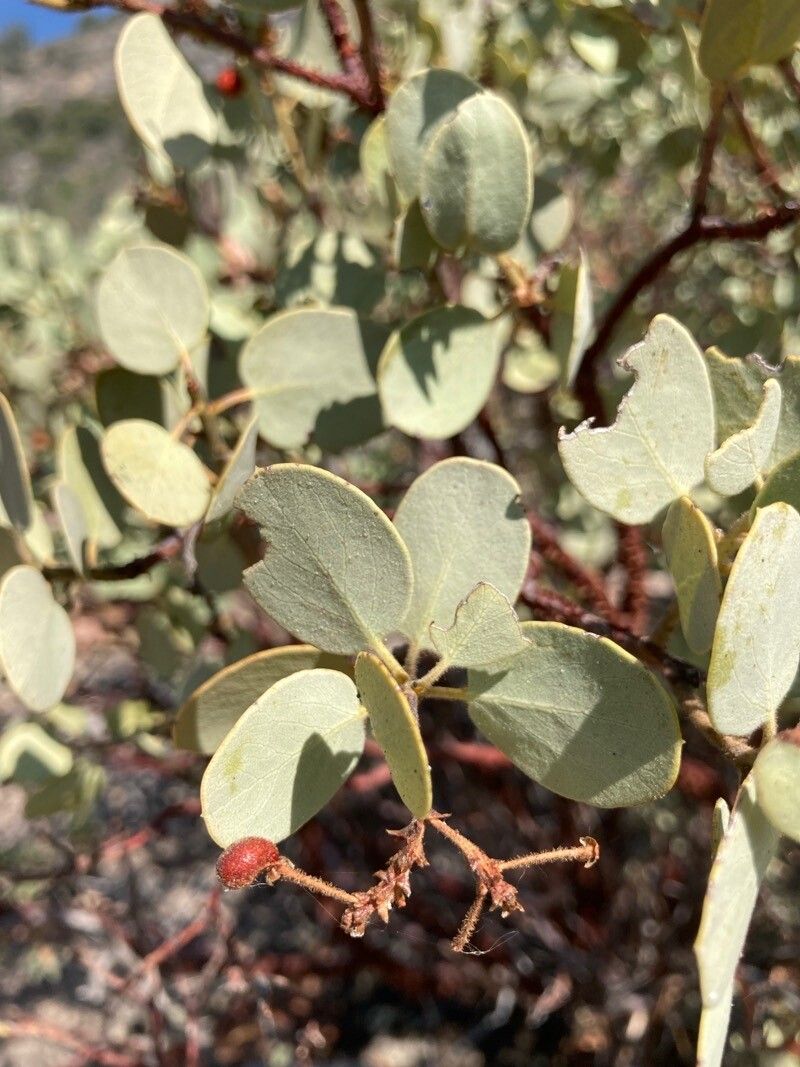
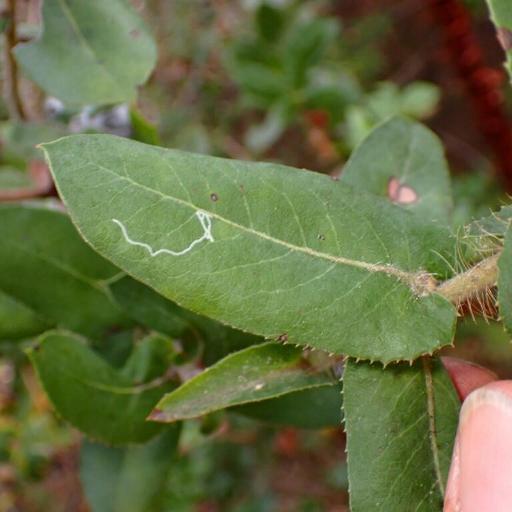
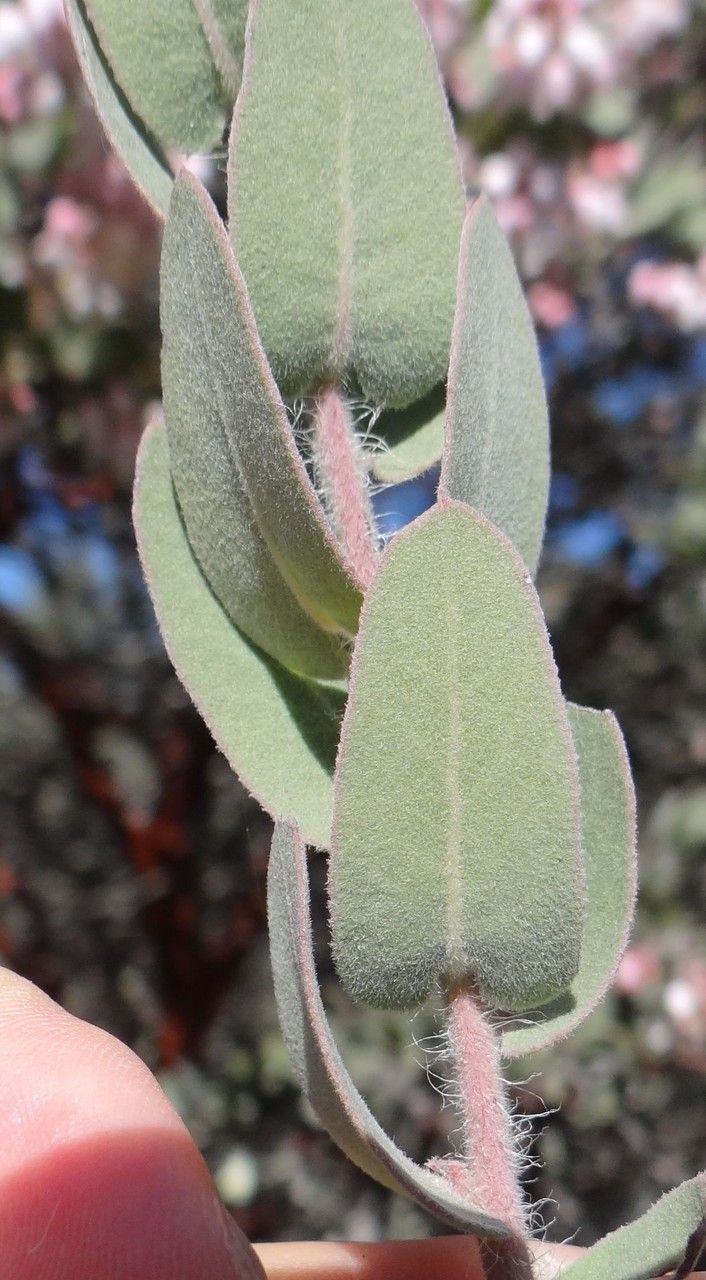
Typically, Arctostaphylos viscida grows up to 6 feet tall and 8 feet wide, characterized by a dense branching habit. Its smooth, reddish-brown bark peels off in thin flakes to reveal a shiny red-brown layer underneath. The oval-shaped leaves have pointed tips and are covered in sticky glandular hairs, giving them a glossy appearance.
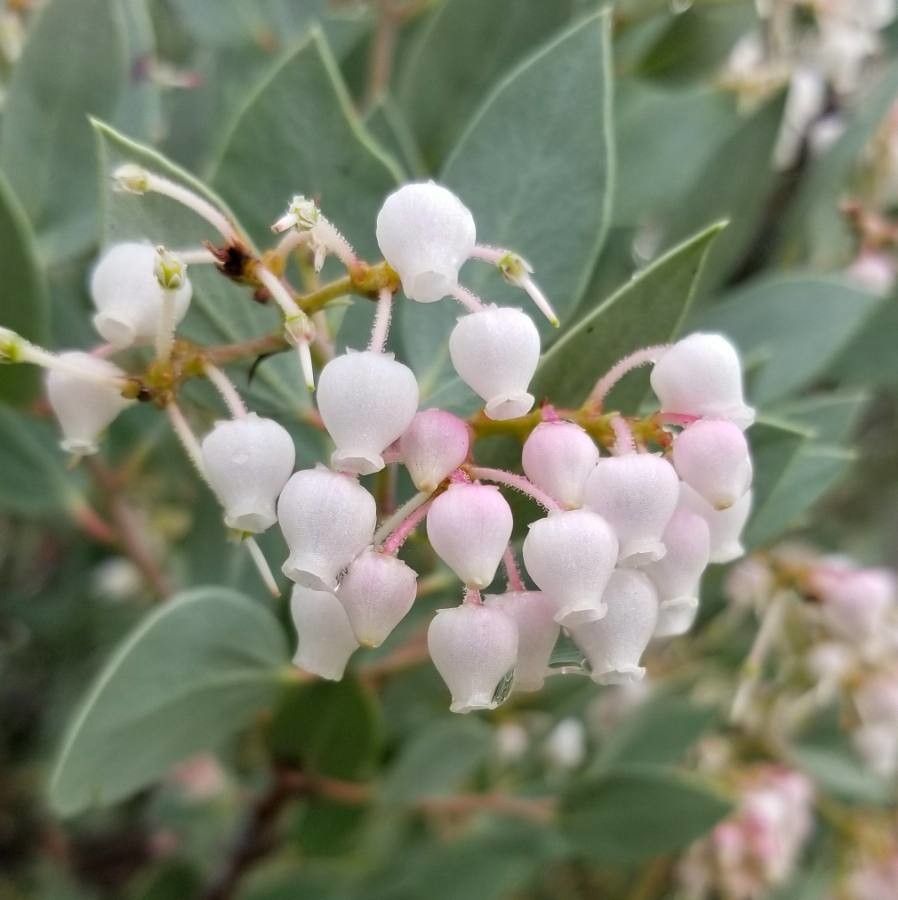
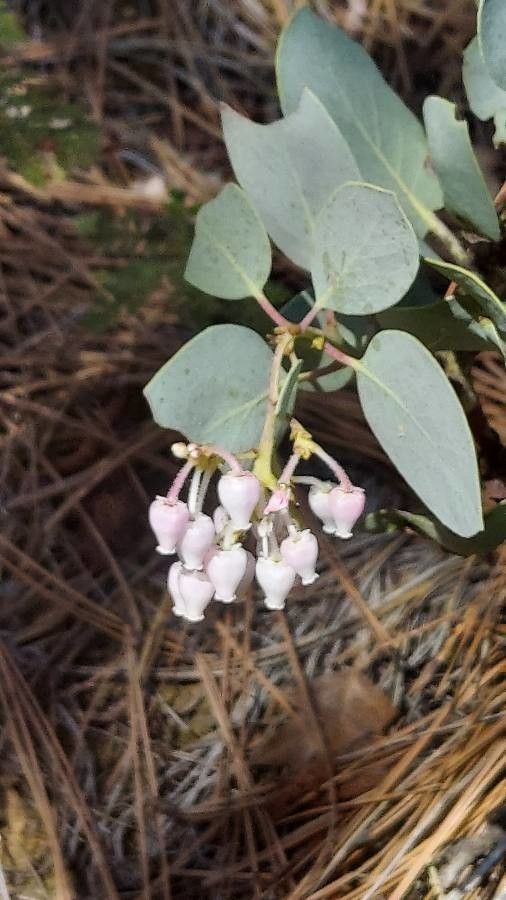
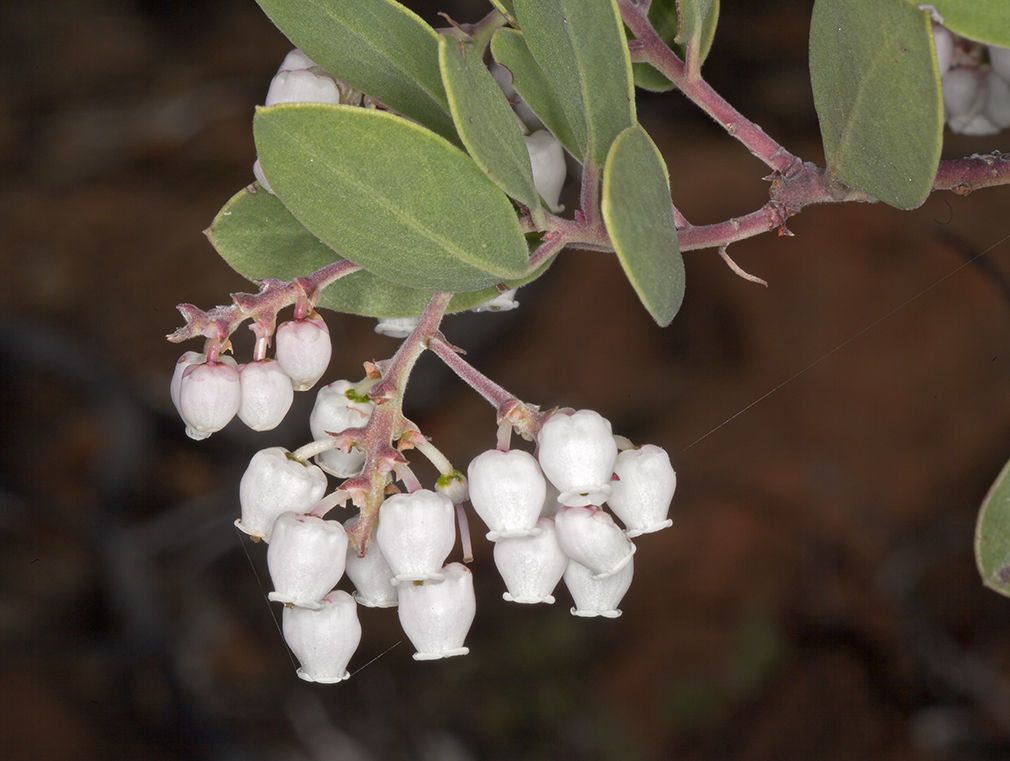
In spring, Arctostaphylos viscida produces clusters of small white or pinkish flowers that attract bees and other pollinators. These flowers eventually give way to small red berries, which are edible but not commonly consumed by humans.
This plant is crucial for wildlife, providing food for birds such as thrushes, quail, and jays, as well as for mammals like bears, which feed on its berries or foliage.
Arctostaphylos viscida prefers well-drained soils and full sun exposure but can tolerate partial shade. Once established, it is drought-tolerant but benefits from occasional watering during prolonged dry spells.
Overall, Arctostaphylos viscida is an attractive shrub with ornamental value, thanks to its glossy leaves. It is suitable for landscaping projects or natural gardens, offering year-round interest while supporting local wildlife populations with food sources throughout different seasons.
Whiteleaf manzanita exhibits good resistance to disease and is generally not prone to illnesses. With regard to care, this plant is fairly low-maintenance. When grown outdoors it needs only minimal watering, and larger plants usually do not require pruning. Smaller plants, however, should be pruned after they have finished blooming. Whiteleaf manzanitat is suitable for anyone with an outdoor area, such as a garden or deck, and does not need a lot of care experience.
How to keep Arctostaphylos Viscida.
Light
Whiteleaf manzanita performs best in places with ample sunlight, which is necessary for healthy growth at every stage. Its native habitat has given it resilience, allowing it to tolerate conditions with less than full light. However, too little or too much sunlight can damage its health.
Water
Native to arid regions, whiteleaf manzanita is well-adapted to dry conditions and requires minimal moisture, demonstrating high drought tolerance. Ideally, it should be watered every 2-3 weeks. When grown outdoors, it benefits from natural rainfall. This plant thrives in well-draining soil, showcasing its ability to flourish in environments with limited water.
Temperature
Whiteleaf manzanita originates from warmer regions and prefers temperatures of 59 to 95°F (15 to 35 ℃). It can handle some temperature fluctuations, but keeping conditions stable will help it grow better.
Fertilizer
Timing matters for fertilizing Whiteleaf manzanita. Apply fertilizer in early spring and continue once a month until early summer. Fertilizer promotes attractive blooms and supplies energy during both dormant and active growth phases.
Pruning
Whiteleaf manzanita boasts glossy green leaves and white flowers. To maintain its health and appearance, it's beneficial to prune it in late spring. This involves removing dead branches and thinning out the growth to improve air circulation. By pruning at the right time and using proper techniques, you can prevent overcrowding and airflow issues, ensuring the plant thrives.
Botanical profile.
- Plant Type
- Shrub
- Life Cycle
- Perennial
- Genus
- Arctostaphylos
- Family
- Ericaceae
- Hardiness Zone
- 7-10
- Mature Height
- 0.91 m to 4.57 m
- Mature Spread
- 1.52 m to 1.83 m
- Leaf Color
- Gray, Light Gray
- Leaf Type
- Evergreen
- Flower Color
- White, Pink
- Flower Size
- 0.51 cm to 0.76 cm
- Bloom Time
- Late winter, Early spring, Mid spring
- Planting Time
- Autumn
- Harvest Time
- Mid summer, Late summer, Early fall
Other names.
Reader questions.
How should I water my Whiteleaf manzanita plant?
The Whiteleaf manzanita is not very particular about how you water it. You can use any common watering tool, such as watering cans, hoses, or even cups, to moisten the soil. It is important to water the plant by applying the water directly to the soil. Make sure to evenly moisten all areas of the soil to provide water to the entire root system. Using filtered water is recommended, as tap water may contain harmful particles for plants. It is also beneficial to use water that is at or slightly above room temperature, as extremely hot or cold water might shock the plant. However, the Whiteleaf manzanita usually responds well to any type of water you give it.
Why should I add fertilizer to my Whiteleaf manzanita?
Fertilizing a Whiteleaf manzanita is important for a few reasons. Firstly, it helps the plant produce beautiful blooms. Secondly, fertilizing in early spring is especially beneficial for ensuring excellent flowers during that season. Additionally, fertilizer provides the plant with energy that it can store in the ground during its dormant growth phases. Giving the plant extra nutrients during fall planting or late spring helps it hold more energy for use during active growth.
What are the sunlight requirements for Whiteleaf Manzanita?
Whiteleaf Manzanita requires full sun, meaning it thrives in conditions where it can receive above 6 hours of sunlight daily. However, it can also adapt to partial sun, with about 3-6 hours of sunlight. It's important to observe how sunlight moves through your garden, ensuring plants get a balance of light and shade for optimum growth. The plant's native resilience allows it to survive in varying light conditions, but optimal sun exposure is crucial for its health.
What is the optimal temperature range for Whiteleaf manzanita?
The Whiteleaf manzanita is best suited to warmer climates, thriving optimally within a temperature range of 59 to 95°F (15 to 35°C). Although it can handle temperature variations to some extent, maintaining a consistent environment is beneficial for its growth.
What should I do if I give my Whiteleaf manzanita plant too much or too little water?
When it comes to outdoor plants, especially ones that are newly planted or seedlings, they can easily suffer from lack of watering. It's important to consistently water these plants for a few months until they are established and can rely on rain. On the other hand, if you have a Whiteleaf manzanita planted in a pot, overwatering is more likely to occur. If you accidentally overwater your Whiteleaf manzanita, you should take immediate action to fix the situation. First, stop watering the plant to minimize the effects of overwatering. Then, remove the plant from its pot and check for any signs of root rot. If no root rot is found, you can put the plant back in its container. If there is root rot, trim away the affected roots and consider applying a fungicide. Finally, make sure to repot the Whiteleaf manzanita in well-draining soil. In the case of underwatering, simply increase the frequency of watering. It's easy to fix underwatering as the leaves will droop and dry out, but they will quickly recover after being properly watered. So, adjust your watering schedule as soon as you notice signs of underwatering.
When should I fertilize my Whiteleaf manzanita for the best results?
The timing of fertilizing Whiteleaf manzanita is very important. Using fertilizer too early, while the plant is still dormant, is not effective and will end up being wasted and causing pollution as it gets washed away by rainwater. The first application of fertilizer should be in early spring, and then continue applying it once a month until early summer.
How essential is sunlight for Whiteleaf Manzanita's growth?
Sunlight is crucial for the Whiteleaf Manzanita, as it thrives best in environments with abundant sunlight. This plant has adapted to withstand significant sunlight, making it critical for its development at all stages. Although it can tolerate some shade, lack or excess of sunlight can adversely affect its health. In situations where natural light is insufficient, especially indoors or during winter, artificial lighting such as LED lights can be used to supplement the plant's light needs. Depending on the plant's sunlight category, artificial lights should be adjusted in intensity and distance to mimic natural conditions.
Does Whiteleaf manzanita require frost protection?
Whiteleaf manzanita possesses strong cold resistance, negating the need for special frost protection measures in most winter conditions. However, if temperatures are forecasted to fall below -15°C, it's crucial to safeguard the plant by wrapping its trunk and branches with insulating materials like non-woven fabric or cloth. To further protect against cold damage, it's recommended to water the plant abundantly before the first freeze of autumn, ensuring the soil remains moist and enters a frozen state. This practice helps prevent dehydration and water scarcity throughout the winter and early spring.
How frequently should I water my Whiteleaf manzanita plant?
Most outdoor plants can thrive with rainfall, but if you live in an area with little rain, you will need to water your plants every 2 weeks in the spring and fall, and more often during the summer. In winter, when plants grow slower and need less water, you can water them less frequently or not at all. However, if your Whiteleaf manzanita is young or newly planted, it will need more frequent watering to help it establish and grow. When it comes to potted plants, there are two ways to determine how often to water your Whiteleaf manzanita. One option is to follow a set schedule, watering it once a week or once every other week. However, this might not always be the best approach as it doesn't consider the specific conditions of your plant's environment. Another approach is to monitor the soil moisture. Wait until the top two to four inches of soil, about ⅓ to ½ depth of the pots, have completely dried out before giving more water. This method can be especially useful during the summer when the plant's water needs are highest.
When should I not give fertilizer to my Whiteleaf manzanita plant?
When fertilizing Whiteleaf manzanita, it's important to avoid using a fertilizer with excessive nitrogen. This can result in an abundance of leaves but a lack of blooms. Instead, opt for a fertilizer that has a lower nitrogen content compared to other nutrients. It's also crucial to refrain from fertilizing Whiteleaf manzanita after early autumn. Fertilizing during this time can cause excessive growth right before winter, which is not ideal. Additionally, avoid fertilizing during hot and dry periods because dry soil does not effectively deliver fertilizer compared to moist soil. Fertilizing during this time can also stimulate growth that requires more water, which may not be readily available. It's best to apply fertilizer earlier in the season when temperatures are cooler. Lastly, keep in mind that Whiteleaf manzanita can absorb fertilizer that has been applied to nearby plants or lawns. It's important to be cautious and not unintentionally give the tree/shrub a double-dose of fertilizer.
What symptoms indicate insufficient sunlight for Whiteleaf Manzanita?
Symptoms of insufficient sunlight in Whiteleaf Manzanita include small, new leaves; leggy or sparse growth; faster leaf drop than usual; slower or halted new growth; pale or irregularly colored new leaves indicating a lack of chlorophyll; and symptoms of overexposure like chlorosis, sunscald, leaf curling, wilting, and leaf scorching. These symptoms help identify when the plant is not receiving adequate sunlight or when it's exposed to too much direct sunlight, affecting its health and growth.
How does Whiteleaf manzanita react to temperatures below -15°C?
Although Whiteleaf manzanita is cold-tolerant and fares well in temperatures above 15°C, exposure to temperatures below -15°C may not exhibit immediate effects during winter, but come springtime, branches could turn brittle and dry, with no new shoots emerging. To manage these effects, it's advisable to prune any dead branches that failed to produce new leaves in the spring.