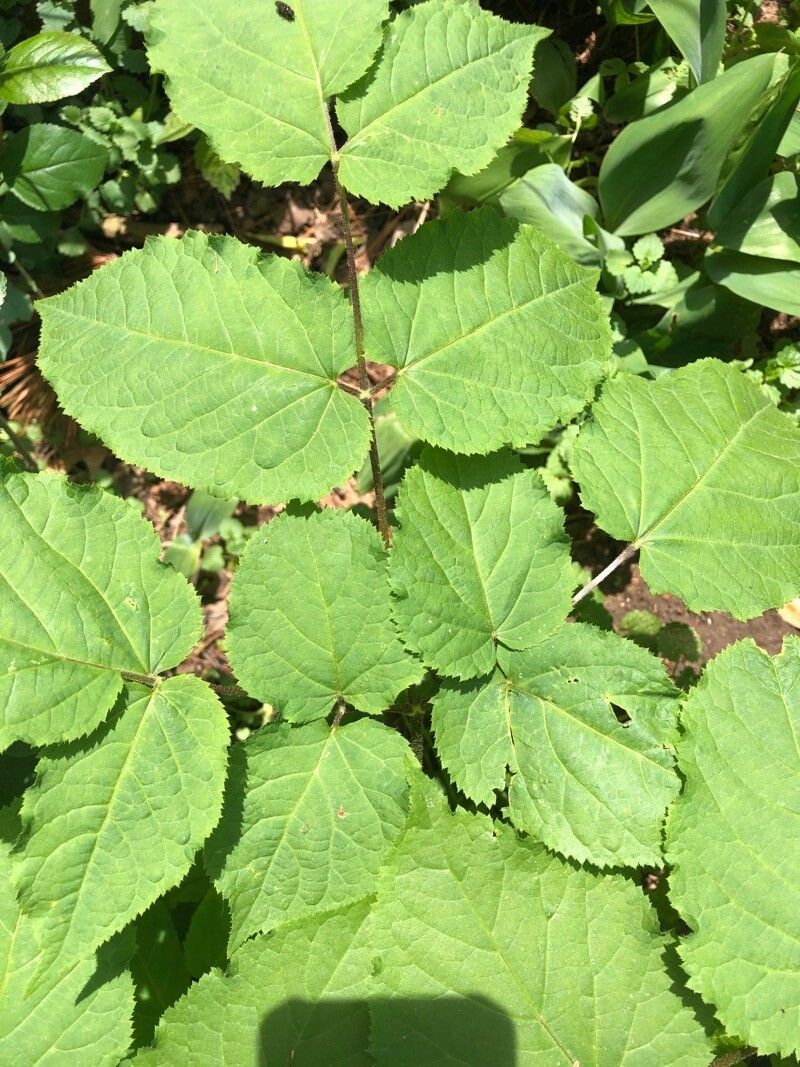
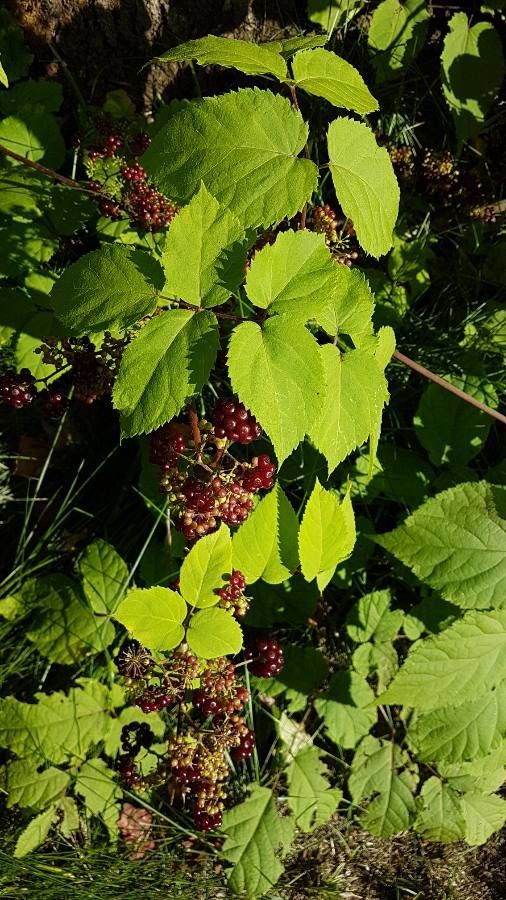
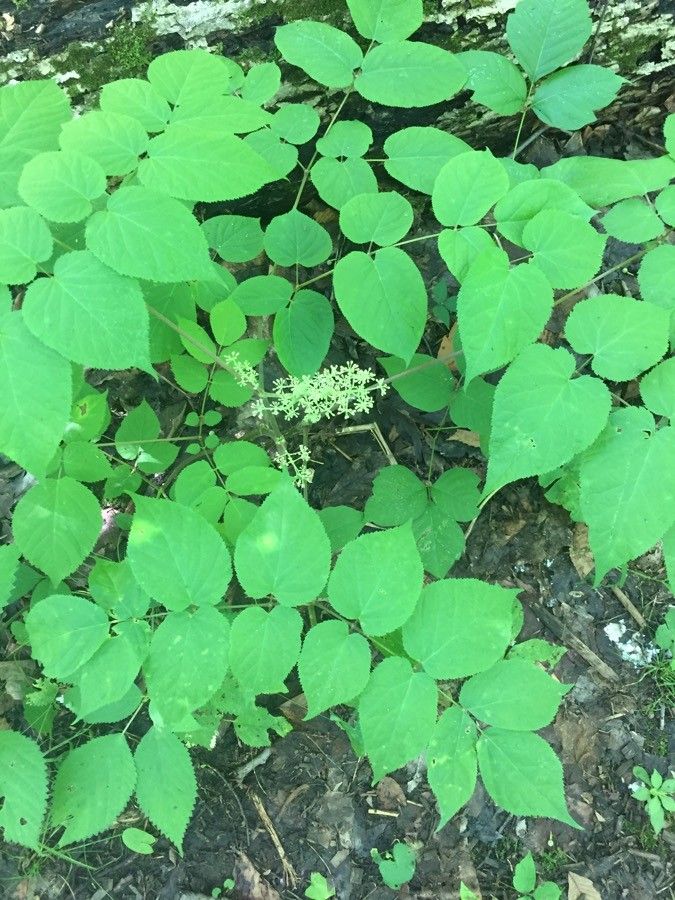
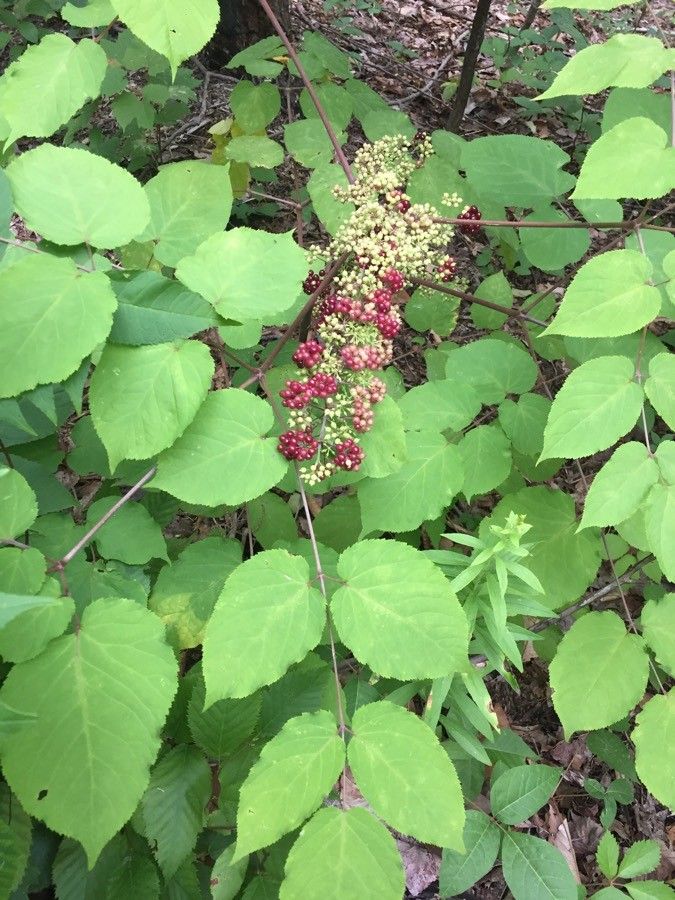
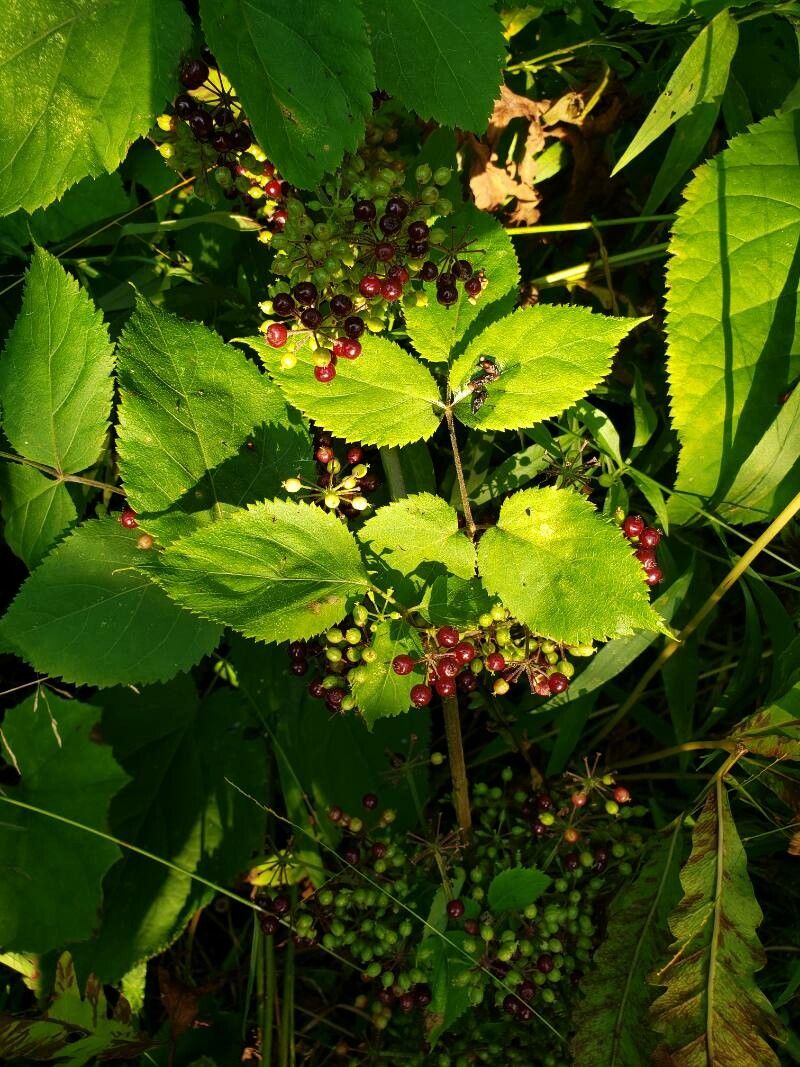
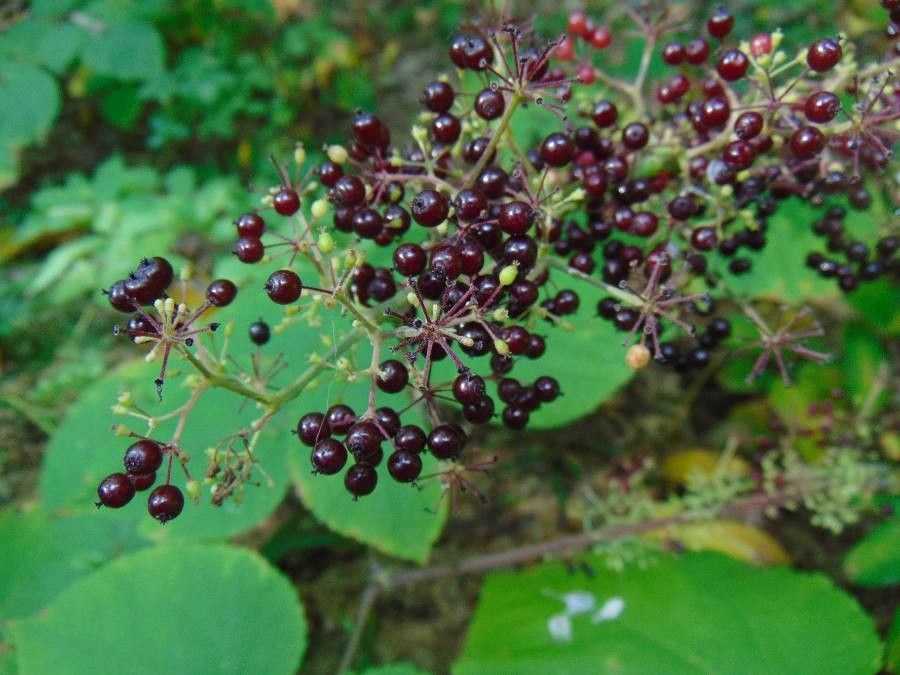
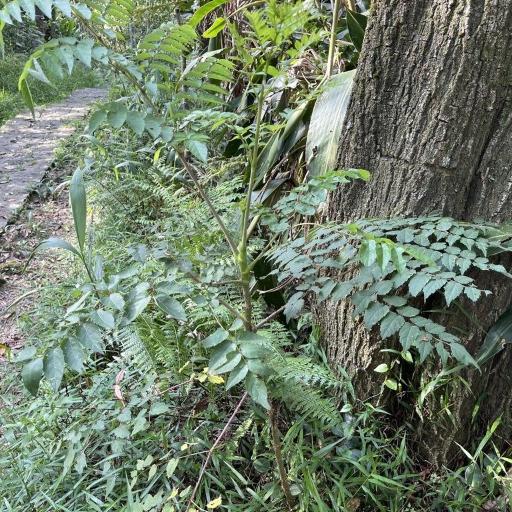
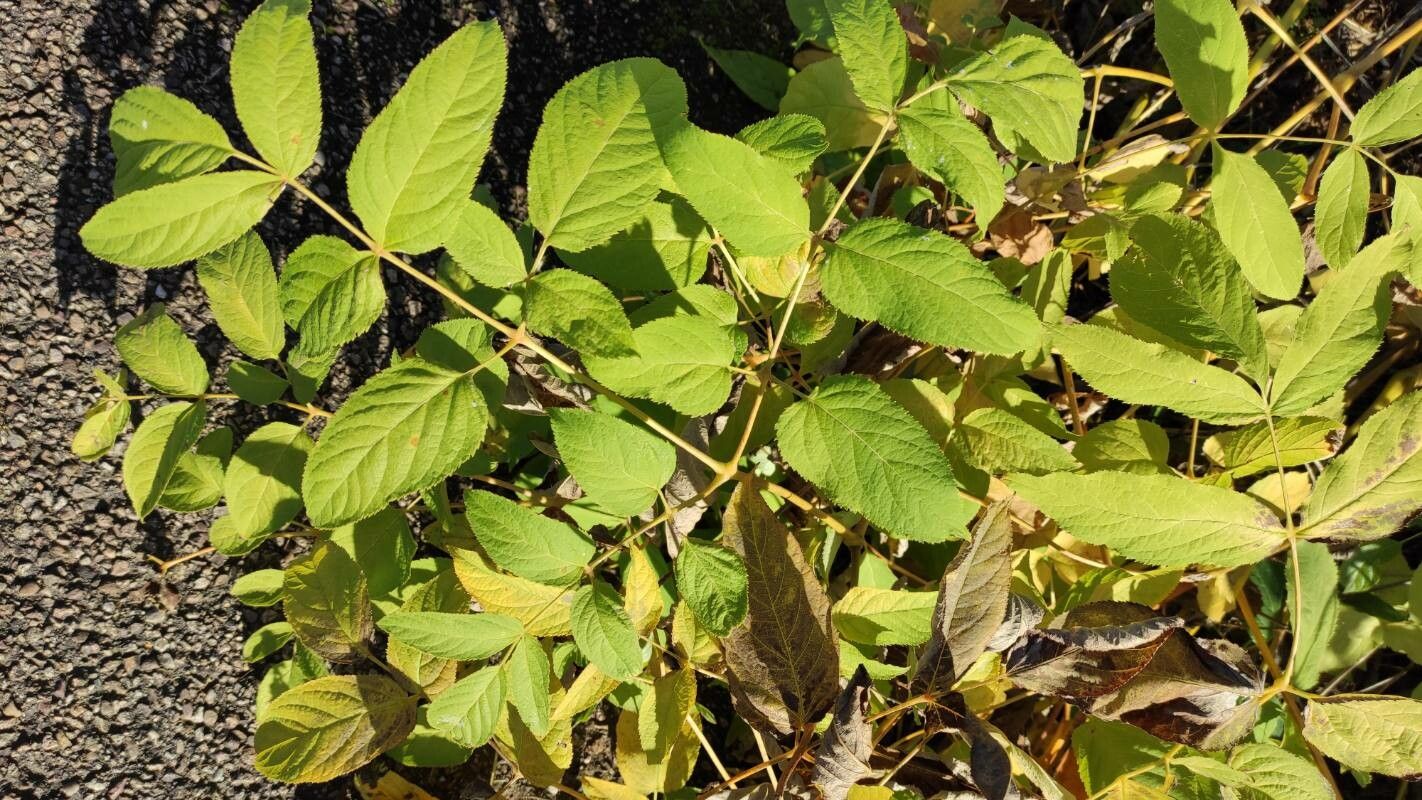
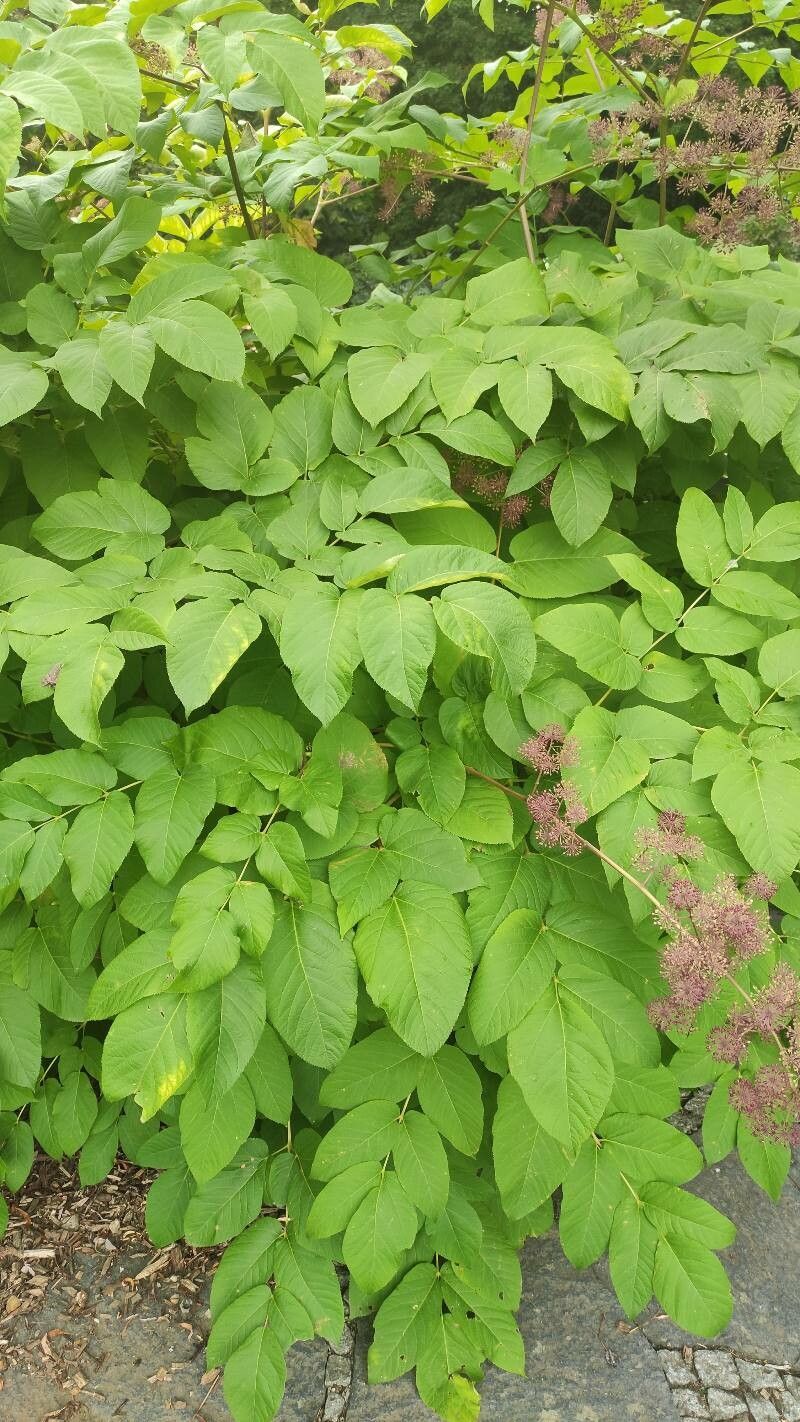
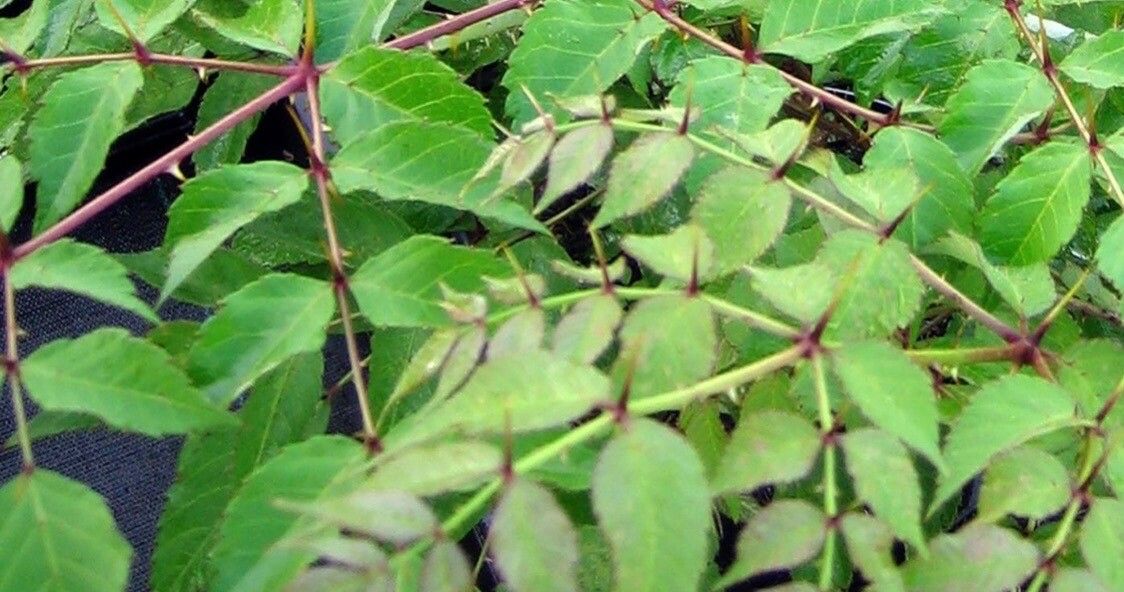
Aralia racemosa, with common names American spikenard, small spikenard, Indian root, spice berry, spignet, life-of-man, petty morel, is an ornamental plant in the family Araliaceae native to the United States and Canada. It is a herbaceous plant, about 1 to 2 m (3 ft 3 in to 6 ft 7 in) tall, which grows in shady areas. Its native range includes most of the eastern United States.
American Spikenard is fairly resistant to diseases and typically does not suffer from many illnesses. Still, it can be affected by pests and diseases present in its environment, though such problems are generally mild. Care-wise, the plant needs a moderate level of attention. Regular pruning is necessary to preserve an attractive appearance and support healthy growth, and applying fertilizer can encourage more flowering. This plant is well suited for anyone with outdoor space, like a garden or patio, and does not demand extensive gardening experience. If grown indoors, it may need additional care.
How to keep Aralia Racemosa.
Light
American spikenard flourishes with a plentiful supply of sunlight, which is essential for optimal growth. It can tolerate conditions where light is partially blocked. However, too much or too little sun can hinder its development. Its native habitat favored abundant sunlight, shaping its preference for bright conditions.
Water
Originating from temperate forests, American spikenard thrives best in moist, well-drained soil and dappled sunlight. This resilient herbaceous perennial adapts well to seasonal rainfall, requiring weekly watering to flourish. It's an excellent choice for gardeners seeking a hardy plant that performs well in varying conditions.
Temperature
American Spikenard is native to environments with temperatures ranging from 41 to 89.6 °F (5 to 32 ℃). It prefers cooler climates but can adapt when necessary. Gradual temperature adjustments through the seasons are recommended for optimal growth.
Fertilizer
The best time to fertilize an American Spikenard is in early spring, as it comes out of dormancy and starts active growth. Fertilizing supplies essential nutrients for healthy development. Although an American Spikenard has relatively low fertilizer needs, giving it fertilizer once a year can improve its survival and encourage better, longer-lasting flowers.
Pruning
To maintain optimal health for American Spikenard, prune it in early to late spring. Start by removing any dead or damaged wood and thinning out crowded areas to improve air circulation and exposure to sunlight. This helps promote vigorous growth and enhances the plant's ornamental appeal. Make sure to use clean, sharp tools, and make precise cuts just above the buds.
Botanical profile.
- Plant Type
- Herb
- Life Cycle
- Perennial
- Genus
- Aralia
- Family
- Araliaceae
- Hardiness Zone
- 4-8
- Mature Height
- 0.91 m to 1.52 m
- Mature Spread
- 0.91 m to 1.52 m
- Leaf Color
- Green
- Leaf Type
- Deciduous
- Flower Color
- White
- Flower Size
- 0.25 cm to 0.51 cm
- Bloom Time
- Early summer, Mid summer
- Planting Time
- Spring
- Harvest Time
- Mid summer
- Native Area
- Mexico
Other names.
Reader questions.
How should I water my American Spikenard plant?
When watering the American Spikenard, it is best to use filtered water at room temperature. Tap water may have harmful particles, so filtered water is safer. The plant prefers warmer water since it comes from a warm environment and cold water can be a shock. It is also important to avoid overhead watering as it can cause problems with the foliage. Instead, water the soil directly until it is completely soaked. This helps the roots stay moist and spread throughout the soil to gather nutrients.
Why is it important to add fertilizer to my American Spikenard plant?
The main structure of the American Spikenard is made up of its leaves. Fertilization is a very important way to ensure that the leaves not only look great but also function properly. Proper fertilization will promote consistent color and a healthy texture in the leaves. It also helps the plant below the soil's surface by promoting the growth of new roots and maintaining existing roots. This not only keeps the plant healthy in the present, but also helps it absorb soil nutrients more effectively in the future.
What are the sunlight requirements for American Spikenard?
American Spikenard requires a generous amount of sunlight for optimal growth, being tolerant to conditions where sunlight is not entirely unobstructed. The plant thrives best in full sun, defined as above 6 hours of sunlight per day, but can also grow in partial sun, which is about 3-6 hours of sunlight per day. It's important to watch how sunlight moves through your garden to select spots that offer the right balance of light and shade, ensuring the plant's health and happiness.
What is the native climate for American Spikenard?
American Spikenard is native to environments where temperatures range from 41 to 89.6 °F (5 to 32 °C). It flourishes in cooler climates but is capable of adapting to different conditions. For optimal growth, gradual temperature adjustments throughout the year are beneficial. The plant has a strong tolerance to cold, hence special frost protection measures are generally not required during winter. Nevertheless, in regions where winter temperatures dip below -30°C, it's crucial to provide cold protection by covering the plant with materials such as soil or straw. Additionally, watering the plant abundantly before the first freeze in autumn is advised to ensure the soil remains moist and enters the winter in a frozen state, which helps prevent drought and water scarcity for the plant during the colder months.
What should I do if I give too much or too little water to my American Spikenard?
Overwatering is a common problem for American Spikenard plants and can cause wilting and yellowing of the stems and leaves. Prolonged overwatering can also lead to diseases like root rot, mold, and mildew, which can be fatal for the plant. Underwatering is less common due to the plant's drought tolerance, but it is still possible and can result in brittle, brown leaves. It is important to recognize the signs of overwatering early on because some of the resulting diseases cannot be reversed if left too long. To address overwatering, reduce the watering schedule and consider using well-draining soil. If underwatering occurs, simply water more regularly until the symptoms improve.
When should I fertilize my American Spikenard plant?
Growing your American Spikenard outdoors each year will result in new growth in early spring. This is the cue to start fertilizing. Usually, a single application of fertilizer is enough for the plant to thrive. However, if you want to maximize growth, you can feed it multiple times from spring to early summer, at intervals of about once every month to a month and a half.
How can artificial lighting support indoor growth of American Spikenard?
Indoor plants like American Spikenard require adequate lighting for optimal growth, especially when natural sunlight is scarce, such as in winter or in less sunny spaces. Using artificial lights provides a vital solution, promoting healthier, faster growth. LED lights are popular as they offer customizable wavelengths needed by plants. Full sun plants need 30-50W/sq ft of artificial light, whereas partial sun plants require 20-30W/sq ft. The light source should be placed 12-36 inches above the plant to mimic natural sunlight, and most plants will need 8-12 hours of light per day.
How does American Spikenard react to low temperatures?
American Spikenard is notably cold-tolerant, thriving best when temperatures are maintained above 5°C. Throughout the winter, it is important to ensure temperatures stay above -25°C. In cases where temperatures plummet below -30°C, while there may not be immediate visible changes during the winter, the plant may experience a decrease in sprouting or fail to sprout at all come springtime. To counteract this, in spring, it's recommended to remove any parts of the plant that have failed to sprout.
How frequently should I water my American Spikenard?
If your American Spikenard plant is in a pot, the most precise way to determine if it needs water is to check the moisture level of the soil by plunging your finger into it. If the top two to three inches of soil feel dry, it is time to give it some water. On the other hand, if you have your American Spikenard planted outdoors in the ground, you can use a similar method to test the soil. Once again, if the top few inches of soil have dried out, it's time to water. Typically, during the spring and early fall, you will need to water this plant about once a week using this method. However, when extremely hot weather occurs, you may need to increase the watering frequency to twice a week or even more. It's worth noting that mature, well-established American Spikenard plants have an impressive ability to withstand drought.
When is the wrong time to add fertilizer to my American Spikenard?
During the late fall and winter, your American Spikenard will be dormant and won't produce new growth. Therefore, avoid fertilizing during this time. In spring and summer, if you do choose to fertilize, start reducing the amount as summer approaches because the growth rate of your American Spikenard will slow down. Remember, it's not a good idea to fertilize when the weather is unusually hot or the soil is very dry, as this can stress the plant and cause it to die prematurely.
What are the common symptoms of incorrect sunlight exposure in American Spikenard?
Incorrect sunlight exposure in American Spikenard can lead to several symptoms indicating stress or poor health, including small leaves, leggy or sparse growth, faster leaf drop, slower or no new growth, lighter-colored or irregularly patterned new leaves, chlorosis, sunscald, leaf curling, wilting, and leaf scorching. These symptoms can result from both insufficient and excessive sunlight, showing the plant's struggle to adapt to its lighting conditions.
How should American Spikenard be cared for in high temperatures?
During the hotter months, it is vital to keep the temperature below 32°C for American Spikenard. Exposing the plant to temperatures above 35°C can lead to leaves becoming lighter in color, curling, suffering from sunburn, and in severe situations, the entire plant may wilt and become dry. To manage this, trim away the sunburned and dried-up parts of the plant. It's also advisable to move the plant to a location that offers shade during the midday and afternoon sun or use a shade cloth to protect it. Moreover, watering the plant during the morning and evening hours will help keep the soil sufficiently moist.