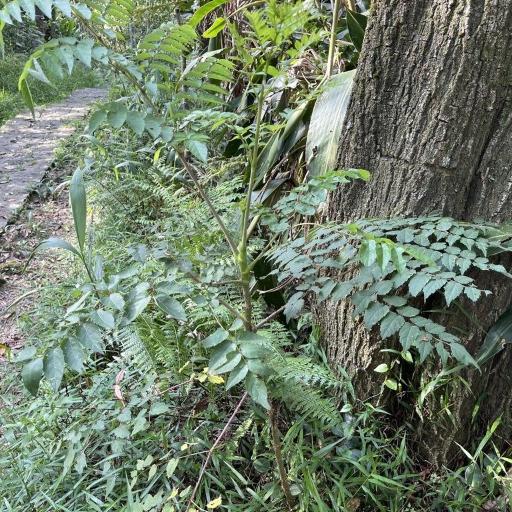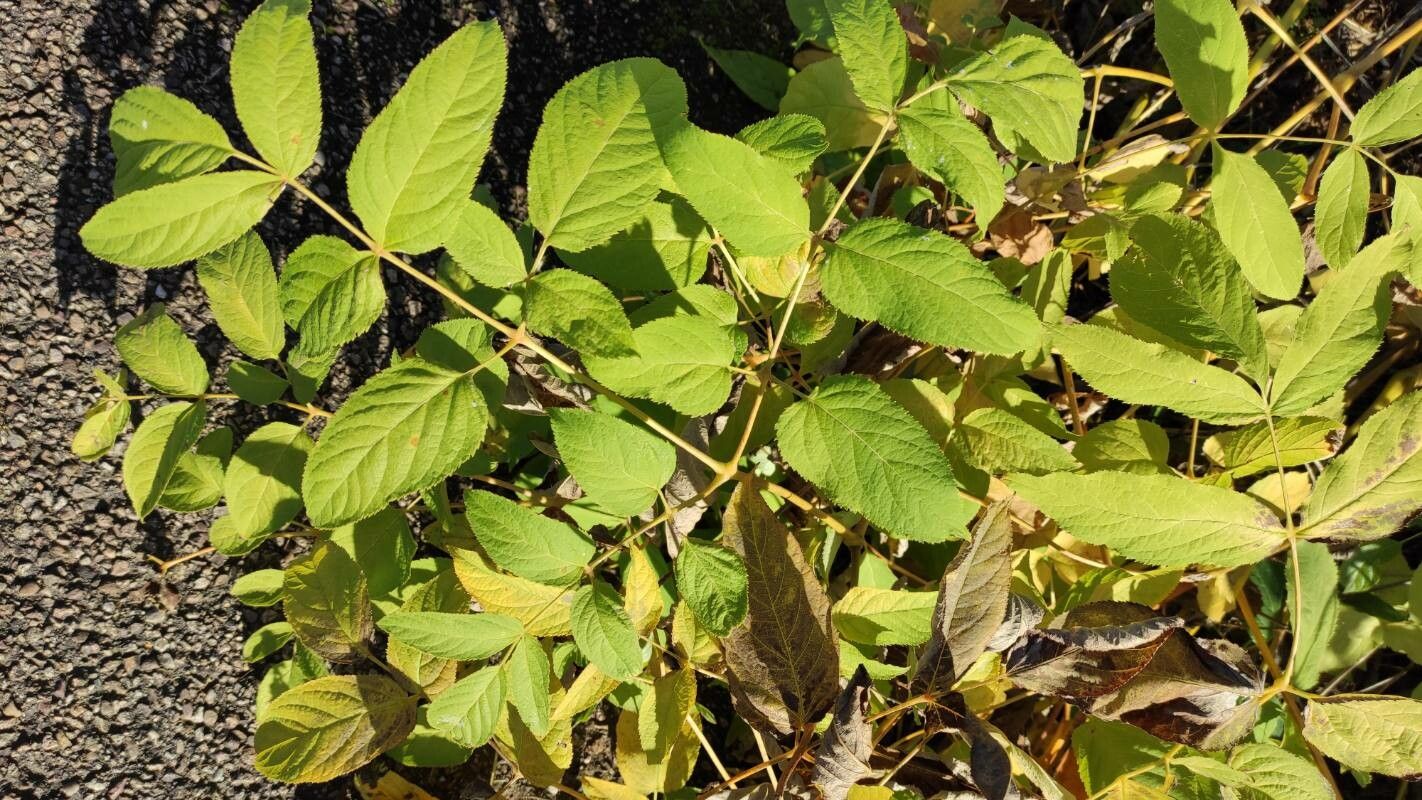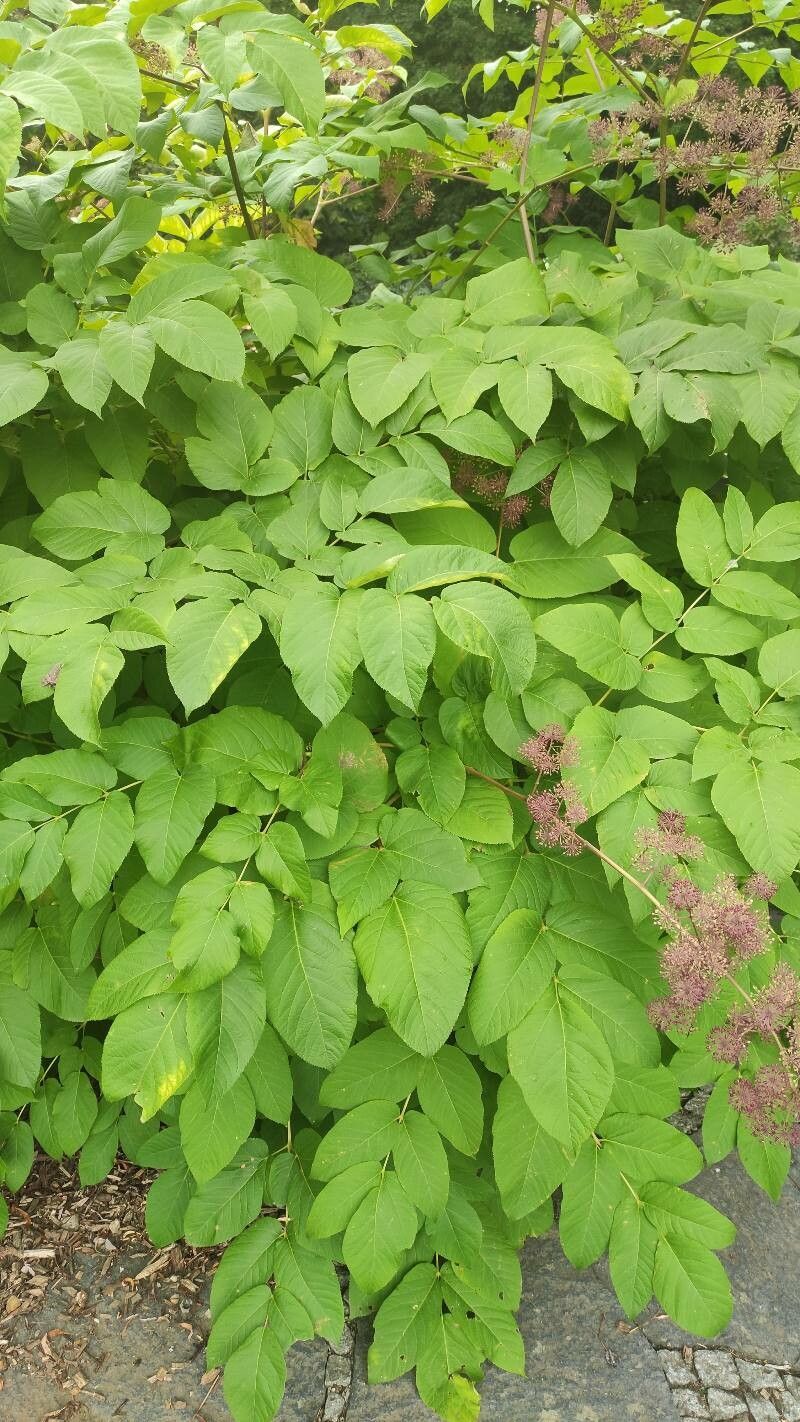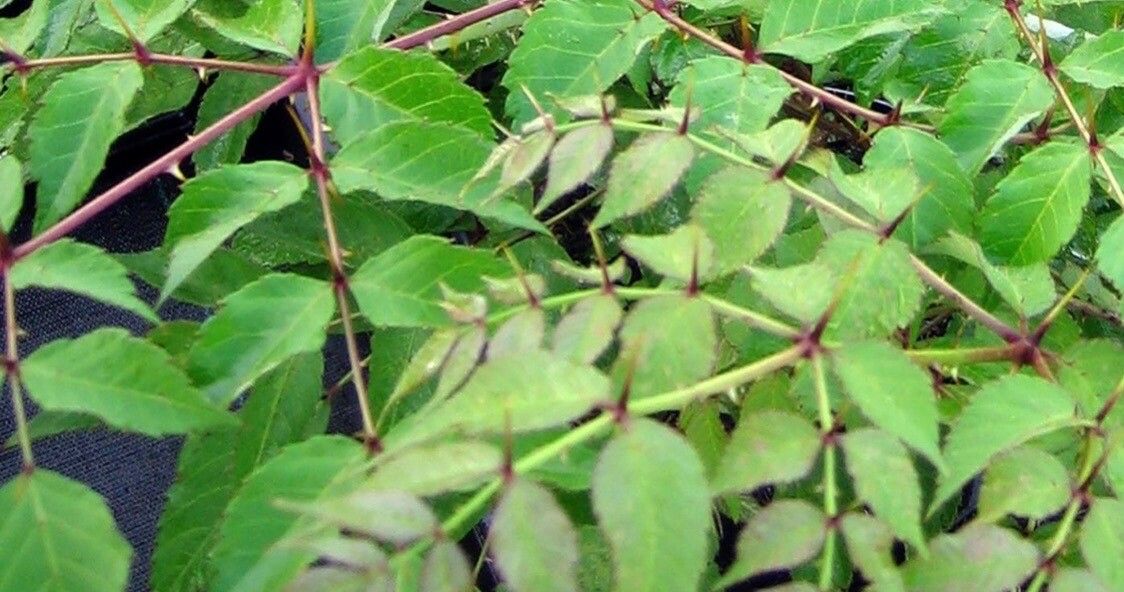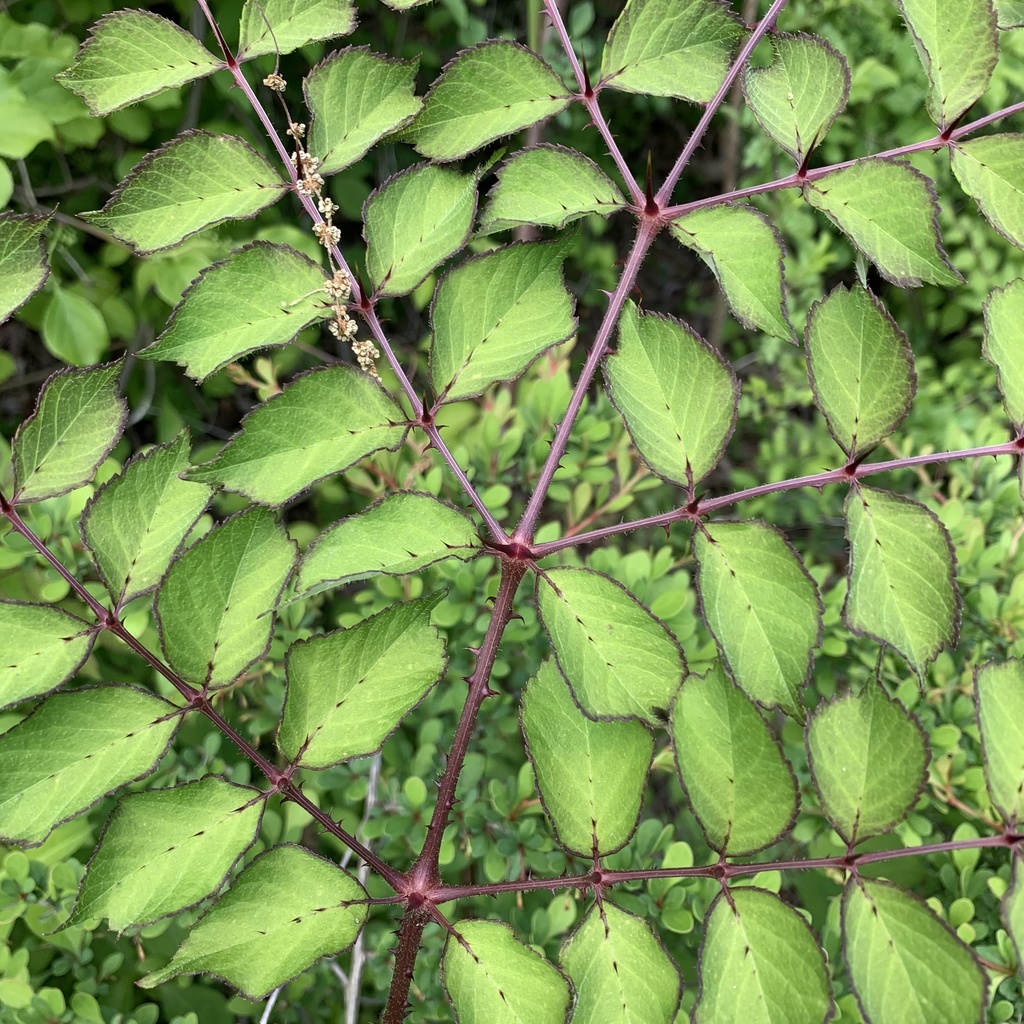
Aralia elata, the Japanese angelica tree, Chinese angelica-tree, or Korean angelica-tree, is a woody plant belonging to the family Araliaceae. It is known as tara-no-ki (タラノキ; 楤木) in Japanese, and dureup-namu (두릅나무) in Korean.
Japanese angelica tree has moderate resistance to disease and can be prone to problems like leaf spot. Its susceptibility to insect pests can differ by variety, but most varieties tend to be less resistant to pests. Regarding care, Japanese angelica tree requires regular watering and fertilization, along with frequent removal or pruning of yellow leaves. It is important to manage pests and diseases when they appear and to harvest the plant at the proper time. Japanese angelica tree is appropriate for people who can spare some time and energy for routine care.
How to keep Aralia Elata.
Light
The Japanese angelica tree grows best in spots that get plenty of sun for most of the day but not intense direct sunlight. Too much sun can leave the tree stressed or stunted, while too little light can restrict its growth. It originates from habitats where sunlight is filtered through the forest canopy.
Water
The Japanese angelica tree thrives in moderate humidity and well-drained soil. It needs watering every three weeks. Once established, the tree is moderately drought-tolerant. Applying mulch helps retain moisture during the growing season and supports healthy growth without the risk of waterlogging.
Temperature
The Japanese angelica tree is a hardy plant native to cool-climate regions, preferring temperatures between 41 and 95 °F (5 to 35 ℃). During seasonal changes, make sure it is not exposed to temperatures below its sensitive threshold, especially in winter.
Fertilizer
Japanese angelica tree species benefit from one or two applications of organic natural fertilizers containing potassium and phosphorus. Apply the fertilizer before planting, incorporate it into the soil and water thoroughly. One application is generally sufficient, but a second can be made once seedlings are established. Avoid excessive fertilizer use, as it can damage the plants.
Pruning
Prune the Japanese angelica tree in early spring by removing any dead branches and thinning out older stems to improve air circulation. Trim the lower branches to shape the tree, and remove any suckers at the base to control its spread. Regular pruning encourages healthy growth and enhances the tree's ornamental value.
Botanical profile.
- Plant Type
- Tree
- Life Cycle
- Perennial
- Genus
- Aralia
- Family
- Araliaceae
- Hardiness Zone
- 4-9
- Mature Height
- 10.06 m
- Mature Spread
- 1.83 m to 3.05 m
- Leaf Color
- Green, Yellow, Orange
- Leaf Type
- Deciduous
- Flower Color
- White
- Flower Size
- 1.02 cm to 1.52 cm
- Bloom Time
- Mid summer
- Planting Time
- Spring, Autumn
- Harvest Time
- Mid summer
- Native Area
- Russia, Japan, Koppen, South Korea, China
Other names.
Reader questions.
What's the best way to give water to my Japanese angelica tree?
To ensure healthy root development, it is recommended to place a garden hose at the base of the plant rather than spraying the leaves directly. If the plant is outdoors and exposed to direct sunlight, the leaves will require more water. For moistening the roots, bubblers can be used for each plant, while soaker hoses can cover the entire garden or bed when adding or removing plants to ensure deep rooting. After watering, any excess water should be drained and the soil should be allowed to dry before watering again. Watering at ground level is advised to prevent diseases. On sunny days, it may be beneficial to spray the entire bush with water. Whether the Japanese angelica tree is potted or in the ground, it prefers deep watering rather than light sprinkling.
Why should I put fertilizer on my Japanese angelica tree?
The Japanese angelica tree grows fast and needs a lot of energy to make the root vegetables we like. To grow and produce roots, Japanese angelica tree species need nutrients, along with sunlight, oxygen, and water. Normally, these nutrients are in garden soil due to the natural breakdown of organic matter. However, sometimes the soil may not have enough nutrients for healthy tree growth. In those situations, fertilizer gives the Japanese angelica tree the boost it requires.
What are the sunlight requirements for the Japanese angelica tree?
The Japanese angelica tree needs ample but not intense sunlight for the majority of the day to thrive well. It can tolerate both partial sun, about 3-6 hours of sunlight, and full sun, above 6 hours of sunlight. It is important to watch how sunlight moves through your garden and choose spots that offer a perfect balance of light and shade, ensuring the plants are happy and healthy. This tree originates from environments where sunlight is naturally filtered through the canopy of the forest, implying it does not fare well under excessive sunlight, which can lead to stress or stunted growth.
What is the optimal temperature range for Japanese angelica tree growth?
The Japanese angelica tree thrives in cold-resonant areas and prefers temperatures between 41°F (5°C) and 95°F (35°C). To ensure the plant's optimal growth, it's important to maintain temperatures above 5°C during the winter months. It is crucial to protect the plant from freezing temperatures, especially in winter, by keeping the minimum temperature above the freezing point. When outdoor temperatures approach -5°C (25°F), consider bringing the Japanese angelica tree indoors or protect it with a temporary greenhouse or wrapping materials such as plastic film or fabric.
What do I do if I give the Japanese angelica tree too much or too little water?
When a Japanese angelica tree is overwatered, it displays signs such as yellowing and dropping leaves, as well as a dull and unhealthy appearance with mushy stems. In these cases, it is recommended to adjust your watering schedule. Conversely, wilting can also indicate under watering, characterized by crispy and dry leaves. If the soil is dry and simply watering is not enough, a thorough watering is necessary. However, after a few days, the plant may still have dry and yellow leaves due to damage to the root system. It is important to check the moisture levels of the pot when the tree is indoors, avoiding overwatering and looking out for black spots. In the presence of root rot, transferring the tree to a different pot is advisable if discolored and slimy roots are observed. Preventing root rot and avoiding excessively soggy soil is essential. When planting the tree outdoors, it is recommended to dig a little deeper and, if the soil feels too dry, ensure adequate watering to aid in the plant's recovery.
When should I fertilize my Japanese angelica tree?
Prepare your soil for planting by applying natural fertilizer. Take enough time to incorporate it into the soil and water it thoroughly before planting seeds or seedlings. Typically, a single application of fertilizer is sufficient to support the growth of Japanese angelica trees throughout the season. However, if desired, you can apply an extra round of fertilizer once the seedlings have established themselves to further increase their yield. Ensure not to use excessive fertilizer as it may harm the plants.
How can artificial lighting be used for indoor plants?
Artificial lighting is crucial for indoor plants, especially when natural sunlight is insufficient, like in winter or less sunny spaces. LED lights are recommended due to their ability to provide specific light wavelengths needed for plant growth. For optimal growth, full sun plants require 30-50W/sq ft of artificial light, partial sun plants need 20-30W/sq ft, and full shade plants need 10-20W/sq ft. The light source should be placed 12-36 inches above the plant to mimic natural sunlight and be kept on for 8-12 hours per day to simulate natural daylight hours effectively.
How does the Japanese angelica tree respond to low temperatures and what are the solutions?
The Japanese angelica tree has moderate tolerance to low temperatures, performing best between 5°C and 35°C. It should be kept above -25°C during winter. If temperatures drop below -30°C, you may notice the leaves darken and potentially exhibit signs of water-soaked necrosis, wilting, drooping, and gradually turning brown in severe cases. To address frost damage, trim away frost-damaged parts and move the plant to a warmer indoor environment or set up a makeshift greenhouse. Ensure the plant is placed near a south-facing window for ample sunlight or use supplemental lighting if natural light is insufficient.
How often do I need to water my Japanese angelica tree?
The Japanese angelica tree prefers deep and infrequent watering. When planted in pots, it's important to soak them with a gallon of water each time due to the limited water storage in the pots. In colder regions, watering is needed every 3 to 5 days. It is best to water early in the morning when the soil is dry, whether the tree is outdoors or indoors. You can check the soil inside the pot to determine if watering is needed - when the top 2-3 inches of soil are dry, it's time for a full watering. During hot days, check the moisture daily as the heat can quickly dry out the soil. If you have a garden, irrigation of the soil is also necessary. In hot climates, watering once a week is sufficient. Only water when about 2 to 3 inches of the soil become too dry, and avoid adding water if there has been a lot of rainfall to prevent root rot. Japanese angelica trees generally grow during spring and fall. Outdoor trees should be mulched with about 3 to 4 inches of mulch to conserve water. Sandy soil requires more frequent watering as it drains faster, while clay soil needs less frequent watering to avoid root rot. Keeping track of watering dates on a calendar can be helpful, and if you notice the leaves drooping, it may indicate that you need to water the tree earlier.
When is it not a good idea to fertilize my Japanese angelica tree?
To ensure effective fertilization, remember to avoid applying fertilizer when the soil is dry. After fertilizing, make sure to water your plants thoroughly as this helps deliver the nutrients properly. If you prioritize the growth of foliage over the root crops, then high-nitrogen fertilizers might be suitable for you. However, take care not to let fertilizer come into contact with the base of the plant, leaves, or stems as it can potentially damage them.
What are the signs of improper lighting for a Japanese angelica tree?
When a Japanese angelica tree is exposed to inadequate light conditions, it may show signs such as smaller new leaves compared to the older ones, leggy or sparse growth, faster leaf drop, slower or no growth indicating the plant has entered a survival mode due to poor light conditions. Additionally, lighter-colored new leaves, chlorosis (yellowing of leaves), sunscald, leaf curling, wilting, and leaf scorching can also occur. These signs hint at either too much or too little light, both of which can affect the plant's health adversely.
What measures should be taken if a Japanese angelica tree is exposed to high temperatures?
During the summer months, it's crucial to ensure that the Japanese angelica tree's temperature does not exceed 35°C. Exposure to temperatures above 38°C can slow down its growth, lead to a lighter leaf color, and increase susceptibility to sunburn. To mitigate these issues, trim away sunburned and dried-up parts. Relocate the plant to a shaded area, preferably where it can avoid the intense afternoon sun. Additionally, watering the plant in the morning and evening can help keep the soil adequately moist and prevent heat stress.