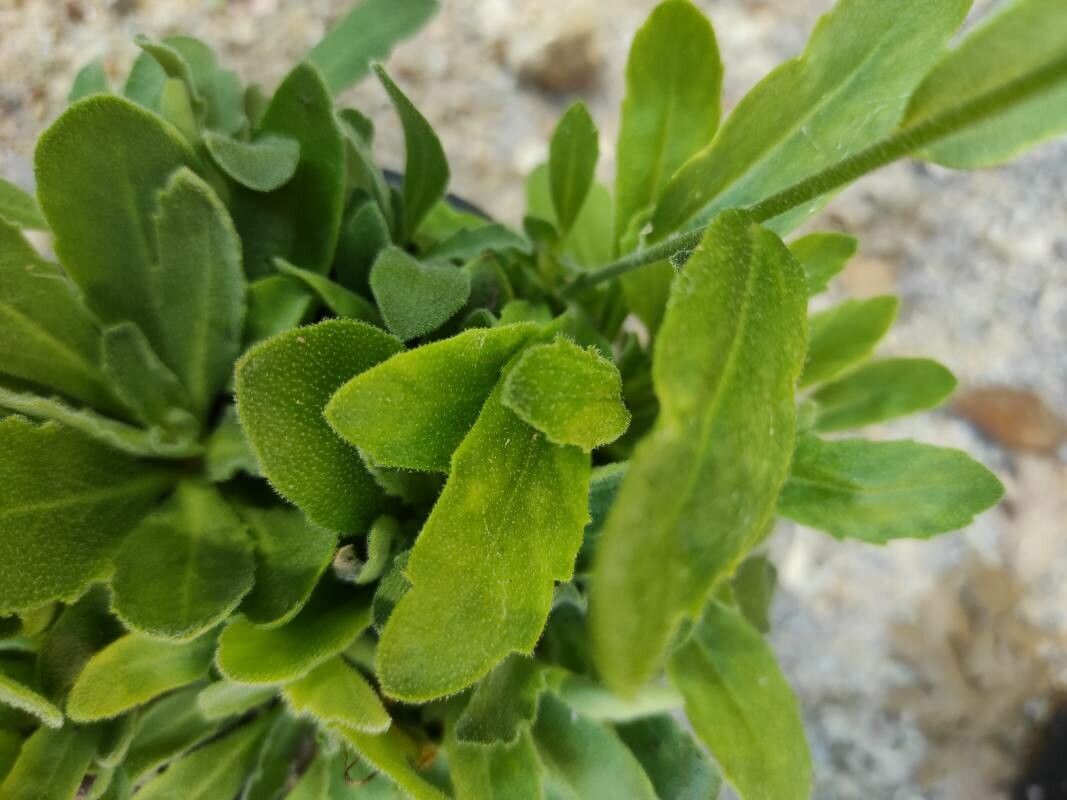
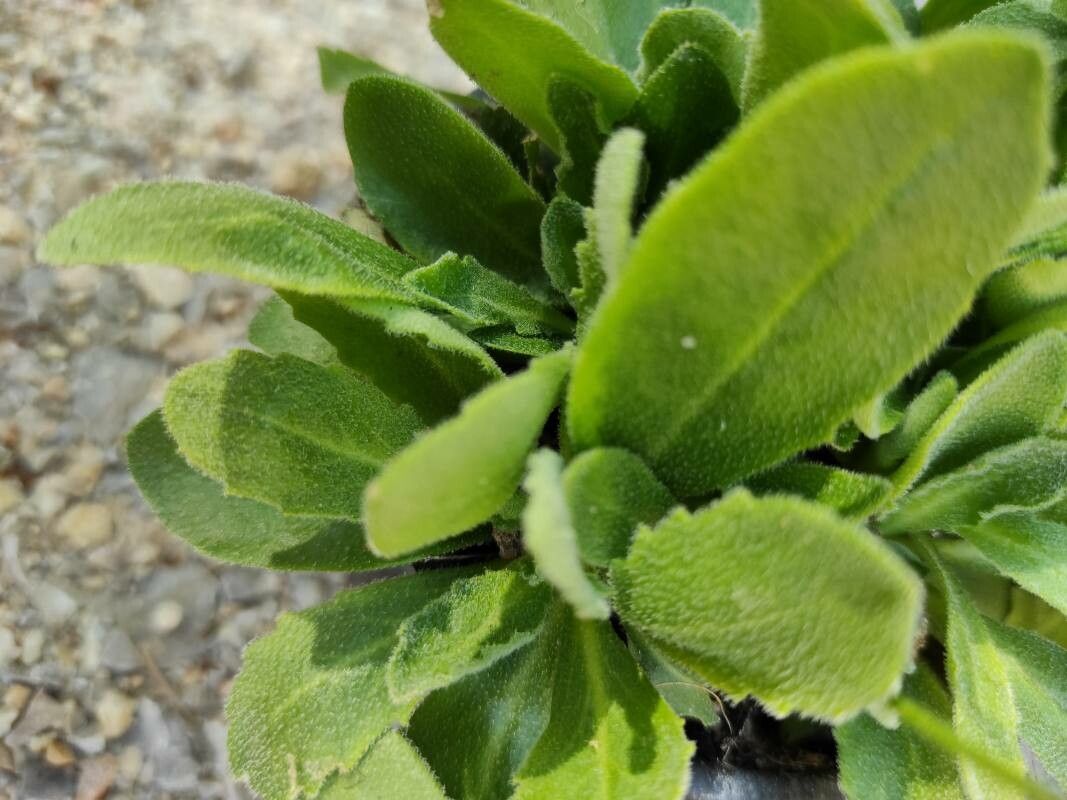
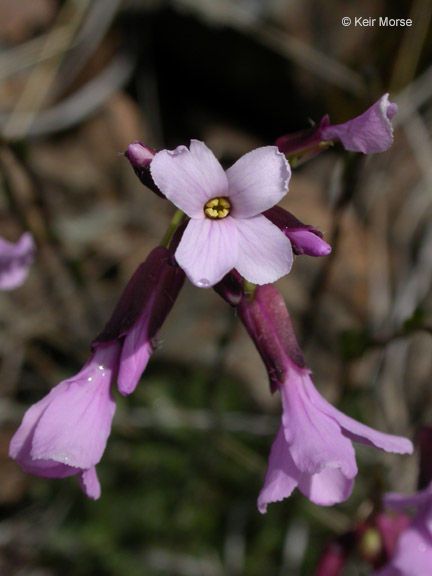
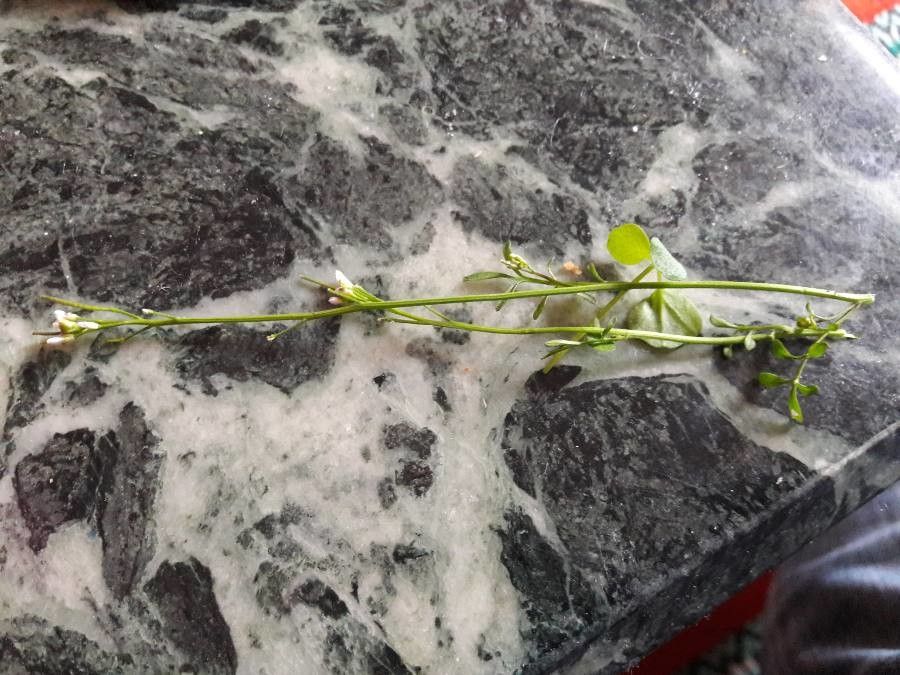
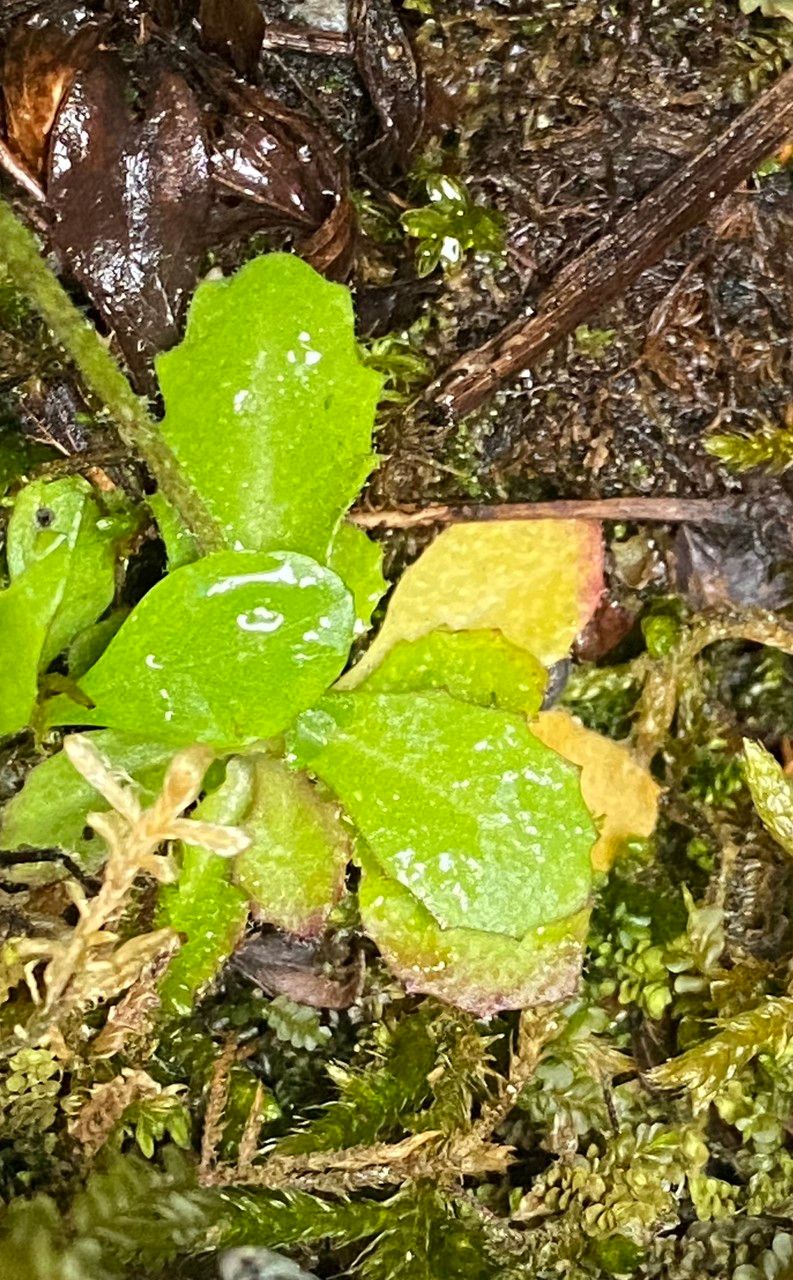
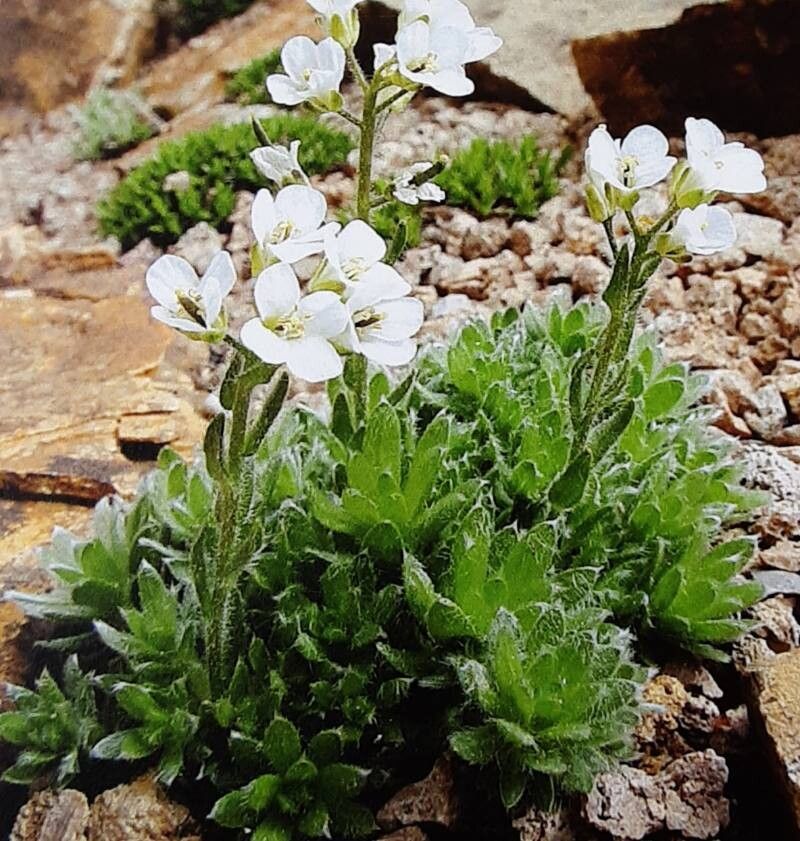
Arabis blepharophylla, commonly known as coast rockcress, is a perennial herbaceous plant that belongs to the Brassicaceae family. It is native to the western coast of North America, ranging from British Columbia to California. The plant typically grows up to 30 cm in height and has a spreading habit, with numerous stems arising from a woody base. The leaves of Arabis blepharophylla are evergreen and arranged in rosettes at the base of each stem. These dark green leaves have toothed margins, giving them a distinctive appearance. The flowers appear in clusters at the end of each stem, each sporting four white petals that form a cross shape. Arabis blepharophylla prefers well-drained soils with full sun exposure but can also tolerate partial shade. It is commonly found growing on rocky slopes, cliffsides, and coastal bluffs. The plant holds several medicinal uses among indigenous communities where it grows naturally. It contains compounds such as flavonoids, which have anti-inflammatory properties. Overall, Arabis blepharophylla is an attractive ornamental plant suitable for rock gardens or borders. Its evergreen foliage provides year-round interest, and its delicate white flowers bloom during springtime, adding beauty whether they grow naturally or are planted by gardeners for their aesthetic value.
Coast rock cress is fairly disease-resistant and is usually not prone to illness. Still, it can be vulnerable to pests and diseases present in its surroundings. These problems are typically not severe. For care, the plant requires moderate maintenance. It should be pruned regularly to keep an attractive appearance and support healthy growth. Fertilizing can also help encourage flowering. Coast rock cress is suitable for anyone with outdoor space, such as a garden or patio, and does not demand extensive gardening experience. It may need more attention if grown indoors.
How to keep Arabis Blepharophylla.
Light
Coast rock cress grows best in locations that are exposed to sunlight throughout the day. It can also persist in places that receive sunlight only part of the day. While developing, the plant needs a substantial amount of sunlight to thrive. Excessive sunlight or insufficient sunlight can potentially impact its health and growth. Its natural habitats mirror these light conditions.
Water
Coast rock cress, which originates from rocky coastal habitats, thrives in well-drained soils with moderate moisture. To keep this plant healthy, especially in temperate regions, it's beneficial to water it weekly. This regular watering works alongside seasonal rains to maintain a balanced moisture level.
Temperature
Coast rock cress is native to cooler habitats and grows best at temperatures between 41 and 89.6 °F (5 and 32 ℃). In regions that are excessively hot or cold, seasonal temperature adjustments may be required for optimal growth.
Fertilizer
The best time to fertilize a Coast rock cress is in early spring, when it is coming out of dormancy and starting active growth. Fertilizing supplies essential nutrients for healthy development. Although Coast rock cress has relatively low fertilizer requirements, an annual application can improve its survival and encourage better, longer-lasting flowers.
Pruning
Coast rock cress is a perennial plant that thrives in rocky coastal areas, producing beautiful pink to purple flowers. To keep the plant healthy, prune it in early spring or late winter to remove dead stems and stimulate new growth. Regularly deadhead the flowers to encourage prolonged blooming and maintain a compact shape.
Pot & Repot
Repot coast rock cress every 2-3 years in the spring to encourage growth. Choose a container that is just slightly larger than the current one. After repotting, place the plant in indirect light and ensure consistent moisture for the best recovery and overall health.
Botanical profile.
- Plant Type
- Herb
- Life Cycle
- Perennial
- Genus
- Arabis
- Family
- Brassicaceae
- Hardiness Zone
- 4-8
- Mature Height
- 30 cm
- Mature Spread
- 40 cm
- Leaf Color
- Green
- Leaf Type
- Evergreen
- Flower Color
- Pink, Violet
- Flower Size
- 1.02 cm to 2.03 cm
- Bloom Time
- Spring
- Planting Time
- Spring, Summer
- Harvest Time
- Late spring, Early summer, Mid summer
Other names.
Reader questions.
What are the sunlight requirements for Coast rock cress?
Coast rock cress requires full sun, meaning it needs above 6 hours of sunlight daily, but it can also thrive in partial sun, with about 3-6 hours of sunlight. It's essential for the plant's health and growth to be placed in spots that offer a perfect balance between light and shade. Observing how sunlight moves through your garden will help in choosing the best location for your Coast rock cress, ensuring it receives the consistent exposure needed to flourish.
What are the ideal growing conditions for Coast Rock Cress?
Coast rock cress, scientifically known as Arabis blepharophylla, thrives best in cooler environments, with ideal temperatures ranging from 41 to 89.6 °F (5 to 32 °C). It possesses strong cold resistance, meaning special frost protection measures are usually not required during winter. However, in climates where winter temperatures are expected to drop below -30°C, it is crucial to provide cold protection by covering the plant with soil or straw. Additionally, it is recommended to water the plant abundantly before the first freeze in autumn to ensure the soil remains moist and enters a frozen state, helping to prevent drought and water scarcity during the colder months.
Can Coast rock cress grow under artificial lighting?
Yes, Coast rock cress can grow under artificial lighting, especially when natural sunlight is insufficient, like during winter or in less sunny spaces. LED lights are recommended because they can be adjusted to provide specific wavelengths needed by the plant. Full sun plants require 30-50W/sq ft, partial sun plants 20-30W/sq ft, and full shade plants 10-20W/sq ft of artificial light. The light source should be placed 12-36 inches above the plant, mimicking natural sunlight for 8-12 hours per day.
How does low temperature affect Coast Rock Cress, and what are the solutions?
Coast rock cress is quite cold-tolerant, performing well when the temperature is above 5°C and should ideally be kept above -25°C during winter. If the temperature falls below -30°C, there may not be immediate visible changes, but a decrease in sprouting or even a complete lack of sprouting might occur in the spring. The solution to this problem is to remove any parts of the plant that have failed to sprout in the spring.
What are the symptoms of inappropriate light exposure in Coast rock cress?
Inappropriate light exposure can lead to various symptoms in Coast rock cress, including smaller new leaves, leggy or sparse growth, faster leaf drop, slower or no new growth, lighter-colored new leaves, chlorosis, sunscald, leaf curling, wilting, and leaf scorching. These symptoms indicate either too much or too little light, affecting the plant's health, growth, and appearance.
How does high temperature affect Coast Rock Cress, and what solutions can be implemented?
During summer, Coast rock cress should be maintained in temperatures below 32°C. Exposure to temperatures exceeding 35°C can cause the leaves to lighten in color, become prone to curling, and susceptible to sunburn, with severe cases leading to the entire plant wilting and drying out. To combat these issues, trim away the sunburned and dried-up parts of the plant. Move the plant to a location with shade from the midday and afternoon sun or use a shade cloth to protect it. Additionally, ensure the soil remains moist by watering the plant in the morning and evening.
How can I address light exposure issues with my Coast rock cress?
To address light exposure issues with Coast rock cress, consider gradually moving your plant to a sunnier spot each week until it receives at least 6 hours of direct sunlight daily. Use a south-facing window and keep curtains open during the day for indoor plants. For outdoor plants, avoid sudden changes in light intensity to prevent sunburn. If obstructions block sunlight, consider pruning or transplanting to a location with more sunlight. Additionally, using artificial light can provide ample light exposure for optimal growth.