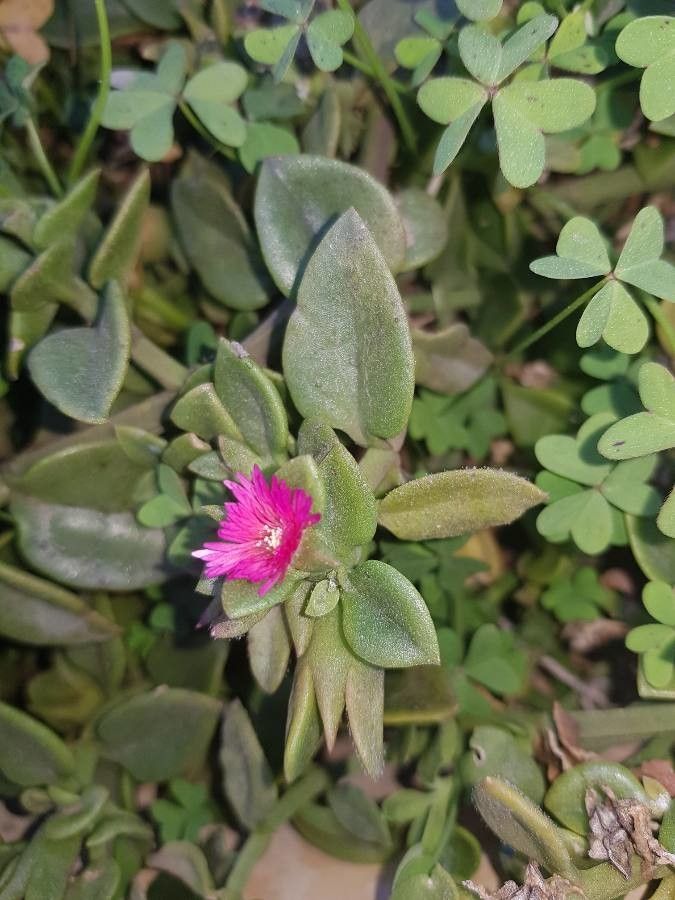
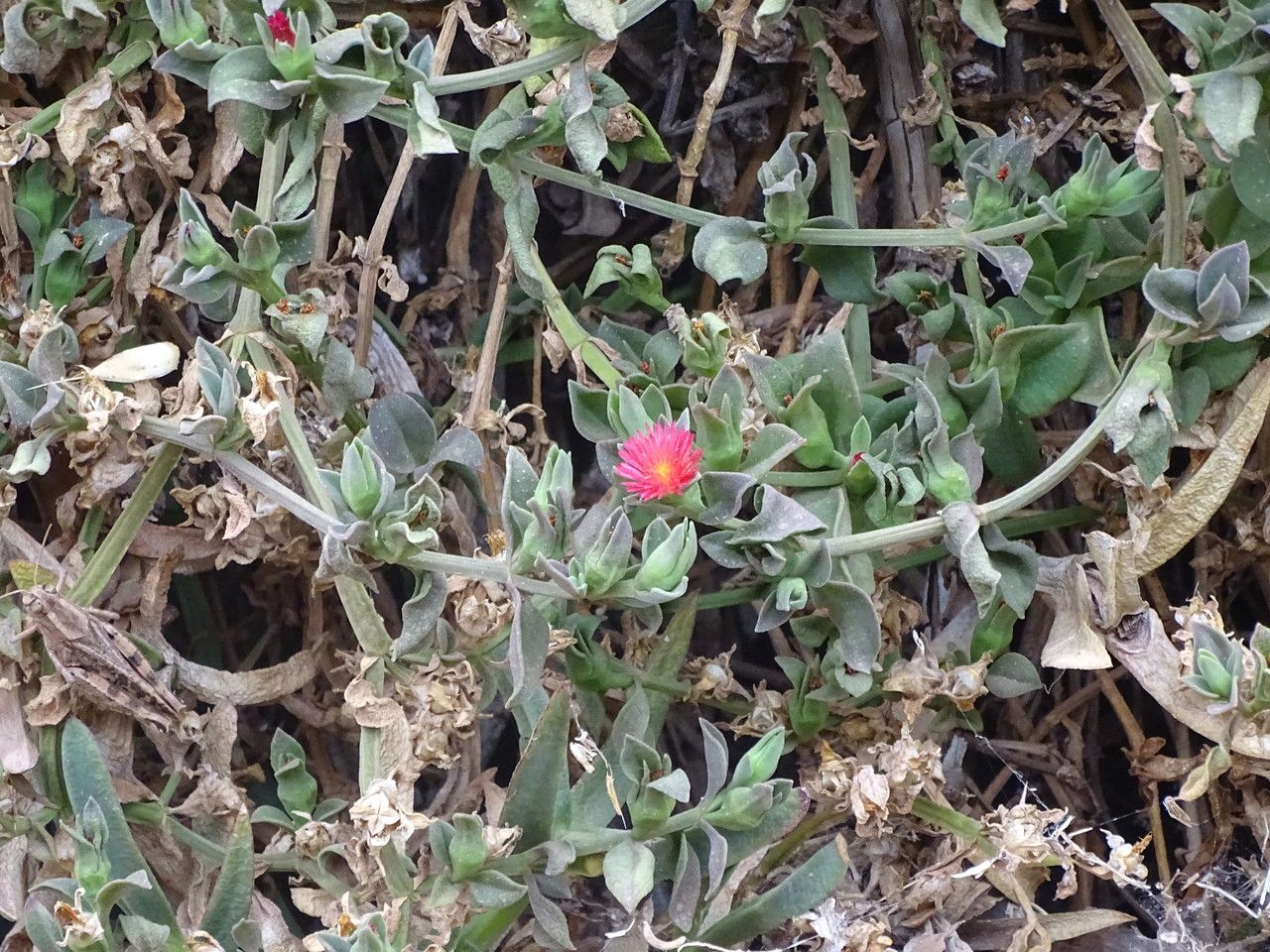
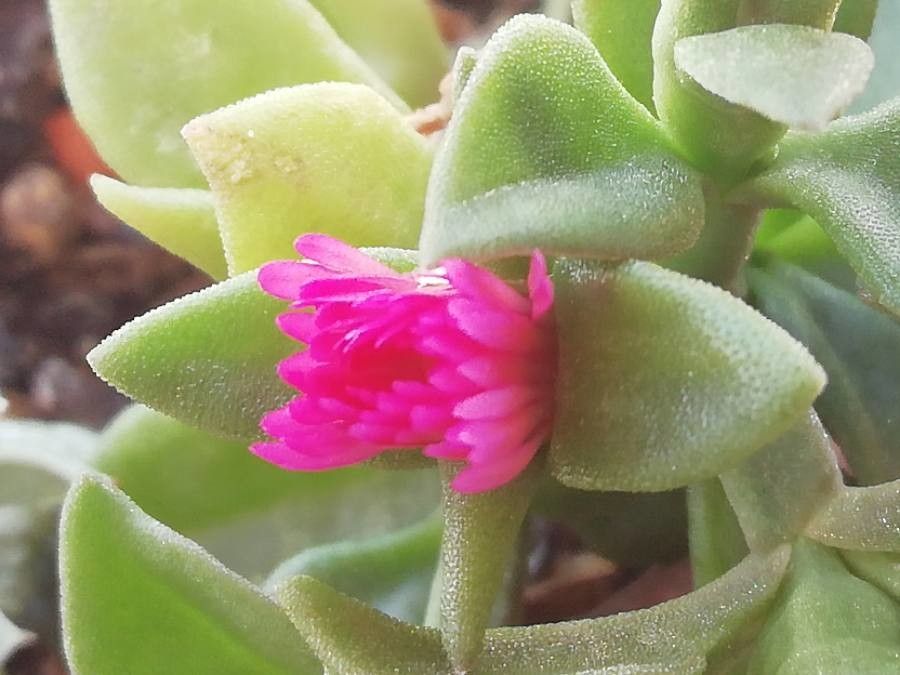
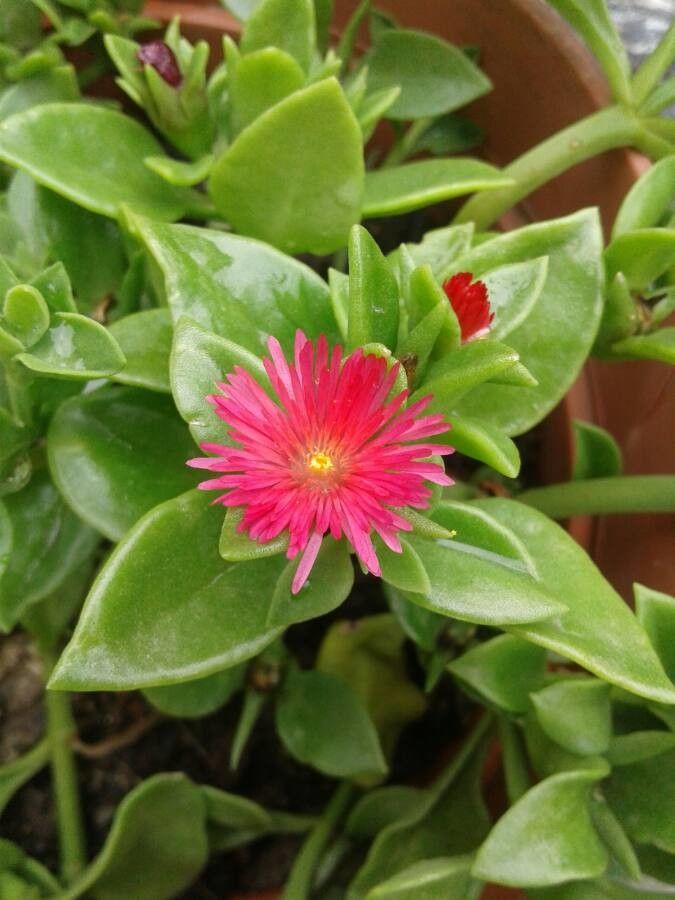
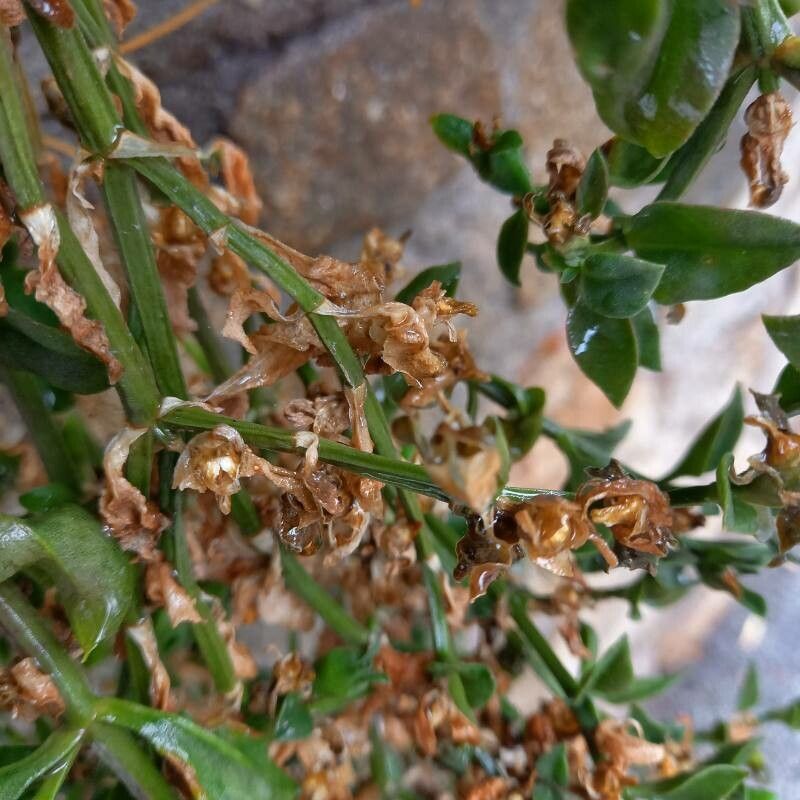
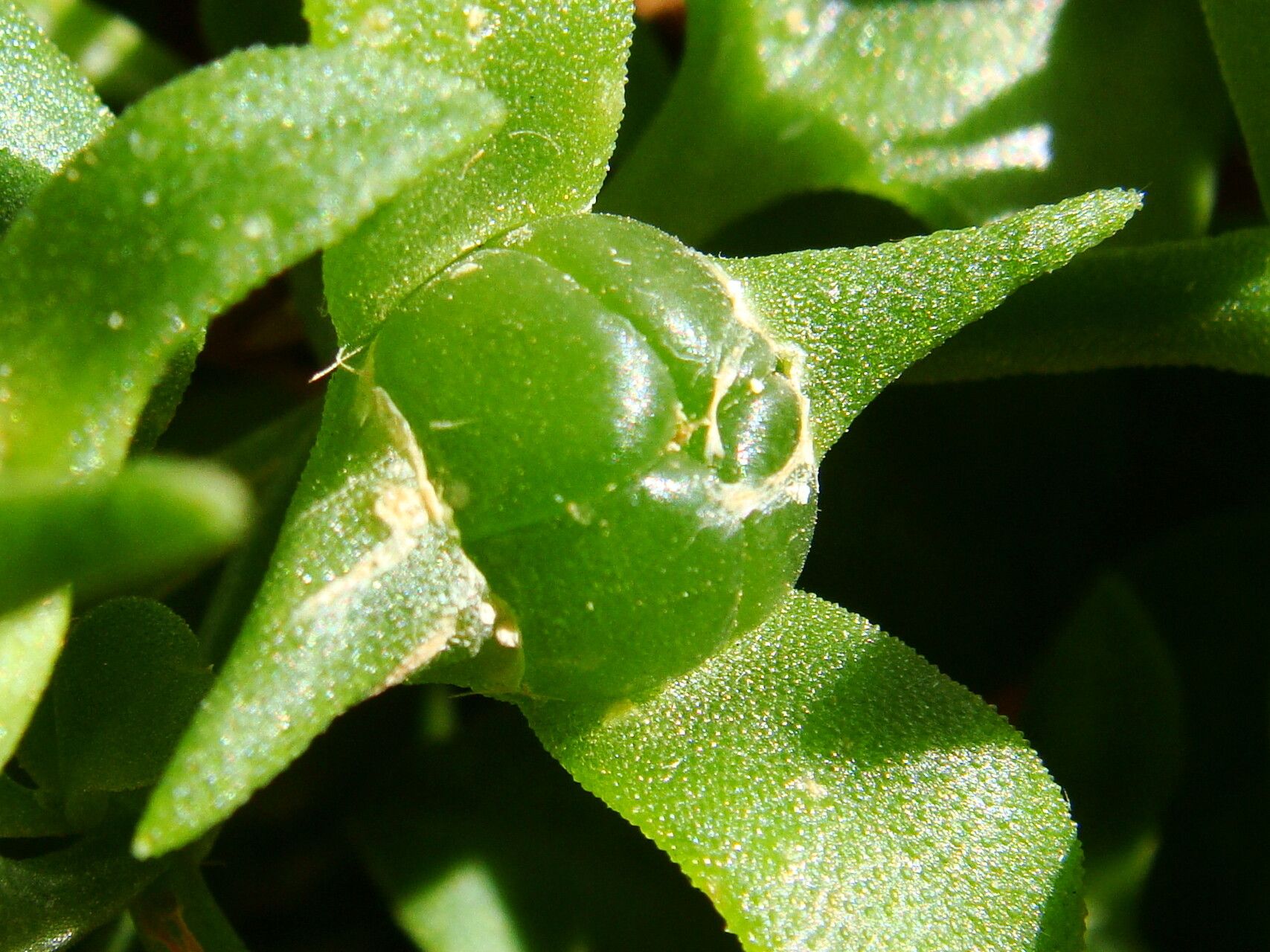
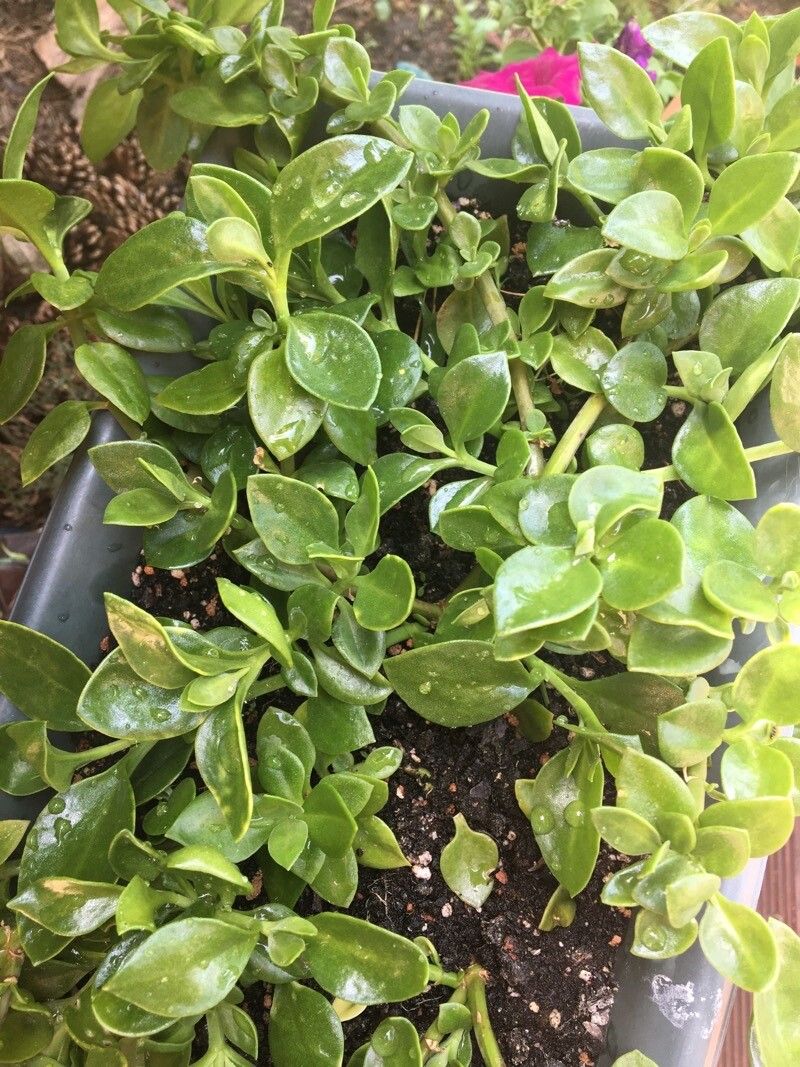
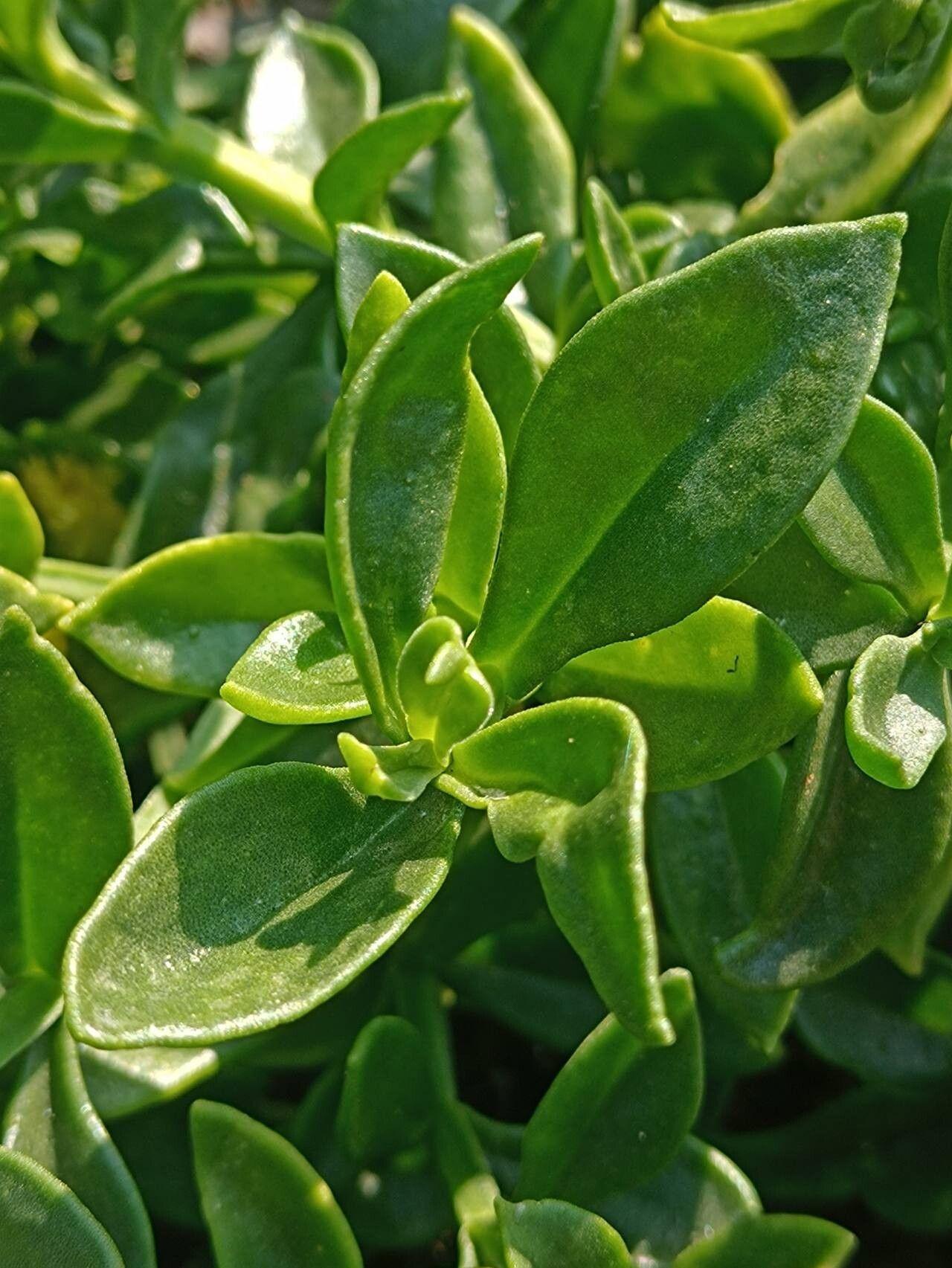
Mesembryanthemum cordifolium formerly known as Aptenia cordifolia is a species of succulent plant in the iceplant family. It is a creeping plant that forms a carpet of flat-growing perennial herbs in groups on the ground from a base. Genus name means middle-embryo flower in reference to the position of the ovary in the flower. The specific epithet is derived from Latin for heart-shaped leaves.
Baby sun rose has moderate disease resistance but is more sensitive to humidity and excessive watering. It also becomes more prone to disease when it lacks light and is overwatered. In terms of care, Baby sun rose is drought-tolerant and can endure long periods without watering. It needs little fertilizer and only occasional pruning. These characteristics make it suitable for people of all experience levels, especially those who prefer to spend less time on plant care or who may be away from home for extended periods. It is a good option for anyone who does not want to devote a lot of time to caring for plants but still wants an easy-to-maintain specimen.
How to keep Aptenia Cordifolia.
Light
Baby sun rose does best when it receives the full force of sunlight. It can also tolerate locations with moderate sunlight. Native to coastal cliffs and sand dunes, this plant's growth and overall health benefit from those light conditions. Too much or too little light can result in slow growth and may weaken its health.
Water
This hardy succulent can survive extreme drought and rainfall, so irregular watering is not a problem. For the best results, only water your Baby Sun Rose once the soil completely dries out.
Humidity
This plant prefers dry conditions, so don't mist it. However, watering it less often can also thrive in higher humidity.
Temperature
The baby sun rose thrives in warm climates and is native to hot, arid regions. It prefers temperatures between 68 to 100 ℉ (20 to 38 ℃). In summer it can tolerate higher heat, but in winter it is best kept around 60 to 70 ℉ (15 to 21 ℃) to prevent frost damage.
Fertilizer
For Baby sun rose, apply light doses of fertilizer 1-2 times a year during the growing season. Do not fertilize in winter or in summer when the plant is dormant. For repotted plants, cut back on fertilizer and wait a couple of months after repotting before feeding. Fertilizing helps maintain healthy growth and encourages blooms.
Pruning
Though pruning is not typically necessary, you may trim your Baby Sun Rose to your desired shape and size. Do this early in the spring and focus on removing any damaged stems.
Pot & Repot
When repotting Baby sun rose, pick a pot slightly bigger than the current one that provides good drainage. Use a gritty, well-draining succulent or cactus mix. Gently remove the plant from its old pot, brush away excess soil, and place it at the same planting depth. Wait a few days before watering so any root injury can heal. Repot in spring or fall and keep it in a brightly lit spot.
Botanical profile.
- Plant Type
- Succulent, Herb
- Life Cycle
- Perennial
- Genus
- Aptenia
- Family
- Aizoaceae
- Hardiness Zone
- 10-11
- Mature Height
- 15 cm
- Mature Spread
- 58 cm
- Leaf Color
- Green
- Leaf Type
- Evergreen
- Flower Color
- Purple, Red, Yellow, Pink, White, Orange
- Flower Size
- 1.02 cm
- Bloom Time
- Spring, Late summer, Fall, Winter
- Planting Time
- Spring, Summer, Autumn
- Harvest Time
- Spring, Early summer, Fall, Winter
- Native Area
- South Africa
Other names.