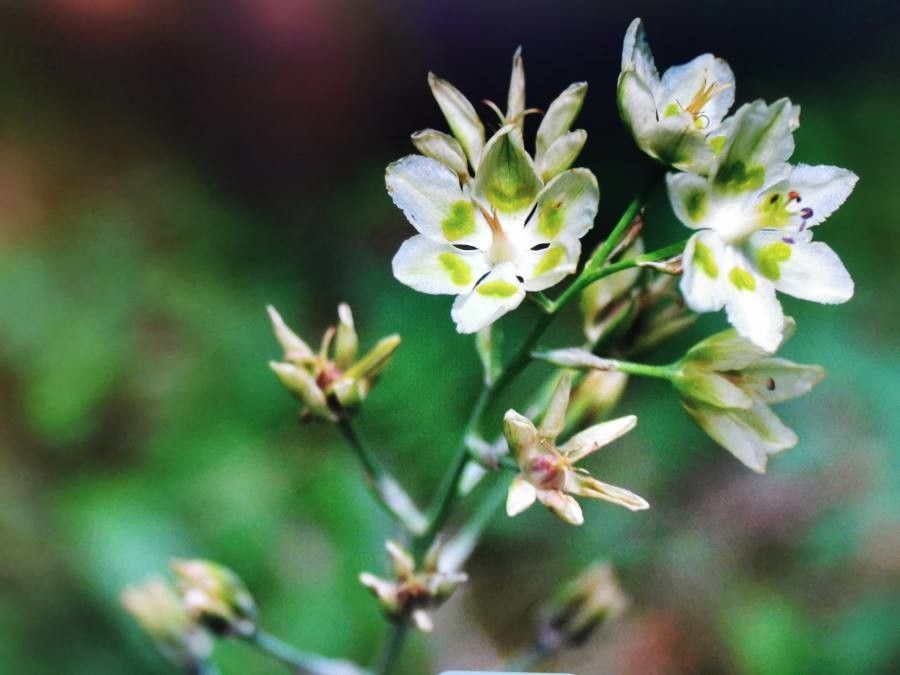
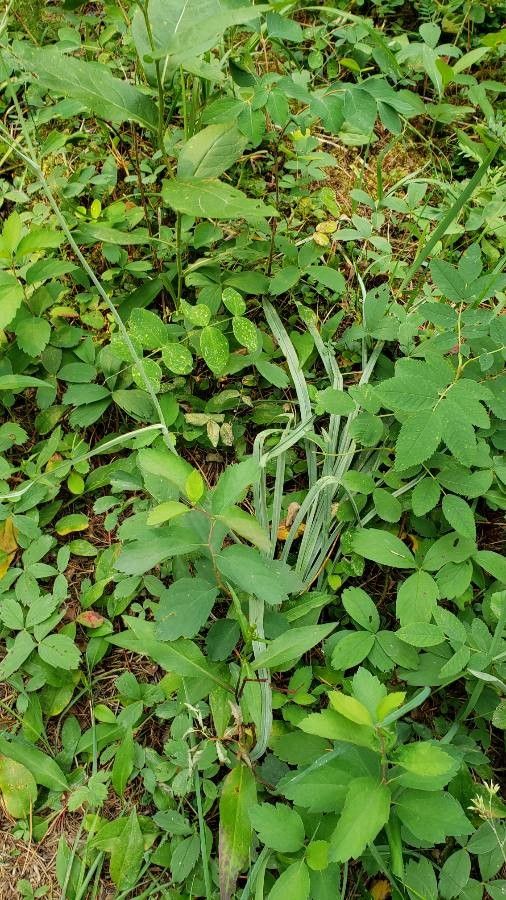
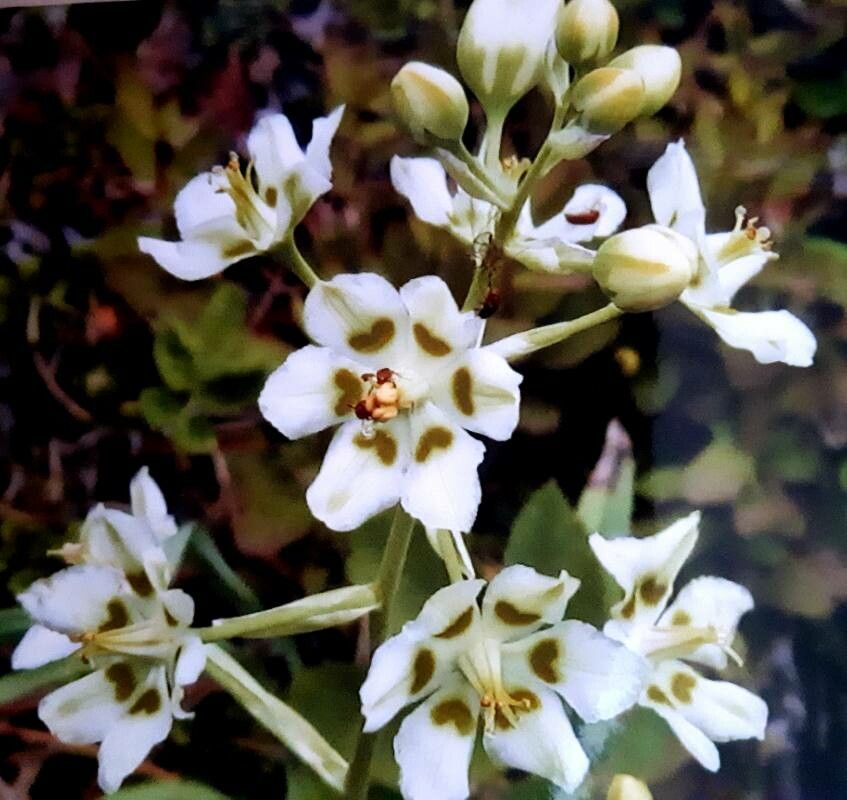
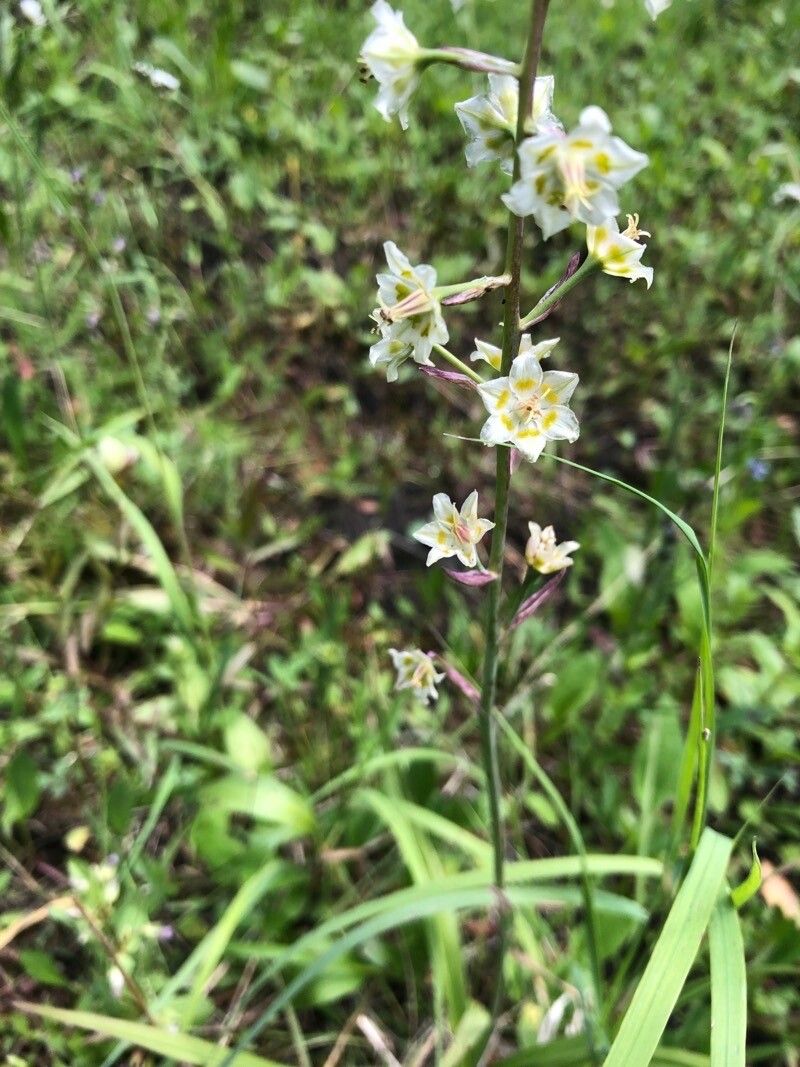
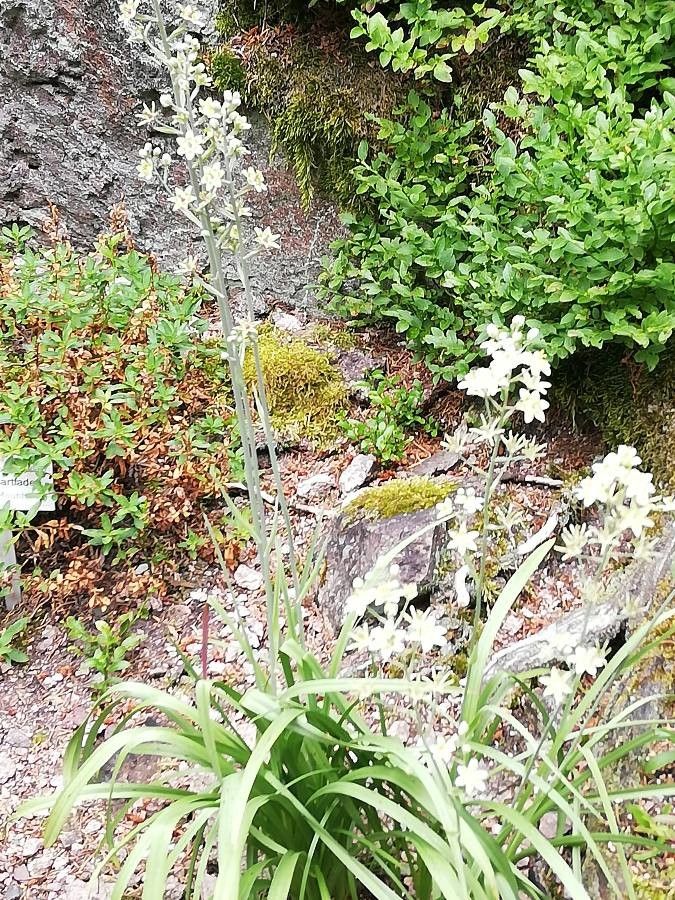
Anticlea elegans, formerly Zigadenus elegans, is also known as mountain deathcamas, elegant camas or alkali grass. It is not a grass (though its leaves are grass-like), but belongs to the trillium family, Melanthiaceae. It has white lily-like flowers and two-pronged, greenish-yellow glands on each petal (the shape of which can help in distinguishing it from other members of the genus). It is widely distributed throughout North America and occurs in many habitats. Plants on the western side of the continent tend to be smaller in size than their eastern counterparts, but have more densely clustered flowers. The plant is extremely poisonous.Meriwether Lewis, while on the course of his expedition in 1806, collected a specimen near the Blackfoot River.
White camas is fairly disease-resistant and typically does not suffer from illnesses. However, it can be vulnerable to pests and diseases present in its environment. These problems are generally mild. In terms of care, this plant needs a moderate level of maintenance. It should be pruned regularly to maintain a neat appearance and healthy growth. Fertilizing can also help encourage flowering. White camas is appropriate for anyone with outdoor space, such as a garden or patio, and does not require extensive care experience. It may need more attention when grown indoors.
How to keep Anticlea Elegans.
Light
White camas requires considerable sunlight for best growth and health, though it can tolerate periods of reduced light. Its development in habitats with abundant sun underlies its preference for sunny conditions. Excessive or insufficient light can cause reduced vigor or growth problems. Different sunlight levels at various growth stages are not necessary.
Water
White camas naturally grows in open woodlands with well-drained soils and thrives when it receives moderate moisture. It prefers consistent watering without becoming waterlogged. For optimal health, water it weekly. As an herbaceous perennial, white camas benefits from natural rainfall patterns, syncing its growth with the seasons.
Temperature
White camas originates from temperate regions and does best in temperatures from 41 to 95°F (5 to 35°C). During colder seasons, it is advised to provide extra warmth to keep the plant healthy.
Fertilizer
The best time to fertilize a White camas is in early spring, when it is coming out of dormancy and beginning active growth. Fertilizing supplies essential nutrients for healthy growth. Although White camas has relatively low fertilizer requirements, applying fertilizer annually can improve its survival and encourage better, longer-lasting flowers.
Pruning
White camas is known for its beautiful white flowers and slender leaves. To keep the plant healthy, prune it in early spring by removing spent blooms and dead foliage. This will encourage new growth and help prevent disease. Regular pruning not only supports healthy growth and enhances blooming but also contributes to the plant's overall vitality and longevity.
Botanical profile.
- Plant Type
- Herb
- Life Cycle
- Perennial
- Genus
- Anticlea
- Family
- Melanthiaceae
- Hardiness Zone
- 5-9
- Mature Height
- 15 cm to 91 cm
- Mature Spread
- 20 cm
- Leaf Color
- Green, Gray, Silver
- Leaf Type
- Deciduous
- Flower Color
- White
- Flower Size
- 2.54 cm
- Bloom Time
- Early summer, Mid summer
- Planting Time
- Spring, Summer, Autumn
- Harvest Time
- Late summer, Early fall
Other names.
Reader questions.
What are the sun requirements for white camas?
White camas thrives with substantial sunlight exposure for optimal growth and health, indicating its sun-loving nature due to its origin in sunny environments. It requires above 6 hours of sunlight for 'full sun' conditions and about 3-6 hours for 'partial sun.' It's essential to monitor the sunlight patterns in your garden to ensure plants get the right balance of light and shade. However, white camas shows tolerance for periods of reduced solar illumination, although over or underexposure may affect its vitality or cause growth issues.
What is the native environment of White camas (Anticlea elegans)?
White camas (Anticlea elegans) is native to temperate environments. It thrives best in temperatures ranging from 41 to 95°F (5 to 35°C). These plants can handle colder seasons without special frost protection measures, but it is suggested to provide additional warmth to maintain plant health during extreme cold, especially if temperatures are expected to drop below -25°C.
How can artificial lighting supplement sunlight for white camas indoors?
Indoor white camas plants benefit from adequate lighting when natural sunlight is insufficient. Artificial lighting is crucial for promoting healthy growth, especially in winter or less sunny spaces. LED lights are an excellent choice, offering customized wavelengths needed by plants. For full sun plants, 30-50W/sq ft is recommended, 20-30W/sq ft for partial sun plants, and 10-20W/sq ft for full shade plants. Place the light source 12-36 inches above the plant and mimic natural daylight hours by providing 8-12 hours of light per day.
How should White camas be cared for in winter?
During winter, White camas exhibits strong cold resistance and usually does not require special frost protection measures. If winter temperatures are expected to drop below -25°C, however, it's important to provide cold protection by covering the plant with soil or straw. Additionally, before the first freeze of autumn, watering the plant abundantly to ensure the soil remains moist and enters a frozen state can help prevent drought and water scarcity for the plant during winter and early spring.
What are the signs of improper lighting for white camas?
White camas displays several symptoms when exposed to inadequate lighting, including smaller new leaves, leggy or sparse growth, faster leaf drop, slower or no new growth, and lighter-colored or yellowing leaves (chlorosis). Excessive sunlight exposure can lead to symptoms such as sunscald, leaf curling, wilting, leaf scorching, and a general reduction in plant health and photosynthetic capacity.
What are the symptoms of White camas being exposed to temperatures too low or high?
For temperatures too low, White camas is cold-tolerant and thrives best above 5°C. During winter, it should be kept above -20°C to avoid issues. If temperatures fall below -25°C, there may not be noticeable changes during winter, but a decrease in sprouting or even no sprouting might occur in spring. For temperatures too high, during summer, White camas should be kept below 35°C. Exceeding 38°C can cause the leaves to lighten in color, become prone to curling, get sunburned, and in severe cases, the plant wilts and becomes dry.
How can I address lighting issues for white camas?
To address lighting issues for white camas, gradually increase light exposure for optimal growth. For indoor plants, move them to a sunnier location weekly, aiming for at least 6 hours of direct sunlight daily. Use a south-facing window or artificial light sources like desk or ceiling lamps for at least 8 hours daily. For outdoor plants, avoid sudden changes in light intensity by gradually moving them to sunnier spots. If sunlight is obstructed, consider pruning or transplanting during the plant's dormant period for better light access. Note that parts of the plant affected by insufficient light may not recover, but new growth will be healthy after adjusting light exposure.
What solutions are recommended for White camas exposed to extreme temperatures?
When White camas is exposed to low temperatures that inhibit sprouting, removing parts that have failed to sprout in the spring is recommended. For high temperatures causing sunburn or drying, trimming the affected parts, moving the plant to a shaded location, or using a shade cloth is advised. Additionally, watering the plant in the morning and evening to keep the soil moist can help mitigate the effects of high temperatures.