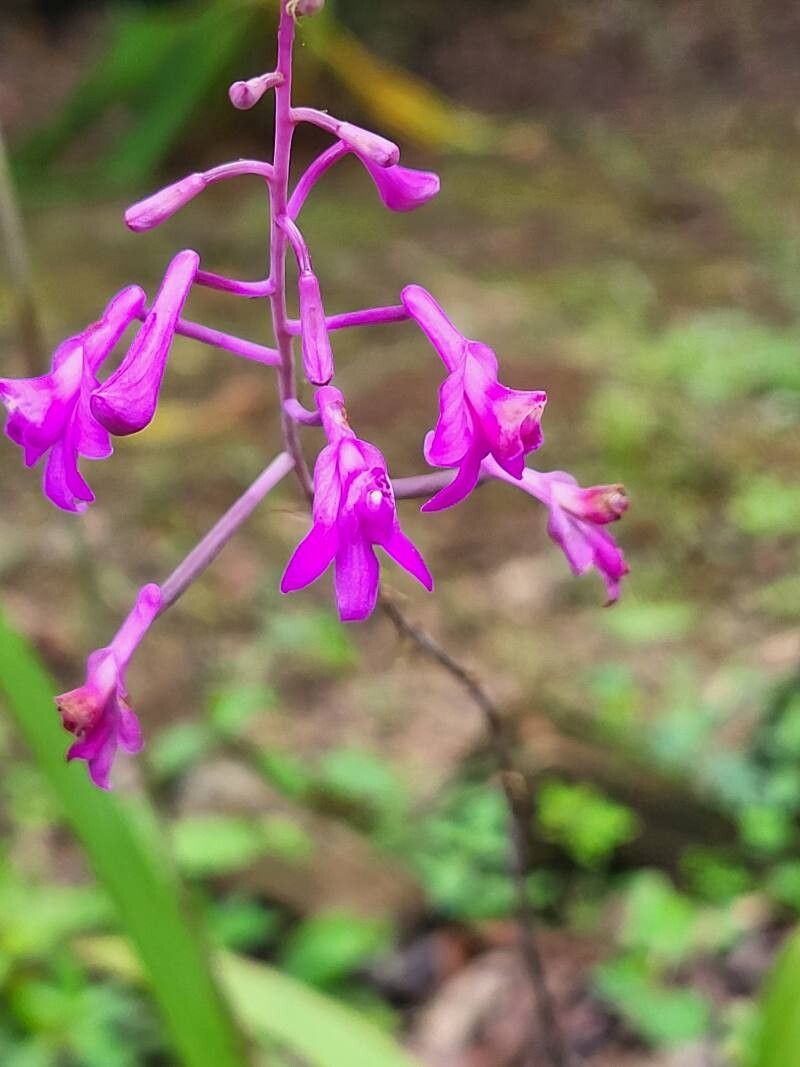
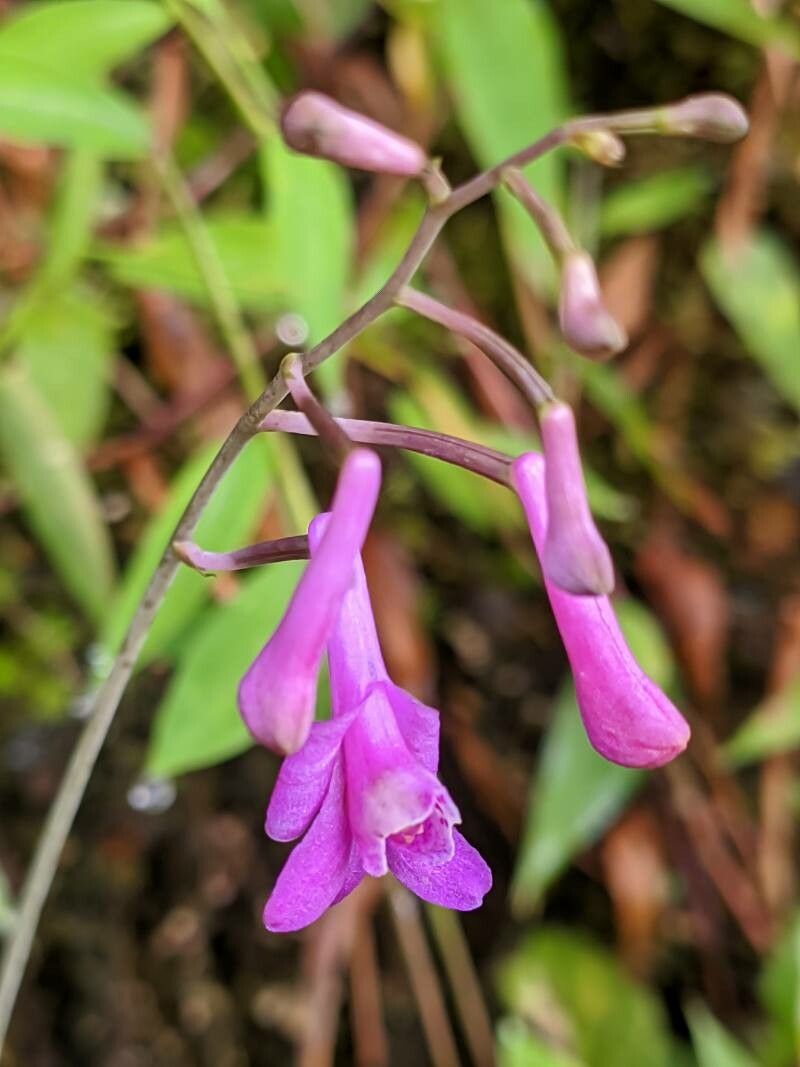
Anthogonium is a genus of orchids (family Orchidaceae). At the present time (May 2014), only one species is recognized, i.e., Anthogonium gracile found in India, Assam, Bangladesh, Nepal, Bhutan, Myanmar, Laos, Cambodia, Vietnam, Thailand, Malaysia, Guangxi, Guizhou, Tibet, and Yunnan.
Slender anthogonium typically has strong resistance to disease and is affected by relatively few insect pests. Its care is considered difficult because it requires high humidity while also needing good ventilation and minimal presence of harmful pathogens. Overwatering can cause root rot. Although growing Slender anthogonium is suitable for anyone, keeping it healthy and inducing it to flower again requires greater cultivation experience.
How to keep Anthogonium Gracile.
Light
Slender anthogonium comes from the understory of tropical forests or from among rocks that provide natural shade. It prefers partial sun but can tolerate full sun, adapting well to varying light conditions.
Water
The slender anthogonium grows best in consistently moist conditions and can tolerate moderate drought. It prefers to be watered weekly, especially when grown indoors under controlled conditions. To prevent root rot, which can occur if the plant is over-watered, it's important to carefully monitor the soil's moisture levels.
Temperature
Slender anthogonium prospers in regions where temperatures usually range from 68 to 100 °F (20 to 38 ℃). It is important to adjust temperature with seasonal changes and maintain those temperature levels for optimal growth.
Fertilizer
Proper fertilization is essential for the health and appearance of Slender anthogonium. Fertilize Slender anthogonium in the summer, repeating the application monthly throughout the season. Nutrients supply energy for growth and help maintain the plant's structures. Fertilization improves Slender anthogonium's flower display, ensuring the best blooms.
Pruning
To maintain the vigor and health of slender anthogonium, it is important to follow several key practices. Begin by carefully pruning the plant in early to late spring to remove any dead stems and encourage new growth. Trimming faded flowers also promotes additional blooms. Make sure to use clean tools to prevent the spread of disease, and regularly monitor the plant for any signs of pests. Additionally, pruning helps maintain the plant's shape. By following these steps, you can optimize the health and vitality of your slender anthogonium.
Botanical profile.
- Plant Type
- Herb
- Life Cycle
- Perennial
- Genus
- Anthogonium
- Family
- Orchidaceae
- Hardiness Zone
- 9-11
- Mature Height
- 55 cm
- Mature Spread
- 20 cm to 30 cm
- Leaf Color
- Green
- Leaf Type
- Deciduous
- Flower Color
- Pink
- Flower Size
- 4.06 cm to 25.40 cm
- Bloom Time
- Early summer, Mid summer
- Planting Time
- Spring, Summer
- Harvest Time
- Late summer, Early fall
- Native Area
- Nepal, India, Cambodia, Vietnam, Myanmar, Bhutan, Bangladesh, Laos, Thailand, China
Reader questions.
What are the sunlight requirements for Slender Anthogonium?
Slender Anthogonium thrives in partial sun, requiring about 3-6 hours of sunlight per day, but can also tolerate full shade, which is less than 3 hours of sunlight. It's important to watch how sunlight moves through your garden to ensure plants receive the ideal balance of light and shade. Additionally, Slender Anthogonium can adapt well to varying light conditions, whether in the understory of tropical forests or among rocks in natural shade, and even in full sun in cooler weather.
What is the optimal temperature range for growing Slender anthogonium?
Slender anthogonium, a tropical plant known botanically as Anthogonium gracile, thrives best in a temperature range between 68 to 100 °F (20 to 38 °C). To ensure the plant grows optimally, it's important to maintain these temperature conditions, especially with seasonal changes. During winter, if temperatures are expected to drop below 0°C, it's advisable to bring Slender anthogonium indoors. Keeping the indoor environment above 20°C and near a south-facing window for ample sunlight, while also maintaining humidity through misting or a humidifier, benefits the plant greatly. For outdoor overwintering orchids, finding a sheltered sunny position or using protection like plastic film or fabric coverings can help manage the cold.
How can artificial lighting be used for Slender Anthogonium?
When natural sunlight is insufficient, artificial lighting provides a vital solution for Slender Anthogonium's growth, especially indoors or during less sunny periods. LED lights are recommended due to their customizable wavelengths specific to plant needs. Full sun plants require 30-50W/sq ft, partial sun plants need 20-30W/sq ft, and full shade plants need 10-20W/sq ft of artificial light. The light source should be placed 12-36 inches above the plant for 8-12 hours per day to mimic natural sunlight.
How should you care for Slender anthogonium in low temperature conditions?
In low temperature conditions, Slender anthogonium is vulnerable as it prefers warmer climates, thriving above 20°C. It must be kept above 0°C in winter to avoid damage. Exposure to temperatures below -5°C can cause the leaves to suffer from water-soaked necrosis, wilting, and drooping. If this occurs, trim off the frostbitten areas and move the plant indoors to a warmer location. Placing it near a south-facing window will ensure it receives enough sunlight. Furthermore, avoid placing the plant near heaters or air vents to prevent the air from becoming excessively dry which could harm the plant.
What are some important symptoms of light deficiency or overexposure in Slender Anthogonium?
Symptoms of light deficiency in Slender Anthogonium include smaller new leaves, leggy or sparse growth, faster leaf drop, slower or no new growth, and lighter-colored new leaves. Overexposure can lead to chlorosis (yellowing leaves), sunscald, leaf curling, wilting, and leaf scorching. These symptoms indicate either a lack of or too much sunlight, affecting the plant's ability to photosynthesize and maintain overall health.
How do you protect Slender anthogonium from high temperatures?
During the summer, it’s crucial to keep Slender anthogonium in conditions below 38°C. Temperatures above 43°C can halt the plant's growth and lead to wilted leaves. The plant becomes more at risk for issues like root rot and can suffer from sunburn if left in direct sunlight for too long. To protect it from high temperatures, trim away any parts of the plant that are sunburned or have dried up. Relocate the plant to a shaded area, particularly away from the harsh midday and afternoon sun. Watering the plant in the morning and evening will help maintain moisture for both the plant and its surroundings, mitigating the adverse effects of high temperatures.
What solutions are available for managing light exposure in Slender Anthogonium?
To manage light exposure, gradually move Slender Anthogonium to sunnier spots each week to adapt to changing light conditions, aiming for 3-6 hours of direct sunlight daily. Use artificial light if natural sunlight is insufficient, keeping a lamp on for at least 8 hours daily, or invest in professional plant grow lights. For outdoor plants, avoid sudden changes in light intensity to prevent sunburn. Reducing obstructions, like pruning blocking trees, or transplanting to sunnier locations can also help ensure optimal growth. Note that parts of the plant affected by insufficient sunlight may not recover, but new growth will be healthy after improving light exposure.