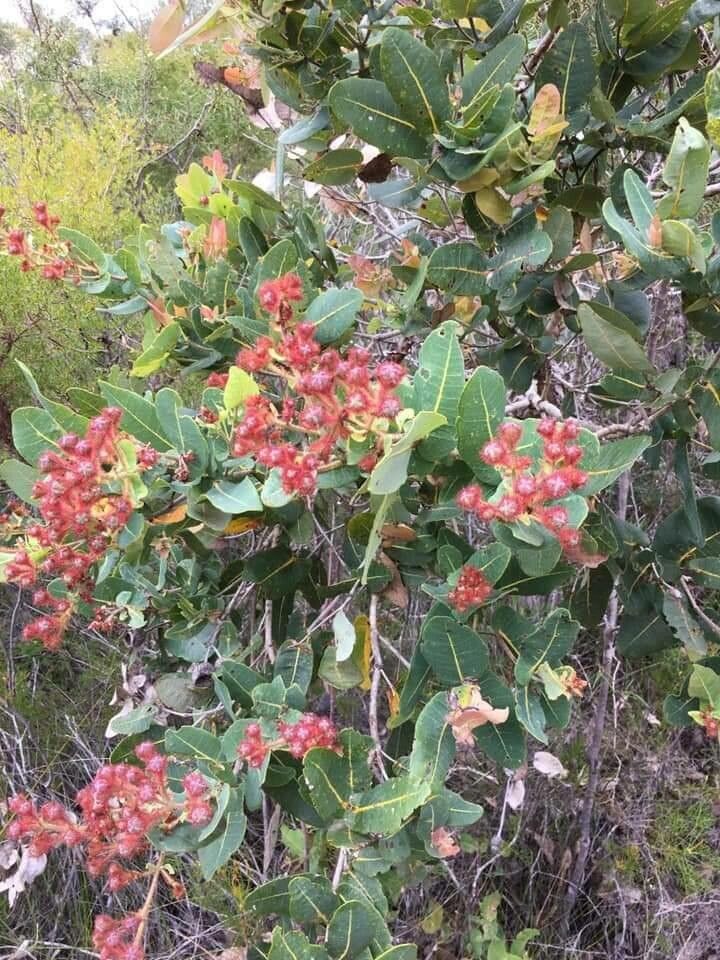
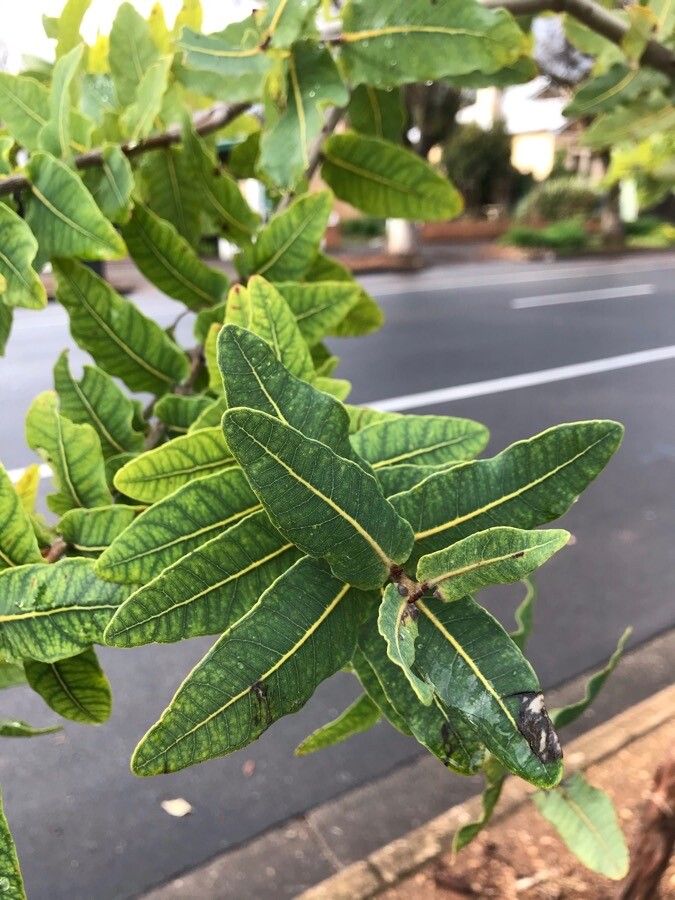
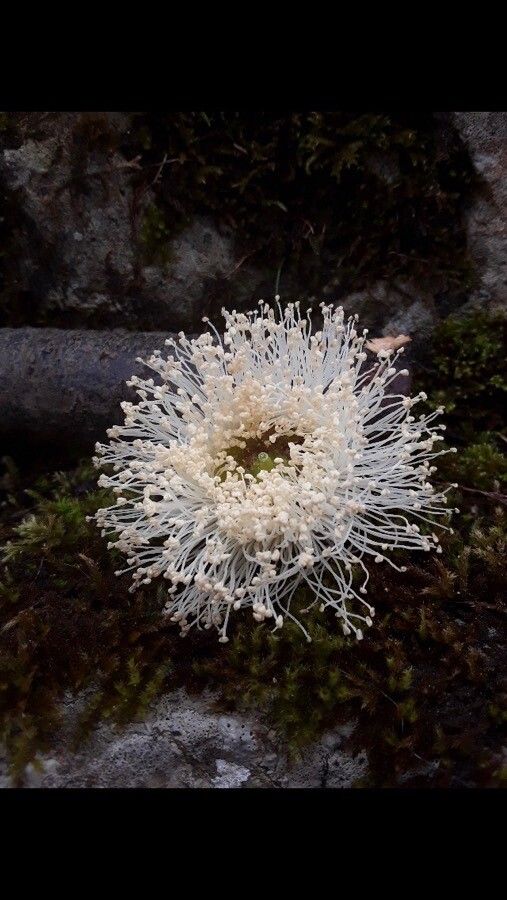
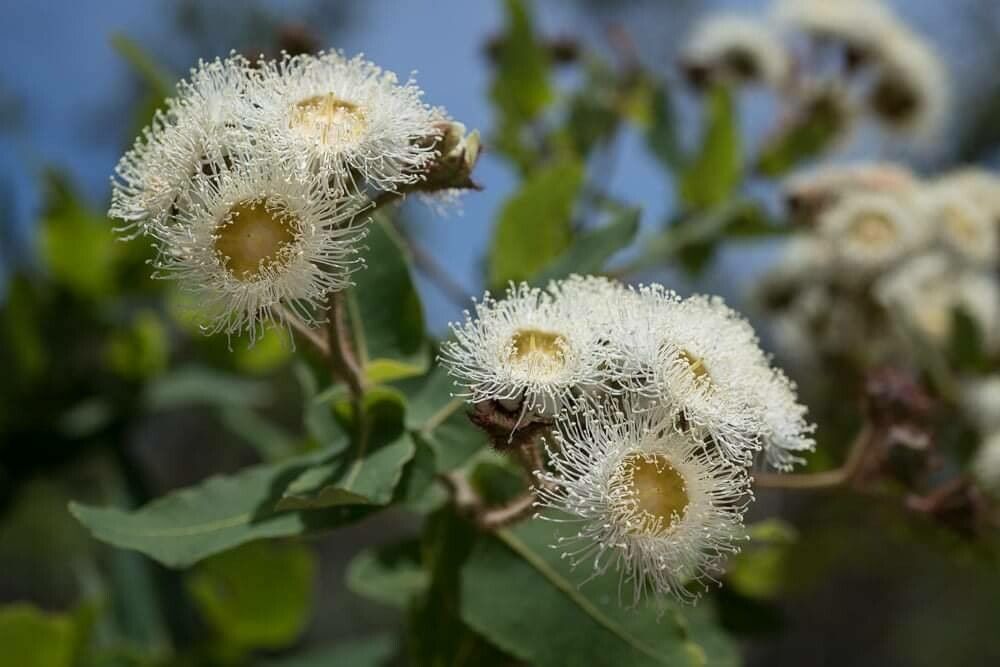
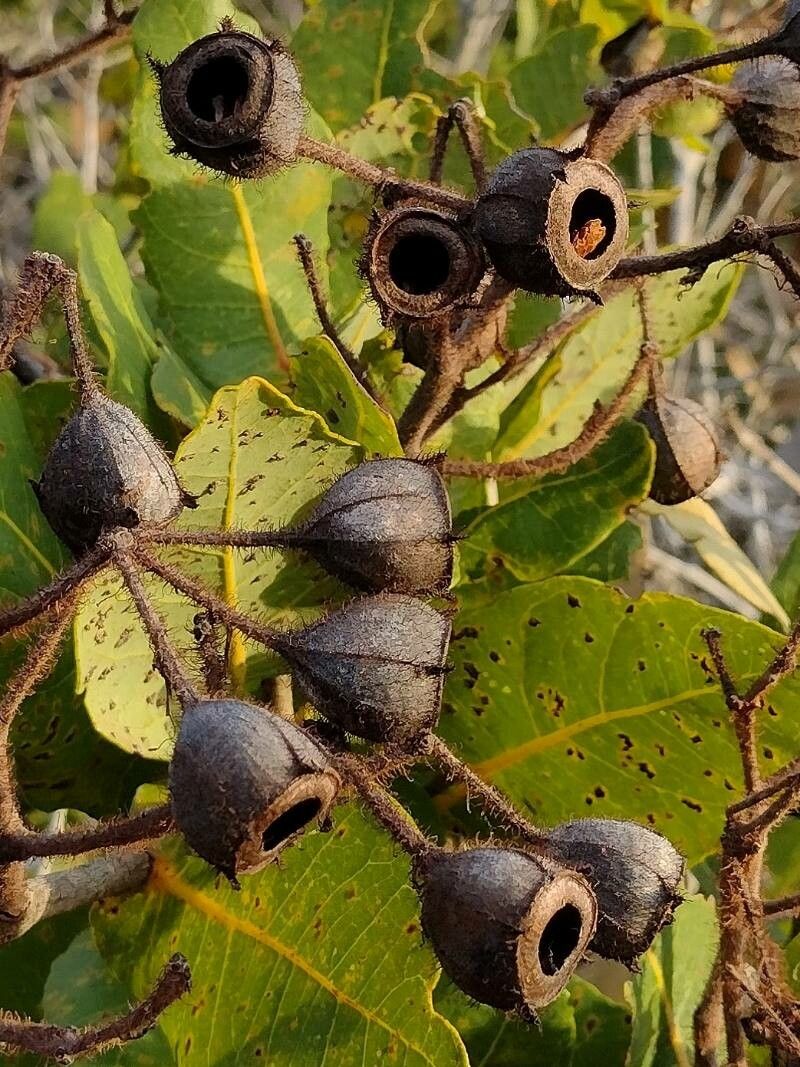
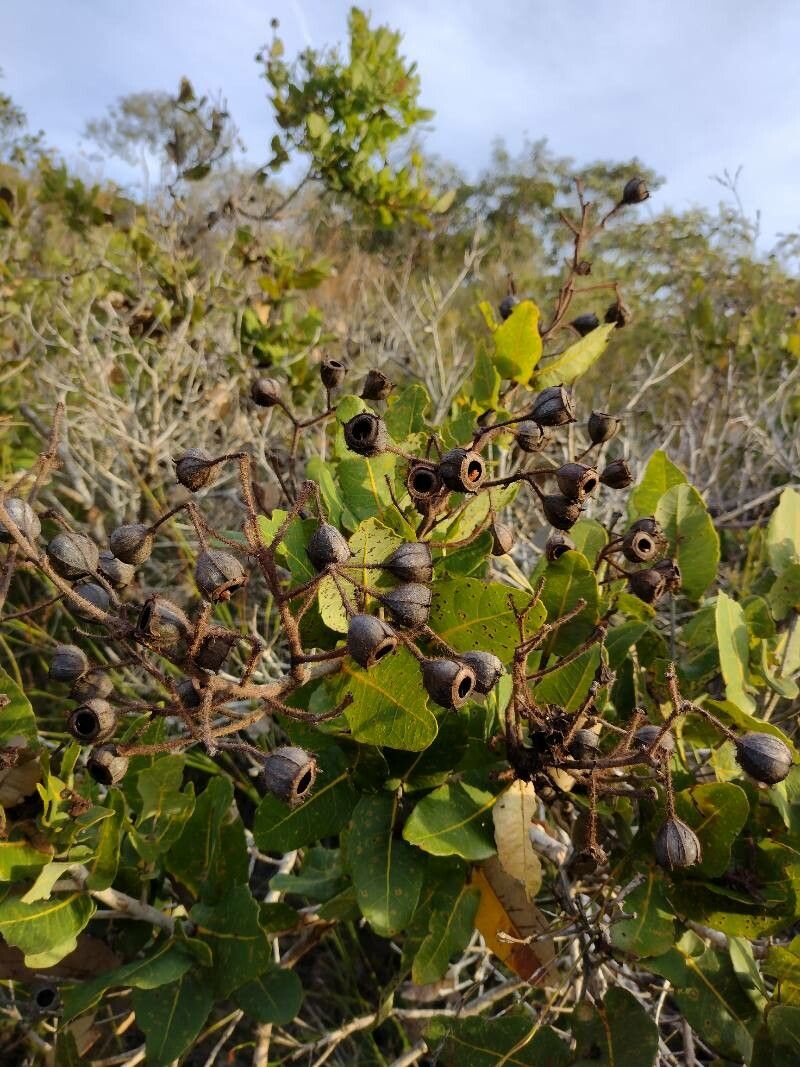
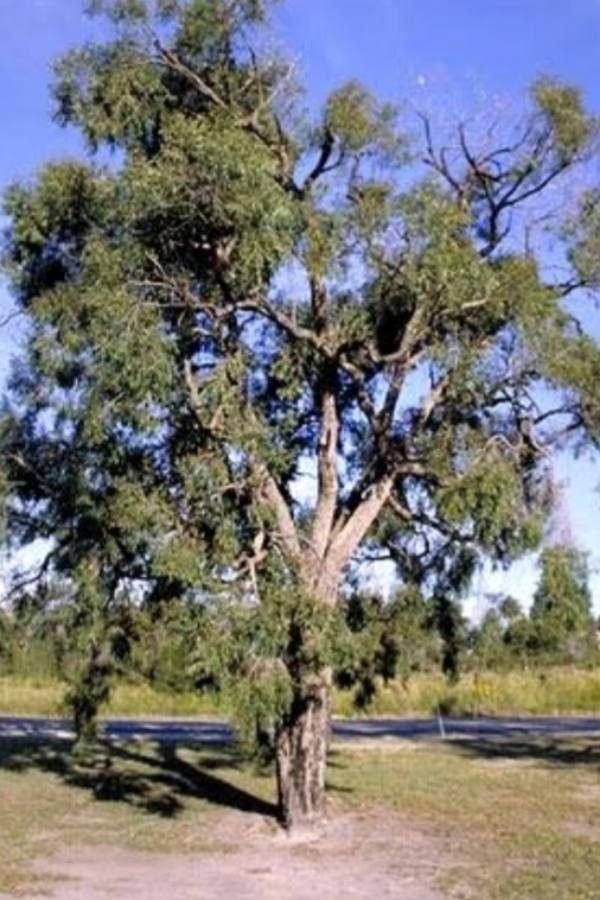
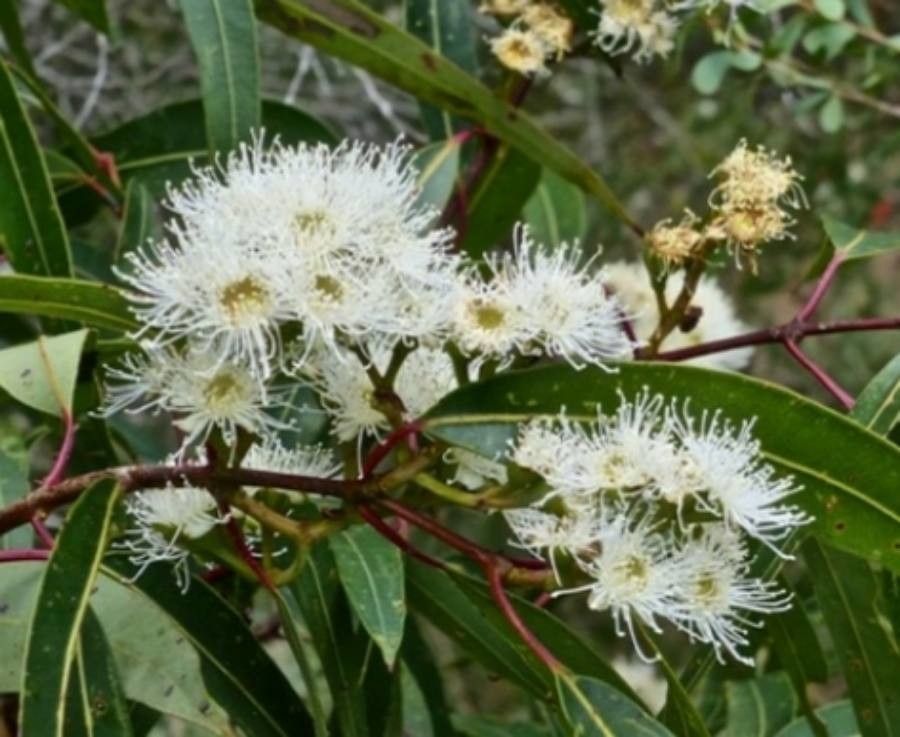
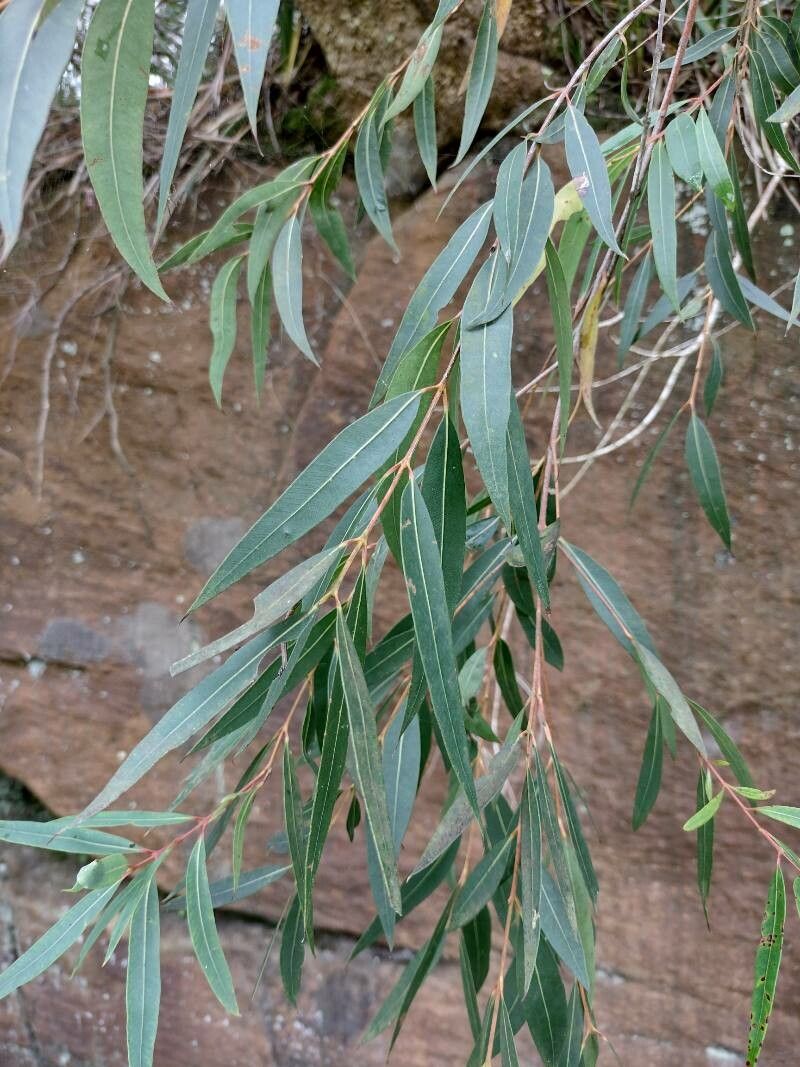
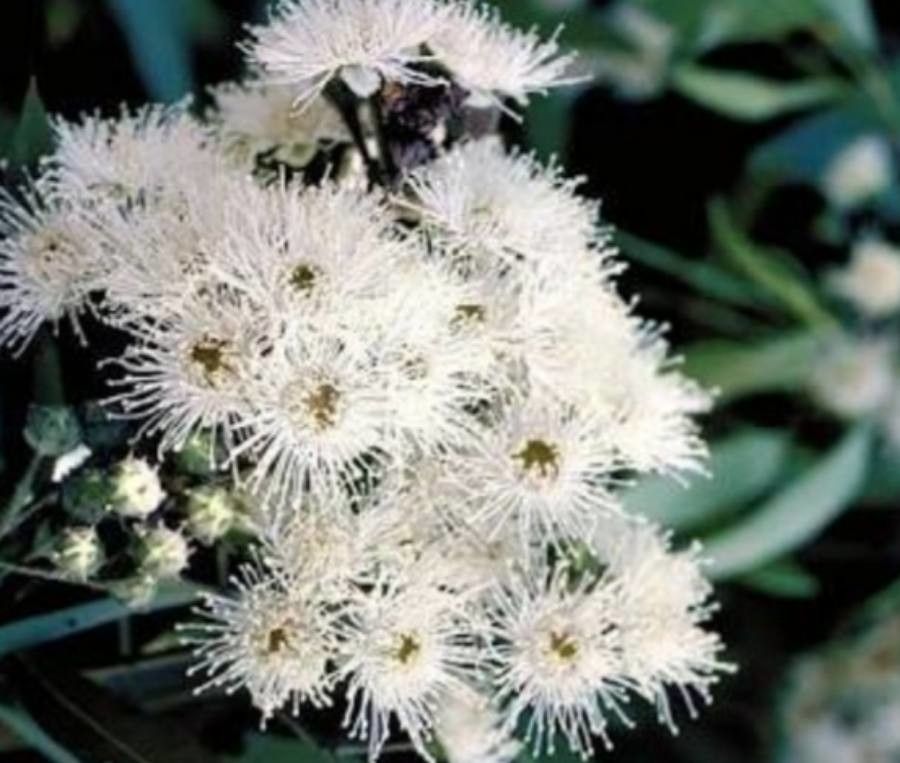
Angophora hispida grows as a mallee, or as a tree to about 7 m (25 ft) in height.A. hispida's small size, especially when compared to its Angophora and Eucalyptus relatives, leads to it being known by the common name dwarf apple. It is native to a relatively small patch of central New South Wales – from just south of Sydney up to the Gosford area. The plant's leaves are sessile (stalk-less) and hug the stem with heart-shaped bases. Its previous name – A. cordifolia – referred to these cordate leaves. Another distinctive feature are the red bristly hairs that cover the branchlets, flower bases and new growth. This leads to the specific epithet hispida (meaning "bristly").
Dwarf apple has strong disease resistance and is generally not susceptible to illnesses. In terms of care, this plant is fairly low maintenance. When grown outdoors it needs only minimal watering, and larger plants typically do not require pruning. However, smaller plants should be pruned after they finish blooming. Dwarf applet is well suited for anyone with an outdoor area, such as a garden or deck, and does not demand extensive gardening experience.
How to keep Angophora Hispida.
Light
Dwarf apple comes from open habitats, such as sunny meadows and forest edges, that provide plentiful light. It performs best in full sun but can also tolerate partial sun, adapting well to different light conditions.
Water
Dwarf apple trees, which originate from environments with varying moisture levels, are moderately drought-tolerant. They need watering every 1-2 weeks. These trees thrive outdoors and prefer well-drained soil that retains some moisture. This mimics their native conditions, supporting healthy growth without causing waterlogging.
Temperature
Dwarf apple shows good temperature adaptability, tolerating higher heat and wider temperature fluctuations. In hot conditions, you should ensure adequate watering and provide suitable shade to avoid sunburn. On the other hand, Dwarf apple is relatively sensitive to low temperatures. Although it can tolerate some cold, extremely low temperatures can cause frost damage.
Fertilizer
Timing is essential when fertilizing dwarf apple. Apply fertilizer in early spring and continue every month until early summer. The fertilizer encourages attractive blooms and provides energy during both dormant and active growth stages.
Pruning
Dwarf apple trees thrive when they are carefully pruned. The best time for pruning is during the tree's dormancy, typically from early to late winter. Start by removing any dead branches and thinning the canopy to improve airflow. Making clean cuts helps prevent disease, and regular pruning promotes healthy growth. This practice also shapes the tree into a more aesthetically pleasing form.
Botanical profile.
- Plant Type
- Tree
- Life Cycle
- Perennial
- Genus
- Angophora
- Family
- Myrtaceae
- Hardiness Zone
- 9-11
- Mature Height
- 7.01 m
- Mature Spread
- 4.88 m to 7.92 m
- Leaf Color
- Green, Yellow, Gray
- Leaf Type
- Evergreen
- Flower Color
- White
- Flower Size
- 1.02 cm to 1.27 cm
- Bloom Time
- Summer
- Planting Time
- Spring
- Harvest Time
- Late summer, Early fall, Mid fall
Other names.