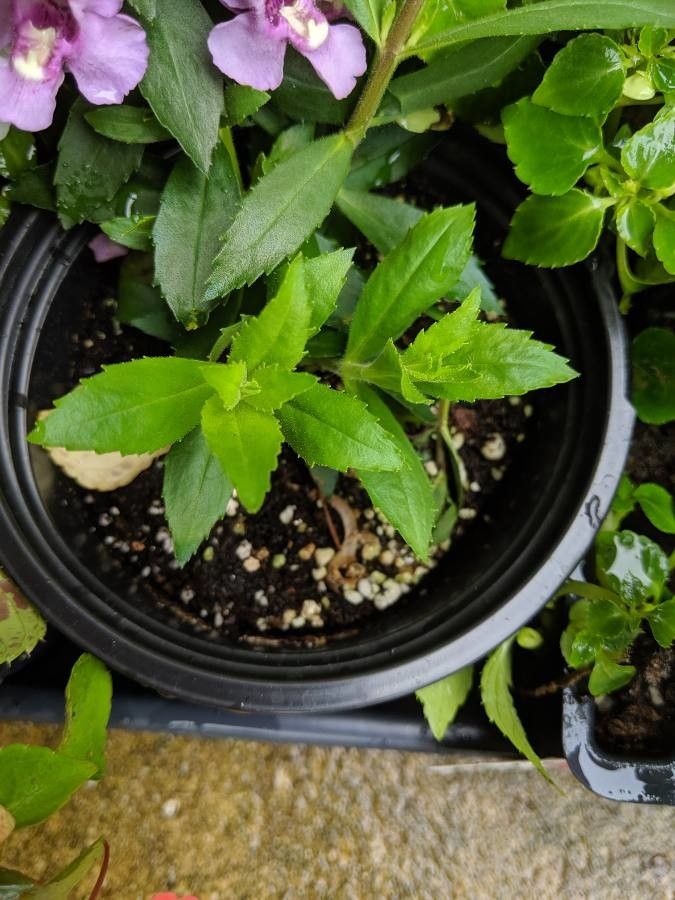
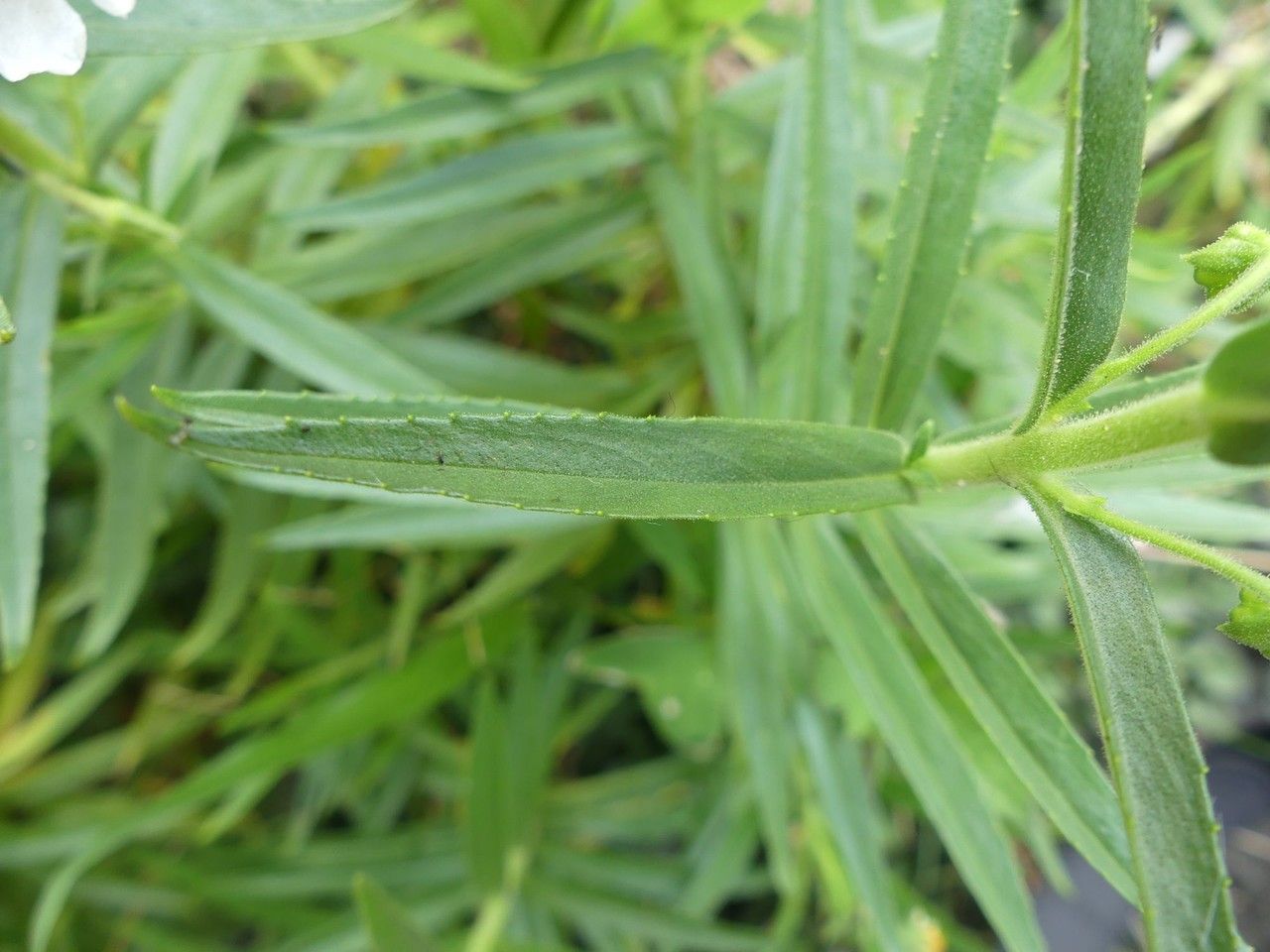
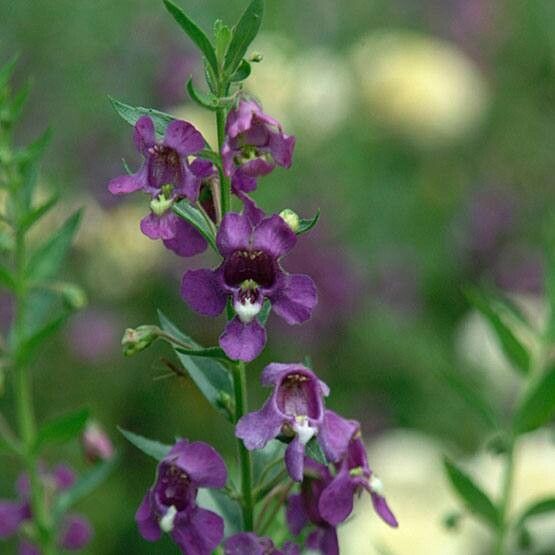
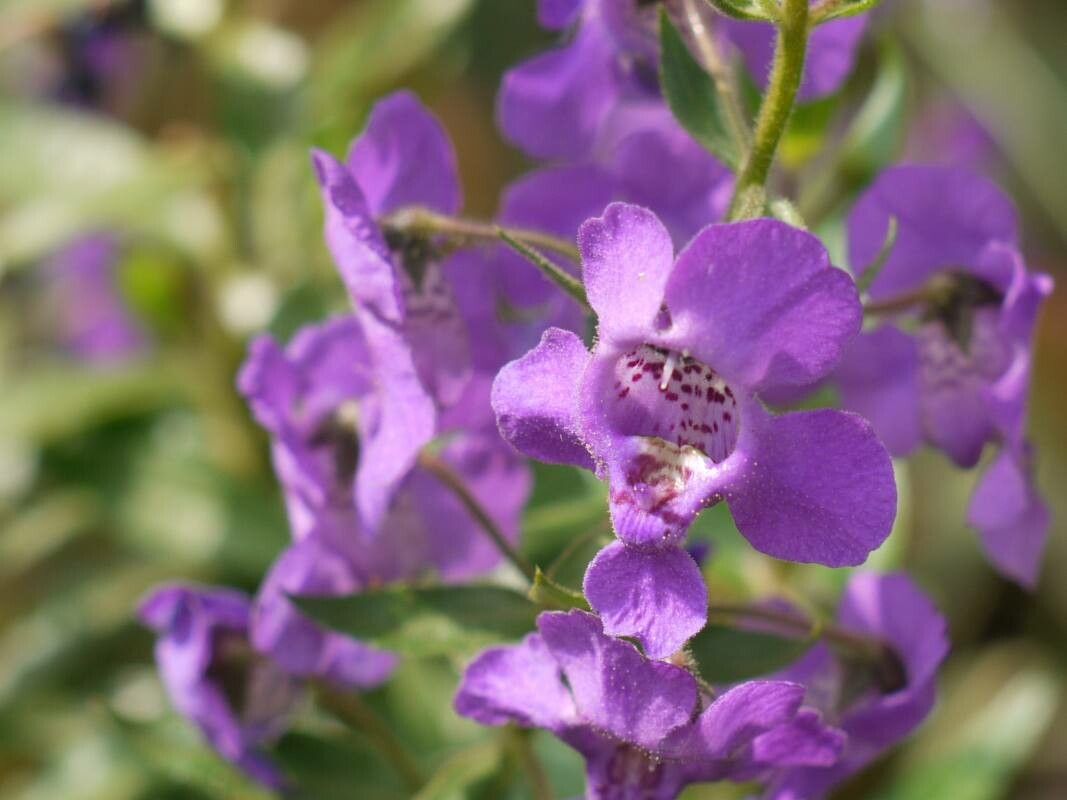
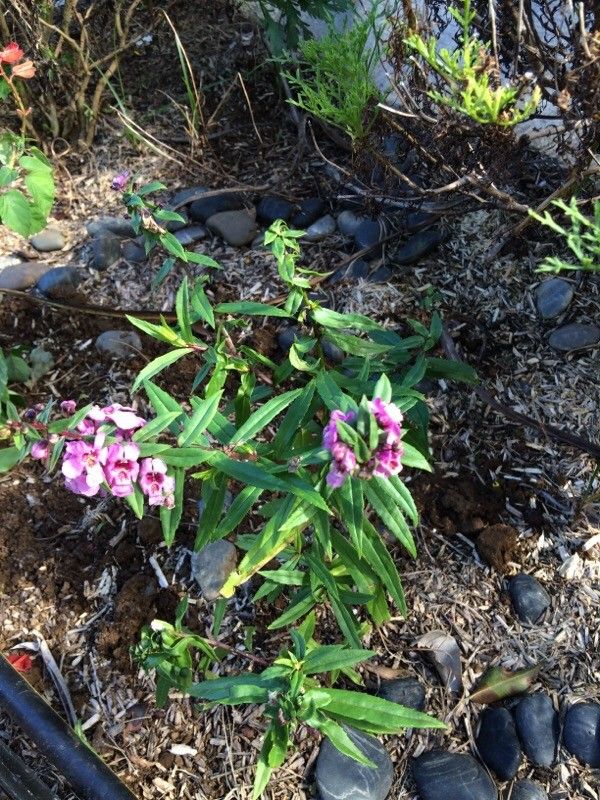
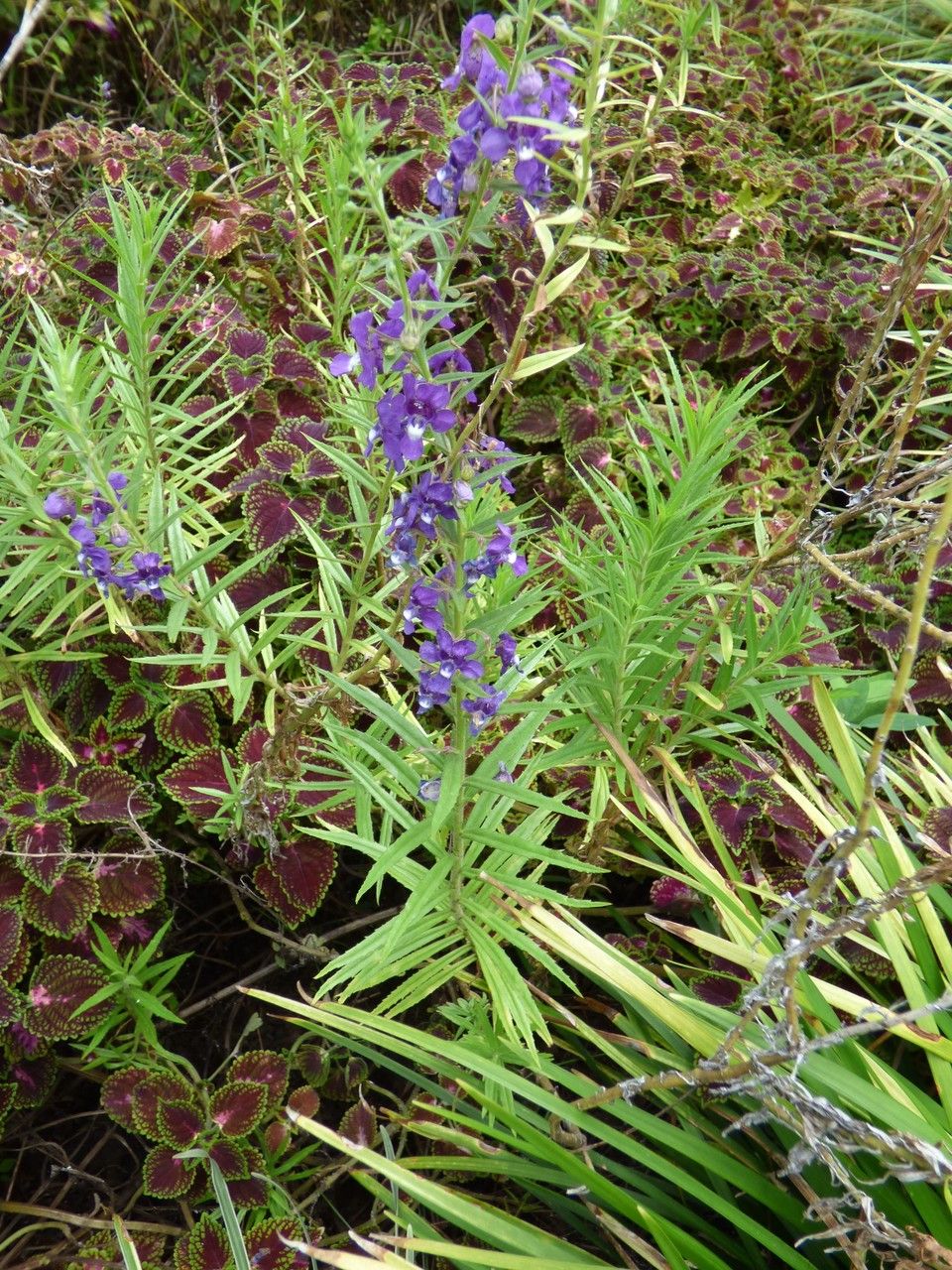
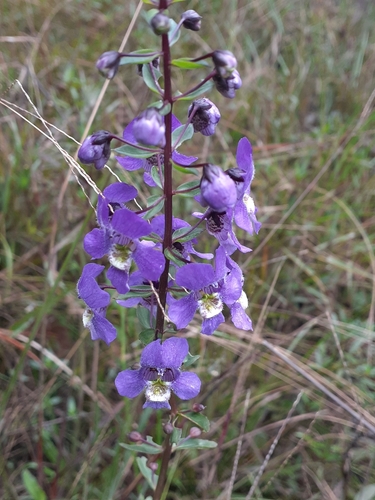
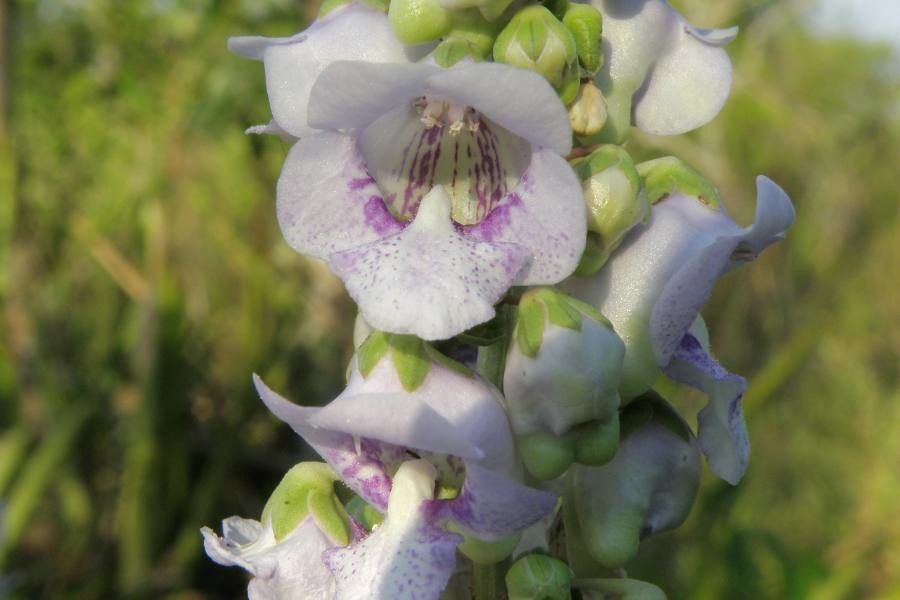
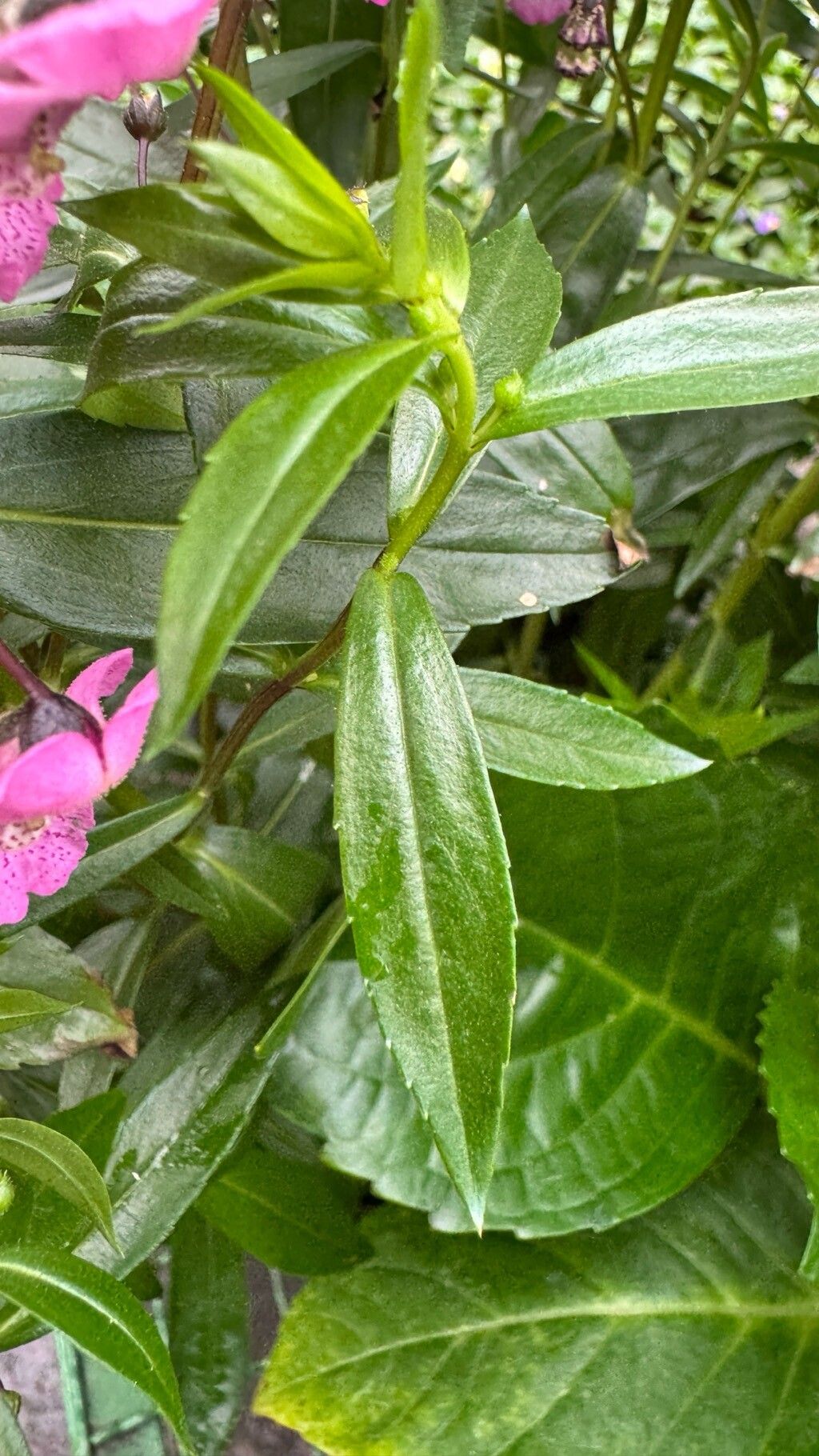
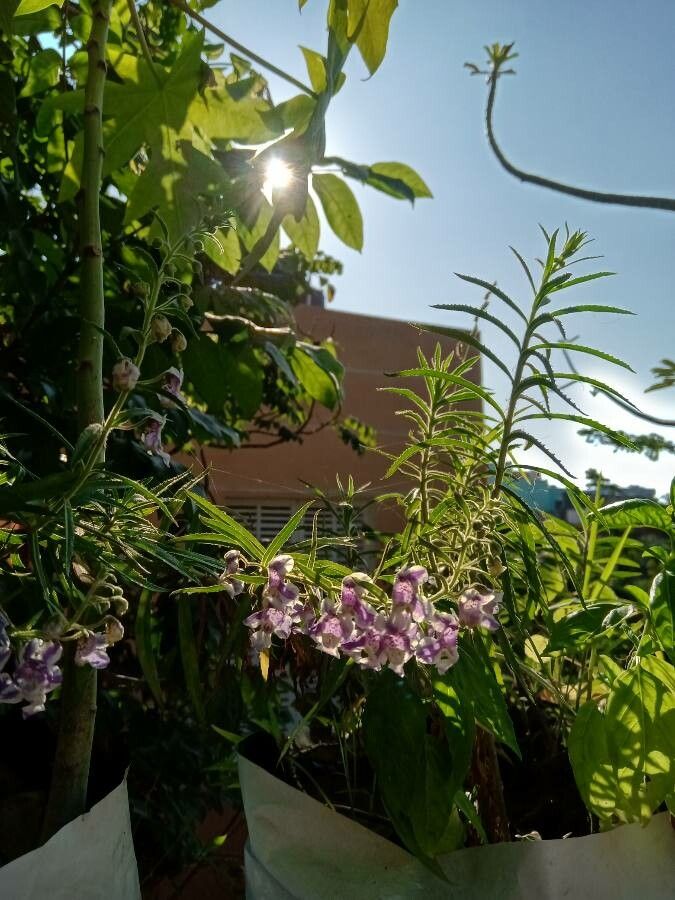
Angelonia biflora, commonly known as the two-flowered angelonia, is a perennial herbaceous plant in the family Plantaginaceae. Native to South America, it thrives in countries such as Brazil, Argentina, and Paraguay. The plant can reach up to 60 cm in height and features lance-shaped leaves that are arranged oppositely on the stem. This plant produces small flowers that are typically white or pink with purple spots on their lower lip. These blooms appear from spring through fall and attract pollinators like bees and butterflies. Angelonia biflora prefers well-drained soil and full sun exposure but can also tolerate partial shade. Once established, it is drought-tolerant, though it requires regular watering during its initial growth period. In traditional South American medicine, Angelonia biflora is attributed with several medicinal properties. It is believed to have anti-inflammatory effects beneficial for treating conditions such as arthritis, rheumatism, fever, and headaches, among others. In conclusion, Angelonia biflora is a beautiful ornamental plant with medicinal properties, making it an excellent addition for gardeners seeking an attractive flowering perennial and those interested in traditional South American medicine practices.
Angelonia biflora is fairly disease-resistant and is usually not prone to illness. That said, it can become affected by pests and diseases present in its environment. These problems are typically minor. For care, this plant needs moderate maintenance. It should be pruned regularly to preserve a tidy appearance and support healthy growth. Fertilizing can also help increase flowering. Angelonia biflora is appropriate for anyone with an outdoor area, such as a garden or patio, and does not demand extensive gardening experience. It may require more attention if grown indoors.
How to keep Angelonia Biflora.
Light
Angelonia biflora is a sun-loving perennial herbaceous plant native to open habitats, where it often grows in meadows and grasslands. It prefers full sun but will also tolerate partial sun.
Humidity
This plant prefers dry conditions, so don't mist it. However, watering it less often can also thrive in higher humidity.
Temperature
Angelonia biflora comes from tropical areas, where the climate is generally warm and humid. Consequently, it is well adapted to high temperatures and humidity. It does not tolerate sudden temperature shifts and prefers a steady thermal environment, so indoor temperature fluctuations should be avoided. It typically cannot endure cold conditions and requires warmer temperatures to grow. If the surrounding temperature falls too low, the plant may stop growing or even die.
Fertilizer
Appropriate fertilization is essential for Angelonia biflora's health and appearance. Fertilize Angelonia biflora during summer, repeating the treatment monthly throughout the season. Nutrients fuel growth and sustain the plant's parts. Fertilization improves Angelonia biflora's floral display, ensuring the best blooms.
Botanical profile.
- Plant Type
- Herb
- Life Cycle
- Perennial
- Genus
- Angelonia
- Family
- Plantaginaceae
- Hardiness Zone
- 9-11
- Mature Height
- 30 cm to 61 cm
- Mature Spread
- 20 cm to 30 cm
- Leaf Color
- Green
- Leaf Type
- Evergreen
- Flower Color
- Lavender, White
- Flower Size
- 1.02 cm to 2.03 cm
- Bloom Time
- Late spring, Summer, Early fall, Mid fall
- Planting Time
- Spring, Autumn
- Harvest Time
- Mid summer, Late summer, Fall, Early winter
- Native Area
- Guyana
Other names.