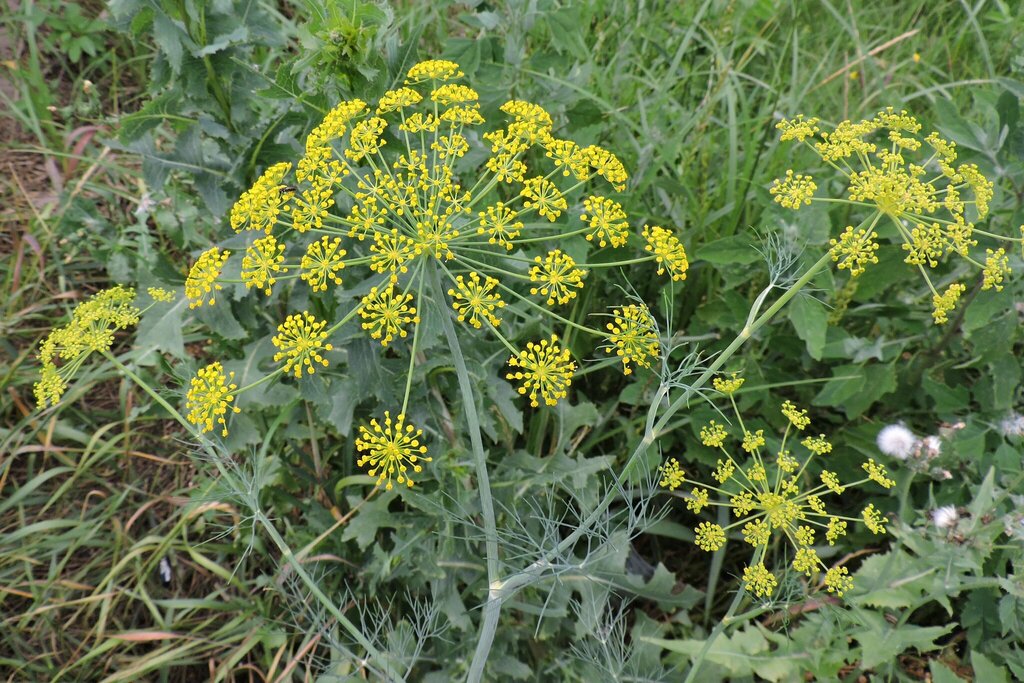
Anethum graveolens, commonly known as dill, is an annual herbaceous plant in the Apiaceae family. Native to the Mediterranean region and western Asia, it has been widely cultivated in various parts of the world. The plant can grow up to 1 meter tall and features feathery, blue-green leaves. Its small, yellow flowers are arranged in umbrella-shaped clusters called umbels.
Dill is renowned as a culinary herb for its distinctive flavor and aroma. It is often used to season pickles, fish dishes, soups, salads, sauces, and dressings. Additionally, dill seeds serve as a spice, commonly utilized for flavoring breads and pickling vegetables.
Beyond its culinary applications, dill is known for its medicinal properties, thanks to essential oils such as carvone and limonene. These oils possess anti-inflammatory characteristics that can help alleviate digestive issues like bloating and constipation.
In summary, Anethum graveolens, or dill, offers a unique flavor profile for culinary purposes and provides medicinal benefits, making it a valuable addition to any garden or kitchen pantry.
Dill is fairly disease-resistant and typically isn't vulnerable to illnesses. However, it can be affected by pests and diseases present in its environment. Such infestations are usually mild. In terms of care, the plant needs moderate maintenance. It should be pruned regularly to preserve a neat appearance and encourage healthy growth. Applying fertilizer can also help encourage flowering. Dill is suitable for anyone with an outdoor area, such as a garden or patio, and does not require much gardening experience. When grown indoors, it may need more attention.
How to keep Anethum Graveolens.
Light
Dill does best in places that get plenty of sunlight each day. This light need is crucial for strong growth. Its native habitat has similar light levels, which supports healthier development. It can also cope in areas with less light. Too much or too little light harms its health, causing chlorosis, slowed growth, or wilting.
Water
Dill, which originates from the Mediterranean and Eastern European regions, grows best in sunny locations with moderate moisture. It should be watered regularly, about twice a week, but can withstand short dry periods. Ensuring the plant receives enough water during the growing season is essential for it to produce its aromatic leaves.
Humidity
This plant will thrive in moderate humidity, which is probably the level in your home. However, misting it a few times a week can be very beneficial. Make sure the room has good ventilation.
Temperature
Dill is a plant native to temperate regions that prefers temperatures from 68 to 100 °F (20 to 38 ℃). In certain seasons, if the temperature falls below 68 °F (20 ℃), consider moving it to a warmer location.
Fertilizer
Dill can benefit from frequent, weak applications of fertilizer to encourage healthy leaf growth. You should fertilize Dill about once a month during the summer. Nitrogen is vital for foliage, and adding nitrogen-rich sources helps Dill thrive.
Pruning
Proper pruning helps dill thrive by making it bushier and preventing it from bolting. The best time to prune dill is from early to late spring. By regularly cutting back the stalks and removing spent flowers, you encourage new growth, improve air circulation, and reduce the risk of disease. This results in a more abundant harvest.
Pot & Repot
When repotting Dill, choose a pot that is 1-2 inches (2.5–5.1 cm) larger in diameter and has good drainage. Use a well-draining potting mix and consider adding perlite to improve drainage. Repot in spring or early summer, water thoroughly afterward, and keep it in a shady spot at first.
Toxicity
Dill is non-toxic to dogs, cats, and horses. There are also no reports of poisoning in humans.
Further reading →
The toxicity and danger assessments provided are for reference only. We do not assure their accuracy, so it's crucial not to depend on them. Seek professional advice when necessary for accurate guidance.
Botanical profile.
- Plant Type
- Herb
- Life Cycle
- Annual
- Genus
- Anethum
- Family
- Apiaceae
- Hardiness Zone
- 3-11
- Mature Height
- 40 cm to 61 cm
- Mature Spread
- 61 cm to 91 cm
- Leaf Color
- Green, Blue
- Leaf Type
- Deciduous
- Flower Color
- Yellow
- Flower Size
- 2.03 cm to 8.89 cm
- Bloom Time
- Late spring, Early summer, Mid summer
- Planting Time
- Spring, Summer
- Harvest Time
- Early summer, Mid summer
- Native Area
- Saudi Arabia, Libya, Tajikistan, Turkey, Tunisia, Cyprus, Bulgaria, Armenia, Greece, Croatia, Morocco, China, Lebanon, Iraq, Syria, Kazakhstan, Iran, Algeria, Turkmenistan
Other names.
Reader questions.
How should I water my Dill plant?
Watering Dill is easy and can be done using different tools like a garden hose with a spray nozzle or a watering can. Dill is not too picky about the type of water it receives, whether it's rainwater, tap water, or filtered water. It's important to avoid watering from above as this can harm the leaves and flowers and potentially cause disease. Setting up a drip irrigation system is often the best method for watering Dill, as it ensures even and direct water application to the soil. When watering Dill in a container, you can use a cup, watering can, or tap to water directly onto the soil.
Why should I put fertilizer on my dill plant?
Plants need nutrients to grow, but some don't need additional fertilizers because they can obtain what they need naturally. Dill, like other plants, requires nutrients for growth and internal processes. The main nutrients plants use, such as nitrogen, phosphorus, and potassium, support essential functions. Among these, nitrogen is particularly important for foliage. Dill may struggle to obtain enough nitrogen from the soil, so gardeners often choose to provide supplementary nitrogen through feeding.
What are the sun requirements for growing dill?
Dill requires areas that receive abundant sunlight exposure every day, thriving best in full sun conditions, which means it needs above 6 hours of sunlight daily. However, it can also tolerate partial sun, approximately 3-6 hours of sunlight. Ensuring that your dill plant receives the right amount of sunlight is crucial for its robust growth, as too much or too little light can cause issues such as chlorosis, slow growth, or wilting. To ensure your plants are happy, observe how sunlight moves through your garden and choose locations that offer a balanced light and shade environment.
What are the ideal growing conditions for Dill?
Dill (Anethum graveolens) is adaptable to temperate climates, preferring temperatures between 68°F (20°C) and 100°F (38°C). It handles colder environments well, without the need for special frost protection, except in extremely cold conditions where temperatures are expected to fall below -35°C. In such cases, measures like covering the plant with soil or straw are advisable. To prepare for winter, it's recommended to water the plant abundantly before the first freeze, ensuring the soil remains moist, which helps prevent drought and water scarcity during the colder months.
What should I do if I give too much or too little water to my Dill plant?
If your Dill plant is not getting enough water, the solution is simple. Start watering it more frequently when you notice that it is dry. Overwatering, on the other hand, can be a serious issue, especially if you don't notice it early. Overwatered Dill can develop diseases that cause it to deteriorate and die. To prevent this, choose a growing spot with plenty of sunlight to dry out the soil and good drainage to ensure excess water doesn't pool and create waterlogged soil. If you have been overwatering Dill in a pot, consider transferring it to a new pot. The old container might not have provided good drainage or had enough holes. When repotting the overwatered Dill, use loose soil and a pot that drains efficiently.
When should I fertilize my Dill?
To help your dill plant thrive, you can apply fertilizer about once a month while it is actively growing. This is typically during the spring and summer months, as dill is less active and requires fewer nutrients during the fall and winter. Look for signs of new growth to determine when to begin fertilizing. Whether you are growing your dill plant outside or in a container indoors, the fertilization schedule remains the same. However, if your dill is in a container, you may not need to fertilize for the first one to two months. This is because potting soil for container plants already contains ample nutrients. Once your dill has been in the same soil for a while, you can start fertilizing to provide it with additional nutrients.
How can artificial lighting supplement sunlight for indoor dill plants?
Indoor dill plants can benefit significantly from artificial lighting, especially when natural sunlight is inadequate, such as during winter or in less sunny spaces. Artificial lights can be a vital solution for promoting faster and healthier growth. LED lights are particularly beneficial as they can be customized to provide the precise wavelengths needed by plants. For optimal growth, full sun plants require 30-50W/sq ft of artificial light, partial sun plants need 20-30W/sq ft, and full shade plants need 10-20W/sq ft. The light source should be placed 12-36 inches above the plant to mimic natural sunlight, and the duration of exposure should be 8-12 hours per day to simulate the length of natural daylight hours.
How does low temperature affect Dill and what are the solutions?
Dill is quite cold-tolerant, thriving best when temperatures stay above 20°C, and should be kept above 0°C during winter. In very cold conditions, where temperatures drop below -35°C, the plant may not show immediate damage but could have a reduced or even a lack of sprouting in the following spring. If this happens, the recommended course of action is to remove any parts of the plant that have failed to sprout in spring.
How frequently should I give water to my Dill plant?
To keep your Dill plant healthy, it is important to water it regularly throughout the growing season. In the spring, water it once a week. As the season progresses and the temperature increases, you may need to water it two to three times a week. However, be careful not to exceed this rate as it can harm your Dill. Regardless of how often you water, make sure the soil remains moist but not wet. Watering Dill in a pot is different. Since the soil in a pot can dry out faster, you will likely need to water it more frequently, generally a few times per week. In contrast, for Dill planted in the ground, once a week watering is usually sufficient.
When is it not a good idea to fertilize my Dill?
- Avoid fertilizing unhealthy dill plants, especially if they have diseases or insect pests. - Refrain from fertilizing dehydrated plants as it may exacerbate the issue. - Only apply fertilizer to healthy plants. - When watering, be cautious not to splash fertilizer onto the leaves or stem to prevent burn spots. - Unless you're using a special foliage fertilizer, avoid direct contact between the plant and fertilizer.
What are the symptoms of insufficient light in dill plants?
When dill plants receive inadequate sunlight, they may exhibit several symptoms indicating light deficiency. These include the development of small new leaves, leggy or sparse growth, faster leaf dropping, slower or halted growth, and lighter-colored new leaves. Chlorosis, or the loss of green coloration in leaves, may occur, indicating a breakdown of chlorophyll which affects the plant's photosynthesis. Sunscald, leaf curling, wilting, and leaf scorching are other symptoms that can manifest due to excessive sunlight or insufficient light, affecting the plant's overall health and development.
How does high temperature affect Dill and what are the recommended solutions?
During the summer months, it's important to ensure that Dill is kept in conditions below 38°C. Exceeding 43°C can lead to the plant's leaves becoming lighter, prone to curling, susceptibility to sunburn, and in severe cases, the plant may wilt and dry out completely. To counteract these effects, sunburned and dried up parts should be trimmed away. Moving the plant to a shaded location or employing shade cloth to protect it from midday and afternoon sun can be beneficial. Furthermore, watering the plant in the morning and evening will help keep the soil adequately moist.