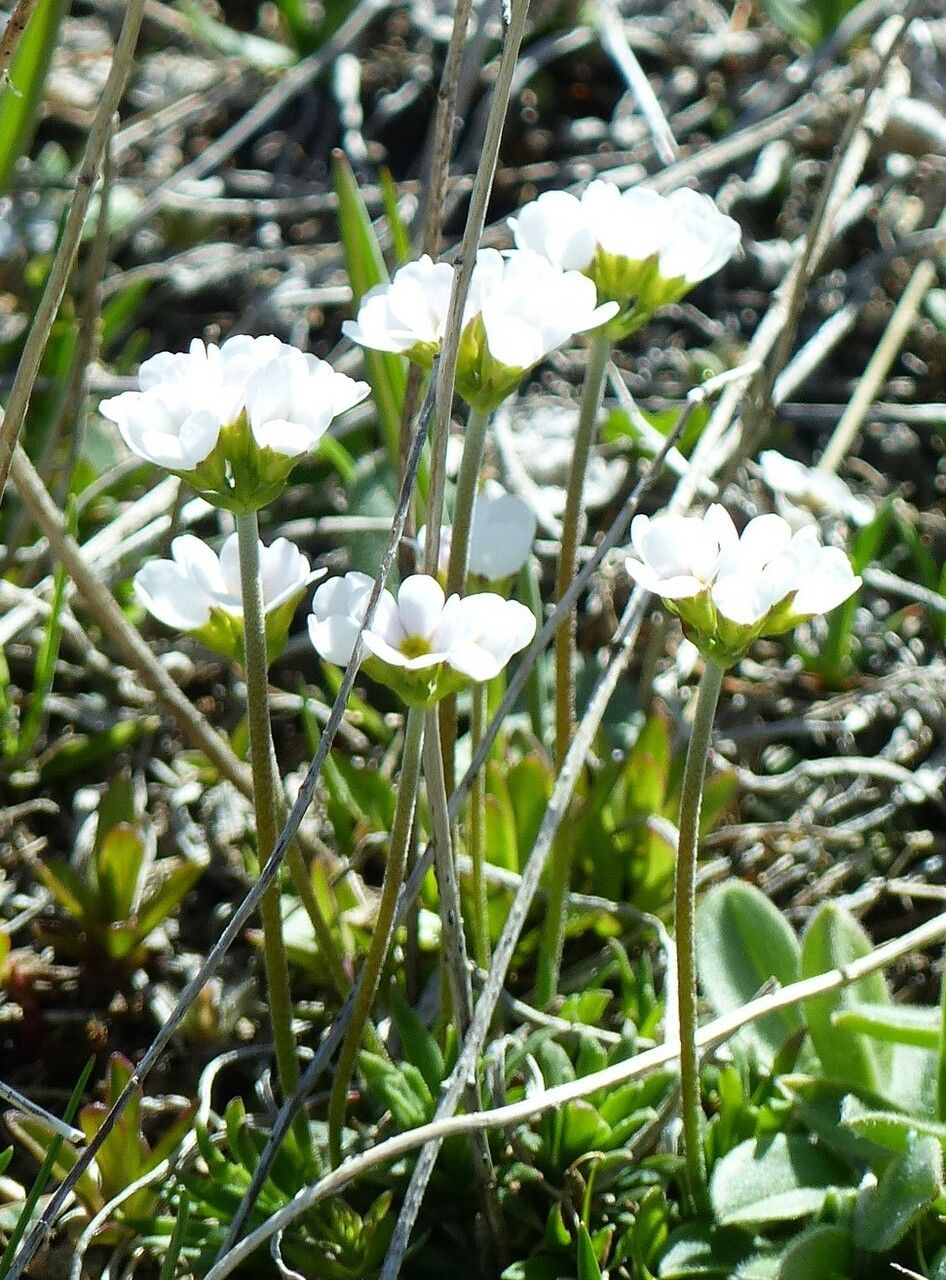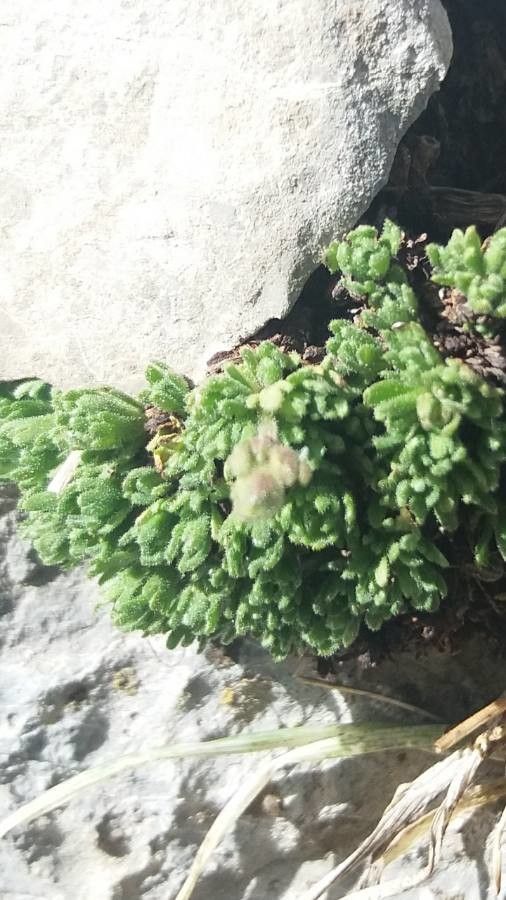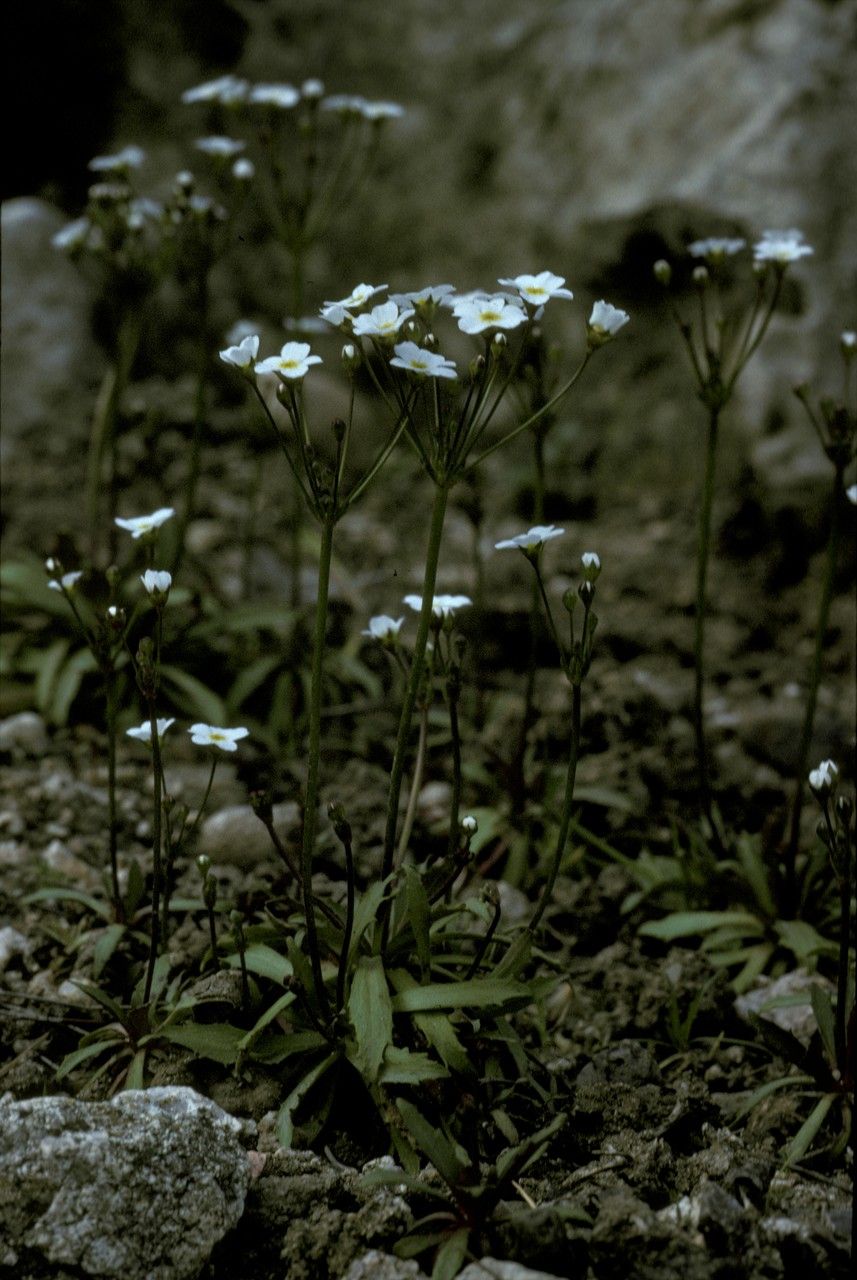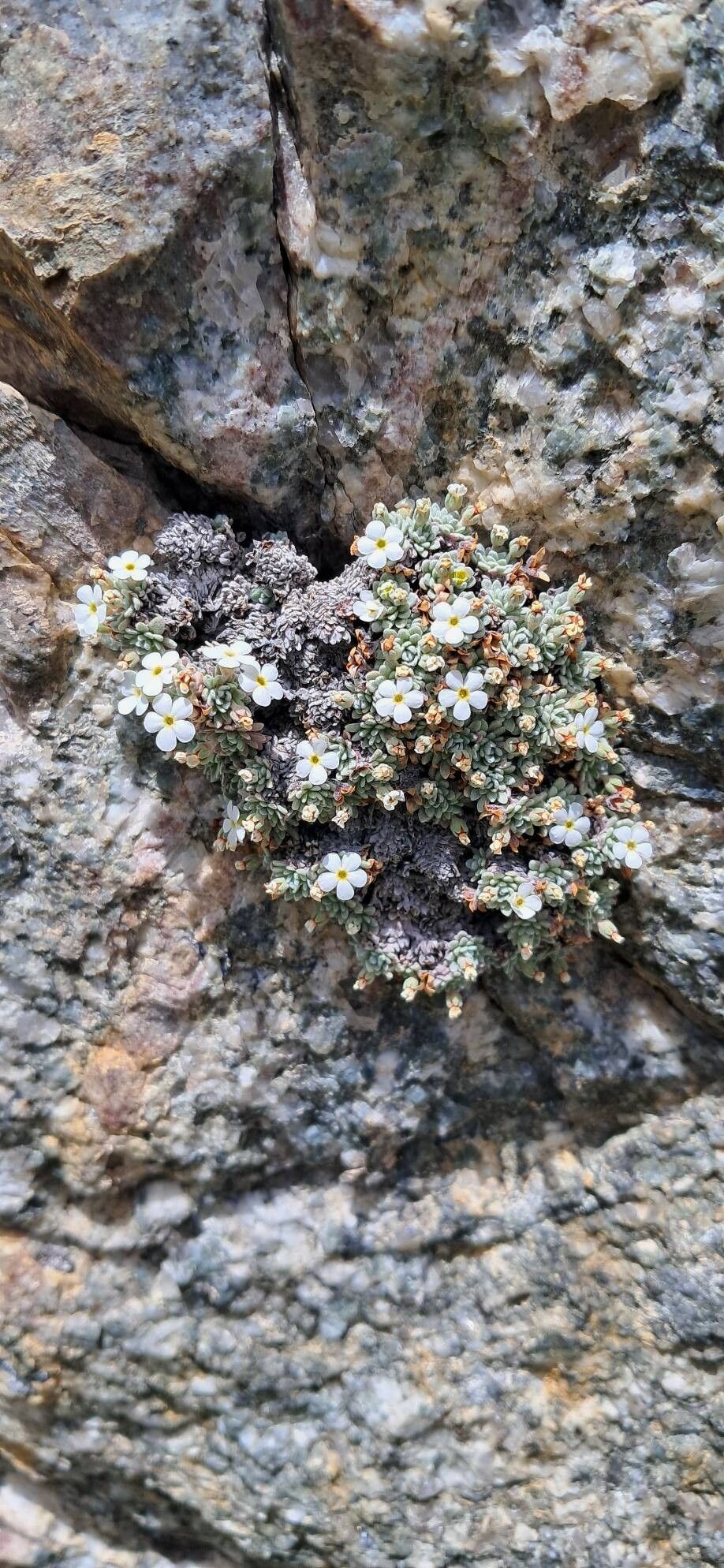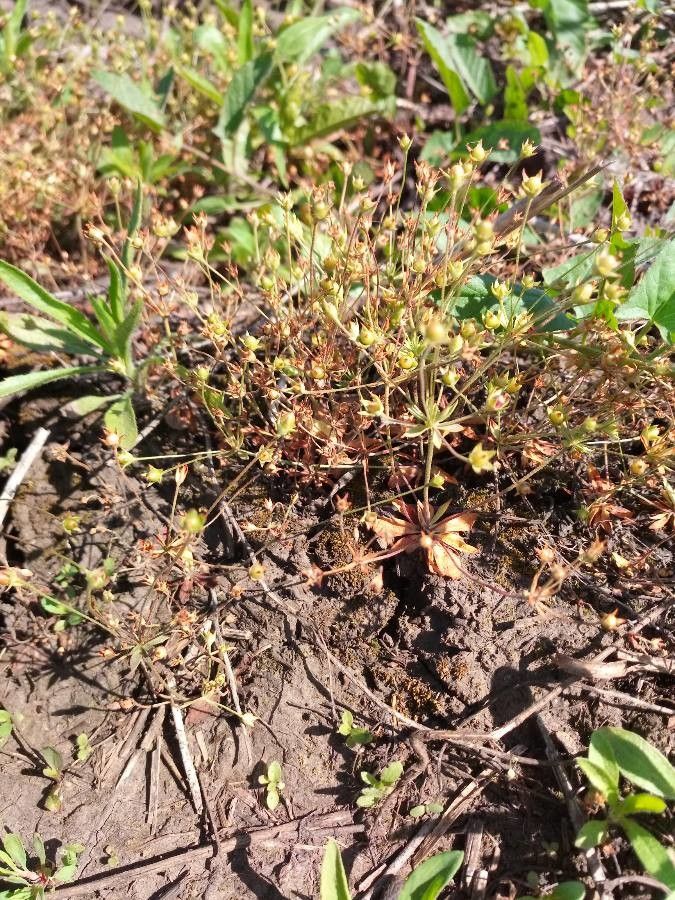
Androsace occidentalis is a species of flowering plant in the primrose family known by the common name western rockjasmine. It is native to much of southern central and western Canada, and the midwestern and western United States, from the Great Lakes region south to Texas, and west across the Great Plains to Idaho, Utah, and the Sierra Nevada in California. It occurs in open habitat such as prairies and meadows in montane forests, especially in moist areas.
Western rock jasmine is relatively disease-resistant and generally not prone to illness. Still, it can be vulnerable to pests and diseases present in its environment. These infections are typically not severe. For care, this plant requires moderate maintenance. It should be pruned regularly to keep a good appearance and support healthy growth. Fertilizing can also help encourage flowering. Western rock jasmine is suitable for anyone with outdoor space, like a garden or patio, and does not demand a lot of care experience. It may need more attention if grown indoors.
How to keep Androsace Occidentalis.
Light
Western rock jasmine comes from bright, open habitats and flourishes in full sun. It will tolerate partial sun but favors direct sunlight for optimal growth. This plant, which can be annual or biennial, is noted for its sun-loving nature.
Water
Western rock jasmine, native to rocky terrains, flourishes in well-drained environments with moderate drought tolerance. It needs to be watered weekly, with the frequency reduced during its dormant period. Commonly grown outdoors, this plant is adaptable to seasonal changes in water availability, showcasing its resilient nature.
Temperature
Western rock jasmine can tolerate a wide range of temperatures, but its distribution can still be restricted by certain combinations of moisture and heat. It does best in warm summer climates with adequate rainfall or regular watering. Extended periods of cloudy, rainy weather, as well as prolonged high temperatures, can increase the plant's likelihood of dying. In winter, protecting it properly from the cold can boost its chances of survival.
Fertilizer
Western rock jasmine responds well to regular, light applications of fertilizer to encourage healthy leaf growth. Fertilize Western rock jasmine about once a month during the summer. Nitrogen is important for foliage, so providing nitrogen-rich sources helps Western rock jasmine thrive.
Pruning
Western rock jasmine benefits from pruning, ideally performed between early and late spring. Remove dead stems and thin out overcrowded areas to improve air circulation. Pruning after flowering encourages denser growth. Regular maintenance promotes healthy growth and reduces the risk of disease.
Botanical profile.
- Plant Type
- Herb
- Life Cycle
- Annual
- Genus
- Androsace
- Family
- Primulaceae
- Hardiness Zone
- 4-8
- Mature Height
- 1 cm to 8 cm
- Mature Spread
- 5 cm to 10 cm
- Leaf Color
- Green, Blue
- Leaf Type
- Evergreen
- Flower Color
- White, Pink
- Flower Size
- 0.20 cm to 0.25 cm
- Bloom Time
- Early spring, Mid spring
- Planting Time
- Spring
- Harvest Time
- Late spring, Early summer
- Native Area
- Mexico
Other names.
Reader questions.
What are the sunlight requirements for Western rock jasmine?
Western rock jasmine thrives in full sun, requiring more than 6 hours of direct sunlight daily for optimal growth. It can also tolerate partial sun, which constitutes about 3-6 hours of sunlight. However, it's crucial to observe the movement of sunlight through your garden to place your plants in locations that offer a good balance of light and shade, ensuring their well-being. This plant is naturally suited to bright, open environments and prefers direct sunlight, although it will grow in partial sun.
How can artificial lighting benefit indoor Western rock jasmine plants?
Indoor Western rock jasmine plants benefit significantly from adequate artificial lighting, especially when natural sunlight is insufficient, such as in winter or in less sunny spaces. Artificial lights, particularly LED lights, can be customized to provide specific wavelengths needed by plants, promoting healthier and faster growth. For full sun plants, 30-50W/sq ft of artificial light is recommended, 20-30W/sq ft for partial sun plants, and 10-20W/sq ft for full shade plants. The optimal placement is 12-36 inches above the plant to mimic natural sunlight, and it's crucial to determine the right duration, usually 8-12 hours per day, to mimic natural daylight hours, ensuring the plant's growth and health.
What are common symptoms of light deficiency in Western rock jasmine?
When Western rock jasmine is cultivated indoors and receives inadequate light, it may exhibit various symptoms indicating light deficiency. These symptoms include smaller new leaves, leggy or sparse growth due to longer spaces between leaves or stems, faster leaf drop as the plant sheds older leaves to conserve resources, slower or no new growth as the plant enters survival mode, lighter-colored new leaves due to insufficient chlorophyll and essential nutrients, chlorosis (leaves turning yellow), sunscald (damage from intense sunlight exposure), leaf curling as a defensive mechanism against excessive sunlight, wilting from increased water loss, and leaf scorching characterized by brown, dry edges on leaves.
What solutions can address light deficiency symptoms in Western rock jasmine?
To address light deficiency in Western rock jasmine, gradually moving plants to sunnier locations each week until they receive at least 6 hours of direct sunlight daily is recommended. For indoor plants, using a south-facing window or additional artificial lighting can help. It's vital to expose plants to sunlight gradually to prevent sunburn. For outdoor plants, identifying and reducing obstructions (e.g., by pruning trees) and transplanting smaller plants during their dormant period to a location with more sunlight and good drainage are effective strategies. Note that parts of the plant affected by insufficient light may not recover, but new growth following improved light exposure will be healthy.