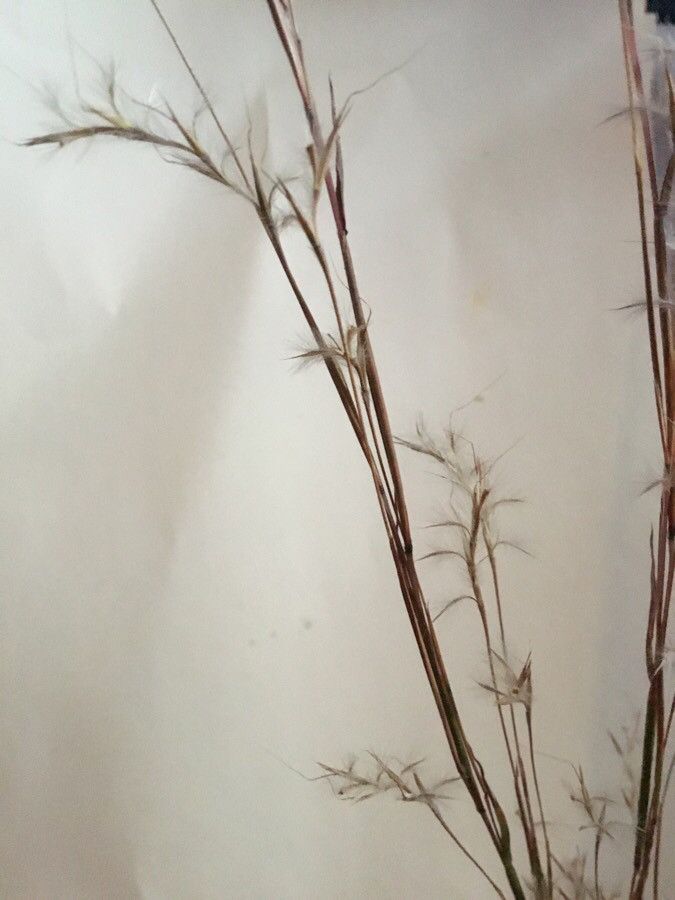
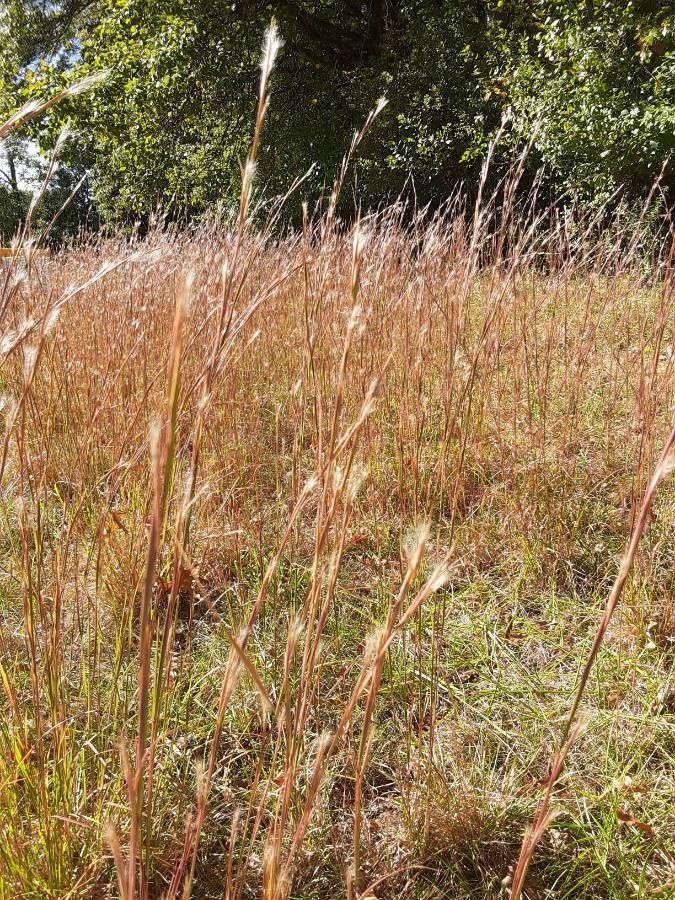
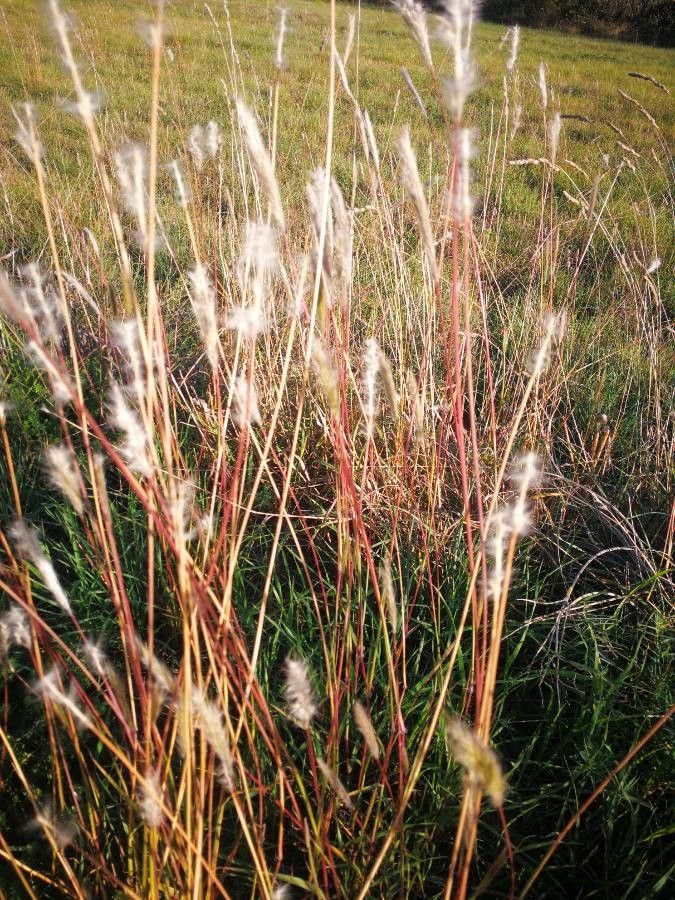
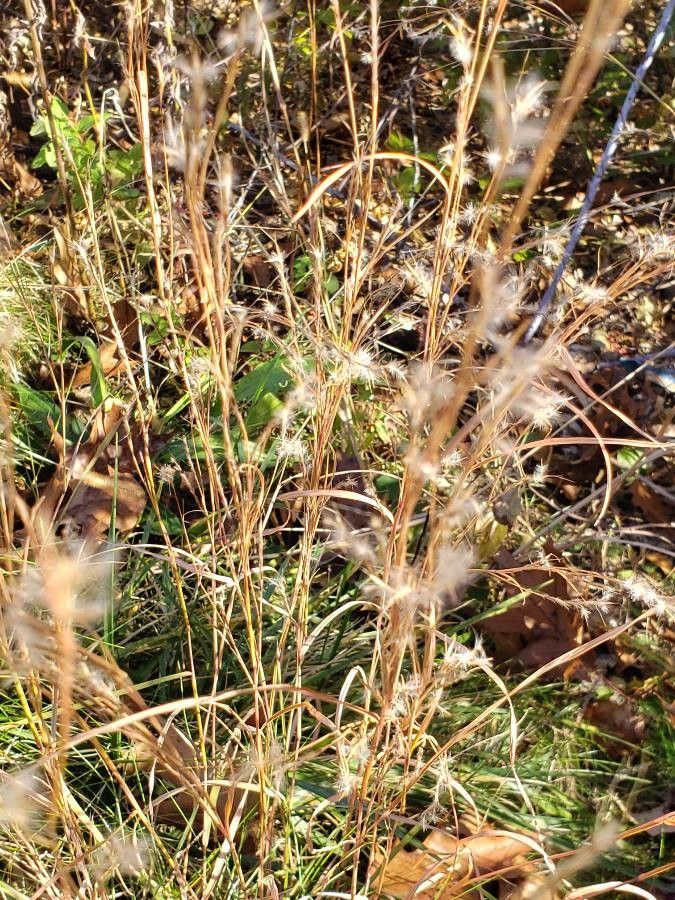
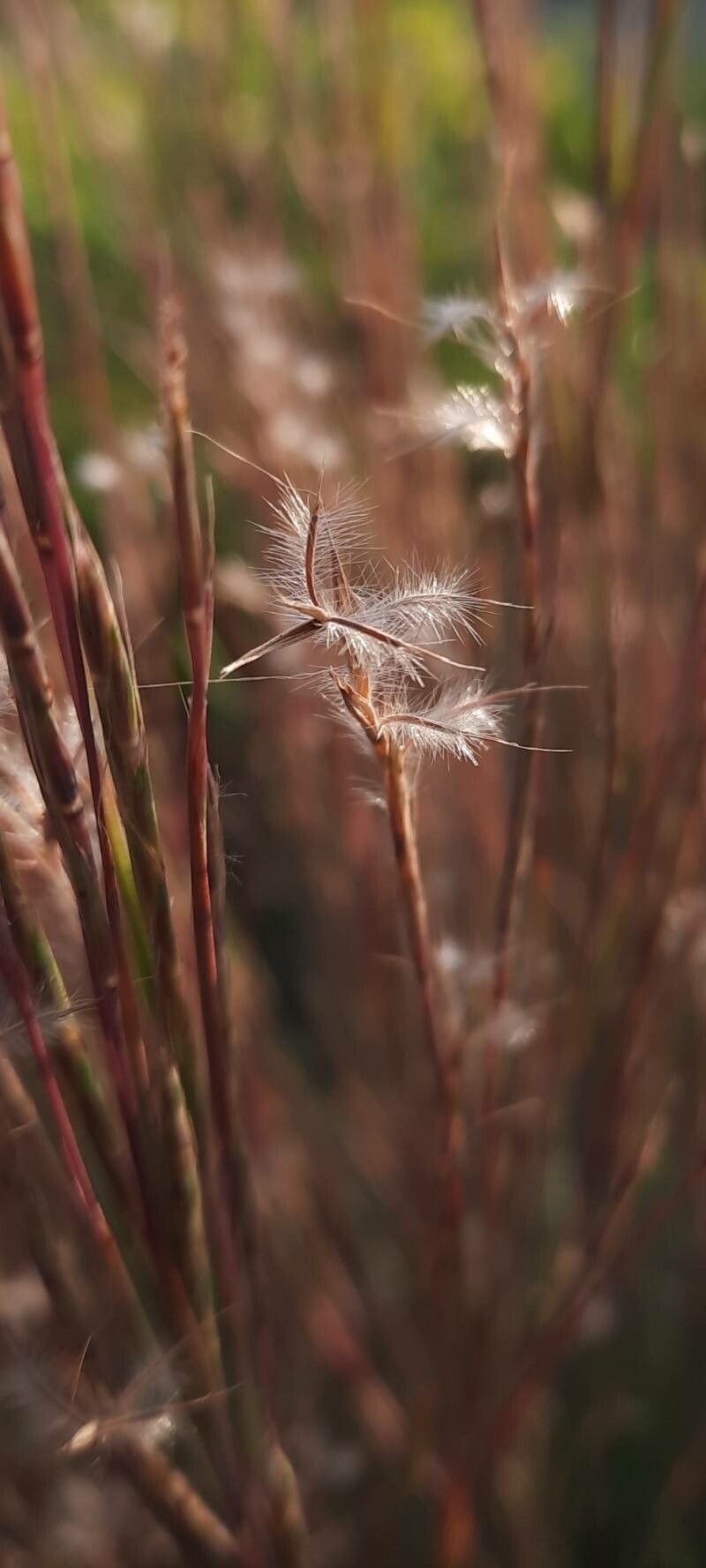
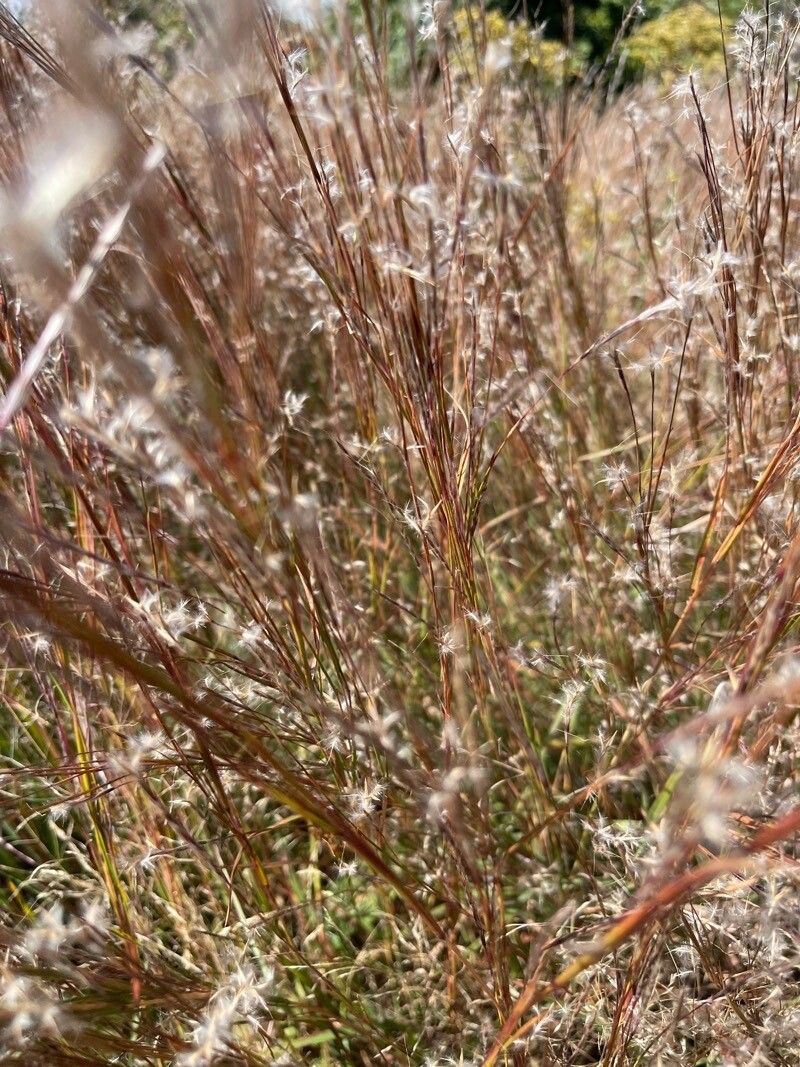
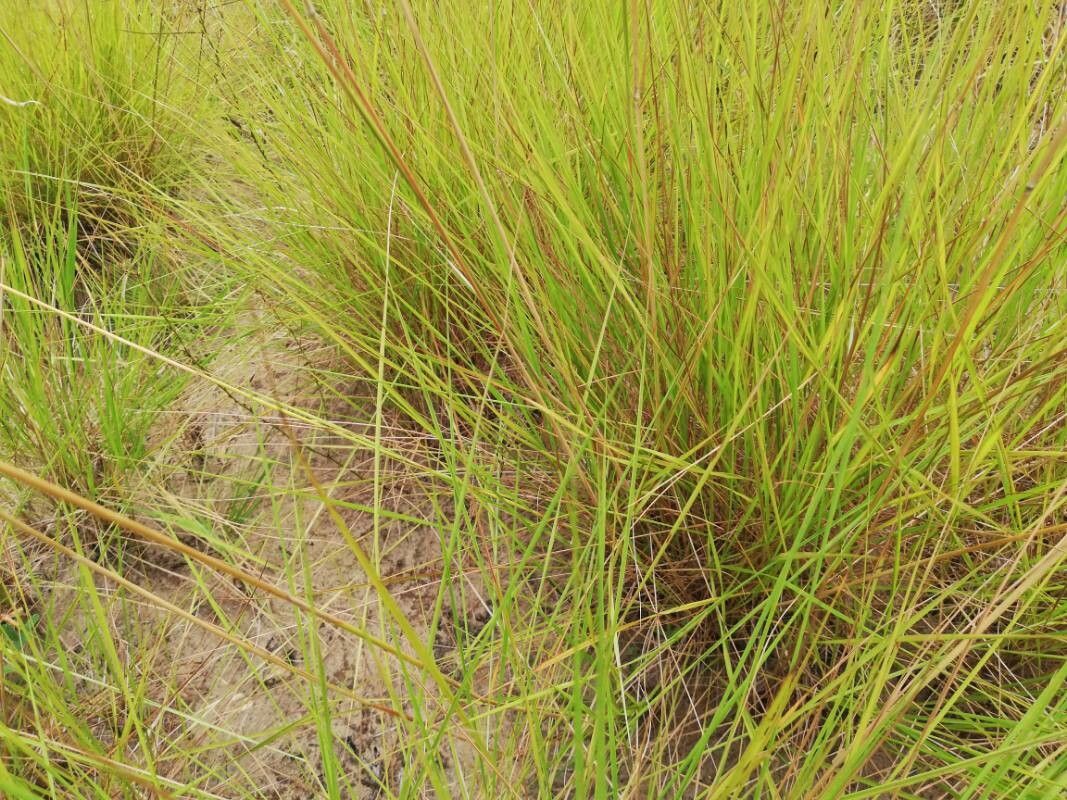
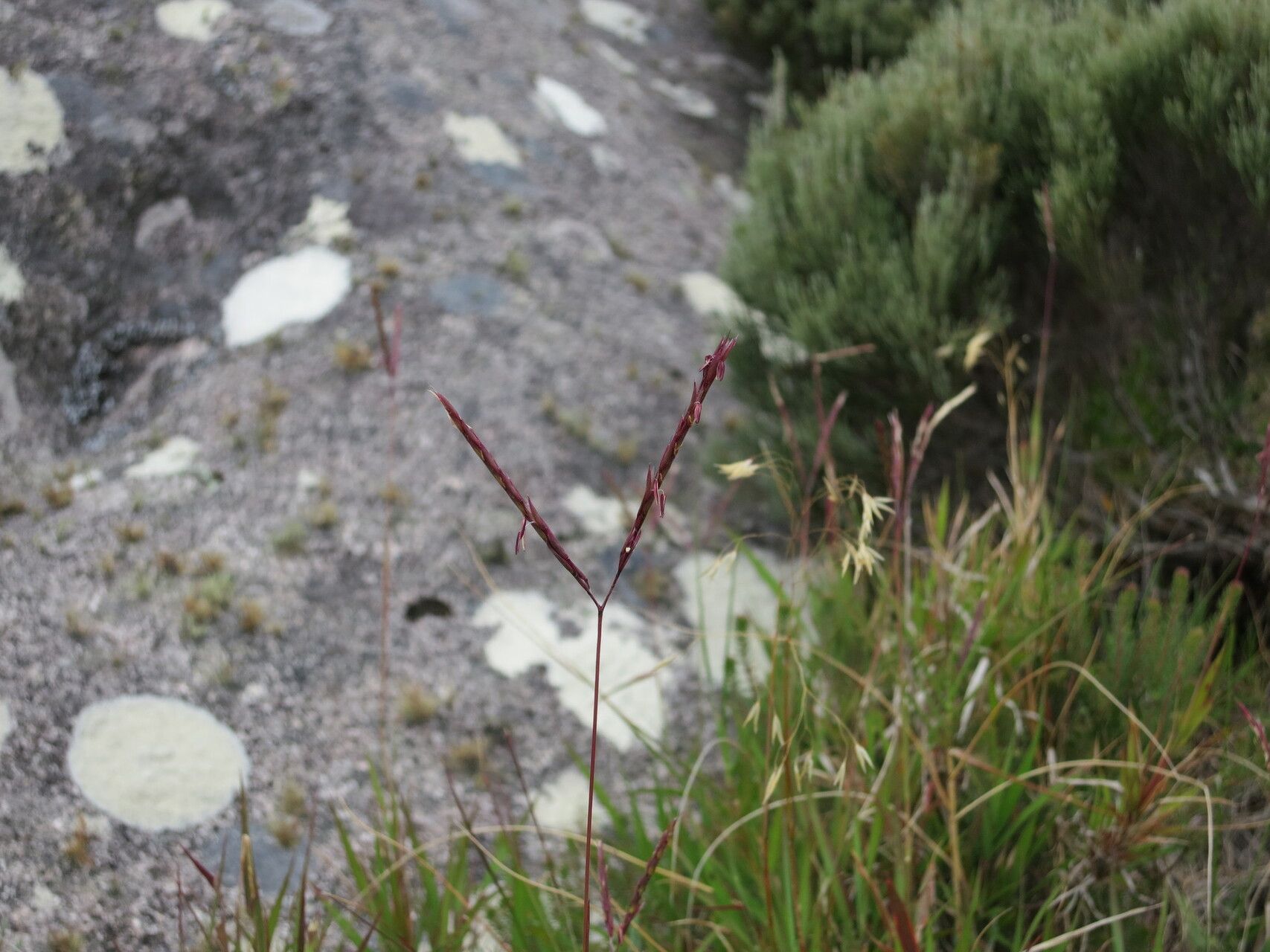
Andropogon ternarius is a species of grass known by the common names split bluestem, splitbeard bluestem, silver bluestem, and paintbrush bluestem. It is native to the southeastern, east-central, and south-central parts of the United States, where it occurs from New Jersey south to Florida and west to Kansas, Oklahoma, and Texas.This perennial grass forms tufts of branching stems reaching 120 to 150 centimeters in maximum height. The inflorescence is made up of pairs of feathery racemes, each of which contains pairs of spikelets. Each pair is made up of one fertile spikelet and one sterile. The fertile spikelet has an awn up to 2.5 centimeters long. The spikelets are coated in very long, silvery hairs. In the Great Plains, the grass blooms in August through October. In the Carolinas blooming occurs in September and October and in Louisiana the grass blooms in the fall. One variety of this species, the Florida endemic var. cabanisii, has been treated as a separate species, A. cabanisii.This grass grows in pine and oak forests and on prairie. It is dominant in the pine savanna around the Texas-Louisiana border. It grows in disturbed habitat types such as grazed pastures, ditches, and abandoned crop fields. Old fields in the southern United States are often colonized with the grass and its relative, broomsedge (Andropogon virginicus). In the ecological succession of abandoned fields in the region, the bluestem grasses grow after various annual and perennial weeds but before pines move in to shade them out.Cattle graze on the grass. Northern bobwhite are known to nest in bunches of it.
Splitbeard Bluestem has good disease resistance and is generally not prone to illness. However, it can be affected by pests and diseases present in its environment. These infections are generally not serious. As for care, this plant needs moderate maintenance. It should be pruned regularly to maintain an attractive appearance and healthy growth. Fertilizing can also help encourage flowering. Splitbeard Bluestem is suitable for anyone with outdoor space, such as a garden or patio, and does not require extensive care experience. It may need more attention when grown indoors.
How to keep Andropogon Ternarius.
Light
Splitbeard Bluestem does best with plenty of bright sunlight. Originating in well-lit habitats, it has also adapted to tolerate areas with less sun. Too much or too little light can, respectively, burn its leaves or limit vigorous growth.
Water
Splitbeard Bluestem thrives in well-draining soil and prefers balanced moisture, requiring watering twice a week. It is moderately drought-tolerant, making it ideal for xeriscaping, and is typically grown outdoors where it successfully adapts to varying moisture conditions.
Temperature
Splitbeard Bluestem is a hardy species suited to a variety of climates. Its preferred temperature range is 50 to 95 °F (10 to 35 ℃). If subjected to extreme conditions, gradual acclimation is advised to avoid thermal shock.
Fertilizer
A single fertilizer application in spring is typically enough for Splitbeard Bluestem, although multiple feedings can maximize growth. Feed it once every month to a month and a half. Fertilization improves leaf appearance and function, supporting consistent color and a healthy texture. It also encourages root growth and nutrient uptake for long-term plant health.
Pruning
Splitbeard Bluestem is characterized by its fluffy seed heads and tall stems. To encourage new growth and vitality, prune the plant in early spring by trimming the old growth to 4-6 inches above the ground. Removing damaged stems enhances air circulation, reduces the risk of disease, and promotes robust growth, ensuring the plant maintains its visual appeal throughout the year.
Botanical profile.
- Plant Type
- Herb
- Life Cycle
- Perennial
- Genus
- Andropogon
- Family
- Poaceae
- Hardiness Zone
- 6-10
- Mature Height
- 61 cm to 91 cm
- Mature Spread
- 30 cm to 61 cm
- Leaf Color
- Green, Blue
- Leaf Type
- Deciduous
- Flower Color
- White, Green, Silver
- Flower Size
- 2.54 cm
- Bloom Time
- Late summer, Early fall, Mid fall
- Planting Time
- Spring, Summer, Autumn
- Harvest Time
- Fall
- Native Area
- Mexico
Other names.
Reader questions.
What are the sun requirements for Splitbeard Bluestem?
Splitbeard Bluestem requires a specific amount of sunlight to thrive. Full sun, which means the plant should receive above 6 hours of sunlight daily, is ideal for its optimal growth. However, it can also manage in partial sun conditions, receiving about 3-6 hours of sunlight. It's crucial to observe the way sunlight moves through your garden throughout the day to identify spots that offer the right balance of light and shade. This ensures that your plants are happy and healthy.
What is Splitbeard Bluestem and what are its temperature preferences?
Splitbeard Bluestem, botanically known as Andropogon ternarius, is a rustic plant species that adapts well to a range of climates. It thrives in temperatures ranging from 50 to 95 °F (10 to 35 °C). While it possesses strong resistance to cold, allowing it to withstand most winter conditions without special frost protection, it is advised to gradually acclimatize the plant to extreme conditions to avoid thermal shock. However, in areas where winter temperatures may plummet below -25°C, additional measures such as covering the plant with soil or straw for cold protection are recommended. Before the onset of winter, it's also suggested to water the plant abundantly so the soil remains moist and enters a frozen state, which helps in preventing drought and water scarcity during the colder months.
How does Splitbeard Bluestem respond to different lighting conditions?
The Splitbeard Bluestem is versatile in its lighting requirements. Originating from regions with abundant sunlight, it has adapted to flourish even in areas with limited sun. Exposing the plant to intense sunlight can scorch its leaves, while insufficient sunlight may impede its robust growth. For indoor plants or those in less sunny environments, artificial lighting can be a great solution to avoid these issues. LED lights, in particular, are beneficial as they can be customized to provide specific wavelengths needed for the plant's growth. The right amount of artificial light varies, with full sun plants needing 30-50W/sq ft, partial sun plants requiring 20-30W/sq ft, and full shade plants needing 10-20W/sq ft. Additionally, positioning the light source 12-36 inches above the plant and ensuring it gets 8-12 hours of light per day mimics natural light conditions.
How does Splitbeard Bluestem respond to low temperatures and what should be done in spring?
Splitbeard Bluestem showcases remarkable cold tolerance and generally thrives when temperatures remain above 10°C. Despite its resilience, prolonged exposure to temperatures below -25°C may not outwardly affect the plant during winter but could lead to reduced or even absent sprouting in spring. To address this, it is advisable to inspect the plant in spring and remove any parts that have not sprouted. This proactive measure ensures the vitality and continued growth of the plant following a harsh winter.
What are the symptoms of inappropriate lighting for Splitbeard Bluestem?
Inadequate lighting conditions can lead to a variety of symptoms in Splitbeard Bluestem. Poor light can cause new leaves to be smaller, lead to leggy or sparse growth due to longer spaces between leaves or stems, result in faster dropping of older leaves, and slow down or completely stop new growth. Further complications include lighter-colored or yellow leaves (chlorosis), sunscald from too much light, leaf curling, wilting from excessive water loss, and leaf scorching indicating damage from too intense sunlight. Properly adjusting the plant's light exposure is crucial to maintaining its health and vibrant appearance.
What effect do high temperatures have on Splitbeard Bluestem and how can they be mitigated?
Splitbeard Bluestem is ideally kept at temperatures below 35°C during the summer months. Exposure to temperatures above 41°C can cause the leaves to lighten in color, curl, become prone to sunburn, and in severe cases, can lead to the entire plant wilting and drying out. Mitigation strategies involve removing the sunburned and dried parts of the plant, relocating it to a shaded area or employing a shade cloth to protect it from the midday and afternoon sun. It's also important to water the plant adequately both in the morning and evening to ensure the soil remains moist, which helps prevent heat stress and maintains the plant's health.
What are the solutions for Splitbeard Bluestem experiencing light-related stress?
For Splitbeard Bluestem facing light-related issues, gradual adjustments and solutions are necessary. Indoors, gradually move the plant to receive at least 6 hours of sunlight daily, using south-facing windows for maximum exposure. If the plant is large or hard to move, artificial lighting, such as a lamp or grow lights, left on for at least 8 hours a day can help. Outdoors, introduce the plant to progressively sunnier spots each week to prevent sunburn. Note that parts of the plant already damaged by poor light may not recover, though new growth will be healthy. Additionally, for ground-planted specimens, removing obstructions like tree branches can increase sunlight exposure. If necessary, transplanting smaller plants during their dormant period to sunnier locations can improve their health and growth.