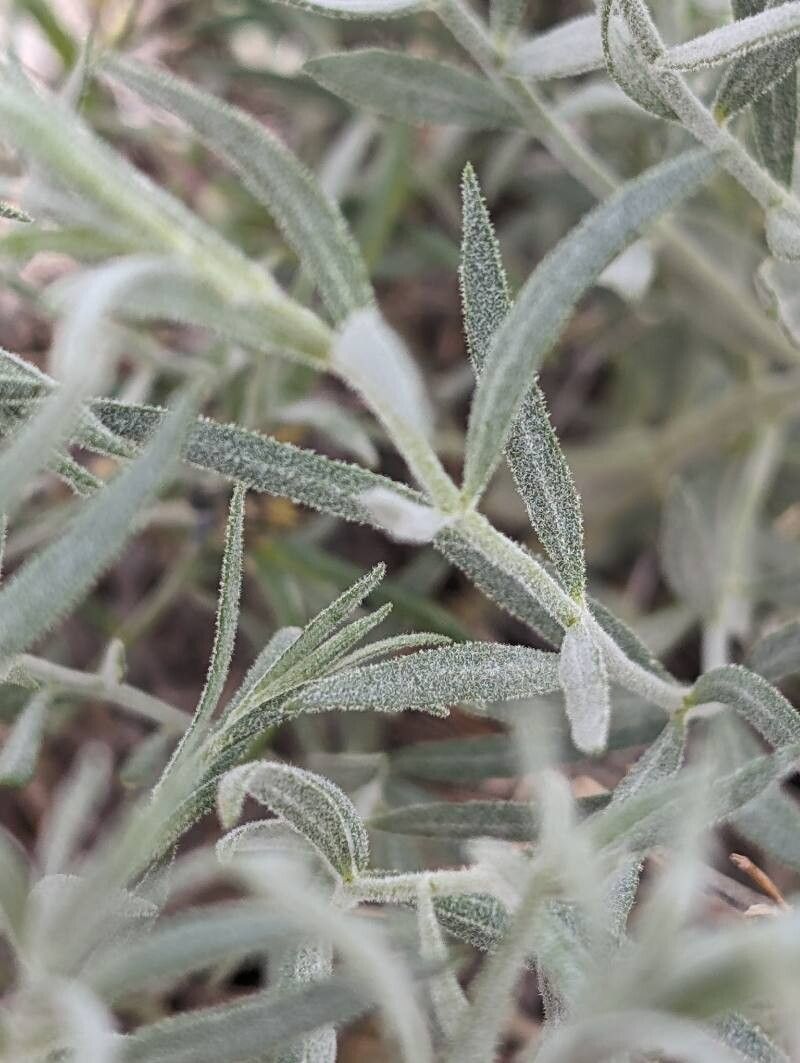
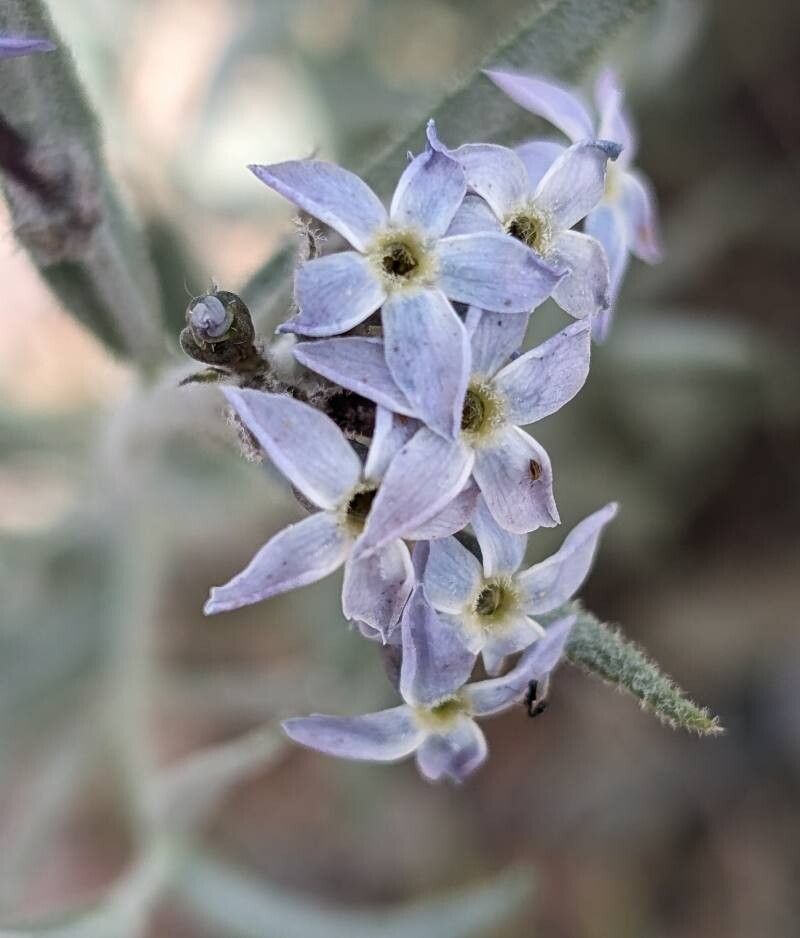
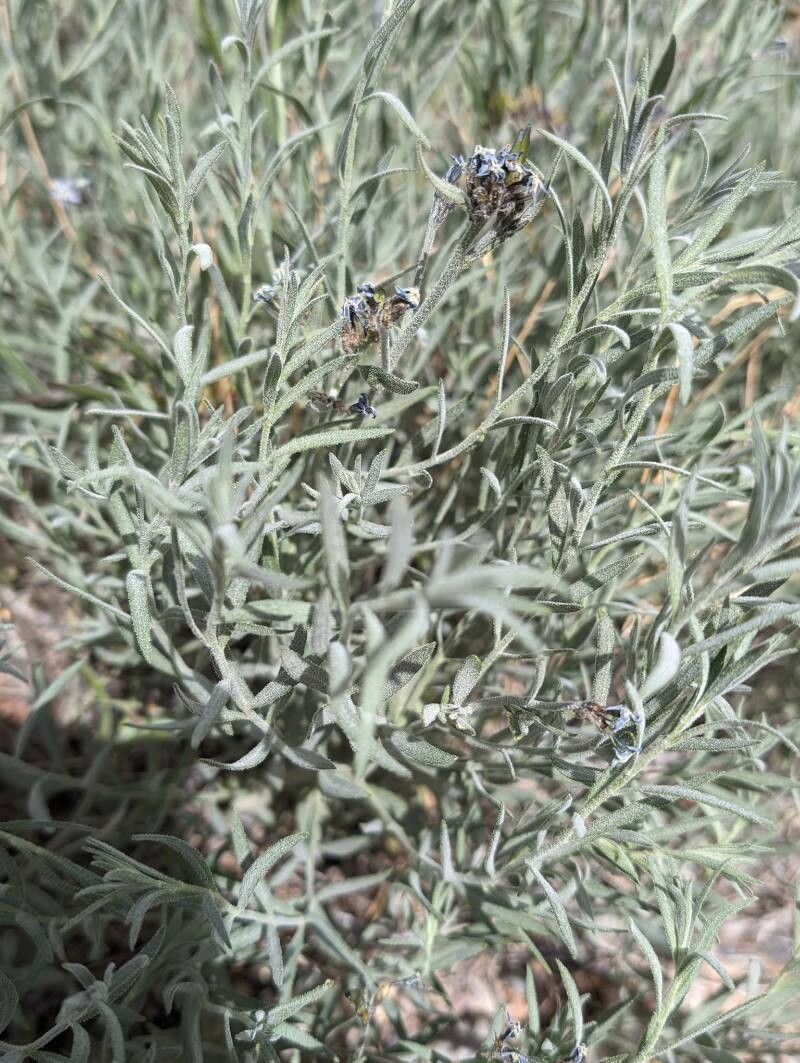
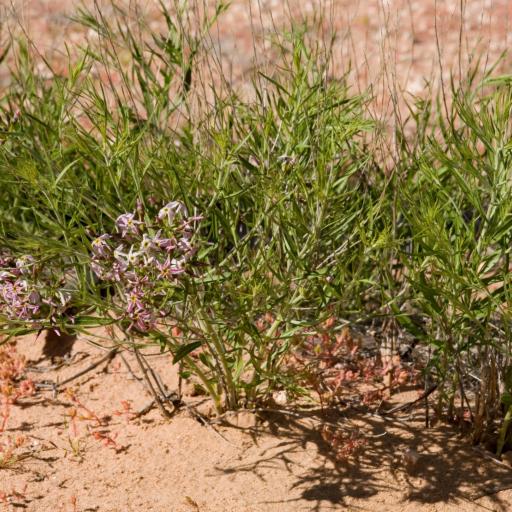
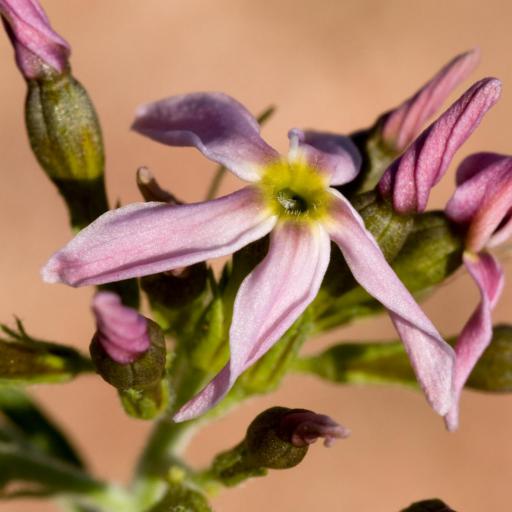
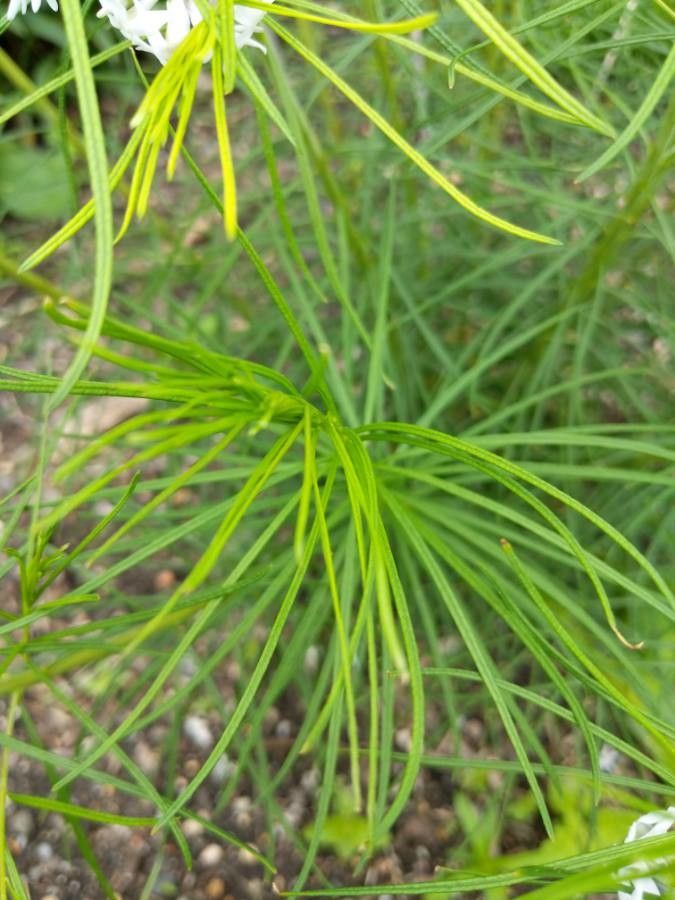
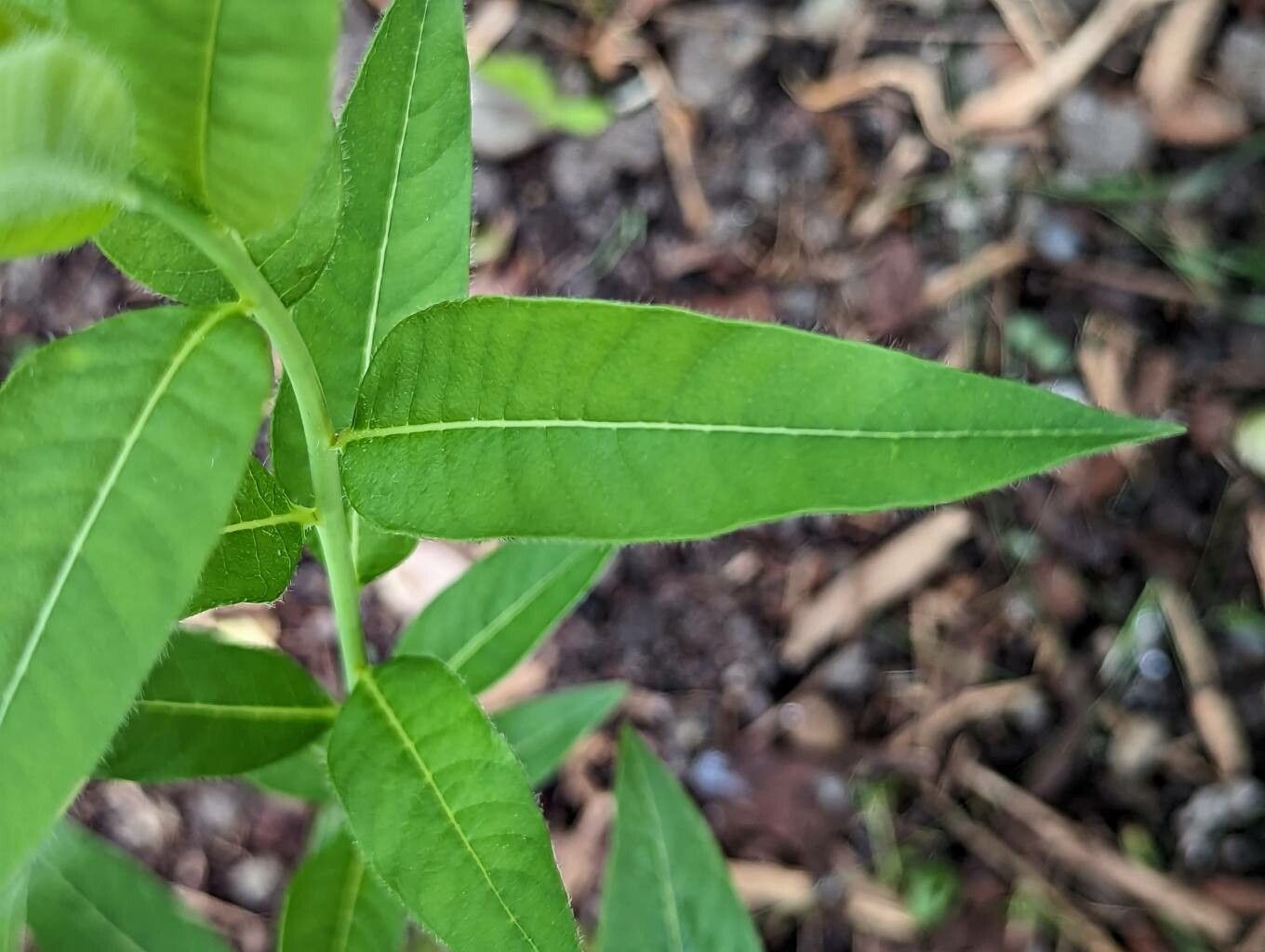
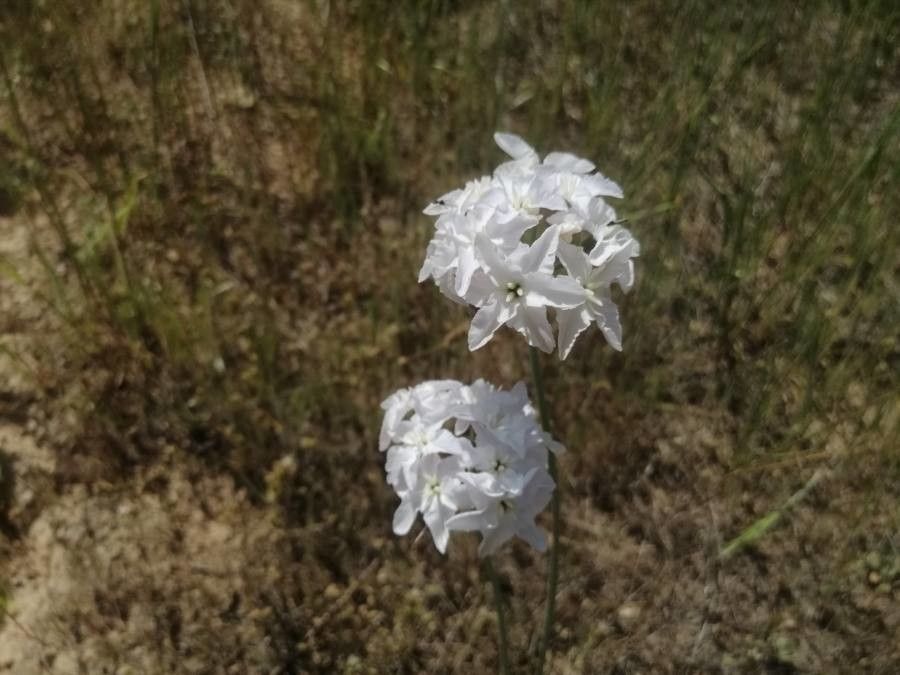
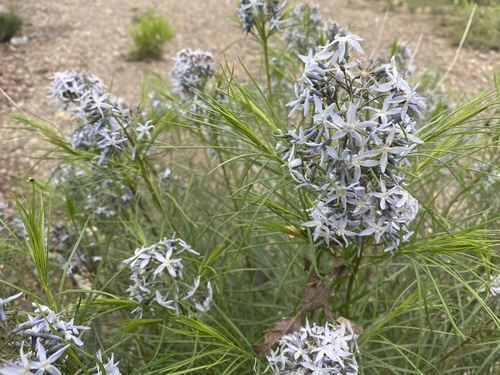
Amsonia tomentosa is a species of flowering plant native to the southwestern United States (S California, S Nevada, Utah, Arizona, New Mexico, W Texas) and northern Mexico (Chihuahua). Its common names include woolly bluestar and gray amsonia. Amsonia tomentosa is a short, woody plant with many erect stems rarely reaching half a meter in height. The plant has two forms, a green glabrous (hairless) form, and a gray woolly form. The leaves are oval but pointed, and about 3 centimeters long. The flowers are white with a green or blue tint. They are tubular at the base and have flat faces with five petals. The flowers often come clumped in a cyme inflorescence. The fruits are podlike follicles that may separate into sections, each bearing a seed. Varieties Amsonia tomentosa var. stenophylla Kearney & Peebles – Arizona, New Mexico, Utah, Texas, Chihuahua Amsonia tomentosa var. tomentosa – S California, S Nevada, NW Arizona
Woolly bluestar is fairly disease-resistant and usually not prone to illnesses. However, it can be affected by pests and diseases present in its surroundings. These problems are typically not severe. In terms of care, the plant requires moderate maintenance. It should be pruned regularly to maintain appearance and support healthy growth. Fertilizing can also help encourage flowering. Woolly bluestar is suitable for anyone with outdoor space, such as a garden or patio, and does not demand extensive gardening experience. It may require more attention if grown indoors.
How to keep Amsonia Tomentosa.
Light
Woolly bluestar is a sun-loving, perennial herbaceous plant that comes from open habitats and commonly thrives in meadows and grasslands. It prefers full sun but can also tolerate partial sun.
Water
Woolly bluestar flourishes when provided with moderate moisture, necessitating regular weekly watering. This plant prefers well-draining soil to avoid overwatering, which is important for maintaining healthy roots. Generally cultivated outdoors, this resilient species is well-adapted to its native environment, achieving a balance between hydration and avoiding excessive dryness or moisture.
Temperature
Woolly bluestar is native to areas where temperatures range from 32 to 100.4°F (0 to 38℃), so it is well suited to a variety of climates. It tolerates cold conditions, but should be protected during severe weather.
Fertilizer
The best time to fertilize a Woolly bluestar is in early spring, as it emerges from dormancy and starts active growth. Fertilization supplies essential nutrients for healthy development. Although Woolly bluestar has relatively low fertilizer requirements, an annual application can improve its survival and encourage better, longer-lasting flowers.
Pruning
Woolly bluestar is known for its dense, woolly foliage and blue star-shaped flowers. To ensure it thrives, it's important to prune the plant from early to late spring. By trimming old stems and removing dead growth, you promote healthier blooms, maintain a compact shape, and improve airflow, which helps reduce the risk of diseases. Spring pruning rejuvenates the plant after its dormant period, ensuring robust growth and abundant flowering.
Botanical profile.
- Plant Type
- Herb
- Life Cycle
- Perennial
- Genus
- Amsonia
- Family
- Apocynaceae
- Hardiness Zone
- 3-11
- Mature Height
- 20 cm to 61 cm
- Mature Spread
- 30 cm to 46 cm
- Leaf Color
- Light Green
- Leaf Type
- Deciduous
- Flower Color
- White, Purple
- Flower Size
- 1.02 cm to 2.03 cm
- Bloom Time
- Mid spring, Late spring
- Planting Time
- Spring, Summer
- Harvest Time
- Early summer, Mid summer
- Native Area
- Mexico
Other names.