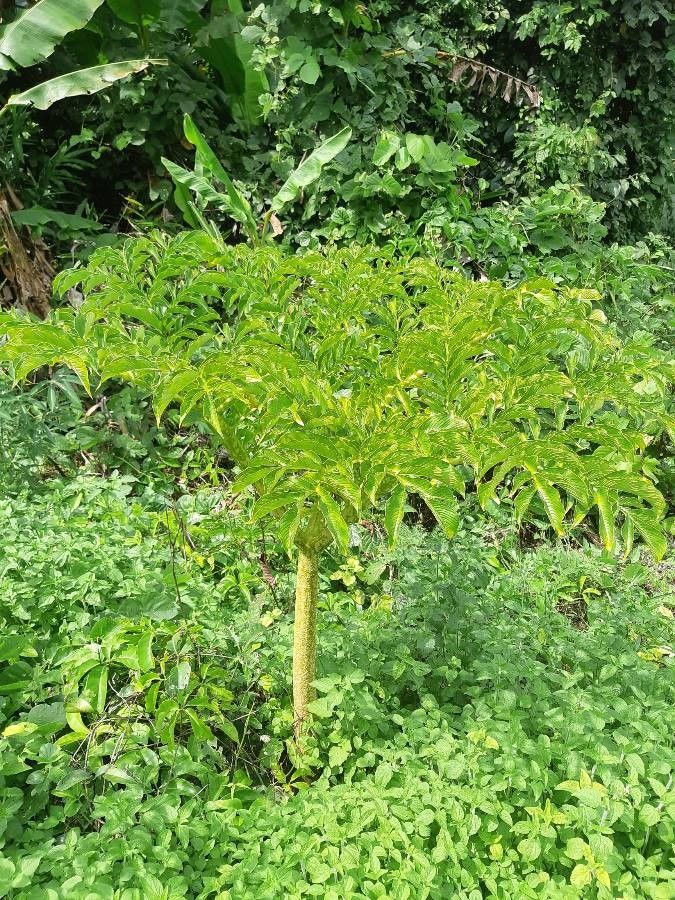
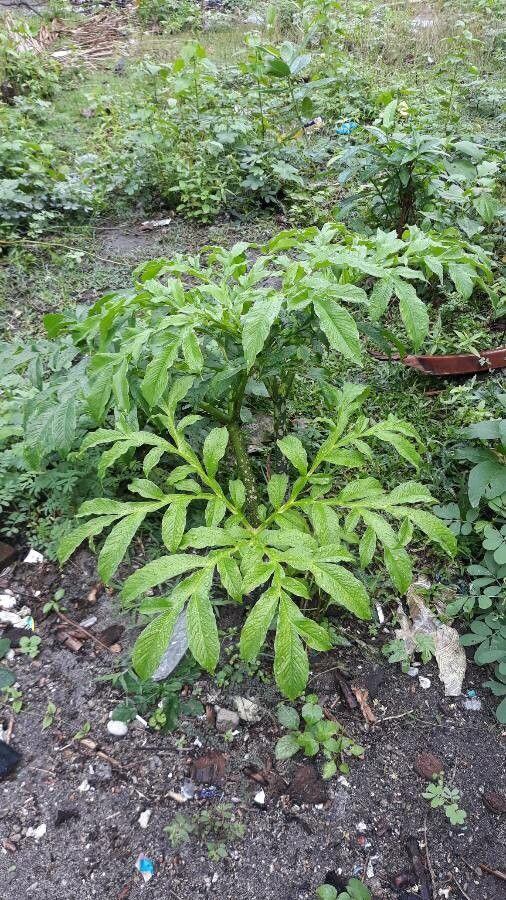
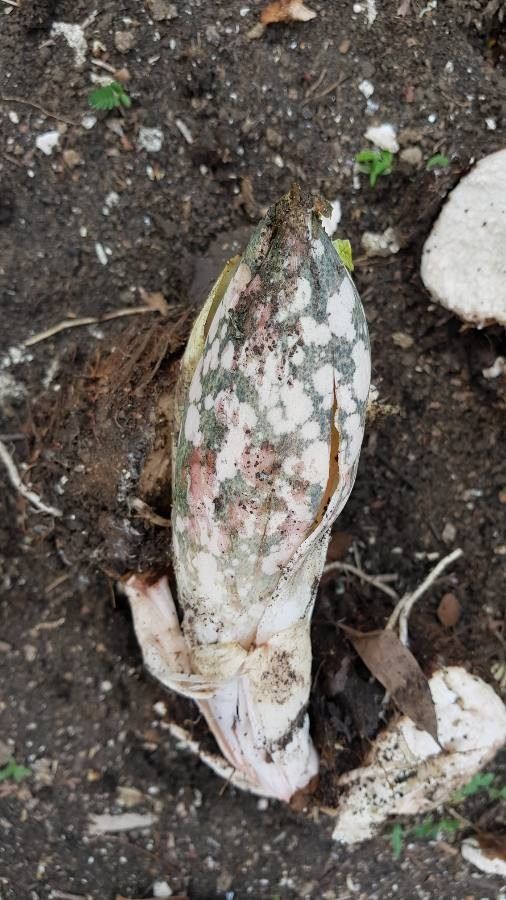
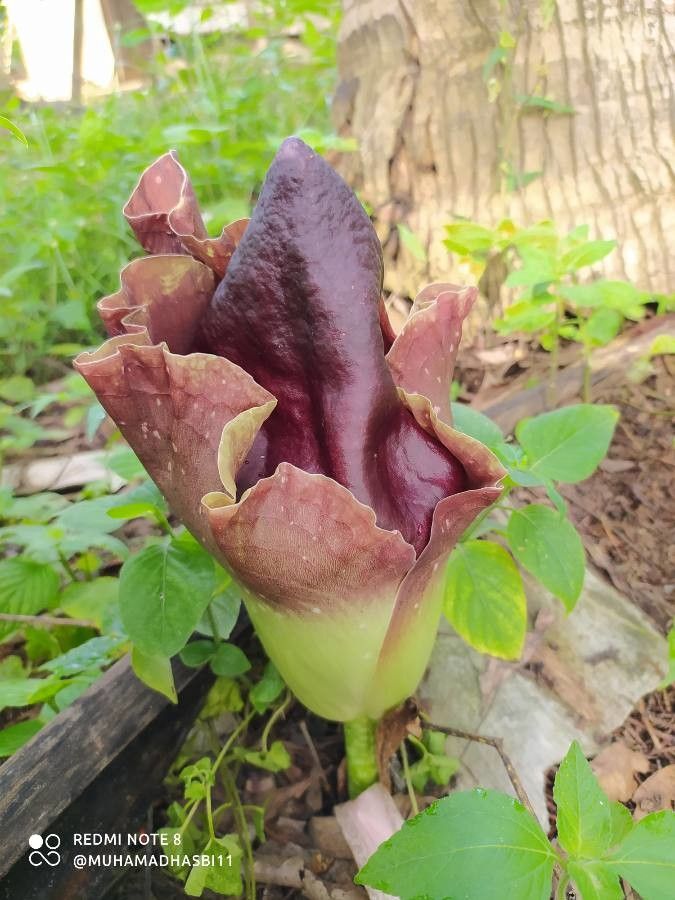
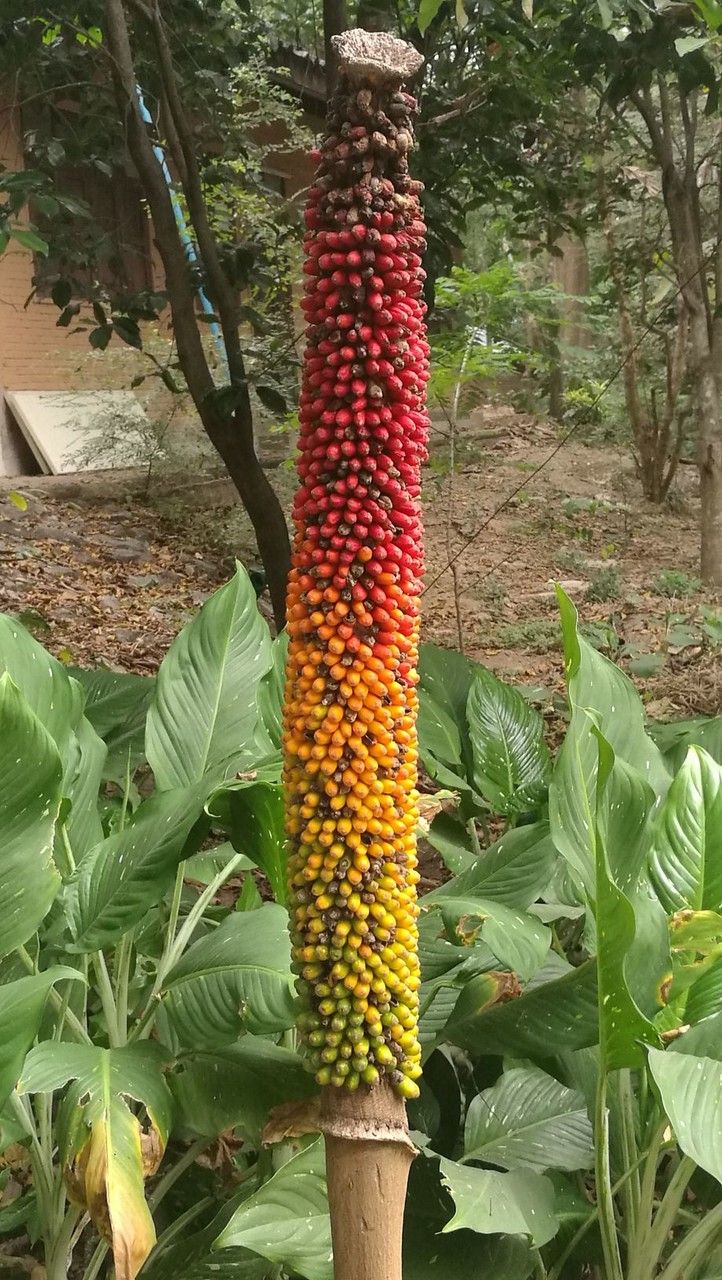
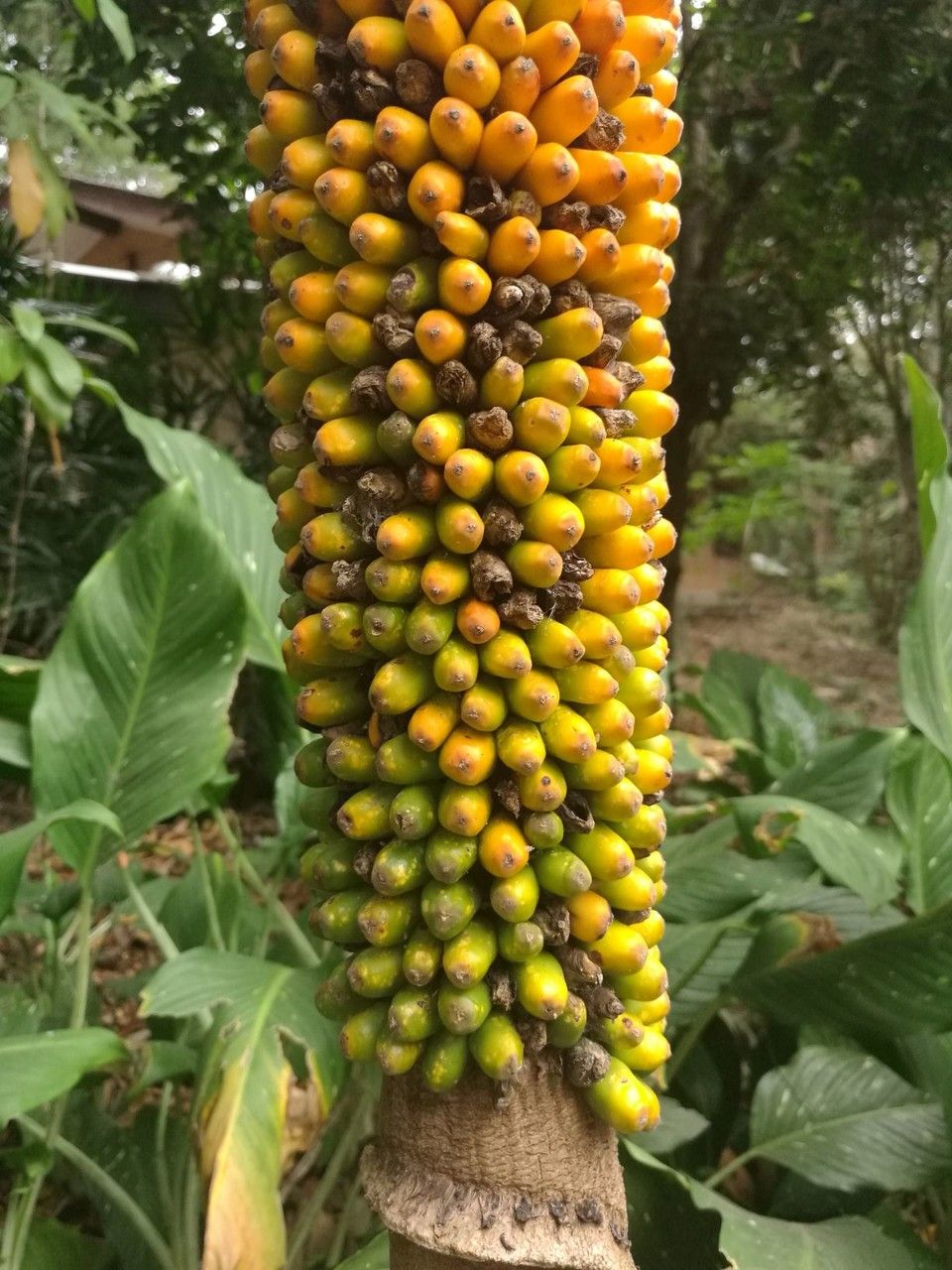
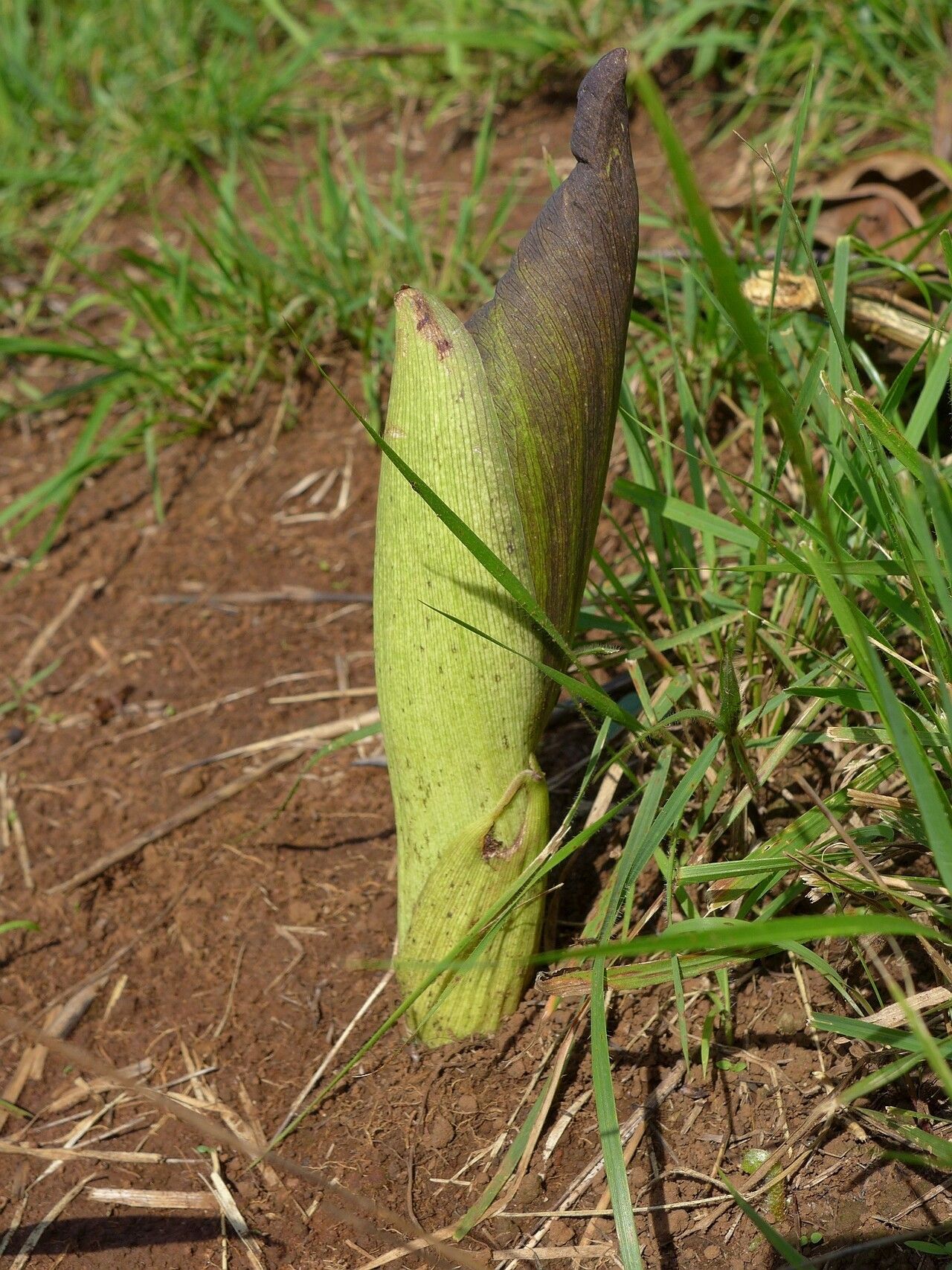
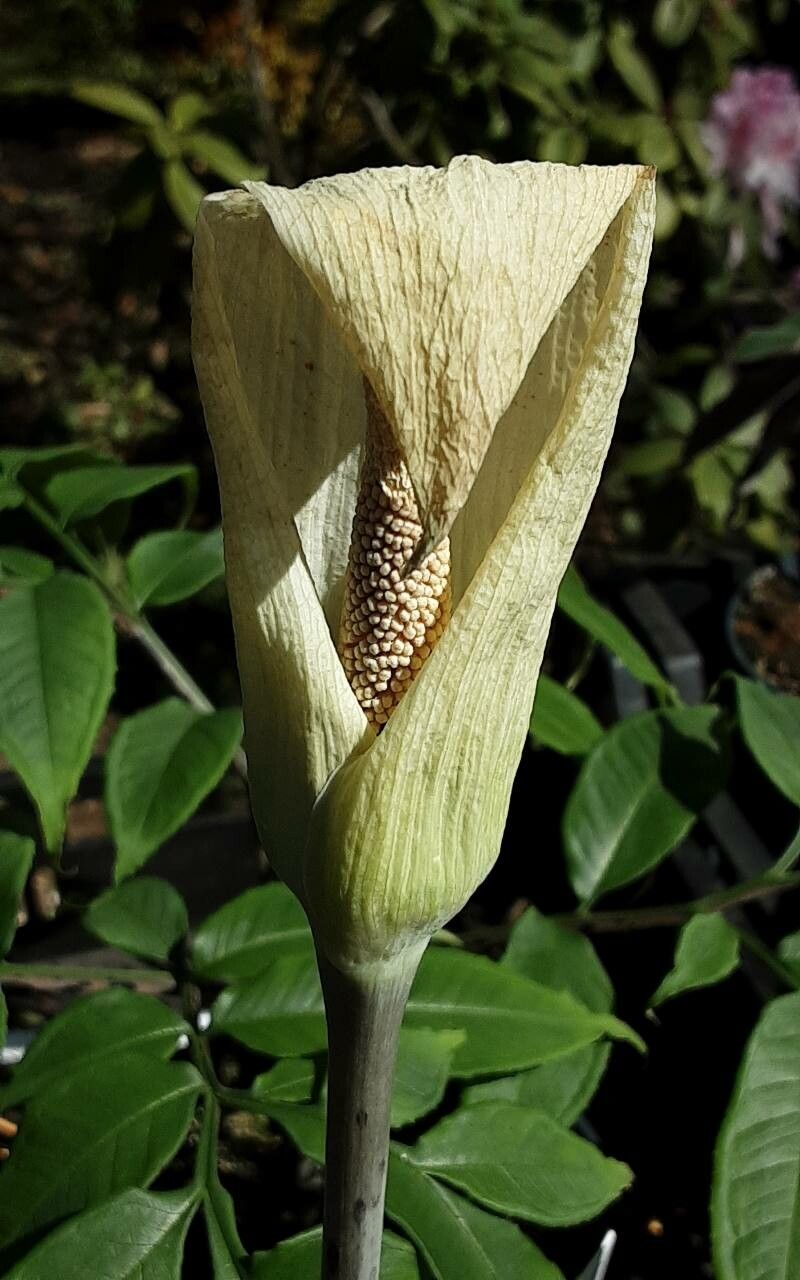
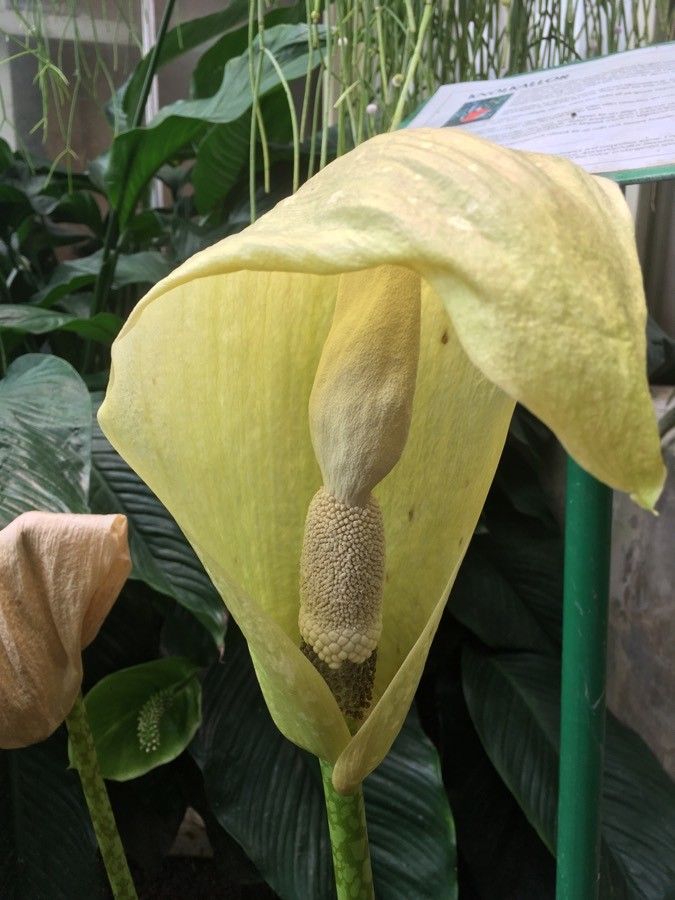
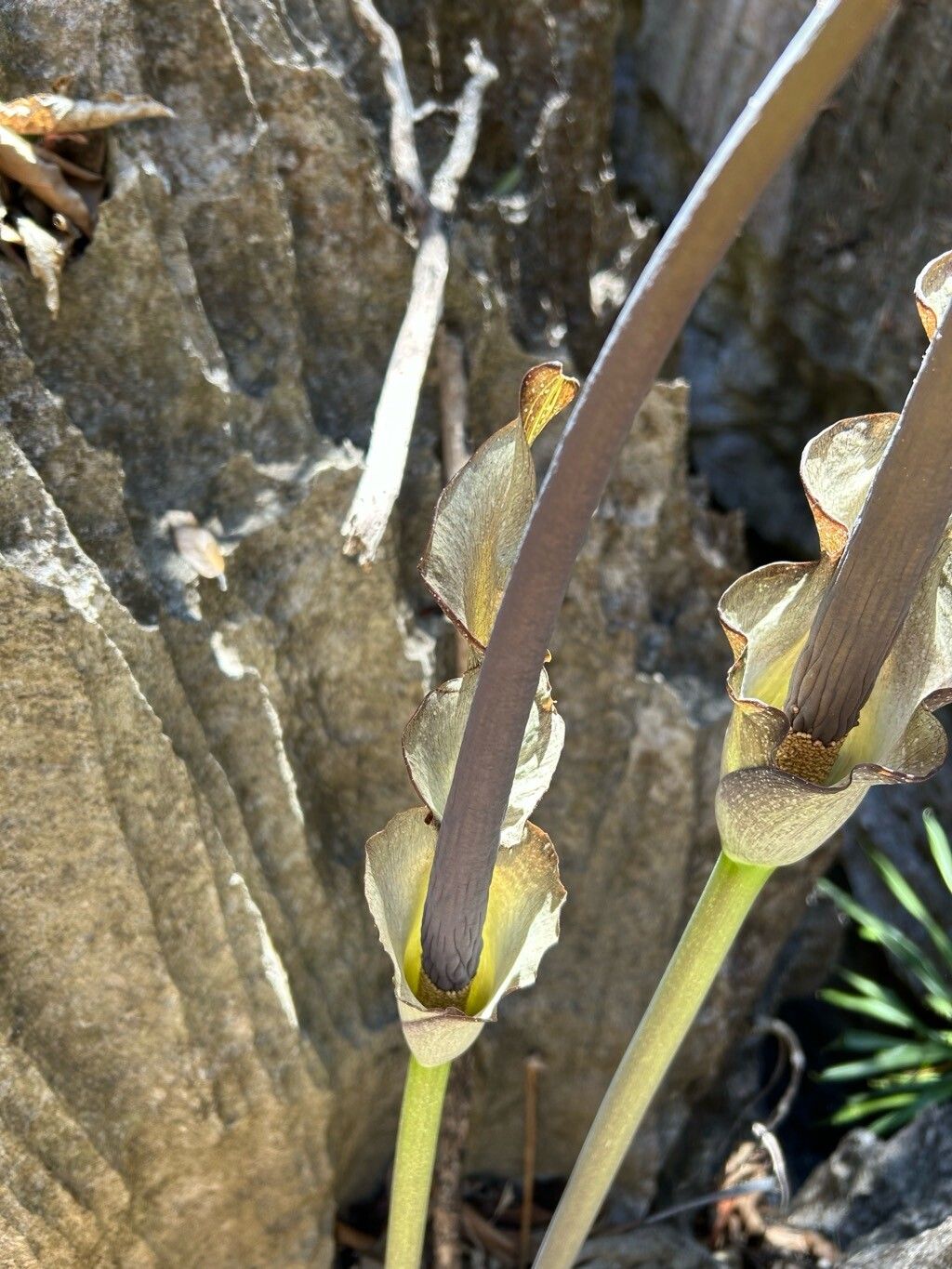
Amorphophallus paeoniifolius, commonly known as the elephant foot yam, is a tropical plant native to Southeast Asia and India. Part of the Araceae family, this perennial herb can grow up to 2 meters tall. It features large, heart-shaped leaves that can extend up to 1 meter in length, and it produces a single inflorescence with a prominent spadix encircled by an elongated spathe.
The elephant foot yam holds significant culinary value in many parts of Asia, especially in India, where it is extensively cultivated for its edible tubers. These tubers are rich in starch and serve as a staple food source for numerous communities. Additionally, they are used medicinally for their anti-inflammatory properties.
To thrive, the plant requires warm temperatures and high humidity levels, making it well-suited to tropical climates. It prefers well-drained soils rich in organic matter but can tolerate some degree of waterlogging.
Despite its culinary importance, the plant contains toxic compounds that necessitate careful preparation before consumption. The tubers have calcium oxalate crystals, which can cause irritation if not properly processed or thoroughly cooked.
In summary, Amorphophallus paeoniifolius is a fascinating plant with both culinary and medicinal applications, playing a vital role in many cultures across Southeast Asia and India.
Whitespot giant arum has moderate resistance to disease and can be prone to problems like leaf spot. Its sensitivity to insect pests varies with the variety, but most are not highly resistant to pests. For care, Whitespot giant arum requires regular watering and fertilization, along with frequent removal of yellowing leaves. It is important to treat pests and diseases when they occur and to harvest the plant promptly. Whitespot giant arum is appropriate for people who can dedicate some time and effort to routine care.
How to keep Amorphophallus Paeoniifolius.
Light
The Whitespot giant arum grows best with prolonged sun exposure during the day, though it can tolerate lower light levels. Native to sunny habitats, this plant uses sunlight to support healthy growth. Excessive sun can cause leaf blotches and scorching, while too little light may limit its growth potential.
Water
The whitespot giant arum, native to tropical rainforests, thrives in high humidity and can tolerate short periods of dryness. When watering, aim to do so weekly, keeping the soil consistently moist but not waterlogged. If grown outdoors, ensure it is planted in well-draining soil to prevent root rot, particularly during its active growing season when it requires more water.
Temperature
The Whitespot giant arum flourishes in conditions similar to its native tropical habitat, with ideal temperatures around 68 to 100 °F (20 to 38 ℃). It copes well with most seasons, provided the temperature stays within this preferred range.
Fertilizer
For Whitespot giant arum, apply natural organic materials such as compost, grass clippings, or manure. A slow-release granular fertilizer or a commercial fertilizer may be used sparingly. Incorporate the organic fertilizer into the soil before planting. Generally, one to two fertilizer applications per growing season are sufficient for a plentiful harvest.
Pruning
Proper pruning of the whitespot giant arum in early to late spring promotes healthy growth by removing dead or damaged leaves. This also helps control the plant's size and shape, improving air circulation. Be cautious of the plant's irritating sap while pruning. Regular pruning leads to a robust and visually appealing plant.
Botanical profile.
- Plant Type
- Herb
- Life Cycle
- Perennial
- Genus
- Amorphophallus
- Family
- Araceae
- Hardiness Zone
- 11-12
- Mature Height
- 18.9 m
- Mature Spread
- 0.91 m to 2.13 m
- Leaf Color
- Green
- Leaf Type
- Deciduous
- Flower Color
- Yellow, Red, Purple, Brown
- Flower Size
- 5.08 cm to 6.35 cm
- Bloom Time
- Early summer, Mid summer
- Planting Time
- Spring, Summer
- Harvest Time
- Late summer, Early fall, Mid fall
- Native Area
- Sri Lanka, India, Malaysia, Indonesia, Cambodia, Vietnam, Myanmar, Philippines, Bhutan, Bangladesh, Laos, Thailand, China
Other names.
Reader questions.
How should I water my Whitespot giant arum plant?
When it comes to watering your Whitespot giant arum, there are several options available. If you have the plant in a small pot indoors, you can simply take it to the kitchen sink and use the faucet to add water to the container. Hold the pot in your hands and stop watering when you see water running out of the drainage holes. However, keep in mind that doing this in winter or cold climates can harm the plant's roots. If your tap water has high levels of fluorine, chlorine, or salts, it is best to use rainwater or lake water instead. Additionally, the Whitespot giant arum responds well to both overhead watering and direct watering into the soil, so you can use a watering can, hose, or any tool of your choice.
Why is it necessary to add fertilizer to my Whitespot giant arum plant?
Depending on the soil conditions in your garden, fertilizing your Whitespot giant arum may or may not be necessary. A good harvest without fertilizing is a sign that you may not need to add fertilizer. To be sure, testing the soil is the best approach. You can do it yourself or have a lab analyze it. By knowing the nutrient levels in your soil, you can make an informed decision about whether or not to use additional fertilizer.
What are the sunlight requirements for Whitespot giant arum?
Whitespot giant arum thrives under full sun, meaning it requires above 6 hours of sunlight daily for optimal growth. However, it can also adapt to partial sun conditions, where it would receive about 3-6 hours of sunlight. The plant originates from habitats rich in sunlight, utilizing this energy for healthy growth. It's vital to observe how sunlight moves through your garden to ensure plants get the right balance of light and shade, mitigating risks like leaf blotches and scorching from overexposure or growth hampering from insufficient light.
What is the optimal temperature range for growing Whitespot giant arum?
Whitespot giant arum thrives best in a temperature range from 68 to 100 °F (20 to 38 °C), which reflects its preference for environments similar to its original tropical habitat. To ensure optimal growth, especially during winter, it's important to maintain temperatures above 20°C and keep the minimum temperature above the freezing point to avoid freezing damage. In regions where outdoor temperatures may drop to -5°C (25°F) or lower in winter, taking measures such as bringing the plant indoors or using protective coverings like plastic film or fabric is advisable to shield it from the cold.
What should I do if I give too much or too little water to my Whitespot giant arum?
If you realize that your Whitespot giant arum is not getting enough water, the first step to fix the problem is to give it some water. Water the plant deeply until the excess water drains from the container or until the soil becomes wet if you are growing it outside. On the other hand, if you notice that your Whitespot giant arum is receiving too much water, start by watering it less frequently. You should also consider the soil and container in which the plant is growing. If the soil or container does not allow for proper drainage, the plant may become overwatered again. To solve this, transfer the plant to looser soil and use a container with larger drainage holes or a more porous material. Additionally, check the location of the plant. If it is placed in a corner or a poorly ventilated area, it is advised to move it to a spot near a window or door to improve air circulation. Ensuring that the plants are in a well-ventilated location can help reduce the chances of overwatering to some extent.
When should I fertilize my Whitespot giant arum for the best results?
To prepare for planting Whitespot giant arum, begin by mixing organic fertilizer into the soil at least a week before planting. Then, during the spring, apply a dressing on top of the soil to give the young plants an extra boost. Generally, one to two applications of fertilizer during the growing season should be enough to ensure a good harvest of Whitespot giant arum.
How should artificial lighting be used for indoor Whitespot giant arum plants?
Indoor Whitespot giant arum plants require adequate lighting for optimal growth. When natural sunlight is insufficient, artificial lights are beneficial. For full sun plants, 30-50W/sq ft of artificial light is recommended, 20-30W/sq ft for partial sun plants, and 10-20W/sq ft for full shade plants. LED lights are a popular choice as they can be customized to provide specific wavelengths needed by plants. The artificial light source should be placed 12-36 inches above the plant, mimicking natural sunlight, and kept on for 8-12 hours per day to match natural daylight hours for the species.
How does Whitespot giant arum react to low temperatures, and what are the solutions?
Whitespot giant arum displays moderate tolerance to low temperatures but performs best when kept within its ideal temperature range of 20°C to 38°C. During the colder months, it's crucial to keep the temperature above 10°C to prevent the leaves from darkening, which is a sign of distress. Exposure to temperatures below 5°C can lead to more severe symptoms such as water-soaked necrosis, wilting, and eventual browning of the leaves. To mitigate these issues, affected parts should be trimmed away, and the plant should either be moved indoors to a warmer environment or protected with a makeshift greenhouse. Ensuring the plant is placed near a south-facing window for sufficient sunlight or using supplemental lighting if natural light is inadequate can also help in recovery.
How often do I need to give water to my Whitespot giant arum?
The Whitespot giant arum does not need consistently moist soil. It is actually better to let the soil dry out in between watering. If you grow these arums in containers, you can determine when to water by checking how dry the soil is inside the container. If the top half of the soil is dry, it is time to water. You can check by feeling the soil with your fingers, sticks, or a soil moisture meter. If you are growing Whitespot giant arums outdoors, you can plan to water them about once every other week, unless it has rained recently.
When is it not a good idea to add fertilizer to my Whitespot giant arum?
If you have already harvested most of your vegetables, there is no need to fertilize your Whitespot giant arum. This crop needs to be replanted every year, so it would be a waste of your fertilizer and energy. Additionally, if you are gardening in soil that is already nutrient-rich, avoid fertilizing the Whitespot giant arum. It doesn't require a lot of fertilizer to grow well and produce flavorful vegetables. Only fertilize if a soil test indicates that your garden soil is lacking in certain nutrients.
What are the symptoms of light deficiency in Whitespot giant arum?
When grown indoors or under limited light, Whitespot giant arum may show signs of light deficiency. Symptoms include smaller sized new leaves, leggy or sparse growth, faster leaf drop, slower or halted new growth, lighter-colored new leaves, chlorosis (yellowing leaves due to chlorophyll breakdown from excessive sunlight, negatively impacting photosynthesis), sunscald (damage from intense sunlight exposure), leaf curling (a defense mechanism against excessive sunlight), wilting (from increased water loss and inadequate hydration), and leaf scorching (brown, dry, crispy leaf edges from excessive sunlight).
How does Whitespot giant arum react to high temperatures, and what should be done?
During the warmer months, it's important to keep Whitespot giant arum in conditions below 38°C to prevent heat stress, as exposure to temperatures above 43°C can slow down its growth, lighten the color of its leaves, and increase susceptibility to sunburn. In such cases, it's advisable to trim away any sunburned or dry parts and relocate the plant to an area with afternoon shade. Additionally, watering the plant in the morning and evening can help keep the soil moist and further alleviate stress from high temperatures.