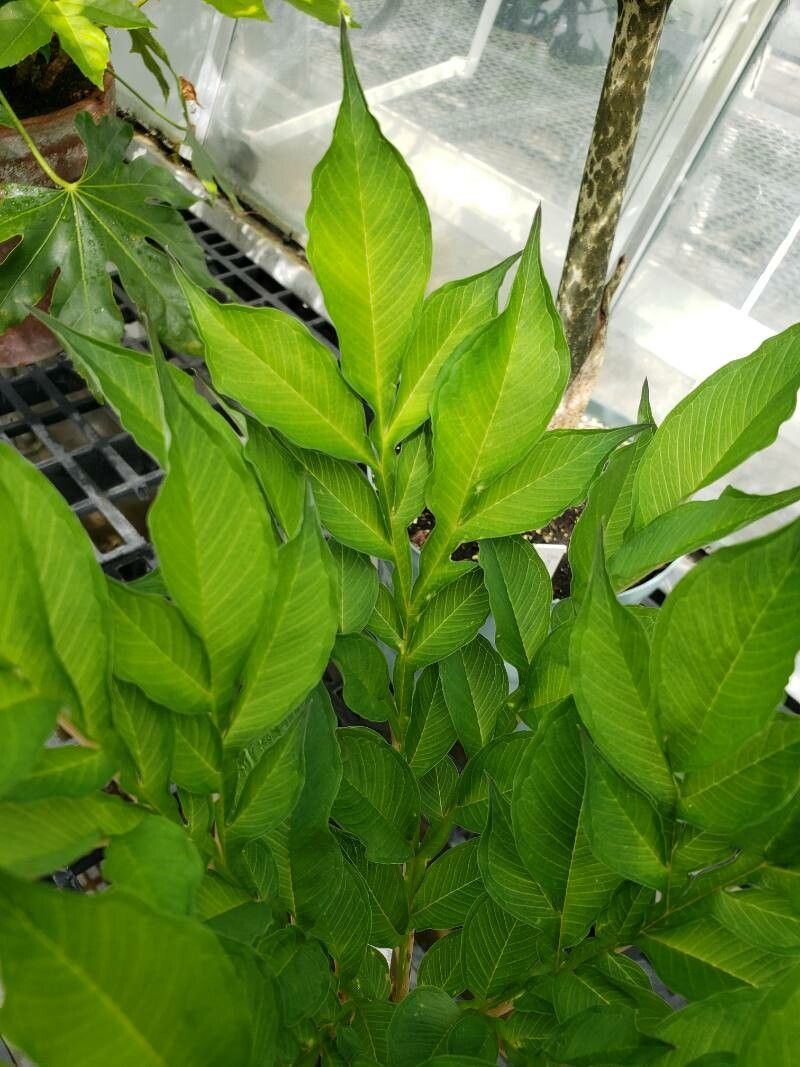
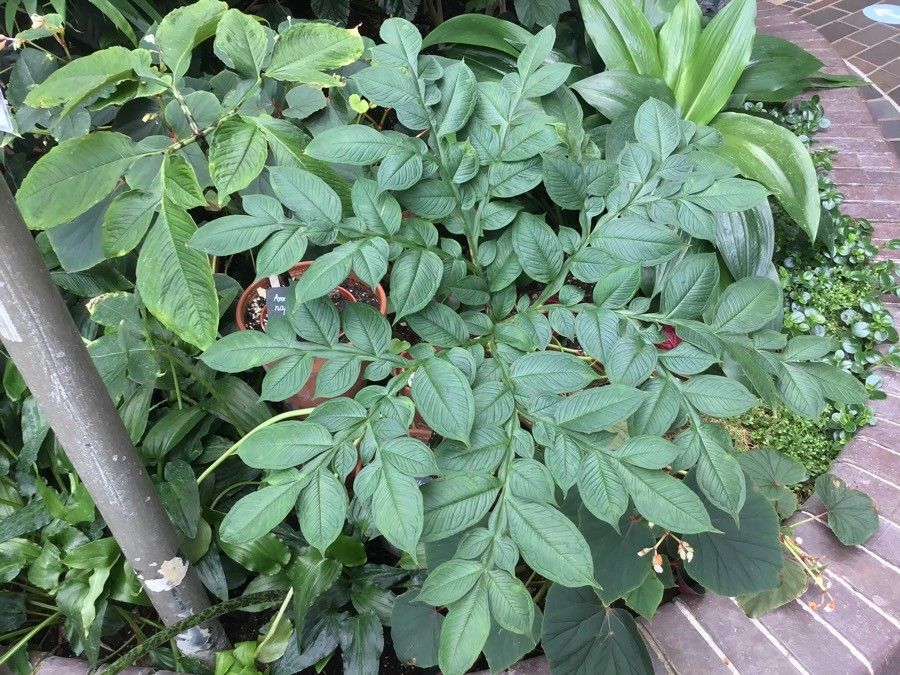
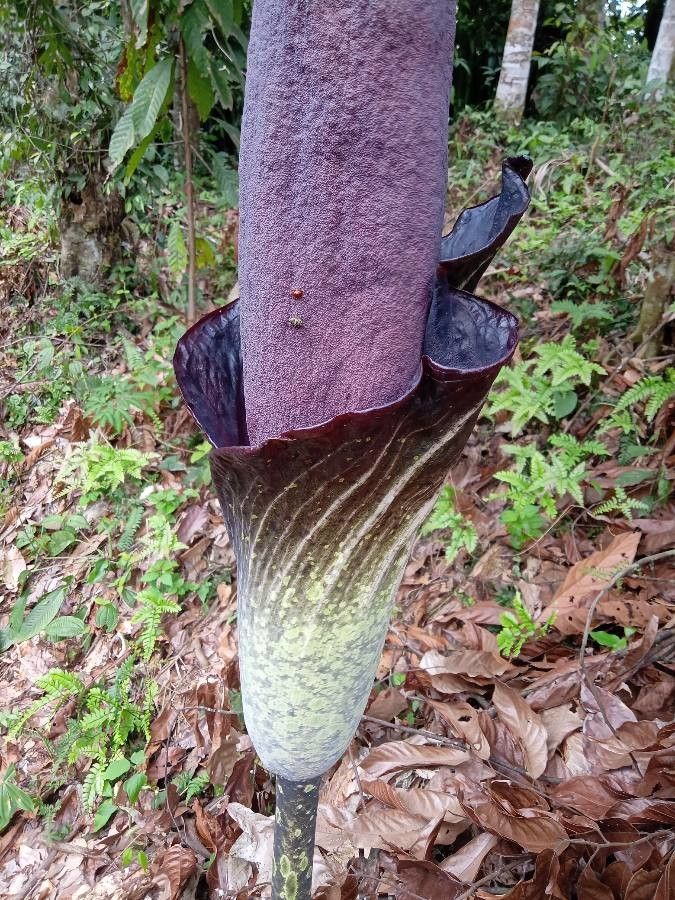
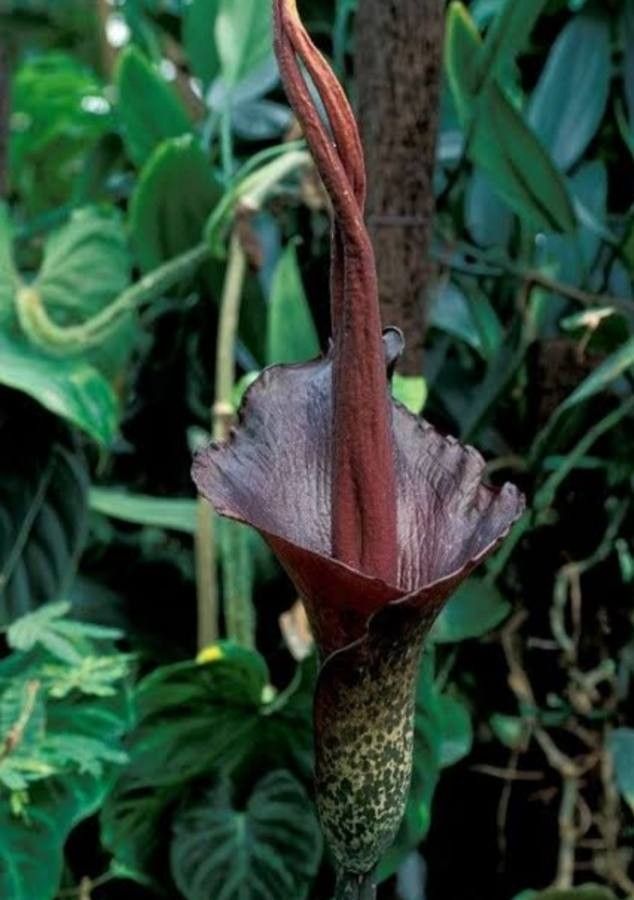
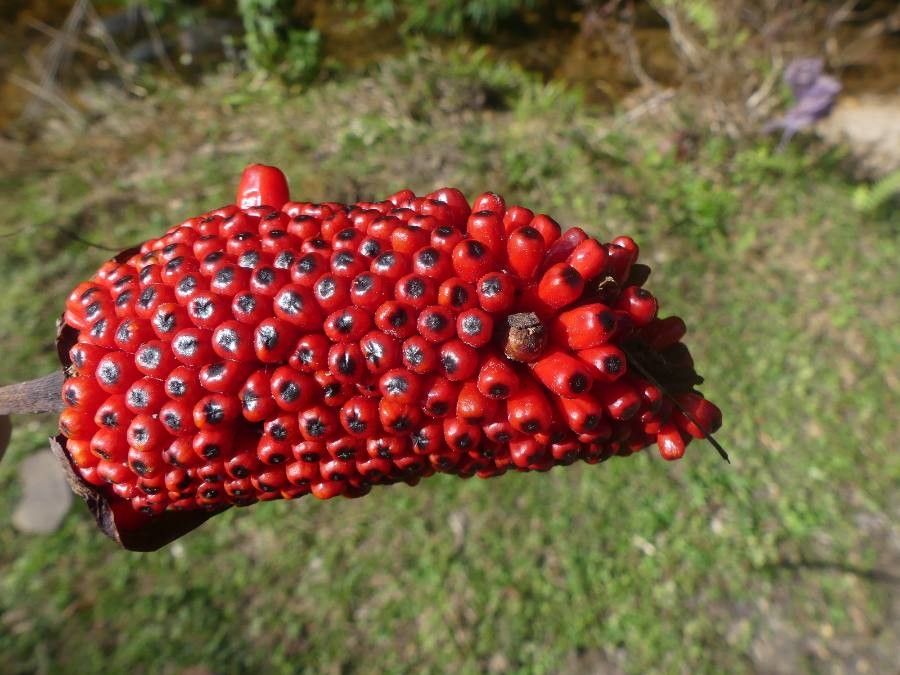
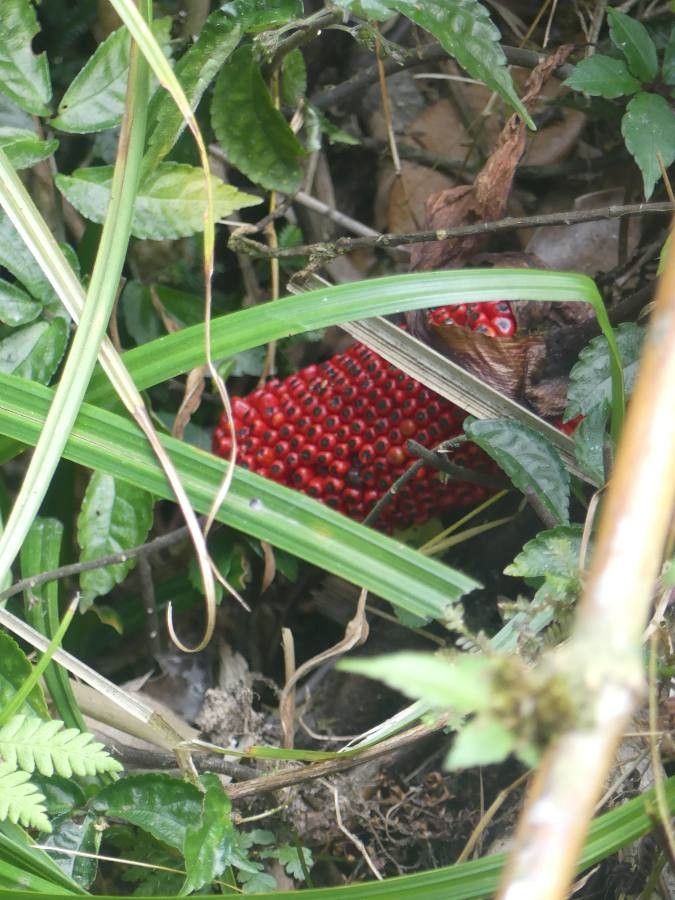
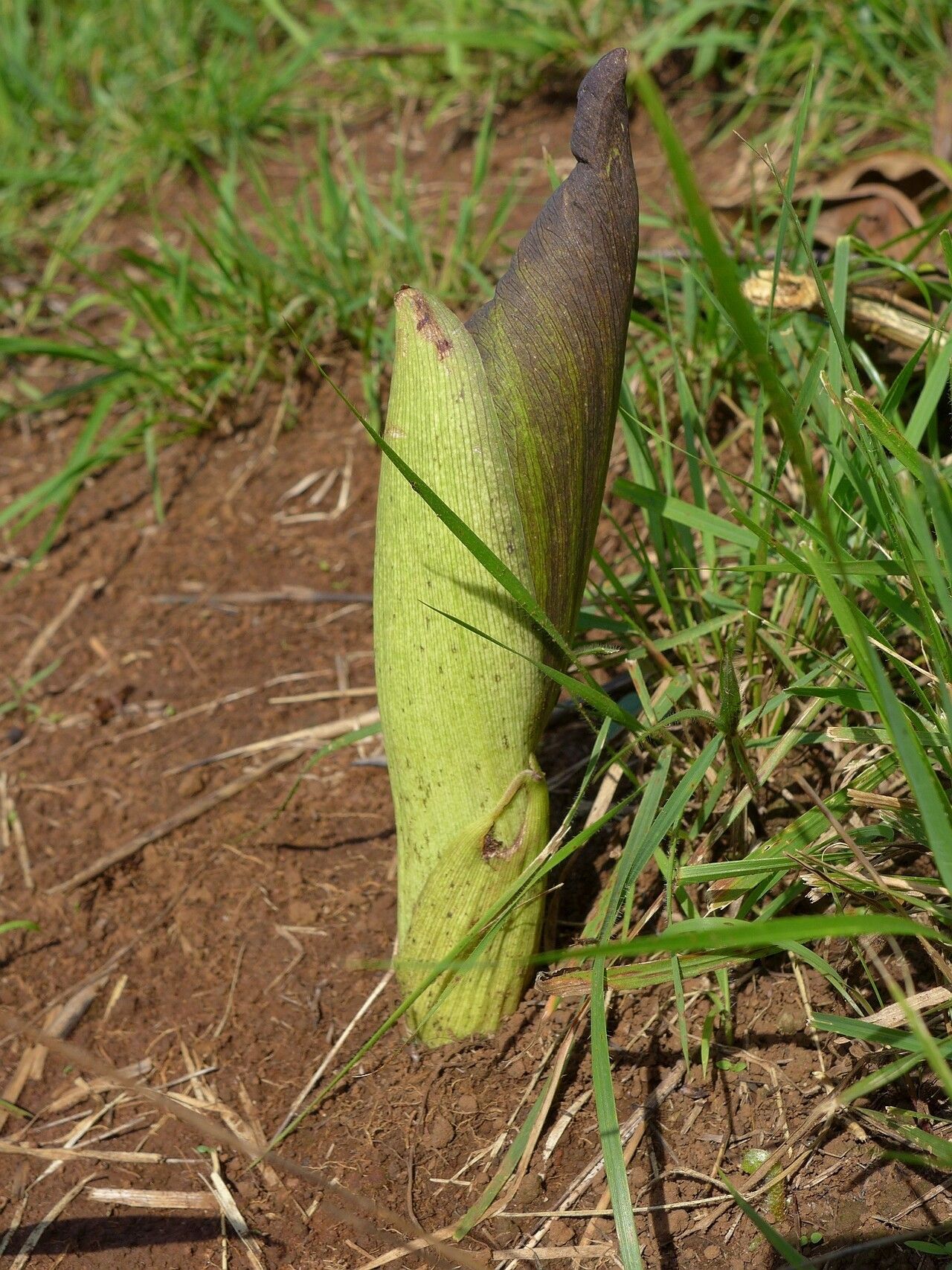
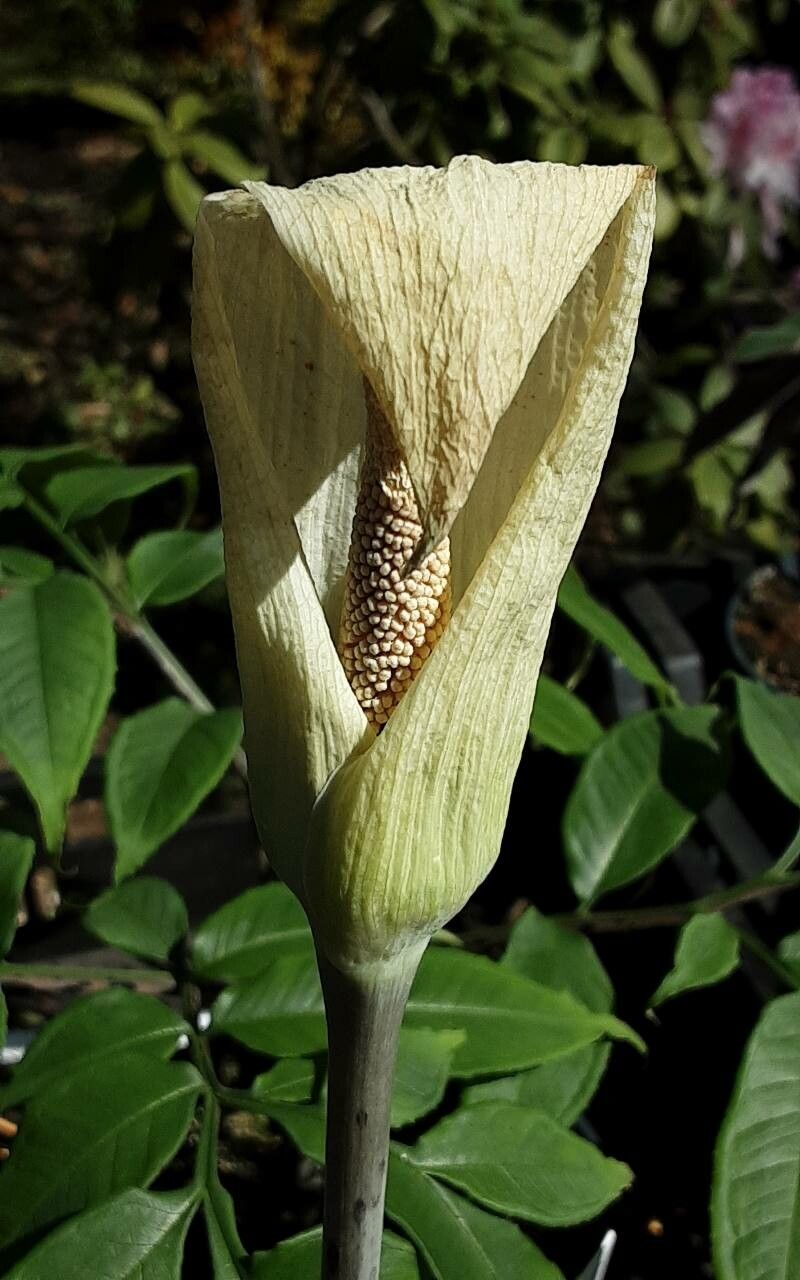
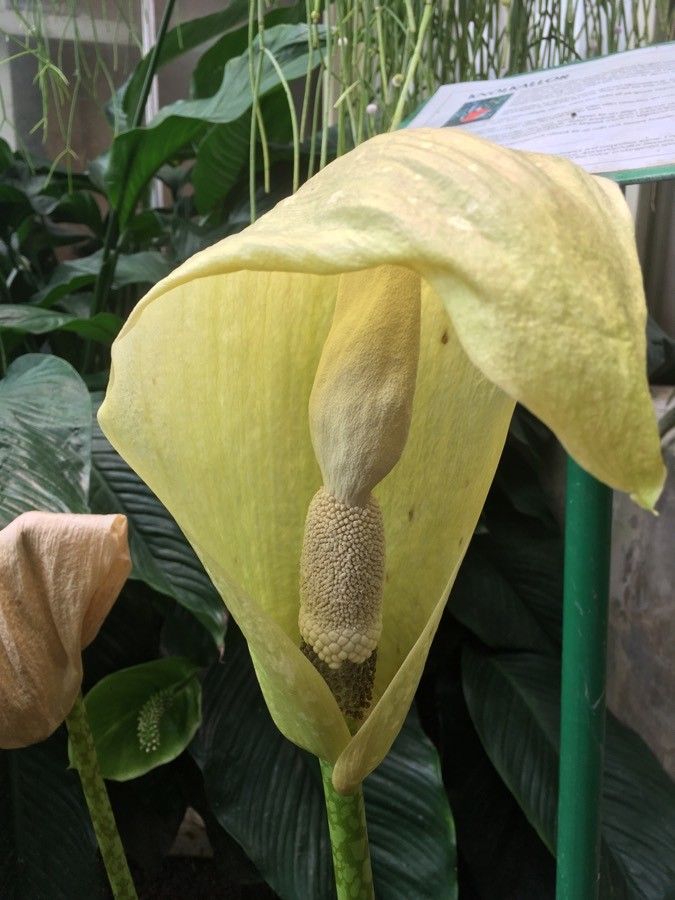
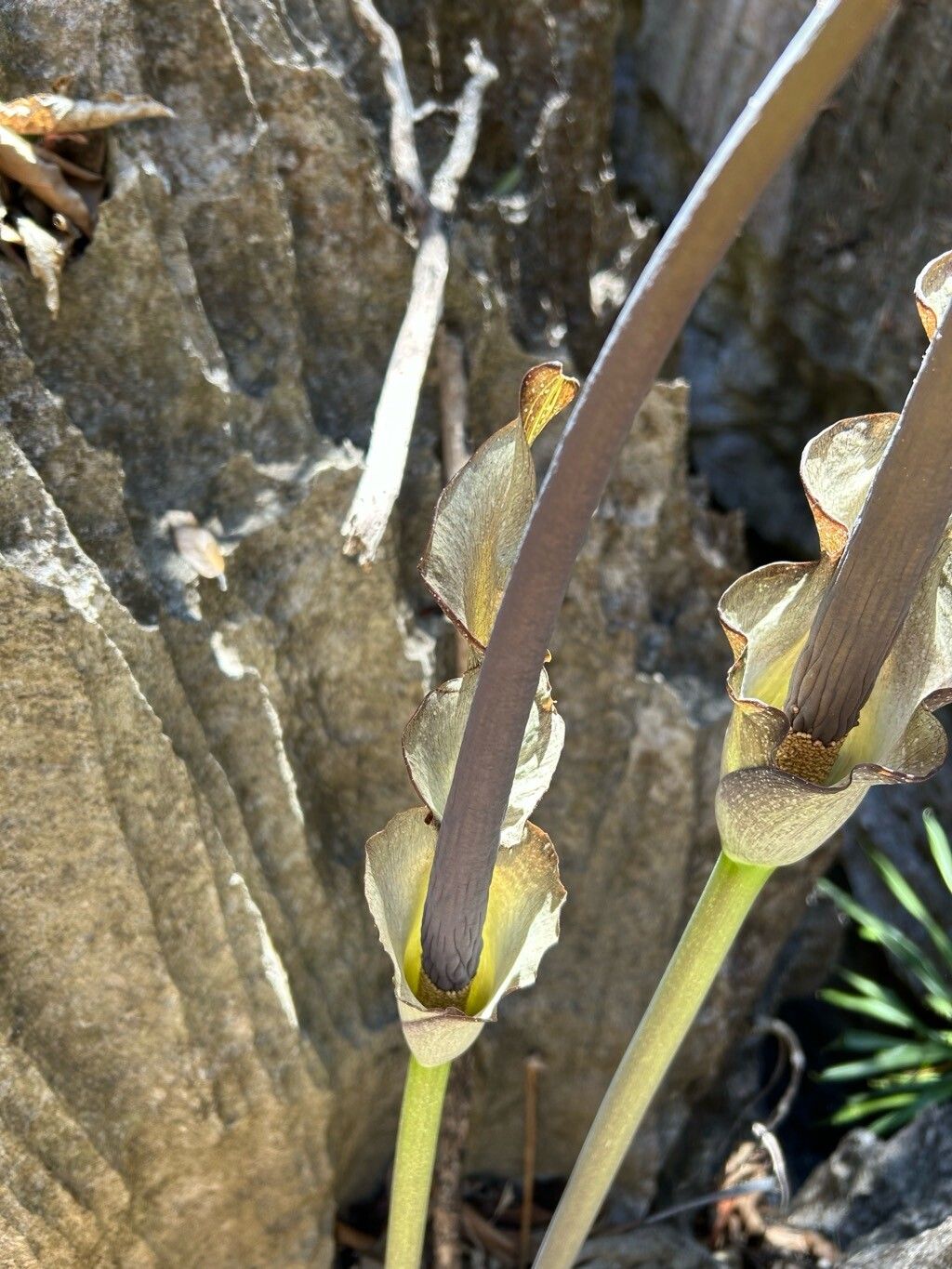
Konjac (or konjak, English: KON-yak, KON-jak) is a common name of the East and Southeast Asian plant Amorphophallus konjac (syn. A. rivieri), which has an edible corm (bulbo-tuber). It is also known as konjaku, konnyaku potato, devil's tongue, voodoo lily, snake palm, or elephant yam (though this name is also used for A. paeoniifolius). It is native to Yunnan in China and cultivated in warm subtropical to tropical East and Southeast Asia, from China and Japan south to Indonesia and Vietnam (USDA hardiness zone 6–11). It is a perennial plant, growing from a large corm up to 25 cm (10 in) in diameter. The single leaf is up to 1.3 m (4 ft) across, bipinnate, and divided into numerous leaflets. The flowers are produced on a spathe enclosed by a dark purple spadix up to 55 cm (22 in) long. The food made from the corm of this plant is widely known in English by its Japanese name, konnyaku (yam cake), being cooked and consumed primarily in Japan and Korea. The two basic types of cake are white and black. Noodles made from konnyaku are called shirataki. The corm of the konjac is often colloquially referred to as a yam, though it is not related to tubers of the family Dioscoreaceae.
Konjac has moderate resistance to diseases but can be prone to problems such as leaf spot. Its vulnerability to insect pests varies by variety, though most types are relatively less resistant to pests. Regarding care, Konjac requires regular watering and fertilization, along with frequent removal of yellow leaves. Controlling pests and diseases promptly and harvesting the plant at the right time are important. Konjac is suitable for people who can commit some time and energy to routine care.
How to keep Amorphophallus Konjac.
Light
Konjac grows well with a mix of sun and shade, so it is adaptable to different light conditions. Excessive exposure to sunlight can be damaging, while too little light can limit its growth. Its native habitat features variable light levels, and it does not require strong sunlight at any stage of development.
Water
Konjac is native to tropical regions and thrives in humid environments, where it naturally absorbs moisture from the air around it. To keep it healthy, the plant prefers soil that remains consistently moist without becoming waterlogged, so it needs to be watered weekly. As an evergreen often grown indoors, konjac also benefits from regular misting to mimic its naturally humid habitat.
Humidity
This plant will thrive in moderate humidity, which is probably the level in your home. However, misting it a few times a week can be very beneficial. Make sure the room has good ventilation.
Temperature
Konjac originates from areas where temperatures typically range from 50 to 100 °F (10 to 38 ℃). It grows most successfully within that temperature band. In colder seasons, ensure it gets enough warmth to keep conditions inside that range.
Fertilizer
Konjac plants benefit from one or two applications of organic, natural fertilizers that contain potassium and phosphorus. Apply the fertilizer before planting, work it into the soil and water thoroughly. Usually a single application is enough, but a second can be made after seedlings have become established. Avoid overusing fertilizer, since it can damage the plants.
Pruning
Konjac, known for its large blooms and tuberous roots, benefits from light pruning done from early to late spring. To encourage growth and improve air circulation, remove any dead foliage. This also helps minimize the risk of pests. Aim to keep the plant looking neat while allowing it to develop naturally. For additional guidance, consult expert horticultural resources.
Pot & Repot
To ensure optimal growth, repot your konjac plant each spring while it is dormant. Choose a pot that is only slightly larger than the corm, as konjac can reach heights of up to 1.5 meters (5 feet). Use well-draining soil, and be careful not to over-water after repotting to support the plant's health and recovery.
Botanical profile.
- Plant Type
- Herb
- Life Cycle
- Perennial
- Genus
- Amorphophallus
- Family
- Araceae
- Hardiness Zone
- 6-11
- Mature Height
- 91 cm
- Mature Spread
- 0.61 m to 1.22 m
- Leaf Color
- Green
- Leaf Type
- Deciduous
- Flower Color
- Brown
- Flower Size
- 30.48 cm
- Bloom Time
- Late spring, Early summer
- Planting Time
- Spring
- Harvest Time
- Mid summer
- Native Area
- Laos, Vietnam, Japan, China
Other names.
Reader questions.
How should I water my Konjac plant in the best way possible?
There are multiple ways to water your Konjac plant effectively. If you have it in a small indoor pot, you can easily bring it to your kitchen sink and use the faucet to water it. Simply hold the pot and stop watering when you see water coming out of the drainage holes. However, avoid doing this in cold temperatures or during winter, as it can damage the roots. Most of the time, tap water is fine for watering Konjac plants, but if it has high levels of fluorine, chlorine, or salts, consider using rainwater or lake water. Additionally, you can also water your Konjac plant overhead or directly into the soil using a watering can, hose, or any other watering tool you prefer.
Why do I have to put fertilizer on my Konjac plant?
Konjac is known for its rapid growth and high energy consumption in producing the root vegetables we love. In addition to sunlight, oxygen, and water, Konjac species rely on nutrients to thrive and develop their roots. Garden soil usually contains these nutrients thanks to the decomposition of organic matter. However, there are times when the soil lacks sufficient nutrients to support healthy Konjac growth. In these cases, fertilizer can provide the necessary boost for Konjac plants.
What are the sunlight requirements for Konjac plants?
Konjac plants require a mix of sun and shade to thrive, with partial sun exposure amounting to about 3-6 hours of sunlight and full shade experiencing less than 3 hours of sunlight daily. It's essential to observe the changes in sunlight throughout your garden to ensure your Konjac is planted in an area that provides an ideal balance of light and shade, as too much direct sunlight or insufficient light can hinder its growth.
What is the native temperature range for growing Konjac?
Konjac is native to regions where the temperature comfortably ranges from 50 to 100 °F (10 to 38 °C). It thrives best within this temperature range. To ensure optimal growth, especially during colder seasons, it's important to provide sufficient warmth to maintain temperatures within this range. When cultivating Konjac during winter, keeping the temperature above the freezing point is beneficial to prevent damage, as Konjac prefers relatively warm temperatures.
What should I do if I give my Konjac plant too much or too little water?
If you realize that your Konjac plant isn't getting enough water, the first thing you should do is give it a good watering. Make sure the water seeps through the drainage holes in the container or thoroughly moistens the soil if it's planted outside. On the other hand, if your Konjac is getting too much water, start by cutting back on your watering routine. It's also important to consider the soil and container you're using. If the soil doesn't drain well or the container doesn't have proper drainage, your plant will likely become overwatered again. To fix this, try using looser soil or a container with bigger drainage holes or made from a more porous material. Additionally, check the location of your plant. If it's in a cramped spot, it's a good idea to move it to a more ventilated area like near a window or doorway. Providing good ventilation can help prevent overwatering to some extent.
When should I fertilize my Konjac plant?
To prepare your soil for planting, apply natural fertilizer. Take the time to incorporate the fertilizer into the soil and water it thoroughly before placing seeds or seedlings in the ground. Generally, one application of fertilizer is sufficient to support the growth of Konjac throughout the season. However, if you wish to increase their yield further, you can add another application once the seedlings have established themselves. Just ensure that you do not use excessive fertilizer, as it could harm the plants.
What are the essentials for growing Konjac indoors and outdoors?
Growing Konjac plants successfully requires awareness of their lighting needs. These plants can grow in varied light conditions, from partial sun to full shade, without the need for strong sunlight at any stage of their growth. For indoor plants particularly, adequate lighting is crucial, which can be supplemented with artificial light sources like LED lights when natural sunlight is insufficient. Specific wattage ranging from 10-50W/sq ft depending on the plant's natural sunlight requirement ensures optimal growth. Additionally, maintaining the correct distance between the plant and the light source, as well as mimicking natural daylight hours, can promote healthier growth.
What should I do if the temperature falls below the comfortable range for Konjac?
Konjac has a moderate tolerance to low temperatures, but for optimal growth, it should be kept within its suitable temperature range. If the temperature drops below its tolerable minimum, the leaves may darken, and the plant may experience water-soaked necrosis, wilting, and drooping, with leaves eventually turning brown. In such cases, trim away frost-damaged parts and move the plant to a warmer indoor environment or set up a makeshift greenhouse for cold protection. Ensure the plant is placed near a south-facing window for ample sunlight, and consider supplemental lighting if natural light is insufficient.
How often do I need to water my Konjac plant?
The Konjac plant does not need consistently moist soil. In fact, it is best to let the soil dry out between waterings. If you grow Konjacs in containers, you can check if it's time to water by feeling the soil. If the top half of the soil is dry, it's time to water. You can use your fingers, sticks, or a soil moisture meter to check. For those who grow Konjac outdoors, you can aim to water it once every other week, unless it has rained recently.
When is it not a good idea to fertilize my Konjac plant?
To ensure effective fertilization, remember to avoid applying fertilizer when the soil is dry. After fertilizing, make sure to water your plants thoroughly as this helps deliver the nutrients properly. If you prioritize the growth of foliage over the root crops, then high-nitrogen fertilizers might be suitable for you. However, take care not to let fertilizer come into contact with the base of the plant, leaves, or stems as it can potentially damage them.
What are the important symptoms of incorrect light exposure in Konjac plants?
Konjac plants may show various symptoms based on their light exposure. Inadequate light can lead to smaller leaves, leggy growth, faster leaf drop, and slower or no new growth, signifying the plant's struggle to adapt. Leaves may also develop irregular color patterns or appear pale, indicating insufficient chlorophyll. Conversely, symptoms of excessive sunlight include chlorosis, sunscald, leaf curling, wilting, and leaf scorching, showcasing the plant's distress. Identifying these symptoms early can help in adjusting the plant's environment to better suit its needs.
How should Konjac be cared for during high temperatures?
During the summer, it's crucial to ensure that Konjac's exposure to high temperatures is minimized, as it should be kept below its maximum comfortable temperature range. Exceeding the tolerable maximum temperature can slow the plant's growth, lighten the color of its leaves, and increase susceptibility to sunburn. To manage this, trim away any sunburned and dried parts, relocate the plant to a shaded area, particularly from the harsh afternoon sun, and maintain soil moisture by watering in the morning and evening.