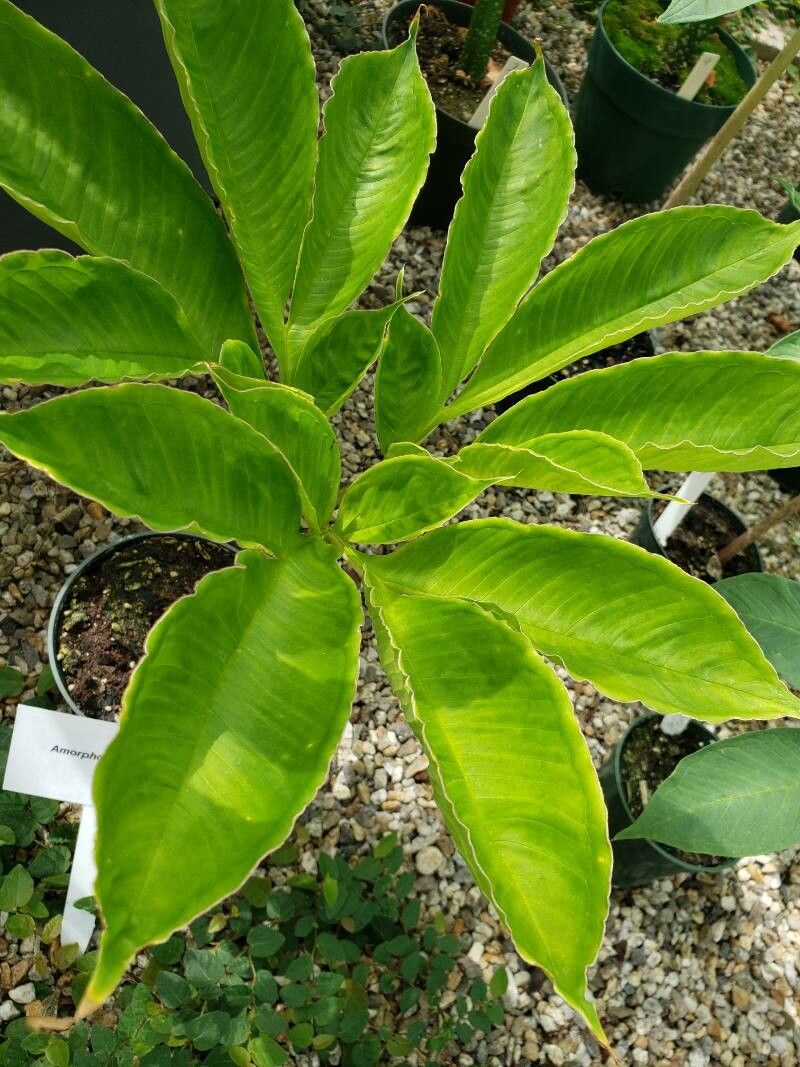
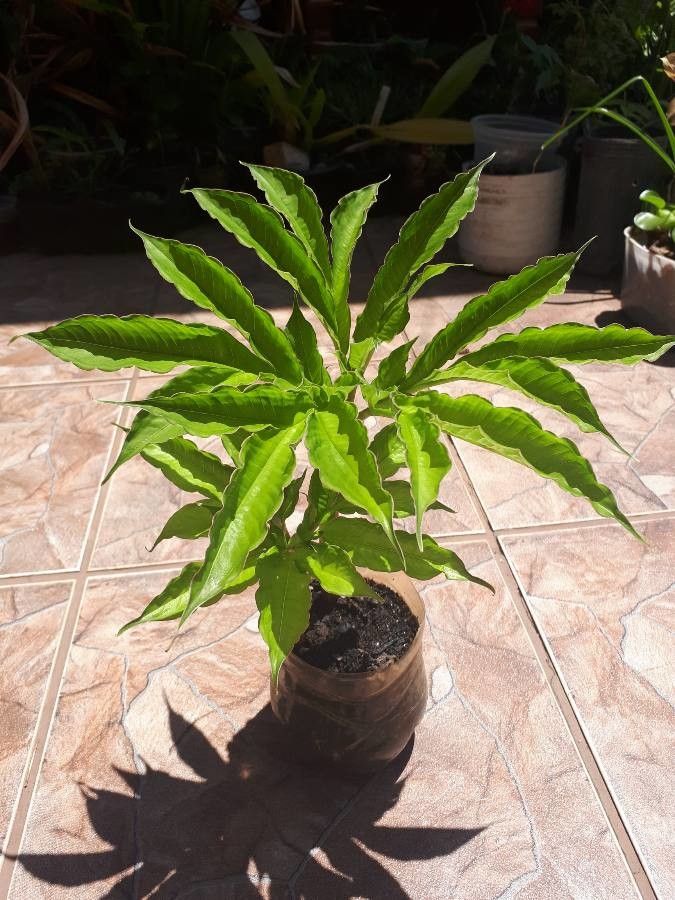
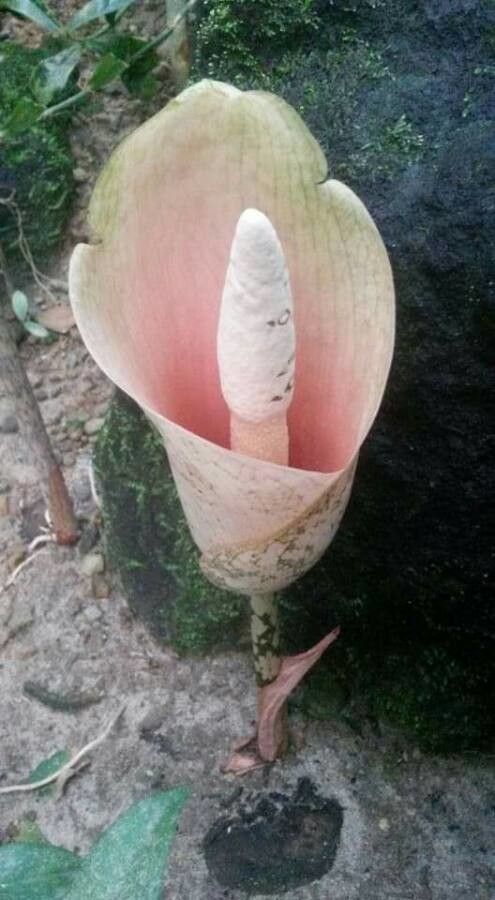
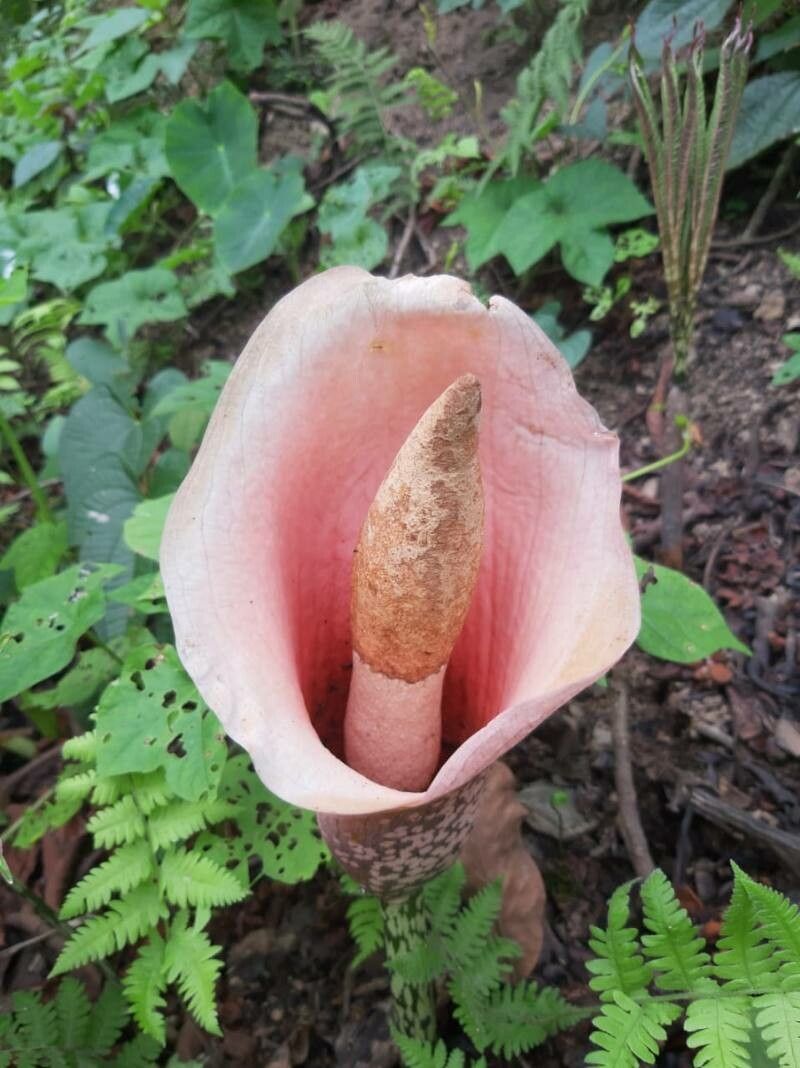
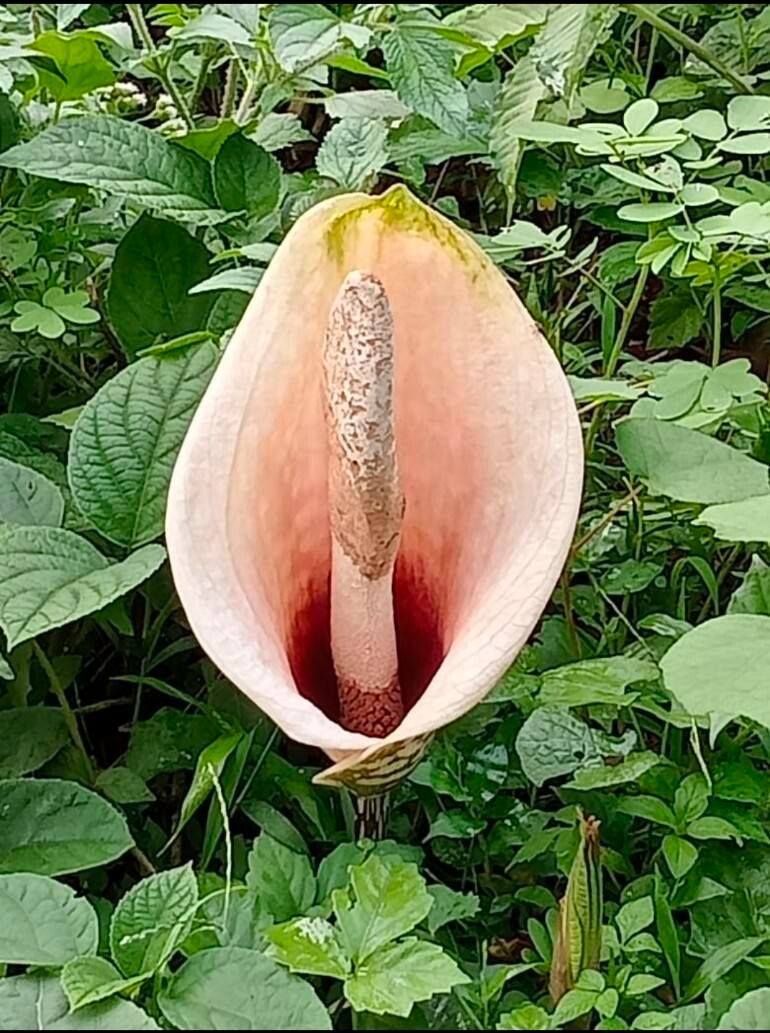
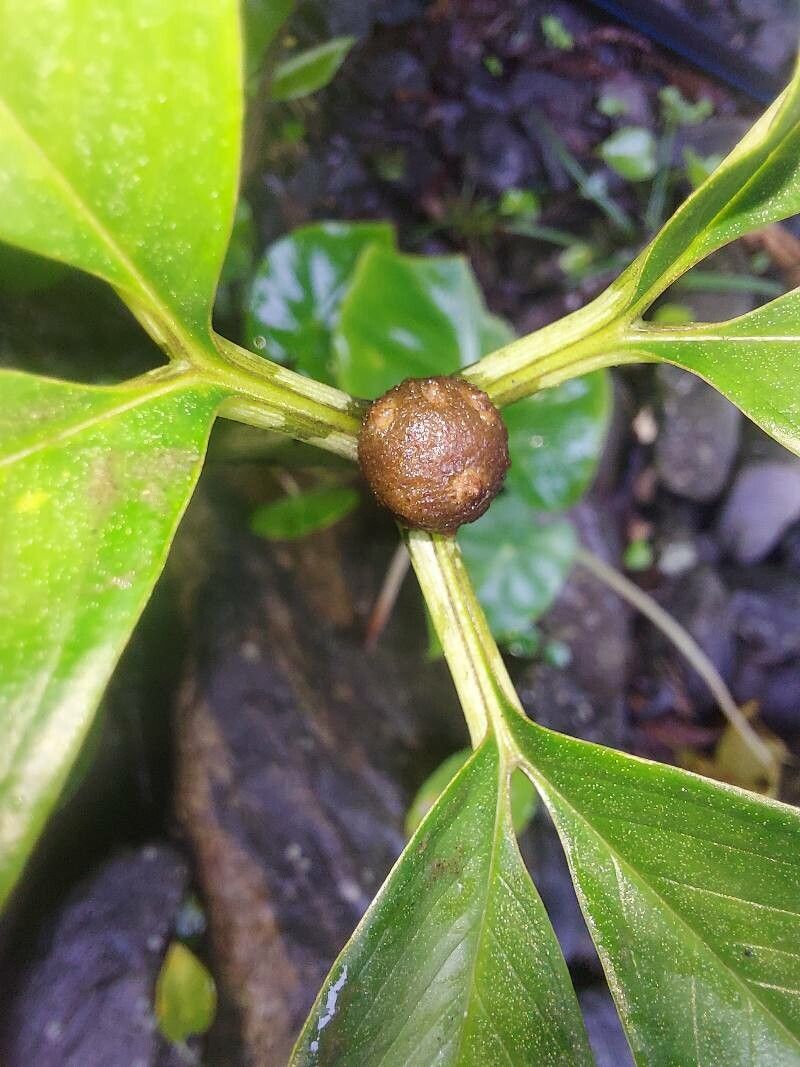
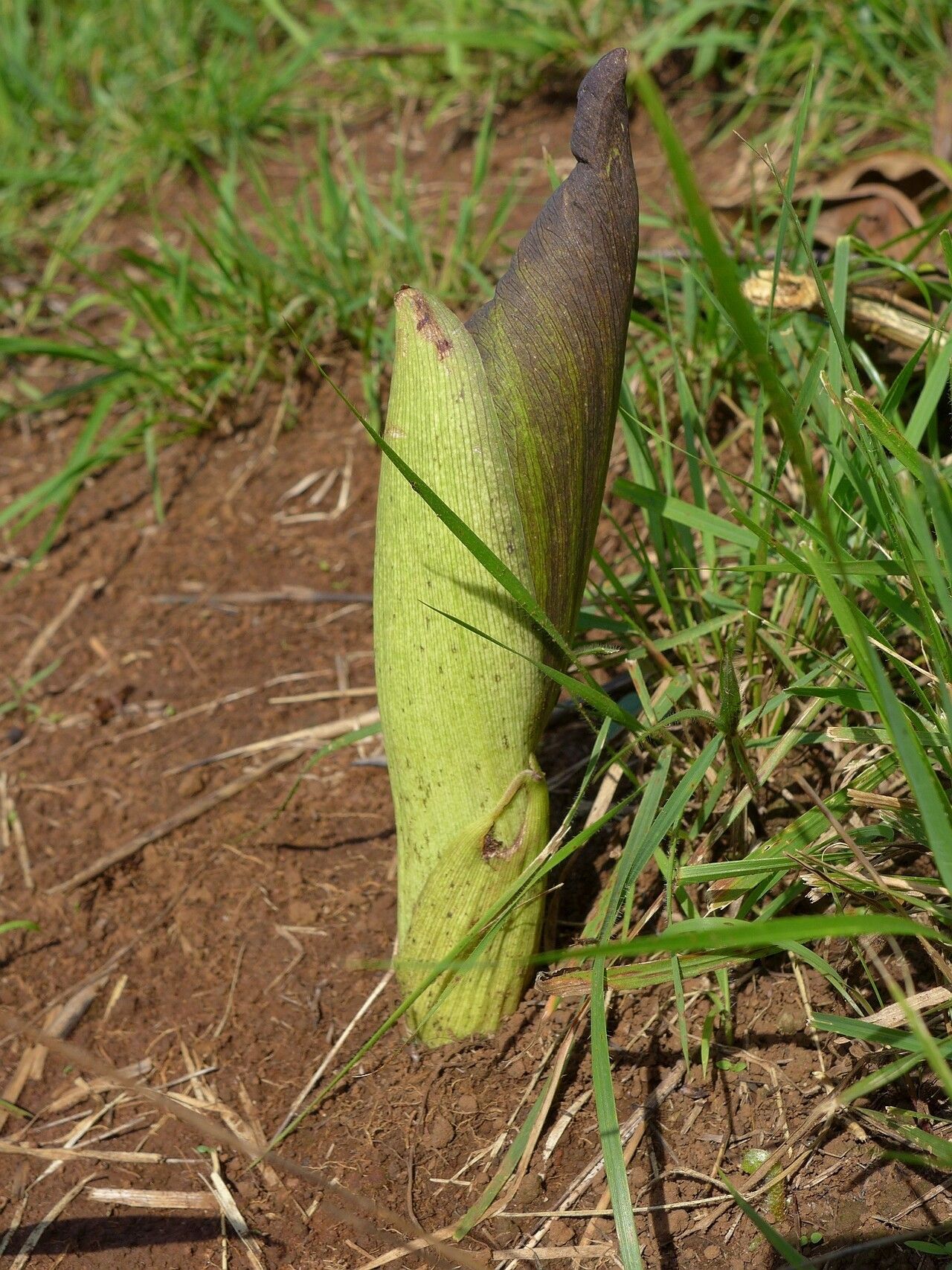
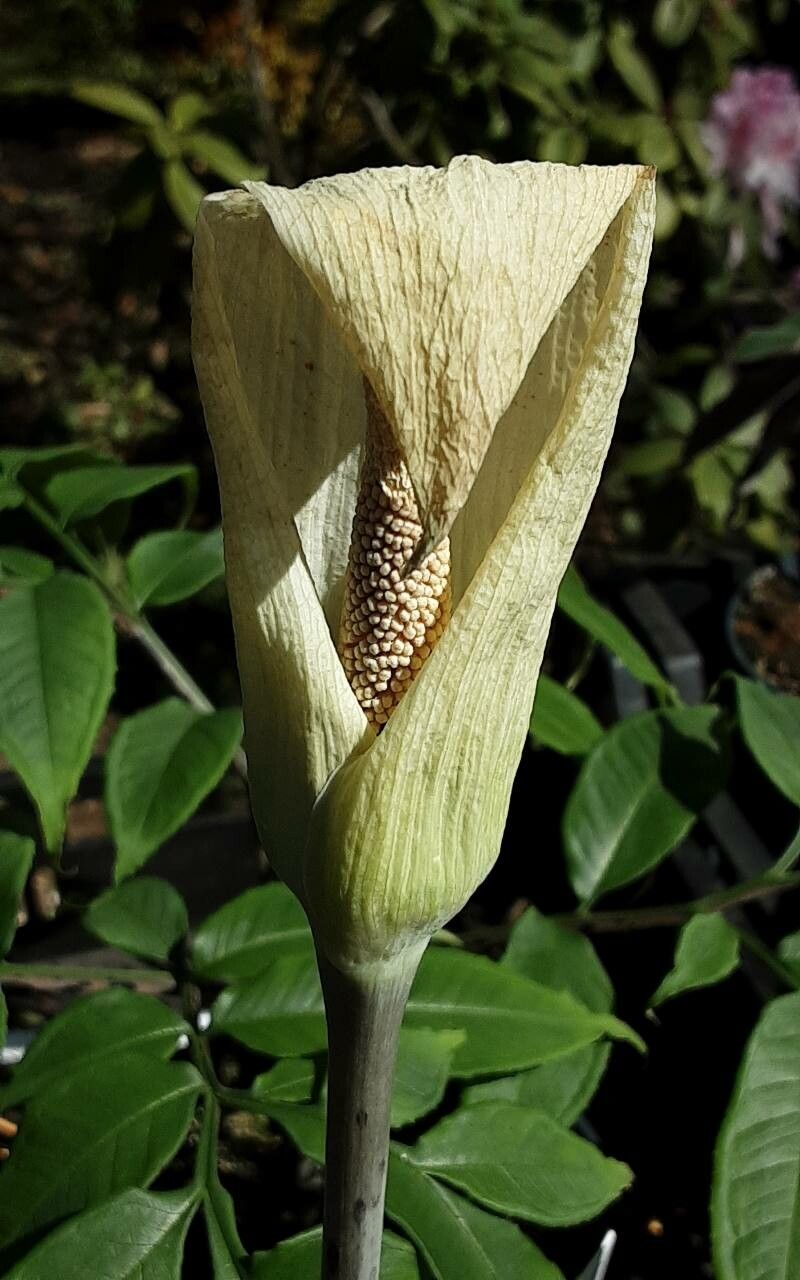
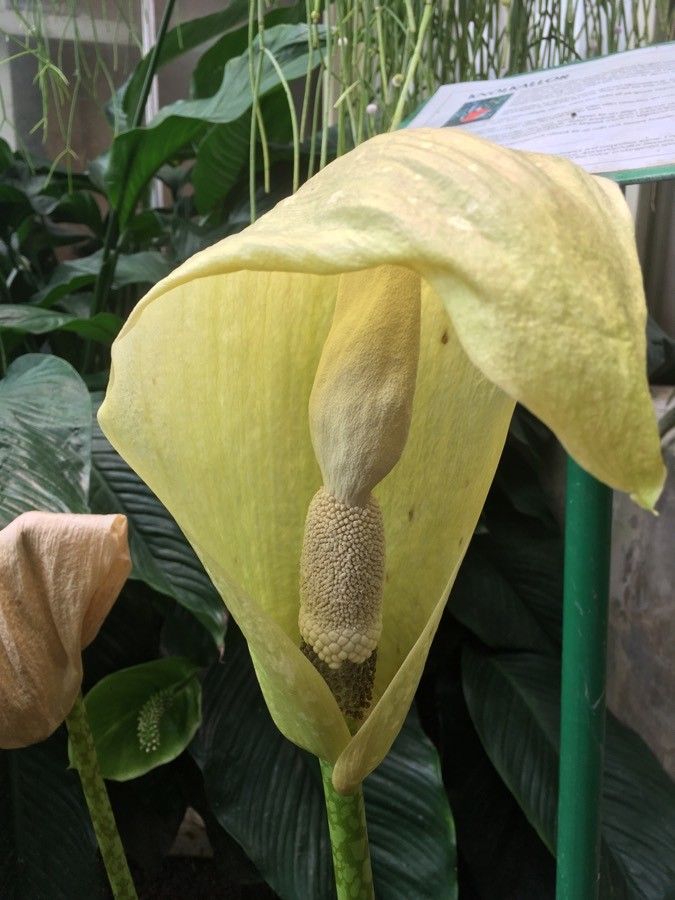
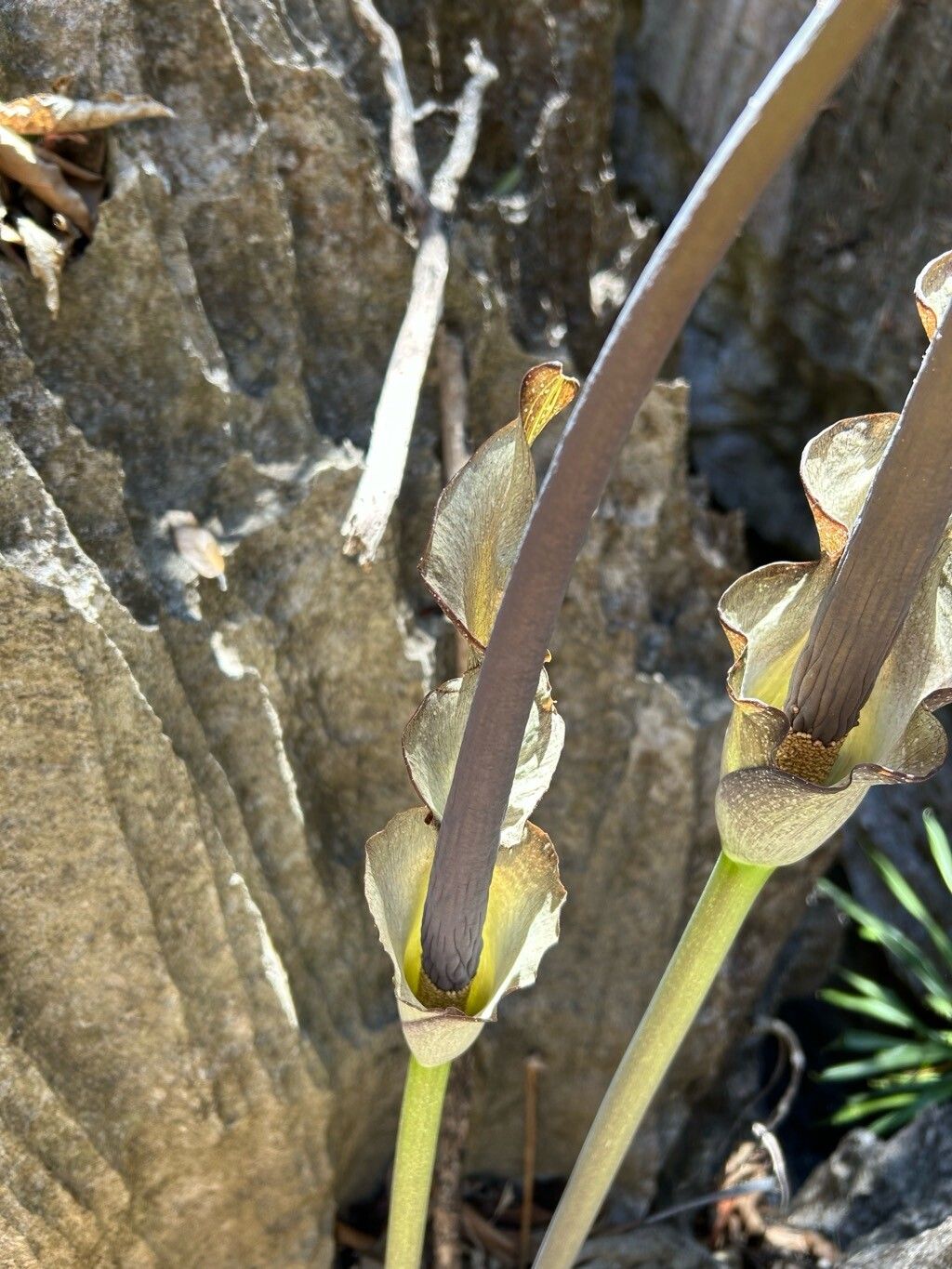
Amorphophallus bulbifer is a species of subtropical tuberous herbaceous plant found in Assam; Bangladesh; China South-Central; East Himalaya; India; Myanmar; Nepal.
Devil's tongue has strong resistance to disease and is typically not prone to illnesses. Still, it can be affected by pests and diseases that exist in its environment. Such infections are generally mild. Regarding care, the plant demands a moderate level of upkeep. It should be pruned on a regular basis to preserve a neat appearance and encourage healthy growth. Applying fertilizer can also aid in boosting flowering. Devil's tongue is well suited for anyone who has outdoor space, like a garden or patio, and does not call for extensive gardening experience. It may need more attention when cultivated indoors.
How to keep Amorphophallus Bulbifer.
Light
Devil's tongue grows best in ample sunlight, though it can withstand a range of light conditions from deep shade to areas with filtered light. Its native habitat includes places with varying light intensities. However, extreme light conditions can harm the plant's health.
Water
Originating from tropical forests, the devil's tongue plant thrives in environments with high humidity and consistent soil moisture. Ideally, it should be watered weekly. To mimic its natural habitat indoors, regular misting is beneficial, especially during its active growing season. This practice enhances the plant's overall vigor and health.
Temperature
Devil's tongue comes from tropical areas, where the weather is usually warm and humid. Consequently, it is adapted to high heat and humidity. It does not tolerate abrupt temperature changes and prefers a steady temperature, so indoor temperature swings should be avoided. It generally cannot endure cold temperatures and needs higher temperatures to grow. If the ambient temperature falls too low, the plant may stop growing or even die.
Fertilizer
Proper feeding is vital for Devil's tongue's health and appearance. Fertilize Devil's tongue in summer, applying it once a month throughout the season. Nutrients support growth and help preserve the plant's parts. Feeding improves Devil's tongue's flower display, ensuring the best blooms.
Pruning
The Devil's tongue plant features distinctive foliage and inflorescence. To encourage growth, prune the dormant leaves in early spring and remove any dead parts in late spring. Key pruning techniques include trimming close to the base and avoiding cuts during the active growth phase. Proper pruning enhances aeration, prevents disease, and promotes healthy development. For detailed care instructions, consult reliable gardening resources.
Pot & Repot
Repot the devil's tongue plant every spring, moving it into a larger pot to prevent overcrowding. Maintain consistent moisture, being careful to avoid waterlogging, and ensure it receives bright, indirect light to help it recover. Paying close attention to its needs after repotting will support the plant's unique growth and structure.
Botanical profile.
- Plant Type
- Herb
- Life Cycle
- Perennial
- Genus
- Amorphophallus
- Family
- Araceae
- Hardiness Zone
- 8-11
- Mature Height
- 76 cm
- Mature Spread
- 61 cm
- Leaf Color
- Dark Green, Forest Green
- Leaf Type
- Deciduous
- Flower Color
- Purple
- Flower Size
- 15.24 cm to 30.48 cm
- Bloom Time
- Early summer, Mid summer
- Planting Time
- Spring, Summer, Autumn
- Harvest Time
- Late summer, Early fall
- Native Area
- Nepal, India, Myanmar, Bhutan, Bangladesh, China
Other names.
Reader questions.
What are the sunlight requirements for Devil's Tongue?
Devil's Tongue requires full sun, which is more than 6 hours of sunlight daily, to thrive optimally. It can also grow in conditions of partial sun or full shade, which is about 3-6 hours of sunlight. It's essential to observe how sunlight moves through your garden throughout the day to find the perfect spot that provides the right balance of light and shade for your plants. This careful placement ensures the plants' happiness and health by meeting their sunlight needs.
How does the Devil's Tongue react to different light conditions?
Devil's Tongue flourishes best with abundant sun exposure but is versatile enough to tolerate a wide range of light conditions, from deep shadows to spaces with filtered light. Its origin habitat includes environments with varying light intensities, demonstrating its adaptability. Despite this flexibility, extremely high or low light conditions can negatively impact the plant's health. Artificial lighting can be a vital solution for indoor plants, especially when natural sunlight is insufficient. LED lights, for example, can be customized to provide the necessary wavelengths of light, with specific wattage recommendations based on whether the plant needs full sun (30-50W/sq ft), partial sun (20-30W/sq ft), or full shade (10-20W/sq ft). The correct distance between the plant and the artificial light source and the duration of exposure are also critical factors to consider.
What symptoms indicate light deficiency in Devil's Tongue?
When Devil's Tongue doesn't receive enough light, several symptoms can become apparent. These include smaller new leaves, leggy or sparse growth due to increased spacing between leaves or stems, early leaf drop as a conservation measure, delayed or completely halted growth, and new leaves that are lighter in color or show signs of chlorosis (yellowing due to a lack of chlorophyll). Excessive sunlight can also cause problems such as sunscald, which manifests as pale, bleached areas on the plant tissue; leaf curling as a defense mechanism against too much light; wilting due to increased water loss; and leaf scorching, indicated by brown, crispy edges on leaves.
How can I address light-related issues for Devil's Tongue, both indoors and outdoors?
For indoor Devil's Tongue plants experiencing light deficiencies, gradually moving the plant to a sunnier spot weekly until it receives at least 6 hours of direct sunlight daily is advisable. Using a south-facing window can maximize sunlight exposure. If the plant is large or cannot be easily moved, supplementing with artificial light for at least 8 hours daily can help. For outdoor plants, a similar gradual relocation to sunnier spots helps avoid sunburn from sudden light intensity changes. If the sunlight is blocked by physical obstructions, consider pruning or relocating smaller plants during their dormant period to a brighter location with better drainage. It's important to note that while parts of the plant that suffered from insufficient sunlight may not recover, new growth should be healthy after adjusting the light exposure.