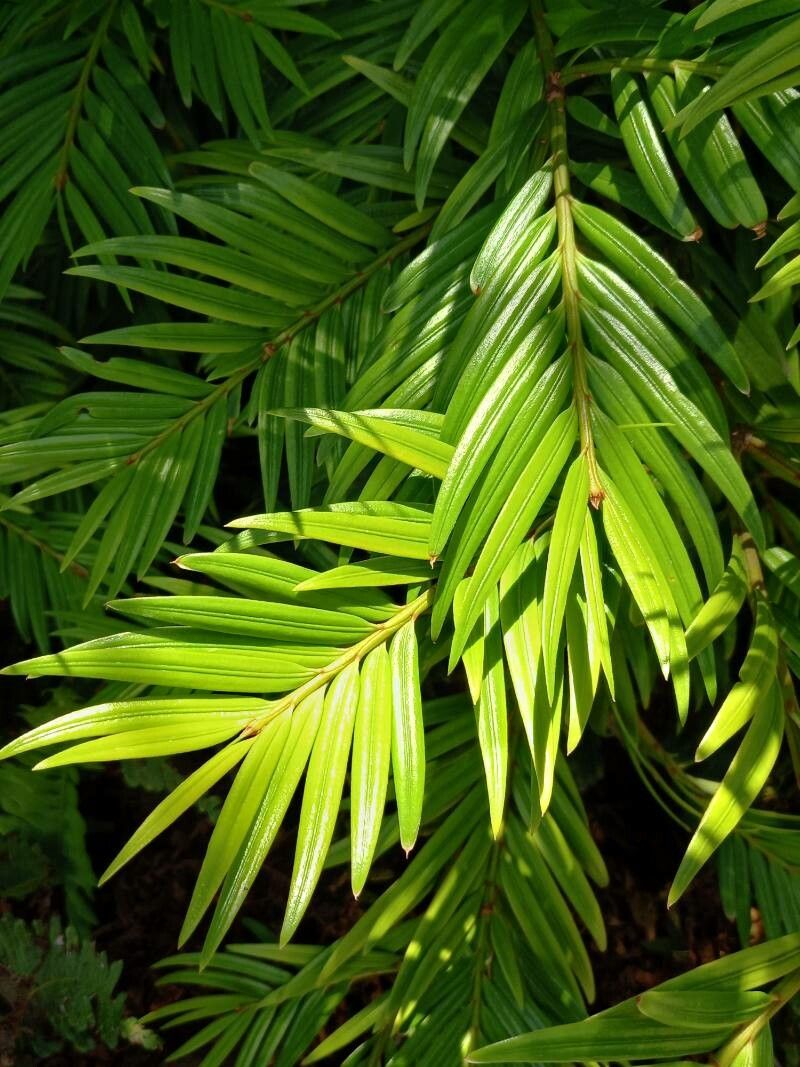
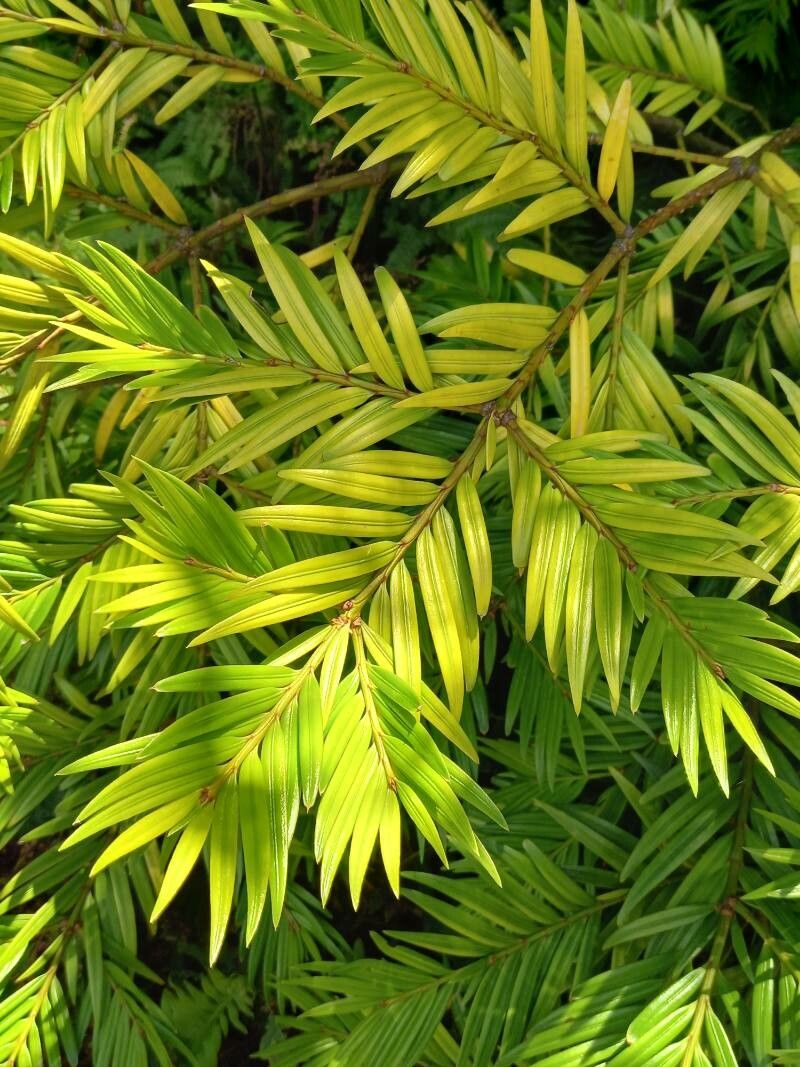
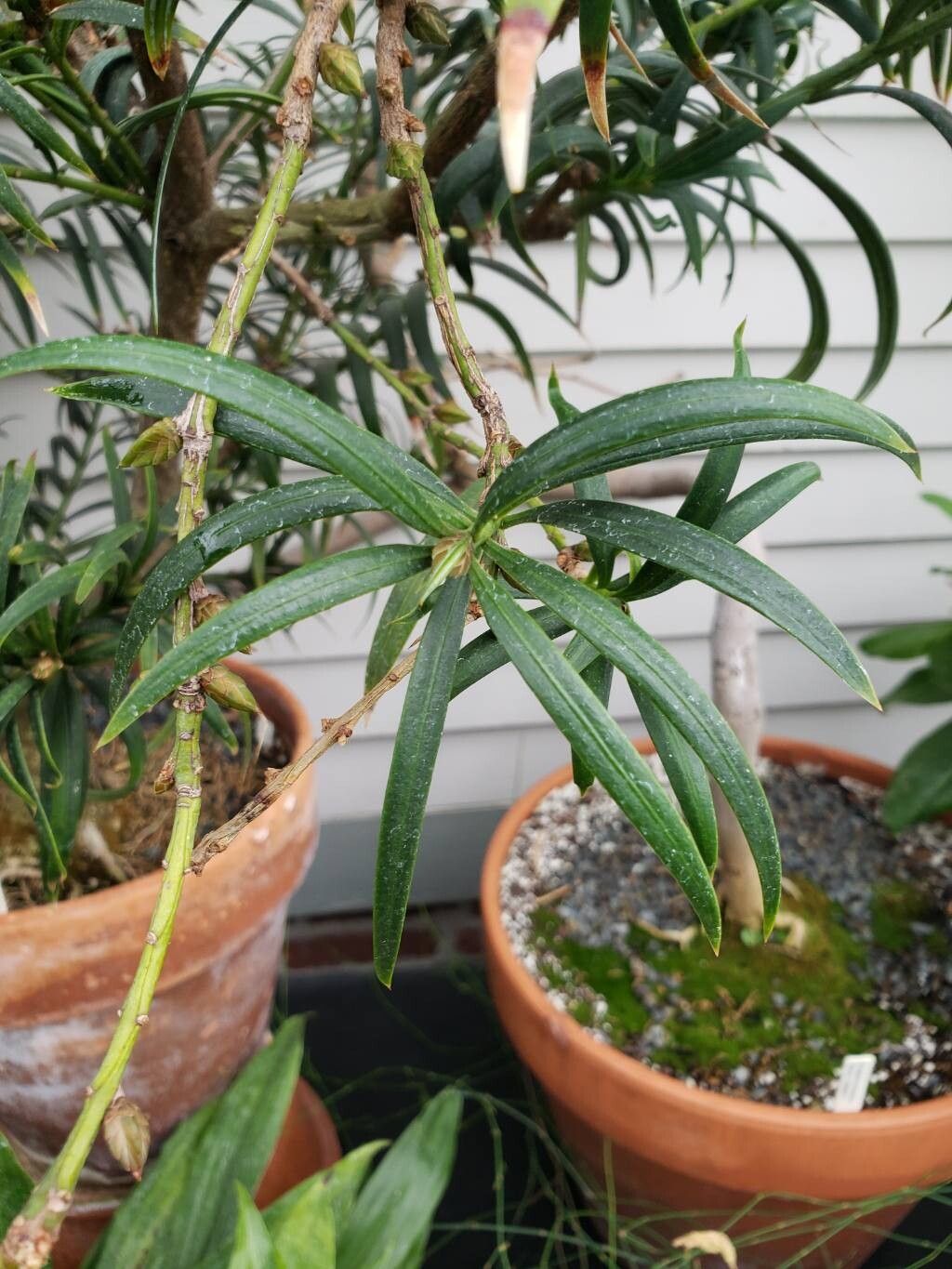
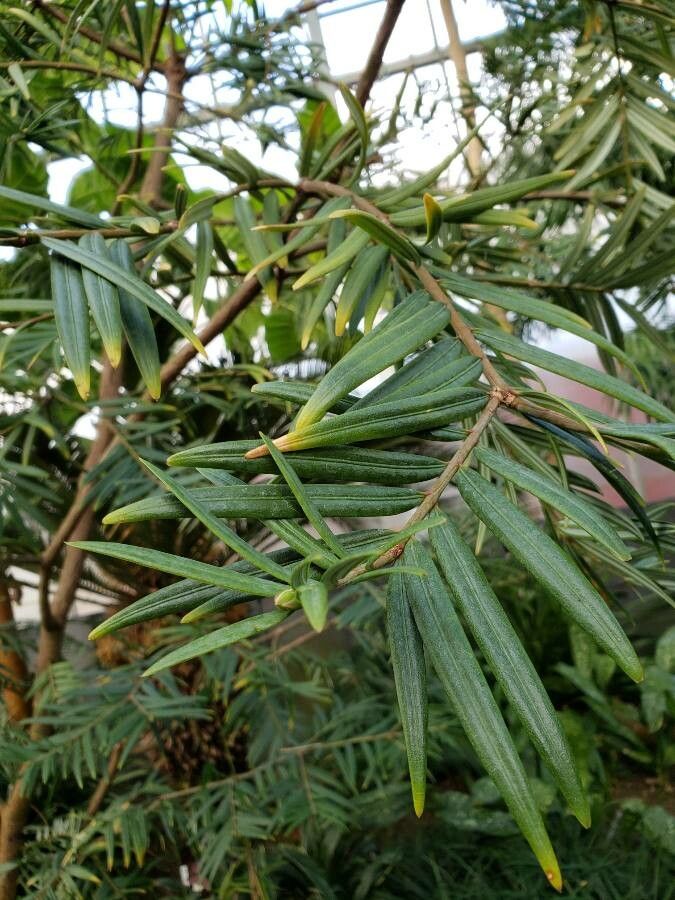
Amentotaxus argotaenia, the catkin yew, is a species of conifer in the family Taxaceae. It is a shrub or a small tree up to 7 metres (23 ft) tall.Amentotaxus argotaenia var. brevifolia has been described from southern Guizhou and listed separately by IUCN. Amentotaxus formosana was previously recognised as a variant of A. argotaenia.
Catkin yew displays strong disease resistance and is generally not prone to illness. Regarding care, this plant is fairly low-maintenance. When grown outdoors it needs little watering, and larger plants typically do not require pruning. Smaller plants, however, should be pruned after they have finished blooming. Catkin yewt is suitable for anyone with an outdoor area, such as a garden or deck, and does not require extensive plant-care experience.
How to keep Amentotaxus Argotaenia.
Light
Catkin yew prospers in places that receive abundant sunshine and can also tolerate sites with moderate sun exposure. Originally characteristic of sun-rich environments, it thrives and displays healthy growth when given ample sunlight. However, settings with extreme sun exposure can damage catkin yew, causing it to wilt or burn.
Water
The Catkin Yew thrives in the humid understories of forests, preferring soil that is consistently moist and environments with high humidity. To maintain its health, you should water the plant every 1-2 weeks, ensuring that the soil remains damp but not soggy. Being an evergreen, the Catkin Yew efficiently manages water loss during dry spells.
Temperature
Catkin yew is a plant that grows best in a temperature range of 68 to 95 °F (20 to 35 ℃). Originally from temperate environments, catkin yew may require temperature adjustments throughout the year to mimic its natural growth environment.
Fertilizer
Catkin yew has specific nutrient needs and does not require heavy fertilization. Spring is the best time to apply fertilizer for optimal growth. Supplying nutrients improves its health, increases its resistance to pests and diseases, and helps sustain its long lifespan.
Pruning
Prune catkin yew in the early to late winter, concentrating on removing dead or diseased branches, thinning overcrowded areas, and shaping the plant. Pruning during dormancy reduces stress and improves air circulation and light penetration, which helps maintain a strong structure. To ensure the plant's optimal health, use clean, sharp tools and avoid making excessive cuts.
Pot & Repot
When repotting Catkin yew, select a pot 1-2 inches (2.5–5.1 cm) larger that provides good drainage. Use a well-draining potting mix. Repot in spring or fall, making sure the root ball sits slightly lower than the rim of the flower pot. Water thoroughly after repotting and keep it in a warm place with indirect sunlight.
Botanical profile.
- Plant Type
- Tree, Shrub
- Life Cycle
- Perennial
- Genus
- Amentotaxus
- Family
- Taxaceae
- Hardiness Zone
- 9-10
- Mature Height
- 7.01 m
- Mature Spread
- 4.88 m to 7.92 m
- Leaf Color
- Dark Green
- Leaf Type
- Evergreen
- Flower Color
- Yellow, Green
- Bloom Time
- Mid spring, Late spring
- Planting Time
- Spring, Summer, Autumn
- Harvest Time
- Late summer, Early fall, Mid fall
- Native Area
- Laos, India, China
Other names.
Reader questions.
What are the sun requirements for Catkin yew?
Catkin yew requires full sun or partial sun to thrive optimally. Full sun means the plant should receive above 6 hours of sunlight, while partial sun refers to about 3-6 hours of sunlight. It's important to watch how sunlight moves through your garden to find spots that provide a balance of light and shade, ensuring the plants remain happy. Catkin yew flourishes in abundant sunshine but can also tolerate moderate sun exposure. Extreme sun exposure, however, can harm the plant, leading to wilting or burning.
What is the best temperature range for Catkin yew to thrive?
Catkin yew thrives best in a temperature range of 68 to 95 °F (20 to 35 °C). Originating from temperate environments, it requires temperature adjustments throughout the year to mimic its natural habitat. While Catkin yew possesses some cold tolerance and doesn't need extra measures for temperatures above 0°C, it's crucial to protect it from temperatures below freezing by using materials such as plastic film or fabric for insulation. These protective measures must be removed once temperatures rise to prevent any potential damage.
How do I use artificial lighting for Catkin yew?
For indoor Catkin yew plants requiring artificial lighting, LED lights are recommended due to their ability to provide specific light wavelengths needed for plant growth. Full sun plants, including Catkin yew, need 30-50W/sq ft of artificial light, while partial sun plants require 20-30W/sq ft. The light source should be placed 12-36 inches above the plant to mimic natural sunlight conditions, and the plant should be exposed to 8-12 hours of light per day. This approach promotes healthier, faster plant growth, especially in conditions where natural sunlight is insufficient.
How does Catkin yew react to low temperature, and what measures should be taken?
Catkin yew has a moderate tolerance to low temperatures and prefers conditions above 20°C. It should be kept above 0°C during winter, and exposure to temperatures below -5°C may cause the leaves to droop. In mild cases, the plant can recover, but if conditions worsen, leaves might wilt and fall off. To counteract frost damage, affected parts should be trimmed, and before facing low temperatures again, wrapping the plant in non-woven fabric or cloth, alongside constructing a wind barrier, can offer protection.
What symptoms indicate insufficient light for Catkin yew?
Symptoms of insufficient light in Catkin yew include smaller new leaves, leggy or sparse growth, faster leaf drop, slower or no new growth, and lighter-colored new leaves. Additionally, excessive sunlight can cause symptoms such as chlorosis, where leaves lose their green color, sunscald with pale or bleached areas on leaves, leaf curling as a defense against water loss, wilting due to increased water loss, and leaf scorching characterized by brown, dry edges on leaves.
What are the implications of high temperature on Catkin yew and how can it be protected?
In the summer, it's essential to keep Catkin yew below 35°C to prevent stress from high temperatures. Exceeding 41°C can lead to lighter leaf colors, dry and withered leaf tips, curling leaves, and increased susceptibility to sunburn. To manage this, trim the sunburned and dried parts of the plant, relocate it to a shadier spot during midday and afternoon, or use a shade cloth for protection. Ensure the soil remains moist by watering the plant in the morning and evening.
What are the solutions for insufficient or excessive sunlight exposure in Catkin yew?
To address insufficient light, gradually move plants to sunnier locations to receive at least 6 hours of direct sunlight daily. For indoor plants, use a south-facing window or artificial lighting for at least 8 hours daily. For outdoor plants, move them gradually to avoid sunburn. If light is blocked by obstructions like trees, consider pruning to improve sunlight exposure. For smaller plants, transplanting during their dormant period to a sunnier location can also be beneficial. Note that parts of the plant affected by insufficient light may not recover, but new growth will be healthy once light exposure is increased.