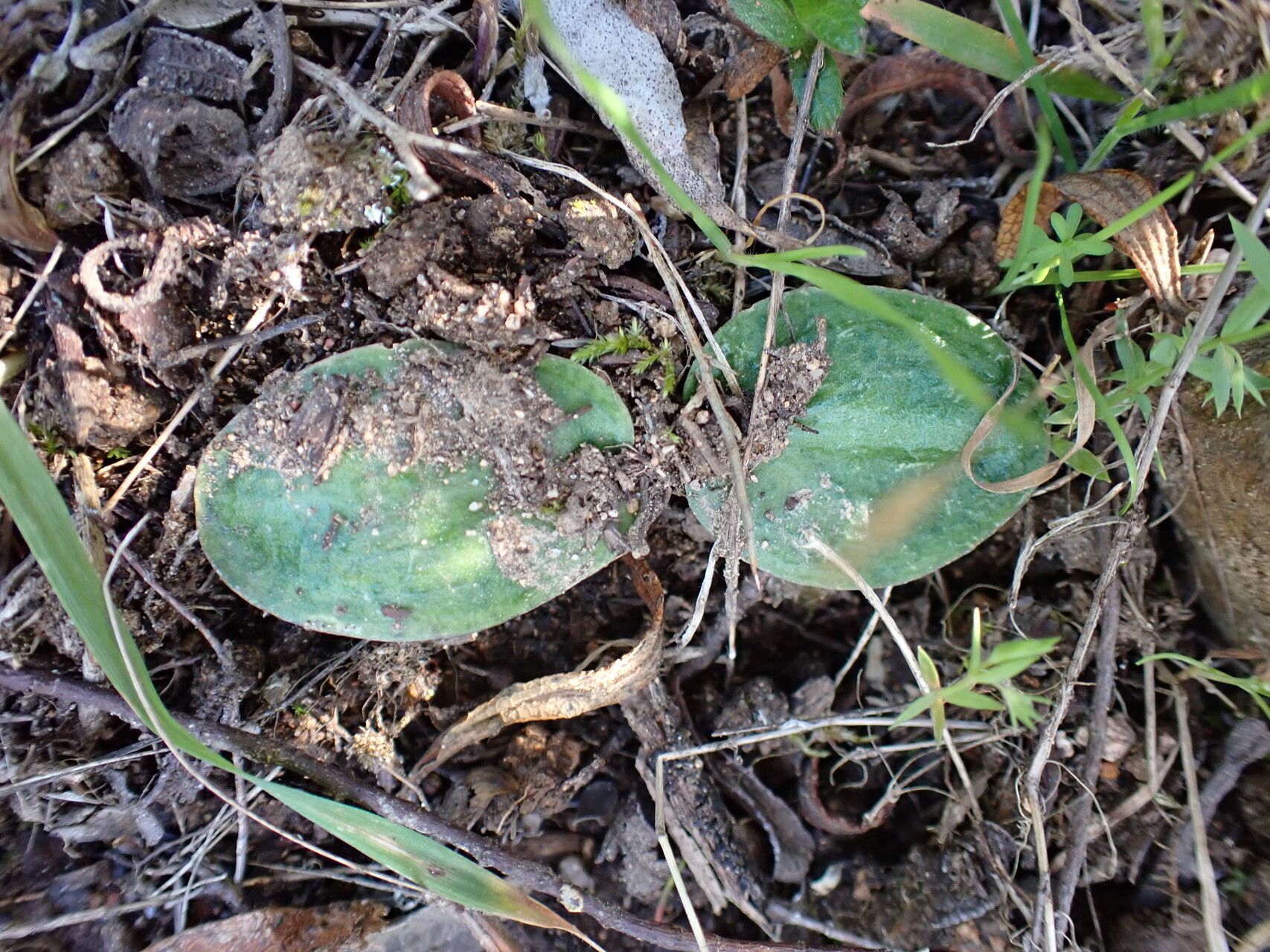
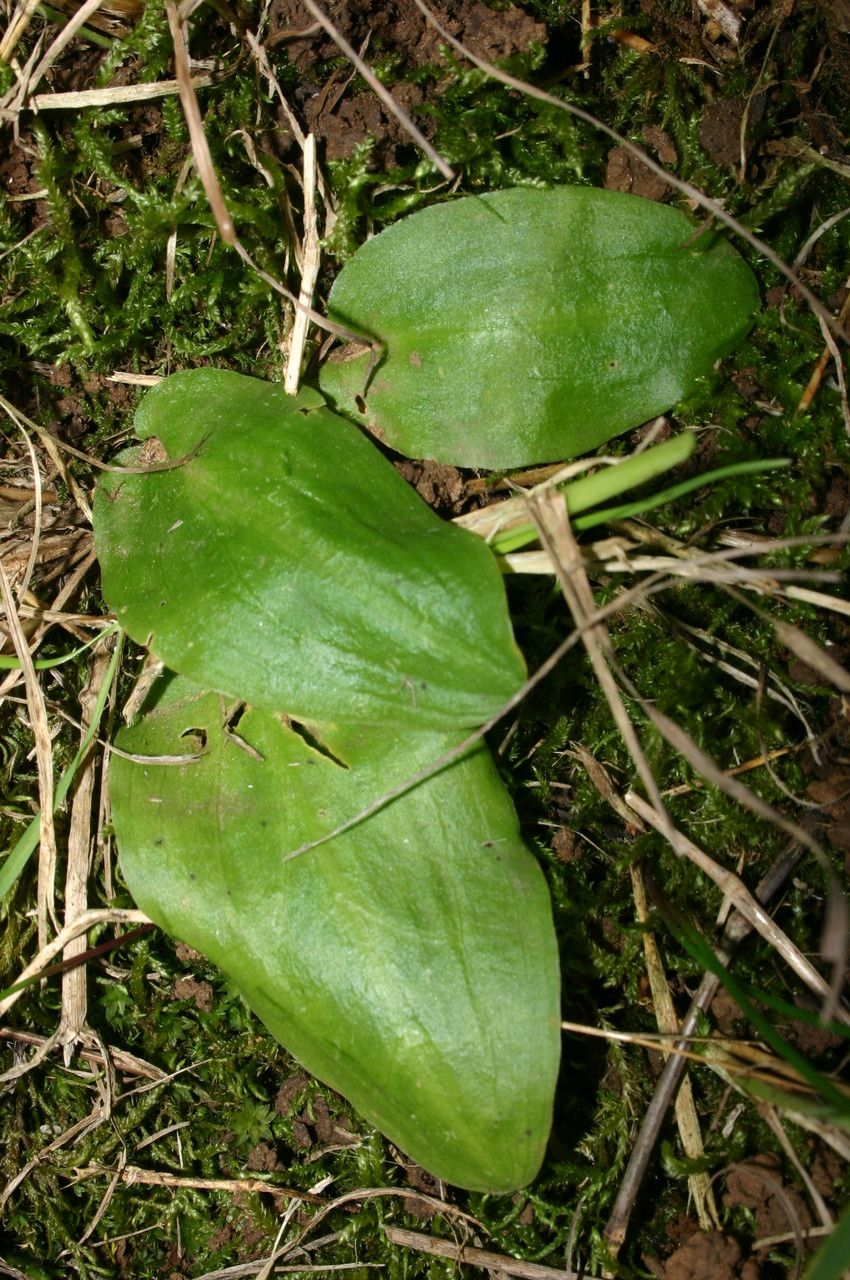
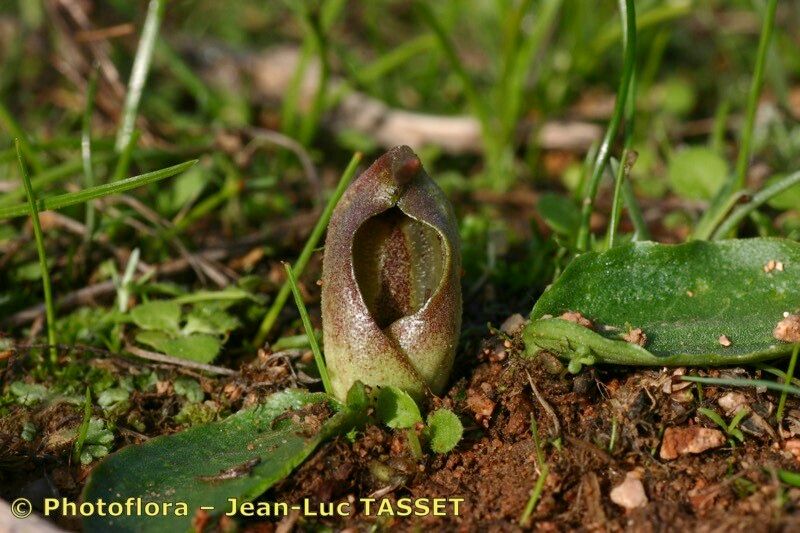
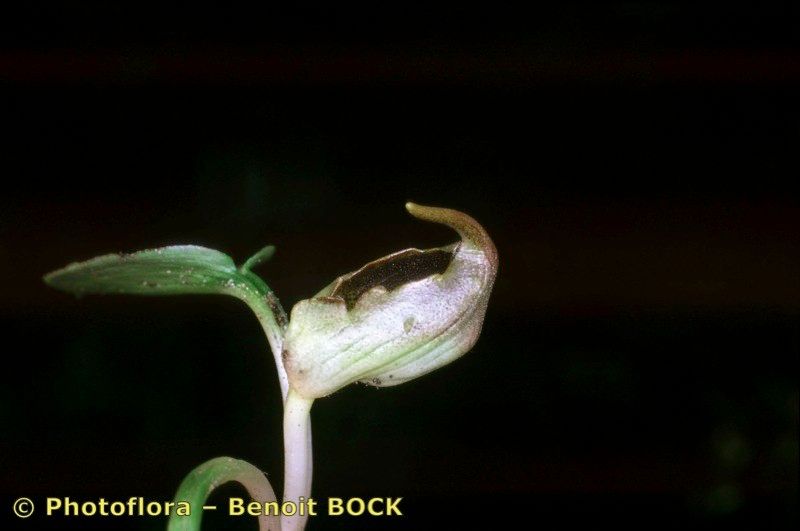
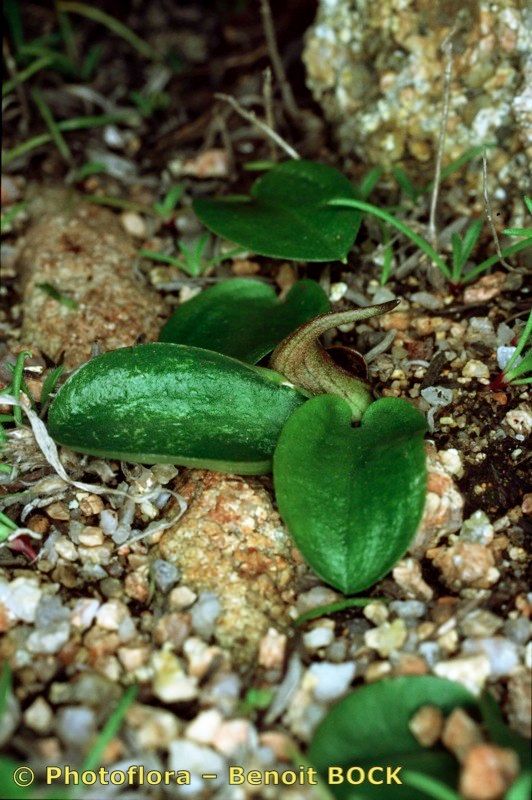
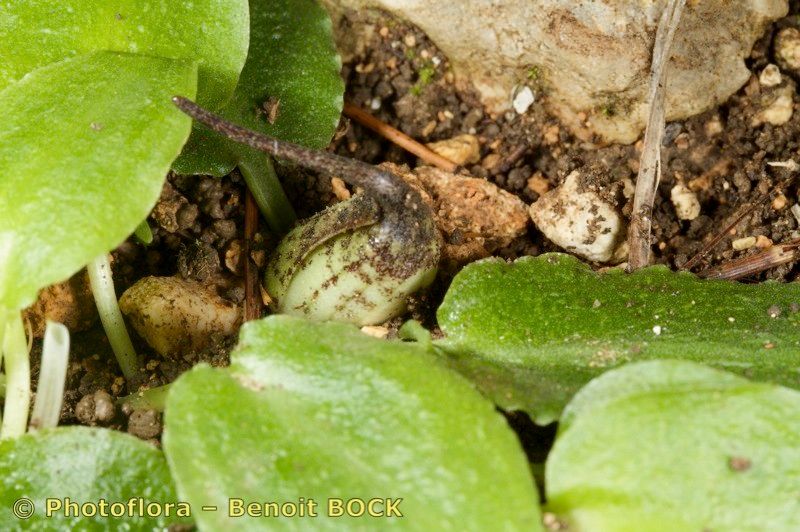
Ambrosina is a genus in the family Araceae that consists of only one species, Ambrosina bassii, and the only genus in the tribe Ambrosineae. This species is the smallest aroid in the Mediterranean, growing only to 8 cm tall. It is usually found growing in woodlands on north faces of hillsides and in humus soil that is covering limestone. It is distributed in Sardinia, Corsica, Sicily, southern mainland Italy, Tunisia, and Algeria.Ambrosina bassii has oval leaves that are 3.5 to 6 cm long and resemble the leaves of many aroid seedlings. The inflorescence is 2.5 cm long bent over and has an unusual spathe. The spathe is shaped like an egg and is greenish brown with dots on it. Inside the egg shaped spathe is divided two chambers. In one chamber is contained a single female flower and in the other are 8 to 10 male flowers. The seeds are dispersed by ants that eat the elaiosomes attached to the seeds.
Ambrosina bassii is well resistant to disease and is typically not susceptible to illnesses. With regard to care, this plant is fairly low maintenance. When grown outdoors it needs only light watering, and larger plants usually do not need pruning. Smaller plants, however, should be pruned after they finish blooming. Ambrosina bassiit is appropriate for anyone with outdoor space, such as a garden or deck, and does not demand much care experience.
How to keep Ambrosina Bassii.
Pruning
Ambrosina bassii is known for its distinct foliage and compact growth. For optimal health and appearance, it's best to prune the plant in early spring. Regular pruning helps to shape the plant and boost its vitality. Be sure to remove any dead or damaged parts to encourage vigorous growth and flowering. This routine maintenance not only prevents disease but also promotes a fuller and healthier appearance.
Botanical profile.
Other names.