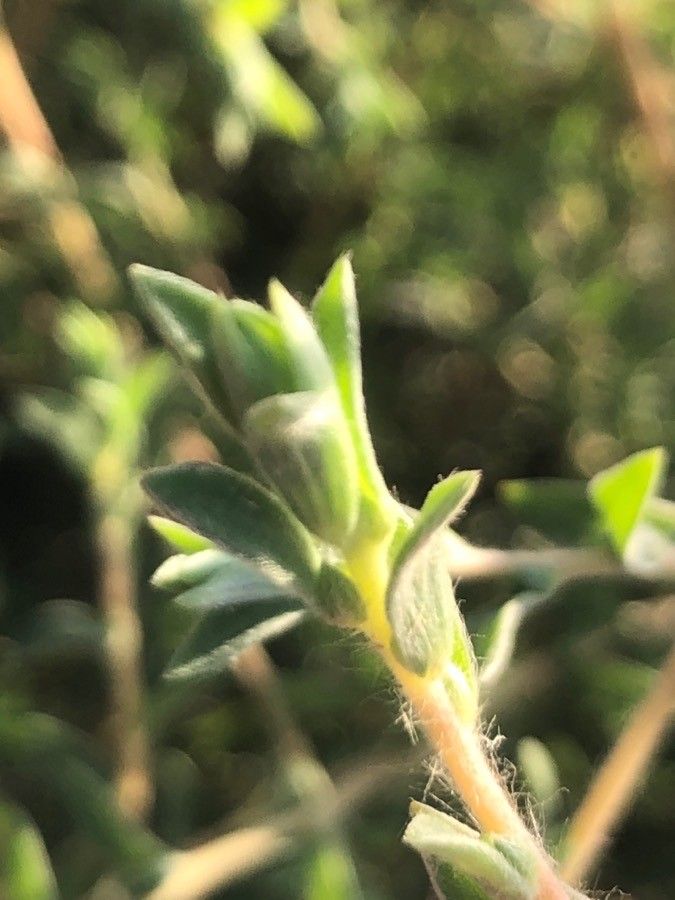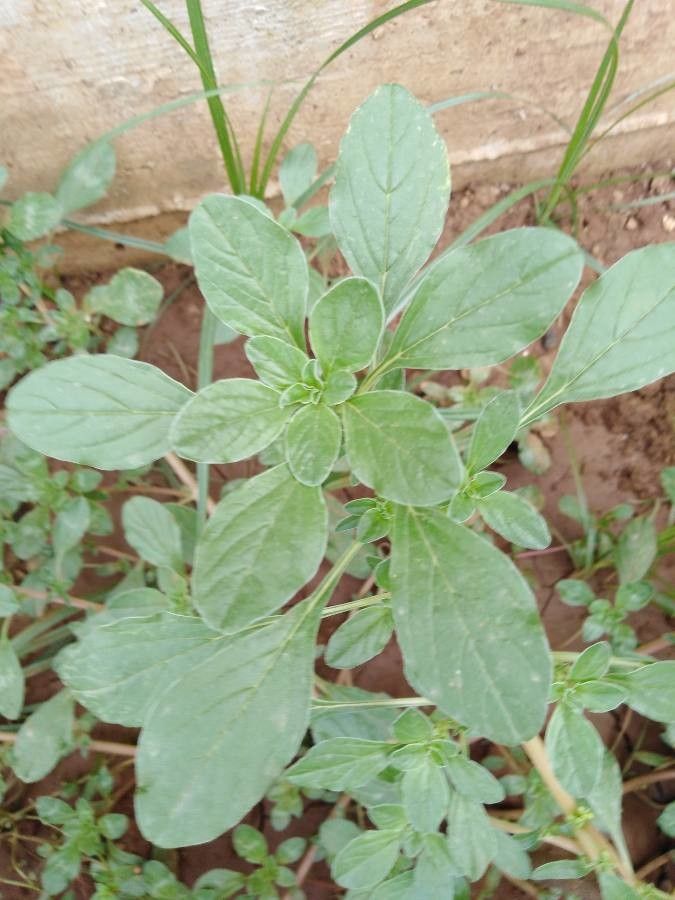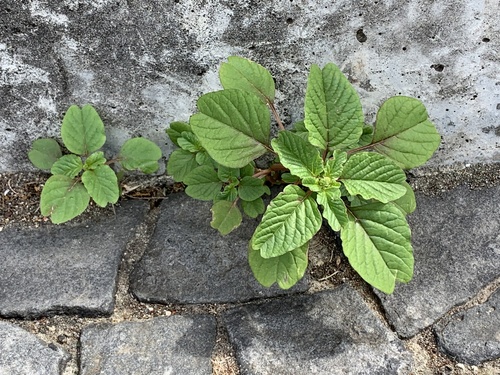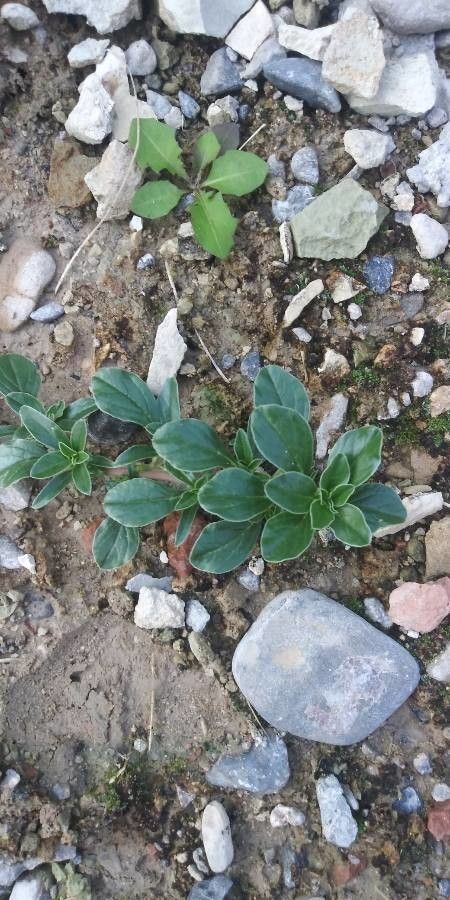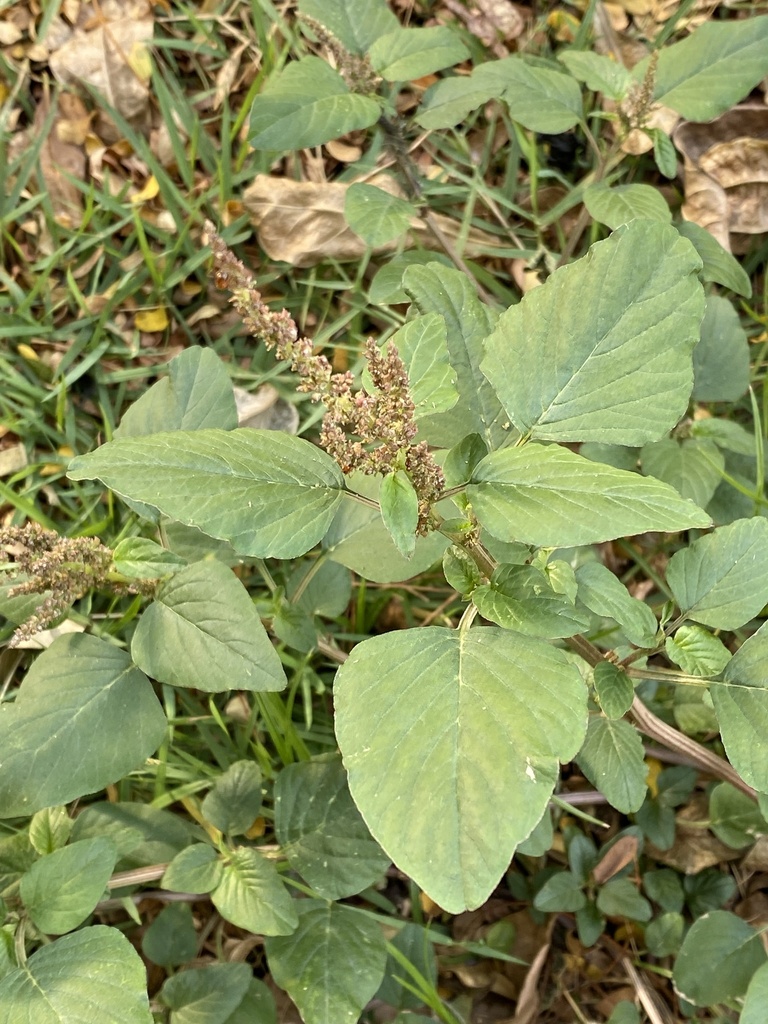
Amaranthus viridis, commonly known as slender amaranth or green amaranth, is an annual herbaceous plant in the Amaranthaceae family. Native to tropical and subtropical regions, it is found in many countries, including India, Africa, South America, and Australia. The plant can grow up to 1 meter tall and features green, lance-shaped or oval leaves. The flowers are small and inconspicuous, with a greenish color, and grow on long spikes at the top of the stem. It produces tiny black seeds that can be used as food. Amaranthus viridis has a long history of use in traditional medicine, primarily for its anti-inflammatory properties, which help reduce swelling and pain associated with ailments such as arthritis and gout. Besides its medicinal uses, Amaranthus viridis is also valued in culinary contexts, particularly in Asian cuisine. It is often added to soups or stir-fried dishes because of its high nutritional value. It is rich in vitamins A and C, iron, calcium, and protein. Overall, Amaranthus viridis offers numerous benefits. It serves as both a food source and a medicinal herb and is also an attractive ornamental plant prized for its vibrant green coloration, making it popular with gardeners worldwide.
Green amaranth, known scientifically as Amaranthus viridis, derives its common name from its Latin designation. The genus name, Amaranthus, comes from a combination of two Greek words that mean "unfading" and "flower," forming the word "amaranth." The species name, "viridis," translates to "green," which gives the plant its full common name: green amaranth.
Livid amaranth shows strong resistance to diseases and is typically not susceptible to illnesses. Still, it can be affected by pests and diseases present in its environment. Such infections are generally mild. Regarding maintenance, this plant needs a moderate amount of care. It should be pruned on a regular basis to retain a pleasing appearance and vigorous growth. Applying fertilizer can also encourage more blooms. Livid amaranth is appropriate for anyone with an outdoor area, like a garden or patio, and does not demand extensive gardening experience. It may need extra attention when cultivated indoors.
How to keep Amaranthus Viridis.
Light
Livid amaranth does best with moderate sunlight but can also adjust to a broad spectrum of lighting, from full sun to deep shade. Excessive sun can stress it, while too little light may cause it to grow lanky. Originating in environments with varied light levels, it shows a notable adaptability to different light conditions.
Water
Green amaranth thrives in humid and moist environments and should be watered twice a week for optimal growth. Once it has become established, it shows drought tolerance. Rainfall during the growing season greatly supports its development, complementing its natural affinity for water.
Humidity
This plant will thrive in moderate humidity, which is probably the level in your home. However, misting it a few times a week can be very beneficial. Make sure the room has good ventilation.
Temperature
Livid amaranth is native to temperate regions and performs best in temperatures from 68 to 95°F (20 to 35 ℃). If the surroundings become noticeably warmer or cooler, gradually change the temperature over several days to allow the plant to acclimate.
Fertilizer
Livid amaranth responds well to regular, light fertilizer applications to encourage healthy leaf development. Fertilize Livid amaranth about once a month during the summer. Nitrogen is important for foliage, and supplying nitrogen-rich sources helps Livid amaranth thrive.
Botanical profile.
- Plant Type
- Herb
- Life Cycle
- Annual
- Genus
- Amaranthus
- Family
- Amaranthaceae
- Hardiness Zone
- 4-9
- Mature Height
- 10 cm to 30 cm
- Mature Spread
- 30 cm to 37 cm
- Leaf Color
- Green
- Leaf Type
- Deciduous
- Flower Color
- Green
- Flower Size
- 2.54 cm
- Bloom Time
- Early summer, Mid summer
- Planting Time
- Spring
- Harvest Time
- Mid summer
- Native Area
- Egypt, Turkey, India, Angola, Montenegro, Pakistan, Nigeria, Slovenia, Morocco, Croatia, Yemen, Kenya, Uganda, Tanzania, Zimbabwe, Russia, Uruguay, Benin, Cuba, Paraguay, Argentina, Mozambique, Venezuela, Brazil, Portugal, France, Saudi Arabia, Congo, Chile, Tunisia, Peru, South Africa, Zambia, Sudan, Mauritania, Cyprus, Bulgaria, Greece, Guinea, Serbia, Lebanon, Colombia, Bahamas, Syria, Italy, Spain, Bolivia, Guyana, Côte d'Ivoire, Iran, Albania, Ecuador, Algeria, Azerbaijan, Congo (DRC), Gabon
Other names.
Reader questions.
How should I water my Green amaranth?
Green amaranth can be watered using various methods, such as a garden hose with a spray nozzle, a watering can, or any other common watering tool. It is not particular about the type of water it receives, and can thrive with rainwater, tap water, or filtered water. However, it is best to avoid watering the plant from overhead as this can damage the leaves and flowers, and potentially cause disease. A drip irrigation system is often recommended for watering Green amaranth, as it ensures even and direct application of water to the soil. When watering a container-grown Green amaranth, you can use a cup, watering can, or tap water to directly apply water to the soil.
What are the sunlight requirements for Green Amaranth plants?
Green Amaranth thrives in both partial and full sunlight environments. It requires about 3-6 hours of sunlight daily for partial sun conditions and more than 6 hours for full sun conditions. Observing the movement of sunlight through your garden will help you find spots that offer a perfect balance for your plant, ensuring its growth and health. Originally from habitats with moderate to intense sunlight exposure, Green Amaranth can tolerate a wide range of light conditions, but insufficient light may impede growth, while excessive exposure could damage the leaves.
What is Green Amaranth and where does it thrive best?
Green Amaranth, botanically known as Amaranthus viridis, is a plant well-suited to warmer climates. It originally comes from regions where temperatures typically range between 68 to 100 °F (20 to 38 °C). To ensure the plant thrives, adjusting its environment to mimic these conditions during cooler seasons is essential. This plant has strong cold resistance, making special frost protection measures generally unnecessary, although precautions should be taken if temperatures are expected to drop below -35°C.
What should I do if I give too much or too little water to my Green amaranth?
To fix underwatering for Green amaranth, just make sure to water it more regularly when you notice it lacks moisture. Overwatering is a bigger problem because it can lead to diseases that cause the plant to decline and die. To prevent this, choose a sunny location with well-draining soil to help the water dry up quickly. If you overwater your potted Green amaranth, you might need to change it to a new pot with good drainage. When repotting, use loose soil and a pot that drains well.
How does artificial lighting affect Green Amaranth growth?
When natural sunlight is not sufficient, especially during winter or in spaces with less sunlight, artificial lighting can be crucial for the optimal growth of indoor Green Amaranth plants. LED lights, customizable to provide specific wavelengths needed by plants, are recommended. The intensity of artificial light needed varies depending on the plant's natural sunlight requirements: 30-50W/sq ft for full sun plants, 20-30W/sq ft for partial sun plants, and 10-20W/sq ft for full shade plants. Placement should be 12-36 inches above the plant to mimic natural sunlight, and the duration should mimic natural daylight hours, generally 8-12 hours per day.
How should Green Amaranth be cared for during winter?
To protect Green Amaranth during winter, especially if temperatures are forecasted to fall below -35°C, it's important to provide cold protection. This can be done by covering the plant with soil or straw. Before the arrival of the first freeze in autumn, watering the plant abundantly is recommended so that the soil is moist and enters a frozen state, which helps prevent drought and water scarcity during winter and early spring.
How much should I water my Green amaranth plant?
Green amaranth requires regular watering throughout the growing season. In spring, you should water it once a week. As the season progresses and temperatures increase, you may need to water it two to three times a week. However, be careful not to exceed this rate as it can harm the plant. It's important to keep the soil relatively moist but not wet, regardless of the watering frequency. When it comes to watering Green amaranth in a pot, you'll need to increase the frequency. Potted soil tends to heat up and dry out faster than ground soil. Therefore, you should water a container-grown Green amaranth a few times per week, compared to just once a week for a plant in the ground.
What are the symptoms of inappropriate light exposure in Green Amaranth?
Symptoms of inadequate light exposure in Green Amaranth include smaller new leaves, leggy or sparse growth, faster leaf drop, slower or no new growth, and lighter-colored new leaves. Excessive light exposure can lead to chlorosis, sunscald, leaf curling, wilting, and leaf scorching. These signs indicate either a deficiency or excess in sunlight, impacting the plant's ability to photosynthesize and its overall health.
What are the symptoms of exposure to low temperatures in Green Amaranth?
Green Amaranth is cold-tolerant and performs best when the temperature is above 20°C, ideally kept above 0°C during winter. If the temperature falls below -35°C, there might not be any noticeable changes during winter, but there may be a decrease in sprouting or even no sprouting at all come springtime. The recommended solution for spring is to remove any parts of the plant that have failed to sprout.
How much water does my Green amaranth plant need?
When determining how much water to give your Green amaranth, there are a few options. Some gardeners prefer to gauge moisture by feeling the soil, suggesting that you should water until the top six inches are moist. Another approach is to use a set measurement, such as two gallons per week, taking into account temperature and soil dryness. However, adhering rigidly to guidelines may result in overwatering if the plant requires less. For container-grown Green amaranth, a different method is necessary. Water should be added until all dry layers of soil are moistened, which can be checked by sticking a finger into the soil or observing excess water drainage.
How can I address lighting issues for my Green Amaranth plant?
To address lighting issues for Green Amaranth, gradually acclimate your plant to different light conditions by increasing its exposure to sunlight each week or using artificial lighting for indoor plants. For outdoor plants, move them to sunnier spots gradually to avoid sunburn. If sunlight is obstructed, consider pruning nearby trees or transplanting the plant to a brighter location. Remember, damaged parts might not recover, but new growth should be healthy after adjusting light exposure. For optimal growth, indoor plants should be shifted to sunnier spots or supplemented with artificial light for at least 8 hours daily.
What happens to Green Amaranth in high temperatures, and how can it be managed?
During the summer, it's crucial to keep Green Amaranth below 38°C. Exceeding 43°C can cause the leaves to lighten in color, become prone to curling, susceptible to sunburn, and in severe cases, the entire plant may wilt and dry up. To manage this, trim away the sunburned and dried-up parts. Relocating the plant to a shaded area during the midday and afternoon sun or using a shade cloth can offer protection. Additionally, watering the plant in the morning and evening will help keep the soil consistently moist.