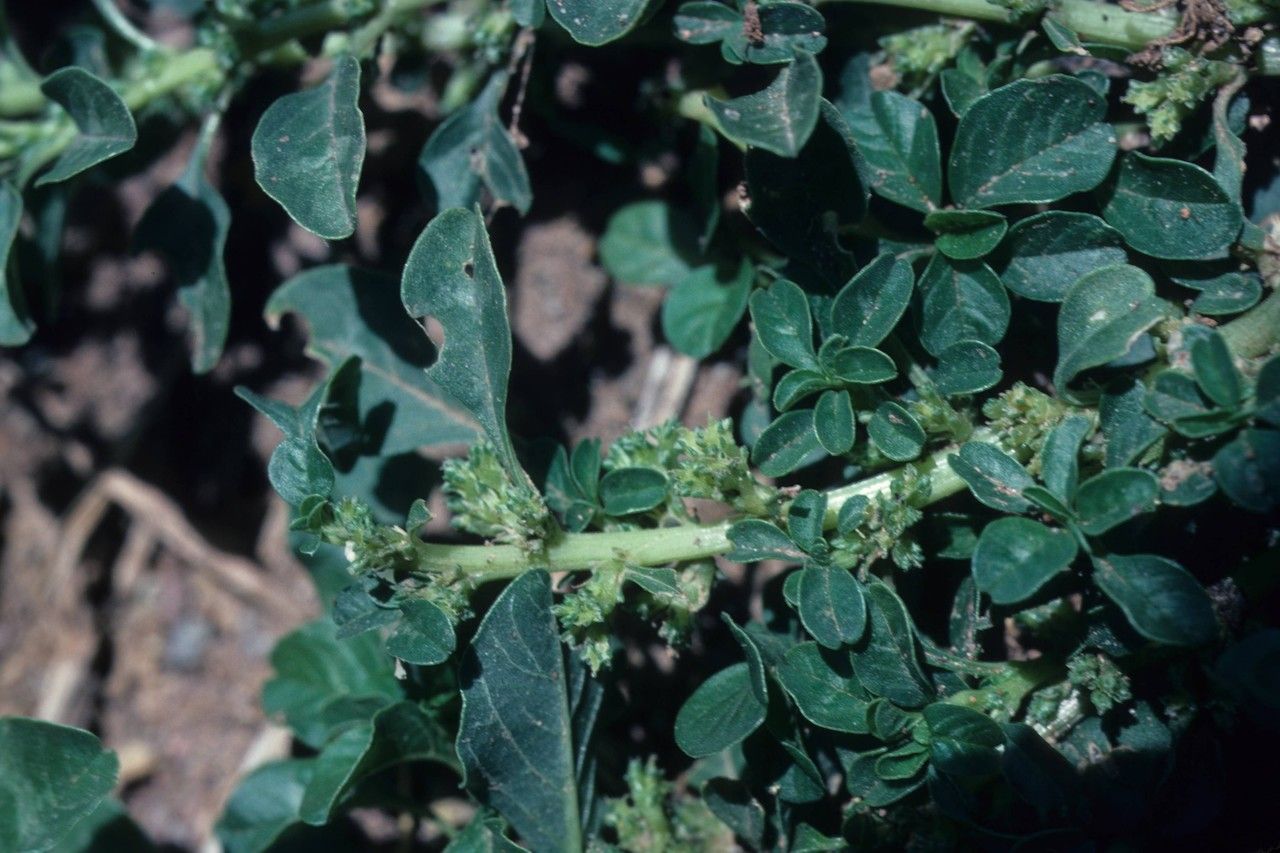
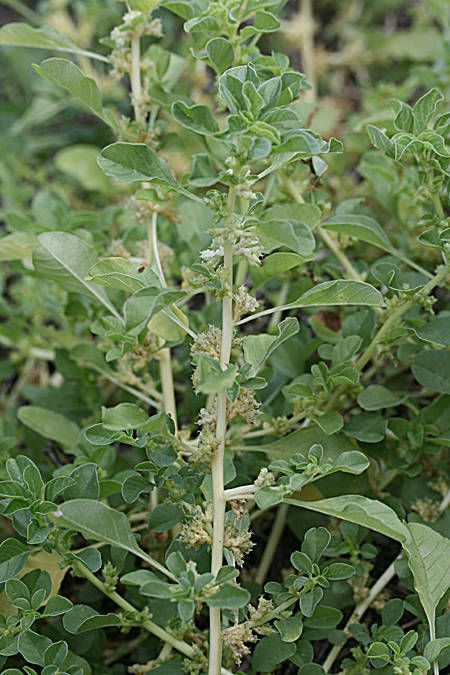
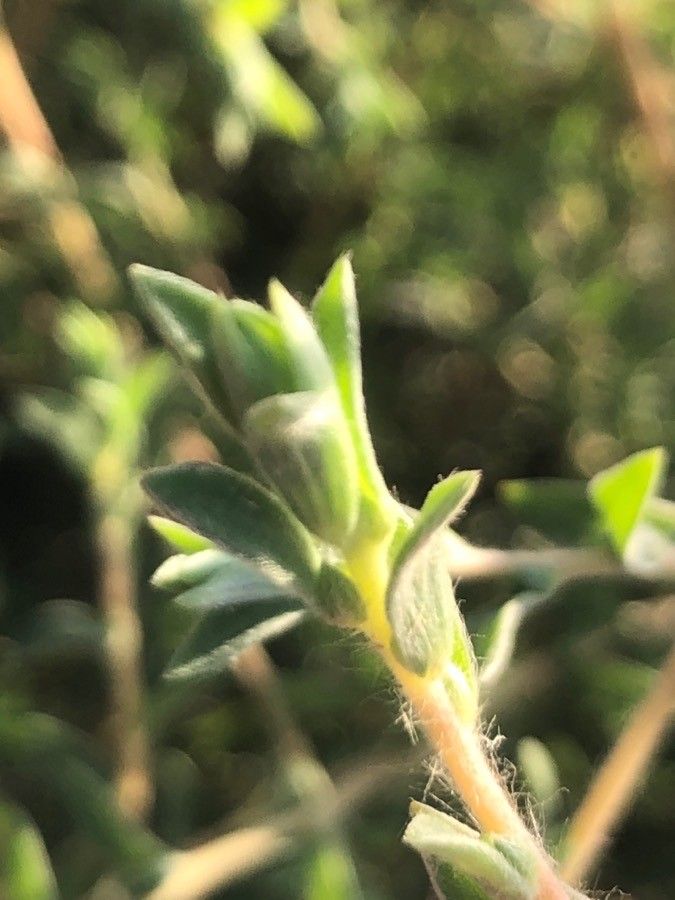
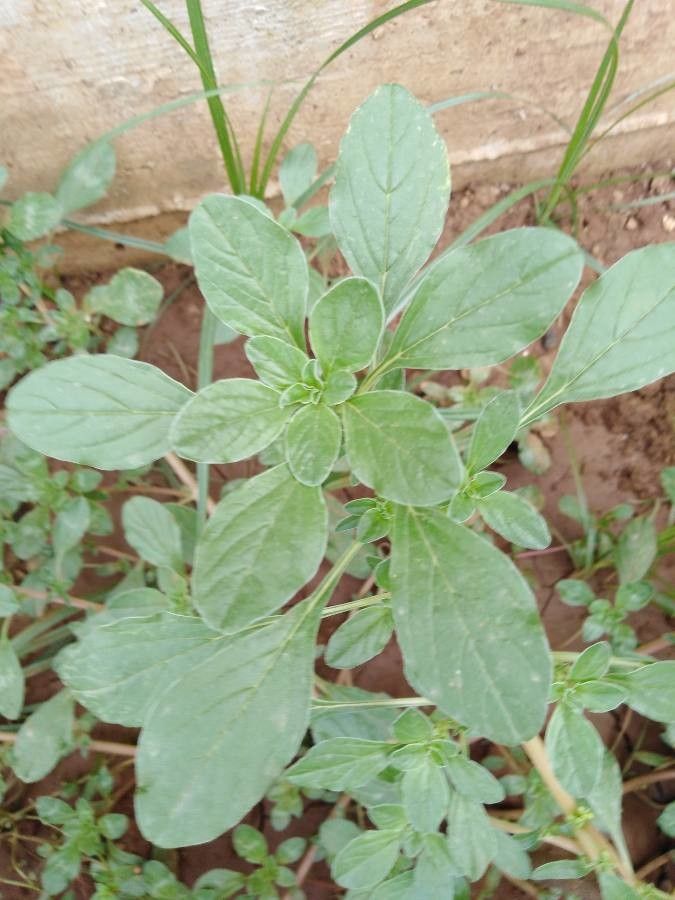
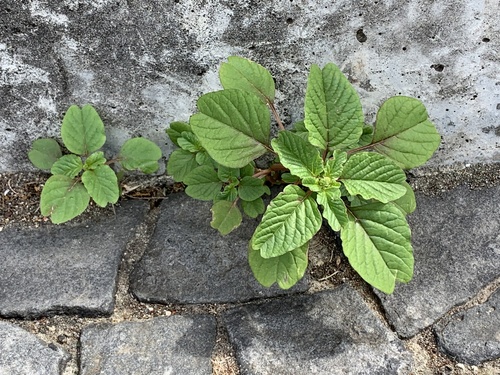
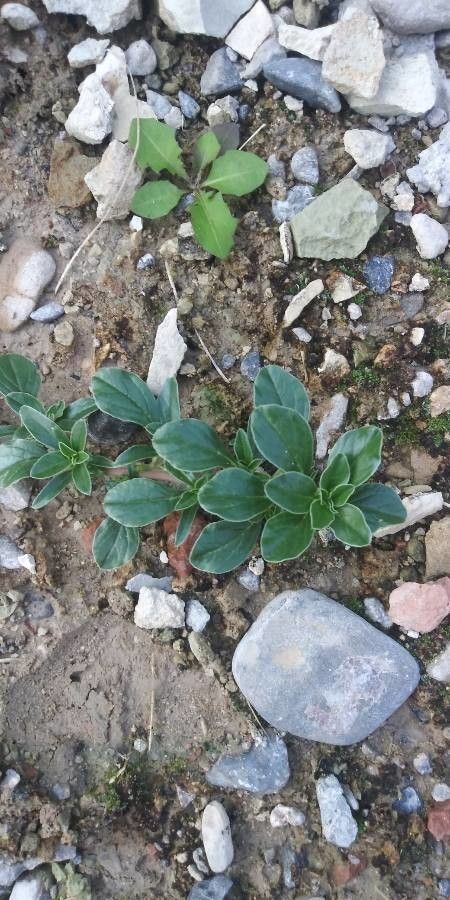
Amaranthus crassipes, also known as spreading amaranth, is a glabrous annual plant that is both native and introduced in the United States. In the U.S., it is found in New Mexico, Arizona, Texas, Alabama, South Carolina, and Louisiana. It is also found in Mexico, the West Indies, and South America.The plant can grow up to two feet in height. It flowers in the summer and fall. It is usually found near wet habitats or disturbed areas. Two varieties of A. crassipes have been described: A. crassipes var. crassipes and A. crassipes var. warnockii. The major difference appears to be the leaf structure.
Spreading amaranth is fairly resistant to disease and generally not easily affected by illnesses. Still, it can be vulnerable to pests and diseases present in its environment. Such infections are typically mild. Regarding care, this plant needs moderate maintenance. Regular pruning is necessary to keep it looking good and to encourage healthy growth. Applying fertilizer can also support flowering. Spreading amaranth is appropriate for people who have outdoor areas like a garden or patio and does not demand extensive gardening experience. It may need extra attention if cultivated indoors.
How to keep Amaranthus Crassipes.
Light
The proliferation of amaranth is rooted in brightly lit, open spaces where it blooms in ample sunlight. It's capable of surviving in partial sun, but it flourishes best under full sun exposure for ideal growth. Recognized for its predilection towards sunlight, this plant has both annual and biennial lifecycles.
Temperature
Being native to the tropics, spreading amaranth is used to a hot and moist environment, demonstrating a well-suited adaptation to such high heat and humidity. Rapid changes in temperature are not well-received, with the plant favoring a consistent thermal environment, making it essential to prevent indoor temperature swings. It typically doesn't stand up well to chilly climates, needing warmer temperatures to grow. Should the temperature of its surroundings dip excessively, there's a potential for the plant to halt growth or even perish.
Fertilizer
Regular, mild applications of fertilizer can enhance the healthy growth of leaves in Spreading amaranth. It is recommended to fertilize Spreading amaranth roughly once monthly throughout the summer. Nitrogen plays a vital role in foliage development, and utilizing sources rich in nitrogen supports the wellbeing of Spreading amaranth.
Botanical profile.
- Plant Type
- Herb
- Life Cycle
- Annual
- Genus
- Amaranthus
- Family
- Amaranthaceae
- Hardiness Zone
- 9-11
- Mature Height
- 30 cm to 61 cm
- Mature Spread
- 20 cm to 40 cm
- Leaf Color
- Green, Dark Green
- Leaf Type
- Deciduous
- Flower Color
- Red
- Flower Size
- 0.20 cm to 0.25 cm
- Bloom Time
- Summer, Early fall, Mid fall
- Planting Time
- Autumn, Winter
- Harvest Time
- Late summer, Fall, Early winter
- Native Area
- Colombia, Bahamas, Cuba, Haiti, Mexico, Venezuela, Dominican Republic, Jamaica
Other names.