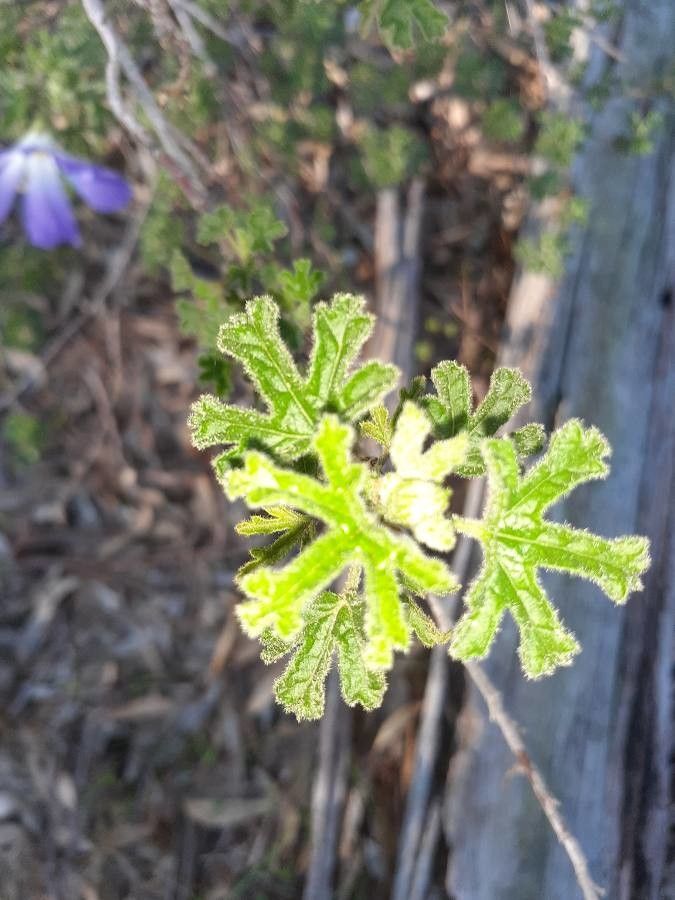
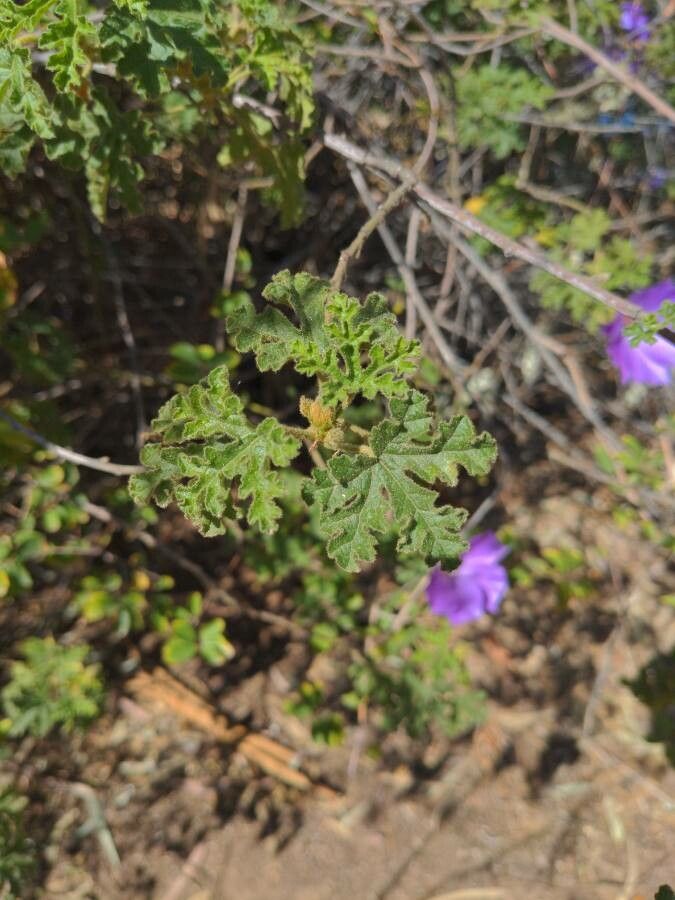
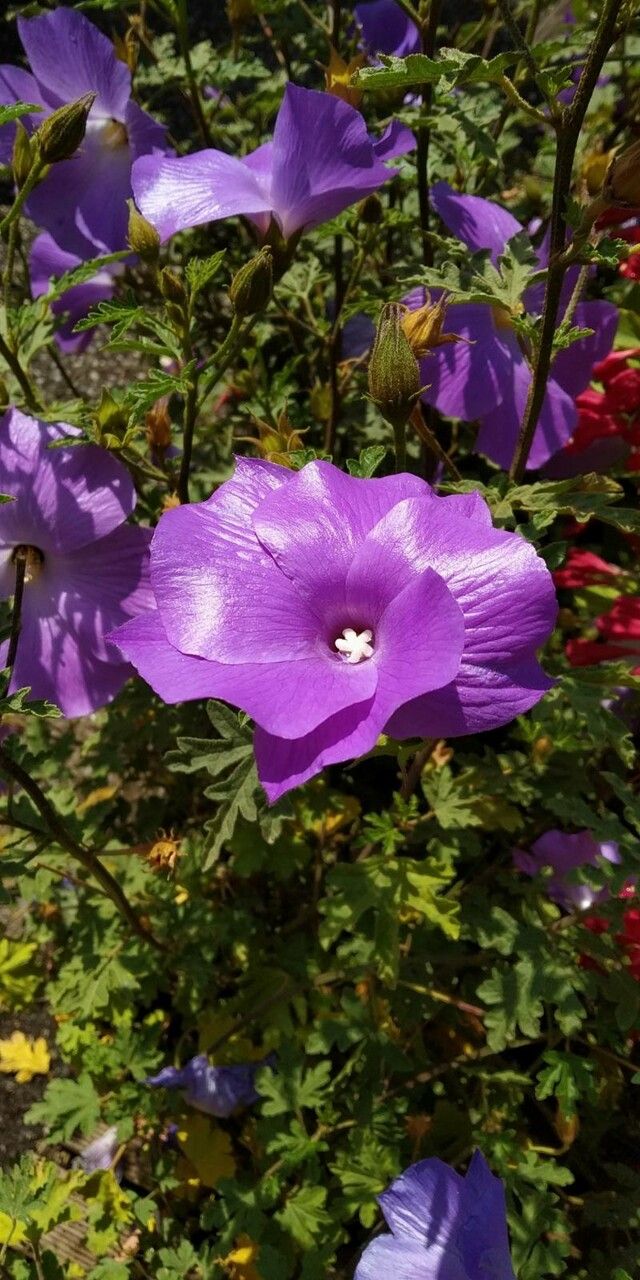
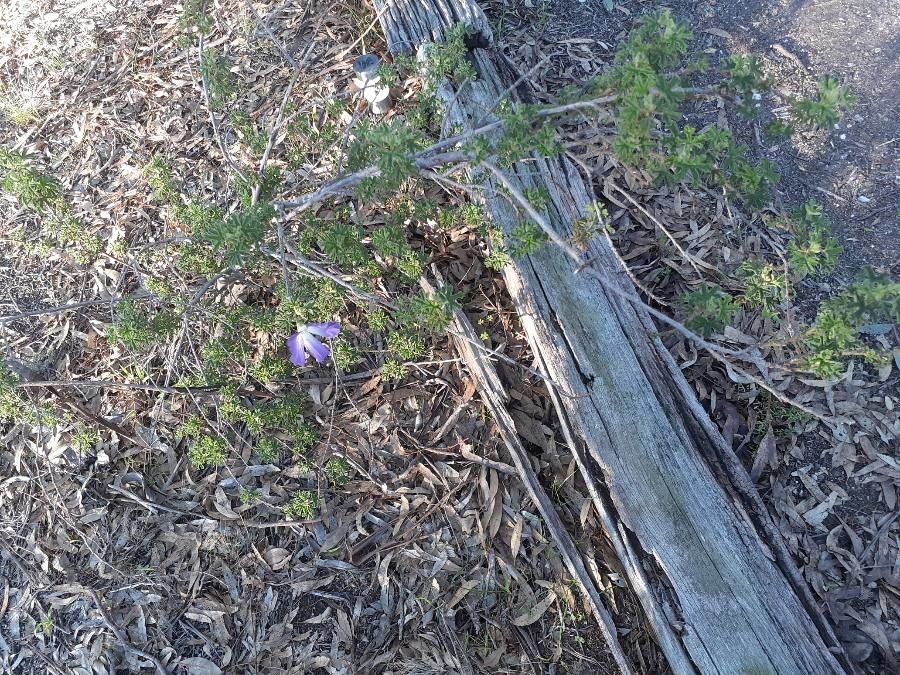
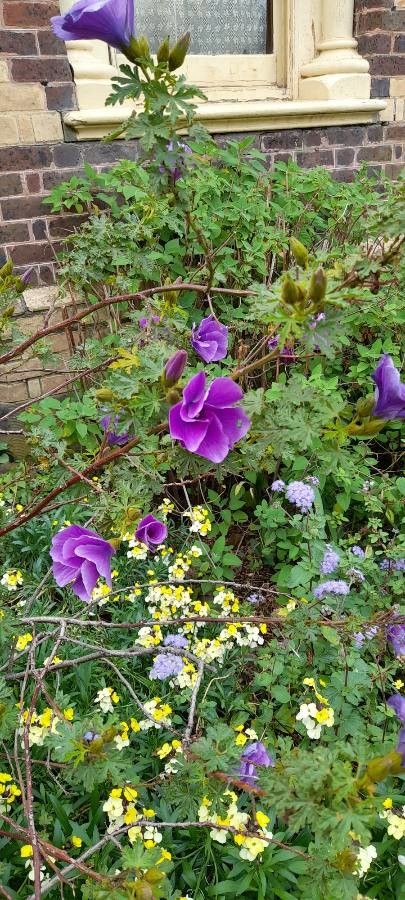
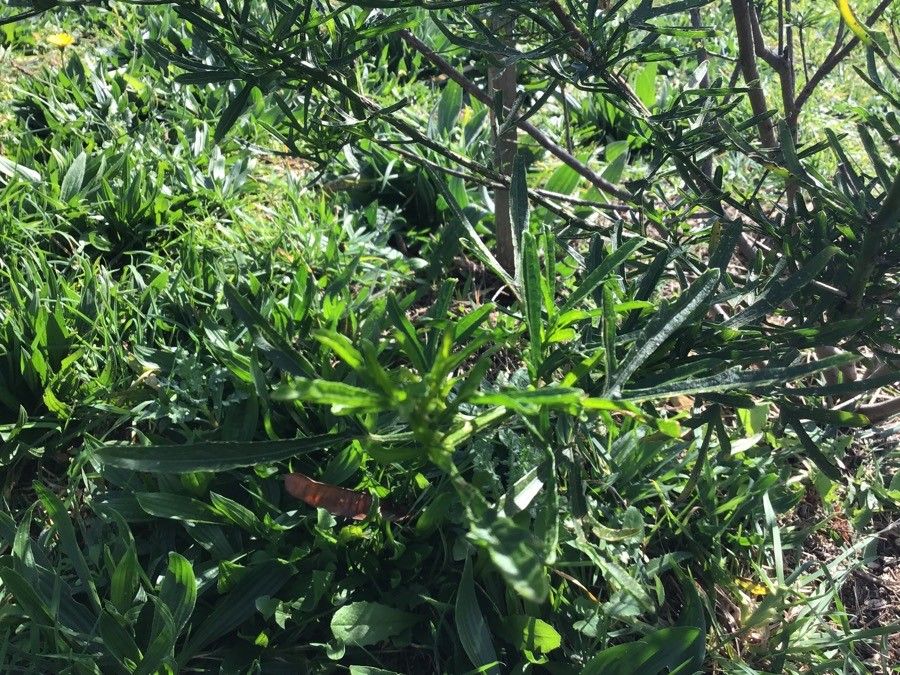
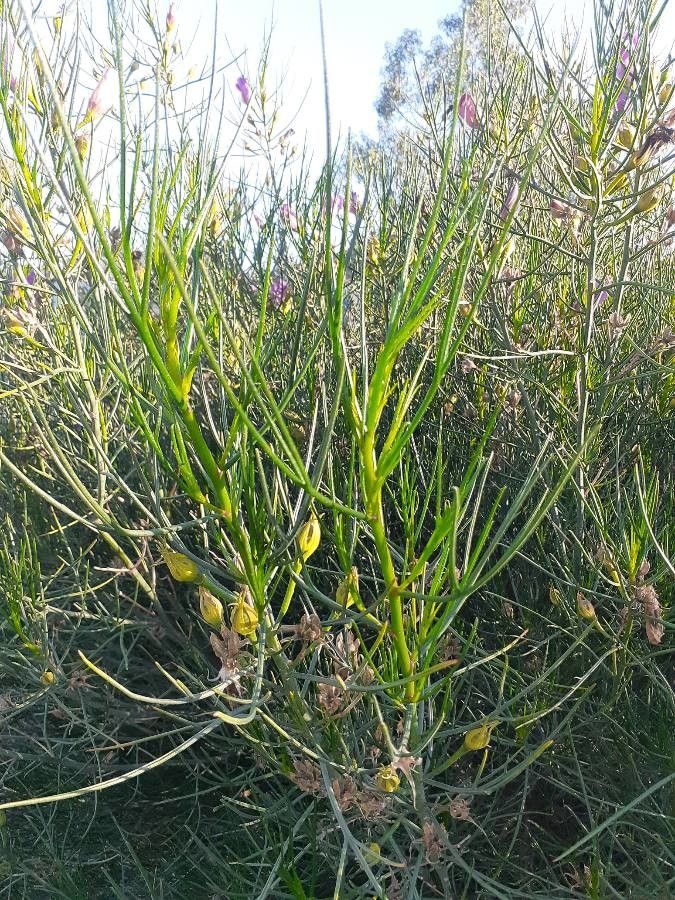
Alyogyne huegelii, commonly known as Blue Hibiscus or Lilac Hibiscus, is a flowering plant native to Western Australia. It belongs to the Malvaceae family and is a popular ornamental plant due to its attractive blue or lilac-colored flowers. The plant can grow up to 2 meters tall and has green, lobed, and toothed leaves.
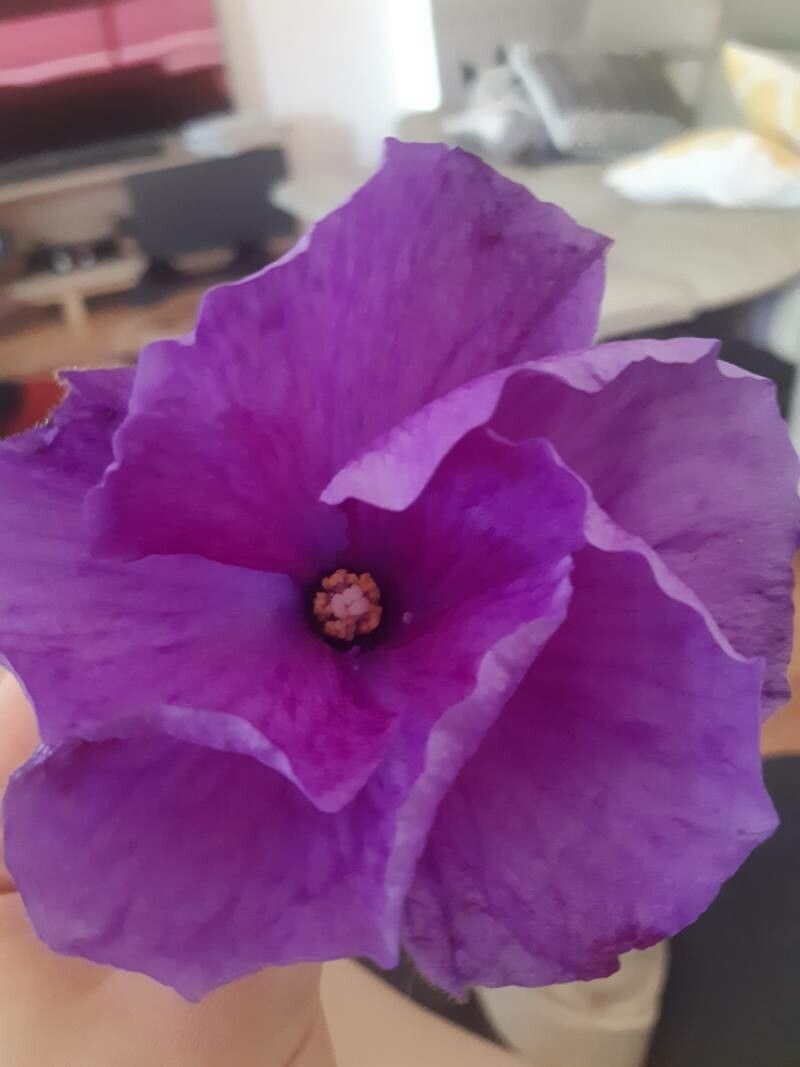
The flowers of Alyogyne huegelii are large, showy, and resemble those of hibiscus plants. They bloom from late winter through spring and attract bees, butterflies, and other pollinators. The delicate petals have a silky texture, adding an elegant touch to any garden.
Alyogyne huegelii prefers full sun exposure but can tolerate partial shade in hotter climates. It requires well-draining soil with moderate watering during the growing season and can withstand periods of drought once established.
Overall, Alyogyne huegelii is an easy-to-grow plant that enhances any garden with its stunning blue or lilac-colored flowers that bloom abundantly in the spring.
Australian mallow has strong resistance to disease and is typically not susceptible to illnesses. Regarding care, this plant is fairly low-maintenance. When grown outdoors it needs only minimal watering, and larger specimens usually do not require pruning. Smaller plants, however, should be pruned after they have finished blooming. Australian mallowt is appropriate for anyone with an outdoor space, such as a garden or deck, and does not demand extensive care experience.
How to keep Alyogyne Huegelii.
Light
Australian mallow comes from open habitats, such as sunny meadows and forest edges, which offer abundant light. It does best in Full Sun but can also tolerate Partial Sun, adapting well to a range of sunlight conditions.
Humidity
This plant will thrive in moderate humidity, which is probably the level in your home. However, misting it a few times a week can be very beneficial. Make sure the room has good ventilation.
Temperature
Australian mallow is indigenous to Australia, where temperatures vary. It grows best between 59 and 100 °F (15 to 38 ℃). Making seasonal adjustments to replicate this range boosts its growth.
Fertilizer
Timing is essential for feeding Australian mallow. Apply fertilizer in early spring and continue monthly until early summer. Fertilizer promotes attractive blooms and supplies energy during both dormant and active growth periods.
Botanical profile.
- Plant Type
- Shrub
- Life Cycle
- Perennial
- Genus
- Alyogyne
- Family
- Malvaceae
- Hardiness Zone
- 8-11
- Mature Spread
- 1.22 m
- Leaf Color
- Green
- Leaf Type
- Evergreen
- Flower Color
- Purple, Lavender
- Flower Size
- 5.08 cm to 7.62 cm
- Bloom Time
- Summer, Fall
- Planting Time
- Spring, Summer, Autumn
- Harvest Time
- Fall, Early winter, Mid winter
Other names.