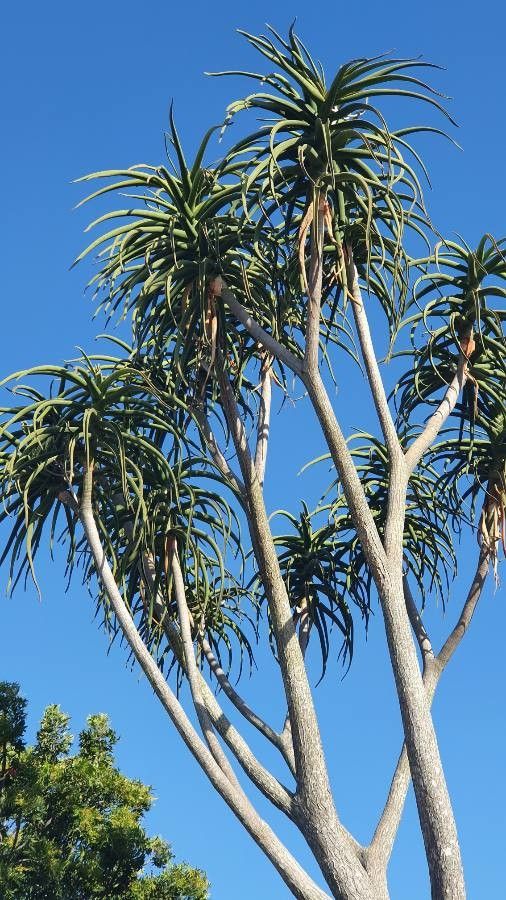
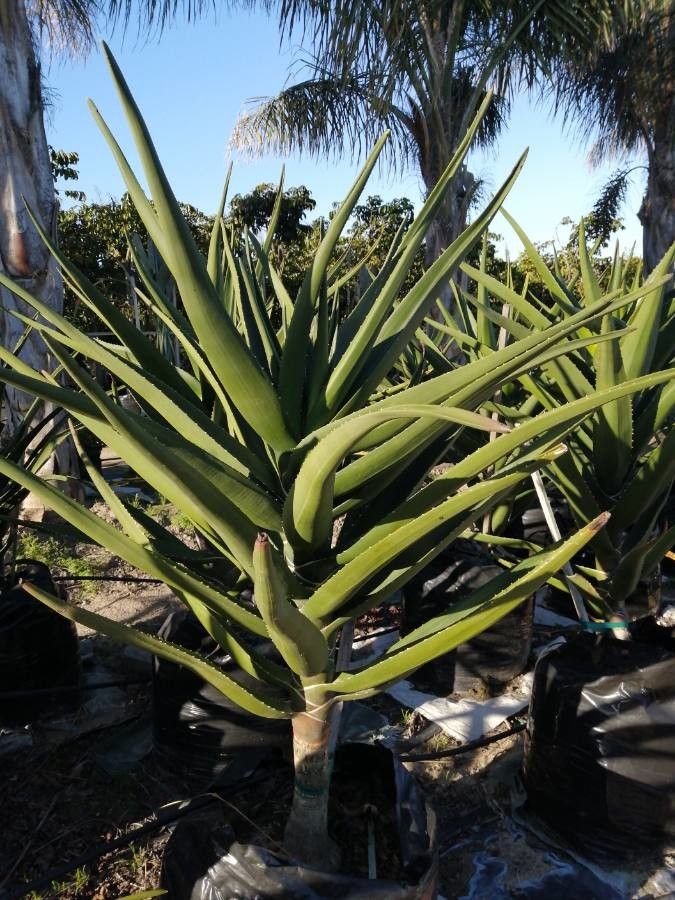
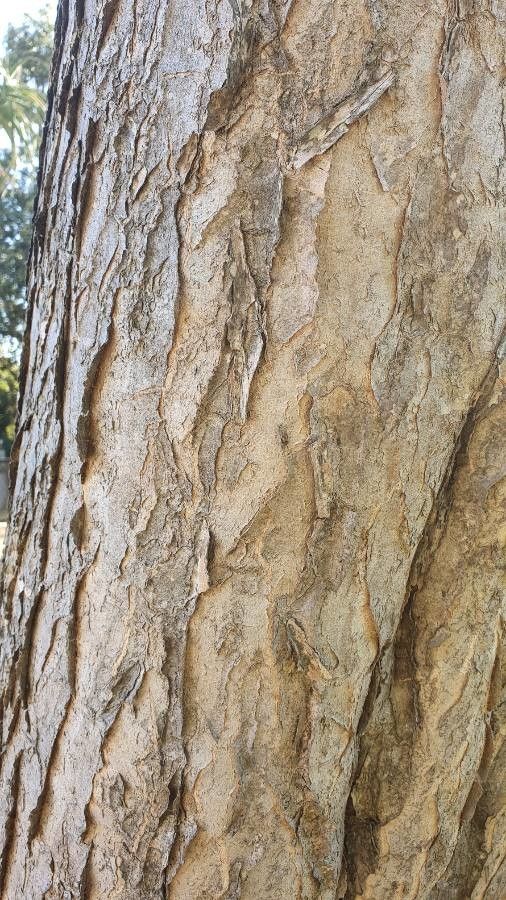
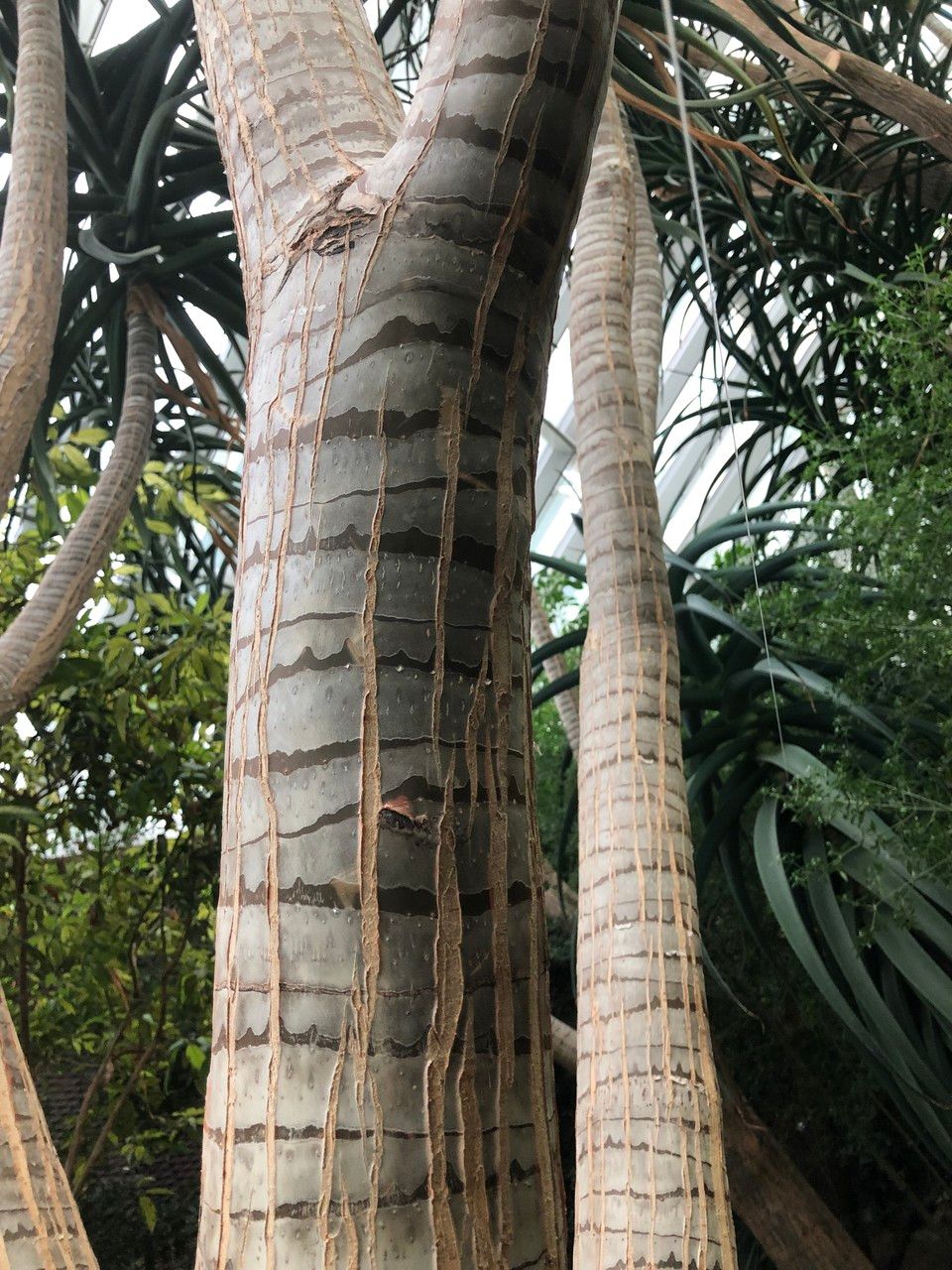
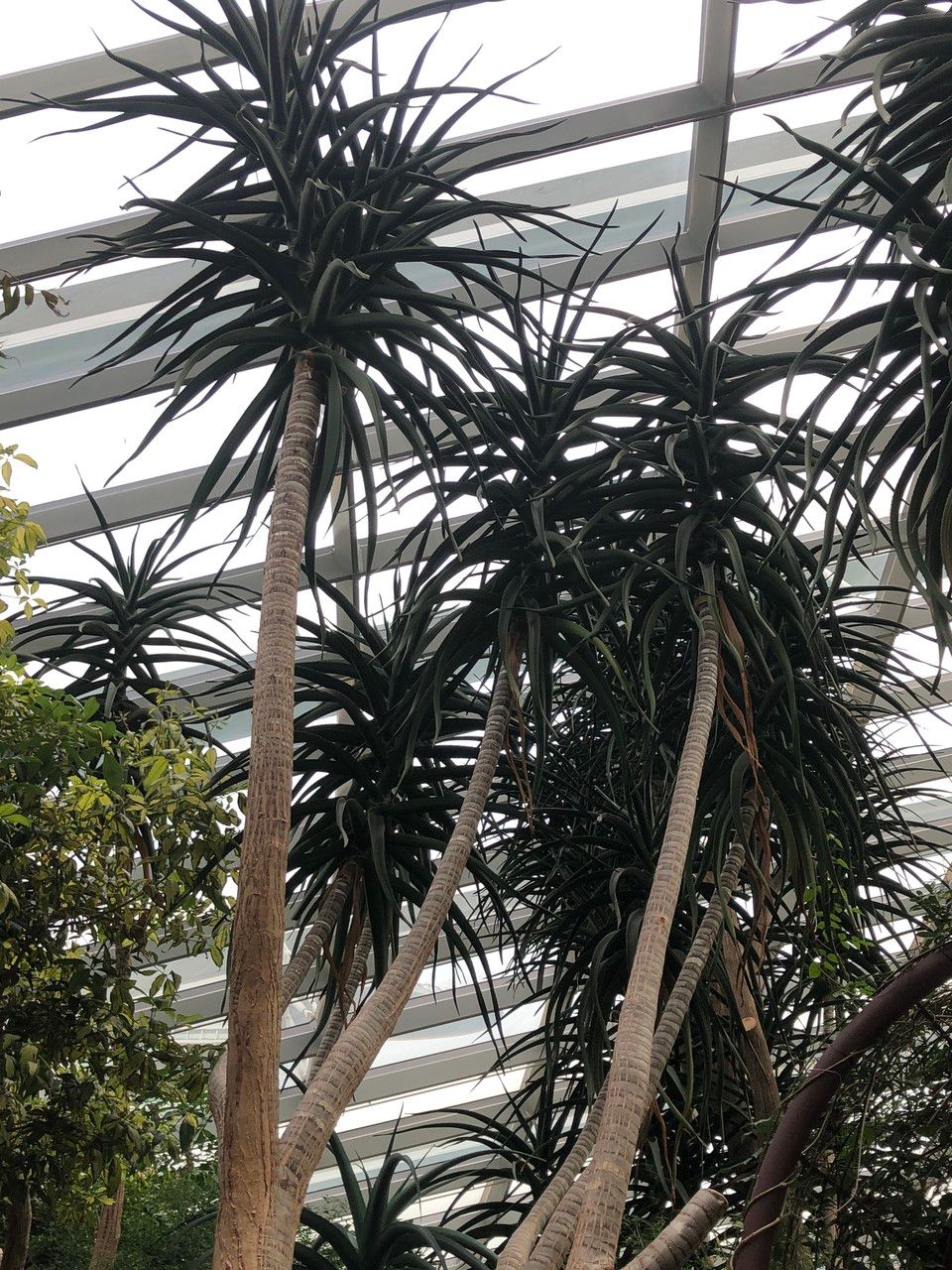
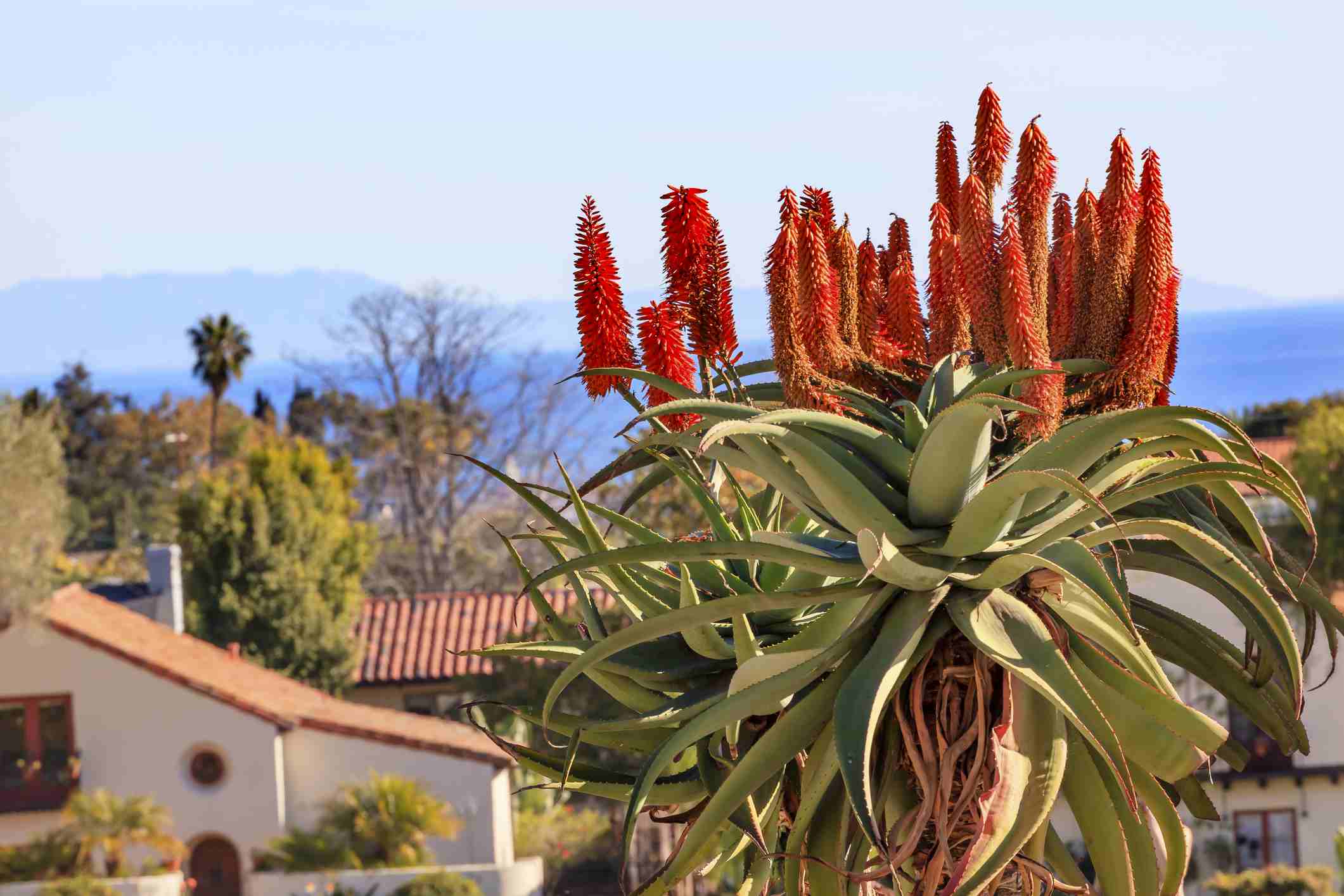
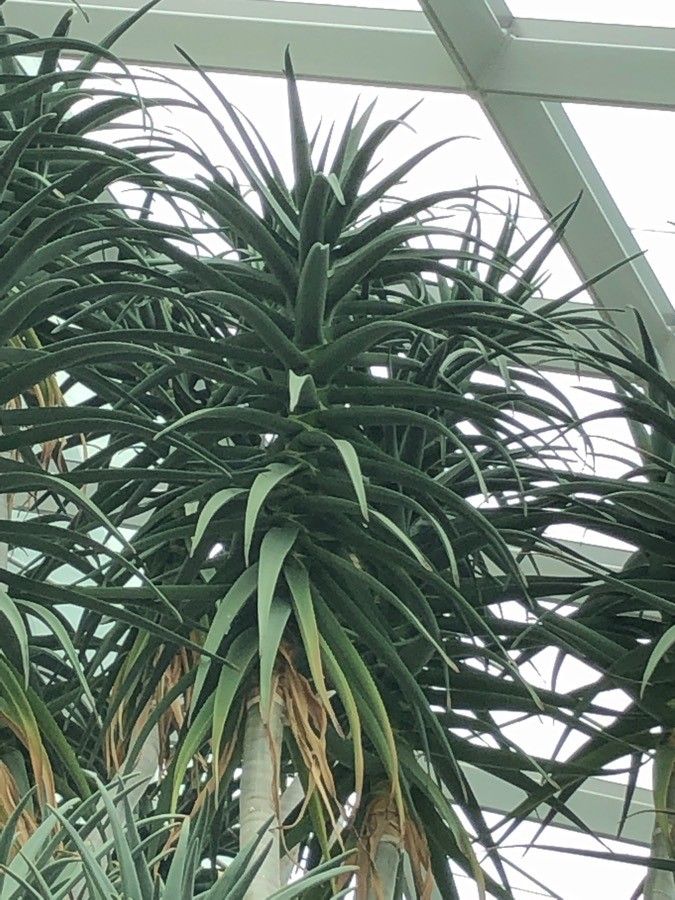
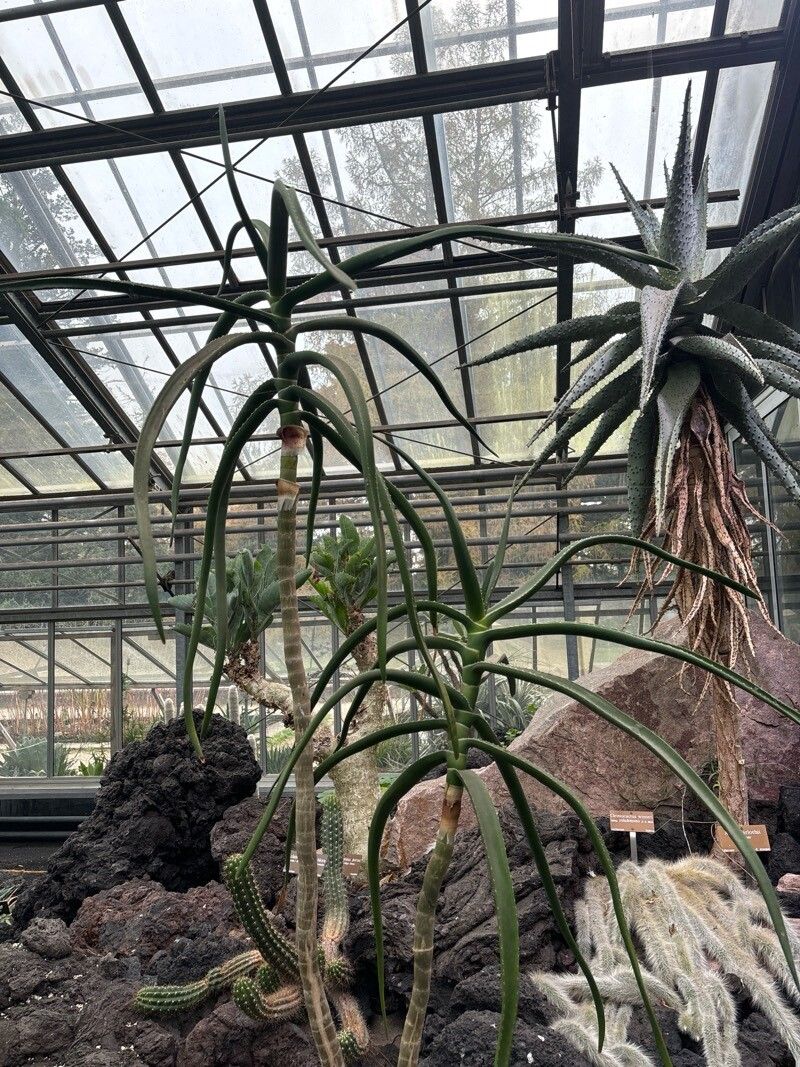
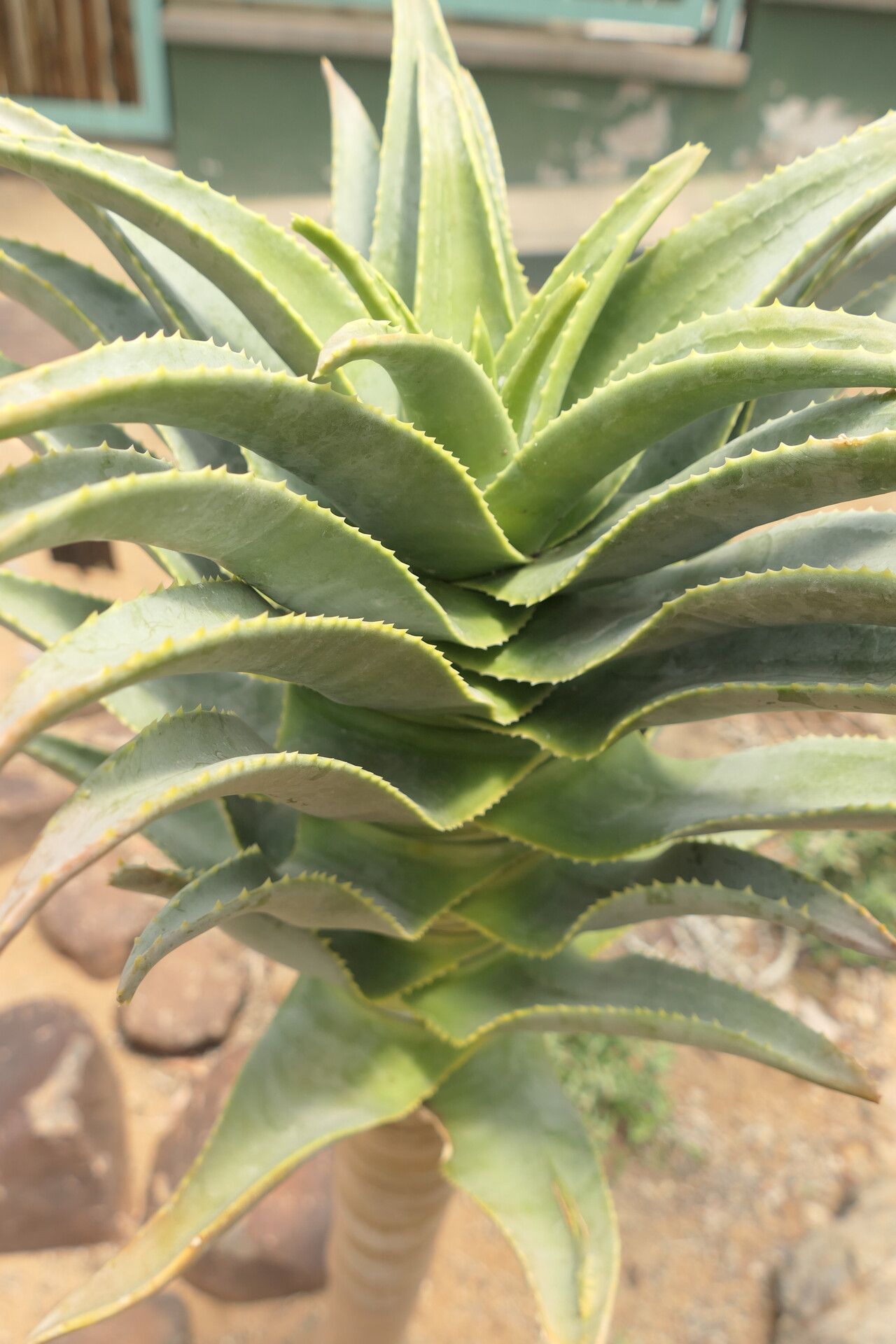
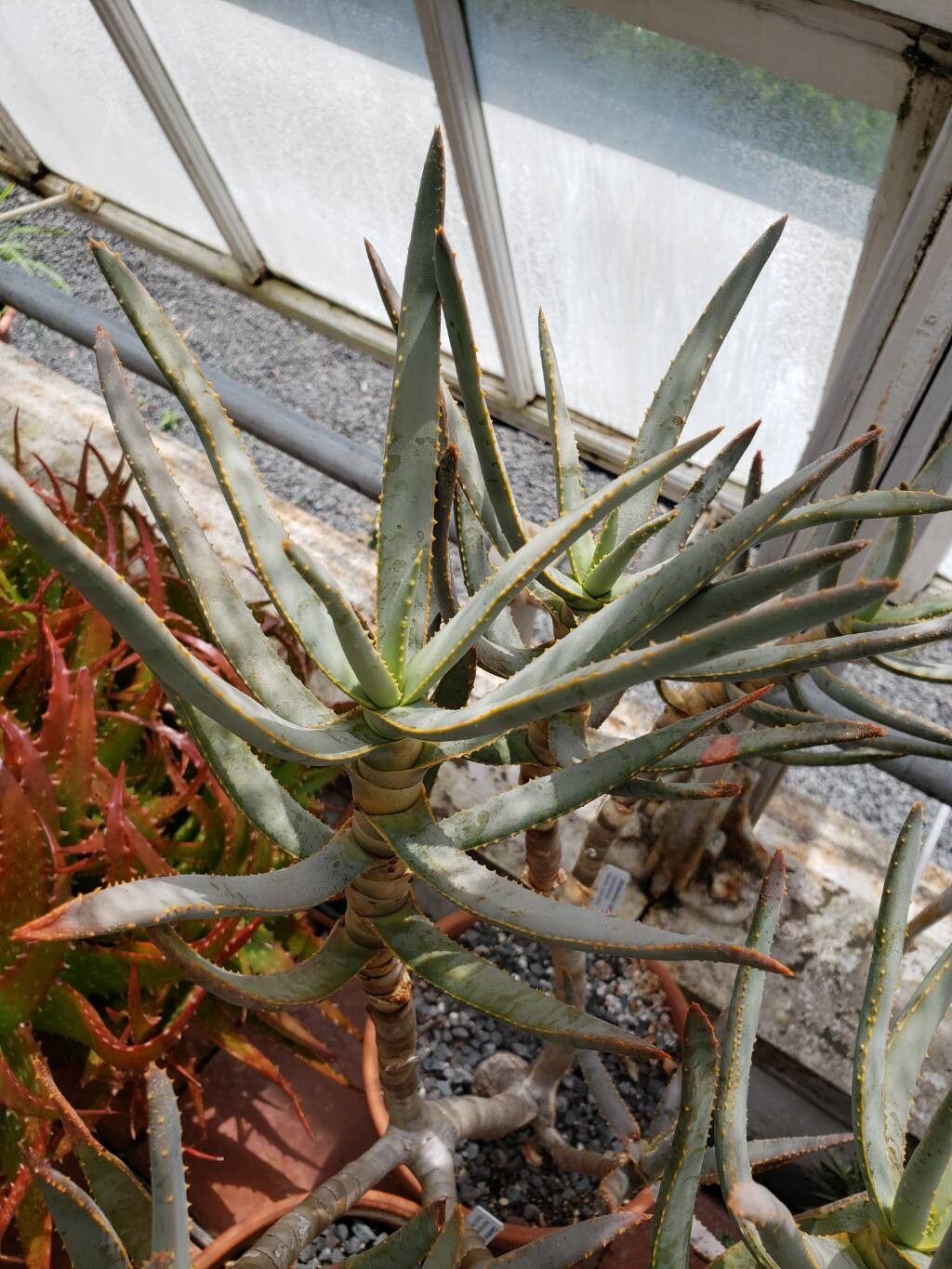
Aloidendron barberae, formerly Aloe bainesii and Aloe barberae, also known as the tree aloe, is a species of succulent plant in the genus Aloidendron. It is native to South Africa northwards to Mozambique. In its native climes this slow-growing tree can reach up to 60 feet (18 m) high and 36 inches (0.91 m) in stem diameter. Aloidendron barberae is Africa's largest aloe-like plant. The tree aloe is often used as an ornamental plant. Its tubular flowers are rose pink (green-tipped); it flowers in winter and in its natural environment is pollinated by sunbirds.
Tree aloe has strong disease resistance and, with normal care, is unlikely to fall ill. It is likewise not easily affected by most pests and diseases. In terms of care, tree aloe is drought-tolerant and can withstand long stretches without watering. It needs little fertilizer and generally does not require pruning. This makes it suitable for people of all experience levels, especially those who prefer to spend less time tending their plants. It’s a good option for people who are often away for extended periods and might forget to water regularly.
How to keep Aloidendron Barberae.
Light
The tree aloe flourishes in situations where it has access to sunlight all day long. From the seedling stage to full maturity, sufficient sunlight greatly contributes to its vigorous growth. Born in locations where light is plentiful, the tree aloe is capable of withstanding intense sun exposure. Nonetheless, insufficient sunlight may lead to damage, impeding its growth and overall wellbeing.
Water
The tree aloe thrives in arid climates and requires minimal watering, needing moisture only once every three weeks. It prefers full sun exposure and well-draining soil to prevent root rot. Its succulent leaves store water, allowing it to maintain lush foliage year-round, even with limited rainfall.
Temperature
The tree aloe is native to hot climates, where the temperature fluctuates from 68 to 100°F (20 to 38 ℃). It flourishes in these thermal conditions and may require adjustments during colder periods or in chillier areas.
Fertilizer
For the Tree aloe, administering small amounts of fertilizer one to two times annually during its growth period is adequate. Do not fertilize during winter and summer when the plant is inactive. Diminish the quantity of fertilizer for plants that have been repotted and hold off on fertilizing for a few months post-repotting. Fertilizing assists in vibrant growth and promotes flowering.
Pruning
The tree aloe is a tall, striking plant with broad, succulent leaves. To maintain its shape and remove any dead branches, it is best to prune it from early to late winter. Use sharp, sterile tools for this task. Pruning not only promotes healthy growth but also helps prevent the danger of falling branches.
Botanical profile.
- Plant Type
- Tree
- Life Cycle
- Perennial
- Genus
- Aloidendron
- Family
- Asphodelaceae
- Hardiness Zone
- 9-11
- Mature Height
- 91 cm
- Mature Spread
- 91 cm
- Leaf Color
- Green, Blue
- Leaf Type
- Evergreen
- Flower Color
- Pink
- Flower Size
- 3.81 cm
- Bloom Time
- Mid summer, Late summer
- Planting Time
- Spring, Summer
- Harvest Time
- Early fall, Mid fall
- Native Area
- South Africa, Eswatini, Mozambique
Other names.
Reader questions.
How should I water my Tree aloe plant?
Your Tree aloe is not particular about how you water it, so you can use any common watering tool like watering cans, hoses, or even cups. When watering, it's best to apply the water directly to the soil and make sure all areas of the soil are evenly moistened to provide water to all parts of the root system. Filtered water is recommended to avoid any harmful particles that may be present in tap water. It's also helpful to use water that is at or slightly above room temperature, as extremely cold or hot water can be a bit shocking to the Tree aloe. However, the Tree aloe generally responds well to any type of water you give it.
Why should I put fertilizer on my Tree aloe?
Fertilization plays a crucial role in promoting the overall health and well-being of a Tree aloe. By ensuring a proper supply of energy and nutrients, you can expect to see your Tree aloe develop lush foliage and strong stems and branches. Additionally, fertilization significantly benefits the production of flowers, which are highly valued by gardeners. When the right type of fertilizer is used, it enhances the ability of the Tree aloe to transfer nutrients from its roots to its flowers, resulting in large, vibrant, and long-lasting blooms. Furthermore, proper fertilization maintains the plant's overall health, enabling it to better resist diseases.
What are the sunlight requirements for tree aloe?
Tree aloe requires full sun, meaning it needs above 6 hours of sunlight daily to thrive. It's important to observe the movement of sunlight in your garden to find spots that provide a good balance of light and shade, ensuring the ideal conditions for your plants. Ample solar exposure aids the tree aloe's growth from seedling to maturity, originating from environments with abundant light. However, insufficient sunlight can hinder its development and overall health.
What is the ideal temperature range for Tree aloe?
Tree aloe thrives in warmer climates, with ideal temperatures ranging between 68 to 100°F (20 to 38°C). It loves heat and requires adaptations during colder seasons or cooler locales. To ensure the plant's health, it's recommended to maintain temperatures above 20°C during winter and protect it from temperatures nearing 0°C, as cold can cause significant harm to Tree aloe.
What do I need to do if I give my Tree aloe too much or too little water?
Outdoor plants, especially newly planted ones or seedlings, are susceptible to lack of watering. To ensure their growth, it is crucial to water them adequately for the first few months. Once the roots are established, Tree aloe plants can rely mainly on rain. However, when Tree aloe is planted in pots, overwatering becomes more likely. If you accidentally overwater your Tree aloe, take immediate action to correct the situation. Stop watering the plant right away to minimize the impact of overwatering. Then, inspect the roots by removing the plant from its pot. If there are no signs of root rot, you can return the plant to its container. But if root rot is present, trim any affected roots and consider using a fungicide to prevent further damage. Finally, repot the Tree aloe in well-draining soil. In the case of underwatering, simply water the plant more frequently. This issue is usually resolved easily as the leaves will droop and dry out but will recover quickly with sufficient watering. Adjust your watering frequency promptly when underwatering occurs.
When should I fertilize my Tree aloe for the best results?
The best time to fertilize a Tree aloe is in the early spring when it is coming out of dormancy and getting ready to bloom. This will provide the plant with energy for growth and flower development. However, you can also give it a smaller feeding in the fall. Some people fertilize their Tree aloe when planting it, but this is not always needed.
How do I use artificial lighting for indoor tree aloes?
Indoor tree aloes require adequate lighting, especially when natural sunlight is insufficient. Artificial lighting is essential for promoting faster, healthier growth in less sunny spaces or during winter. LED lights are recommended because they can be customized to provide specific wavelengths needed by plants. Full sun plants need 30-50W/sq ft of artificial light, partial sun plants 20-30W/sq ft, and shade plants 10-20W/sq ft. The light source should be placed 12-36 inches above the plant for 8-12 hours per day to mimic natural daylight.
How should Tree aloe be cared for in cold weather?
During cold weather, it's important to protect Tree aloe from low temperatures. If you're growing it outdoors, bring it inside in autumn to a bright spot away from heaters but not too close to avoid damage. Ensure the temperature stays above 20°C to foster healthy growth. If the plant is exposed to temperatures below -5°C, you might see the leaves lighten in color, followed by browning or blackening and symptoms like wilting and drooping. Trim off frost-damaged parts and immediately move the plant to a warm, bright spot indoors for cold protection.
How frequently should I give water to my Tree aloe plant?
If your area doesn't get much rain, you need to water your outdoor plants every 2 weeks in the spring and fall, and more often in the summer. In the winter, water less frequently because the plants grow slower and need less water. For Tree aloe plants that are young or newly planted, water more often to help them establish and grow. For potted plants, you can either set a watering schedule or water based on the moisture in the soil. In the summer, the plant will need more water than the predetermined schedule suggests. It's best to wait until the top 2 to 4 inches of soil are dry before watering again.
When should I not put fertilizer on my Tree aloe plant?
During the winter, Tree aloe plants are in a dormant phase, so they don't require fertilization like many other plants. They don't need extra energy from the soil to grow during this time, and fertilizing them in the winter increases the risk of overfertilization. The main feeding times for Tree aloes are in the early spring and the fall, so they don't need fertilizer for most of the spring and summer. If the plant is experiencing very hot or dry conditions, it's also a good idea to avoid feeding it.
What are the symptoms of insufficient light in tree aloes?
Tree aloes show several symptoms when they do not receive enough light, such as smaller new leaves, leggy or sparse growth, faster leaf drop, and slower or no new growth. Insufficient light leads to lighter-colored new leaves, indicating a lack of chlorophyll and essential nutrients. Other symptoms include chlorosis, where leaves turn yellow, sunscald, leaf curling, wilting from excessive sunlight exposure, and leaf scorching, characterized by brown, dry edges on leaves.
What should I do if my Tree aloe gets too cold?
If your Tree aloe experiences temperatures lower than suitable, indicating by lightening of the leaves and frost damage, the best solution is to trim away the damaged parts. Move the plant to a warm environment indoors and place it near a south-facing window for ample light, but ensure it's not too close to heaters or air conditioning vents to avoid dry air that can further stress the plant.