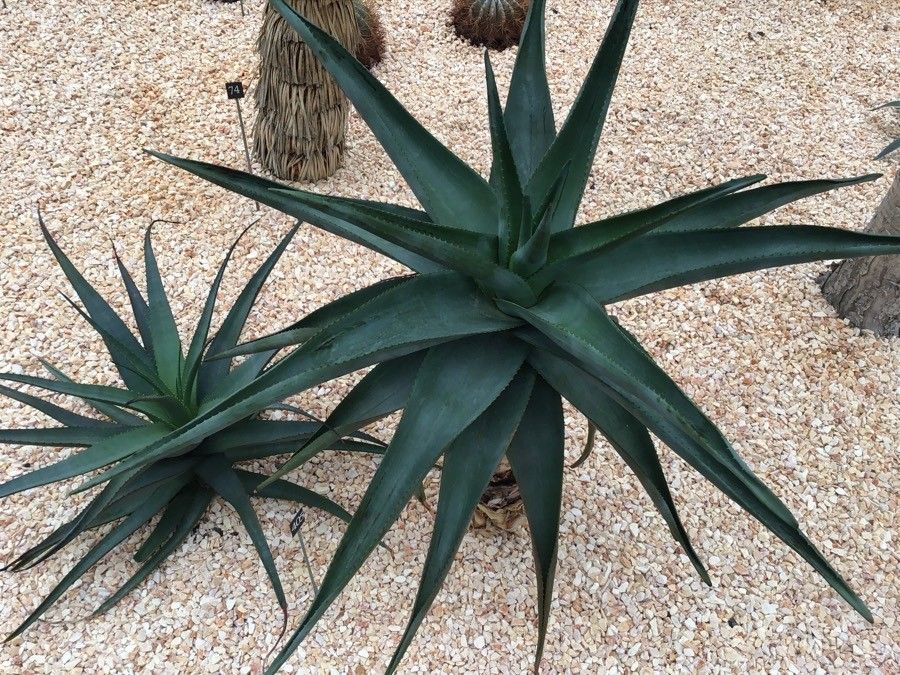
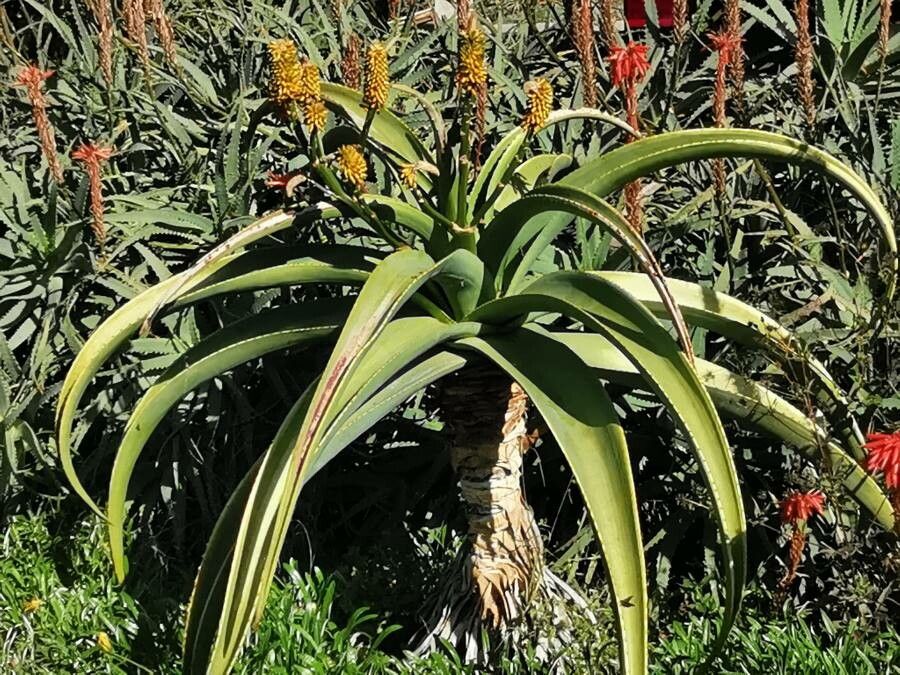
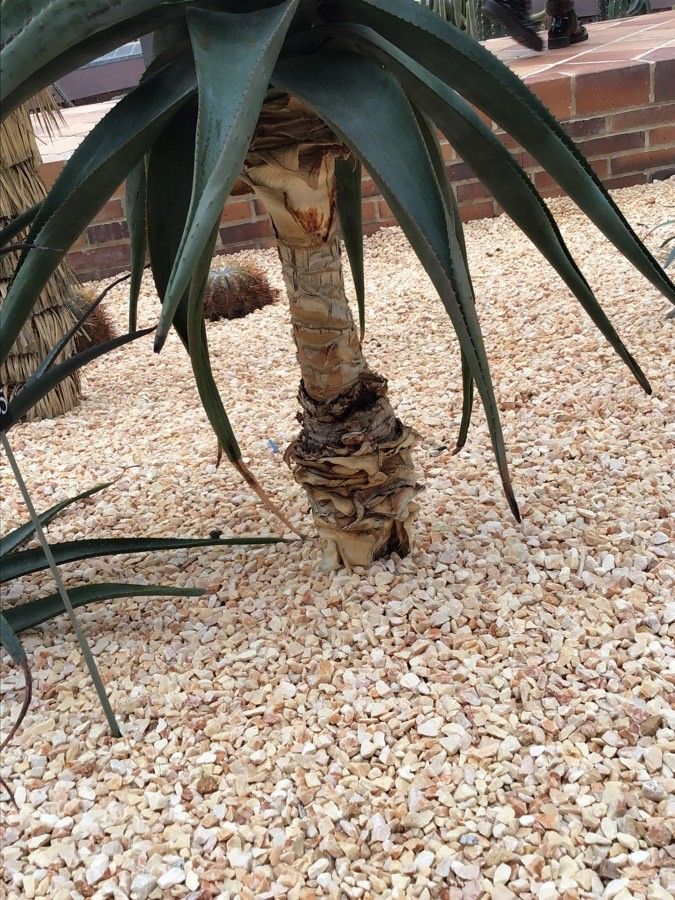
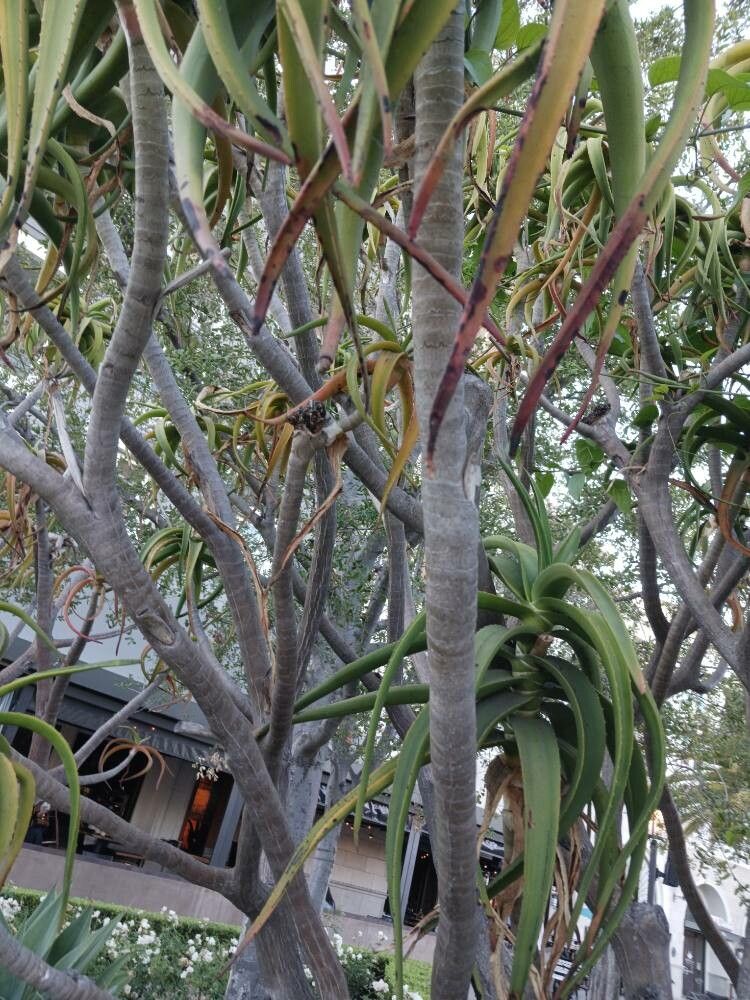
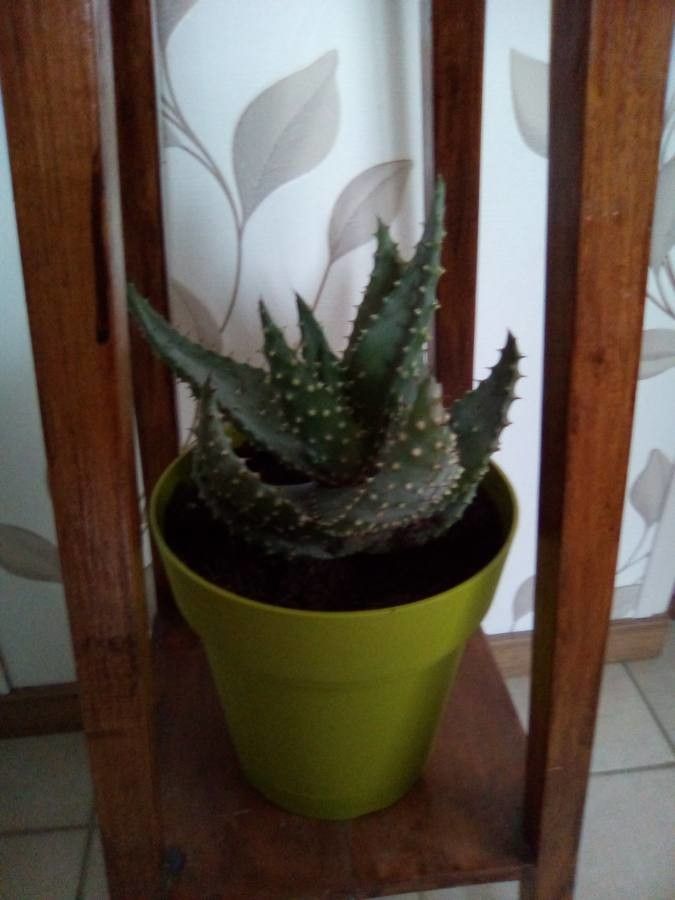
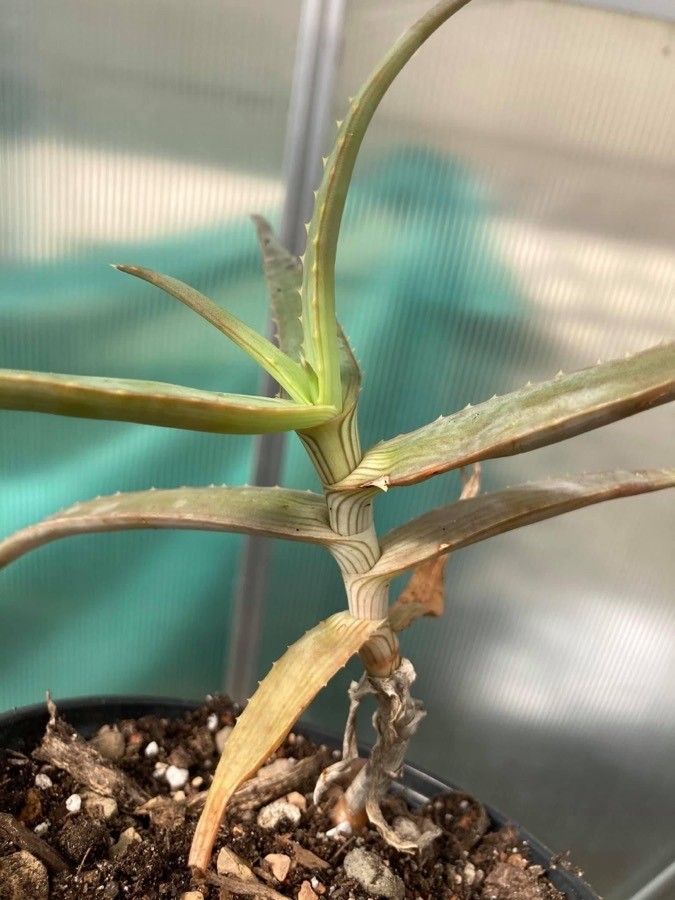
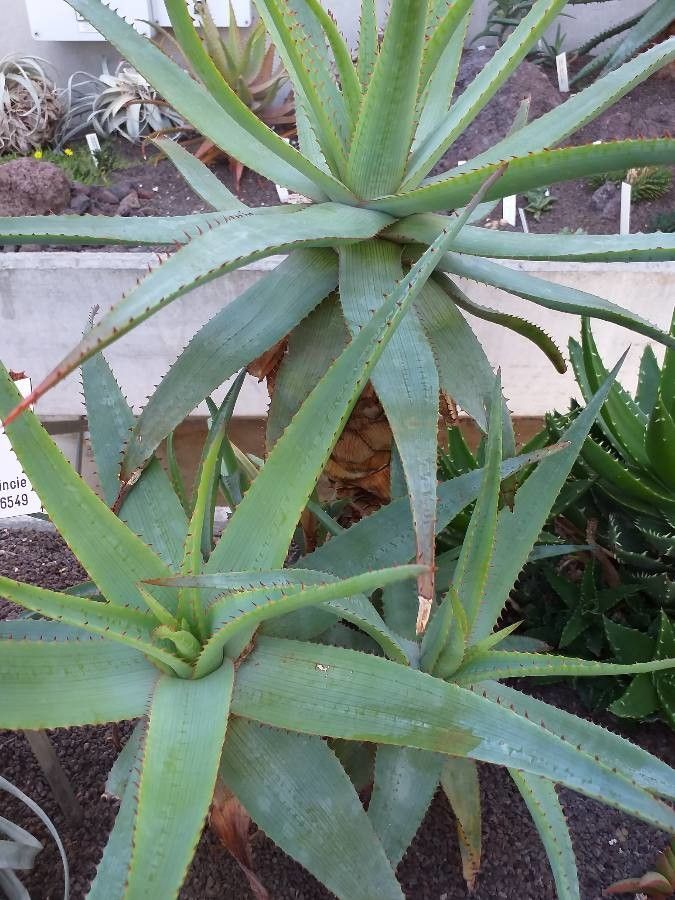
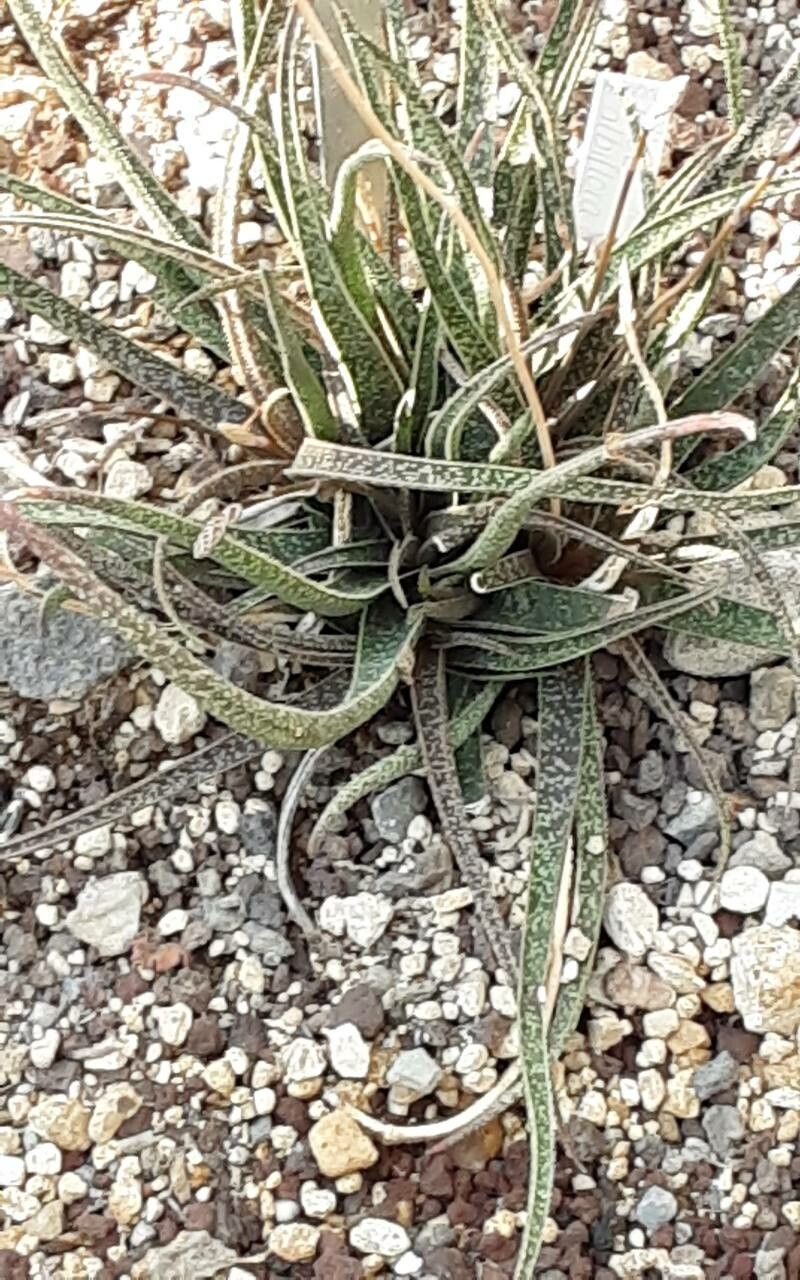
Aloe thraskii, commonly known as the Dune Aloe, is a succulent native to the coastal regions of South Africa. It belongs to the Asphodelaceae family and can grow up to 3 meters tall. The plant features a single stem that branches out at the top, forming a rosette of thick, fleshy leaves. These leaves are green-grey with white spots and have a gel-like substance known for its anti-inflammatory properties used in medicinal applications.
The leaves are alternately arranged and can extend up to 1 meter long. They have sharp, toothed edges and contain a gel-like substance known for its anti-inflammatory properties, which is often used for medicinal purposes.
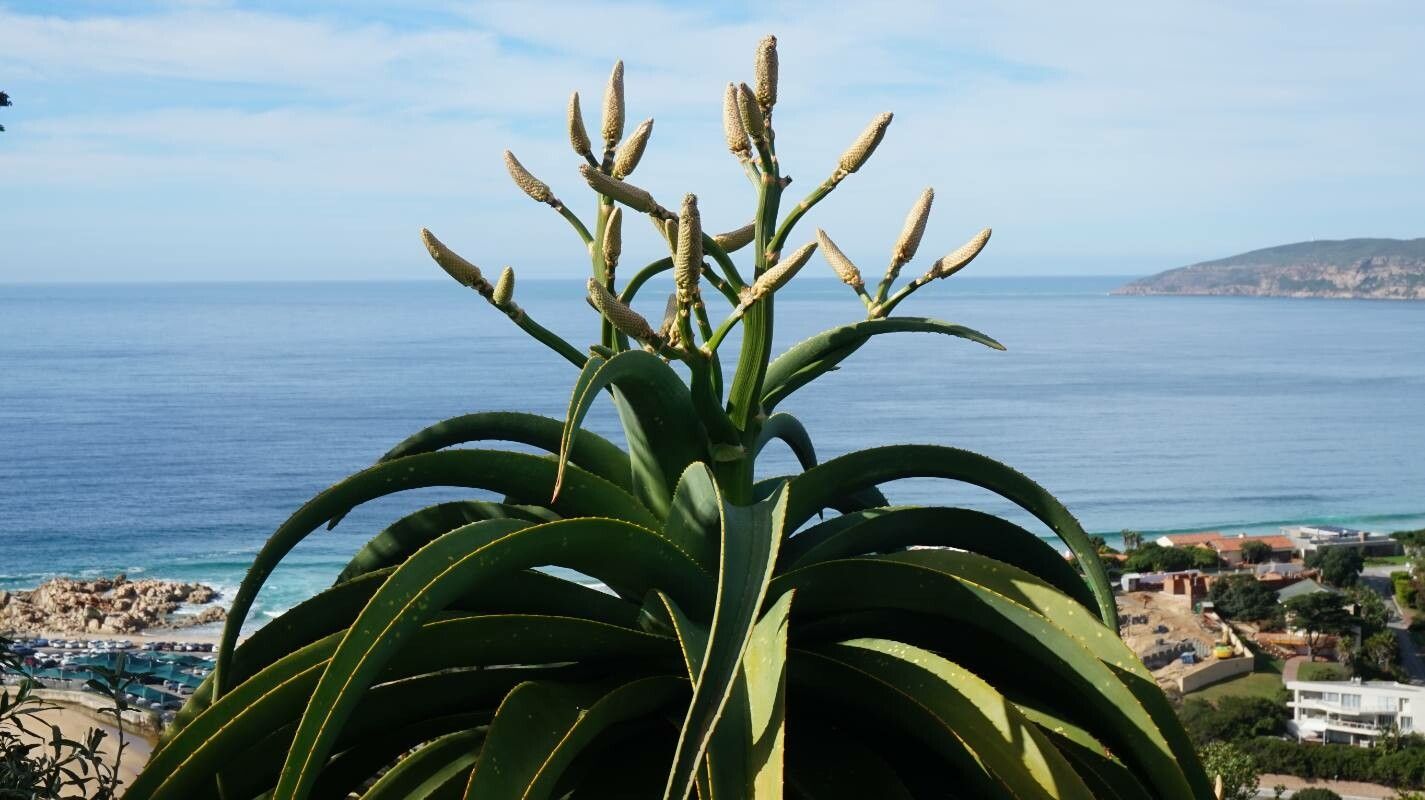
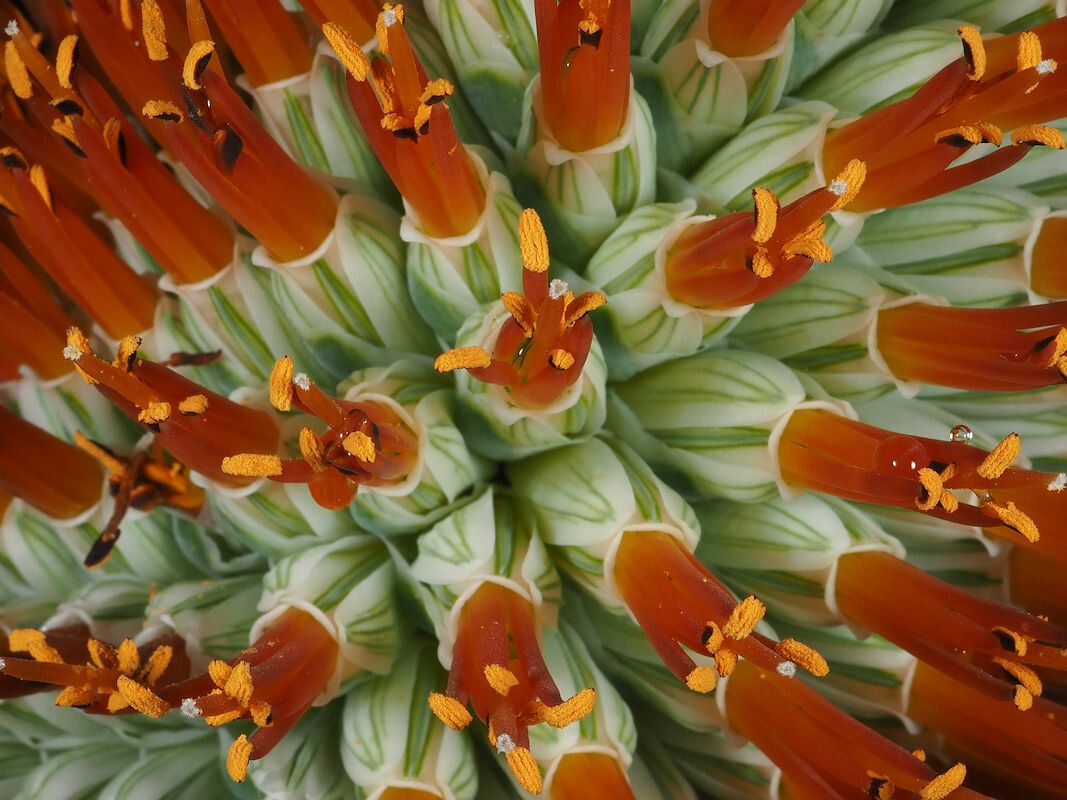
Aloe thraskii blooms in winter, producing tall spikes of tubular flowers in vibrant shades of orange-red or yellow. These flowers attract birds, such as sunbirds, for pollination.
This plant thrives in well-draining soil with moderate watering during the summer but is highly drought-tolerant due to its succulent nature. It prefers full sun or partial shade and requires protection from frost.
Overall, Aloe thraskii is an attractive ornamental plant with medicinal properties, making it ideal for landscaping purposes. Its drought tolerance and low maintenance requirements further enhance its appeal.
Dune aloe has strong resistance to disease and is unlikely to fall ill under normal care. It is also not easily affected by most pests and diseases. Regarding care, Dune aloe is drought-tolerant and can endure extended periods without watering. It requires little fertilizer and typically does not need pruning. This makes it suitable for people of all experience levels, especially those who prefer to spend less time tending their plants. It is a good option for people who are often away for long periods and might forget to water their plants regularly.
How to keep Aloe Thraskii.
Light
Native to dry areas, Dune aloe performs best in full sun, as its native habitat has intense sunlight and very little shade. It will also tolerate partial sun, providing some flexibility in its growth.
Water
Dune aloe is well-suited for arid environments due to its exceptional drought tolerance. It only needs to be watered once every three weeks. As an evergreen plant, dune aloe keeps its foliage throughout the year, which helps it conserve water during dry periods.
Temperature
Dune aloe prospers in warm conditions and needs higher temperatures during the growing season to support growth and metabolism. It prefers plenty of sunlight, proper moisture, and good airflow. However, it can be harmed by excessively low temperatures and by overwatering. It's important to maintain a balance and avoid both overly high temperatures and overly dry conditions.
Fertilizer
For Dune aloe, light fertilization 1-2 times a year during the growing season is sufficient. Avoid fertilizing during winter and summer when the plant is dormant. Use less fertilizer on repotted plants and wait a couple of months after repotting before applying fertilizer. Fertilizing supports healthy growth and encourages blooms.
Pruning
Pruning dune aloe is straightforward and requires minimal effort. Simply remove any spent flower stalks and dead leaves. If you notice any orange or brown leaves, trim them as well to help redirect nutrients back to the healthier parts of the plant. For small to medium-sized dune aloe plants, use a knife for trimming. For larger plants, it is best to use pruning shears. Following these steps will help maintain the overall health of your dune aloe.
Botanical profile.
- Plant Type
- Succulent
- Life Cycle
- Perennial
- Genus
- Aloe
- Family
- Asphodelaceae
- Hardiness Zone
- 9-11
- Mature Height
- 0.91 m to 2.13 m
- Mature Spread
- 0.91 m to 1.52 m
- Leaf Color
- Light Green, Dark Green
- Leaf Type
- Evergreen
- Flower Color
- Orange, Red
- Flower Size
- 2.03 cm to 3.05 cm
- Bloom Time
- Late fall, Early winter, Mid winter
- Planting Time
- Spring, Summer
- Harvest Time
- Late winter, Early spring, Mid spring
- Native Area
- South Africa
Other names.
Reader questions.
What are the sunlight requirements for Dune aloe?
Dune aloe, or Aloe thraskii, is native to arid regions and thrives best in full sun conditions, characterized by above 6 hours of sunlight daily. It can also tolerate partial sun, receiving about 3-6 hours of sunlight each day. This adaptability allows for some flexibility in its placement and care. However, it's crucial to monitor the movement of sunlight through your garden to ensure that your plants get the ideal balance of light and shade, promoting their health and growth.
What are the ideal growing conditions for Dune Aloe?
Dune Aloe, or Aloe thraskii, thrives in warm environments and requires ample sunlight, appropriate moisture levels, and good ventilation to promote growth and metabolism. It enjoys higher temperatures during the growing season but is susceptible to damage from excessively low temperatures and overwatering. To ensure healthy growth, it's important to avoid both excessively high temperatures and overly dry conditions. During winter, Dune Aloe enters a dormant state and should be moved indoors if temperatures drop below -5°C, preferably near a south-facing window to ensure it receives as much sunlight as possible. Supplemental lighting can be used if natural light is insufficient. When the temperature falls below 15°C, the plant's growth slows, necessitating a reduction or cessation of watering to prevent root rot.
Can I use artificial lighting for Dune aloe indoors?
Yes, indoor Dune aloes can benefit significantly from artificial lighting, especially when natural sunlight is inadequate, such as during winter or in less sunny locations. For optimal growth under artificial lights, consider the following: 1. LED lights are recommended because they can be customized to provide specific wavelengths needed by your plants. 2. The intensity of light should match the plant's sunlight needs; full sun plants require 30-50W/sq ft, partial sun needs 20-30W/sq ft, and full shade plants need 10-20W/sq ft. 3. Position the light source 12-36 inches above the plant to simulate natural sunlight conditions. 4. Mimic natural daylight hours by keeping the lights on for 8-12 hours per day depending on the specific needs of your Dune aloe.
How should I care for Dune Aloe in low and high temperature conditions?
In low temperatures, Dune Aloe is vulnerable and should be kept above -5°C, as it thrives best above 15°C. Exposure to temperatures below -10°C may cause the plant to become weak, wilt, and be prone to root rot. In the case of frost damage, trim off frostbitten areas and check for root rot, which requires cutting off rotted roots and possibly propagating through cuttings. Move the plant to a warm indoor spot near a south-facing window for ample sunlight, using supplemental lighting if necessary. In high temperatures above 38°C, Dune Aloe's growth stops, and it may experience water loss, wilting, and susceptibility to sunburn. Remove sunburned and rotten parts, and shield the plant from afternoon sunlight. For plants with root rot, stop watering until new roots emerge.
What symptoms indicate insufficient light for Dune aloe?
Insufficient light can cause various symptoms in Dune aloe, including smaller new leaves, leggy or sparse growth, faster leaf drop, slower or no new growth, lighter-colored new leaves, chlorosis (leaves turning yellow), sunscald, leaf curling, wilting, and leaf scorching. These symptoms range from structural changes, such as legginess and small leaves, to coloration issues, like chlorosis and leaf scorching. Recognizing these symptoms early can help you adjust your plant's light conditions to prevent further stress.
How can I improve the light conditions for my Dune aloe?
Improving light conditions for your Dune aloe involves several strategies depending on whether the plant is indoors, outdoors, or in the ground. Indoors, you can gradually move your plant to sunnier locations or use artificial light to ensure it gets at least 6 hours of direct sunlight daily. Outdoors, it's vital to adapt your plant to brighter conditions gradually to avoid sunburn. This can involve moving it to sunnier spots over several weeks. If the problem is due to physical obstructions like trees blocking sunlight, consider reducing these barriers by pruning. Transplanting smaller plants during their dormant period to a location with better sunlight and drainage can also be beneficial.