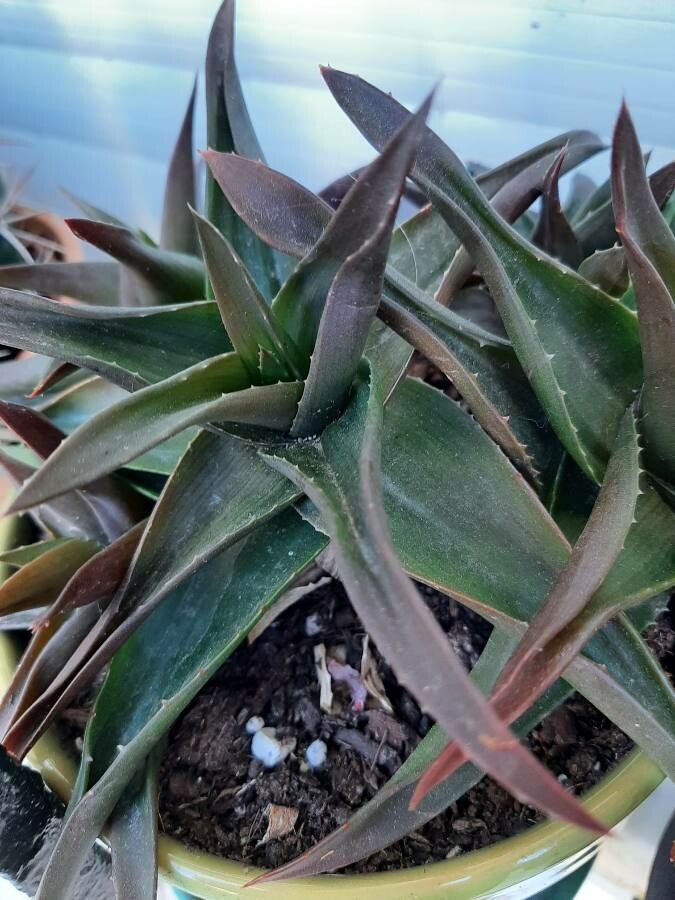
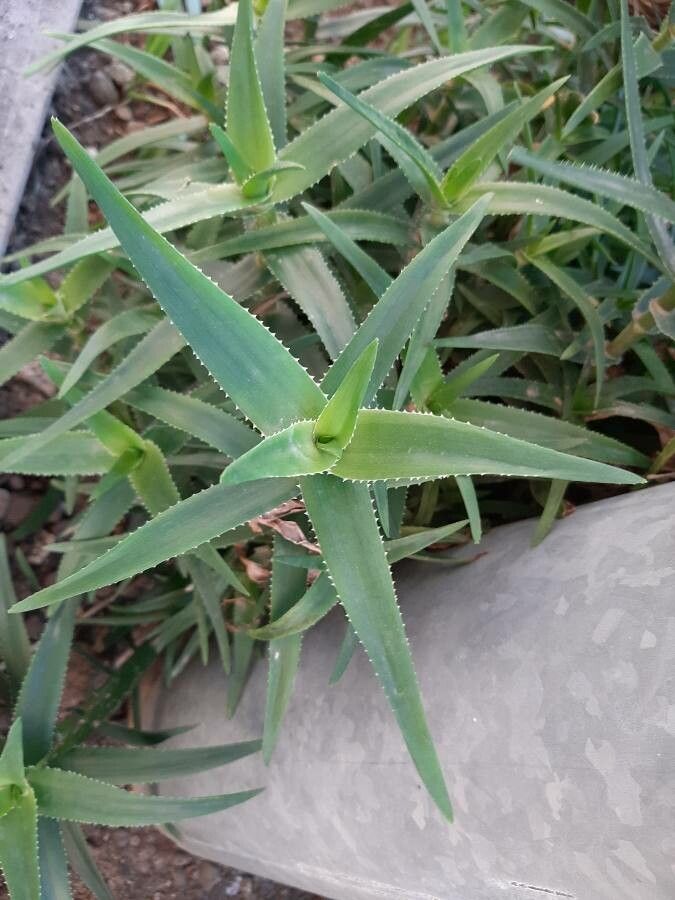
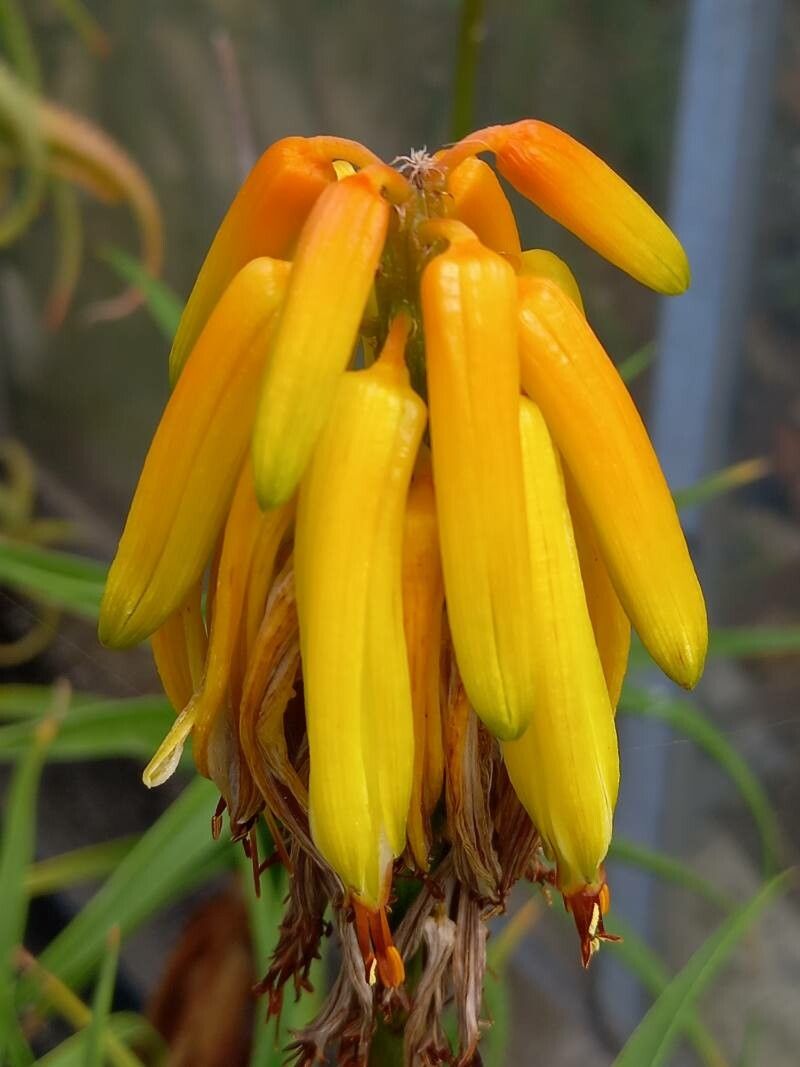
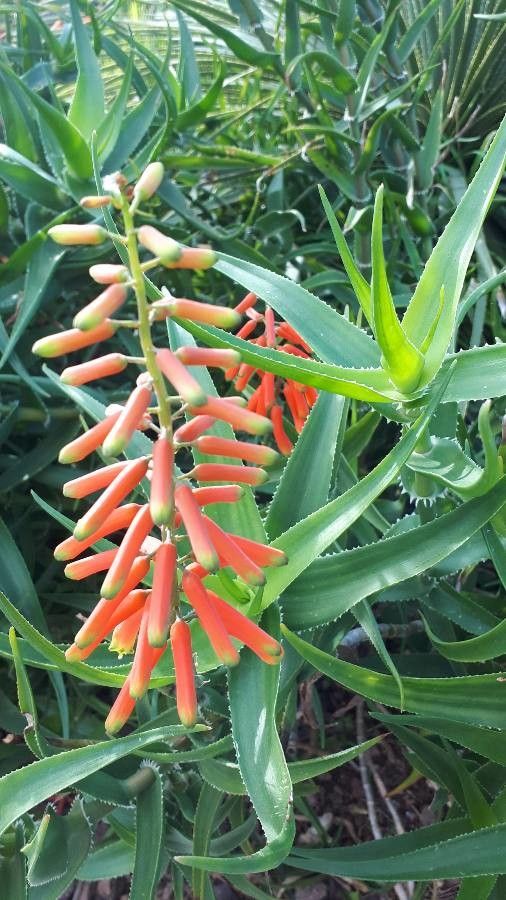
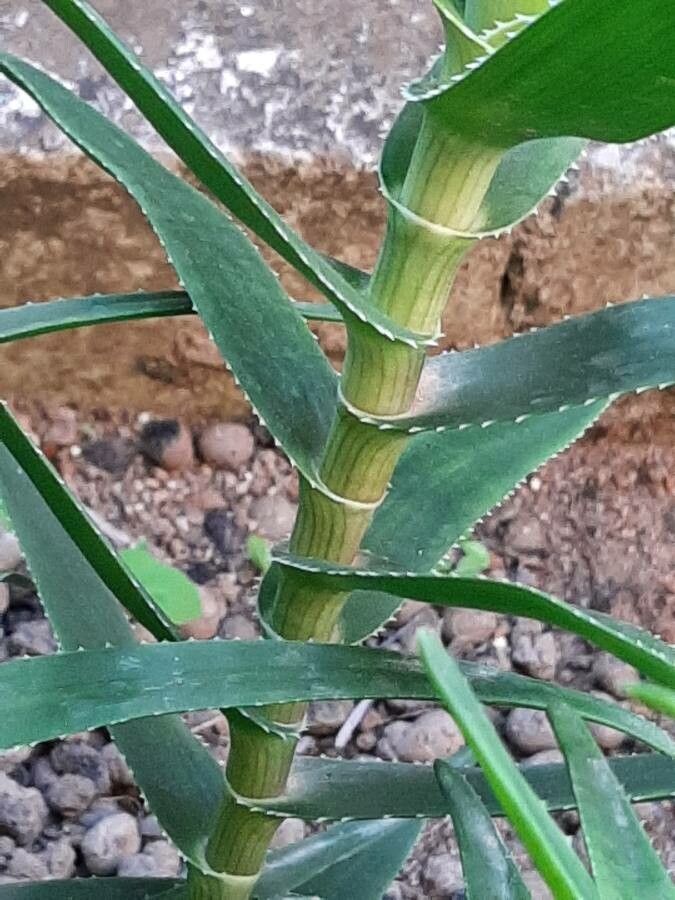
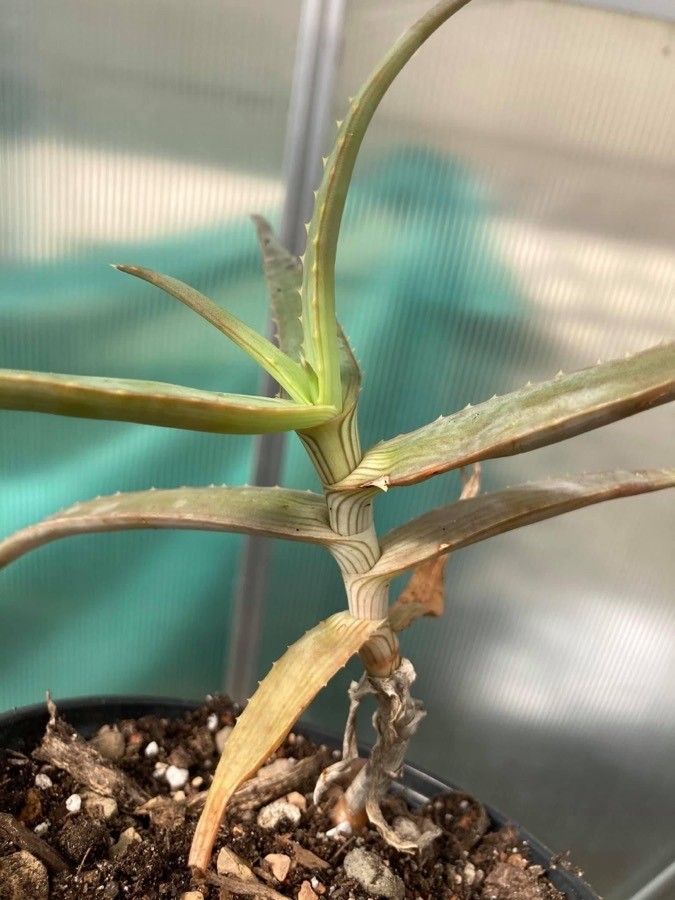
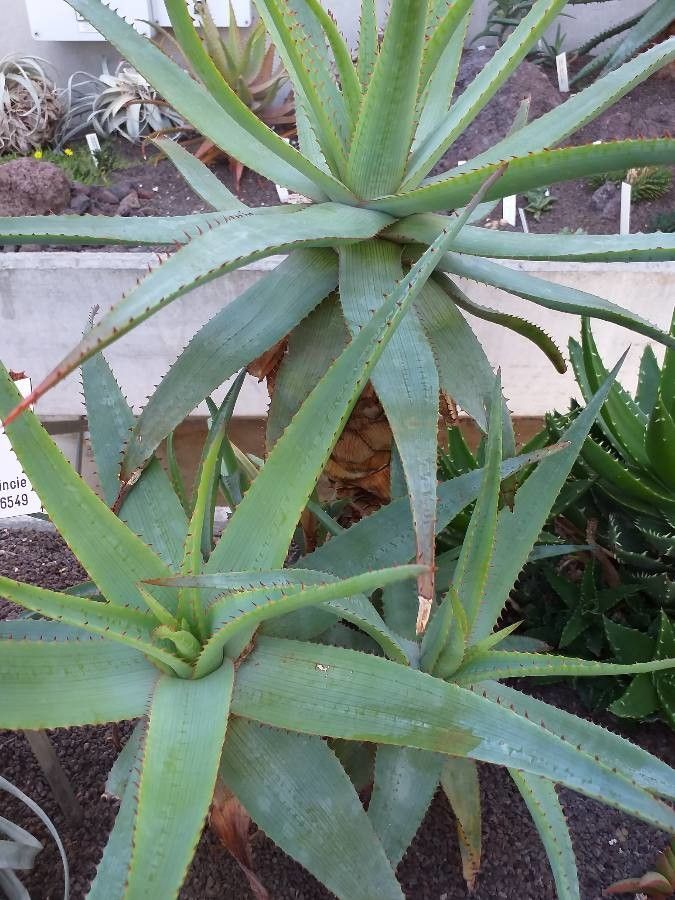
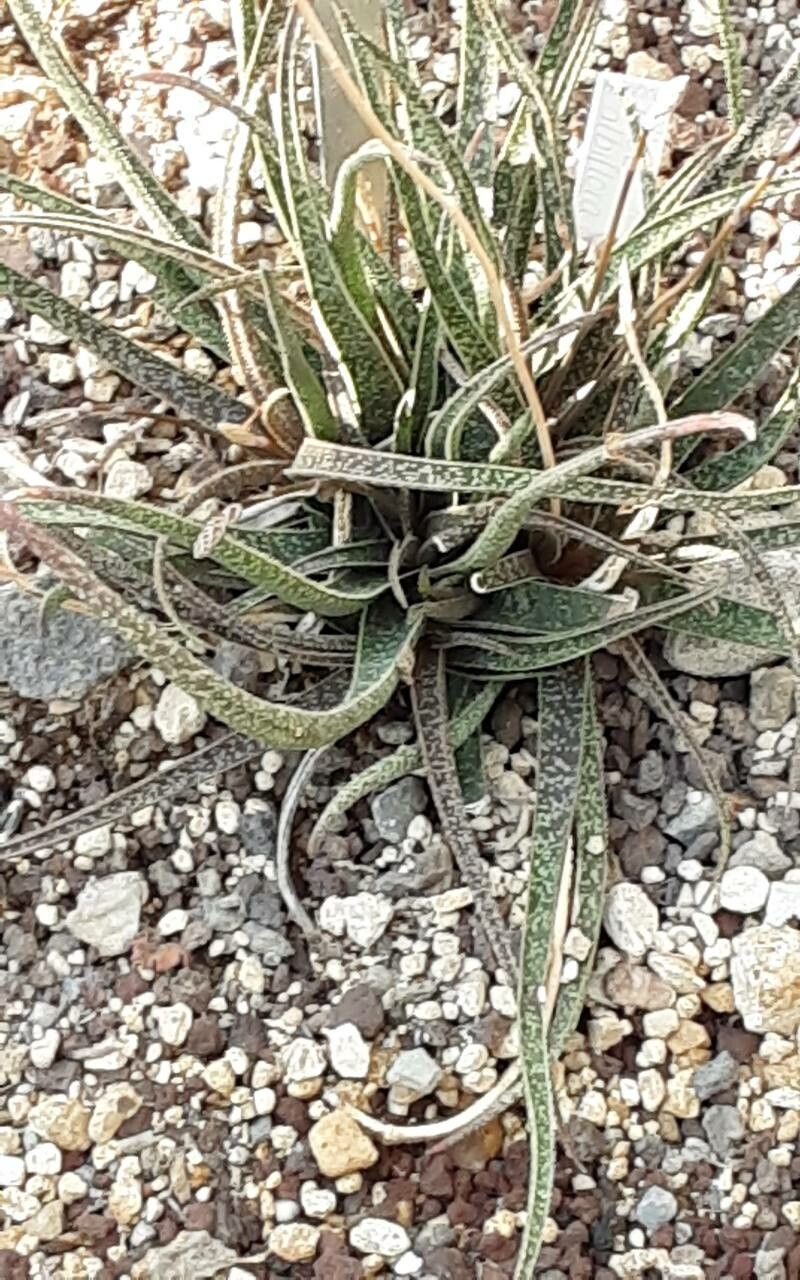
Aloe striatula, commonly known as the Coral Aloe, is a succulent plant native to South Africa. This small to medium-sized shrub can grow up to 1.5 meters tall and 1 meter wide. Its long, narrow green leaves feature distinctive white stripes along their length.
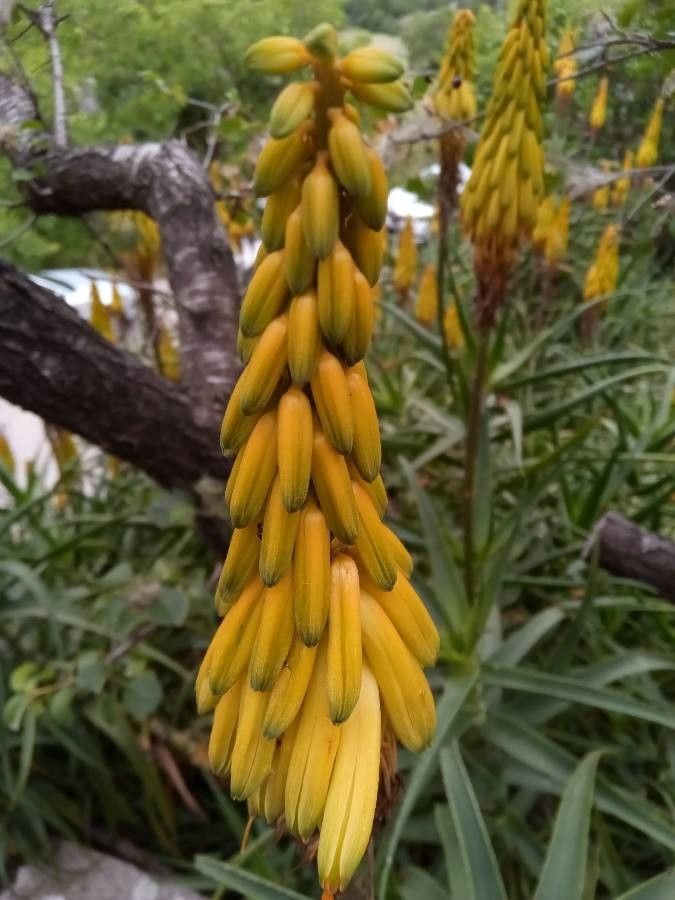
During the winter months, the Coral Aloe produces bright orange-red flowers on tall spikes that attract pollinators such as birds and bees. These tubular flowers contain sweet nectar that provides food for these animals.
The Coral Aloe is drought-tolerant and can thrive in harsh conditions with minimal water or nutrients. It prefers well-draining soil and ample sunlight but can also grow in partial shade.
Aloe striatula is known for its medicinal properties, including anti-inflammatory effects on the skin when applied topically. It can also be taken orally to address digestive issues such as constipation and diarrhea.
Overall, this hardy succulent is a striking, low-maintenance addition to any garden.
Hardy aloe has strong disease resistance and is unlikely to become ill under normal care conditions. It is also generally not easily affected by most pests and diseases. In terms of care, Hardy aloe is drought-tolerant and can withstand long periods without watering. It requires little fertilizer and usually does not need pruning. This makes it a suitable plant for people of all levels of experience, especially those who want to spend less time on plant care. It is a good option for people who are often away for long periods and may forget to water their plants regularly.
How to keep Aloe Striatula.
Light
Hardy aloe prefers plenty of sunlight but is robust enough to tolerate various levels of shade, from partial to full. While it grows best with abundant light, it can adapt to low-light conditions. Its natural habitat offers similar conditions. Too much or too little light can impede the healthy growth of hardy aloe.
Water
The hardy aloe is a drought-tolerant evergreen plant native to arid regions. It thrives with balanced moisture and requires watering only about once every three weeks. This plant efficiently retains water throughout the year, making it perfect for areas with low rainfall.
Humidity
This plant will thrive in moderate humidity, which is probably the level in your home. However, misting it a few times a week can be very beneficial. Make sure the room has good ventilation.
Temperature
The hardy aloe is a resilient plant that tolerates temperatures from 20 to 38 ℃ (68 to 100 ℉). It naturally occurs in temperate zones with warm summers and mild winters. In hot summer months, it benefits from partial shade and regular watering. During cooler winter months, the hardy aloe prefers drier soil and can endure brief frosts.
Fertilizer
Hardy aloe only needs light fertilizer applied once or twice a year during the growing season. Do not fertilize in winter or in summer when the plant is dormant. Use less fertilizer for repotted plants and wait a couple of months after repotting before you fertilize. Feeding helps maintain healthy growth and encourages flowering.
Pruning
To care for hardy aloe plants, remove only the spent flower stalks and any dead or discolored leaves to maintain their health. Trim any orange or brown leaves to help redirect nutrients to the green, healthy areas. Use a knife for smaller plants and pruning shears for larger ones.
Pot & Repot
When repotting Hardy aloe, choose a pot slightly larger than the current one with good drainage. Use a gritty, well-draining succulent or cactus mix. Gently remove the plant from its old pot, brush off excess soil, and plant it at the same depth. Wait a few days before watering to allow any root damage to heal. Repot in spring or fall and place it in a brightly lit area.
Botanical profile.
- Plant Type
- Succulent, Herb
- Life Cycle
- Perennial
- Genus
- Aloe
- Family
- Xanthorrhoeaceae
- Hardiness Zone
- 10-12
- Mature Height
- 91 cm
- Mature Spread
- 91 cm
- Leaf Color
- Green
- Leaf Type
- Evergreen
- Flower Color
- Yellow, Orange
- Flower Size
- 2.03 cm to 3.05 cm
- Bloom Time
- Spring, Summer, Fall
- Planting Time
- Spring, Summer, Autumn, Winter
- Harvest Time
- Mid spring, Late spring, Early summer, Mid summer, Fall, Winter
- Native Area
- Madagascar
Other names.
Reader questions.
What should I do if I give my Hardy aloe plant too much or too little water?
Hardy aloe and other succulent plants can withstand long periods without water, so it is unusual for them to suffer from underwatering. However, if you forget to water your plant for a month or more, you may notice signs of thirst or damage from lack of water. Underwatered Hardy aloe plants will appear lackluster, wrinkled, and some may have completely dried up, turned brown, or fallen off. The soil will also be completely dried out. To remedy this, give your Hardy aloe plenty of water by submerging the pot in water for 5-10 minutes until you feel moisture on the surface of the soil. Overwatering is dangerous for Hardy aloe plants and can be fatal if not addressed. Too much moisture can lead to root rot, which prevents the roots from absorbing nutrients and water. Root rot occurs when fungi and bacteria thrive in wet soil. Signs of overwatering include yellow, swollen, and translucent organs that may burst open. If left untreated, the plant may turn brown or black and the leaves may easily fall off. Check the soil to determine if overwatering is the issue. Saving an overwatered plant is challenging but possible if caught early. Start by removing the plant from its pot and examine the roots and soil. Clean the roots in room-temperature water to remove fungus and assess their health. If the roots are dark brown or black, soft, mushy, or slimy, it indicates root rot. If most of the roots are affected, it may not be possible to save the plant. In this case, salvage any healthy stems to propagate new Hardy aloe plants. If only some roots are affected, remove the unhealthy ones using sterilized cutting tools. Dip the remaining pale roots in fungicide and repot the plant in fresh, well-draining soil. While not always successful, most succulents with root rot can fully recover and start new growth in the next growing season.
Do I have to put fertilizer on my Hardy aloe?
Fertilizing Hardy aloe during the growing season adds nutrients to the growing medium and supports healthy growth. It can also encourage mature specimens to produce blooms. Although aloe does store water and nutrients, applying plant food further enhances its overall health.
What are the sunlight requirements for Hardy Aloe?
Hardy Aloe requires full sun, which means it should receive above 6 hours of sunlight daily. However, it can also thrive in conditions of partial sun to full shade, receiving about 3-6 hours of sunlight. Monitoring the sunlight's movement through your garden and selecting locations that offer the right balance of light and shade is crucial for the plant's well-being.
What are the essential care instructions for Hardy Aloe?
Hardy Aloe is a plant well-suited to temperate climates, thriving in temperatures ranging from 20 to 38°C (68 to 100°F). It enjoys warm summers and can tolerate mild winters with brief periods of frost. During the hot summer months, it benefits from partial shade and regular watering. In contrast, during the winter, it's best to allow the soil to dry out, as the plant enters a dormant state and prefers less moisture. If temperatures fall to the point where growth slows significantly or stops, moving the plant indoors near a south-facing window can provide the necessary sunlight. Supplemental lighting may be used if natural light is inadequate. For outdoor plants, cease watering in low temperatures to prevent root rot and consider insulation methods such as wrapping the plant or using a temporary greenhouse for added warmth.
How much water does my Hardy aloe need?
To determine how often to water Hardy aloe, the best method is to check the soil. Only water when the soil is completely dry. You can check the soil by either sticking your finger in the pot or using a moisture meter. If you plant the aloe in a deep pot, you can use a stick or chopstick to check the soil below the surface. If it feels even slightly moist, wait a few days and check again. In general, most people will need to water Hardy aloe every two weeks in summer and once a month in winter. However, there are other factors to consider that can affect the watering frequency. Below is a list of considerations that can help you determine how often to water.
When should I fertilize my Hardy aloe?
Hardy aloe plants require a small amount of fertilizer during their active growth season. It is recommended to fertilize them 1-2 times a year, specifically in spring and autumn. Avoid fertilizing in winter and summer when the plant is dormant. Use caution when fertilizing repotted plants, as the amount of fertilizer should be reduced. Additionally, it is advisable to wait a couple of months after repotting before applying any fertilizer.
How does Hardy Aloe respond to different lighting conditions?
Hardy Aloe thrives best in generous sunlight but is resilient enough to endure varying light conditions, from partial to full shade. It grows optimally under abundant illumination but can adapt to minimal light, mirroring its natural habitat characteristics. However, both excessive and insufficient light can negatively impact its growth, emphasizing the need for a balanced lighting environment.
How should you care for Hardy Aloe in low temperatures?
In low temperatures, Hardy Aloe's growth can slow down or cease, leading to potential weakness, wilting, and susceptibility to root rot, especially when the temperature drops below the tolerable minimum. Frost damage may not show immediately, but plants can gradually wither post-exposure. If frostbite occurs, trim the damaged areas and check for root rot. Rotten roots should be cut off, and the plant might need to be propagated through cuttings. To recover, move the plant to a warmer indoor location with ample sunlight, ideally near a south-facing window, or use supplemental lighting if necessary.
What things should I think about when giving water to my Hardy aloe?
To properly water your Hardy aloe, you need to consider various environmental factors such as container size, soil type, temperature, and humidity. The container and soil you use determine the frequency and amount of water needed. Use a container with good drainage, as excess water should be able to escape. Smaller containers hold less moisture and require more frequent watering, while larger pots retain moisture and need less watering. Avoid using oversized pots, as they can lead to overwatering. When repotting, choose a container just one size larger than the current one and opt for shallow containers as Hardy aloe has shallow root systems. In terms of seasons, water your Hardy aloe less frequently in winter and more often in spring and autumn when it's in the active growing phase. During winter, growth slows down and less water is used. The cooler air reduces evaporation, keeping the soil wet for longer. Also, consider the general climate in your area. In humid and rainy locations, watering can be less frequent compared to arid and dry climates. Keep in mind that conditions can vary within the same geographical location based on the season and indoor heating or air conditioning. If you have planted Hardy aloe in the ground, it typically doesn't require additional water beyond precipitation and dew once the root system is established. However, during extended dry periods, occasional watering might be necessary. For areas where Hardy aloe can only be grown in containers, you can move the plant outside during spring and summer when the temperature is suitable, and then bring it indoors as temperatures drop. Potted Hardy aloe kept outside usually needs more water due to increased sun exposure, even on a shaded porch.
When is the best time to not fertilize my Hardy aloe?
Hardy aloe, like other plants, goes through a dormancy period. During this time, it is recommended to avoid applying fertilizer. The plant stops growing in both summer and winter, which is another period when you should refrain from fertilizing. Additionally, it is advisable to wait a few months after repotting in the spring before resuming fertilization.
What artificial lighting considerations are there for indoor Hardy Aloe plants?
For indoor Hardy Aloe plants, adequate lighting is crucial, especially when natural sunlight is insufficient. Artificial lighting, such as LED lights, can be an effective supplement, providing the specific wavelengths needed for optimal growth. Full sun plants require 30-50W/sq ft, partial sun plants need 20-30W/sq ft, and full shade plants require 10-20W/sq ft of artificial light. The light source should be placed 12-36 inches above the plant, mimicking natural sunlight for 8-12 hours per day.
What should you do if Hardy Aloe is exposed to high temperatures?
During summer, when temperatures soar, Hardy Aloe needs protection to prevent water loss, wilting, and sunburn, especially if temperatures exceed its tolerance. If the plant suffers from sunburn or rot, remove the damaged sections. To aid recovery, provide shade during the peak sunlight hours until the plant resumes normal growth. In the event of root rot, cease watering to encourage the development of new roots before resuming a regular watering schedule.