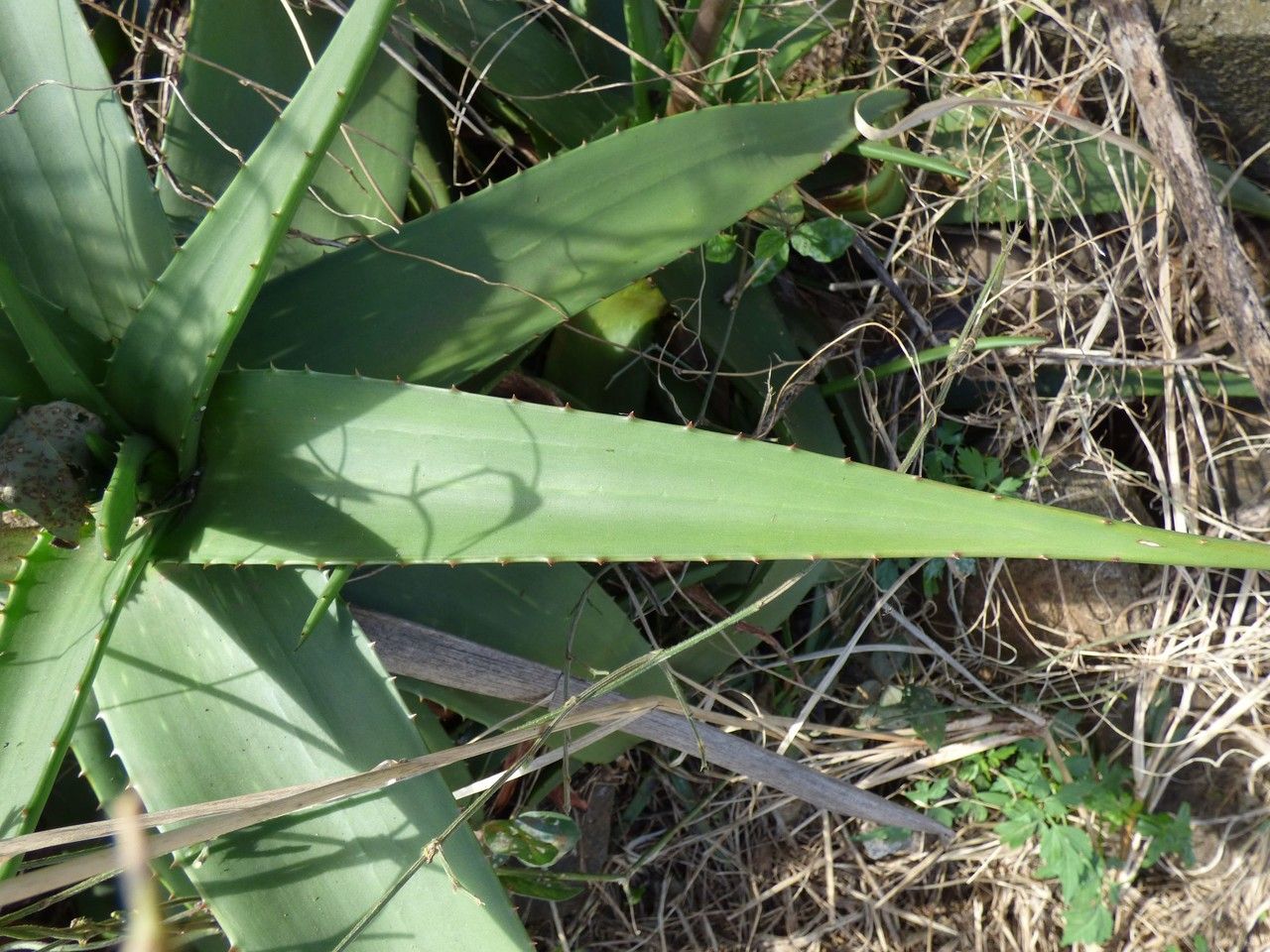
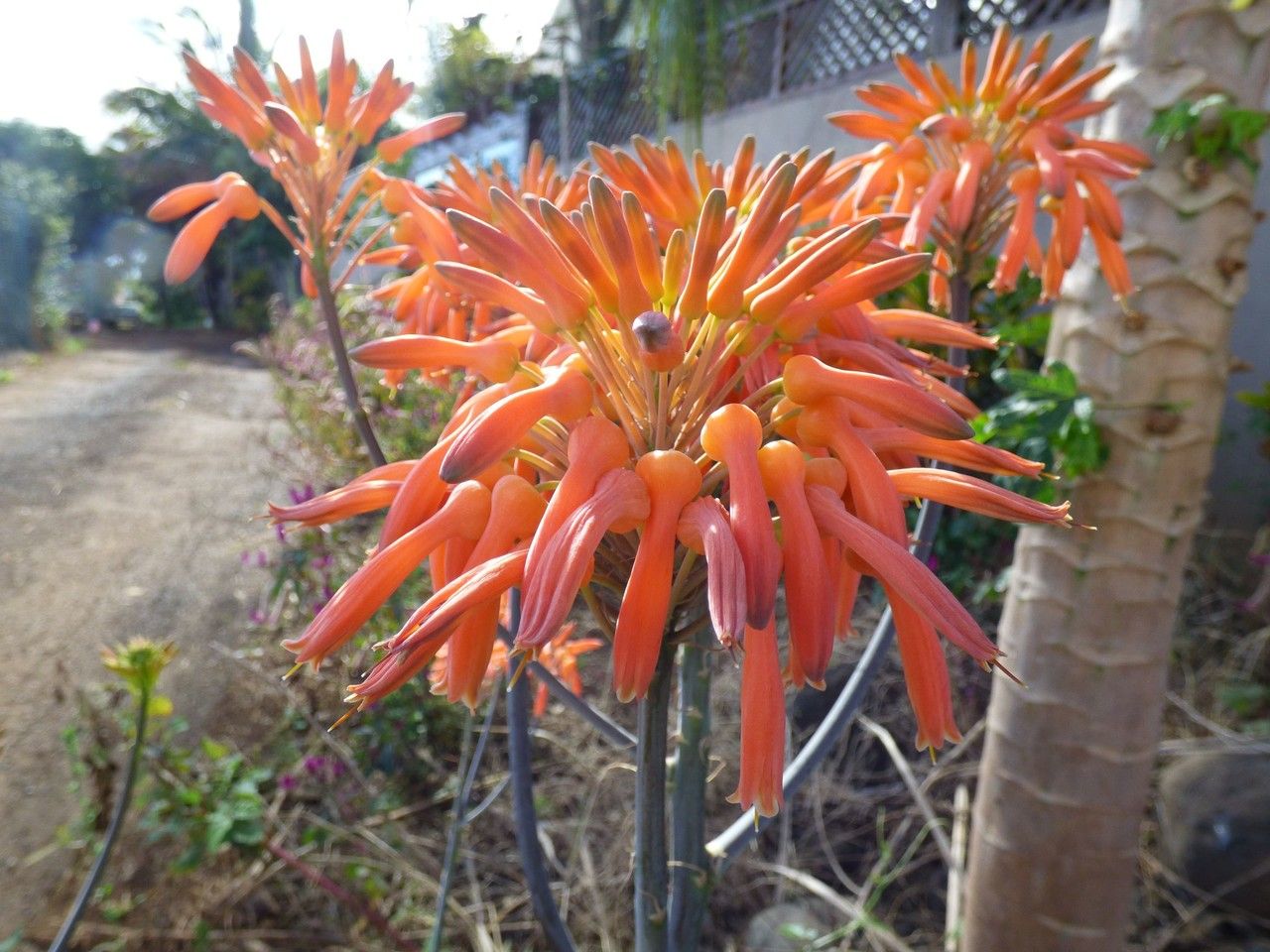
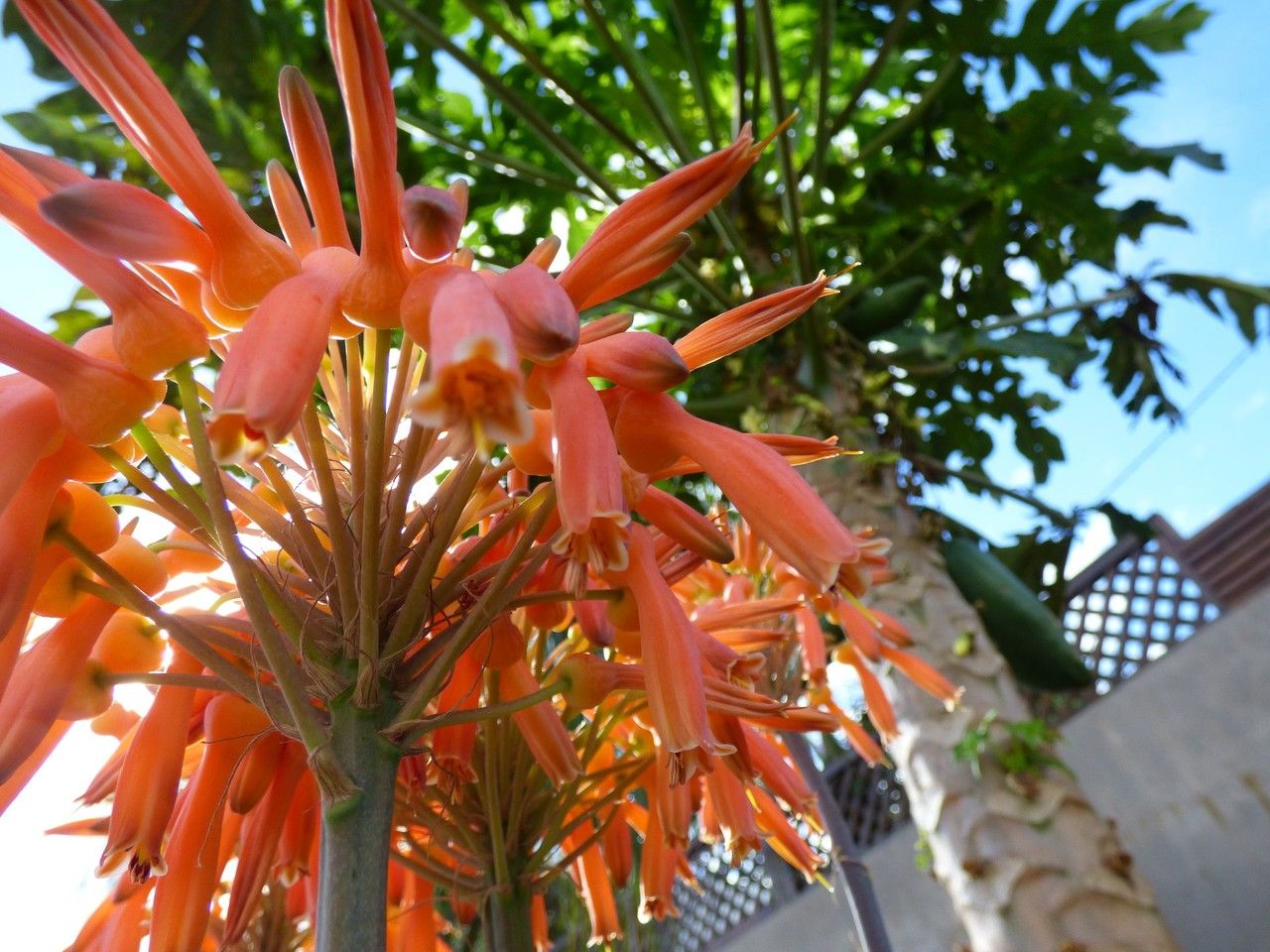
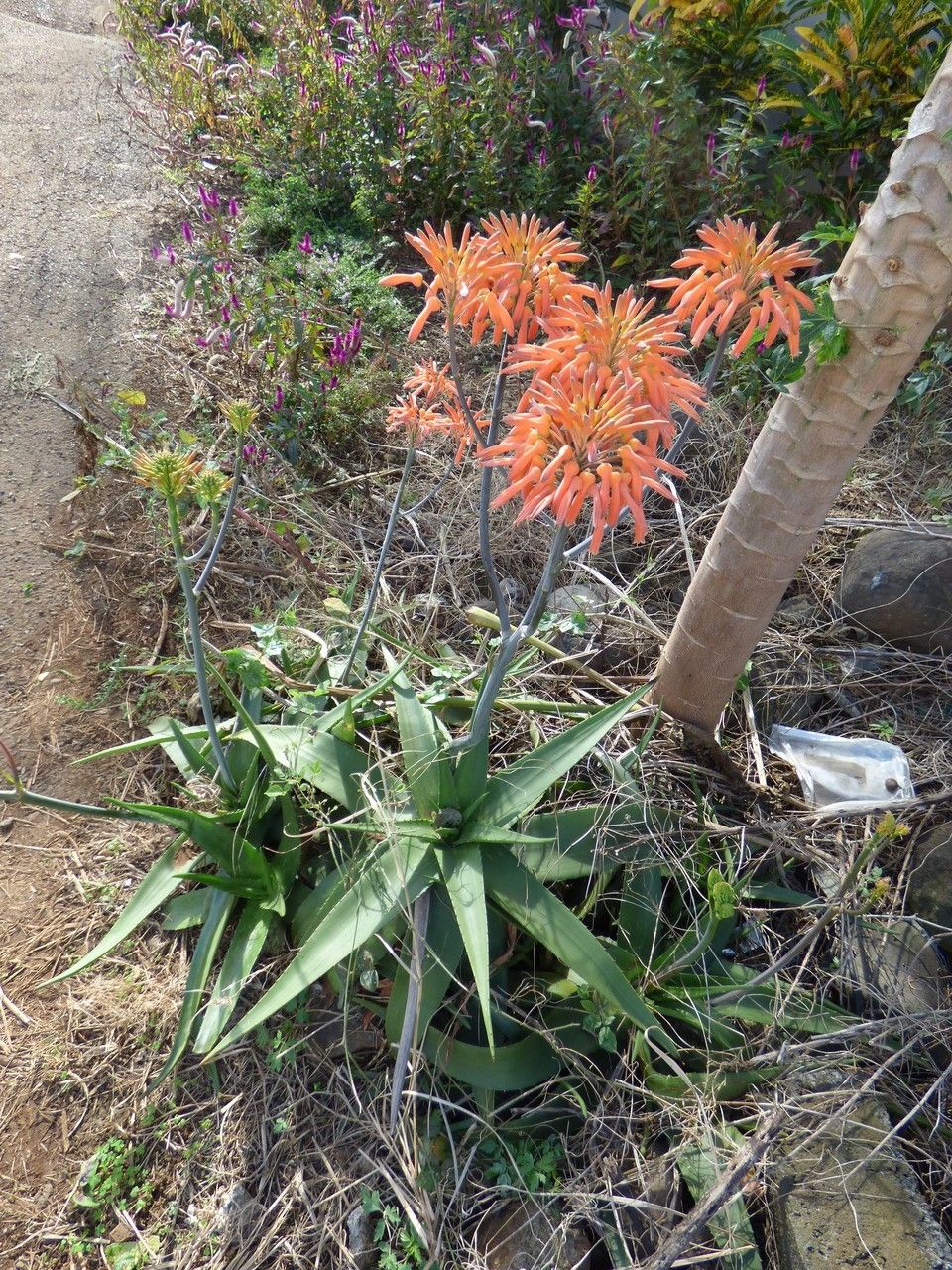
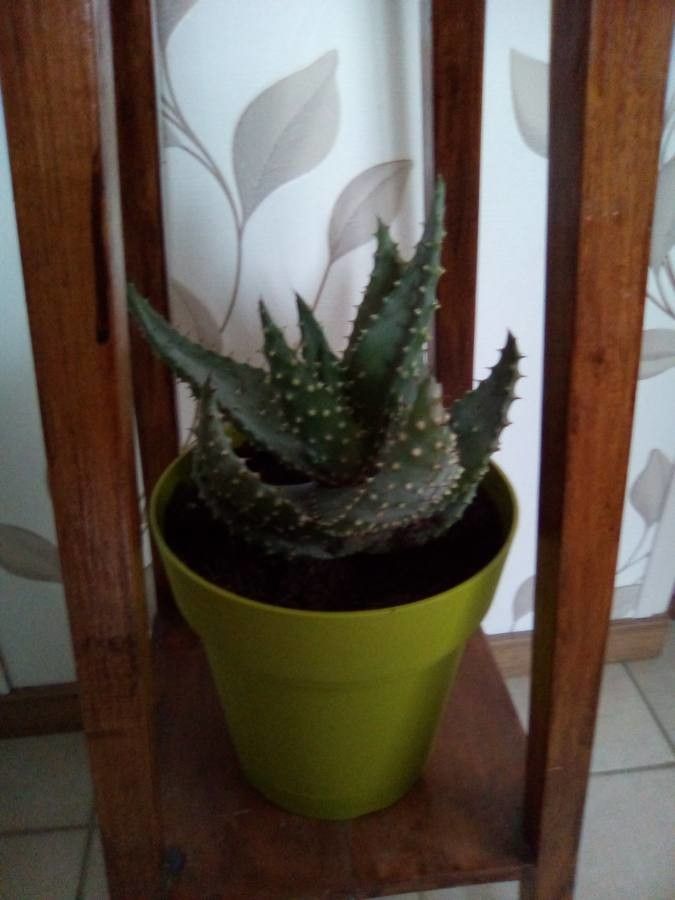
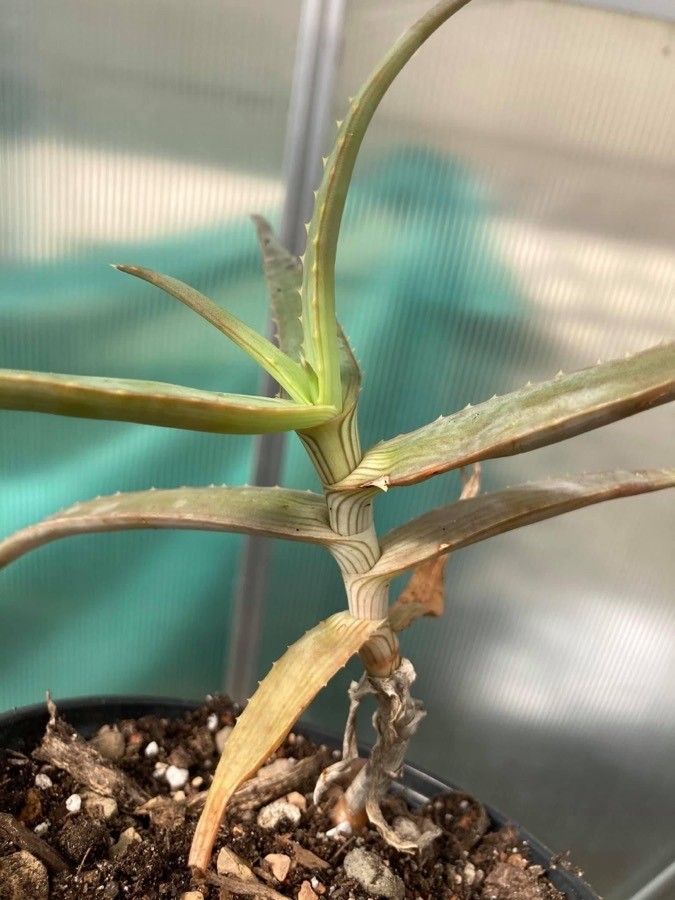
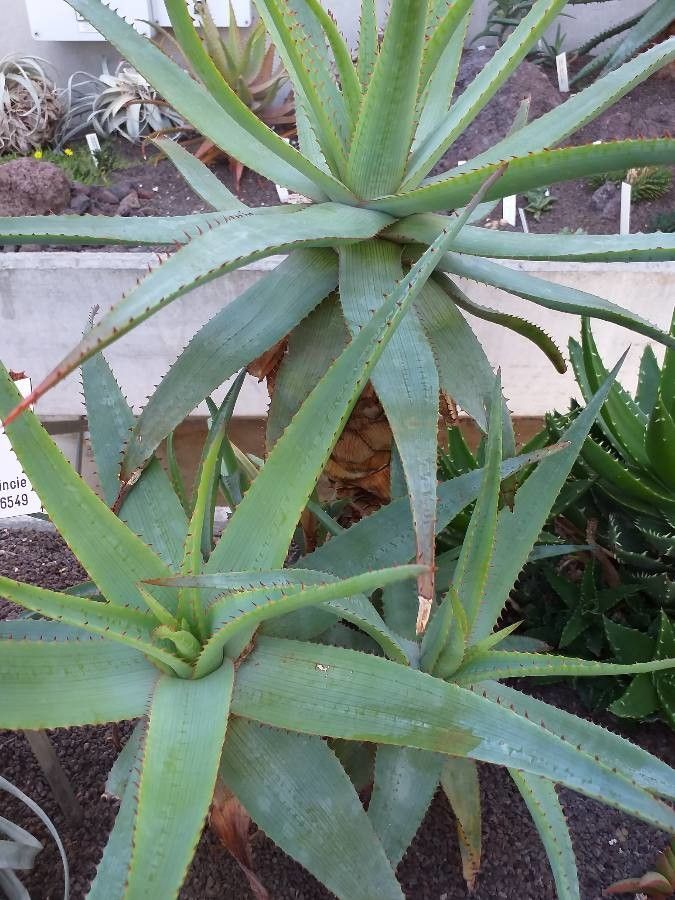
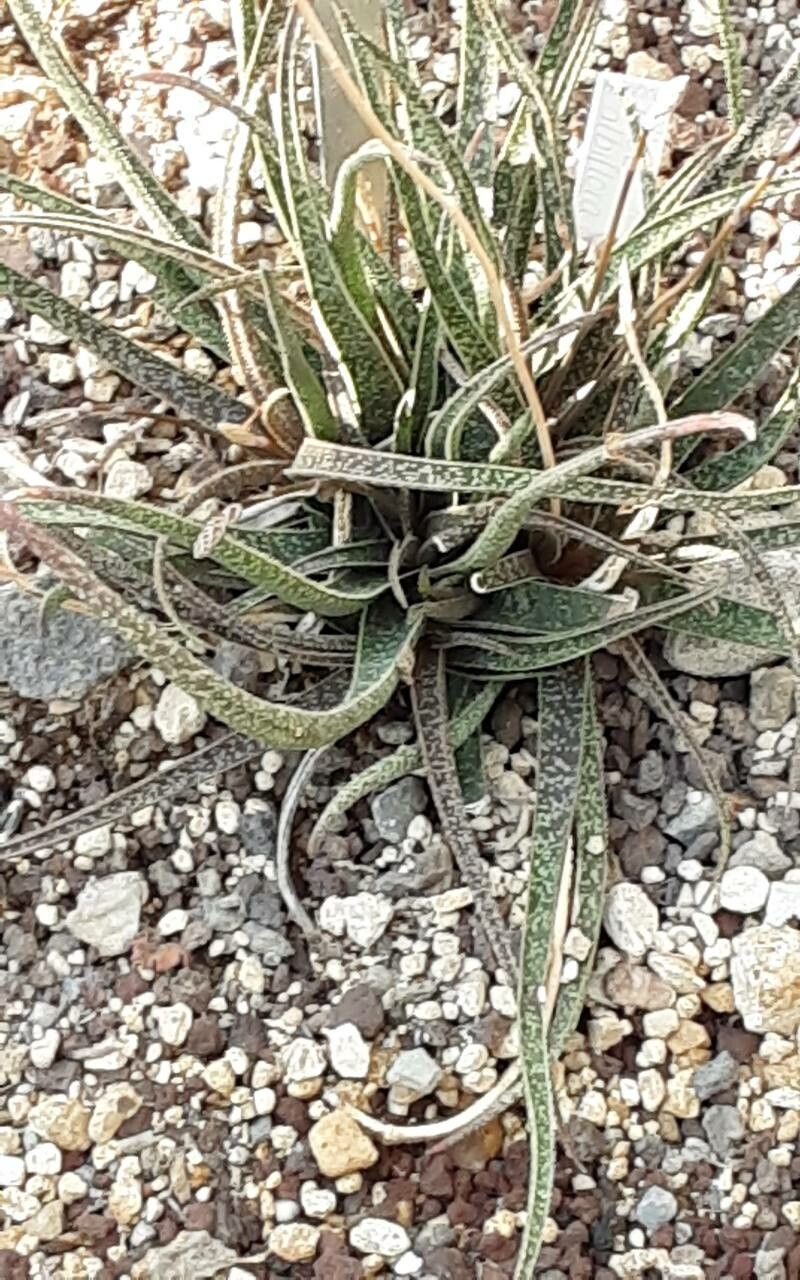
Aloe purpurea (previously Lomatophyllum purpureum/borbonicum/aloiflorum. Locally known as "Mazambron" or "Socotrine du Pays") is a species of Aloe endemic to the island of Mauritius, in the Indian Ocean, where it formerly occurred on dry rocky slopes and outcrops, the highland plateaus, and the forests of the west. It is part of a group of aloes which bear fleshy berries, and were therefore classed as a separate group, "Lomatophyllum". It is also one of only two Aloe species which naturally occur on Mauritius - both endemic and occurring nowhere else.
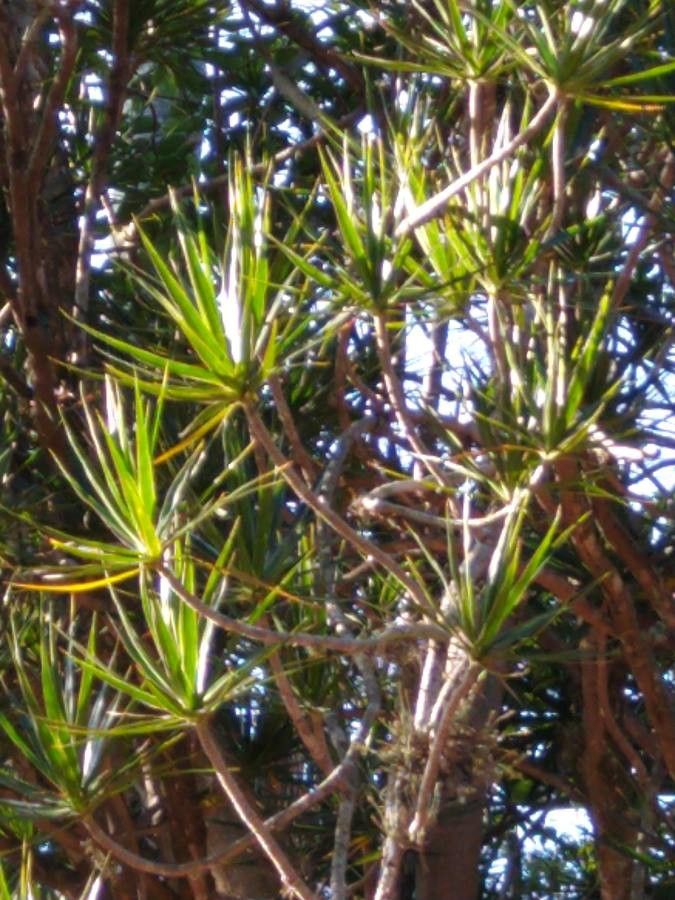
The Madagascar dragon-tree has strong resistance to diseases and is less prone to falling ill under normal care. It is also not highly vulnerable to most pests and illnesses. Regarding care needs, the Madagascar dragon-tree is drought-tolerant and can endure extended periods without watering. It requires little fertilizer and typically does not need pruning. Because of this, it is an appropriate plant for people at any skill level, particularly those who prefer to spend minimal time on plant care. It is a good option for individuals who are away for long stretches and might forget to water their plants regularly.
How to keep Aloe Purpurea.
Light
The Madagascar dragon tree comes from habitats with dappled or filtered light, such as the forest understory or rocky locations that offer natural shade. It prefers partial sun but can also tolerate full sun.
Water
The Madagascar dragon tree flourishes in dry, well-draining soil and is sensitive to the minerals and pH levels found in tap water. It's important to water the plant deeply but infrequently, making sure to check the soil moisture before each watering. If the plant becomes overwatered, allow it to dry out completely before replanting it in fresh soil; wait at least one week before doing so.
Temperature
The Madagascar dragon-tree prefers warm conditions and needs elevated temperatures during the growing season to support growth and metabolic activity. It benefits from plenty of sunlight, suitable moisture, and good air circulation. It can be harmed by very low temperatures and by too much watering. Likewise, it’s important to maintain balance and avoid extreme heat and excessively dry conditions.
Fertilizer
For the Madagascar dragon-tree, light applications of fertilizer once or twice a year during the growing season are enough. Do not fertilize in winter or summer when the plant is dormant. Use less fertilizer for repotted plants and wait a couple of months after repotting before you start feeding again. Fertilizing helps keep growth healthy and encourages flowering.
Pruning
The Madagascar dragon-tree benefits from pruning in early spring, which helps remove dead leaves and unruly stems. This promotes healthy, compact growth and encourages the development of new shoots. Be sure to sterilize your tools to prevent disease, and prune at the right time to support optimal recovery and vigor.
Botanical profile.
- Plant Type
- Succulent
- Life Cycle
- Perennial
- Genus
- Aloe
- Family
- Asphodelaceae
- Hardiness Zone
- 9-11
- Mature Height
- 30 cm to 61 cm
- Mature Spread
- 40 cm to 76 cm
- Leaf Color
- Green, Dark Green
- Leaf Type
- Evergreen
- Flower Color
- Red, Orange
- Flower Size
- 2.03 cm to 3.05 cm
- Bloom Time
- Winter, Spring
- Planting Time
- Spring, Summer, Autumn, Winter
- Harvest Time
- Late winter, Spring, Early summer, Mid summer