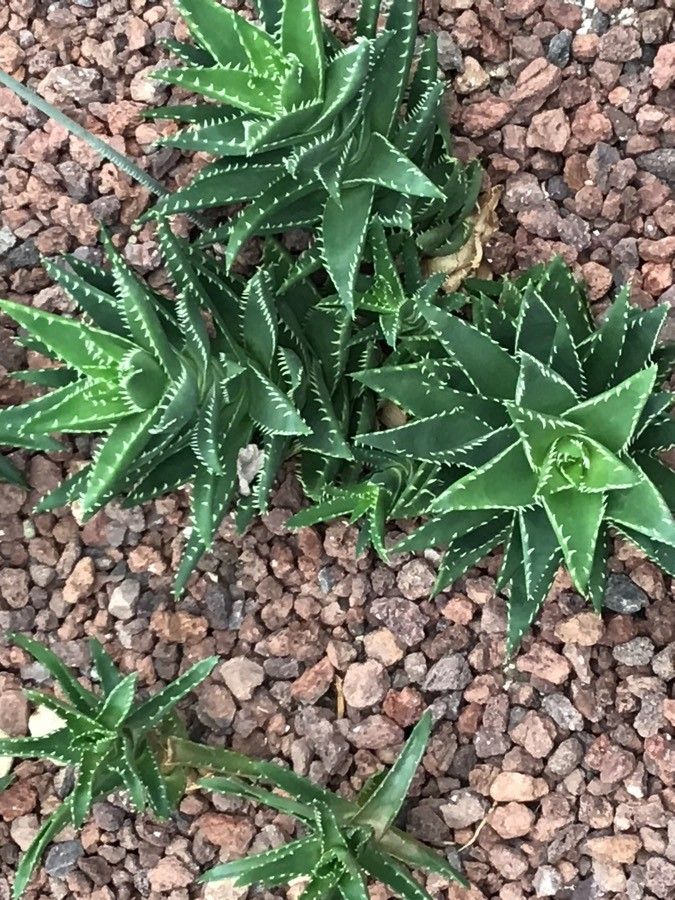
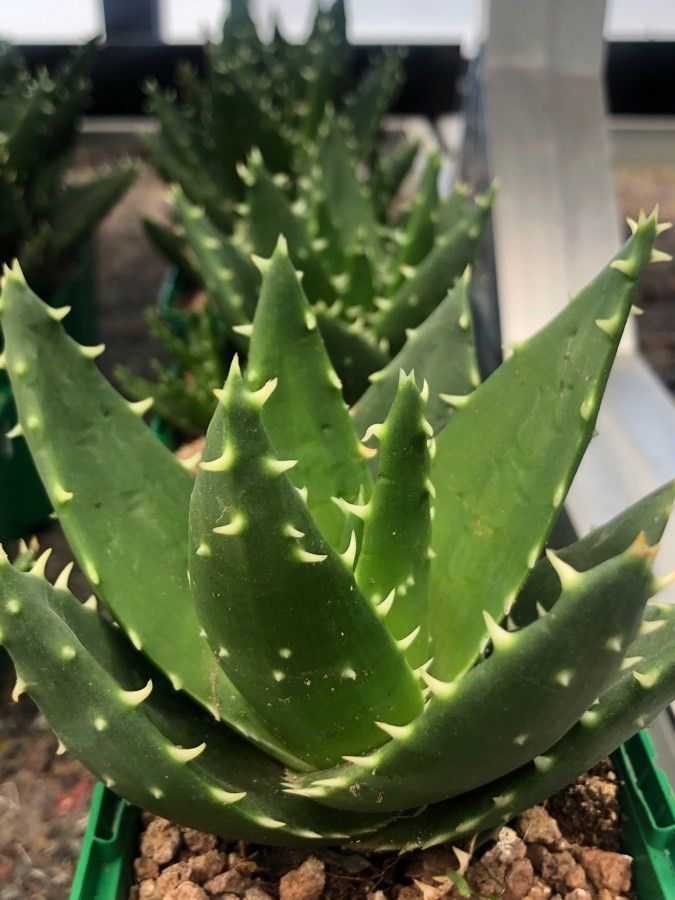
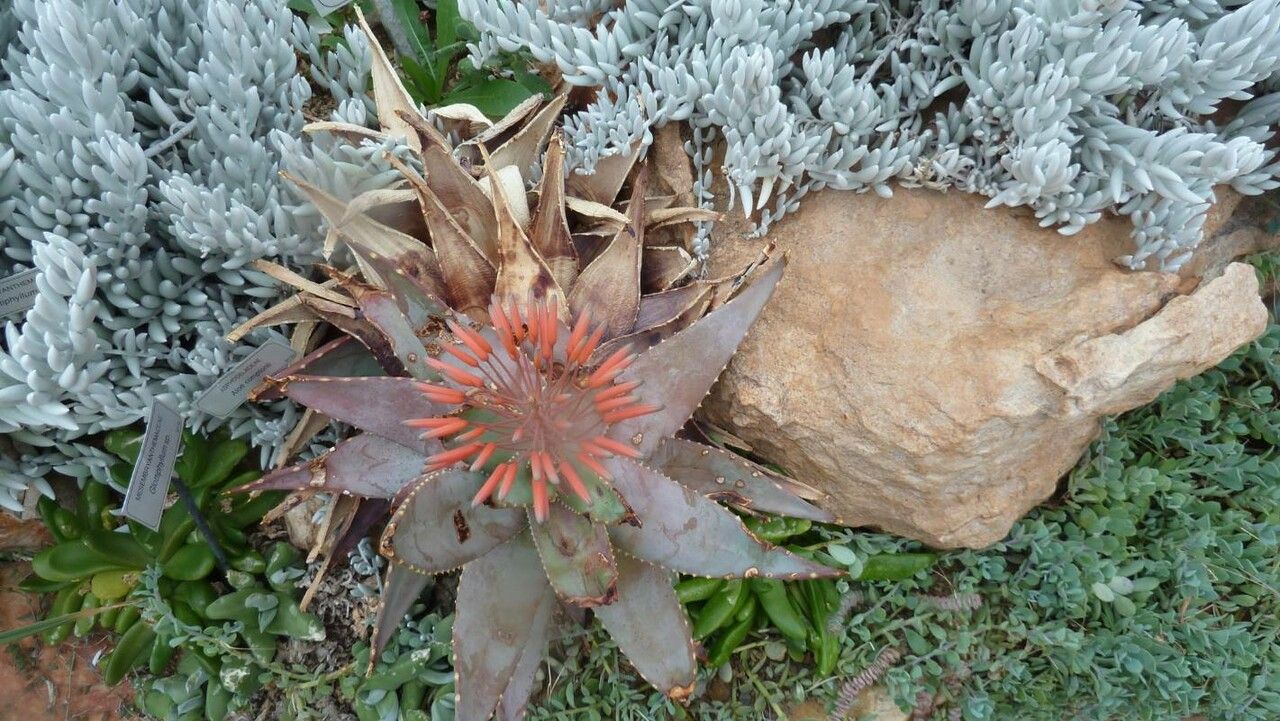
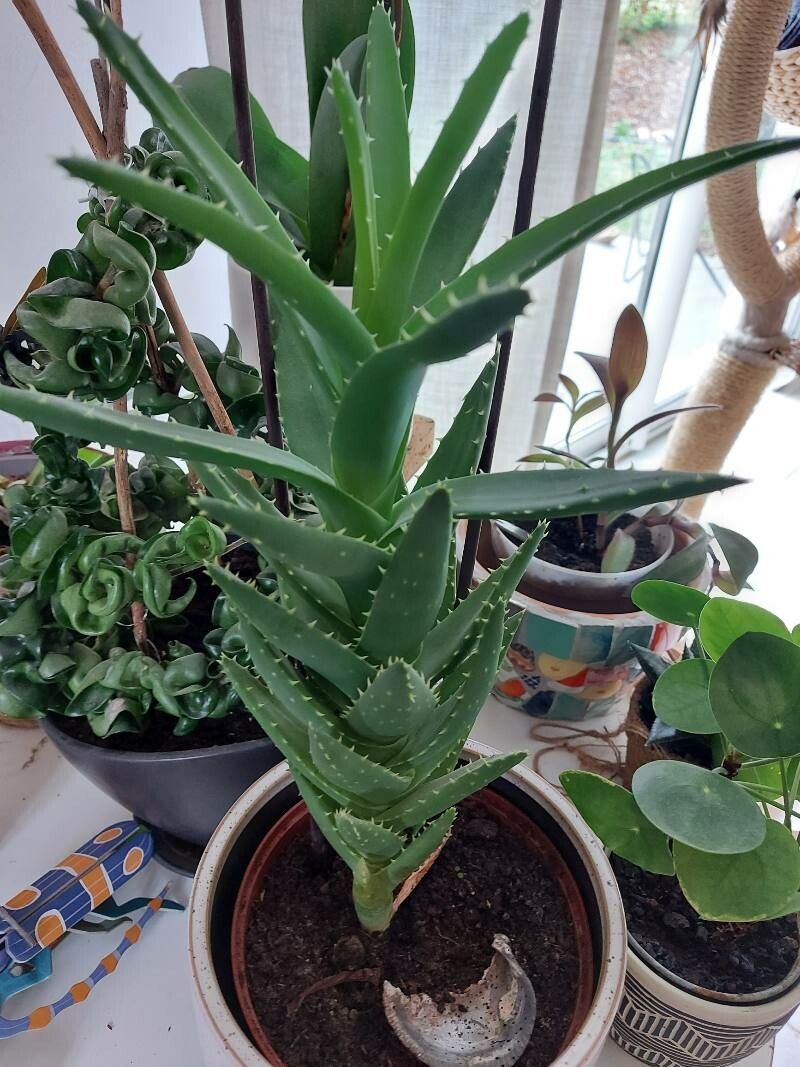
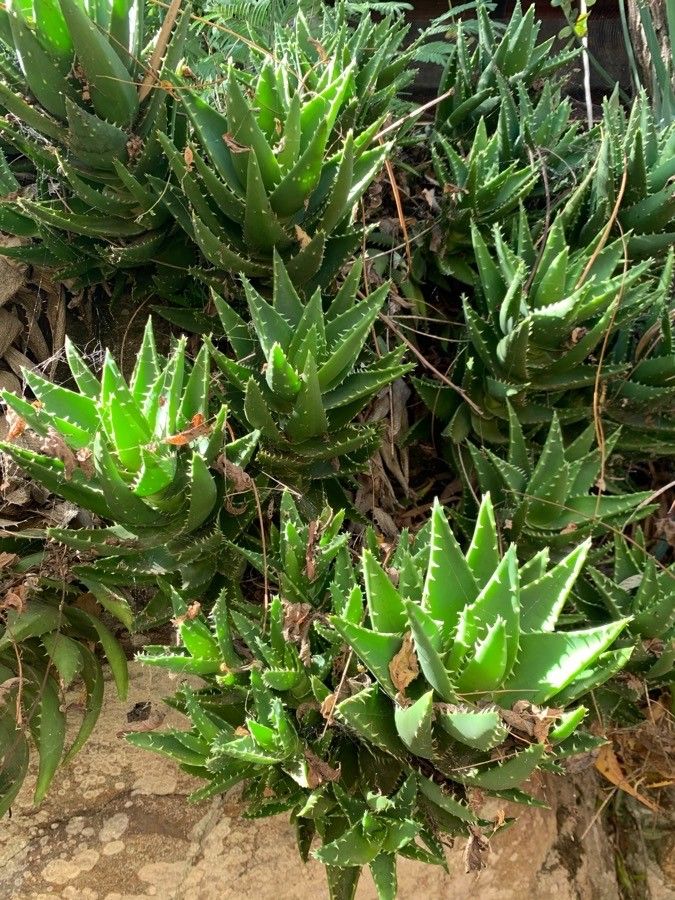
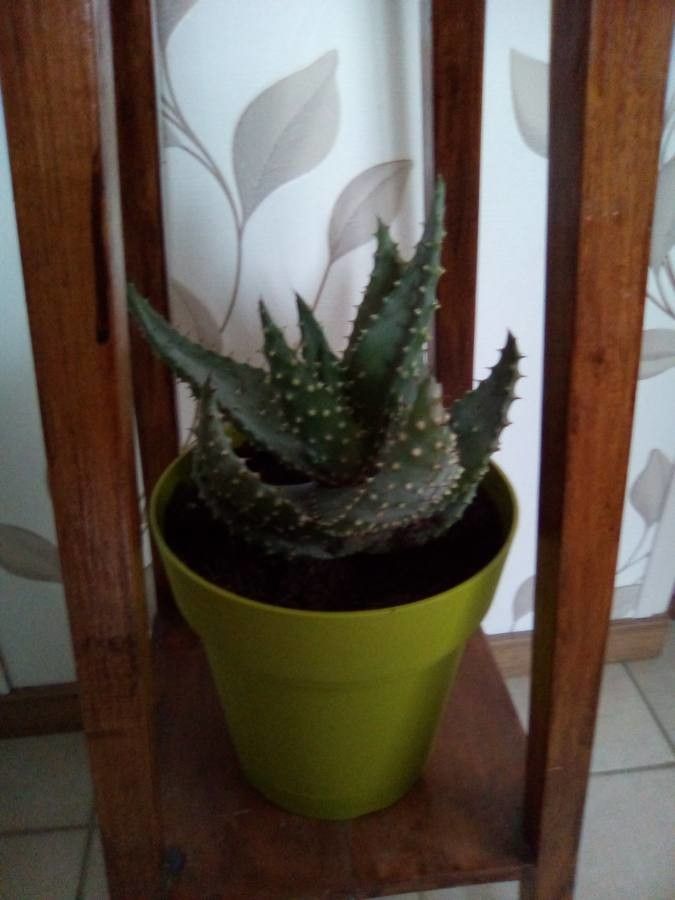
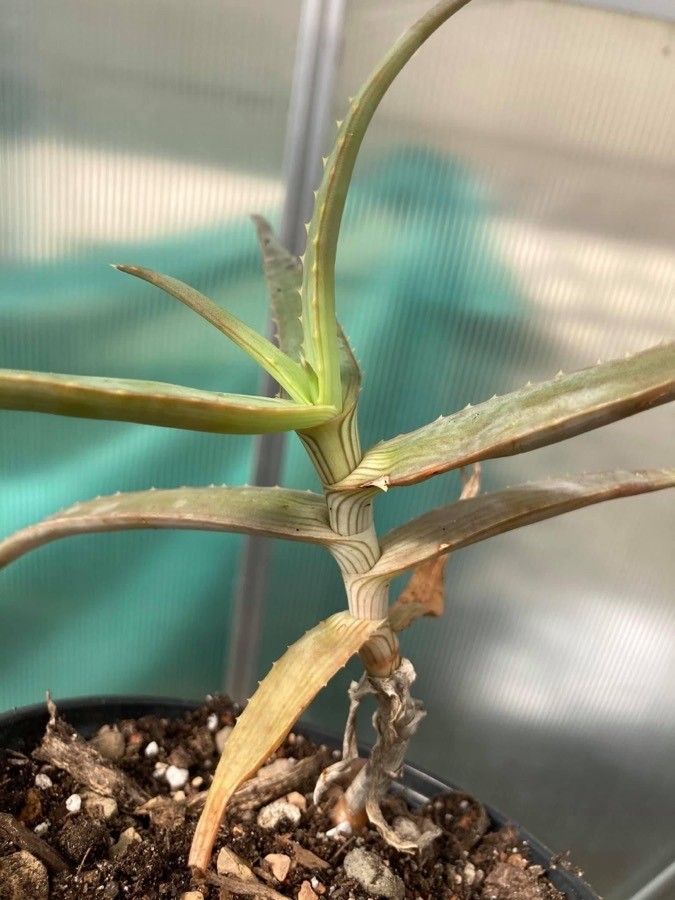
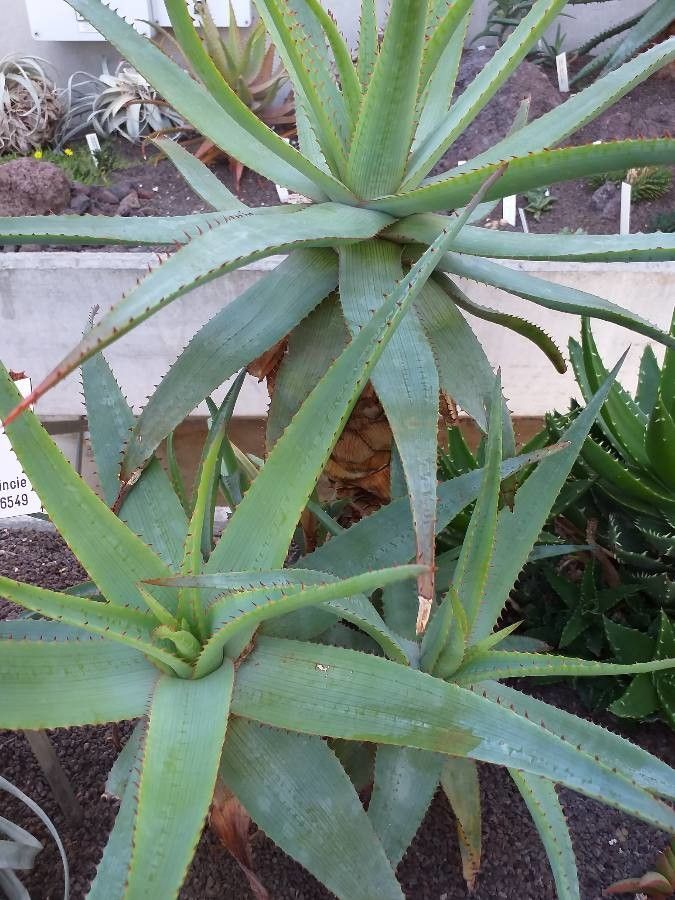
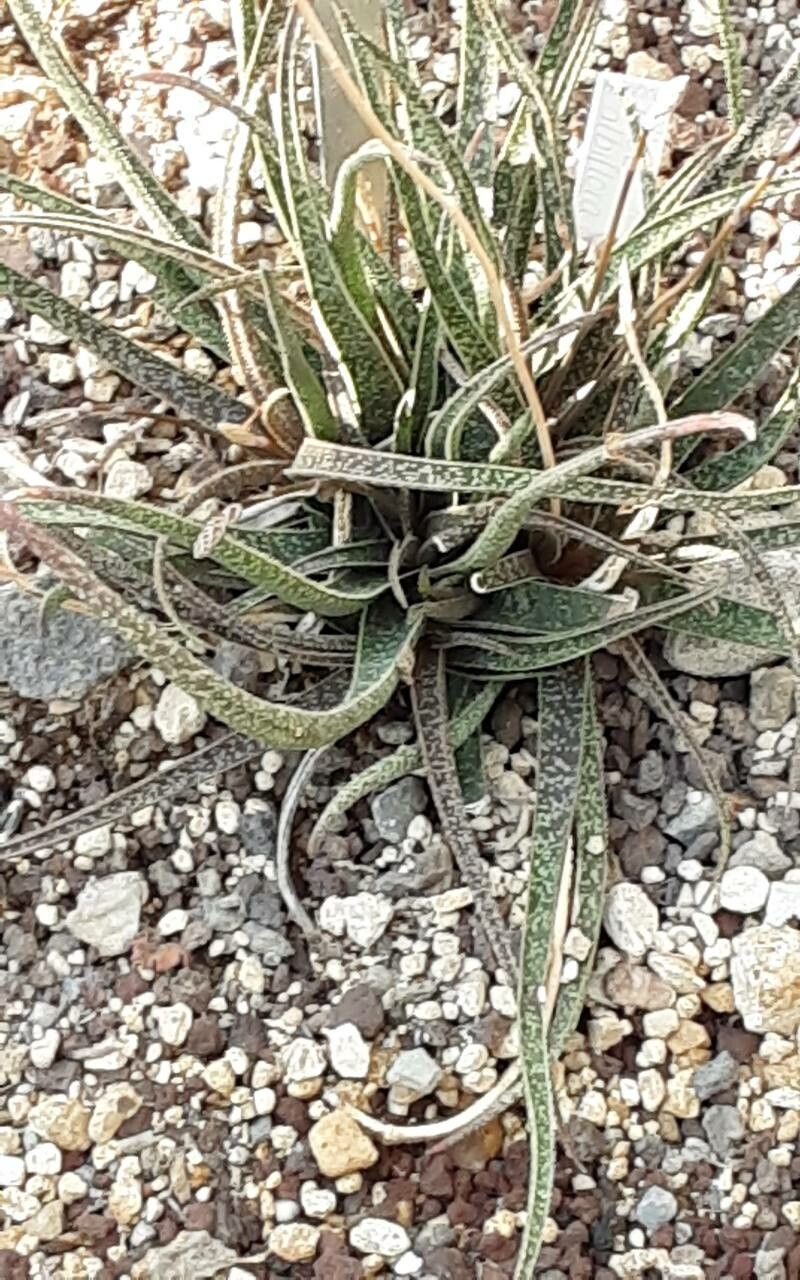
Aloe perfoliata, commonly known as the "mitre aloe" or "lace aloe," is a succulent plant native to South Africa. This plant is distinguished by its rosette-shaped leaves, which can grow up to 30 cm long and 5 cm wide, featuring white spots and serrated edges. The leaves are arranged in pairs that fuse at the base, giving the appearance of a perforated stem.
During late winter and early spring, Aloe perfoliata produces tall spikes of tubular flowers in shades of pink or red. It thrives in well-draining soil and prefers full sun to partial shade.
For centuries, indigenous people in South Africa have used Aloe perfoliata for medicinal purposes. The gel inside its leaves possesses anti-inflammatory properties and can be applied topically to treat burns, wounds, insect bites, and skin irritations.
This hardy plant is easy to care for and makes an excellent addition to any succulent garden or indoor collection.
Mitre aloe has strong resistance to disease and, with normal care, is less prone to becoming ill. It is also not easily vulnerable to most pests and diseases. In terms of care, Mitre aloe is drought-tolerant and can endure long stretches without watering. It needs little fertilizer and usually does not require pruning. These qualities make it a suitable plant for people at any experience level, especially for those who want to spend less time maintaining their plants. It is a good option for individuals who are away for extended periods and may forget to water their plants regularly.
How to keep Aloe Perfoliata.
Light
Mitre aloe thrives in places with moderate sunlight, yet it can tolerate light levels from very bright to very dim. This tolerance comes from the plant's native habitat, which has varied light conditions. Excessive sun can scorch the leaves, while too little light may slow its growth. At every stage of development, moderate light helps sustain healthy growth.
Water
Mitre aloe thrives in arid environments due to its high drought tolerance, needing water only once every three weeks. As an evergreen plant, it retains its leaves all year round, which helps conserve water. It prefers full sun, and its succulent nature makes it resilient during dry periods, making it well-suited for outdoor cultivation.
Humidity
This plant prefers dry conditions, so don't mist it. However, watering it less often can also thrive in higher humidity.
Temperature
The native temperature-related growth environment for mitre aloe is a subtropical climate, with warm temperatures of 20 to 38 ℃ (68 to 100.4 ℉) year-round. It prefers a consistently warm setting but can endure occasional cooler spells during the fall and winter months.
Fertilizer
For Mitre aloe, light applications of fertilizer once or twice a year during the active growing season are adequate. Do not fertilize in winter or summer when the plant is dormant. Use less fertilizer for plants that have been repotted, and wait a couple of months after repotting before applying fertilizer. Fertilizing helps maintain healthy growth and promotes flowering.
Pruning
Mitre aloe typically doesn’t need pruning, but you should remove any spent flower stalks and dead leaves. Trimming orange or brown leaves can help direct nutrients to the healthier parts of the plant. Use a knife to trim smaller plants and pruning shears for larger ones to keep the plant healthy.
Pot & Repot
When repotting a Mitre aloe, choose a container slightly larger than the current one that has good drainage. Use a gritty, well-draining mix made for succulents or cacti. Gently remove the plant from its old pot, brush off excess soil, and set it into the new pot at the same depth. Wait a few days before watering so any root injury can heal. Repot in spring or fall and place the plant in a brightly lit spot.
Botanical profile.
- Plant Type
- Succulent, Herb
- Life Cycle
- Perennial
- Genus
- Aloe
- Family
- Asphodelaceae
- Hardiness Zone
- 9-12
- Mature Height
- 76 cm
- Mature Spread
- 61 cm to 91 cm
- Leaf Color
- Green, Blue
- Leaf Type
- Evergreen
- Flower Color
- Red
- Flower Size
- 2.03 cm to 3.05 cm
- Bloom Time
- Spring
- Planting Time
- Spring, Summer, Autumn
- Harvest Time
- Early summer, Mid summer
- Native Area
- South Africa
Other names.
Reader questions.
What should I do if I give my Mitre aloe plant too much or too little water?
Mitre aloe is a succulent that can survive without water for long periods of time, so it's unlikely to suffer from underwatering. However, if you forget to water it for a month or more, you'll probably notice that it looks thirsty or has some damage from the lack of water. Signs of an underwatered Mitre aloe include a lackluster and wrinkled appearance, dried up leaves, and completely dried out soil. To fix this, give your plant plenty of water by submerging the pot in water for 5-10 minutes until the soil feels moist on the surface. On the other hand, overwatering is dangerous for Mitre aloe and can lead to root rot, which prevents the roots from absorbing nutrients and water. Root rot occurs when fungi and bacteria grow in the soil due to excessive moisture. Symptoms of overwatering include yellow, swollen, and translucent organs that may burst, browning or blackening of the plant, and falling leaves. To address overwatering, change the growing conditions to improve air ventilation and adjust the frequency of watering. It's important to check the soil to confirm if overwatering is causing the symptoms. If you suspect your Mitre aloe is overwatered, remove it from the pot and inspect the roots and soil. If the roots are dark brown or black, soft, mushy, or slimy, this indicates root rot. If most of the roots are affected, saving the plant may not be possible and it's best to propagate new Mitre aloe from healthy stems. However, if only a portion of the roots are affected, there is a chance to save the plant. Remove unhealthy roots using a sterilized cutting tool, dip the remaining healthy roots in fungicide, and repot the aloe in fresh, well-draining soil. While this method doesn't always work, in most cases, the plant will recover and produce new growth in the next growing season.
Why should I add fertilizer to my Mitre aloe?
Fertilizing the Mitre aloe is beneficial as it adds nutrients to the soil and promotes healthy growth. Despite the plant's ability to store water and nutrients, applying plant food during the growing season helps to support its growth. Additionally, fertilizing can stimulate mature Mitre aloe plants to produce blooms in the growing season.
What are the sunlight requirements for Mitre Aloe?
Mitre Aloe requires varying amounts of sunlight depending on its condition, with partial sun (about 3-6 hours of sunlight) being adequate for its growth. It can, however, tolerate full sun or full shade conditions (above 6 hours of sunlight). It's crucial to observe the movement of sunlight through your garden to choose the best spots for your plants, ensuring they get a balance of light and shade to thrive. Excessive sun can cause leaf scorching, while too little may hinder growth.
What is the ideal growth environment for Mitre Aloe?
The ideal growth environment for Mitre Aloe, or Aloe perfoliata, is a subtropical climate with warm temperatures ranging from 20 to 38°C (68 to 100.4°F) throughout the year. This plant prefers a consistently warm environment but can tolerate occasional cooler temperatures in the fall and winter months. It is a heat-loving plant that gradually stops growing and enters a dormant state over the winter. When outdoor temperatures drop too low, the plant should be moved indoors to a location near a south-facing window to maximize sunlight exposure. If natural light is insufficient, supplemental lighting can be used. Additionally, watering should be reduced or stopped when temperatures fall to prevent root rot, especially for plants grown outdoors.
How frequently should I give water to my Mitre aloe?
Determining how often to water Mitre aloe is not set in stone. The easiest way to gauge this is by checking the soil and only watering when it is completely dry. To do this, you can either insert your finger into the pot or use a moisture meter to assess the soil beneath the surface. If you have planted it in a deep pot, a stick or chopstick may be used for this purpose. If the soil feels even slightly damp, wait a few days and recheck. Generally, in summer, most people will need to water Mitre aloe every two weeks, while in winter, watering once a month is usually sufficient. However, the frequency can be influenced by various factors. The following section provides a list of considerations that can assist in determining how often to water.
When should I put fertilizer on my Mitre aloe plant?
Mitre aloe requires a light dose of fertilizer during the growing season, typically 1-2 times a year. It is best to fertilize in spring and autumn, avoiding winter and summer when the plant is dormant. When repotting, reduce the amount of fertilizer and wait a few months before applying any.
How does artificial lighting benefit indoor Mitre Aloe plants?
When natural sunlight is not sufficient, especially during winter or in less sunny spaces, artificial lighting can significantly benefit indoor Mitre Aloe plants. Using the right type of artificial light, such as LED lights, which can be customized to provide specific wavelengths, helps in promoting healthier and faster growth. The intensity and duration of artificial light necessary vary; full sun plants need 30-50W/sq ft, partial sun plants 20-30W/sq ft, and full shade plants 10-20W/sq ft. The light source should be placed 12-36 inches above the plant for 8-12 hours a day to mimic natural sunlight.
How should you care for Mitre Aloe in low temperatures?
In low temperatures, Mitre Aloe requires special care to thrive. It performs best when kept above a certain minimum temperature and should be maintained above a higher, tolerable minimum during winter. If temperatures fall below a critical lower limit, the plant may become weak, wilt, and become prone to root rot. In cases of mild frost damage, the plant could wither gradually after a week. To combat this, trim off frostbitten areas and check for root rot, cutting off affected roots if necessary. You can propagate the plant through cuttings. Move the plant indoors to a warmer location near a south-facing window for ample sunlight, and use supplemental lighting if needed.
What things should I think about when watering my Mitre aloe plant?
There are several factors that influence how you should water your Mitre aloe, such as the size of the container, type of soil, temperature, and humidity. Firstly, the size of the container and the type of soil determine how often and how much water should be used. It's important to use a container with drainage holes so that excess water can escape. A smaller container holds less moisture, so it needs to be watered more frequently, while a larger pot holds more water and requires less frequent watering. Avoid using an oversized pot as it can lead to overwatering. When repotting, it is best to move to a container just one size larger. Mitre aloe has shallow root systems, so a shallow container works better than a deep one. During the winter season, the Mitre aloe needs less frequent watering as its growth slows down and it uses less energy and water. The cooler winter air also reduces evaporation, so the soil stays wet longer. The watering frequency also depends on the climate of your location. In humid and rainy areas, watering is required less frequently compared to dry and arid climates. Keep in mind that even in the same geographical location, conditions can vary with the season and the use of indoor heating and air conditioning. If you plant Mitre aloe in the ground, after it establishes a root system, it generally doesn't need additional watering beyond natural precipitation and dew. However, in extended dry periods, occasional watering may be necessary. In areas where Mitre aloe can only be grown in a container, it can be moved outdoors during spring and summer, as long as the temperature is appropriate. When temperatures start to drop, the plant should be brought back indoors. A potted Mitre aloe kept outside typically requires more water due to increased sun exposure, even on a shaded porch.
When is it better to not fertilize my Mitre aloe?
Mitre aloe, like many other plants, goes through a dormancy period. During this time, it's best to avoid using fertilizer. The plant stops growing in both the summer and winter, so it's important to halt fertilizer applications during these seasons. Additionally, it's advisable to wait a few months after repotting in the spring before resuming fertilizer use.
What are common symptoms of improper lighting in Mitre Aloe?
Common symptoms of improper lighting in Mitre Aloe include lighter-colored new leaves indicating insufficient sunlight, leggy or sparse growth showing the need for better light distribution, and slower or no new growth due to survival mode in poor light conditions. Excessive sunlight can cause chlorosis, sunscald, leaf curling, wilting, and leaf scorching, affecting the plant's overall health and ability to photosynthesize.
How do you manage Mitre Aloe in high temperatures?
During summer, it's essential to keep Mitre Aloe below a certain maximum temperature to ensure its health. Exceeding this temperature causes the plant to stop growing, lose water, wilt, and become susceptible to sunburn. Should the plant suffer from sunburn or rot, remove the affected parts immediately. Protect the plant from direct afternoon sunlight until it recovers and resumes growth. If the plant has experienced root rot, cease watering until new roots develop. This careful management helps the plant withstand excessive heat and recover from any heat-related stress.