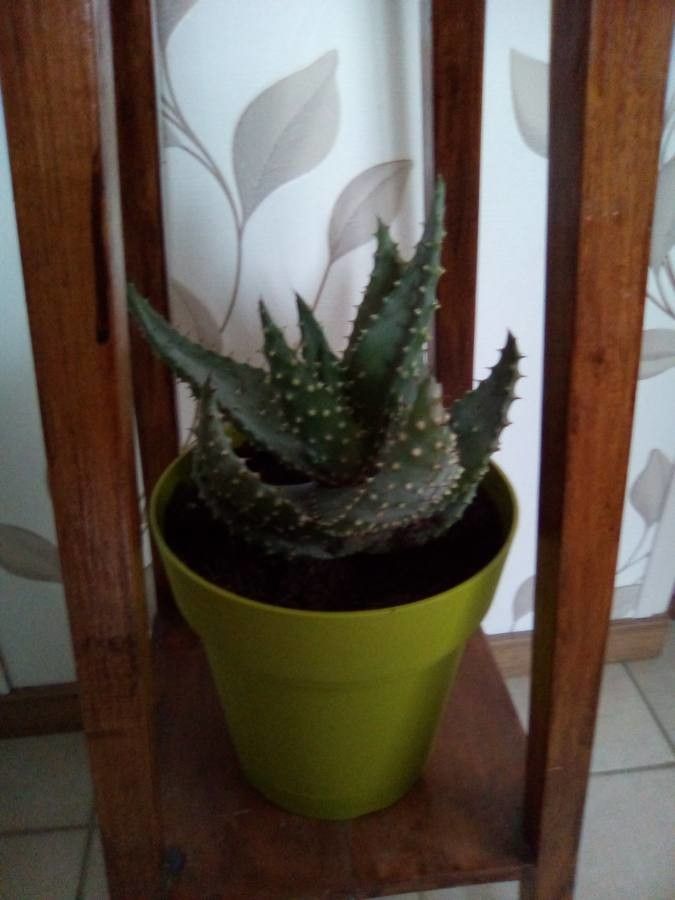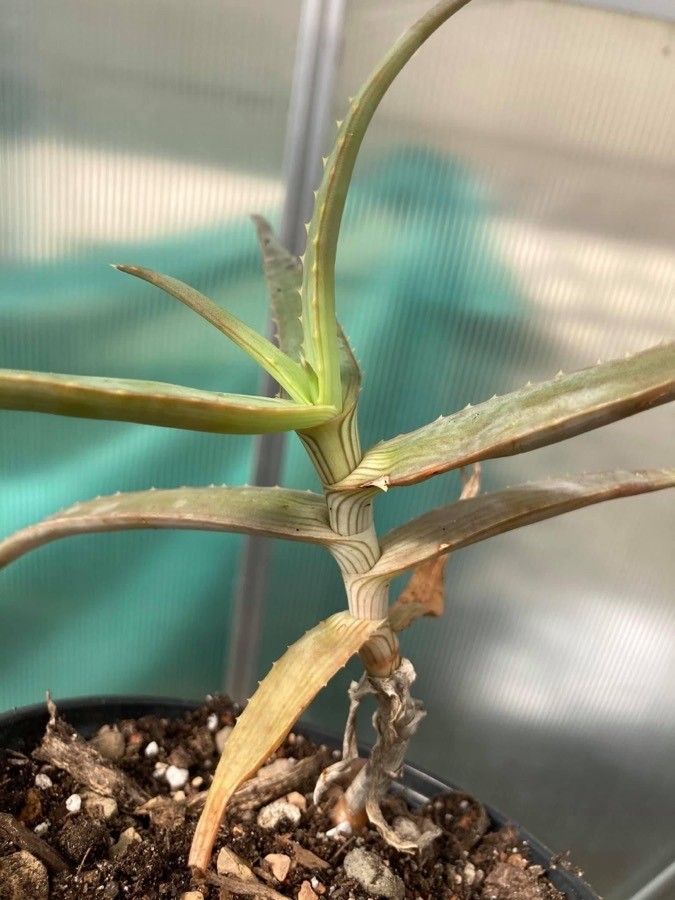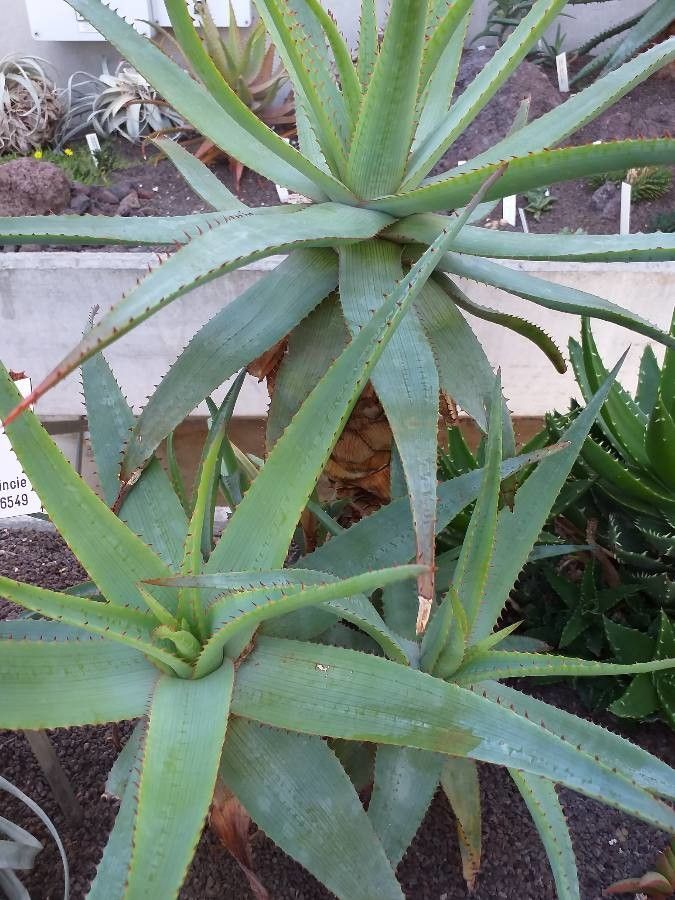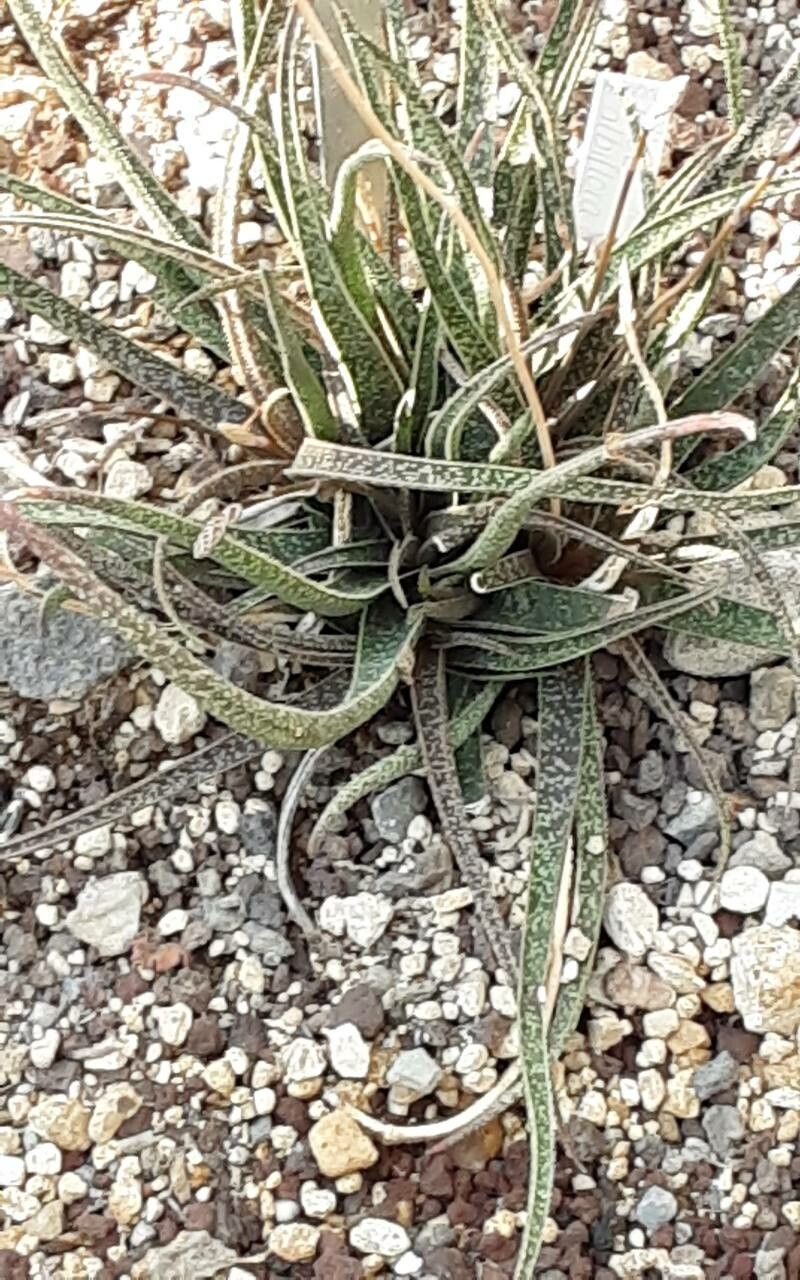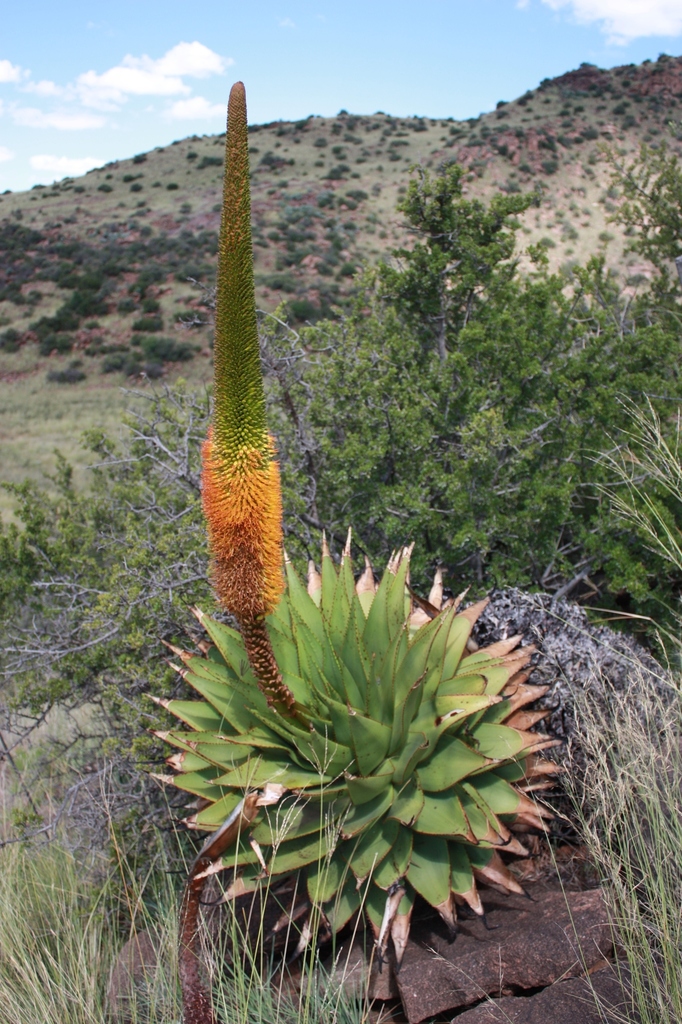
Aloe broomii, commonly referred to as Snake Aloe, is a succulent plant from the Asphodelaceae family. Native to South Africa, it earns its nickname from its long, slender leaves that resemble a snake. The plant can reach up to 2 meters in height and features rosettes of green-grey leaves adorned with white spots.
The leaves of Aloe broomii are thick and fleshy, with sharp edges lined with small, tooth-like structures. During the winter months, the plant produces tall spikes of tubular flowers in shades of orange-red or yellow.
Aloe broomii thrives in well-draining soil and requires full sun exposure for optimal growth. It is drought-tolerant but should be watered sparingly during the summer months when it enters dormancy.
The plant boasts several medicinal properties, including anti-inflammatory, antibacterial, and antifungal benefits, making it useful for treating skin conditions such as burns and wounds.
Overall, Aloe broomii is an attractive succulent with unique features, making it an excellent addition to any garden or indoor collection.
How to keep Aloe Broomii.
Water
Snake aloe, a plant native to arid regions, is highly drought-tolerant and thrives with minimal moisture. It efficiently stores water, requiring watering only every three weeks. As an evergreen species, its fleshy leaves excel at retaining water, which further reduces the need for irrigation, even in warmer climates.
Temperature
Snake Aloe is a robust plant that can withstand temperatures as high as 85 degrees Fahrenheit and as low as nearly freezing. They don't require much humidity, so they should be OK in your home even if you live in a dry area.
Fertilizer
Snake aloe does well without fertilizer, but applying a phosphorus-rich fertilizer once a year in the spring can enhance its growth. Alternatively, you can apply a 1-inch layer of worm castings in mid-spring to achieve a similar effect. Be sure to avoid over-fertilizing and refrain from feeding during the colder months to prevent growth problems.
Pruning
Snake aloe is a unique succulent known for its rosette shape and sturdy leaves. To promote growth and improve airflow, it's best to prune mainly dead or damaged leaves in early spring. Be sure to use clean tools, as this helps maintain the plant's health and appearance while reducing the risk of disease.
Botanical profile.
- Genus
- Aloe
- Family
- Asphodelaceae
- Hardiness Zone
- 9-11
- Mature Height
- 1 m
- Mature Spread
- 1 m