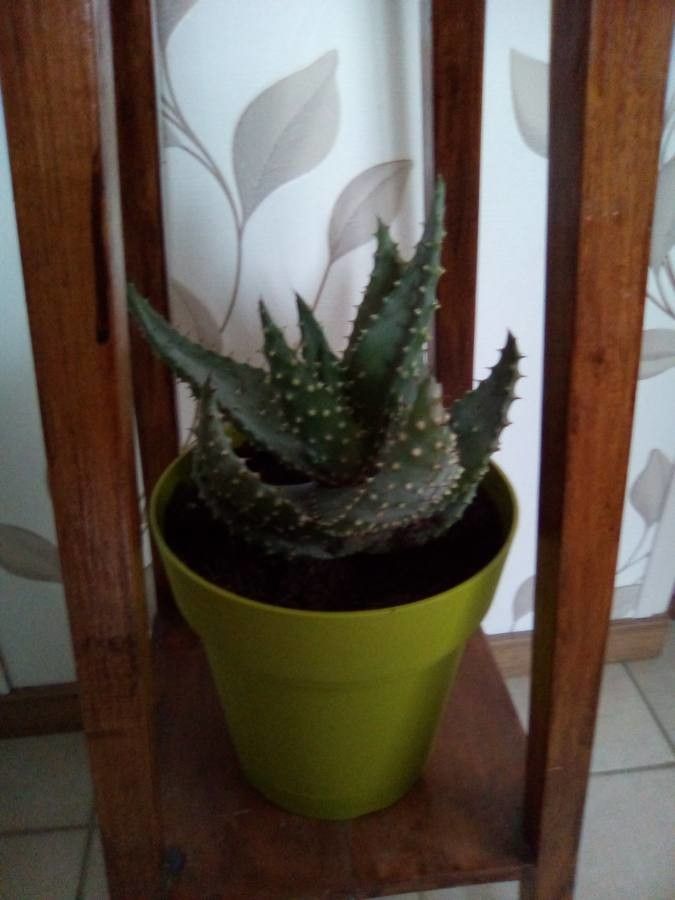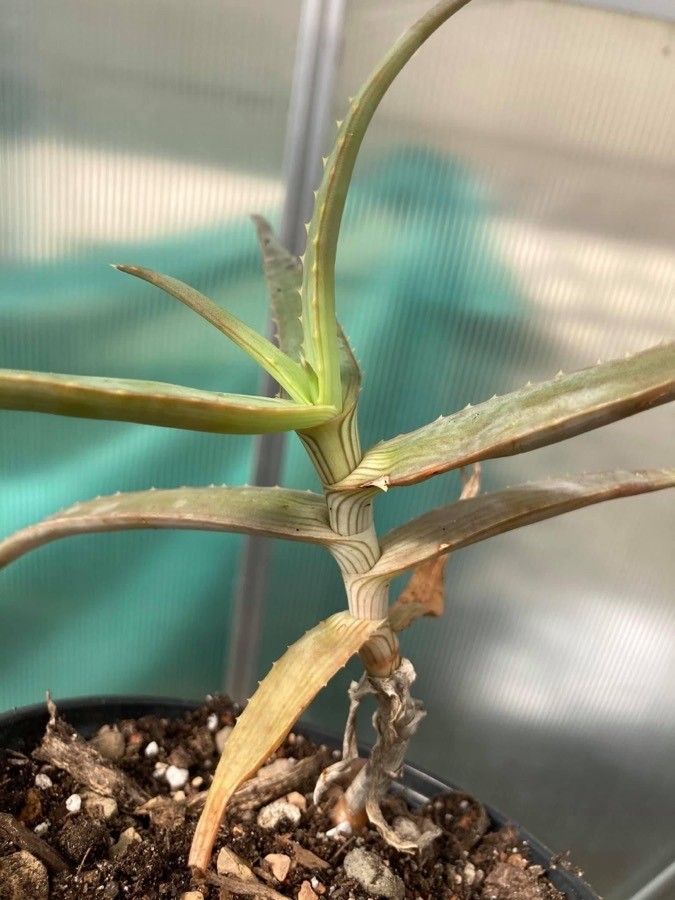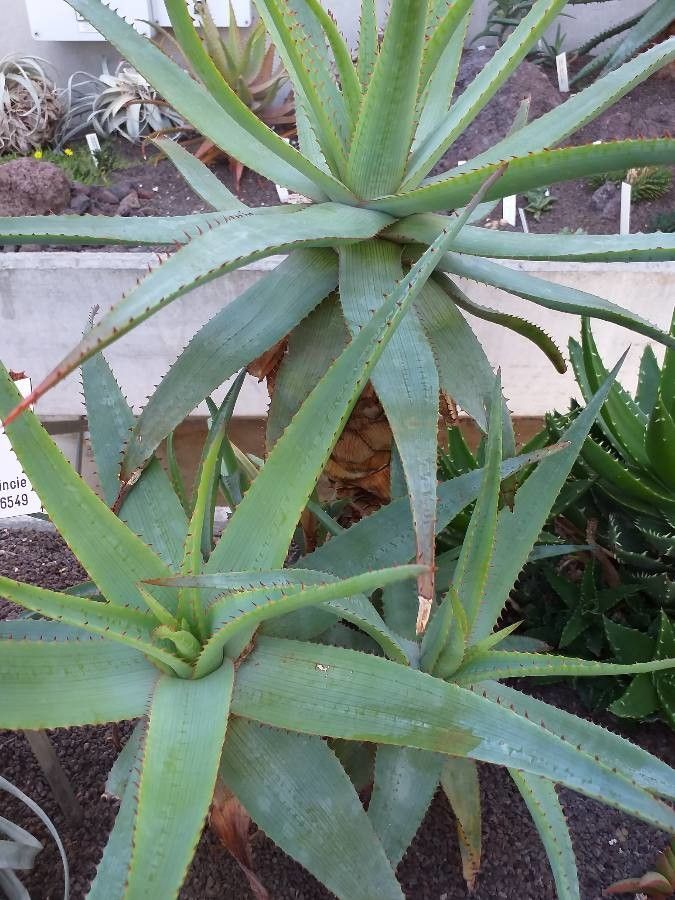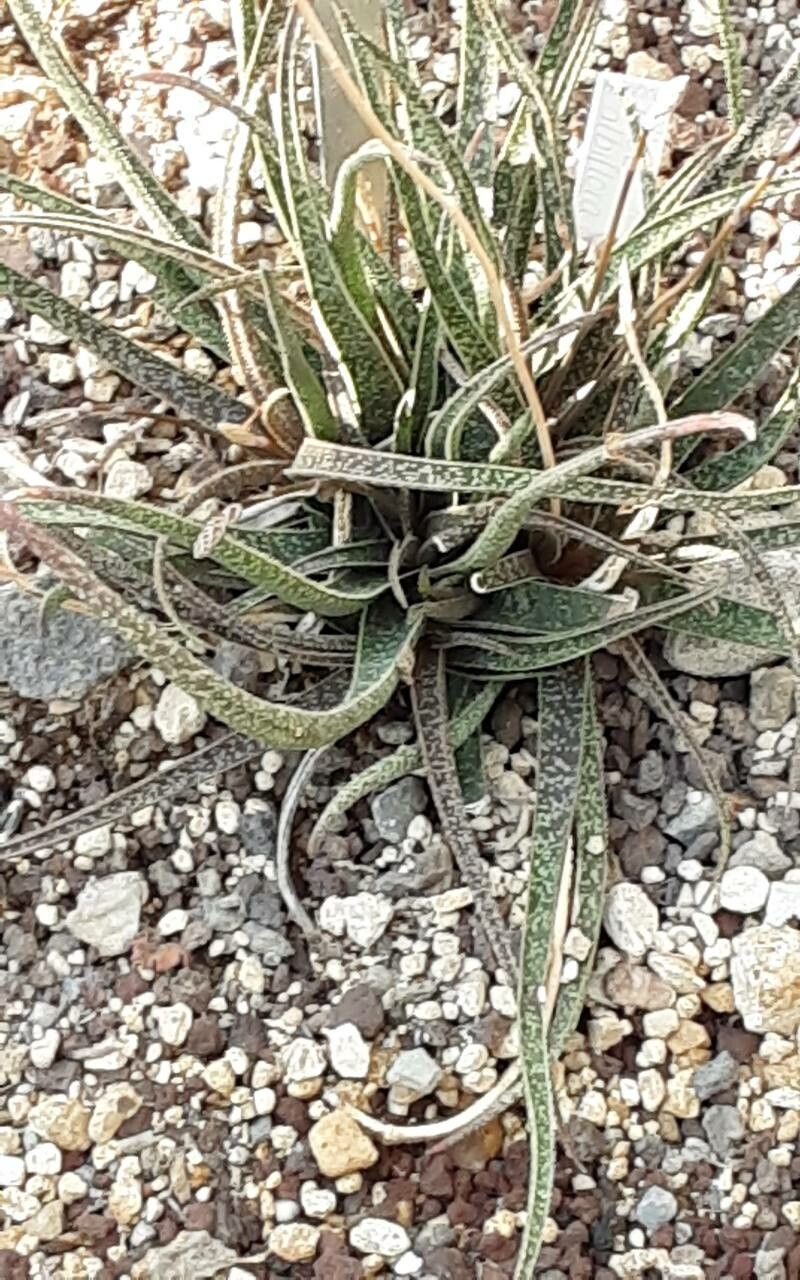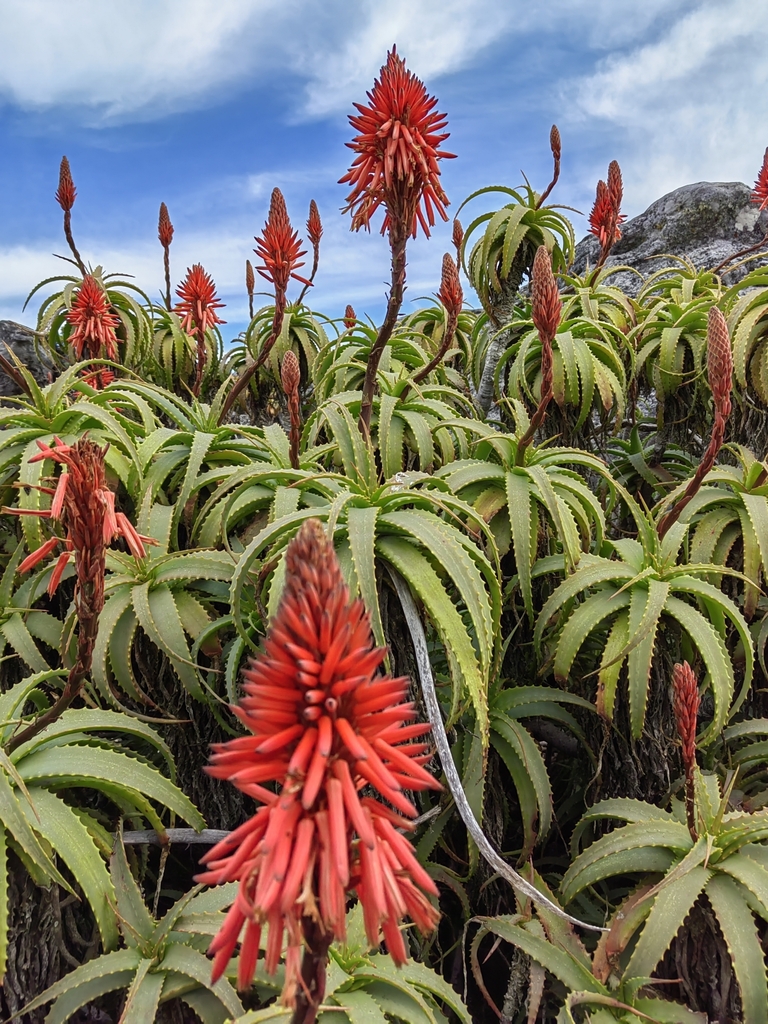
Aloe arborescens, commonly known as Krantz aloe or tree aloe, is a succulent plant indigenous to Southern Africa. This large, multi-stemmed shrub can reach heights of up to 10 feet and widths of approximately 6 feet. Its thick, fleshy leaves, which can grow up to 2 feet long, boast serrated edges. In winter, the plant produces striking bright orange-red flowers on tall spikes.
Renowned for its medicinal properties, Aloe arborescens has been used for centuries in traditional African medicine to treat a range of ailments, including burns, wounds, fever, and digestive issues. The plant is rich in antioxidants, which help bolster the immune system.
Caring for Aloe arborescens is straightforward. It thrives in well-draining soil with ample sunlight and can tolerate drought conditions, although regular watering is recommended during the growing season.
Due to its distinctive appearance and low maintenance needs, Aloe arborescens has gained popularity as an ornamental plant. Its unique shape and vibrant flowers add an exotic touch to gardens and indoor spaces alike.
Candelabra aloe demonstrates strong resistance to disease and is unlikely to become ill under routine care. It is likewise not easily affected by most pests and infections. Regarding care needs, Candelabra aloe is drought-tolerant and can endure extended periods without watering. It requires little fertilizer and generally does not need pruning. Because of this, it is a fitting plant for people at any experience level, particularly those who prefer to spend less time on plant care. It’s a good option for individuals who frequently are away for long stretches and may forget to water their plants regularly.
How to keep Aloe Arborescens.
Light
Candelabra aloe originates from a region where sunlight ranges from strong to moderate. It performs best with plentiful sun, as daylight greatly benefits its health. It can tolerate somewhat shaded conditions. However, excessive shade or too little sun diminishes its vigor and growth.
Water
The candelabra aloe, well-suited to arid regions, displays remarkable drought tolerance. It thrives with minimal watering, generally needing a deep irrigation about once every three weeks. Often incorporated into xeriscapes, this plant stores water in its thick, fleshy leaves, making it ideal for its naturally dry habitat.
Humidity
This plant prefers dry conditions, so don't mist it. However, watering it less often can also thrive in higher humidity.
Temperature
The candelabra aloe is native to warm climates and does best at temperatures of 68 to 100 °F (20 to 38 °C). It can tolerate temperatures as low as 40 °F (4 °C) but will not survive freezing conditions. In winter, move it to a warmer place to prevent frost damage.
Fertilizer
For Candelabra aloe, small amounts of fertilizer once or twice a year during the growing season are adequate. Avoid fertilizing in winter and in summer, when the plant is dormant. Cut back on fertilizer for plants that have been repotted and wait a couple of months after repotting before you feed them. Fertilizing helps maintain healthy growth and encourages flowering.
Pruning
To care for candelabra aloe, minimal pruning is needed. Simply remove any spent flower stalks and dead leaves. Trim off any orange or brown leaves to improve nutrient distribution. For smaller plants, use a knife, and for larger ones, use pruning shears to maintain their health and appearance.
Pot & Repot
When repotting Candelabra aloe, choose a pot slightly larger than the current one that has good drainage. Use a gritty, well-draining succulent or cactus mix. Carefully lift the plant out of its old pot, dust off excess soil, and set it back in at the same depth. Wait a few days before watering to allow any root damage to heal. Repot in spring or fall, and place it in a brightly lit area.
Botanical profile.
- Plant Type
- Succulent, Shrub
- Life Cycle
- Perennial
- Genus
- Aloe
- Family
- Asphodelaceae
- Hardiness Zone
- 9-12
- Mature Height
- 1.83 m to 3.05 m
- Mature Spread
- 2.13 m
- Leaf Color
- Green, Blue
- Leaf Type
- Evergreen
- Flower Color
- Red
- Flower Size
- 2.54 cm to 5.08 cm
- Bloom Time
- Spring, Early summer, Mid fall, Late fall, Winter
- Planting Time
- Spring, Autumn
- Harvest Time
- Spring, Early summer
- Native Area
- Malawi, Mozambique, South Africa, Eswatini, Botswana, Zimbabwe
Other names.
Reader questions.
How many times should I water my Candelabra aloe plant?
To determine how often to water Candelabra aloe, there is no strict rule. The easiest way is to check the soil and only water when it is completely dry. You can check this by sticking your finger or using a moisture meter to assess the soil's moisture below the surface. If you have planted it in a deep pot, you can use a stick or chopstick to do the same. If it still feels even slightly damp, wait a few days before checking again. Typically, most people water Candelabra aloe every two weeks during summer and once a month during winter. However, various factors can affect watering frequency. Read the section below for more information on factors to consider when determining how often to water.
Why should I put plant food on my Candelabra aloe?
Adding nutrients to the growing medium by fertilizing Candelabra aloe supports healthy growth, even though it already stores water and nutrients. This practice also helps mature specimens produce blooms during the growing season.
What are the sunlight requirements for Candelabra Aloe?
Candelabra Aloe needs a specific amount of sunlight to thrive optimally. It prefers locations where it can receive full sun, defined as more than 6 hours of sunlight daily, or partial sun, about 3-6 hours of sunlight. It's essential to observe your garden to ensure that you select spots that provide a balance of light and shade suitable for your plants. In its natural habitat, Candelabra Aloe is accustomed to strong to moderate sun exposure and can tolerate some shade. However, insufficient sunlight or too much shade can negatively affect its health and growth.
What are the ideal growing conditions for Candelabra aloe?
The Candelabra aloe plant is native to warm regions and thrives best within a temperature range of 68 to 100°F (20 to 38°C). This heat-loving plant prefers a location with ample sunlight, ideally near a south-facing window if kept indoors. During winter, it enters a dormant state and should be moved to a warmer indoor location to prevent frost damage. The plant can tolerate low temperatures down to 40°F (4°C) but is not capable of surviving under freezing conditions. To ensure the plant continues to thrive, supplemental lighting can be provided if natural light is insufficient. Moreover, watering should be reduced or ceased during cooler temperatures to avoid root rot, especially when the temperature drops below the ideal growth minimum.
What do I need to think about when I water my Candelabra aloe?
To properly water your Candelabra aloe, you need to consider various environmental factors. The size of the container and the type of soil you use will determine how often and how much water to give the plant. Ensure that the container has drainage holes, as this allows excess water to escape. A smaller container holds less moisture and requires more frequent watering, while a larger pot retains moisture for longer and needs less frequent watering. Avoid using an oversized pot, as it can lead to overwatering. When repotting, choose a container that is only one size larger than the current one, and opt for a shallow container since Candelabra aloe has shallow roots. The watering frequency of your Candelabra aloe will vary depending on the season. During the winter, the plant's growth slows down, and it requires less water as it uses less energy. The cooler winter air also reduces evaporation, keeping the soil moist for a longer time compared to the summer. Additionally, consider the general climate of your location. In a humid and rainy area, you will need to water the Candelabra aloe less frequently than in a dry and arid climate. Remember that even within the same geographic location, conditions can change with the season or due to indoor heating and air conditioning. If you have planted the Candelabra aloe in the ground, it generally doesn't require additional watering once its root system is established. It will receive enough water from precipitation and dew. However, during extended dry periods, you may need to occasionally water the plant. In areas where the Candelabra aloe can only be grown in a container, you can move it outside in the spring and summer when the temperature is suitable and bring it back indoors as temperatures start to drop. Keep in mind that a potted Candelabra aloe placed outside usually requires more water than when kept indoors due to increased sun exposure, even on a shaded porch.
When should I fertilize my Candelabra aloe plant?
Candelabra aloe only requires a small amount of fertilizer during its growing season. It is recommended to fertilize the plant 1-2 times a year, specifically in the spring and autumn. However, avoid fertilizing during the dormant stages of winter and summer. When repotting the plant, be cautious and decrease the amount of fertilizer used. It is also advisable to wait a few months after repotting before applying any fertilizer.
How can artificial lighting benefit Candelabra Aloe and other indoor plants?
Artificial lighting can be crucial for the growth of indoor plants like Candelabra Aloe, especially when natural sunlight is insufficient. During winter or in less sunny areas, artificial lights offer a vital solution. LED lights are recommended because they can provide specific wavelengths needed by plants. For instance, full sun plants require 30-50W/sq ft of light, partial sun plants need 20-30W/sq ft, and full shade plants need 10-20W/sq ft. It's important to place the light source 12-36 inches above the plant and ensure it receives 8-12 hours of light per day to mimic natural conditions.
How should Candelabra aloe be cared for in low temperatures?
Candelabra aloe prefers high temperatures and does not fare well in cold conditions. It's crucial to keep the plant above its tolerable minimum growth temperature to avoid adverse effects. In the winter, or whenever the temperature falls below the plant's growth temperature limit, it may show signs of weakness, wilting, and be at risk of root rot. If the plant suffers mild frost damage, symptoms may not appear immediately but can include withering over time. To care for a plant affected by low temperature, trim off frostbitten sections and check for root rot. Rotting roots should be removed, and the plant can be propagated from cuttings. The plant should then be moved indoors to a warm location with plenty of sunlight. If sunlight is insufficient, supplemental lighting is recommended.
How should I water the Candelabra aloe plant?
To effectively water Candelabra aloe, follow these steps: 1. Water the plant thoroughly, allowing it to completely dry out before watering again. Since this plant can tolerate drought, it's better to underwater than overwater. 2. When watering, make sure the soil is thoroughly soaked throughout the entire pot. Avoid pouring water in just one spot; instead, water around the rim of the planter to ensure all sides of the plant get wet. 3. The amount of water needed depends on the container size and soil absorption. Water the Candelabra aloe until it drains out from the drainage holes. Leave the drained water in the saucer for about 20-30 minutes, ideally, to be absorbed into any dry pockets of soil. Remove any excess water in the saucer to prevent waterlogging. 4. Bottom-watering is also a reliable method for Candelabra aloe. Simply place the pot in a saucer of water and let the soil absorb moisture through the drainage holes. You'll know the soil has absorbed enough water when the top layer is moist. Although it takes more time than top-watering, bottom-watering ensures an even distribution of water throughout the pot. 5. Mimic the plant's natural habitat by bottom-watering only when the soil is completely dry. The Candelabra aloe's native environment experiences minimal rain, but when it does rain, the soil gets thoroughly moistened. Therefore, deep soil saturation is preferable to frequent light watering for this plant.
When is it not a good idea to fertilize my Candelabra aloe plant?
Candelabra aloe, like other plants, goes dormant during certain periods. It's best to avoid fertilizing during these times, which include summer and winter. Additionally, after repotting in the spring, it's advisable to wait a couple of months before resuming fertilization.
What are the symptoms of light deficiency in Candelabra Aloe?
When Candelabra Aloe doesn't receive enough light, it may exhibit several symptoms indicating light deficiency. These include lighter-colored or pale new leaves, indicating a lack of chlorophyll and essential nutrients; leggy or sparse growth, where the plant looks thin and stretched; small leaves compared to older ones; chlorosis, which results in leaves losing their green color; sunscald, causing damage to leaves or stems from intense light exposure; leaf curling, a defensive mechanism against excessive sunlight; wilting due to loss of turgor pressure; and leaf scorching, characterized by brown, dry edges on leaves.
What should be done when Candelabra aloe is exposed to temperatures above its optimal range?
During the summer, it's necessary to keep the Candelabra aloe below its maximum tolerable growth temperature. Exceeding this temperature can lead to halted growth, water loss, wilting, and increased susceptibility to sunburn. To assist a plant suffering from high temperatures, start by removing sunburned and decayed parts. Protecting the plant from direct afternoon sun until it recovers is crucial. If there's any root rot present, halt watering until the plant begins to grow new roots. These measures help the plant to gradually recover and resume growing.