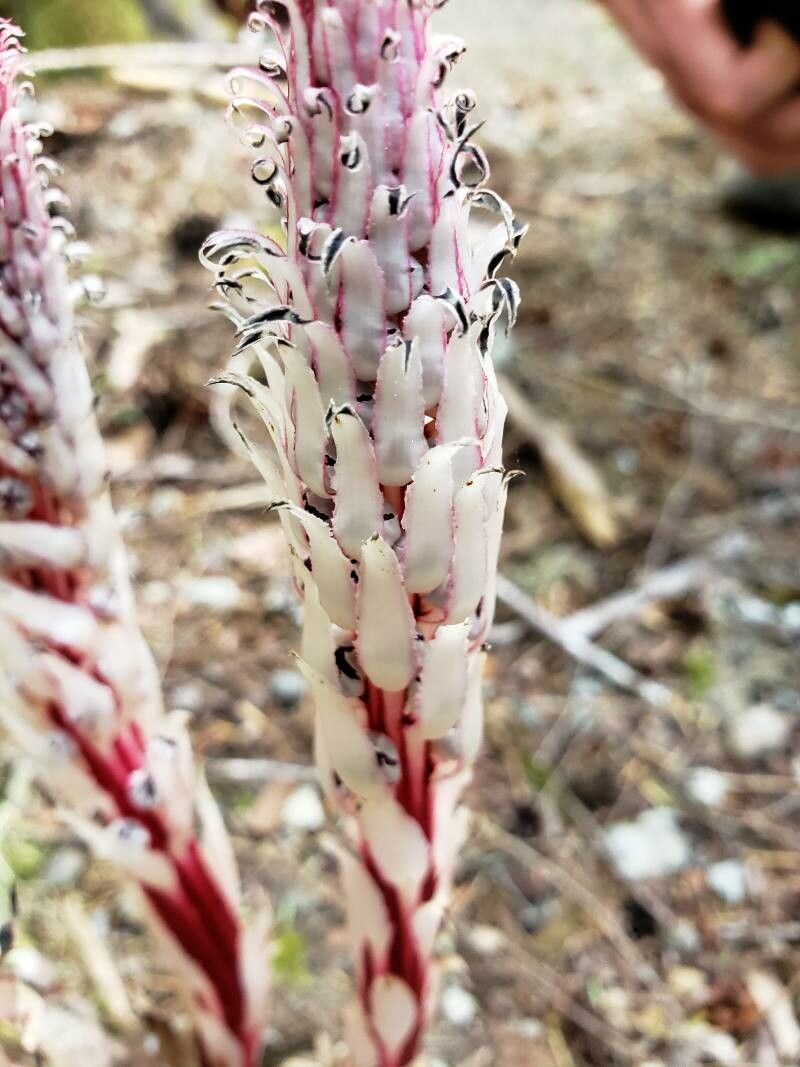
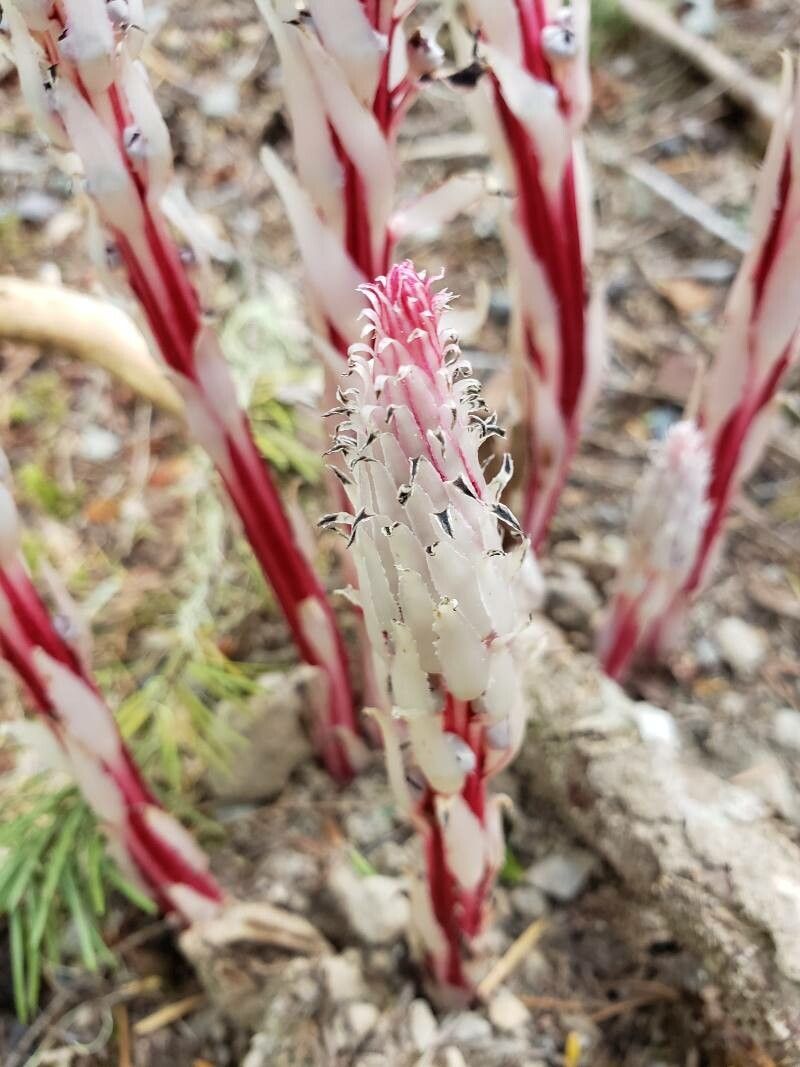
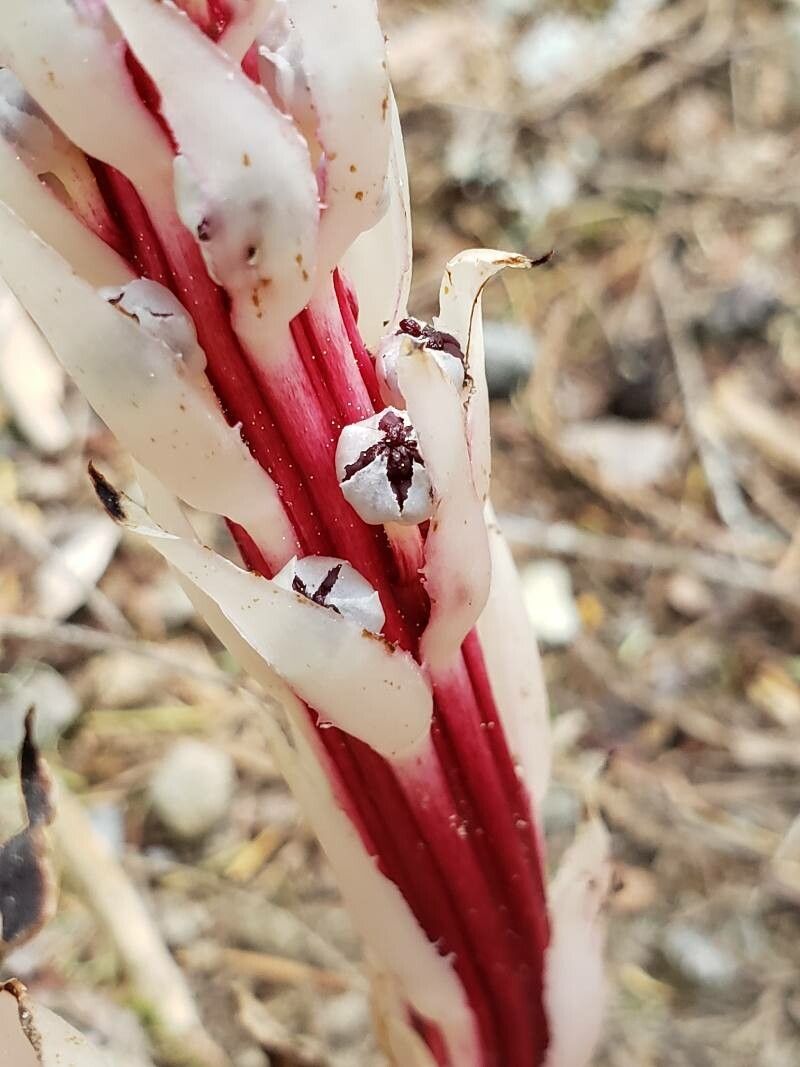
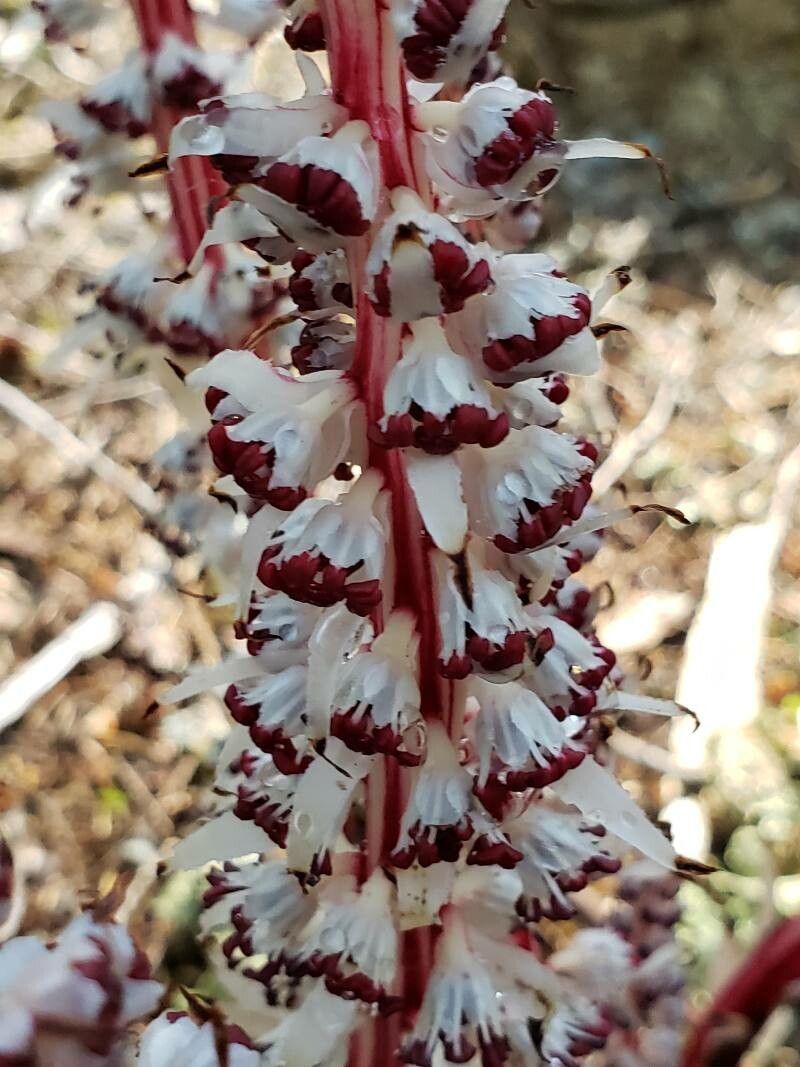
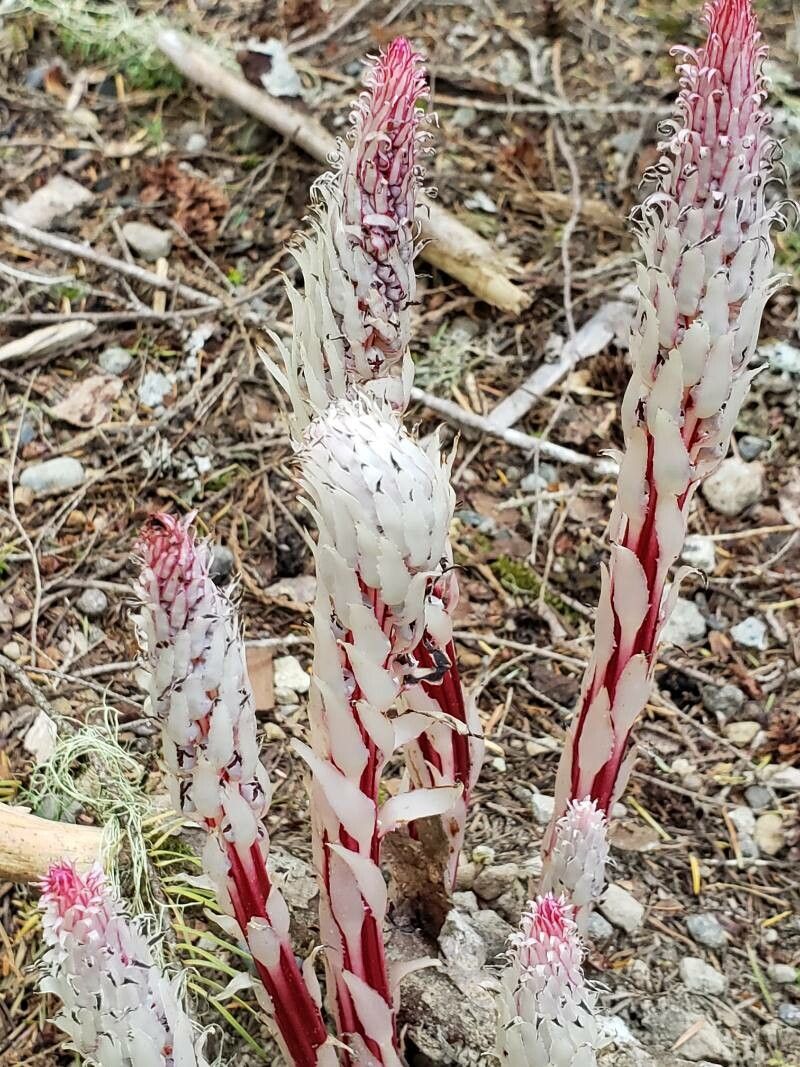
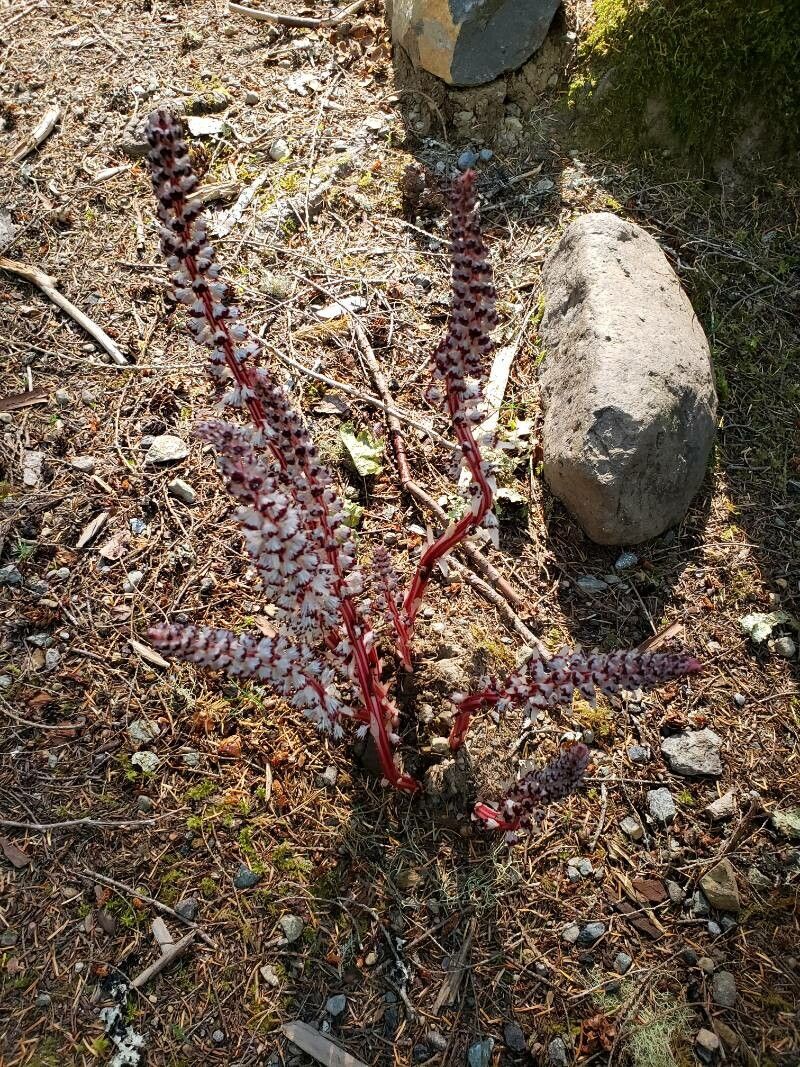
Allotropa virgata is in the family Ericaceae and is the only species of the genus Allotropa. It is a perennial plant that gets its common names from the distinct white and red or maroon stripes along its erect peduncle. A. virgata are nongreen as they lack chlorophyll, instead obtaining nutrition from neighboring green plants through a fungal intermediate. Its common names include sugarstick, candystriped allotropa and barber's pole.
Sugarstick has strong resistance to disease and is usually not susceptible to illnesses. Still, it can be affected by pests and diseases found nearby. These problems are generally minor. As for care, this plant needs moderate maintenance. It should be pruned regularly to preserve a good appearance and support healthy growth. Applying fertilizer can also encourage flowering. Sugarstick is appropriate for anyone with an outdoor area, like a garden or patio, and does not demand extensive care experience. It may need extra attention when cultivated indoors.
How to keep Allotropa Virgata.
Light
Sugarstick is found in habitats such as forest understories or rocky areas that offer natural shade. It prefers Full Shade but can tolerate Partial Sun.
Water
Sugarstick thrives in moist, shaded environments and prefers damp soil without being waterlogged. To mimic its natural habitat, it is essential to water it weekly. As an understory plant, sugarstick benefits from outdoor settings where rainfall can help maintain its moisture needs, reflecting the seasonal patterns of its native climate.
Temperature
Sugarstick can adjust to a wide range of temperature conditions, though its distribution may still be constrained by various combinations of moisture and temperature. It performs best in warm summer climates with sufficient rainfall or irrigation. Extended stretches of cloudy, rainy weather or prolonged high heat can raise the risk of Sugarstick dying. In winter, protecting the plant from cold can increase its chances of survival.
Fertilizer
One fertilizer application in spring is generally enough for Sugarstick, although repeated feedings can maximize growth. Feed roughly every month to six weeks. Fertilizing improves the leaves’ appearance and function, helping maintain consistent color and a healthy texture. It also encourages root growth and nutrient uptake for long-term plant health.
Pruning
To maintain optimal health for your sugarstick plant, prune it from early to late spring. Start by removing any dead or damaged stems, and trim back any overly long ones. Be careful not to prune too heavily, as sugarstick is a slow-growing plant. This light pruning will improve air circulation and allow more light to penetrate the plant. Always use clean, sharp tools to prevent infection.
Botanical profile.
- Plant Type
- Herb
- Life Cycle
- Perennial
- Genus
- Allotropa
- Family
- Ericaceae
- Hardiness Zone
- 5-8
- Mature Height
- 13 cm to 40 cm
- Mature Spread
- 5 cm to 10 cm
- Leaf Color
- Brown, Tan
- Leaf Type
- Deciduous
- Flower Color
- White, Pink, Purple, Red, Brown
- Flower Size
- 1.02 cm
- Bloom Time
- Early summer, Mid summer
- Planting Time
- Spring, Summer, Autumn
- Harvest Time
- Late summer, Early fall
Other names.