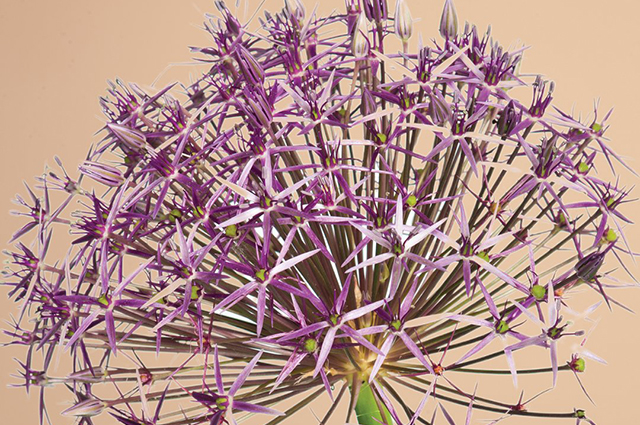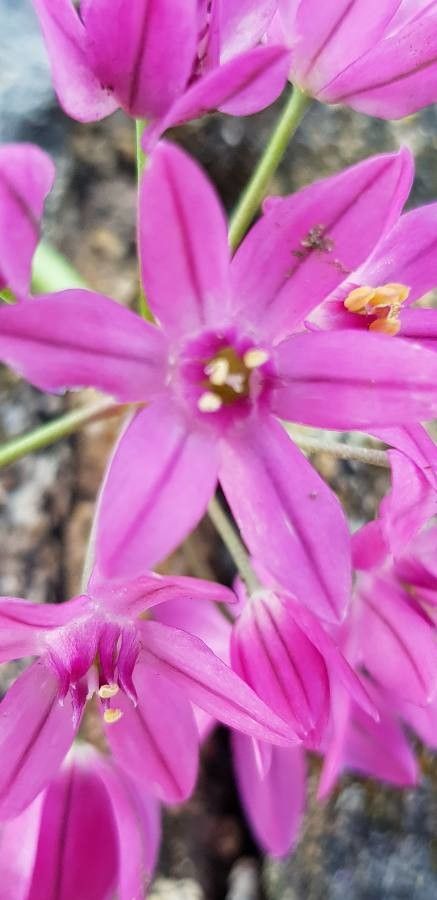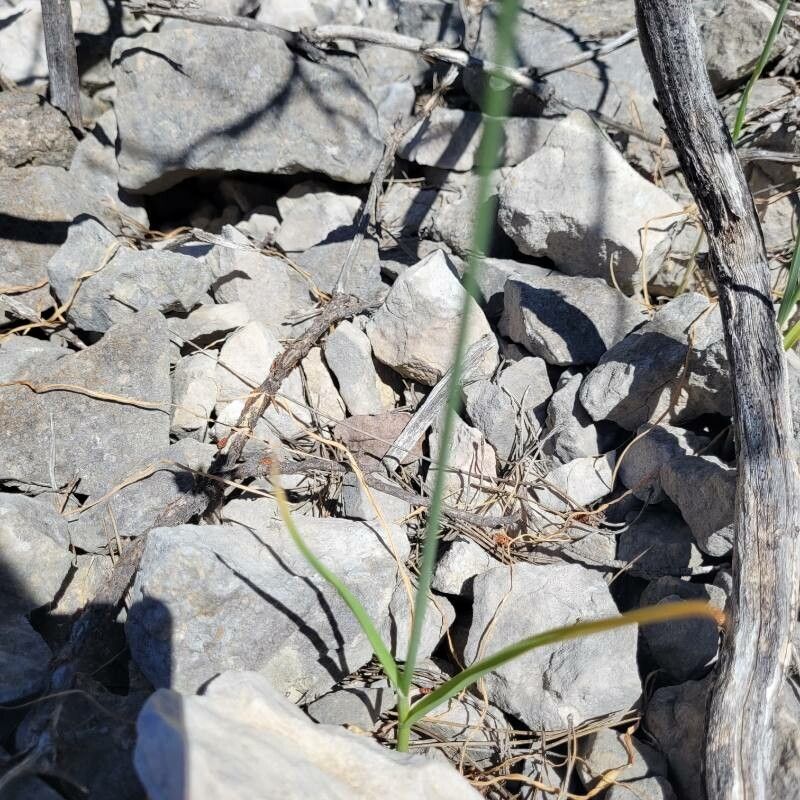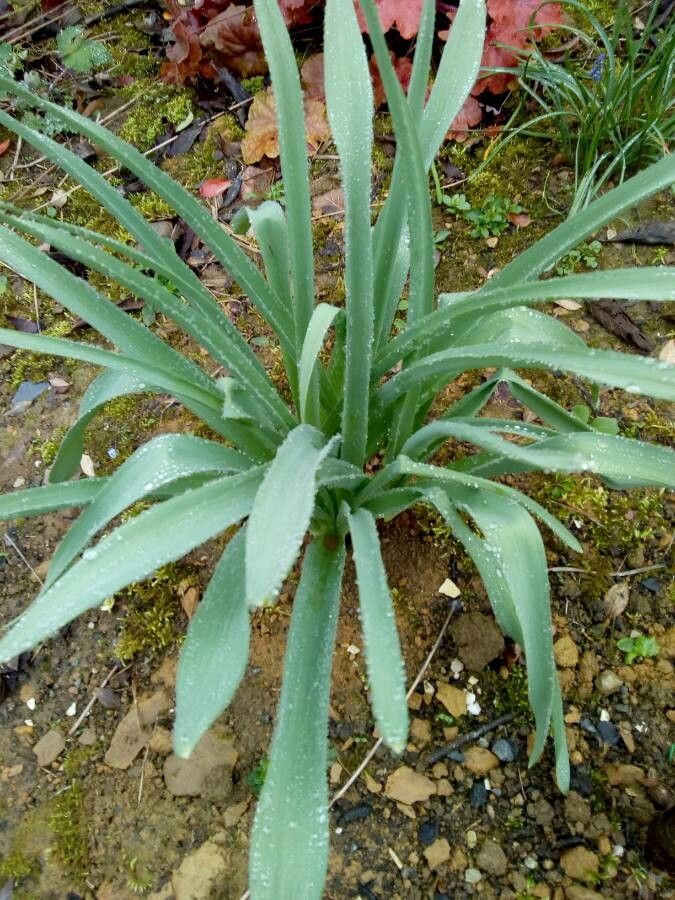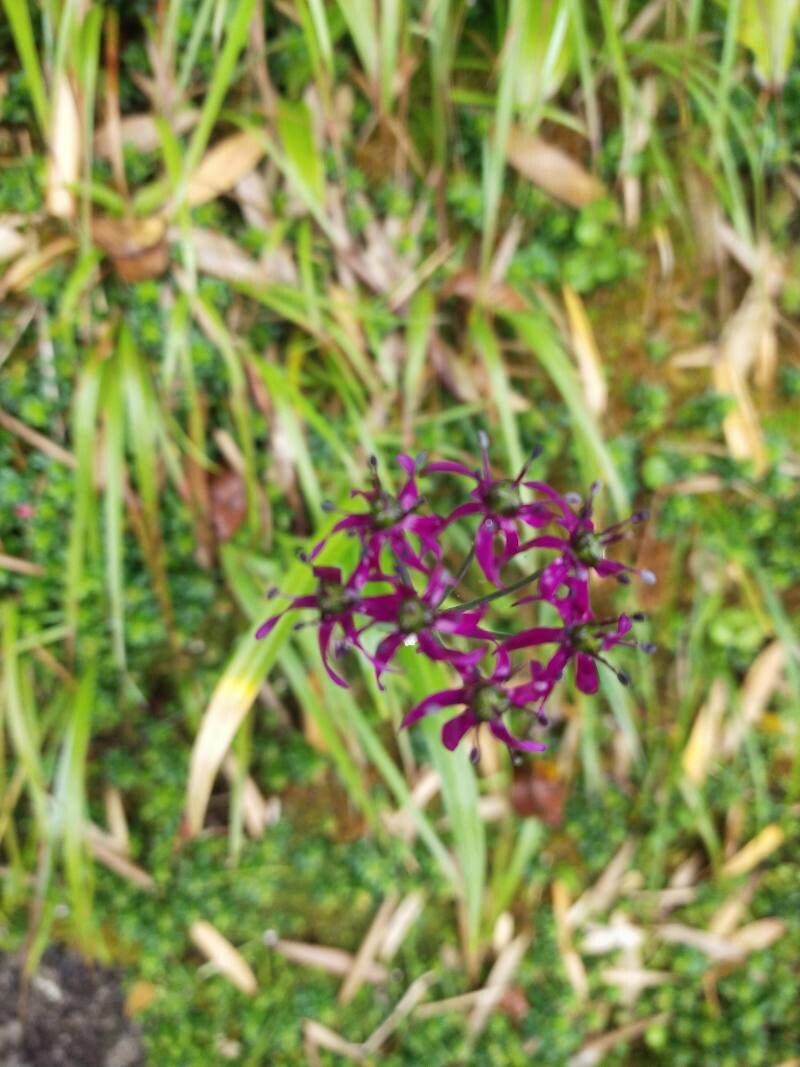
Allium wallichii is a plant species native to India, Nepal, Sikkim, Bhutan, Myanmar, and parts of China (Guangxi, Guizhou, Hunan, Sichuan, Tibet, Xizang, Yunnan). It grows at elevations of 2300–4800 m.Allium wallichii has elongate roots and clusters of narrow bulbs. Scapes are up to 110 cm tall, triangular in cross-section. Leaves are flat, up to 20 mm across, usually shorter than the scape. Flowers are white, pink, red, dark purple (sometimes almost black).
Wallich's garlic has moderate resistance to disease but can be prone to issues like leaf spot. Its vulnerability to insect pests differs by variety, though most types are not very pest-resistant. For care, Wallich's garlic requires regular watering and fertilizing and frequent removal of yellowing leaves. Pests and diseases should be managed as soon as they appear, and the crop should be harvested promptly. Wallich's garlic is best for people who can invest some time and effort in ongoing care.
How to keep Allium Wallichii.
Light
Wallich's garlic favors abundant sunlight for healthy growth. Native to areas with plenty of sun, these plants perform best when not shaded. Adequate sunlight at each growth stage supports optimal development and vigor. Both too much and too little light can impede growth and result in poor plant health.
Water
Wallich's garlic flourishes in high-humidity environments and needs consistent moisture but should not be waterlogged. Watering the plant once a week is usually sufficient to maintain optimal hydration. Typically grown outdoors, Wallich's garlic benefits from natural rainfall, which supports resilient growth and bulb development during the growing season.
Temperature
Wallich's garlic does best in moderate temperatures, similar to those most people find comfortable. It flourishes in conditions that are not excessively hot or cold. The main problem with very high temperatures is the danger of sunburn, so providing some shade in summer is recommended to avoid excessive heat. When temperatures fall, Wallich's garlic goes dormant. If you want it to keep growing year-round, you need to keep temperatures higher through the winter. Frost can injure the plant and should be avoided.
Fertilizer
To maximize the yield and flavor of Wallich's garlic, provide adequate nitrogen throughout the entire growth cycle, including during pre-planting and at harvest. Plants that are well watered and fertilized grow abundant, healthy leaves and exhibit less bitterness. Before planting, amend the soil with organic matter such as compost or manure, preferably 2 to 8 weeks prior.
Pruning
Wallich's garlic features aromatic leaves and vibrant flowers. To promote healthy growth, prune it in early spring to remove any damaged leaves. Later in the season, additional pruning can shape the plant and boost its flowering. Regular maintenance helps prevent overcrowding and disease. Always use clean tools to minimize damage and ensure a healthy growth cycle.
Pot & Repot
For Wallich's garlic to thrive, it needs excellent drainage in its pots. This helps maintain healthy roots and prevents waterlogging.
Botanical profile.
- Plant Type
- Herb
- Life Cycle
- Perennial
- Genus
- Allium
- Family
- Amaryllidaceae
- Hardiness Zone
- 5-9
- Mature Height
- 49 cm
- Mature Spread
- 10 cm
- Leaf Color
- Green
- Leaf Type
- Deciduous
- Flower Color
- Lavender, Purple
- Flower Size
- 1.02 cm to 2.03 cm
- Bloom Time
- Mid summer, Late summer
- Planting Time
- Spring, Summer
- Harvest Time
- Early fall, Mid fall
- Native Area
- Nepal, India, Myanmar, Bhutan, Pakistan, China
Other names.
Reader questions.
What are the sunlight requirements for Wallich's garlic?
Wallich's garlic thrives under full sun exposure, necessitating more than 6 hours of sunlight for optimal growth. However, it can also tolerate partial sun conditions, which means about 3-6 hours of sunlight a day. It's essential to observe how sunlight moves through your garden to find the best spots that offer a balance of light and shade suitable for these plants, ensuring they remain healthy and happy.
What is Wallich's garlic?
Wallich's garlic, known botanically as Allium wallichii, is a plant species belonging to the Allium family. It doesn't have specific details provided about its essentials or symptoms associated with it in the information given.
What are the essentials for growing healthy Wallich's garlic?
Wallich's garlic plants prefer a generous amount of sun exposure, originating from habitats abundant in sunlight. They perform best without any shade barrier, with adequate sunlight being crucial at different growth stages for optimal development and health. An imbalance in light exposure can adversely affect growth and plant health. Artificial lighting, such as LED lights offering 30-50W/sq ft for full sun plants, 20-30W/sq ft for partial sun plants, and 10-20W/sq ft for full shade plants, can be used indoors. It's important to mimic natural sunlight conditions by adjusting the distance (12-36 inches above the plant) and duration (8-12 hours per day) of the artificial light.
What are the signs of insufficient light in Wallich's garlic?
When Wallich's garlic does not receive enough light, several symptoms may surface. Small, undersized new leaves may start growing, and the plant may exhibit leggy or sparse growth, indicating an elongated and weakened structure. Additionally, faster leaf drop and a halt in new growth are common, signaling the plant's shift to survival mode due to poor light conditions. Leaves may also become lighter in color or develop chlorosis, turning yellow due to a deficiency in chlorophyll. Excessive sunlight can lead to sunscald, leaf curling, wilting, and leaf scorching, further compromising plant health.
How can I treat Wallich's garlic experiencing light-related issues?
For indoor plants, gradually acclimatize them to receive at least 6 hours of direct sunlight daily, utilizing south-facing windows for maximum exposure. If moving the plant isn't feasible, consider using artificial lighting, such as desk lamps or professional grow lights, for at least 8 hours a day. Outdoors, relocate your plants gradually to sunnier spots to prevent sunburn, aiming for a smooth transition in light exposure. If sunlight is blocked by obstacles like trees, pruning can help increase sunlight penetration. For smaller plants, consider transplanting during their dormant period to a location with ample sunlight and good drainage. Note that parts of the plant already damaged by insufficient light might not recover, but new growth should be healthy with increased light exposure.