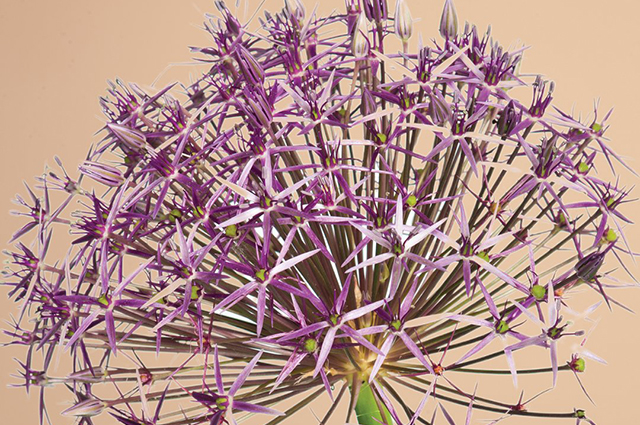
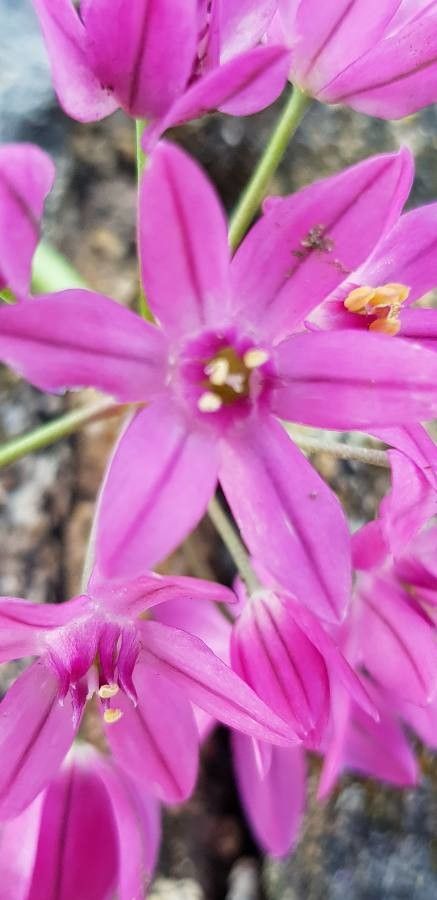
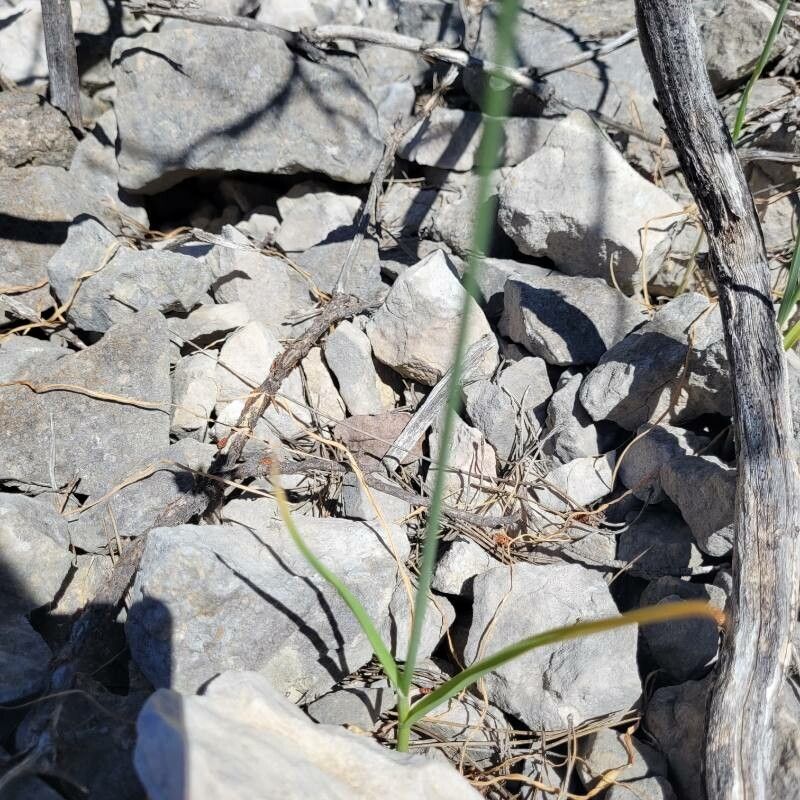
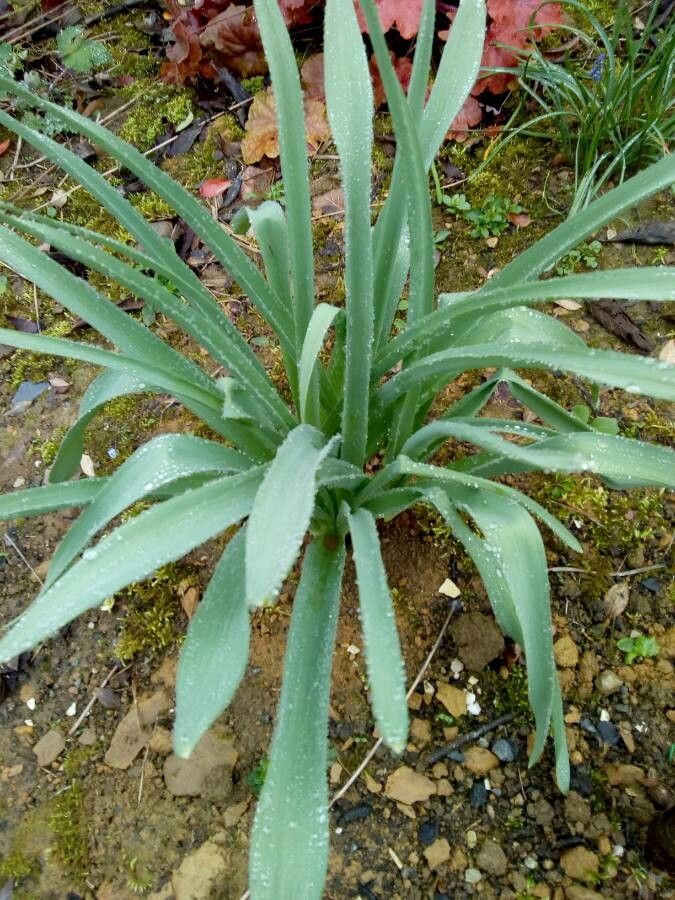
Allium tolmiei (Tolmie's onion) is a plant species native to Idaho, eastern and central Oregon, southeastern Washington, northwestern Nevada and northeastern California. It occurs on mountains and scrublands at elevations of 1,300–9,200 feet (400–2,800 m). It was discovered by and named for Dr. William Fraser Tolmie. Allium tolmiei produces ovoid to oblique bulbs up to 0.79 inches (2 cm) long, the bulbs generally disappearing at flowering time but then reforming later. Flowers are bell-shaped, up to 0.47 inches (12 mm) across; tepals white to pink with reddish midribs; anthers purple or yellow; pollen yellow.Two varieties are currently recognized: Allium tolmiei var. tolmiei - scapes 2.0–11.8 inches (5–30 cm) tall; stamens shorter than tepals Allium tolmiei var. persimile Ownbey (syn Allium persimile (Ownbey) Traub & Ownbey) - scapes 3.9–15.7 inches (10–40 cm) tall; stamens longer than sepals—known only from the Seven Devils Mountains in Idaho
Tolmie's onion is fairly disease-resistant and generally not prone to illnesses. However, it can be vulnerable to pests and diseases present in its surroundings. These infections are usually mild. In terms of care, this plant needs moderate maintenance. Regular pruning is required to keep a good appearance and support healthy growth. Fertilizing can also help encourage flowering. Tolmie's onion is suitable for anyone with outdoor space, such as a garden or patio, and does not demand extensive care experience. It may need more attention when grown indoors.
How to keep Allium Tolmiei.
Light
Tolmie's onion is a perennial herb that loves the sun, naturally occurring in open environments and commonly thriving in grasslands and meadows. It prefers to be in full sunlight but can also manage in conditions with partial sun exposure.
Temperature
Tolmie's onion is capable of adjusting to a diverse array of temperature conditions, but various combinations of heat and water conditions can still confine its spread. This plant flourishes best under sufficient watering or rainfall, during the warm summer weather. Extended bouts of overcast and rainy conditions, along with sustained high temperatures, could raise the probability of Tolmie's onion perishing. During the cold winter months, implementing proper protective measures against the cold could enhance the plant's chances of survival.
Fertilizer
Typically, a one-time fertilizer application in the spring is enough for Tolmie's onion, but growth can be optimized with several feedings. Consider feeding once a month to every six weeks. Fertilizing improves the aesthetics and functionality of the leaves by nurturing a rich color and robust texture. Moreover, it encourages the growth of roots and boosts the absorption of nutrients, contributing to the lasting well-being of the plant.
Pot & Repot
Tolmie's onion needs excellent drainage in pots to thrive. Proper drainage prevents water buildup, which can cause root rot and other health problems.
Botanical profile.
- Plant Type
- Herb
- Life Cycle
- Perennial
- Genus
- Allium
- Family
- Amaryllidaceae
- Hardiness Zone
- 5-10
- Mature Height
- 5 cm to 15 cm
- Leaf Type
- Deciduous