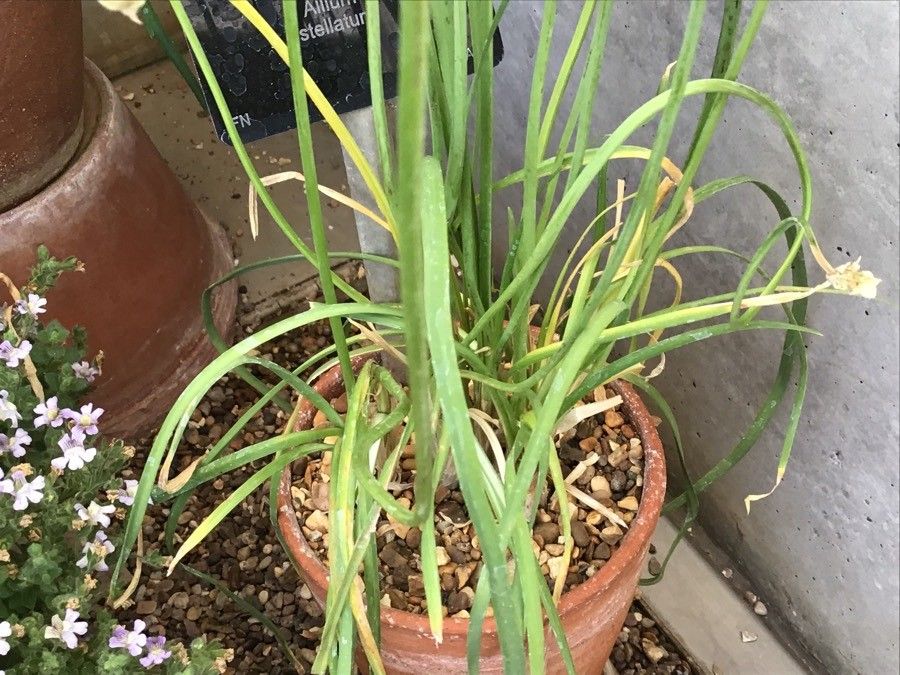
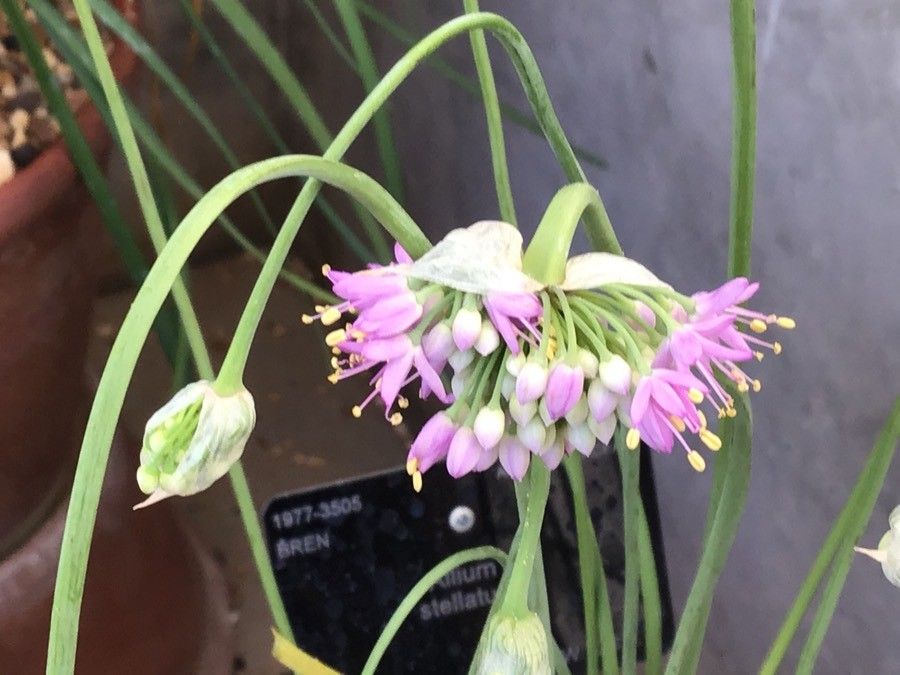
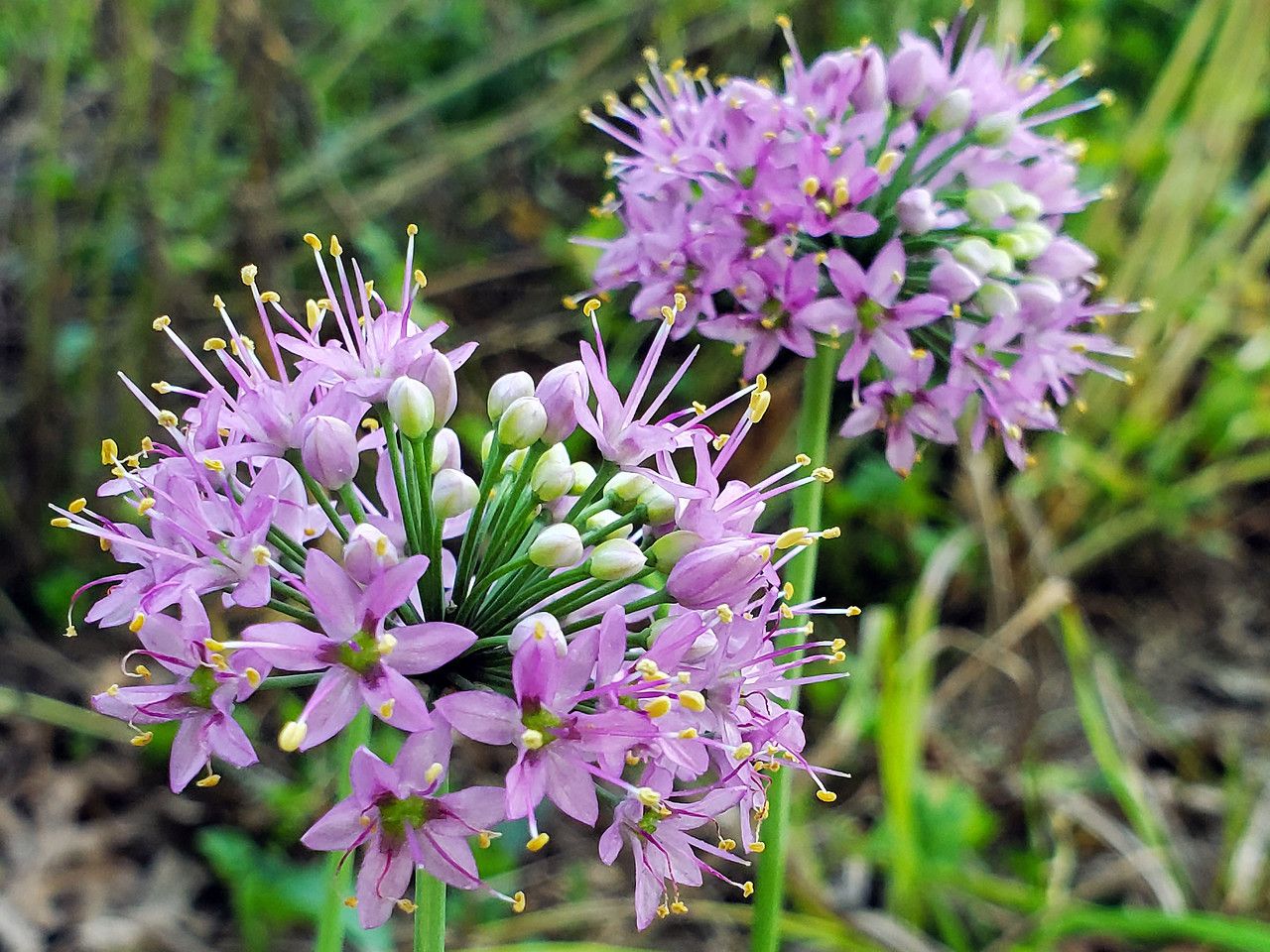
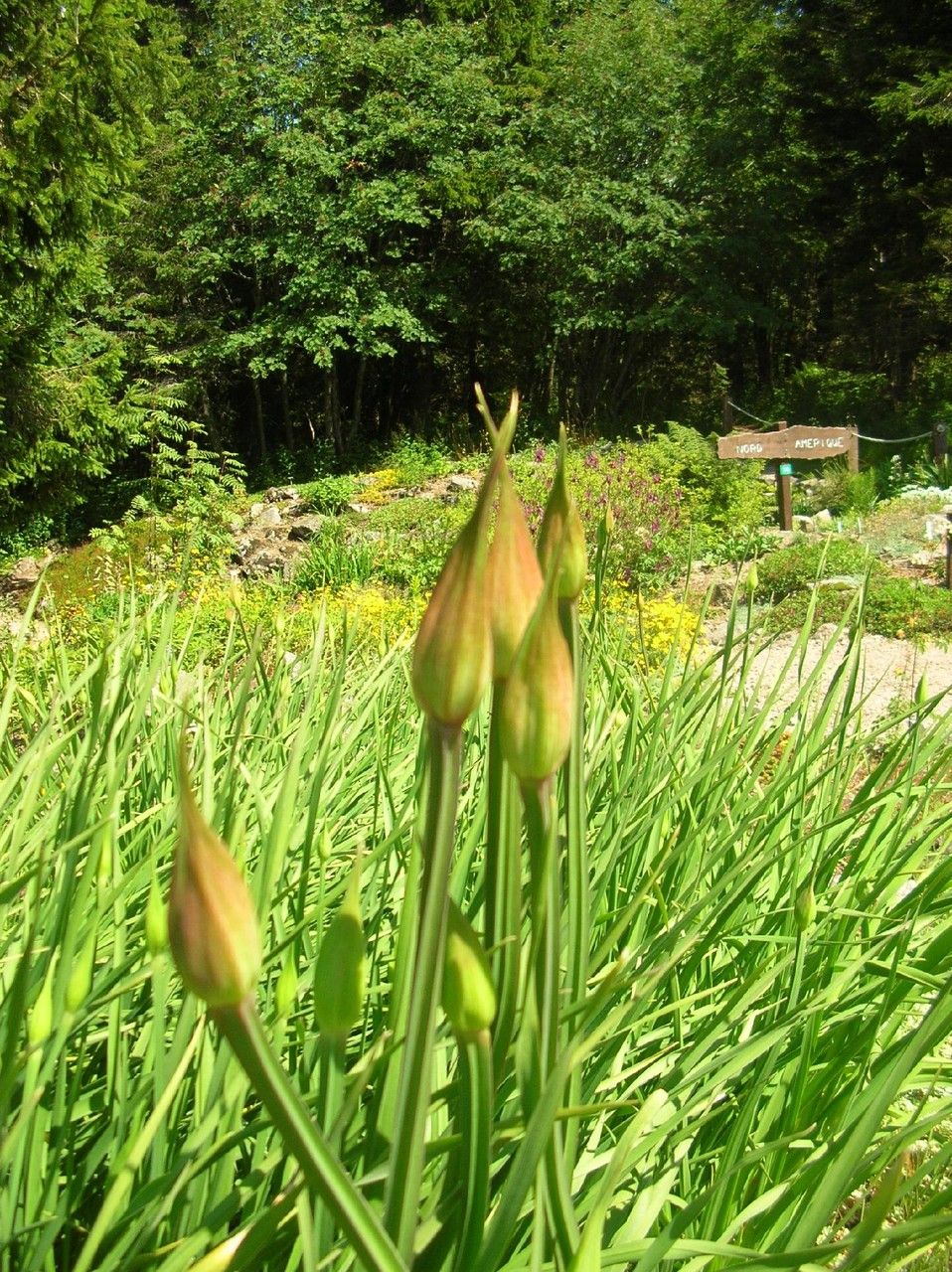
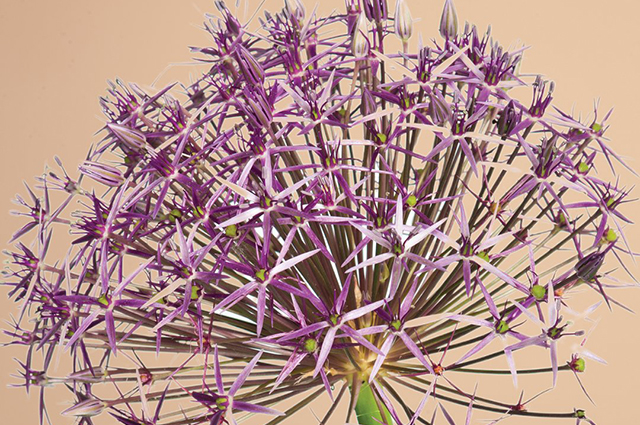
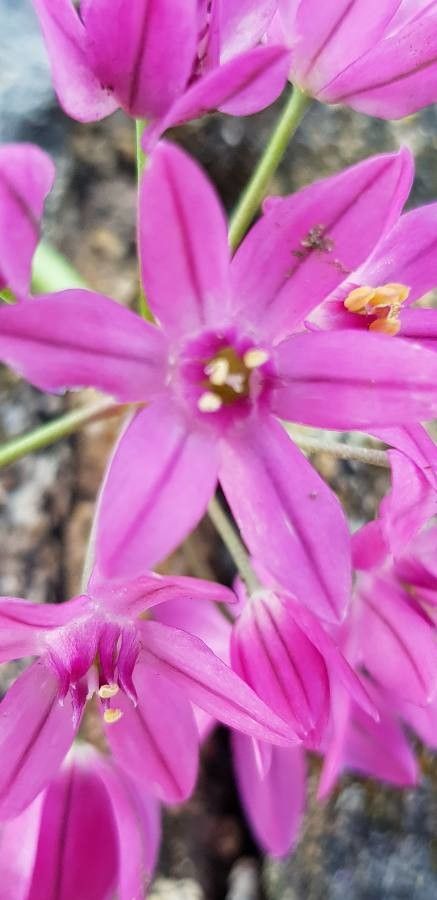
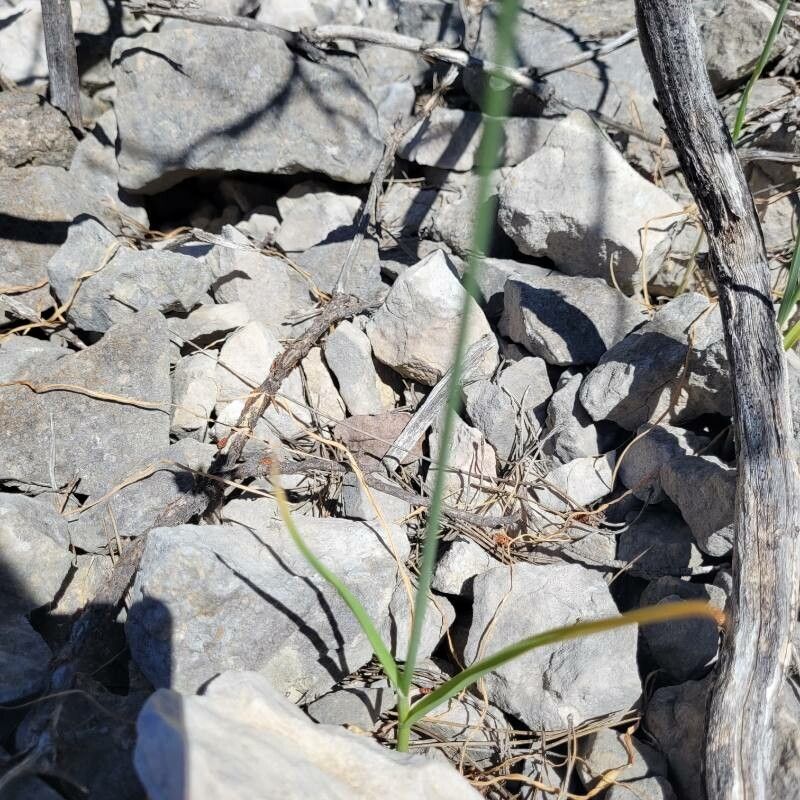
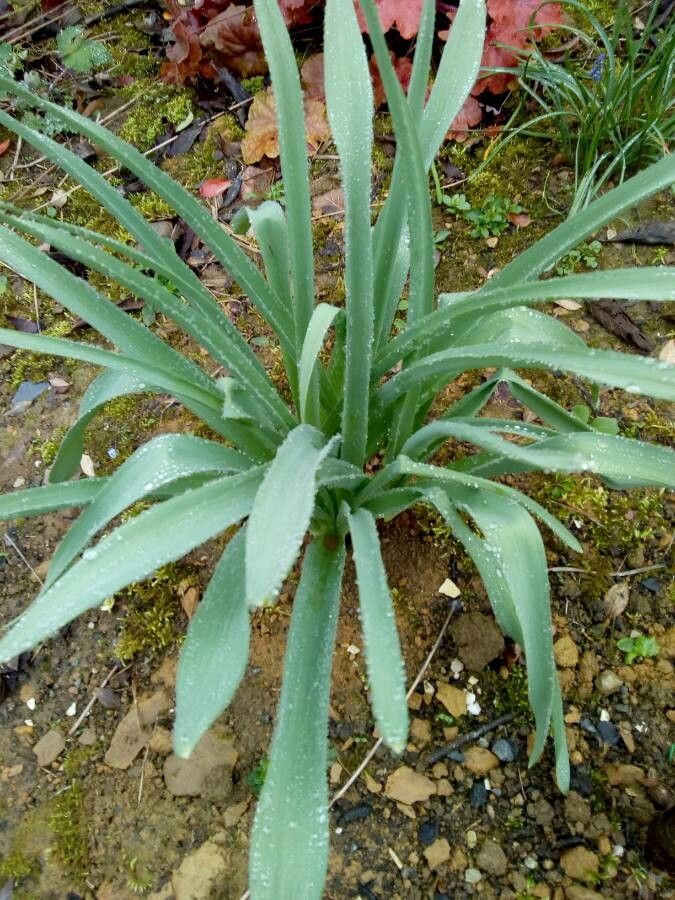
Allium stellatum, the autumn onion or prairie onion, is a North American species of wild onion native to central Canada and the central United States. It ranges from Ontario and Saskatchewan south to Tennessee and Texas.Allium stellatum grows in rocky, sandy soil. It is a perennial forming a bulb. The scape is up to 1–2 feet (30–60 cm) tall with tufts of leaves, which are thick, hard, and rounded on the back. The leaves die back as the umbel of pink to purple flowers forms in early August. The bulbs are strongly flavored but edible.The species name stellatum is botanical Latin for "starry", and refers to the umbels. This species was described for science by John Bellenden Ker Gawler in 1813.
Prairie onion is fairly resistant to disease and typically not prone to illnesses. Still, it can be vulnerable to pests and diseases present in its environment. These problems are generally not serious. For care, the plant needs a moderate level of maintenance. It should be pruned regularly to preserve a neat appearance and support healthy growth. Fertilizing can also encourage more blooms. Prairie onion is suitable for anyone with outdoor space, such as a garden or patio, and does not demand extensive gardening experience. It may need extra attention if kept indoors.
How to keep Allium Stellatum.
Light
The prairie onion does best in places with full sun but can also grow in spots with partial sun. It comes from habitats with unobstructed sunlight and is adapted to those conditions for healthy growth. Excessive shade can impede its development, while full, direct sun does not harm it.
Water
Prairie onion thrives in environments with moderate moisture, enjoying a balance of dryness and rainfall. To keep it healthy, it should be watered weekly. Adapted to temperate zones, the prairie onion can enter dormancy during dry periods to conserve resources.
Temperature
Prairie onion naturally occurs in areas with temperatures between 41 and 95 °F (5 to 35 °C). It favors cooler conditions, so adjustments may be needed during heatwaves or frost. Care should be taken to replicate its native temperate conditions.
Fertilizer
The best time to fertilize a Prairie onion is in early spring, as it comes out of dormancy and begins active growth. Fertilizing supplies essential nutrients for healthy growth. Although Prairie onion has comparatively low fertilizer needs, an annual application can improve its survival and encourage better, longer-lasting flowers.
Pruning
Prairie onion produces ornamental flowers and grows from bulbs, requiring very little pruning. To encourage growth, trim dead stems and damaged leaves in early spring, and remove spent blooms to support bulb development. Pruning helps improve air circulation and enhances the plant's appearance, ensuring the health and vitality of prairie onion.
Pot & Repot
To thrive, the prairie onion needs excellent drainage in pots. This prevents excess water from accumulating and potentially harming the plant.
Botanical profile.
- Plant Type
- Herb
- Life Cycle
- Perennial
- Genus
- Allium
- Family
- Amaryllidaceae
- Hardiness Zone
- 5-9
- Mature Height
- 30 cm to 61 cm
- Mature Spread
- 15 cm to 30 cm
- Leaf Color
- Green
- Leaf Type
- Deciduous
- Flower Color
- Pink, Purple, Red
- Flower Size
- 0.51 cm to 0.76 cm
- Bloom Time
- Mid summer, Late summer
- Planting Time
- Spring, Autumn
- Harvest Time
- Early fall, Mid fall
Other names.
Reader questions.
What are the sunlight requirements for Prairie Onion?
Prairie Onion, or Allium stellatum, requires full sun, which means it should receive above 6 hours of sunlight daily, but it can also grow in partial sun, receiving about 3-6 hours of sunlight. Watch how sunlight moves through your garden to select spots offering a balanced mix of light and shade, ensuring the optimal growth of your plants.
What is the indigenous temperature range for Prairie onion?
Prairie onion, or Allium stellatum, is indigenous to regions where the temperature ranges from 41 to 95 °F (5 to 35 °C). It is better suited to cooler temperatures, requiring adjustments during heatwaves or frost to simulate its natural temperate conditions.
What are the essentials for growing Prairie Onion?
The prairie onion thrives best in full sun exposure but can also adapt to moderate sun exposure. Originating from environments with abundant light, it is well-suited for areas where sunlight is unobstructed. Excessive shade may hinder its growth, although it remains resilient under full, unfiltered sunlight. For indoor plants, artificial lighting is crucial for optimal growth, especially in conditions with insufficient natural sunlight, such as during winter or in less sunny spaces. LED lights are recommended due to their ability to provide specific light wavelengths needed by plants. The required artificial light intensity varies: 30-50W/sq ft for full sun plants, 20-30W/sq ft for partial sun, and 10-20W/sq ft for full shade. The correct placement and duration of artificial lighting are essential for mimicking natural sunlight conditions, enhancing plant growth.
Does Prairie onion need special frost protection?
Prairie onion has strong cold resistance and generally does not require special frost protection measures during winter. However, if temperatures are expected to drop below -25°C, it's important to provide cold protection by covering the plant with soil or straw. Additionally, watering the plant abundantly before the first freeze in autumn is recommended to keep the soil moist and prevent drought and water scarcity during winter and early spring.
What are the symptoms of inadequate lighting for Prairie Onion?
In conditions of inadequate lighting, Prairie Onion may exhibit several symptoms indicating light deficiency. These include smaller new leaves compared to older ones, leggy or sparse growth, increased leaf drop to conserve resources, delayed or halted new growth, paler new leaves suggesting a lack of chlorophyll and nutrients, chlorosis (yellowing leaves due to chlorophyll breakdown), sunscald showing as pale or necrotic spots on the plant from intense sunlight, leaf curling as a defense mechanism against sunlight exposure, wilting due to excessive water loss in high sunlight, and leaf scorching characterized by brown or crispy leaf edges. These symptoms highlight the plant's struggle under poor light conditions.
How does Prairie onion react to low temperatures?
Prairie onion is cold-tolerant and prefers temperatures above 5°C. During the winter, it should be kept above -20°C. If the temperature falls below -25°C, there may not be any noticeable changes during winter, but there could be a decrease in sprouting or even no sprouting at all come springtime. As a solution, it's recommended to remove any parts that have failed to sprout in the spring.
How can I address lighting issues for Prairie Onion?
To rectify lighting issues for Prairie Onion, gradually increase its exposure to sunlight. Move indoor plants to sunnier locations progressively, ensuring at least 6 hours of direct sunlight by utilizing south-facing windows and keeping curtains open during the day. If moving the plant is not feasible, supplement with artificial lighting, keeping a lamp on for 8 hours daily or using professional grow lights. For outdoor plants, introduce them to sunnier spots gradually to prevent sunburn. Removing obstructions like branches can help outdoor plants receive more sunlight. If necessary, transplant smaller plants during their dormant period to a sunnier location with good drainage. Remember, while affected parts may not recover, new growth will be healthy with improved light exposure.
What should be done if Prairie onion is exposed to high temperatures?
During summer, it is crucial to ensure that Prairie onion's temperature stays below 35°C. Exposure to temperatures exceeding 38°C can cause the plant's leaves to become lighter in color, curl, become prone to sunburn, and in severe cases, the entire plant may wilt and dry up. To mitigate damage, trim away the sunburned and dried-up parts, move the plant to a shaded location, or use a shade cloth to protect it from midday and afternoon sun. Additionally, watering the plant in the morning and evening helps keep the soil moist.