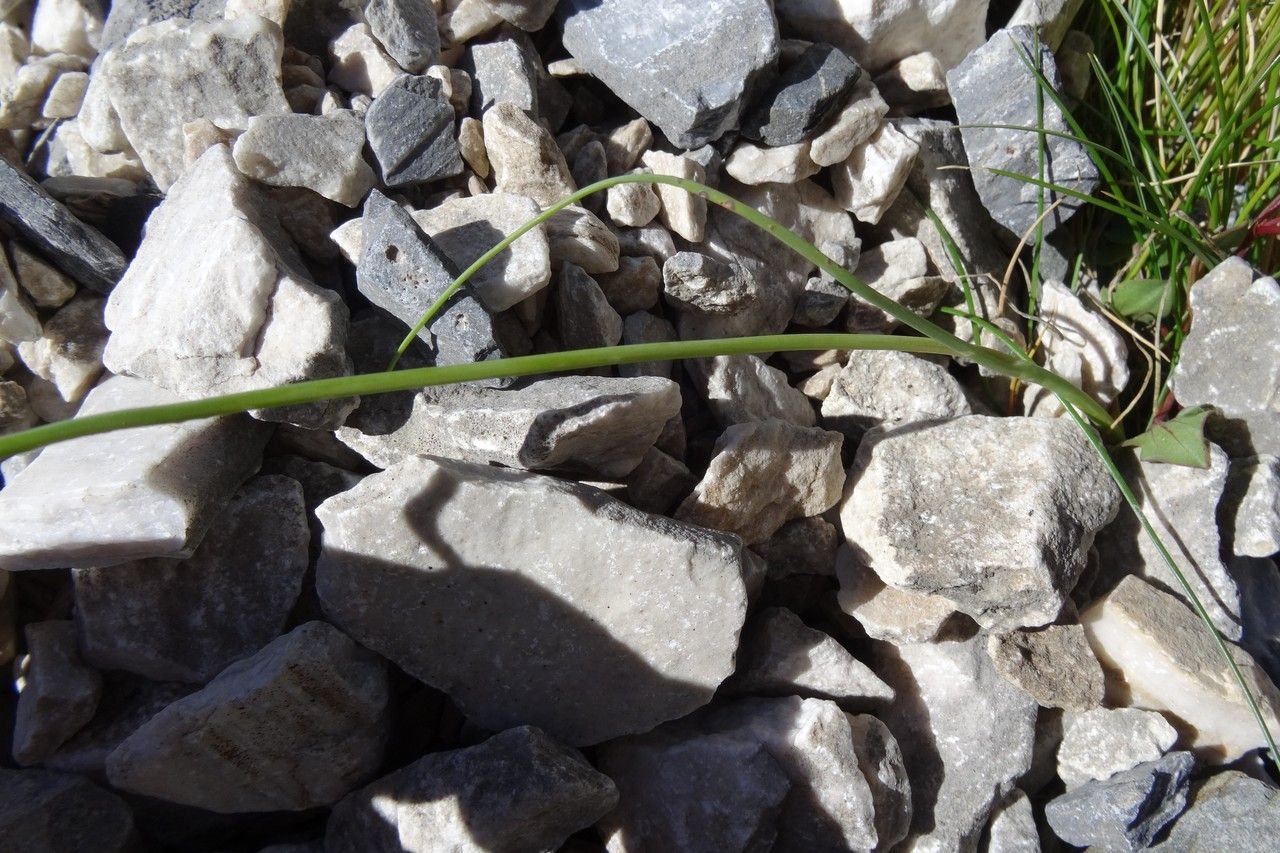
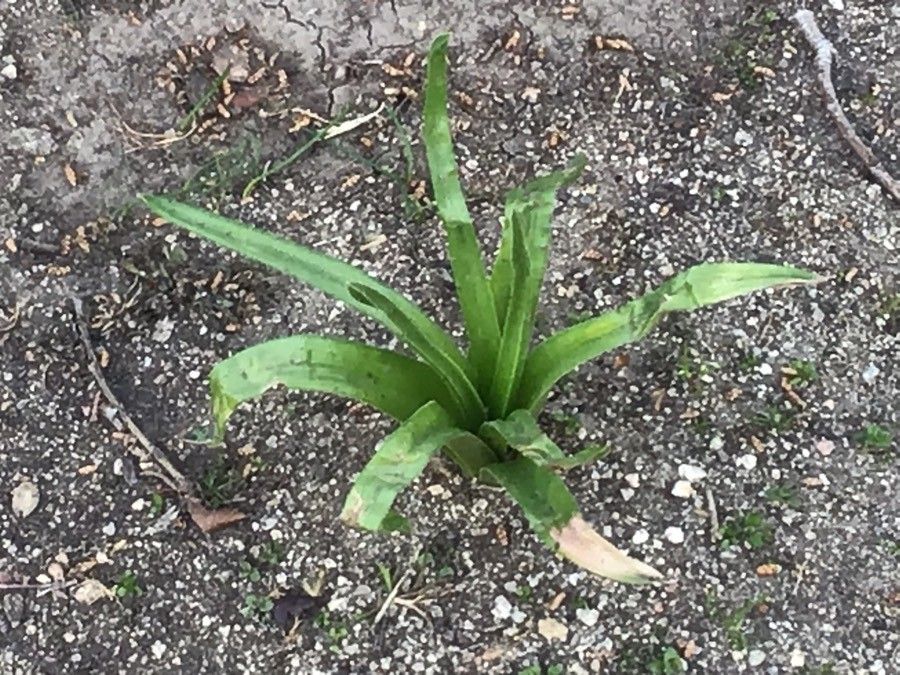
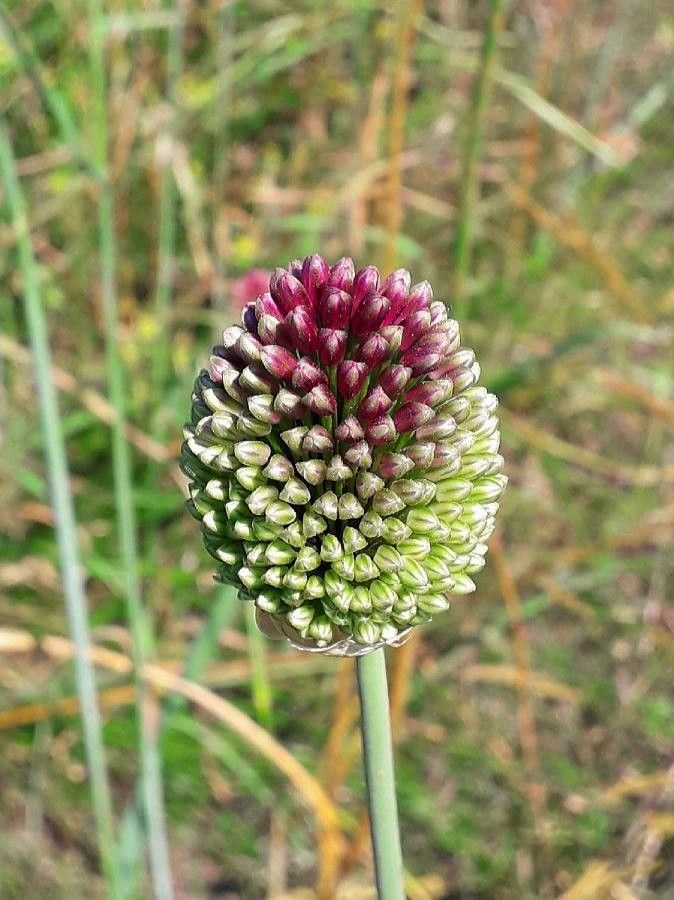
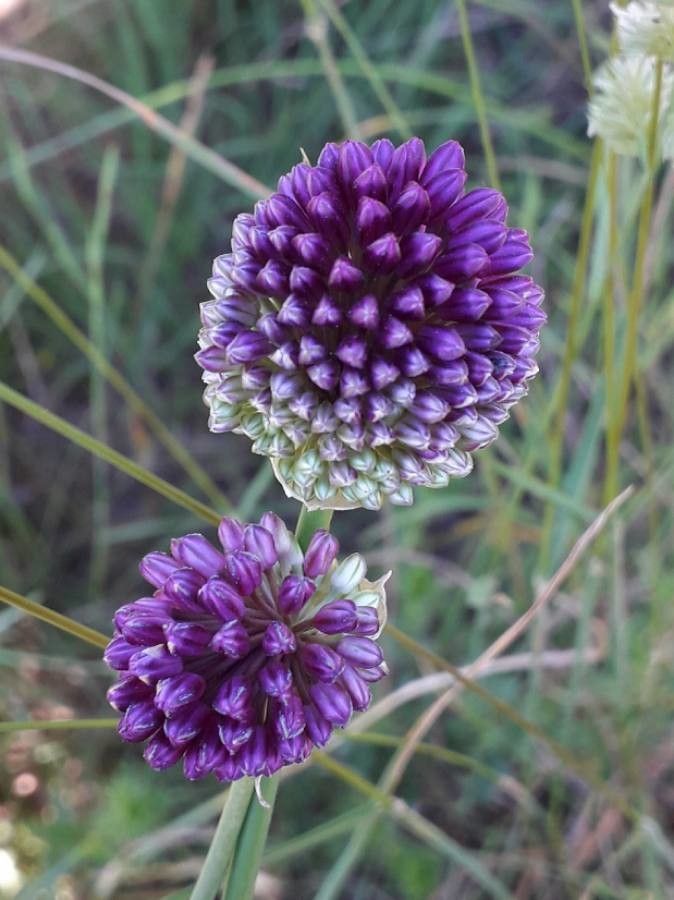
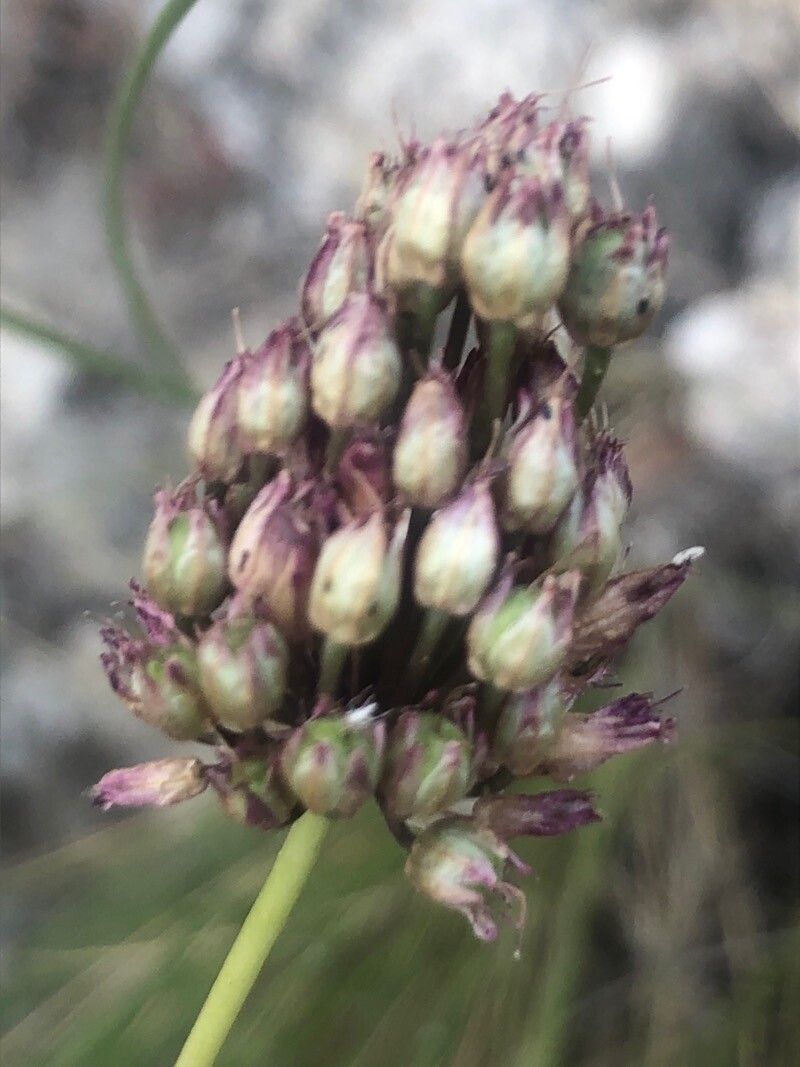
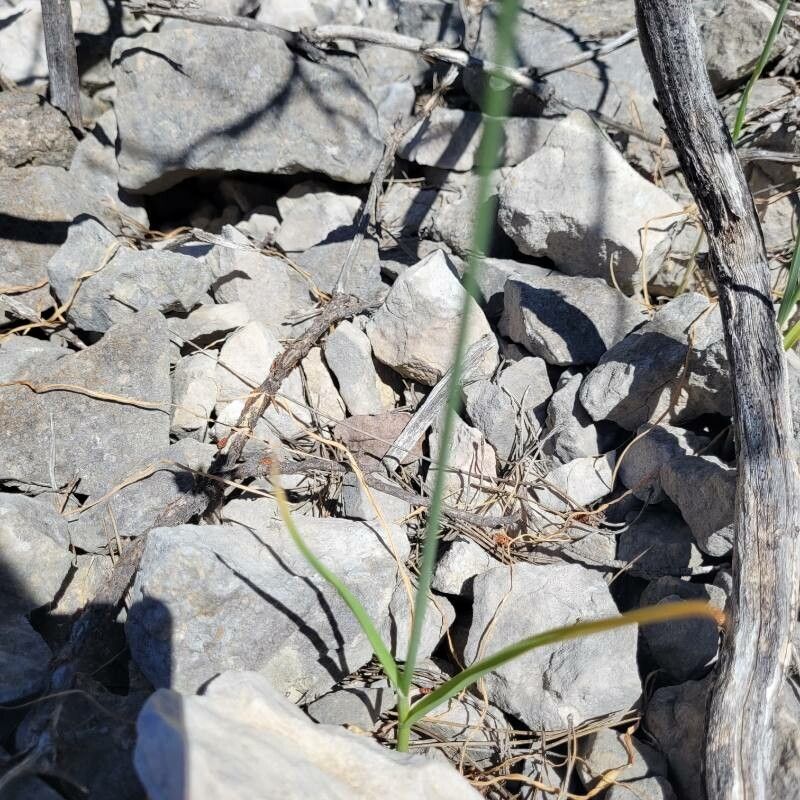
Allium sphaerocephalon is a plant species in the Amaryllis family known as round-headed leek, round-headed garlic, ball-head onion, and other variations on these names. Drumstick allium is another common name applied to this species. Some publications use the alternate spelling Allium sphaerocephalum. It is a bulbous herbaceous perennial plant. Allium sphaerocephalon is found in the wild across all parts of Europe except in the northern and western countries ( Scotland, Ireland, Netherlands, Scandinavia, and the Baltic States). Its native range extends to northern Africa and to western Asia as far east as Iran. It is also reportedly naturalised in New York State, US. In England it grows wild only in the Avon Gorge so is known locally as the Bristol onion.The species is prized by gardeners because of its striking floral display. The spherical "head" (technically an umbel) is borne on a long scape, up to 50 cm in height, usually in July. It can contain hundreds of deep purple flowers.The specific epithet sphaerocephalon derives from ancient Greek, meaning "spherical head". This plant has gained the Royal Horticultural Society’s Award of Garden Merit.
Round-headed leek is fairly resistant to disease and generally not prone to illnesses. However, it can be vulnerable to pests and diseases present in its surroundings. These problems are typically not severe. For care, this plant needs a moderate amount of maintenance. It should be pruned regularly to keep a neat appearance and support healthy growth. Fertilizing can also help encourage flowering. Round-headed leek is well suited for anyone with outdoor space, like a garden or patio, and does not require extensive care experience. It may need extra attention if grown indoors.
How to keep Allium Sphaerocephalon.
Light
Round-headed leek requires full exposure to sunlight for robust growth, as it comes from habitats with abundant sun. Every stage of its development thrives under these conditions. Excessive light typically will not harm it, but inadequate illumination can hinder its growth and development.
Water
The round-headed leek thrives in moist environments and requires regular hydration, ideally with weekly watering. To mimic its natural habitat, maintain high humidity levels indoors. Being a bulbous plant, it needs adequate watering, especially during its growing season, to ensure optimal health and blooming.
Temperature
Round-headed leek is native to regions where temperatures range from 41 to 100 °F (5 to 38 °C). It grows best in these temperate conditions. During different seasons, certain adjustments may be required to maintain optimal growth.
Fertilizer
The primary time to fertilize Round-headed leek is in early spring when the flowers are starting to form. The appropriate fertilizer promotes better blooms and helps Round-headed leek produce attractive flowers. Feeding in early spring ensures excellent flowering during the season and supplies energy for dormant phases of growth.
Pruning
Pruning round-headed leeks in early to late spring promotes new growth and helps maintain their shape. By removing faded flowers, you can enhance the plant's vigor and improve air circulation, which reduces the risk of disease. It's important to avoid heavy pruning to ensure the plants can continue to flower. With regular maintenance, you can enjoy a vibrant garden display that highlights the ornamental appeal of round-headed leeks.
Pot & Repot
To thrive in pots, round-headed leek needs excellent drainage.
Botanical profile.
- Plant Type
- Herb
- Life Cycle
- Perennial
- Genus
- Allium
- Family
- Amaryllidaceae
- Hardiness Zone
- 4-11
- Mature Height
- 49 cm to 61 cm
- Mature Spread
- 10 cm
- Leaf Color
- Green
- Leaf Type
- Deciduous
- Flower Color
- Purple
- Flower Size
- 1.02 cm to 6.35 cm
- Bloom Time
- Early summer, Mid summer
- Planting Time
- Spring, Winter, Summer, Autumn
- Harvest Time
- Mid summer
- Native Area
- Northern Africa and to western Asia as far east as Iran
Other names.
Reader questions.
How should I water my Round-headed leek plant?
To properly water the Round-headed leek, it is best to use filtered water at room temperature. Tap water may be harmful due to potential particles. The plant prefers warm water as it is adapted to warm environments. Avoid watering from above as it can harm the foliage. Instead, water the soil directly until it is thoroughly moistened. This helps the roots spread and acquire necessary nutrients.
Why should I add fertilizer to my Round-headed leek plant?
Fertilization is important for the Round-headed leek because it provides essential nutrients for the plant's growth. While the overall fertilization needs for the Round-headed leek are low, annual fertilization can be beneficial. It helps keep the plant alive and encourages the production of better and longer-lasting flowers. Therefore, maintaining regular fertilization is recommended for those who want their Round-headed leek to look its best.
What kind of sunlight does Round-headed leek need?
The round-headed leek and other perennials require at least six hours of sunlight daily to keep their leaves, roots, and blooms healthy. However, some perennial flowering plants, like the Orange Daylily or Giant Coreopsis, can survive with only three hours of direct sunlight each day. It's important to note that while these plants can live with less sun, they won't grow as well as they would in brighter conditions.
What is the native temperature range for Round-headed leek?
Round-headed leek is native to environments that have a temperature range between 41 to 100 °F (5 to 38 °C). It thrives best under these temperate conditions, adapting well to the changing temperatures of different seasons. Due to its strong cold resistance, Round-headed leek generally does not require special frost protection measures during winter. However, in circumstances where winter temperatures are predicted to plummet below -30°C, it's crucial to safeguard the plant by covering it with soil or straw. To further aid the plant's resilience during colder months, it is advisable to water it abundantly before the first freeze of autumn, ensuring the soil remains moist and enters a frozen state. This preemptive action helps prevent drought and water scarcity during the winter and early spring.
What should I do if I give my Round-headed leek too much water or too little water?
Overwatering is a common issue that can harm your Round-headed leek. It can cause wilting and yellowing of the stems and leaves. Prolonged overwatering can also lead to diseases like root rot, mold, and mildew, which can kill your plant. Underwatering is less common but still possible. In this case, the leaves may become brittle and brown. It's important to notice the signs of overwatering early on. Diseases like root rot may not be fixable if left too long. If you see signs of overwatering, reduce your watering schedule and check the soil's drainage. Replace soil that drains poorly with a loose, well-draining potting mix. If you see signs of underwatering, simply water more regularly until the signs subside.
When should I fertilize my Round-headed leek plant?
The best time to fertilize a Round-headed leek is in late winter to early spring when the plant is coming out of dormancy and starting to grow. Fertilizing during this time helps promote healthy growth and sets the plant up for a successful season. While early spring is the most ideal, it is also acceptable to fertilize in the fall. However, it is not recommended to feed the plant during summer or winter.
Can sunlight harm Round-headed leek? How can I keep Round-headed leek safe from the sun and heat?
In warm climates, some Perennial Flowering Plants may struggle with excessive heat and suffer from sun damage. They can wilt, dry out, or even experience growth problems if they are consistently exposed to the intense afternoon sun. However, not all plants require protection from the light afternoon sun. For those that are harmed by intense afternoon exposure, it is recommended to provide them with some shade in warmer climates. Gardeners can achieve this by planting these plants in areas that do not receive direct heat during the afternoon, such as under trees or behind bushes.
How does Round-headed leek react to low temperatures?
Round-headed leek displays a high level of cold tolerance, thriving best at temperatures above 5°C. During the winter months, it is essential to ensure the temperature remains above -25°C. If temperatures fall below -30°C, the leek may not exhibit noticeable changes immediately during winter; however, a significant decrease in sprouting or the absence of sprouting may become apparent during spring. To address this issue, any parts of the leek that have failed to sprout by spring should be removed to promote healthier growth of the remaining plant.
How much water should I give my Round-headed leek?
If your Round-headed leek is in a pot, the most precise way to determine if it needs water is by checking the soil. Plunge your finger into the soil and if the first two to three inches are dry, it's time to water it. If you're growing the leek outdoors, the same method applies. When the top few inches of soil are dry, it's time to add water. Typically, during spring and early fall, watering once a week will suffice. However, in extremely hot weather, you may need to water twice a week or more. Nonetheless, mature and well-established Round-headed leeks have impressive drought resistance abilities.
When should I not put fertilizer on my Round-headed leek?
To ensure proper fertilization of your Round-headed leek, it is best to only fertilize during late winter and early spring. This plant has low fertilization needs, so a single annual feeding is sufficient. Avoid fertilizing during spring, summer, and fall, as this can lead to overfertilization and complications. The only exception is if you missed fertilizing in spring, then it is acceptable to feed the plant in fall. Additionally, fertilizing during winter is not necessary since the Round-headed leek is in a dormant growth phase and does not produce new growth.
Should I keep the Round-headed leek away from direct sunlight?
Certain perennial plants require ample sunlight to reach their maximum bloom. However, in warmer climates, some of these plants actually benefit from less sun. For instance, individuals residing in hotter regions might find it beneficial to shade their flowering perennials during the intense afternoon sun, especially during summer months. Although many perennial flowering plants prefer partial shade in the hottest climates, there are exceptions. Take the Giant Coreopsis, for example, as it is not bothered by excessive sun exposure. These plants can flourish even when placed in the full sun during scorching weather.
What are the symptoms and solutions for Round-headed leek exposed to high temperatures?
When exposed to high temperatures, specifically during summer when temperatures should ideally remain below 38°C, Round-headed leek may exhibit signs such as lighter colored leaves, a tendency for the leaves to curl, susceptibility to sunburn, and, in severe cases, wilting and drying of the entire plant. Should the temperature exceed 43°C, it is advisable to trim away sunburned and dried-up parts of the plant. Relocating the plant to a shadier location or utilizing a shade cloth to shield it from the midday and afternoon sun can protect it from further damage. Additionally, watering the plant in the morning and evening helps keep the soil moist and conducive for its survival under hot conditions.