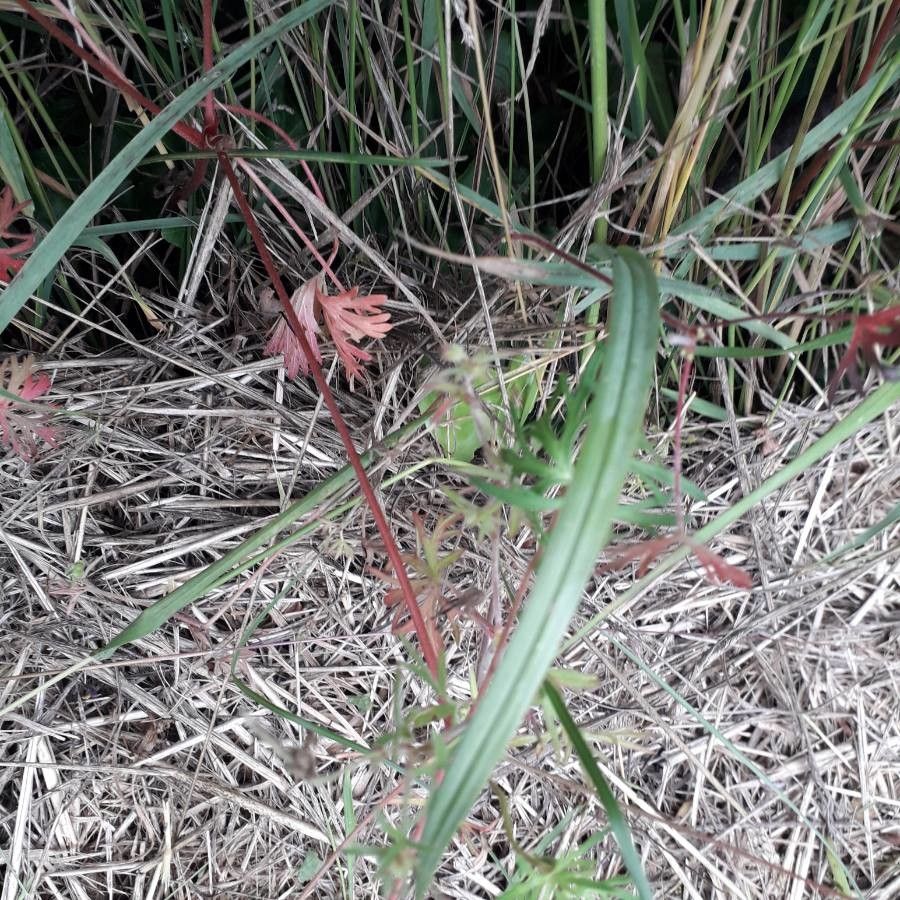
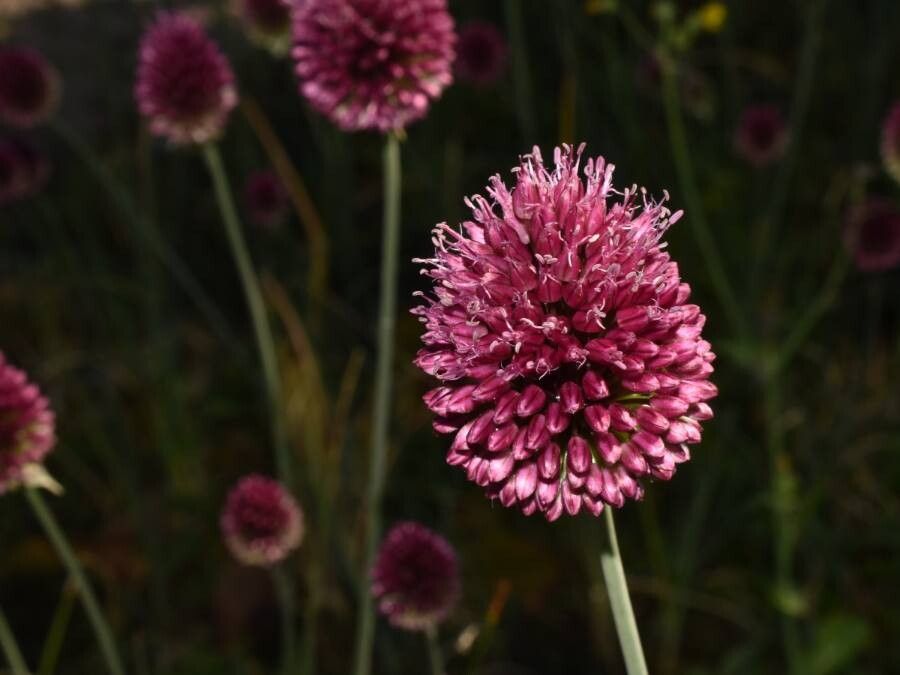
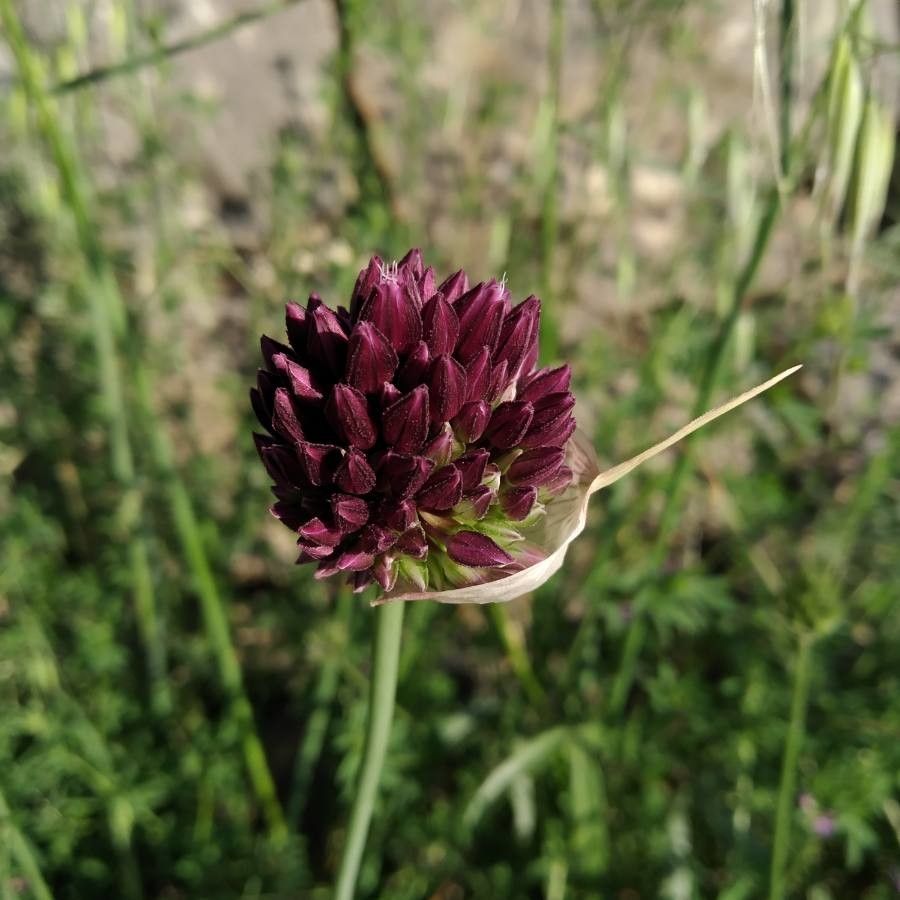
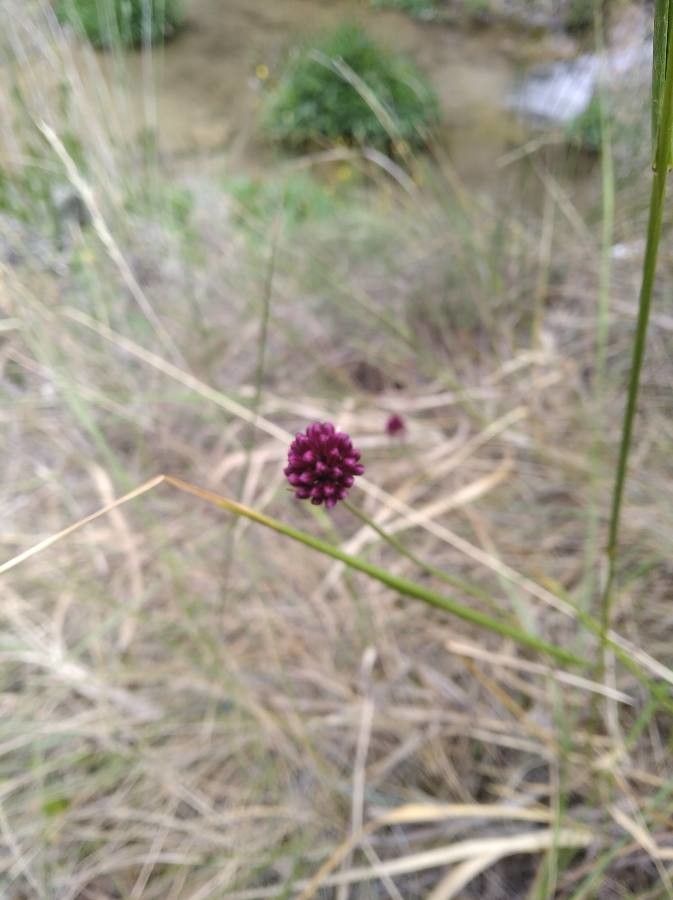
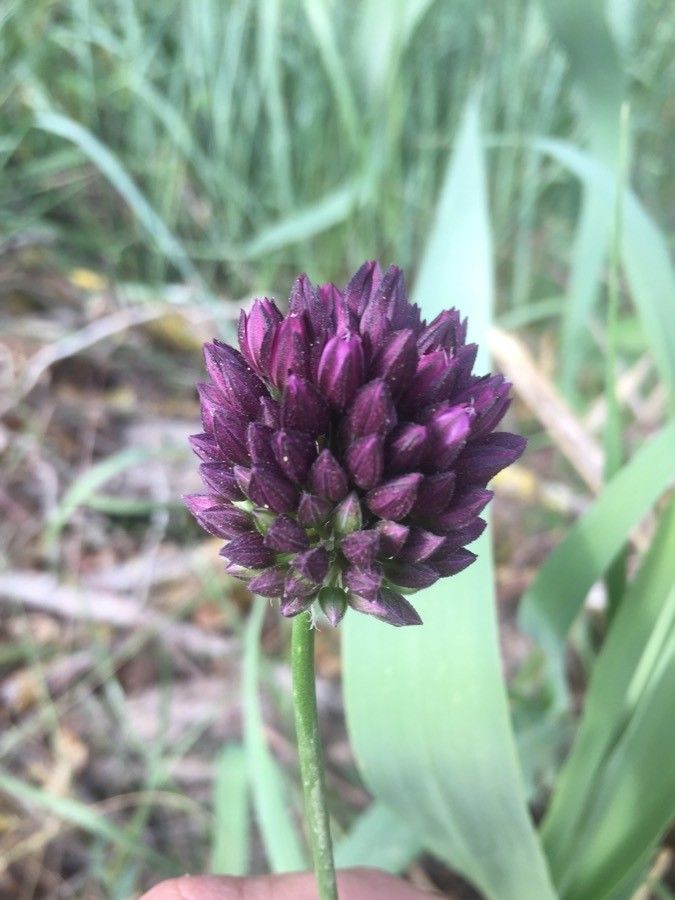
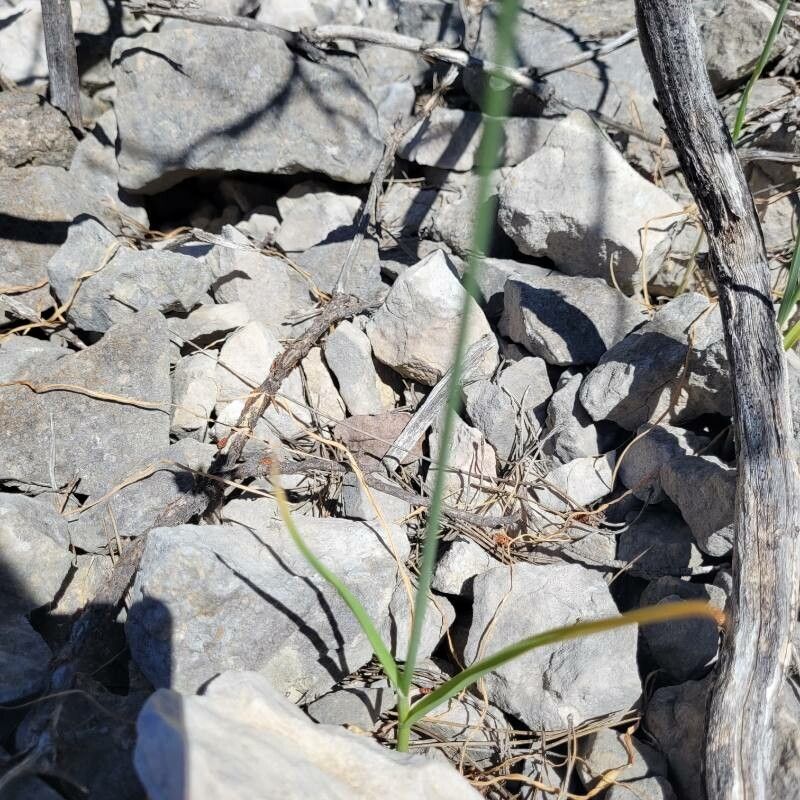
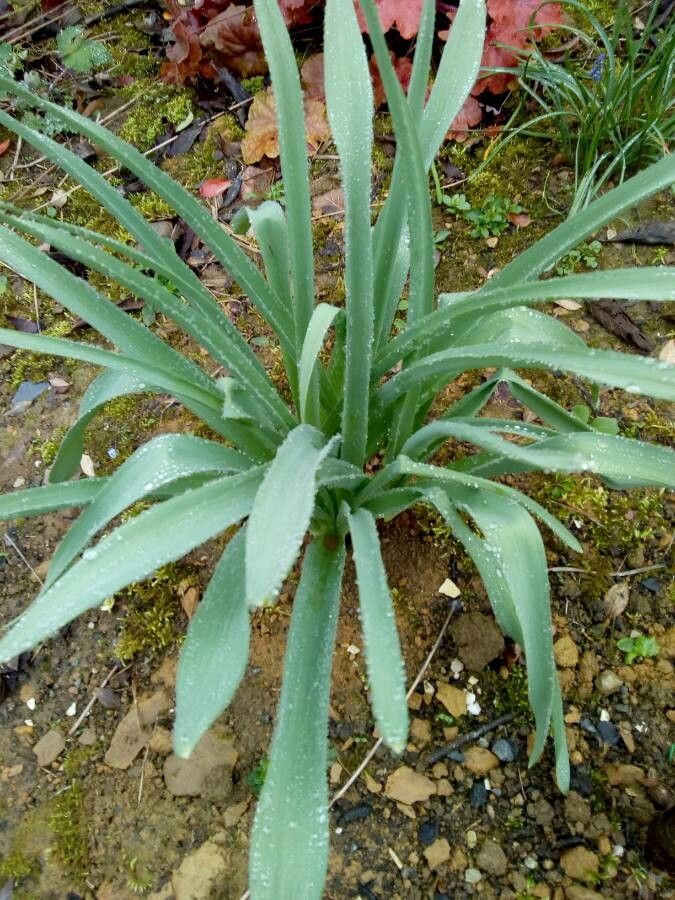
Allium rotundum, common name round-headed leek or purple-flowered garlic, is a Eurasian and North African species of wild onion. Its native range extends from Spain and Morocco to Iran and European Russia. It is sparingly naturalized in parts of the United States (Michigan and Iowa). The species grows in disturbed habitats such as roadsides, cultivated fields, etc.Allium rotundum produces large clumps of as many as 50 egg-shaped bulbs, each up to 1.5 cm long. Leaves are up to 40 cm long. Scapes are up to 90 cm tall. Umbels look round from a distance, and can contain as many as 200 flowers. Flowers are bell-shaped, up to 7 mm across; tepals purple, sometimes with white margins; anthers yellow or purple; pollen yellow or white.
Wild garlic is fairly disease-resistant and typically not vulnerable to illnesses. Still, it can be affected by pests and diseases present in its environment. Such infections are generally mild. Regarding maintenance, the plant needs a moderate level of care. It should be pruned regularly to preserve a neat appearance and encourage healthy growth. Applying fertilizer can also aid in boosting flowering. Wild garlic is appropriate for anyone with outdoor space, like a garden or patio, and doesn't demand extensive gardening experience. It may need more attention if cultivated indoors.
How to keep Allium Rotundum.
Light
Wild garlic grows best when it gets plenty of daylight each day, though it can tolerate spots where sunlight is partly filtered. However, too much shade can impede its healthy development. Since it originates from brightly lit habitats, heavy shading or prolonged overcast conditions can cause stunted growth.
Water
The round-headed leek is a drought-tolerant plant native to dry steppes, where it thrives with minimal moisture. While it needs weekly watering, it's important to ensure the soil is well-draining. Overwatering can be detrimental to its health, so it is best suited for outdoor cultivation in environments that resemble its natural, arid habitat.
Temperature
Wild garlic prefers temperatures between 41 and 90 °F (5 and 32 °C). It comes from regions with moderate climates and needs a mild environment to thrive. In the warmer summer months it may require occasional watering to cope with higher temperatures.
Fertilizer
One fertilizer application in spring is generally enough for Wild garlic, though repeated feedings can increase growth. Feed every one to one and a half months. Fertilizing improves the leaves' appearance and function, encouraging even color and a healthy texture. It also promotes root development and nutrient uptake, supporting the plant's long-term health.
Pruning
To improve the health and appearance of round-headed leeks, prune them in early to late spring. Start by deadheading the blooms to encourage new growth and prevent self-seeding. Additionally, remove any yellowing or damaged leaves to maintain their health and aesthetics. Be sure to use clean, sharp tools to enhance their appearance and promote the development of robust bulbs for the next season.
Pot & Repot
To thrive, round-headed leeks need pots with excellent drainage. This ensures proper airflow to the roots and prevents waterlogging, which can lead to root rot.
Botanical profile.
- Plant Type
- Herb
- Life Cycle
- Perennial
- Genus
- Allium
- Family
- Amaryllidaceae
- Hardiness Zone
- 4-8
- Mature Height
- 30 cm to 61 cm
- Mature Spread
- 10 cm
- Leaf Color
- Green, Gray, Silver
- Leaf Type
- Deciduous
- Flower Color
- Pink, Lavender
- Flower Size
- 2.03 cm to 5.08 cm
- Bloom Time
- Late spring, Early summer
- Planting Time
- Autumn
- Harvest Time
- Mid summer
- Native Area
- Turkey, Austria, Sweden, Slovakia, Montenegro, Croatia, Slovenia, Morocco, Belarus, Russia, Germany, Estonia, Romania, Latvia, Belgium, Netherlands, France, Portugal, Czech Republic, Bulgaria, Armenia, Poland, Greece, Ukraine, Lebanon, Serbia, Lithuania, Norway, Italy, Spain, Switzerland, Denmark, Finland, Iran, Albania, Ireland, United Kingdom, Hungary, Algeria, Azerbaijan
Other names.
Reader questions.
What are the sunlight requirements for Round-headed leek?
The Round-headed leek needs full sun, which means it requires more than 6 hours of sunlight daily to thrive, but it can also manage with partial sun, about 3-6 hours of sunlight. It's crucial to watch how sunlight moves through your garden to pick spots that provide an ideal balance of light and shade, ensuring the plants' health and happiness. This sun-loving plant flourishes best when given plenty of light, although it has the resilience to handle limited sun exposure. Its native habitats are typically in areas with clear skies.
What is the ideal temperature range for Round-headed leek?
The ideal temperature range for Round-headed leek, or Allium rotundum, is between 50 to 95 °F (10 to 35 °C). It is native to environments with moderate temperatures, and seasonal adjustments may be needed to maintain this range, especially during winter. Although the plant has strong cold resistance and usually doesn't require special frost protection, extra care is advised to ensure it thrives.
How can artificial lighting help Round-headed leeks in less sunny spaces?
Artificial lighting can be an excellent solution for Round-headed leeks when natural sunlight is insufficient, especially in winter or less sunny spaces, promoting faster, healthier growth. LED lights are favorites due to their ability to provide specific wavelengths needed by plants. Full sun plants require 30-50W per square foot, partial sun plants need 20-30W per square foot, and full shade plants need 10-20W per square foot of artificial light. The light source should be placed 12-36 inches above the plant, mimicking natural sunlight, and for most plant species, 8-12 hours of light per day is beneficial.
How should I protect Round-headed leek during very cold winters?
During winters, if temperatures are expected to drop below -25°C, it's essential to provide cold protection for Round-headed leek. This can be done by covering the plant with soil or straw. Additionally, before the first freeze in autumn, it's recommended to water the plant abundantly. Keeping the soil moist allows it to enter a frozen state, helping to prevent drought and water scarcity for the plant during the colder months.
What are the symptoms of light deficiency in Round-headed leek?
Symptoms of light deficiency in Round-headed leeks can include smaller new leaves, leggy or sparse growth, faster leaf drop, slower or no new growth, and lighter-colored new leaves. These signs indicate that the plant is not receiving enough sunlight, leading to a reduction in chlorophyll and essential nutrients. Additionally, too much sun can cause chlorosis, sunscald, leaf curling, wilting, and leaf scorching, highlighting the importance of finding the right balance of sunlight.
What should I do if the Round-headed leek is exposed to temperatures below -15°C?
Round-headed leek is cold-tolerant and typically does well above 10°C. However, during winter, it's important to ensure the temperature stays above -15°C. If temperatures fall below -25°C, there might not be noticeable changes immediately, but you may observe a decrease in sprouting or no sprouting at all come spring. In such cases, it is advisable to remove any parts of the plant that have failed to sprout once the warmer weather returns.
What are the solutions for Round-headed leeks not getting enough sunlight?
To address insufficient sunlight for indoor Round-headed leeks, gradually move them to sunnier locations until they receive at least 6 hours of sunlight daily, use a south-facing window, and consider artificial lighting for extra support. For outdoor plants, move them gradually to avoid sunburn. If obstructions like trees block the sun, prune branches to improve sunlight exposure. For smaller plants, consider transplanting during the dormant period to a location with ample sunlight and good drainage. It's essential to note that parts of the plant affected by insufficient sunlight may not recover, but new growth should be healthy after improving light exposure.
What are the signs of Round-headed leek being affected by high temperatures?
In the summer, keeping Round-headed leek below 35°C is crucial. Temperatures exceeding 38°C can cause the leaves to lighten in color, curl, become prone to sunburn, and in severe cases, the entire plant may wilt and dry out. To mitigate high temperature stress, trim away the sunburned and dried parts of the plant. Relocating the plant to provide shade during the midday and afternoon sun, or using a shade cloth, can be beneficial. Furthermore, watering the plant in the morning and evening to maintain soil moisture is recommended.