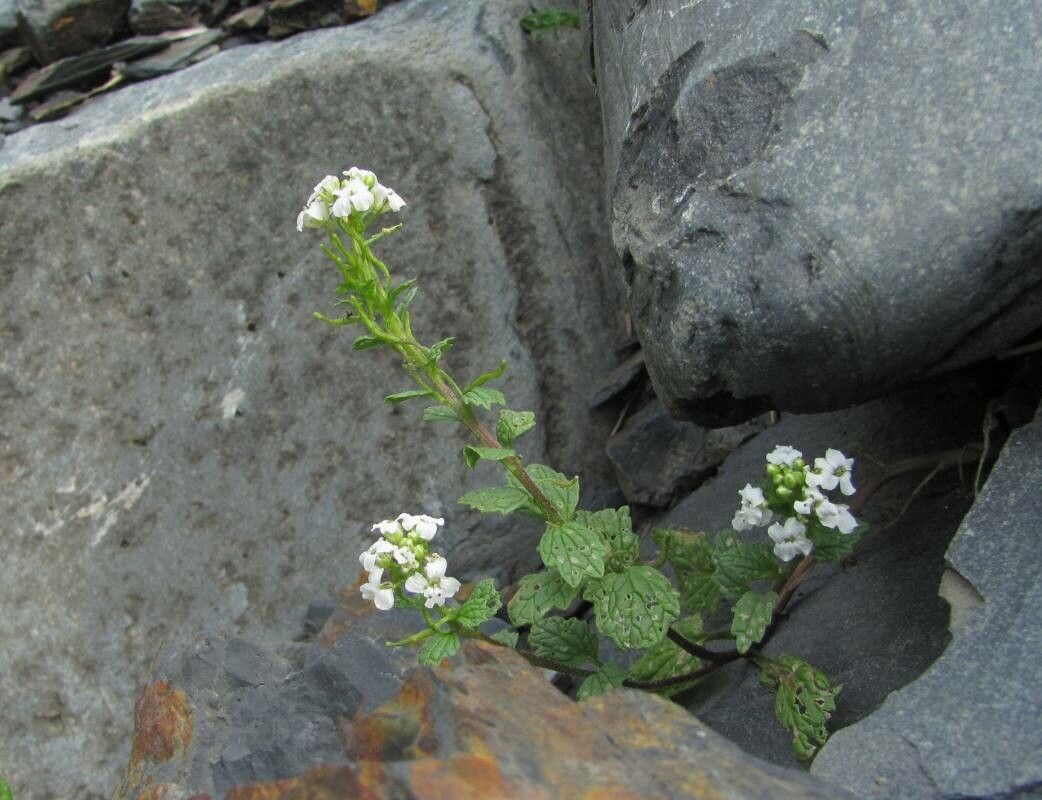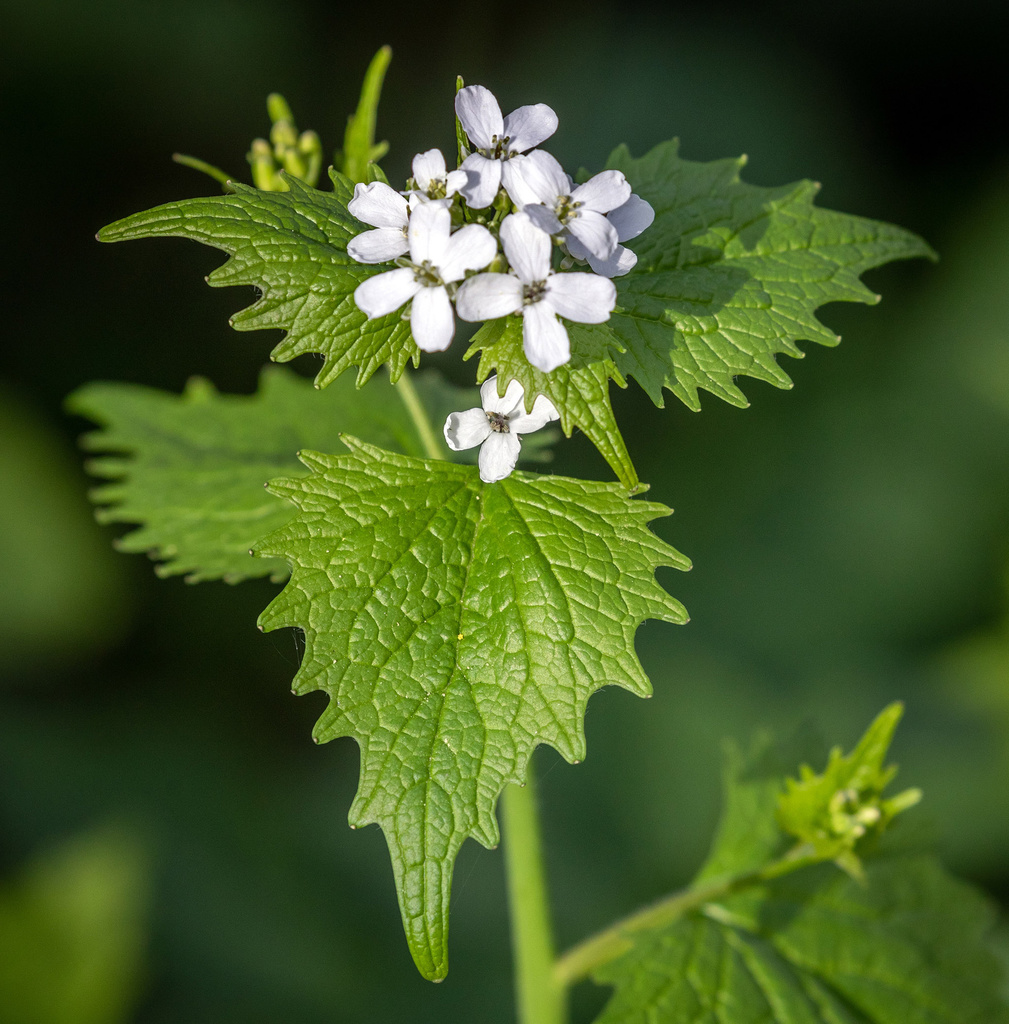
Alliaria petiolata, commonly known as garlic mustard, is a biennial herbaceous plant in the mustard family. Native to Europe and Asia, it has spread to North America and other regions worldwide. The plant can reach up to 1 meter in height, featuring triangular or heart-shaped leaves with toothed edges that emit a strong garlic-like odor when crushed.
In the spring, garlic mustard produces small white flowers arranged in clusters at the top of its stem, followed by long seed pods containing numerous small seeds.
In many parts of North America, garlic mustard is considered an invasive species because it can outcompete native plants for resources such as light, water, and nutrients. Additionally, it releases chemicals into the soil that inhibit the growth of other plants.
In its native habitats across Europe, Asia, and Northern Africa, many herbivores and insects consume Alliaria petiolata due to its appealing flavor. However, in North America, where the plant was introduced and quickly became classified as an invasive species, garlic mustard is toxic or unpleasant to many native herbivores, including butterflies in the Lepidoptera genus. Without natural predators in North America, garlic mustard causes significant harm to the environment. FUN FACT · FROM THE LIBRARY
Despite its invasive nature, garlic mustard has been used for culinary purposes for centuries due to its strong flavor, which is reminiscent of both garlic and horseradish. It can be used fresh or cooked in various dishes, including salads, soups, sauces, and pesto.
Conservationists have made efforts to control garlic mustard populations through manual removal or herbicide application. However, it remains a persistent challenge due to its ability to self-seed rapidly, even after removal attempts.
Garlic mustard is a plant known for its dense clusters of small, cross-shaped white flowers and wrinkled leaves. The genus name, Allaria, is derived from "allium," which refers to garlic, as the crushed leaves of the plant emit a strong garlic-like odor. In fact, all parts of the plant release this garlic aroma. When used as a spice, garlic mustard imparts a flavor that is a blend of garlic and mustard, which is how it got its name.
Garlic mustard has strong resistance to disease and is generally not prone to illnesses. However, it can be vulnerable to pests and diseases that exist nearby. These outbreaks are usually mild. In terms of care, this plant requires moderate maintenance. It should be pruned regularly to keep a neat appearance and promote healthy growth. Fertilizing can also encourage flowering. Garlic mustard is suitable for anyone with outdoor space, such as a garden or patio, and does not need extensive care experience. It may demand more attention when grown indoors.
How to keep Alliaria Petiolata.
Light
Garlic mustard flourishes in regions with moderate sunlight exposure, but it's also adaptable to environments with copious or minimal sunlight. In the place it naturally occurs, it commonly proliferates in areas with varying levels of light. Nonetheless, excessive or insufficient sunlight could potentially affect its vitality.
Water
Garlic mustard originates from woodlands and thrives in moist, well-drained soils. It requires consistent moisture without being waterlogged, making weekly watering essential for optimal growth. This herbaceous biennial's growth cycle is closely tied to water availability, flourishing during periods of abundant rainfall.
Temperature
Garlic mustard is a vegetation indigenous to temperate zones, thriving best when temperatures are maintained between 68 and 95°F (20 to 35℃). To guarantee its wellbeing and vigor, modify the surroundings to sustain this temperature spectrum during colder periods.
Fertilizer
Garlic mustard plants are known for their high nutrient consumption. Regular, small amounts of nitrogen and potassium fertilizers are required along with intermittent applications of phosphorus, micronutrients, sulfur, and magnesium to sustain robust growth and vibrant color. Consistent fertilization is necessary all through the growing period to avoid signs of nutrient shortage and to maintain ideal growth.
Pruning
Garlic mustard is not affected by serious pest or disease issues.
Botanical profile.
- Plant Type
- Herb
- Life Cycle
- Biennial, Annual, Perennial
- Genus
- Alliaria
- Family
- Brassicaceae
- Hardiness Zone
- 4-8
- Mature Height
- 0.1 m to 1.22 m
- Mature Spread
- 40 cm
- Leaf Color
- Green
- Leaf Type
- Deciduous
- Flower Color
- White
- Flower Size
- 0.15 cm to 0.25 cm
- Bloom Time
- Mid spring, Late spring
- Planting Time
- Autumn
- Harvest Time
- Late spring, Early summer, Mid summer
- Native Area
- Turkey, Sweden, India, Austria, Slovakia, Montenegro, Pakistan, Slovenia, Morocco, Croatia, Belarus, Uzbekistan, Russia, Iraq, Germany, Estonia, Romania, Latvia, Belgium, Moldova, Portugal, Nepal, Netherlands, France, Tajikistan, Tunisia, Czech Republic, Cyprus, Bulgaria, Poland, Armenia, Greece, North Macedonia, Ukraine, Serbia, Lebanon, Lithuania, Norway, China, Afghanistan, Syria, Kyrgyzstan, Kazakhstan, Italy, Spain, Switzerland, Denmark, Myanmar, Finland, Bosnia and Herzegovina, Iran, Albania, Ireland, United Kingdom, Hungary, Algeria, Azerbaijan, Turkmenistan
Other names.
Reader questions.
When Should I Water My Garlic Mustard?
The key to watering garlic mustard effectively lies in observing several indicators. Firstly, if the leaves begin to yellow, it indicates water stress, pointing towards either under- or over-watering. To determine the right time for watering, check the soil's dryness approximately 1-2 inches deep; if it feels dry, it's time to water. Droopy leaves can suggest both under- and over-watering, depending on whether the soil is dry or damp. Additionally, a slow growth rate despite adequate light and nutrients could indicate insufficient watering. Over- or under-watering can lead to severe issues like fungal infections, root rot, or even death, emphasizing the need for balanced watering practices.
What are the sunlight requirements for garlic mustard?
Garlic mustard thrives in various sunlight conditions, from moderate sun exposure to full sunlight, and can also adapt to both abundant sunlight and shade. Ideally, it requires between 3-6 hours of sunlight daily for partial sun conditions, and more than 6 hours for full sun or full shade conditions. The adaptability of garlic mustard to different lighting conditions highlights its resilience, although extreme conditions can affect its growth. It's important to monitor the sunlight patterns in your garden to ensure plants receive a balanced light exposure.
What are the essential growing conditions for garlic mustard?
Garlic mustard, known botanically as Alliaria petiolata, thrives in temperate regions with temperatures ranging from 68 to 95°F (20 to 35°C) for optimal growth. It exhibits strong cold resistance, negating the need for special frost protection measures in most cases. However, if winter temperatures are forecasted to plummet below certain limits, protecting the plant with insulation materials such as soil or straw is advisable. To prepare garlic mustard for winter, it's recommended to water it abundantly before the first freeze ensuring the soil remains moist as it freezes. This preparation helps prevent drought and water scarcity during the colder months.
How Should I Water My Garlic Mustard?
Watering garlic mustard correctly involves a few strategic practices. Utilizing a watering can with a diffuser spout allows for even water distribution without disturbing the soil or damaging the roots. Alternatively, bottom-watering is a method especially beneficial in dry conditions or for container plants; it involves allowing the plant to absorb moisture from below. It's crucial to focus watering on the root zone, mimicking natural rainfall and ensuring deep soil penetration without over-saturating. A moisture meter can be helpful in gauging soil moisture levels to prevent over- or under-watering. While watering the foliage is generally discouraged to prevent disease, consistent and focused watering at the roots will support healthy garlic mustard growth.
Why is artificial lighting important for indoor plants, and how can it be optimized?
Artificial lighting plays a crucial role, especially when natural sunlight is insufficient, as in the case of indoor plants during winter or in less sunny spaces. To optimize growth under artificial lighting: 1. Choose LED lights for their capability to produce specific wavelengths needed by plants. Full sun plants require 30-50W/sq ft, partial sun plants need 20-30W/sq ft, and full shade plants need 10-20W/sq ft of artificial light. 2. Position the light source 12-36 inches above the plant to emulate natural sunlight. 3. Mimic natural daylight hours, ensuring plants receive 8-12 hours of light daily. These steps promote healthier, faster plant growth by providing a consistent and appropriate light source.
How does low temperature affect garlic mustard, and what are the solutions?
Garlic mustard is quite cold-tolerant and performs best when temperatures are kept above its minimum growth threshold. Despite its resilience, if temperatures drop below its growth limit during winter, you might not see any immediate damage, but there could be a decreased sprouting activity or no sprouting at all come spring. The solution for such an issue is to wait until spring and then remove any parts of the plant that have failed to sprout, fostering new growth and vitality.
How Much Water Does Garlic Mustard Really Need?
Garlic mustard requires a moderate amount of water to maintain consistently moist soil. The specific volume of water depends on factors like pot size, root depth, and plant size, varying from 0.5-1 liter for smaller pots to 1-2 liters for larger containers. Proper watering ensures that leaves remain vibrant and the plant continues healthy growth, avoiding issues associated with both over- and under-watering such as yellowing leaves, wilting, or root rot. Striking a balance in watering, using well-draining soil and pots, and adjusting to seasonal needs are all part of ensuring garlic mustard stays hydrated without becoming waterlogged.
What are the common symptoms of inappropriate light conditions in garlic mustard plants?
Garlic mustard plants display several symptoms when exposed to inadequate light conditions, including: smaller new leaves, leggy or sparse growth, early leaf drop, slowed or ceased growth, lighter-colored new leaves, symptoms of chlorosis, sunscald, leaf curling, wilting, and leaf scorching. These symptoms indicate either too much or too little light, each affecting the plant's growth, color, and overall health. Observing these symptoms early can help in adjusting the plant's exposure to light to mitigate adverse effects.
What should be done if garlic mustard experiences high temperatures?
During the summer, it's crucial to ensure that garlic mustard's temperature doesn't exceed its maximum tolerable limit. Exposing the plant to temperatures above this limit can lead to symptoms such as lighter leaf color, curling leaves, susceptibility to sunburn, and in extreme cases, wilting and dryness of the entire plant. To mitigate these effects, affected parts should be trimmed away. To protect the plant, it can be moved to a shaded location or covered with a shade cloth, especially during the midday and afternoon when the sun is most intense. Watering the plant in the morning and evening will also help keep the soil adequately moist.
What Kind of Water is Best for Garlic Mustard?
Garlic mustard thrives on a variety of water types, including rainwater, tap water, and filtered water, thanks to its hardy nature. The ideal water pH is slightly acidic to neutral. Although garlic mustard can tolerate the chlorine and fluoride commonly found in tap water, letting water sit for a few hours before use allows these chemicals to evaporate, promoting better health. Using tepid water is preferable as extreme temperature water can shock the plant. For areas with hard water, regular soil flushing can prevent mineral buildup adversely affecting soil permeability. Consistent watering, especially during dry periods, and ensuring good drainage, helps in maintaining optimal plant health.
How can you provide optimal light conditions for garlic mustard plants?
To ensure garlic mustard plants receive optimal light, both indoor and outdoor approaches can be utilized. Indoors, gradually moving plants to sunnier spots or using artificial lighting, like desk or ceiling lamps for at least 8 hours daily, can help. Outdoor plants benefit from a gradual relocation to sunnier spots while avoiding sudden light intensity changes to prevent sunburn. Additionally, for ground plants, reducing obstructions such as pruning trees or transplanting to sunnier locations can significantly improve sunlight exposure. It's crucial to allow plants to adapt gradually for healthy growth.
How Do Garlic Mustard's Watering Needs Change with the Seasons?
The watering needs of garlic mustard vary across seasons, increasing during its rapid growth phase in spring, requiring frequent checks to maintain soil moisture. Summer's heat necessitates additional watering to counter evaporation rates, emphasizing soil moisture without waterlogging. As autumn ushers in cooler temperatures and reduced sunlight, gradually reduce watering in preparation for dormancy. Winter sees garlic mustard in its dormant phase, necessitating minimal watering to prevent drying out without causing waterlogged roots. Seasonal adjustments in watering, aligned with the plant's growth and dormancy phases, ensure its health year-round.