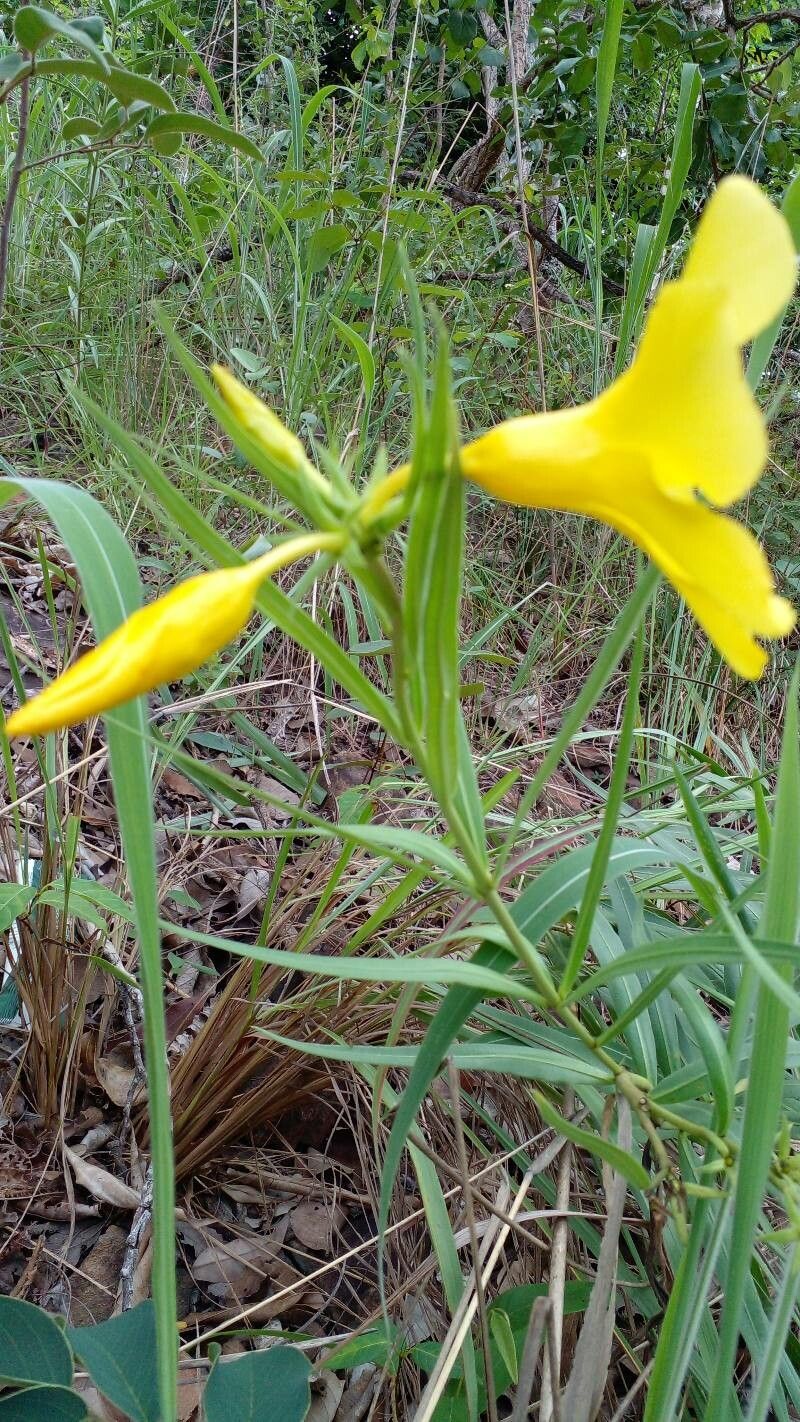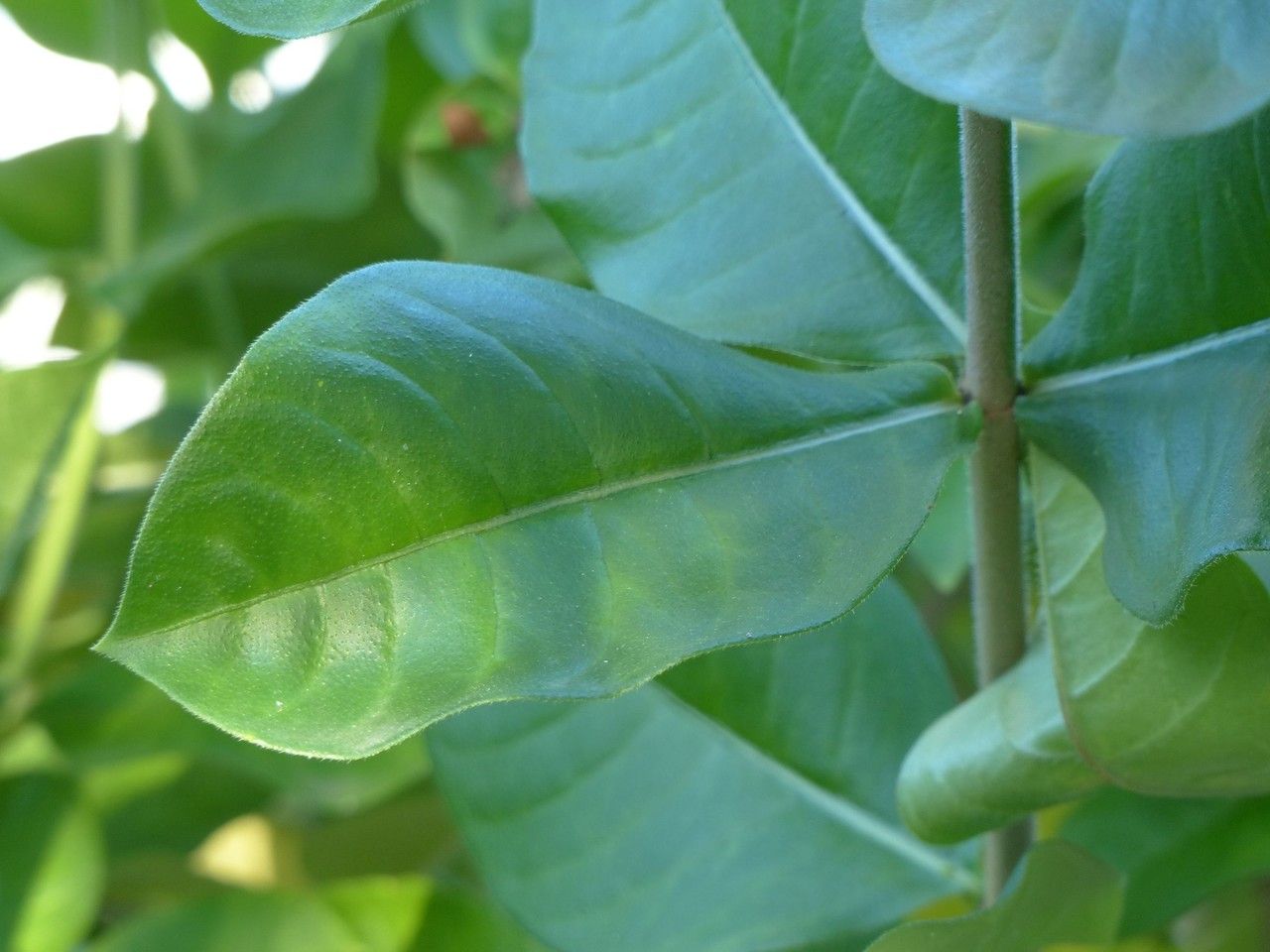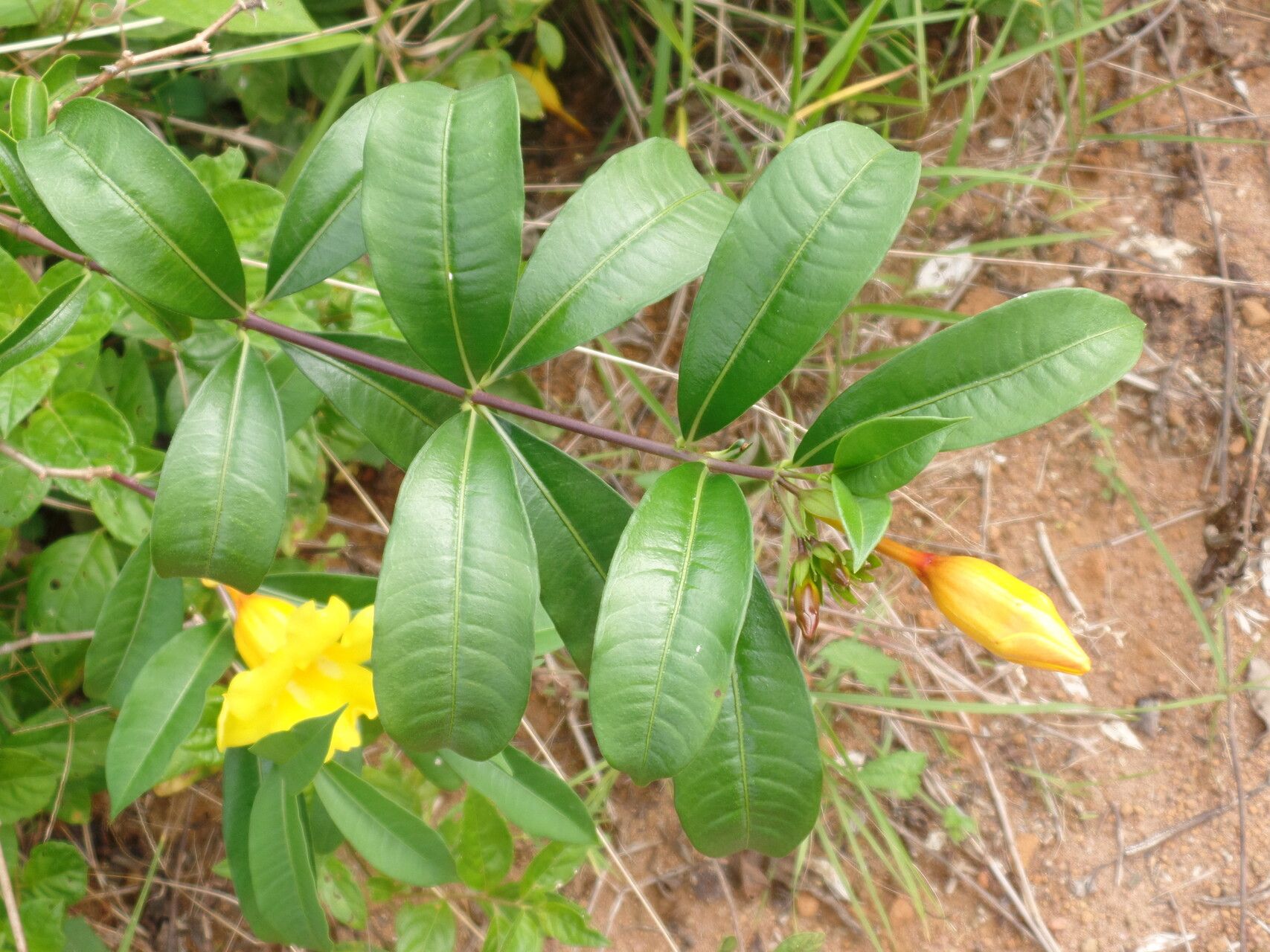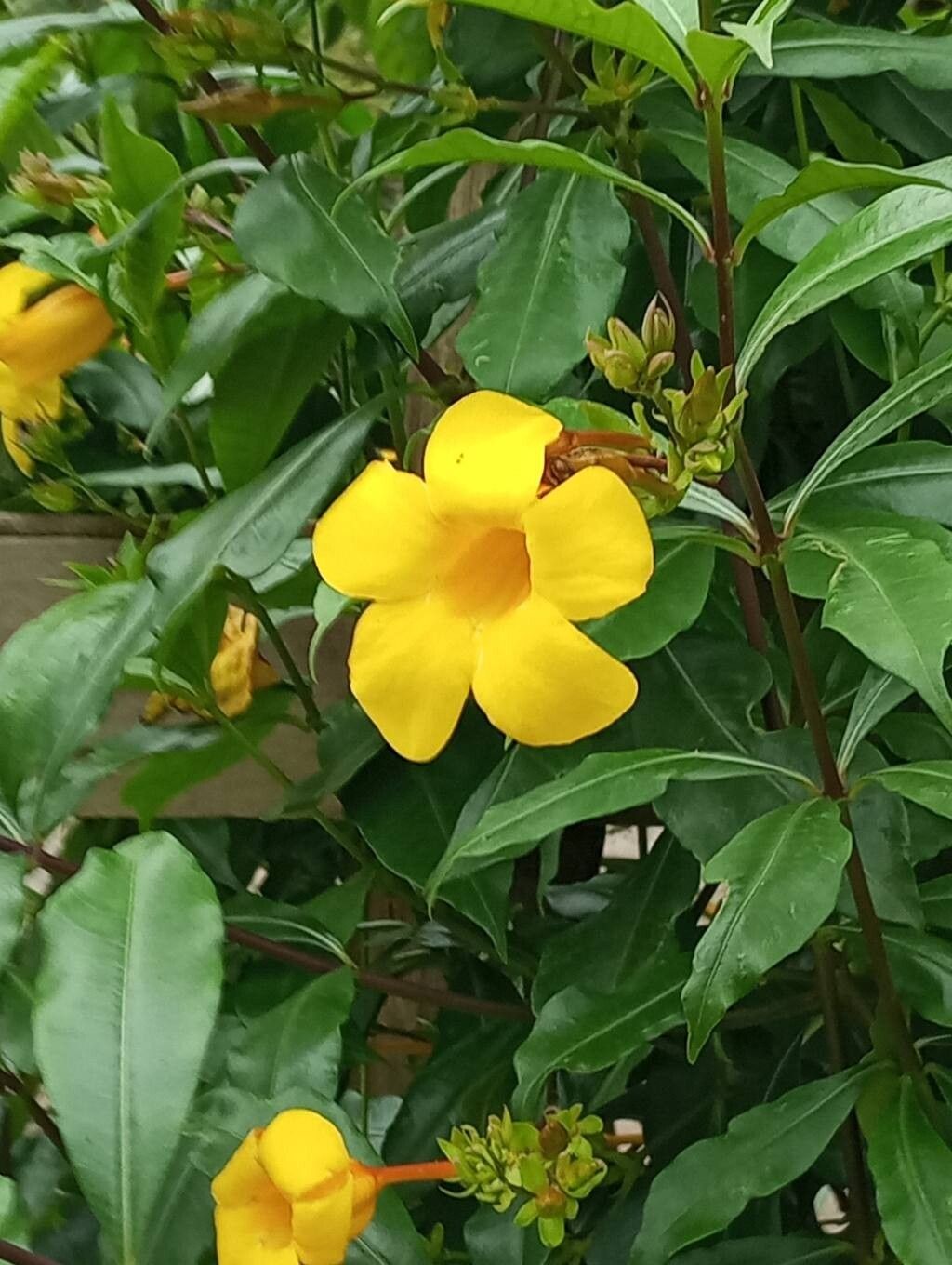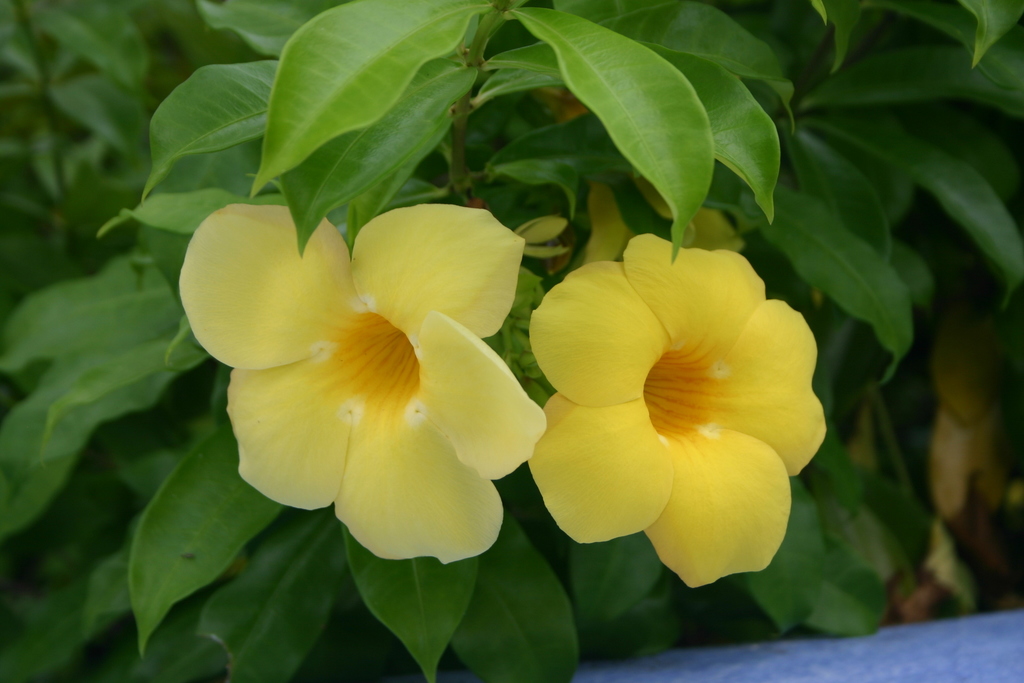
Allamanda cathartica, commonly known as the Golden Trumpet or Yellow Bell, is a tropical plant native to South and Central America. This fast-growing vine can reach up to 20 feet in length and produces large, showy yellow flowers that resemble trumpets. The plant also features glossy green leaves arranged in whorls along the stem.
Allamanda cathartica thrives in full sun or partial shade and prefers well-draining soil. It requires regular watering during the growing season but should be allowed to dry out slightly between waterings. The plant can be propagated through stem cuttings or layering.
Besides its ornamental appeal, Allamanda cathartica has been used in traditional medicine for its laxative properties. However, it is important to note that all parts of the plant are toxic if ingested and should not be consumed by humans or pets.
In Chinese mythology, there's a story about Hou Yi, an archer who shot down nine suns. These fallen suns transformed into flowers and plants upon reaching the ground. The golden trumpet flower is said to be one of these suns. When it blooms, it resembles numerous small suns playing together. FUN FACT · FROM THE LIBRARY
Overall, Allamanda cathartica is a stunning tropical vine with vibrant yellow flowers that can add color and interest to any garden. With proper care and attention to its growth requirements, it can be a beautiful addition to your outdoor space.
The Golden Trumpet is a stunning flowering plant that is highly popular as an ornamental plant in tropical regions. Its flowers resemble small trumpets and have a bright golden color, which beautifully contrasts with the plant's green leaves. This striking appearance is why it is commonly referred to as the Golden Trumpet.
Golden trumpet is resistant to disease and is typically not susceptible to illnesses. Regarding care, this plant is fairly low-maintenance. When grown outdoors it needs little watering, and larger specimens generally do not require pruning. Smaller plants, however, should be trimmed after they have finished blooming. Golden trumpet is suitable for anyone with an outdoor area, such as a garden or deck, and does not demand extensive care experience.
How to keep Allamanda Cathartica.
Light
Golden trumpet prefers spots with plenty of sunlight, though it can tolerate somewhat shadier locations. Native to areas with abundant sun, ample light supports vigorous growth. Still, too much or too little light can harm the plant, causing leaf scorch or stunted growth, respectively.
Water
The golden trumpet plant flourishes in tropical climates and needs consistently moist soil, requiring watering approximately once a week to maintain the ideal level of moisture. As an evergreen, it has constant water needs throughout the year. This plant is usually grown outdoors, where it can benefit from plenty of sunlight and space. To preserve its lush foliage, it is important to avoid letting the soil dry out.
Humidity
This plant needs special care because it loves high humidity levels of 60-80% or more. The best way to achieve this is by placing a humidifier near the plant. Daily misting is also essential! Make sure the room has good ventilation.
Temperature
The golden trumpet naturally grows in warm, humid climates, typically with temperatures between 20 and 38 °C (68 to 100.4 °F). It prefers warmth but can tolerate cooler conditions if given proper care. Seasonal temperature adjustments are not required, provided temperatures do not fall below 15 °C (59 °F), which would stress the plant.
Fertilizer
The best time to fertilize a Golden trumpet is in early spring, as it comes out of dormancy. This supports overall growth and the development of flowers. Fertilizing improves the foliage, stems, and branches, while encouraging large, vibrant, and long-lasting blooms. It also helps move nutrients from the roots to the flowers and enhances the plant's health and resistance to disease.
Pruning
The golden trumpet is a robust flowering vine known for its vibrant yellow, trumpet-shaped flowers. To manage its growth and enhance blooming, it's best to prune the plant in late spring. Effective pruning techniques include trimming overgrown stems and removing any damaged branches. Be sure to use clean tools to prevent the spread of disease. You may also consider using cuttings for propagation.
Pot & Repot
When repotting Golden trumpet, choose a pot 1–2 inches (2.5–5.1 cm) larger with ample drainage. Use a well-draining potting mix. Repot in spring or fall, ensuring the root ball is slightly lower than the rim of the pot. Water thoroughly after repotting and place the plant in a warm spot with indirect sunlight.
Botanical profile.
- Plant Type
- Shrub, Vine
- Life Cycle
- Perennial
- Genus
- Allamanda
- Family
- Apocynaceae
- Hardiness Zone
- 10-12
- Mature Height
- 3.96 m
- Mature Spread
- 0.91 m to 1.83 m
- Leaf Color
- Green
- Leaf Type
- Evergreen
- Flower Color
- Yellow, Gold
- Flower Size
- 10.16 cm
- Bloom Time
- All year round
- Planting Time
- Spring, Autumn
- Harvest Time
- All year round
- Native Area
- Suriname, Venezuela, Guyana, Brazil
Other names.
Reader questions.
How should I water my Golden trumpet plant?
Your Golden trumpet is not overly particular about how you water it. You can use almost any common watering tool to keep the soil moist. Watering cans, hoses, or even cups will all do the job effectively. Regardless of the tool, it's essential to water the soil directly. Make sure to evenly dampen all areas of the soil to provide water to the entire root system. Using filtered water can be helpful since tap water may contain harmful particles for plants. Additionally, using water that is at or slightly above room temperature is beneficial, as extremely cold or hot water can be a bit shocking to the Golden trumpet. However, the Golden trumpet generally responds well to any type of water you give it.
Why should I put fertilizer on my Golden trumpet?
Fertilization plays a crucial role in maintaining the overall health and well-being of a Golden trumpet plant. By providing the necessary energy and nutrients, fertilization supports the growth of healthy foliage, sturdy stems, and branches. However, it is the flowers of the Golden trumpet that are highly valued by gardeners. Thankfully, fertilization also enhances the production of large, vibrant, and long-lasting flowers. This happens because the right fertilizer facilitates the smooth flow of fuel from the roots to the stems and ultimately to the flowers. Additionally, proper fertilization contributes to the plant's overall health, enabling it to better resist diseases.
What are the sunlight requirements for Golden Trumpet plants?
Golden Trumpet, or Allamanda cathartica, thrives in locations with ample sun exposure but can also manage in areas with slightly less light. It requires full sun, meaning above 6 hours of sunlight daily, for optimal growth, though it can tolerate partial sun, approximately 3-6 hours of sunlight. It's important to observe how sunlight moves through your garden to find the best spots that provide a good balance of light and shade, ensuring the plant's happiness.
What is the ideal growth environment for Golden Trumpet?
The Golden Trumpet, or Allamanda cathartica, thrives in warm and humid climates, preferring temperatures between 20 to 38°C (68 to 100.4°F). It is extremely heat-loving and does not require adjustments in temperature across different seasons, provided the temperature does not fall below 15°C (59°F) to avoid stress. During autumn, it's advised to move outdoor plants indoors to a spot near a bright window but away from direct heat sources. Keeping the temperature above a certain minimum during winter supports its growth, while exposure to temperatures approaching a lower limit can be harmful.
What should I do if I give my Golden trumpet plant too much water or too little water?
Outdoor plants, especially newly planted or seedling ones, are prone to not getting enough water. So, it's important to keep watering them adequately for the first few months, especially when they are still small or newly planted. Once the roots are established, Golden trumpet plants can largely rely on rain for their water needs. When you have Golden trumpet plants in pots, overwatering is more likely to happen. If you accidentally overwater your Golden trumpet, you should take immediate action to address the situation. First, stop watering the plant to minimize the negative effects. Then, carefully remove the plant from its pot to inspect the roots. If you don't find any signs of root rot, you can return the plant to its container. However, if you do spot signs of root rot, trim away the affected roots and consider using a fungicide to prevent further damage. Finally, repot the Golden trumpet in well-draining soil. In the case of underwatered Golden trumpet plants, simply water them more frequently. Underwatering is usually easy to fix as the leaves will droop, dry out, and fall off. The leaves should regain their fullness quickly after sufficient watering. Always adjust your watering frequency as soon as you notice underwatering.
When should I fertilize my Golden trumpet plant?
To properly fertilize a Golden trumpet, it is best to do so in early spring as it transitions out of dormancy and starts bud formation. This will provide energy for healthy growth and flower development. However, fertilizing again in the fall can also be beneficial, although a smaller amount is needed. Fertilizing during planting is optional.
How can artificial lighting support Golden Trumpet's growth indoors?
Indoor Golden Trumpet plants require adequate lighting for optimal growth, especially when natural sunlight is insufficient. Artificial lighting, such as LED lights, can provide the specific wavelengths needed by the plant. For full sun plants, 30-50W per square foot is recommended, for partial sun plants 20-30W per square foot, and for full shade plants 10-20W per square foot. The light source should be placed 12-36 inches above the plant to mimic natural sunlight, and most plants need 8-12 hours of light per day.
How does low temperature affect Golden Trumpet, and what are the solutions?
Low temperatures are not well-tolerated by the Golden Trumpet, which thrives best above a certain minimum temperature. In winter, it is essential to keep it above a specific minimal temperature. Exposure to temperatures below a certain limit can cause the leaves to lighten in color, with frost damage leading the foliage to turn brown or black and symptoms like wilting and drooping may appear. The solution involves trimming off frost-damaged parts and moving the plant to a warm, indoor environment near a south-facing window for ample sunlight, while avoiding placement near heaters or air conditioning vents to prevent air dryness.
How often do I need to water my Golden trumpet?
Most plants that grow naturally outdoors can rely on rainfall for their water needs. However, if your area doesn't receive enough rainfall, you'll need to water your plants every 2 weeks in spring and fall, and more frequently in summer. During the slower growth of winter, you can reduce watering. If you have a young or newly planted Golden trumpet, it will need more frequent watering to establish and become more drought-tolerant. If you're growing your Golden trumpet in a pot, there are two ways to determine how often to water it. One way is to follow a set watering schedule of once a week or once every other week. However, this may not always be accurate as it doesn't consider the specific environmental conditions of your Golden trumpet. Another approach is to gauge the soil moisture. Ideally, you should wait until the top two to four inches of soil have completely dried out before watering again. This is typically about one-third to half the depth of the pot. Adjust your watering frequency based on the season, as the plant's water needs will be highest during summer.
When is the best time to not fertilize my Golden trumpet?
During the winter, Golden trumpet plants are dormant and don't require fertilization because they don't need much energy from the soil to grow. Fertilizing during this time can lead to overfertilization. The main times to feed a Golden trumpet are in the early spring and fall. Therefore, during most of the spring and summer, fertilizer is not needed. It's also recommended to avoid feeding if the plant is experiencing extremely hot or dry conditions.
What are the symptoms of light deficiency in Golden Trumpet?
Golden Trumpet may show several symptoms due to insufficient sunlight, particularly when grown indoors during winter. These include faster leaf drop as a result of low light conditions prompting the plant to shed older leaves early, a potential impact on future flowering and fruiting, leggy or sparse growth making the plant look thin and weak, chlorosis where leaves lose their green color and turn yellow, sunscald causing damage to plant tissue, leaf curling as a defense mechanism against excessive sunlight, wilting from overexposure to sunlight, and leaf scorching characterized by brown, dry edges on leaves.
What should be done if Golden Trumpet experiences high temperature?
During summer, it is crucial to keep the Golden Trumpet below a certain maximum temperature. Exceeding this temperature can lighten the leaves' color and increase susceptibility to sunburn. The remedy involves removing sunburned and dried parts of the plant and positioning it in a shaded location during the midday and afternoon sun. Watering in the morning and evening helps maintain soil moisture, providing relief from high temperatures.