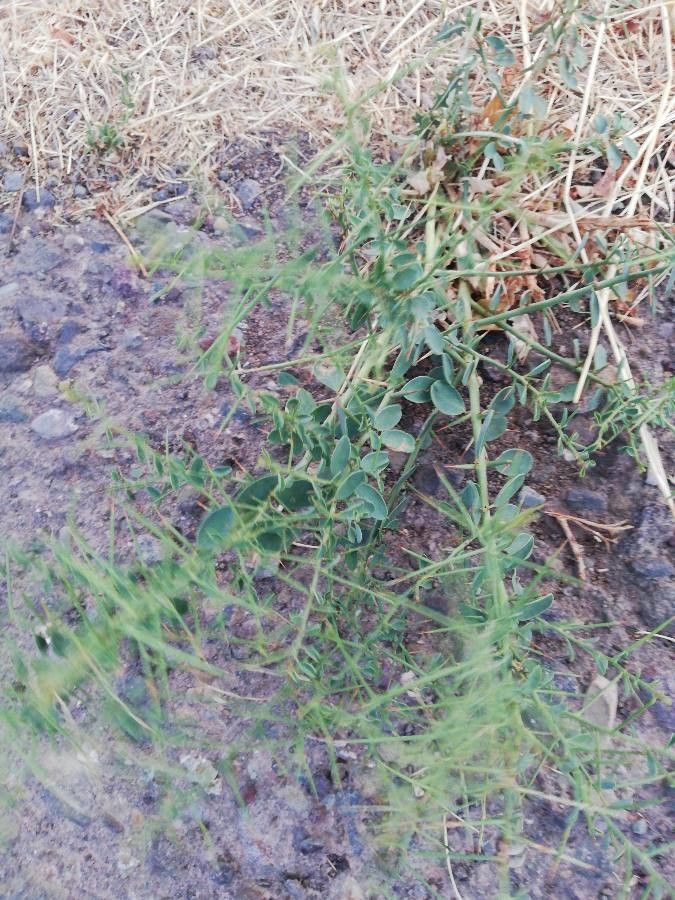
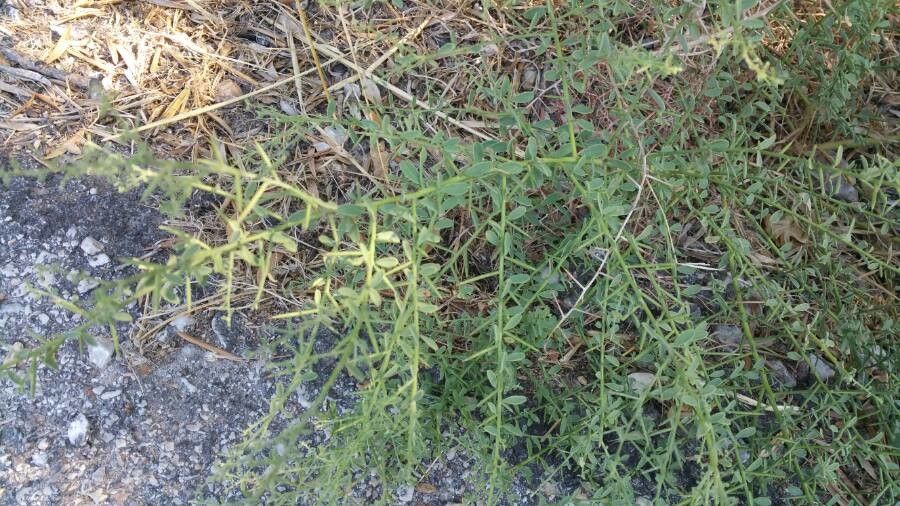
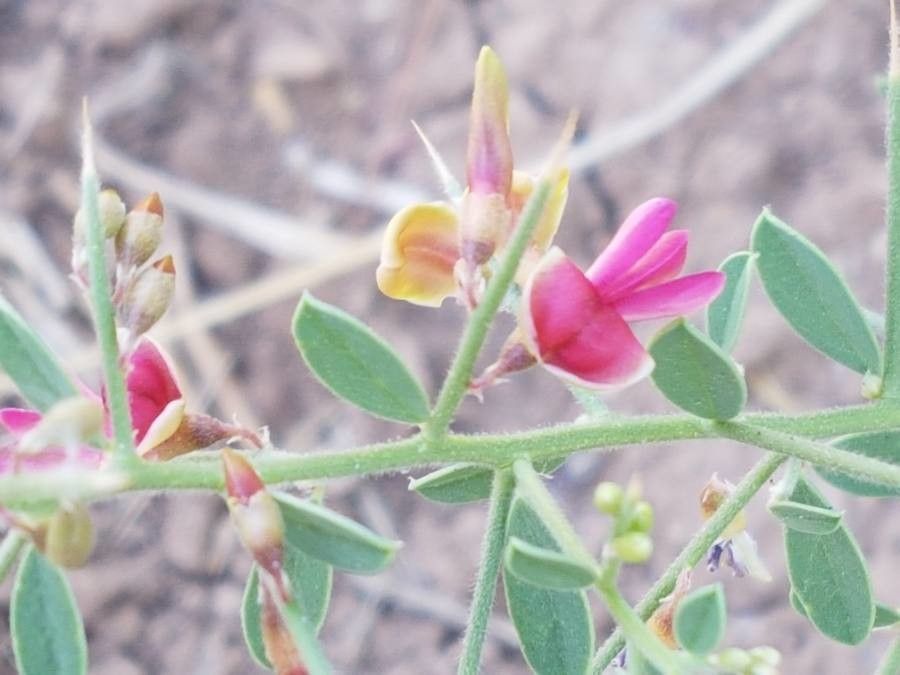
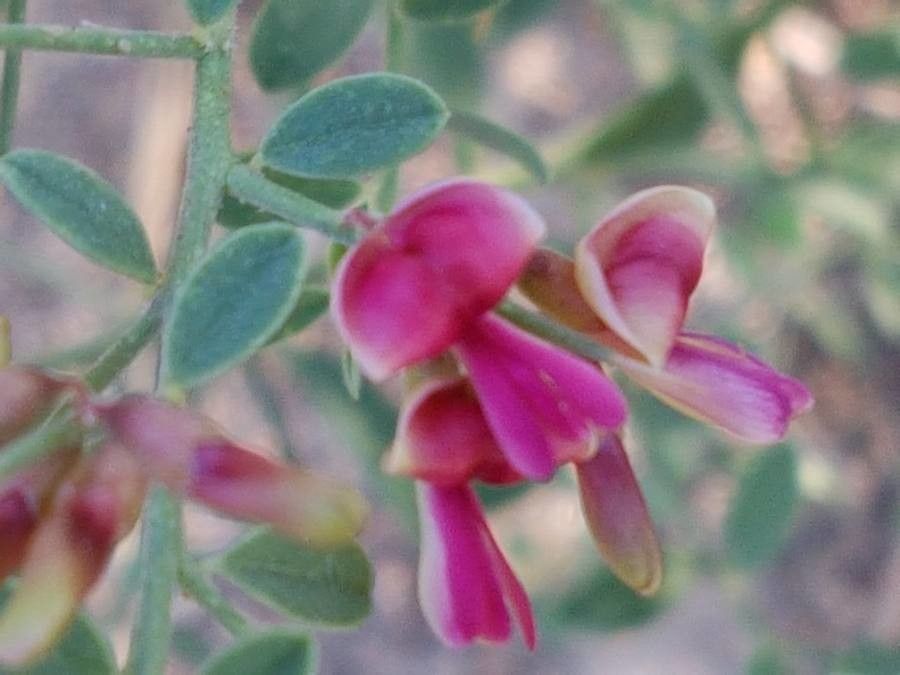
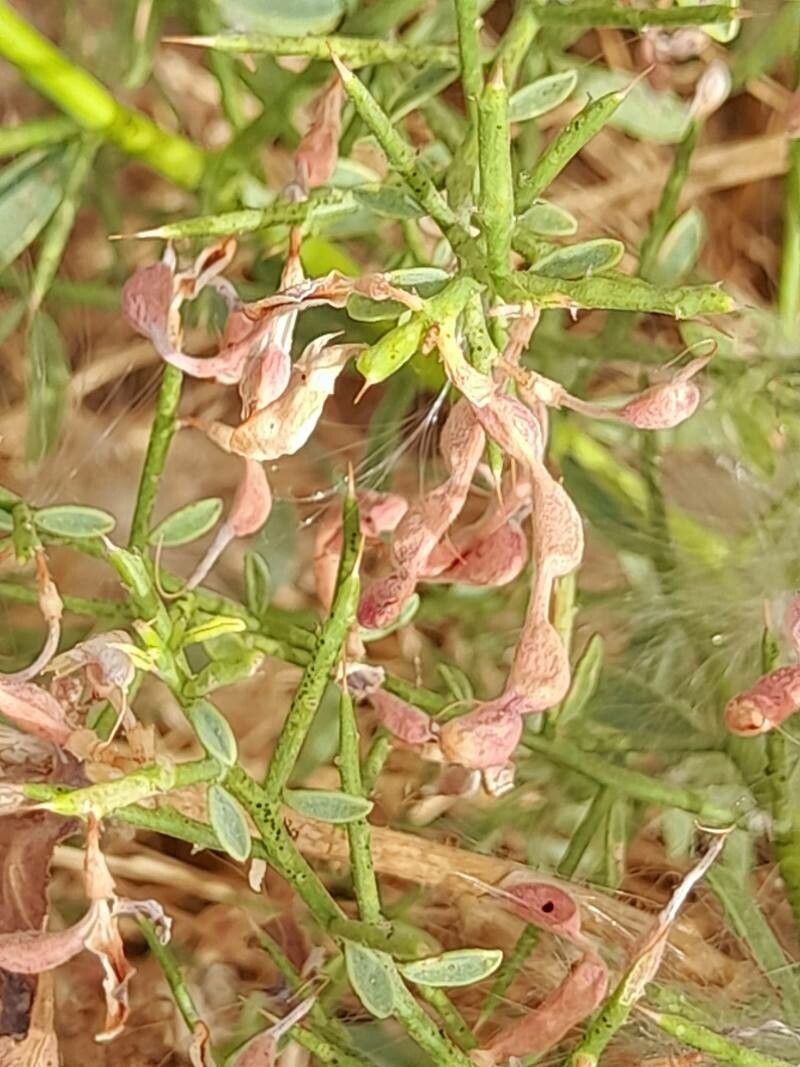
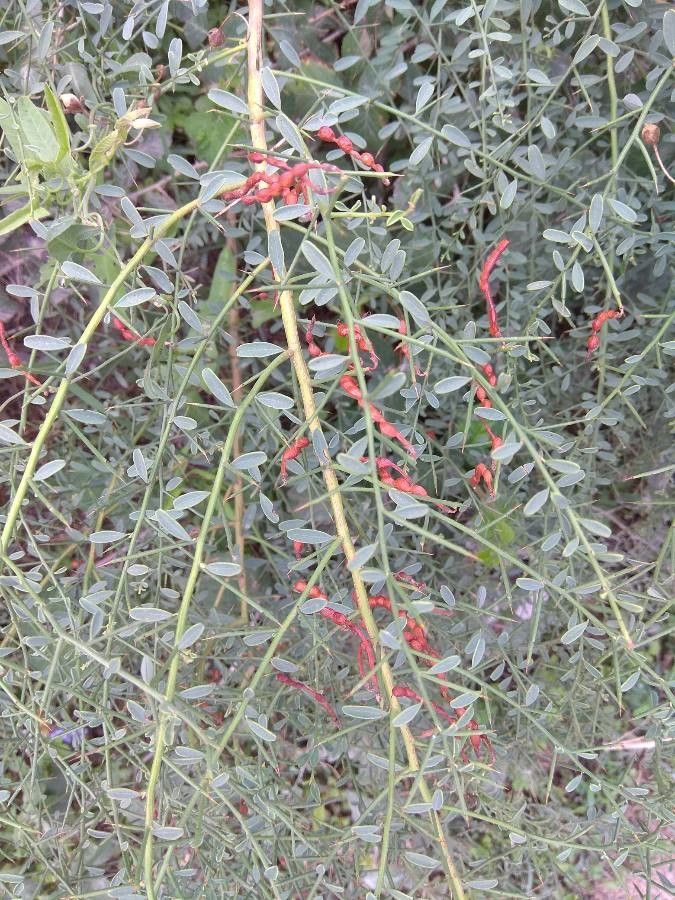
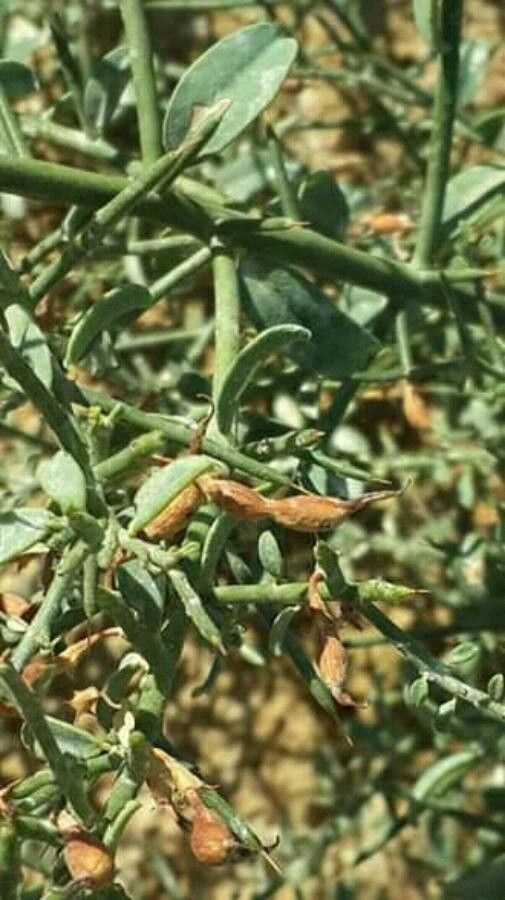
Alhagi maurorum is a species of legume commonly known, variously, as camelthorn, camelthorn-bush, Caspian manna, and Persian mannaplant. This shrub is native to the region extending from the Mediterranean to Russia, but has been introduced to many other areas of the world, including Australia, southern Africa, and the western United States. The perennial plant grows from a massive rhizome system which may extend over six feet into the ground. New shoots can appear over 20 feet from the parent plant. Above the ground, the plant rarely reaches four feet in height. It is a heavily branched, gray-green thicket with long spines along the branches. It bears small, bright pink to maroon pea flowers and small legume pods, which are brown or reddish and constricted between the seeds. The seeds are mottled brown beans.
Camel thorn is fairly resistant to disease and typically does not suffer from many illnesses. Still, it can be vulnerable to pests and local diseases present in its environment. Such infections are generally mild. Carewise, this plant needs moderate attention. Regular pruning is necessary to preserve a neat appearance and support healthy growth. Applying fertilizer can also encourage blooming. Camel thorn is appropriate for anyone with outdoor space, like a garden or patio, and does not demand extensive plant-care experience. It may need extra attention when cultivated indoors.
How to keep Alhagi Maurorum.
Light
Camel thorn is a sun-loving, perennial herbaceous plant native to open habitats and is frequently found in meadows and grasslands. It prefers full sun but can also tolerate partial sun.
Temperature
Camel thorn has good heat adaptability, tolerating high temperatures and wide temperature swings. In hot weather, attention should be paid to watering and providing appropriate shade to avoid sunburn. On the other hand, camel thorn is relatively poorly tolerant of low temperatures. It can endure some cold, but excessively low temperatures may cause frost damage.
Fertilizer
One fertilizer application in spring is generally enough for Camel thorn, though repeated feedings can maximize growth. Feed every one to one-and-a-half months. Fertilizing improves leaf appearance and function, helping maintain even color and a healthy texture. It also encourages root development and nutrient uptake, supporting the plant's long-term health.
Pruning
Camel thorn, known for its thorns, should be pruned in early spring to remove any damaged branches and manage its size. This practice promotes healthy growth and helps prevent the plant from becoming invasive. Regular maintenance also improves air circulation, which reduces the risk of disease. Be sure to use clean, sharp tools for precise cuts to achieve the best results.
Botanical profile.
- Plant Type
- Herb, Shrub
- Life Cycle
- Perennial
- Genus
- Alhagi
- Family
- Fabaceae
- Hardiness Zone
- 7-11
- Mature Height
- 30 cm to 91 cm
- Mature Spread
- 49 cm to 91 cm
- Leaf Color
- Green
- Leaf Type
- Deciduous
- Flower Color
- Pink, Lavender
- Flower Size
- 0.51 cm to 1.02 cm
- Bloom Time
- Summer
- Planting Time
- Spring, Summer
- Harvest Time
- Late summer, Early fall, Mid fall
- Native Area
- Saudi Arabia, Egypt, Turkey, India, Tajikistan, Cyprus, Armenia, Pakistan, Lebanon, Uzbekistan, China, Afghanistan, Iraq, Syria, Jordan, Kyrgyzstan, Kazakhstan, Mongolia, Israel, Iran, Azerbaijan, Kuwait, Turkmenistan
Other names.