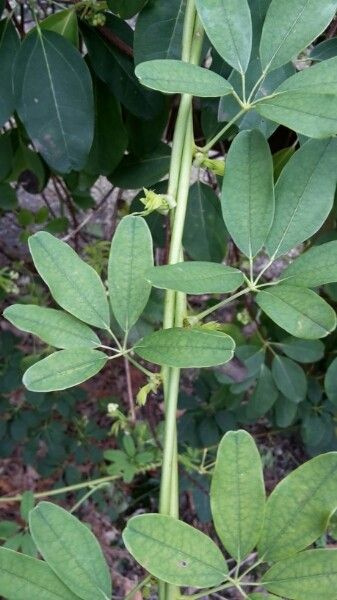
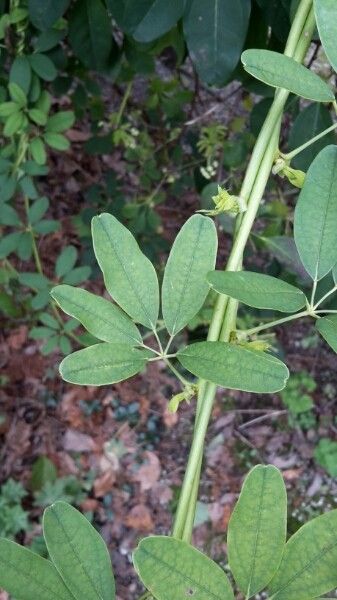
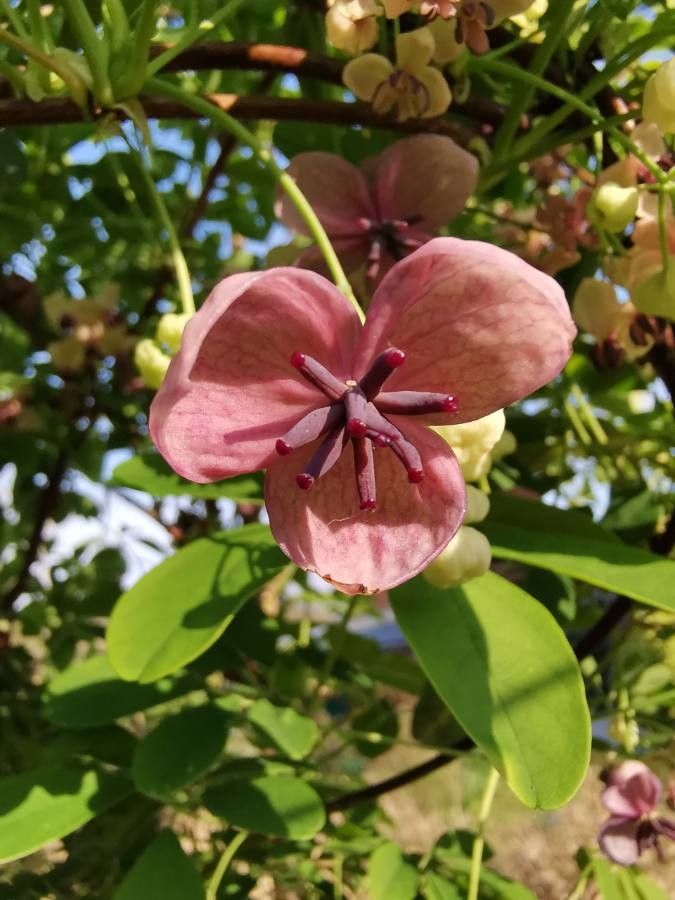
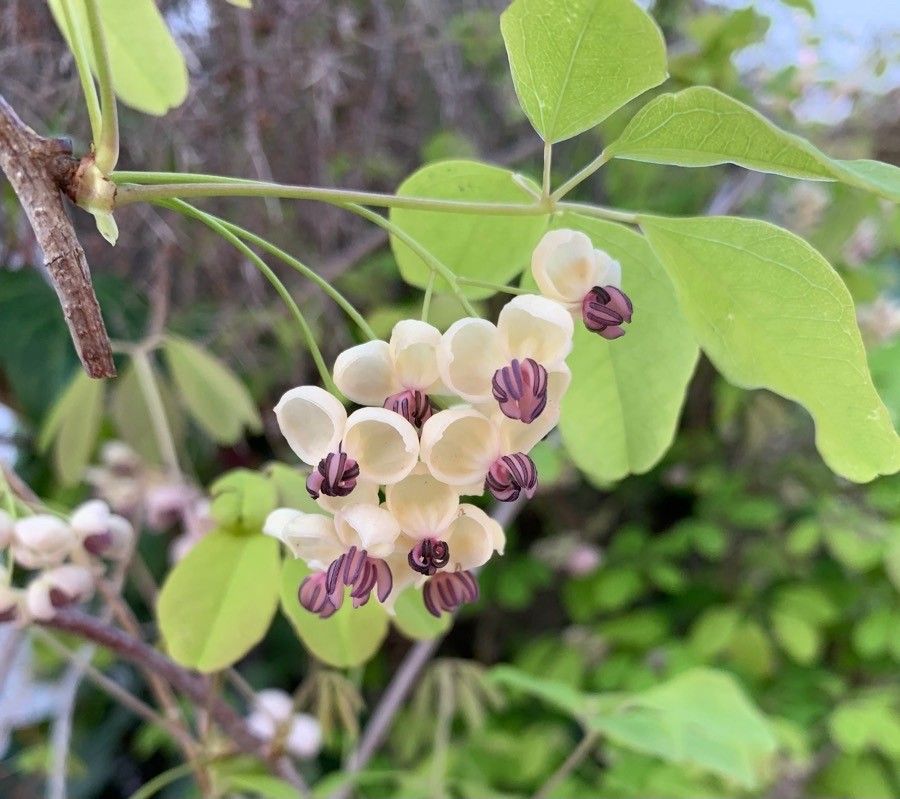
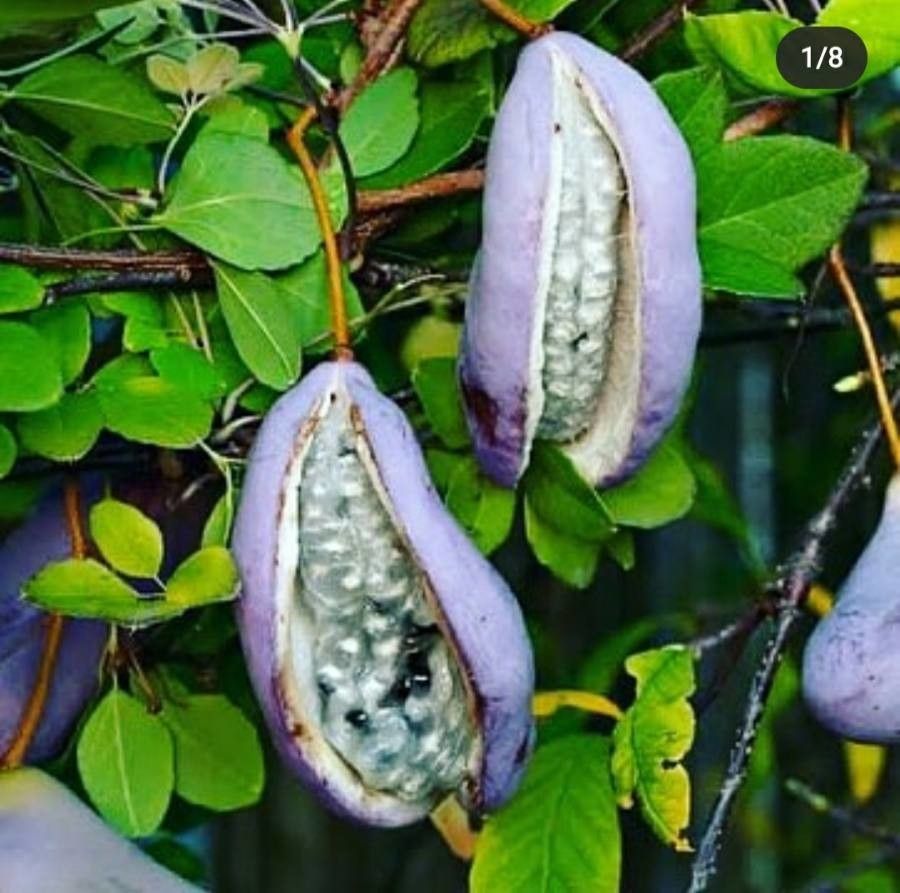
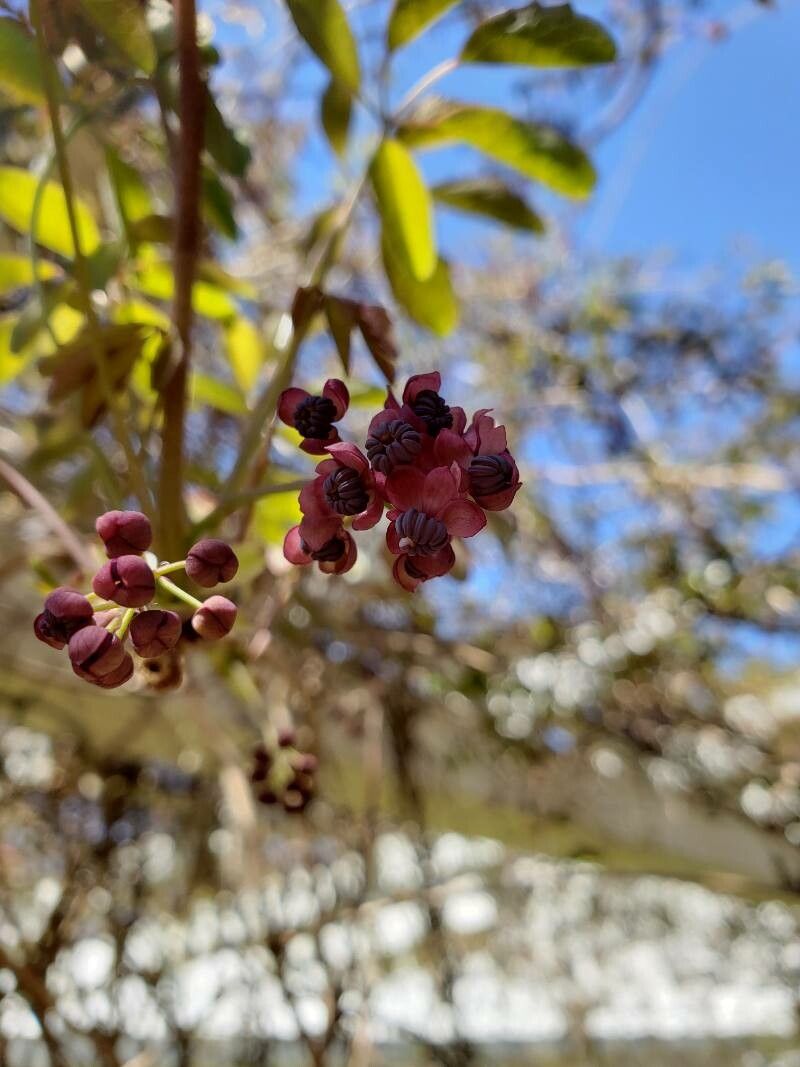
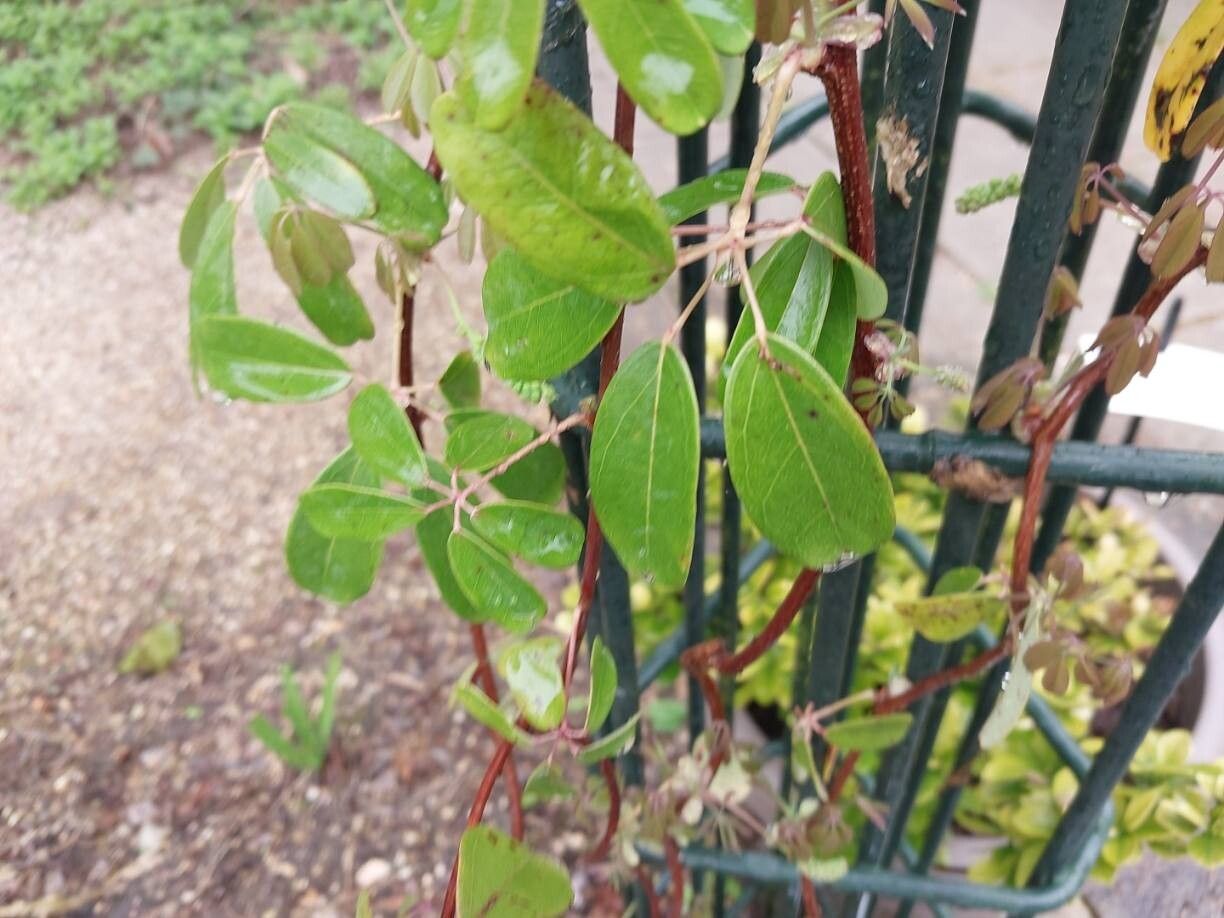
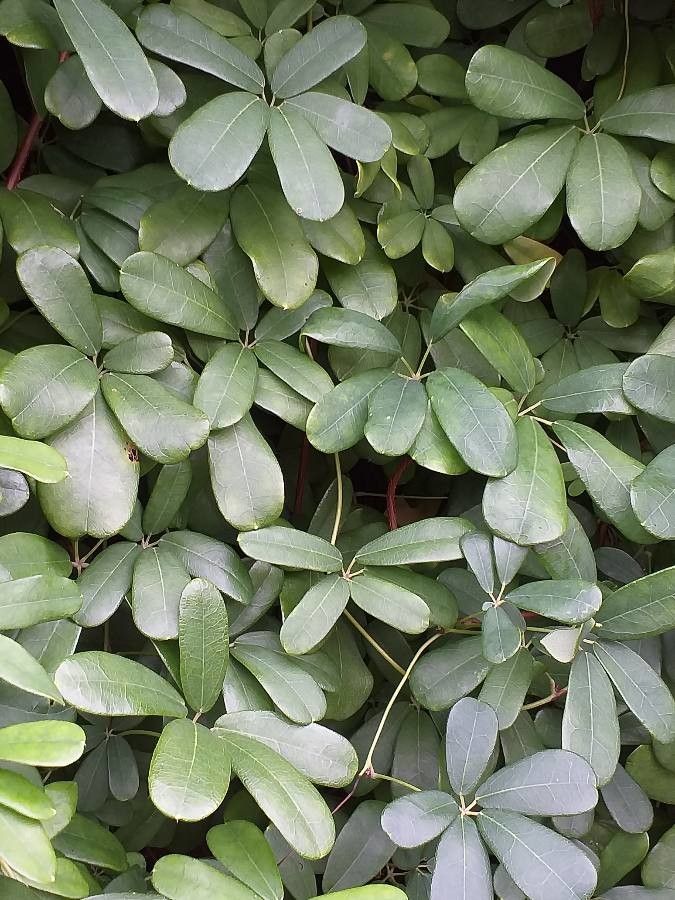
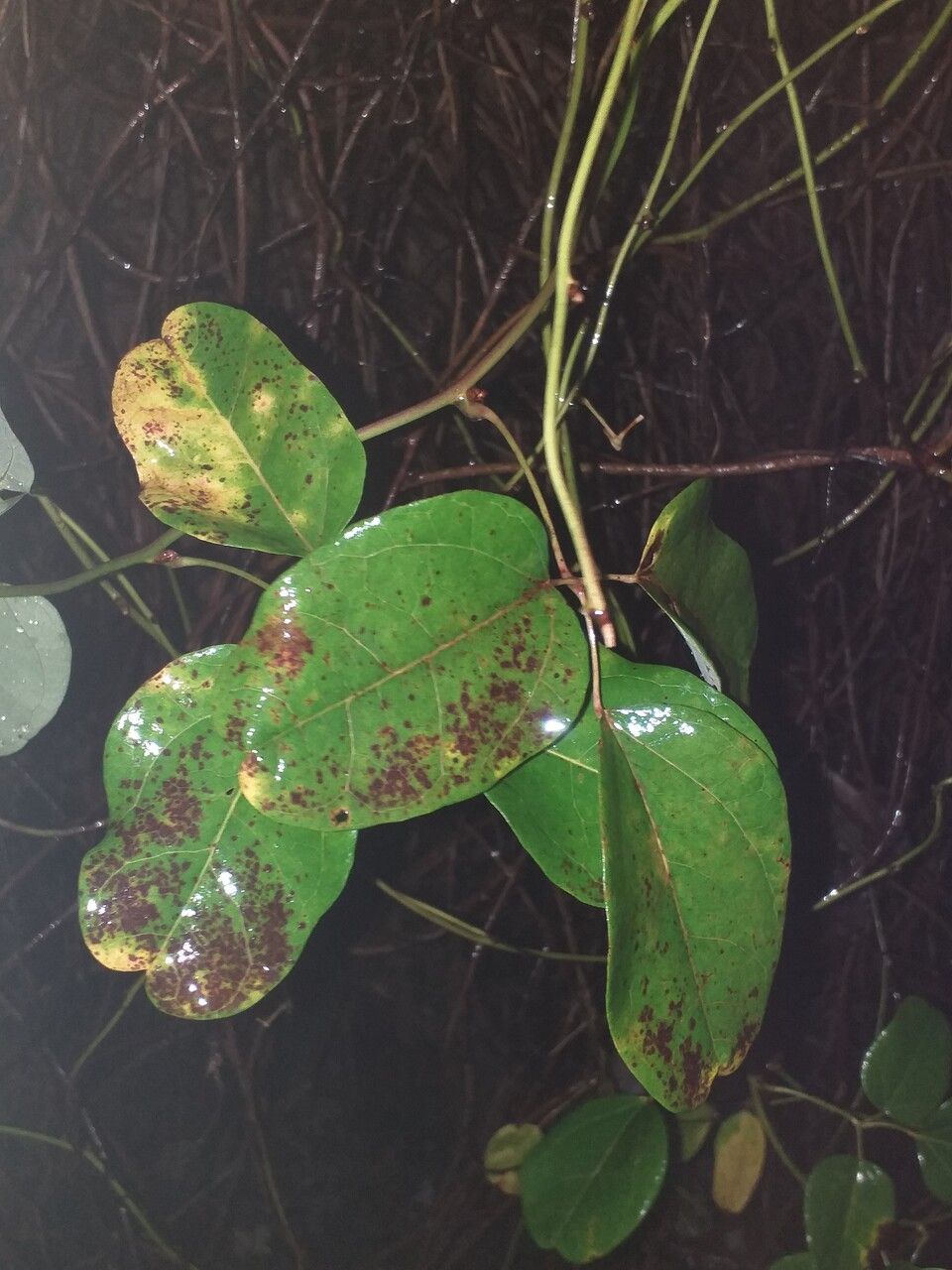
Akebia quinata, commonly known as the five-leaf akebia or chocolate vine, is a deciduous climbing vine native to East Asia. Renowned for its attractive foliage and fragrant flowers that bloom in early spring, the plant features compound leaves comprising five dark green leaflets. Its small, purple-brown flowers emit a sweet fragrance that attracts pollinators such as bees and butterflies.
With support from structures like trellises or fences, the vine can grow up to 30 feet long. It thrives in well-drained soil and partial shade but can also tolerate full sun as long as the soil remains consistently moist.
Beyond its ornamental appeal, Akebia quinata has been utilized in traditional Chinese medicine for centuries. In some cultures, its fruit is also consumed as a food source.
However, it is important to note that Akebia quinata can become invasive if not properly managed, as it can rapidly spread through underground rhizomes. Regular monitoring and pruning are essential to control its growth.
In summary, Akebia quinata is an attractive climbing vine with both ornamental and cultural significance. Nevertheless, it requires diligent management due to its potential invasiveness.
Chocolate vine has moderate resistance to disease but can be prone to problems like leaf spot. Its susceptibility to insect pests differs by variety, although most are less resistant to pests. For care, Chocolate vine requires regular watering and fertilizing, and yellow leaves should be pruned frequently. It is important to manage pests and diseases when they occur and to harvest the plant promptly. Chocolate vine is appropriate for people who can invest some time and energy in routine care.
How to keep Akebia Quinata.
Light
Chocolate vine grows best with abundant sunlight, though it can also adapt to shadier spots. In the wild it is found under open skies, showing its considerable light needs. Both too much and too little sun can lead to stunted growth and pale leaves.
Water
Chocolate vine thrives in moderately moist conditions and can withstand short periods of drought. To encourage optimal growth, water it once a week. As an outdoor climbing plant, it benefits from consistent soil moisture, which supports its vigorous growth during its active growing season.
Humidity
This plant will thrive in moderate humidity, which is probably the level in your home. However, misting it a few times a week can be very beneficial. Make sure the room has good ventilation.
Temperature
Chocolate vine is native to areas with moderate climates, so it does best in temperatures from 41 to 89.6 °F (5 to 32 °C). You may need to adjust temperatures seasonally to mimic its natural habitat. Protect it from frost.
Fertilizer
Chocolate vine generates nitrogen naturally via its root system, decreasing the need for supplemental fertilizers. It prefers well-draining soils, and depending on soil composition, additional fertilization may be unnecessary. However, low potassium or phosphorus can limit successful growth, while a lack of nitrogen does not cause problems.
Pruning
Because of its aggressive growth, it may require regular pruning to keep it in check. You can cut the vine back to ground level or practice light pruning throughout the season after flowering. To keep your chocolate vine tidy, trim to your desired length, cutting around a quarter inch above a leaf or node.
Toxicity
Chocolate vines are not toxic to humans and pets. The fruits of the vine are edible, although not very palatable with their bitter taste.
Further reading →
The toxicity and danger assessments provided are for reference only. We do not assure their accuracy, so it's crucial not to depend on them. Seek professional advice when necessary for accurate guidance.
Botanical profile.
- Plant Type
- Vine, Shrub
- Life Cycle
- Perennial
- Genus
- Akebia
- Family
- Lardizabalaceae
- Hardiness Zone
- 4-8
- Mature Height
- 10.06 m
- Mature Spread
- 1.83 m to 2.74 m
- Leaf Color
- Green, Blue, Purple
- Leaf Type
- Semi-evergreen
- Flower Color
- Purple
- Flower Size
- 1.27 cm to 1.52 cm
- Bloom Time
- Spring
- Planting Time
- Spring, Autumn
- Harvest Time
- Early summer, Mid summer
- Native Area
- Koppen, Japan, China, South Korea
Other names.
Reader questions.
How should I water my Chocolate vine in the best way?
To ensure excellent root development, it is recommended to place a garden hose at the base of the plant. When watering, avoid spraying the leaves directly. However, if the plant is outdoors and exposed to direct sunlight, the leaves may need more water. Bubblers can be attached to each plant to moisten the roots, while soaker hoses can be used to cover the entire garden or bed when adding or removing plants, helping to water the roots deeply. Make sure to drain any excess water and allow the soil to dry before watering again. Watering at ground level is ideal to prevent diseases. On a sunny day, it may be beneficial to spray the entire bush with water. Whether the plant is potted or in the ground, remember that Chocolate vine prefers deep watering rather than light sprinkling.
Why should I put fertilizer on my Chocolate vine?
Chocolate vine can be grown in various types of soil, as long as the drainage is good. Whether or not you need to fertilize depends on the soil composition. If the soil lacks potassium or phosphorus, it may not be able to support successful growth of Chocolate vine. However, if the soil is low in nitrogen only, the crop should flourish without fertilizer.
What are the sunlight requirements for Chocolate Vine?
The Chocolate Vine (Akebia quinata) thrives in full sun, requiring above 6 hours of sunlight per day, but it can also tolerate partial sun, with about 3-6 hours of sunlight. It's essential to monitor the movement of sunlight through your garden to find the perfect balance of light and shade for your plants. In its natural habitat, the Chocolate Vine flourishes under the open sky, which is indicative of its substantial light requirement. Whether planted indoors or outdoors, ensuring it receives the right amount of sunlight is crucial for optimal growth. Too much or too little sun exposure can lead to stunted growth and pale leaf color.
What is the preferred temperature range for the Chocolate vine?
The Chocolate vine, or Akebia quinata, thrives in temperatures ranging from 41 to 89.6 °F (5 to 32 °C). It originates from regions with moderate climates and does best when seasonal temperatures mimic its native environment. It's important to prevent exposure to frost and maintain temperatures above freezing during winter to avoid plant damage. When outside temperatures near -5°C (23°F), consider moving the Chocolate vine indoors or providing protection to avoid frost damage.
What should I do if I give Chocolate vine too much or too little water?
If a Chocolate vine is overwatered, it may develop yellowing, wilting leaves that eventually drop off. The plant may appear dull and unhealthy, with mushy stems. In such cases, it is best to adjust watering schedules whenever possible. However, wilting can also be a sign of under watering, with leaves becoming crisp and dry. It is important to check the soil moisture and provide a thorough watering when it is dry. Sufficient water will help the Chocolate vine recover, but the plant may still have dry appearance and yellow leaves due to damage to the root system. The yellowing will stop once the plant returns to normal. When keeping the Chocolate vine indoors, always check the moisture levels and avoid overwatering. Look out for black spots on the leaves, which may indicate overwatering, and allow the soil in the pot to dry out for a few days. Overwatering can lead to root rot, so if discolored and slimy roots are present, consider transferring the plant to a different pot. It is important to prevent root rot by avoiding overly soggy soil. When planting the Chocolate vine outdoors, ensure that the soil is adequately moist, and if it feels too dry when checked with fingers, it may indicate underwatering. Proper watering is necessary for the plant's recovery.
What is the most ideal time to fertilize my Chocolate vine?
To ensure successful growth of Chocolate vine, it is recommended to add compost or manure during planting. Alternatively, a small amount of liquid fertilizer can be used when seedlings start to emerge. It is generally advised to fertilize Chocolate vine only once during its growing cycle. If additional fertilization is desired, it is best to incorporate fertilizers high in phosphorus and potassium as a soil amendment one year prior to planting the vine.
How can artificial lighting support the growth of Chocolate Vine indoors?
For Chocolate Vine plants grown indoors, where natural sunlight might be insufficient, especially in winter or less sunny spaces, artificial lighting can be a vital solution. Indoor plants benefit from adequate lighting that promotes faster, healthier growth. LED lights are recommended due to their ability to provide specific wavelengths needed by plants. Full sun plants need 30-50W/sq ft of artificial light, whereas partial sun plants require 20-30W/sq ft, and full shade plants need 10-20W/sq ft. The light source should be placed 12-36 inches above the plant, mimicking natural sunlight, and should be kept on for 8-12 hours per day to simulate natural daylight hours.
How does low temperature affect Chocolate vine and what are the solutions?
Chocolate vine has a moderate tolerance to low temperatures, thriving best between 5°C and 32°C. It should be kept above -25°C to avoid damage. Exposure to temperatures below -30°C can lead to darkening leaves, water-soaked necrosis, wilting, drooping, and leaves gradually turning brown. To protect the plant, trim away frost-damaged parts and move it to a warm environment indoors, or set up a makeshift greenhouse. Ensure the plant is placed near a south-facing window for sunlight, or use supplemental lighting if necessary.
How many times should I water my Chocolate vine?
To ensure the health of your Chocolate vine plant, it is important to water it properly. If you have potted plants, you should give them a gallon of water each time you water, as the limited storage capacity of pots causes the soil to dry out quickly. In cold regions, watering every 3 to 5 days is necessary, preferably in the morning when the soil is dry. You can check the moisture level by feeling the top 2-3 inches of soil – if it's dry, it's time for a full watering. On hot days, check the soil daily, as the heat can quickly dry it out. For garden plants, watering once a week is generally sufficient in hot climates. Take into account the amount of rainfall and avoid overwatering, as it can lead to root rot. During spring and fall, when the Chocolate vine is actively growing, adding mulch can help conserve moisture. Sandy soil requires more frequent watering, while clay soil can go 2-3 days between waterings to prevent root rot. Keep track of when you water, and if you notice the leaves drooping, you may need to water them a day earlier.
When is it not a good idea to add fertilizer to my Chocolate vine?
To ensure the health of the environment, it's important not to overdo it with chemical or natural fertilizers on Chocolate vine. Be especially cautious about adding excessive nitrogen to the soil. In general, it's best to fertilize Chocolate vine sparingly. Actually, if you can entirely skip the use of fertilizer, you'll usually still achieve a successful harvest while saving time and effort in the growing process.
What are the symptoms of insufficient or excessive sunlight exposure in Chocolate Vine?
When Chocolate Vine is grown indoors with limited light, it may show symptoms of light deficiency such as smaller new leaves, leggy or sparse growth, faster leaf drop, slower or no new growth, and lighter-colored new leaves. Insufficient sunlight can lead to irregular leaf color patterns or paleness, indicating a lack of chlorophyll. Excessive sunlight, on the other hand, can cause chlorosis (leaves turning yellow), sunscald (damaged leaves or stems due to intense sunlight), leaf curling (a defense mechanism to minimize water loss), wilting (loss of turgor pressure causing drooping), and leaf scorching (brown, dry, and crispy leaf edges).
How does high temperature affect Chocolate vine and what are the solutions?
During summer, it's important to keep the Chocolate vine below 32°C to prevent growth slowdowns and to avoid leaf discoloration and susceptibility to sunburn as temperatures exceed 35°C. To counteract high temperature effects, trim away sunburned and dried parts, move the plant to a shaded location especially from the afternoon sun, and ensure the soil remains moist by watering in the morning and evening.