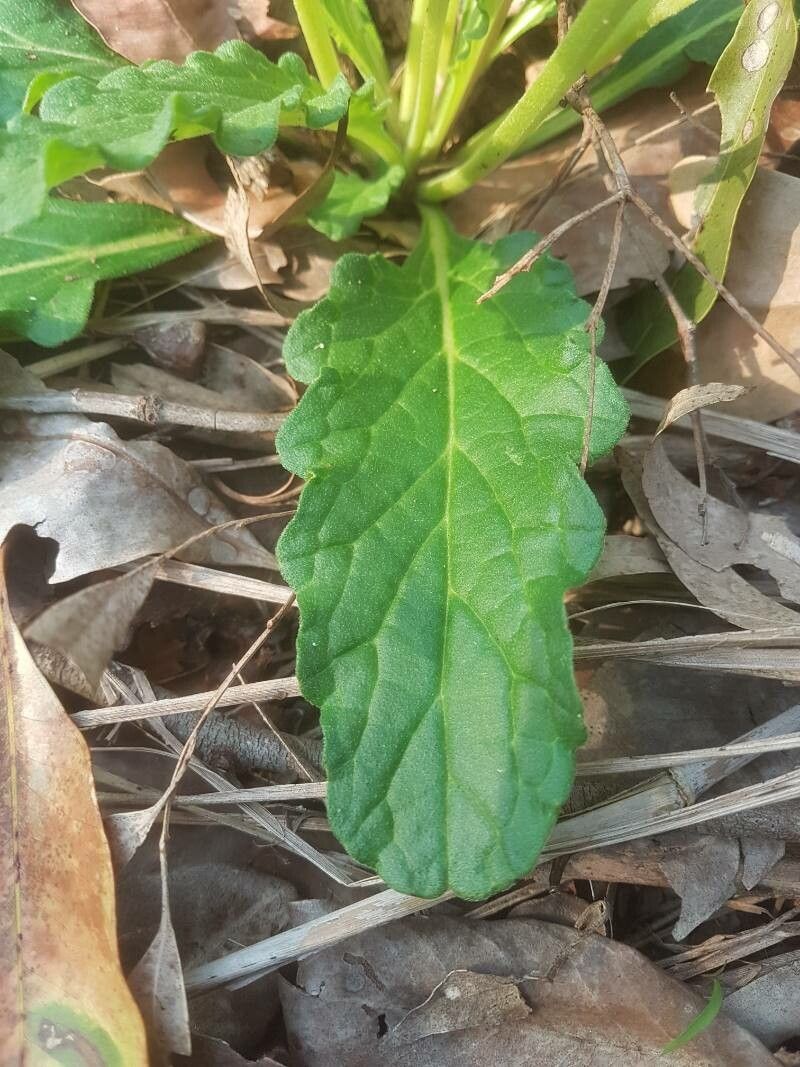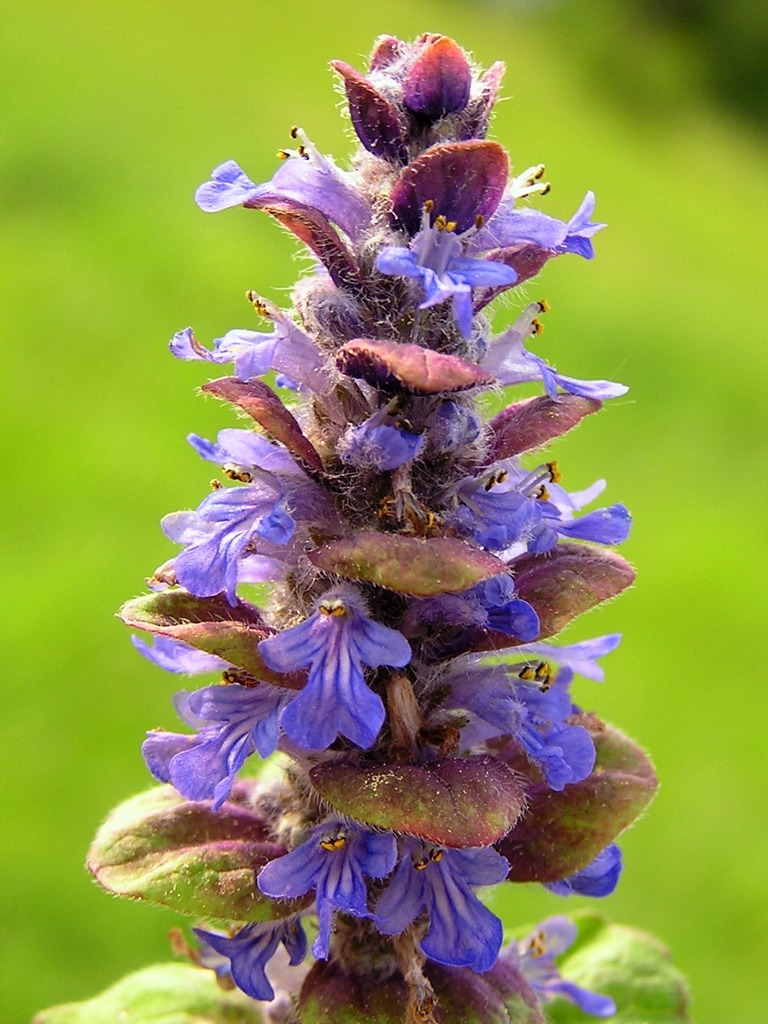
Ajuga reptans, commonly known as Bugleweed, is a low-growing perennial plant belonging to the mint family. Native to Europe, it has been widely cultivated in North America as an ornamental plant. Featuring a creeping habit, Bugleweed forms dense mats of glossy, oval-shaped green leaves with toothed edges. These leaves can grow up to 3 inches long and are arranged in opposite pairs along the stems.
In late spring or early summer, Ajuga reptans blooms with spikes of small blue or purple flowers that rise above the foliage on short stems. These tubular flowers attract bees and other pollinators.
Ajuga reptans prefers moist soil but can tolerate a variety of soil types as long as they are well-drained. It thrives best in partial shade but can also endure full sun if provided with adequate moisture.
The common bugle is a flower that attracts many types of insects. Several butterfly species, such as the pearl-bordered fritillary (Boloria euphrosyne), the small pearl-bordered fritillary (Boloria selene), the dark green fritillary (Speyeria aglaja), and the high brown fritillary (Fabriciana adippe), are especially fond of its nectar. Additionally, you will often spot a hoverfly species called Rhingia campestris visiting the common bugle. FUN FACT · FROM THE LIBRARY
This plant is commonly used for ground cover due to its low-growing nature, attractive foliage, and colorful flowers. Additionally, it has medicinal properties; its leaves have traditionally been used to treat respiratory ailments like bronchitis.
In summary, Ajuga reptans is an appealing perennial herb that adds color and texture to gardens while offering medicinal benefits.
Bugleweed: Despite having "weed" in its name, this plant is actually admired for its rapid growth. Its name, Bugleweed, comes from its trumpet-shaped flowers.
Bugleweed is fairly disease-resistant and typically does not suffer from many illnesses. That said, it can be affected by pests and diseases present in its environment. When infections do occur, they are generally mild. Regarding care, this plant needs a moderate level of attention. It should be pruned regularly to preserve an attractive appearance and healthy growth. Applying fertilizer can also encourage more blooms. Bugleweed is a good choice for anyone with outdoor space, such as a garden or patio, and does not call for extensive gardening experience. It may need additional care if grown indoors.
How to keep Ajuga Reptans.
Light
Bugleweed prefers a spot that receives a moderate amount of sun each day but can also adapt to locations with full-day sun or with considerably less light. This adaptability comes from its origins in varied light environments. Too much or too little light can inhibit its growth.
Water
Common bugle, native to damp environments, thrives as a ground cover plant when provided with consistent soil moisture. It benefits from weekly watering but requires good drainage to prevent root rot. Achieving the right balance between moisture and drainage is crucial for its healthy growth.
Humidity
This plant will thrive in moderate humidity, which is probably the level in your home. However, misting it a few times a week can be very beneficial. Make sure the room has good ventilation.
Temperature
Bugleweed comes from temperate areas, so it prefers a mild climate. It grows best in temperatures between 68 and 95 °F (20 to 35 ℃). During extreme seasons, alter the plant's exposure to keep it within this preferred temperature range.
Fertilizer
Usually, a single fertilizer application in spring is enough for Bugleweed, though several feedings can maximize growth. Feed it every month to a month and a half. Fertilizing improves the leaves' appearance and function, helping to maintain even color and a healthy texture. It also promotes root development and nutrient uptake, supporting the plant's long-term health.
Pruning
Common bugle is a low-growing perennial that showcases vibrant blue flower spikes. To promote healthy growth, prune it between early and late spring by trimming back spent flower spikes and removing any damaged foliage. Be sure to clean your tools to prevent infections. Avoid pruning in late fall to help the plant maintain its hardiness in winter.
Pot & Repot
When repotting Bugleweed, select a pot 1–2 inches (2.5–5.1 cm) larger with ample drainage. Use a well-draining potting mix. Repot in spring or fall, ensuring the root ball sits slightly below the rim of the flower pot. Water thoroughly after repotting and place the pot in a warm spot with indirect sunlight.
Botanical profile.
- Plant Type
- Herb
- Life Cycle
- Perennial, Annual
- Genus
- Ajuga
- Family
- Lamiaceae
- Hardiness Zone
- 4-10
- Mature Height
- 6 cm to 15 cm
- Mature Spread
- 15 cm to 91 cm
- Leaf Color
- Green, Red, Purple, Silver, Brown
- Leaf Type
- Evergreen
- Flower Color
- Blue, White, Purple, Pink, Violet
- Flower Size
- 1.52 cm to 1.78 cm
- Bloom Time
- Mid spring, Late spring, Early summer
- Planting Time
- Spring, Autumn
- Harvest Time
- Early summer, Mid summer
- Native Area
- Turkey, Austria, Sweden, Slovakia, Montenegro, Croatia, Slovenia, Belarus, Russia, Germany, Estonia, Romania, Latvia, Belgium, Netherlands, France, Portugal, Tunisia, Czech Republic, Bulgaria, Poland, Greece, Ukraine, Serbia, Lithuania, Norway, Italy, Spain, Switzerland, Denmark, Iran, Albania, Ireland, United Kingdom, Hungary, Algeria, Azerbaijan
Other names.
Reader questions.
When should I water my common bugle?
To determine when to water your common bugle, check for several key indicators. Soil moisture level is critical; insert your finger about 1 to 2 inches into the soil around the plant. If the soil feels dry, it's time to water. Wilting leaves, a change in leaf color to yellow or pale, and stunted growth are signs the common bugle needs water. Inspect the roots by gently digging around the base; dry and brittle roots mean the plant needs hydration. Consider the temperature and climate as well, since higher temperatures and bright sunlight increase the plant's water needs. Be cautious of early watering, as it might risk root diseases, and late watering, which could lead to wilting or even death of the plant. An understanding of these signs will help manage the watering schedule effectively to maintain the health and vitality of your common bugle.
What are the sunlight requirements for Common Bugle?
Common Bugle needs partial sun, about 3-6 hours of sunlight, but can also adapt to full sun with more than 6 hours of sunlight or full shade conditions. It's vital to watch how sunlight moves through your garden to choose spots that offer a suitable balance for the plant's needs, ensuring their growth and health.
What is the optimal temperature range for Common Bugle (Ajuga reptans)?
The Common Bugle thrives in a moderate climate, with an optimal temperature range of 68 to 95 °F (20 to 35 °C). It is essential to adjust its exposure during extreme seasons to maintain its optimal temperature, ensuring it grows well. Despite its strong cold resistance, when temperatures are expected to fall below -30°C, protective measures should be taken, such as covering the plant with soil or straw, and watering it abundantly before the first freeze to keep the soil moist through the winter.
How should I water my common bugle?
Watering your common bugle correctly is essential for its health. The plant benefits from bottom-watering, a method where the plant pot is placed in a tray of water, allowing the soil to absorb moisture from the bottom upwards. This technique prevents excess moisture on the leaves, reducing the risk of fungal diseases. When using a watering can, opt for one with a narrow spout to direct water to the base of the plant, avoiding the foliage. This approach ensures that the common bugle receives hydration directly at the roots without unnecessary moisture on its leaves.
How does artificial lighting affect Common Bugle's growth?
Artificial lighting is essential for Common Bugle's growth, especially when natural sunlight is insufficient. Indoor plants can benefit from artificial light sources like LED lights, which can be customized to provide specific wavelengths. Full sun plants require 30-50W/sq ft, partial sun plants need 20-30W/sq ft, and full shade plants 10-20W/sq ft of artificial light. The light source should be placed 12-36 inches above the plant for 8-12 hours per day to mimic natural daylight and promote healthier growth.
How does low temperature affect Common Bugle, and what are the solutions?
Common Bugle is cold-tolerant and fares best in temperatures above 20°C. During winter, it should remain above 0°C. If temperatures plummet below -30°C, the plant may not show immediate changes, but there could be a noticeable decrease in sprouting or even no sprouting at all come spring. The advisable course of action in spring is to remove any parts of the plant that have failed to sprout, promoting healthy growth for the rest of the season.
How much water does common bugle really need?
The water needs of common bugle vary based on several factors including plant size, pot size, and root depth. In its natural habitat, common bugle thrives in damp conditions, suggesting a preference for consistent moisture. For a small plant in a 6-inch tall pot, about 1 pint of water is usually sufficient, allowing any excess to drain away. The signs of healthy water intake include lush, vibrant foliage. Conversely, brown or wilting leaves may indicate underwatering, while yellowing or falling leaves could suggest overwatering. The general rule is to allow the top inch of soil to dry out before watering thoroughly again, keeping in mind the plant's preference for moist, but not waterlogged, conditions.
What are the symptoms of light deficiency in Common Bugle?
Light deficiency in Common Bugle can lead to smaller new leaves, leggy or sparse growth, early leaf drop, halted new growth, pale new leaves, chlorosis, sunscald, leaf curling, wilting, and leaf scorching. These symptoms indicate that the plant is not receiving adequate light, affecting its chlorophyll production, nutrient absorption, and overall health.
What should I do if Common Bugle experiences high temperatures?
During the summer, it is crucial to keep the Common Bugle's temperature below 35°C. If the temperature rises above 41°C, the plant's leaves may become lighter in color, curl, become susceptible to sunburn, and in severe cases, wilt and dry out completely. To mitigate these issues, you should trim away the sunburned and dried-up parts of the plant, move it to a shadier location or use a shade cloth to protect it from the midday and afternoon sun. Ensuring the soil remains moist by watering the plant in the morning and evening is also beneficial.
What kind of water is best for common bugle?
Common bugle is adaptable and can thrive on a variety of water types, including tap water, rainwater, distilled, or filtered water. Despite its flexibility, it's advisable to use water free of harmful chemicals for optimal growth. The plant is moderately sensitive to chlorine, so letting tap water sit out for a day to evaporate the chlorine is beneficial. While common bugle shows low sensitivity to fluoride and minerals, excessive levels can be detrimental. Regular monitoring and adjusting water quality, ensuring it isn’t overly rich in chemicals or minerals, help maintain the plant's health.
How can you improve light conditions for indoor and outdoor Common Bugle plants?
To improve light conditions for Common Bugle, gradually increase their sunlight exposure. For indoor plants, move them to sunnier spots each week or use artificial lighting, like a desk or ceiling lamp for at least 8 hours daily or professional grow lights. Outdoors, move the plants gradually to sunnier locations to avoid sunburn. Removing obstructions or transplanting to areas with better sunlight and drainage can also help. Note that parts of the plant damaged by insufficient light might not recover, but new growth should be healthy with improved light conditions.
How do common bugle's watering needs change with the seasons?
Common bugle's watering requirements vary through the seasons. In spring, increase watering to support the active growth phase and maintain consistent moisture for spring blooms. Summer's higher temperatures and light intensity necessitate regular moistening of the soil, but avoid overwatering. As autumn brings cooler temperatures, reduce watering gradually, keeping the soil slightly moist without letting it become waterlogged. In winter, water the plant sparingly, just enough to prevent the soil from completely drying out, accommodating the plant's dormancy period.