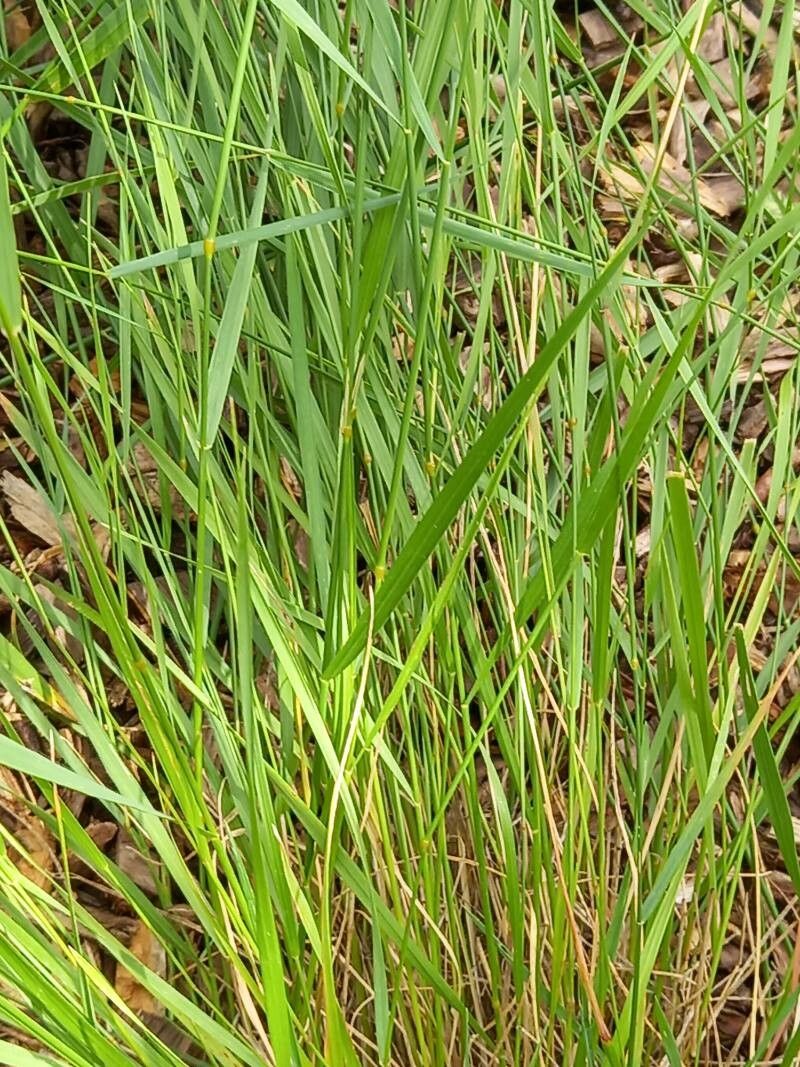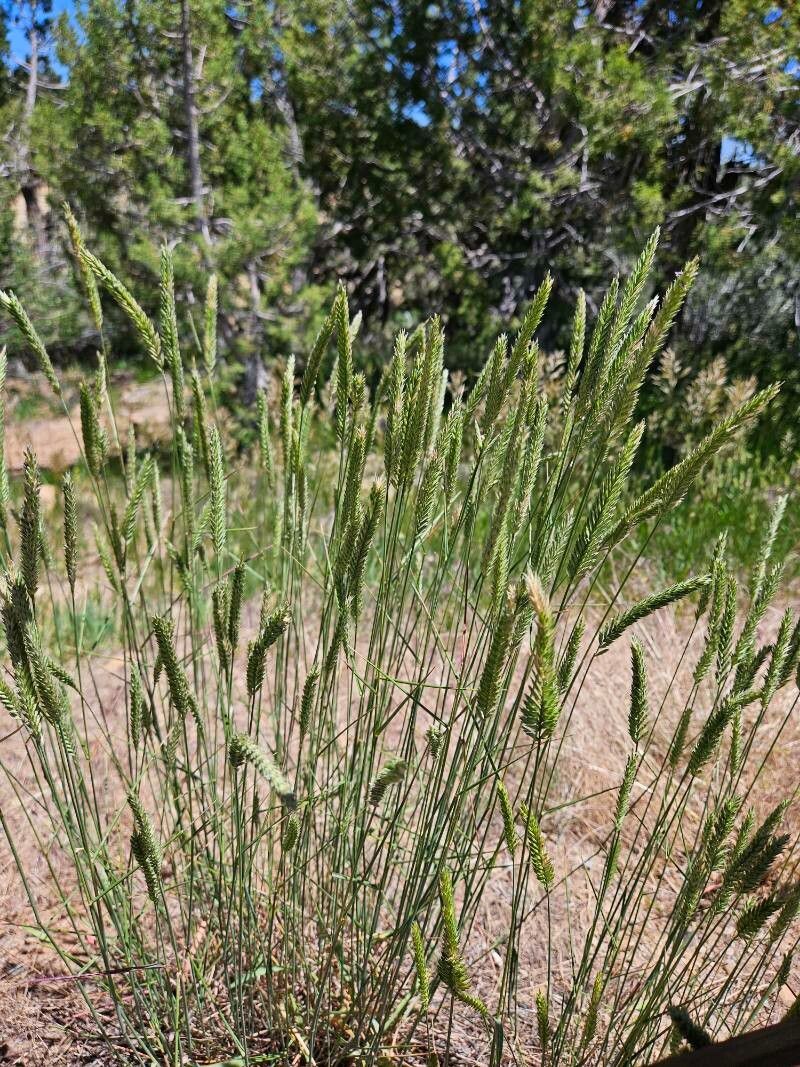
Agropyron desertorum (clustered wheat grass, desert crested wheatgrass, desert wheatgrass, standard crested wheatgrass; syn. Agropyron cristatum subsp. desertorum (Fisch. ex Link) A. Löve, Agropyron cristatum var. desertorum (Fisch. ex Link) Dorn) is a plant species in the family Poaceae which was originally from Russian and Siberian steppes until it was introduced to the United States from there between 1907 and 1913. Prior to its introduction it was believed that Desert wheatgrass and crested wheatgrass are different species. Currently it can still be found in Central and Western United States, except for Idaho, Kansas, Louisiana, Minnesota, Oklahoma, and Washington.
Desert wheatgrass is disease-resistant and is generally not susceptible to illnesses. Regarding care, this plant is fairly low-maintenance. When grown outdoors it needs only minimal watering, and larger specimens typically do not require pruning. Smaller plants, however, should be trimmed after they have finished blooming. Desert wheatgrass is suitable for anyone who has an outdoor area, such as a garden or deck, and it does not require extensive care experience.
How to keep Agropyron Desertorum.
Light
Desert wheatgrass is a perennial herbaceous plant that favors sunny locations and is native to open habitats, commonly found in meadows and grasslands. It prefers full sun but can also tolerate partial sun exposure.
Water
Desert wheatgrass originates from arid regions and thrives in low-moisture environments. Its deep root system enables it to access water from deeper sources. This plant prefers dry conditions and should be watered weekly to ensure optimal growth, especially when cultivated outdoors in open fields.
Temperature
Desert wheatgrass can tolerate a broad range of temperatures, though its range may still be restricted by varying combinations of moisture and heat. It performs best in warm summer conditions with adequate rainfall or irrigation. Extended periods of cloudy, rainy weather or sustained high temperatures can raise the probability of Desert wheatgrass dying. In winter, appropriate protection from the cold can increase the plant's chance of survival.
Fertilizer
Desert wheatgrass needs extra nutrients to encourage healthy new growth. In spring, spreading compost around the plant’s base will effectively supply the nutrition it requires. Fertilizing supports robust growth and helps the plant fend off diseases and pests.
Pruning
Desert wheatgrass is a drought-tolerant grass that is perfect for controlling erosion and providing forage. To promote healthy growth and improve air circulation, it is best to prune it in early spring, taking care to remove no more than one-third of the foliage. This will also help reduce the risk of fungal infections. Be sure to use sharp tools when pruning to prevent damage and minimize the chance of disease.
Botanical profile.
- Plant Type
- Grass
- Life Cycle
- Perennial
- Genus
- Agropyron
- Family
- Poaceae
- Hardiness Zone
- 3-9
- Mature Height
- 61 cm
- Mature Spread
- 20 cm to 40 cm
- Leaf Color
- Green, Dark Green
- Leaf Type
- Evergreen
- Flower Color
- Yellow, Green, Brown
- Flower Size
- 0.51 cm to 1.02 cm
- Bloom Time
- Early summer, Mid summer
- Planting Time
- Spring
- Harvest Time
- Late summer, Early fall
- Native Area
- Uzbekistan, Russia, Iraq, Tajikistan, Kazakhstan, Mongolia, Armenia, Azerbaijan, Turkmenistan, China
Other names.
Reader questions.
What are the ideal temperature conditions for Desert wheatgrass?
Desert wheatgrass adapts well to a wide range of temperatures, flourishing in warm summer climates with adequate rainfall or watering. It possesses strong cold resistance, making special frost protection measures unnecessary, except in extremely cold conditions below -35°C. Proper winter care includes protecting the plant from severe cold by covering it with materials like soil or straw and watering abundantly before the first freeze to prevent drought and water scarcity during the colder months.
How does prolonged bad weather affect Desert wheatgrass?
Prolonged periods of cloudy and rainy weather or extremely high temperatures can negatively affect Desert wheatgrass, increasing the likelihood of the plant dying. It is essential to provide the right environmental conditions to ensure its growth and survival.
What should be done if Desert wheatgrass is exposed to temperatures below -35°C?
If winter temperatures are expected to drop below -35°C, it is important to provide cold protection to Desert wheatgrass. This can be done by covering the plant with insulating materials such as soil or straw. Additionally, watering the plant abundantly before the onset of the first freeze helps the soil remain moist and protects the plant during winter and early spring.
What are the symptoms and solutions for Desert wheatgrass exposed to low temperatures?
Desert wheatgrass is cold-tolerant and performs best when temperatures are above 0°C, though it should be kept above -30°C during winter. Exposure to temperatures below -35°C may not show immediate adverse effects, but can lead to decreased or no sprouting in spring. In such cases, removing the parts that failed to sprout can help the plant recover.
How should Desert wheatgrass be cared for during high temperatures?
In high summer temperatures, particularly above 35°C, Desert wheatgrass may show signs of stress such as lighter-colored leaves, curling, susceptibility to sunburn, and, in severe cases, wilting and drying up. To mitigate these issues, trim away sunburned and dried parts, move the plant to a shaded location, or use shade cloth during peak sun hours. Additionally, ensuring the soil remains moist through watering in the morning and evening can help the plant stay hydrated.