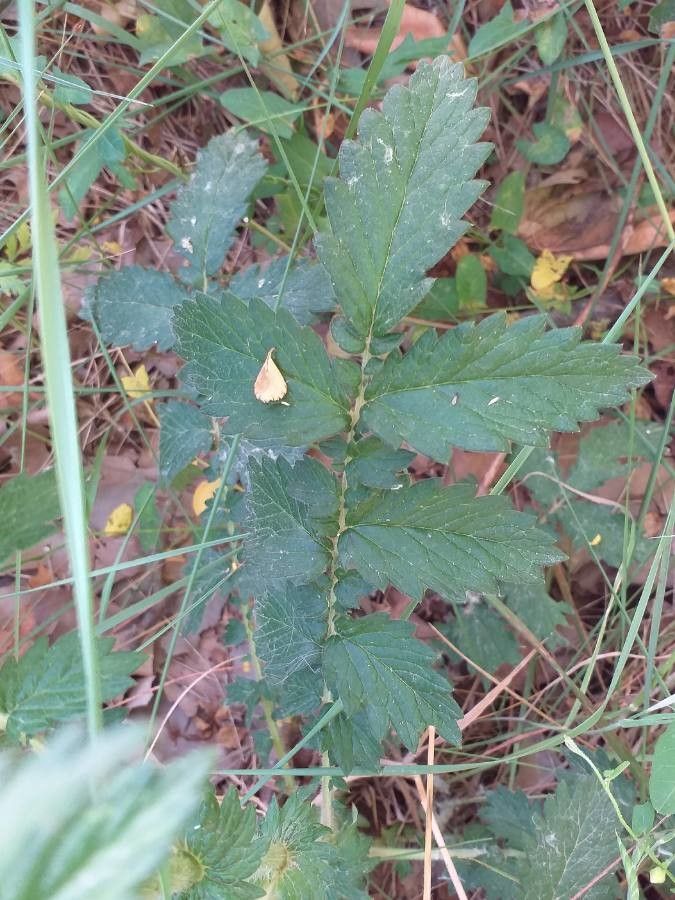
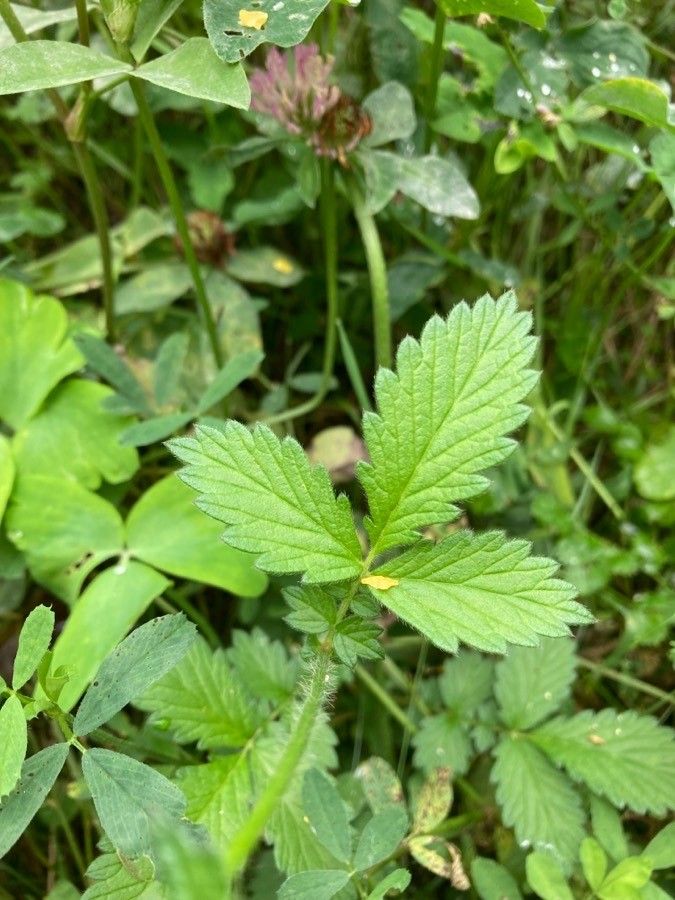
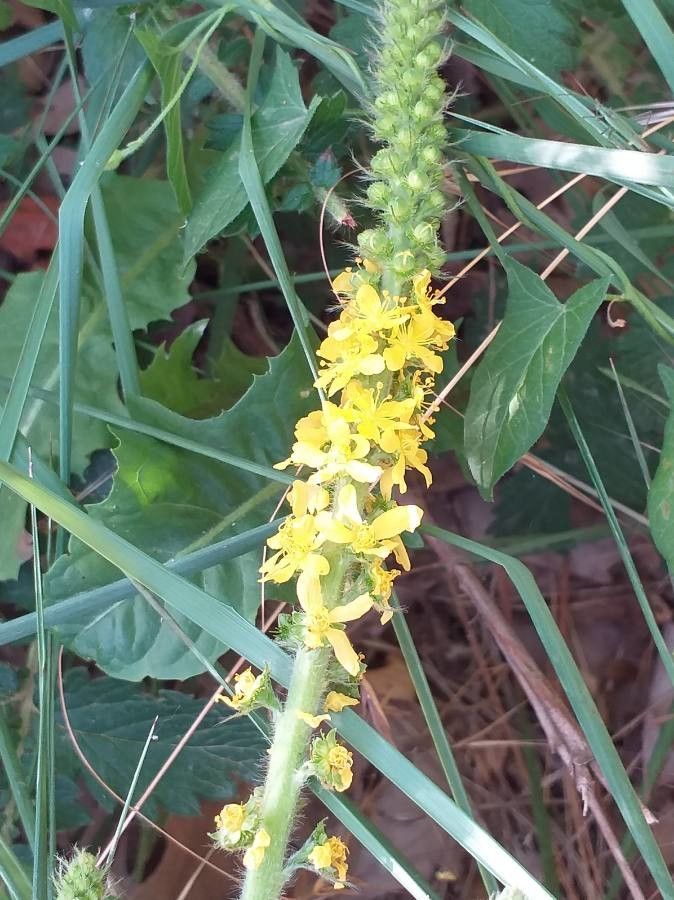
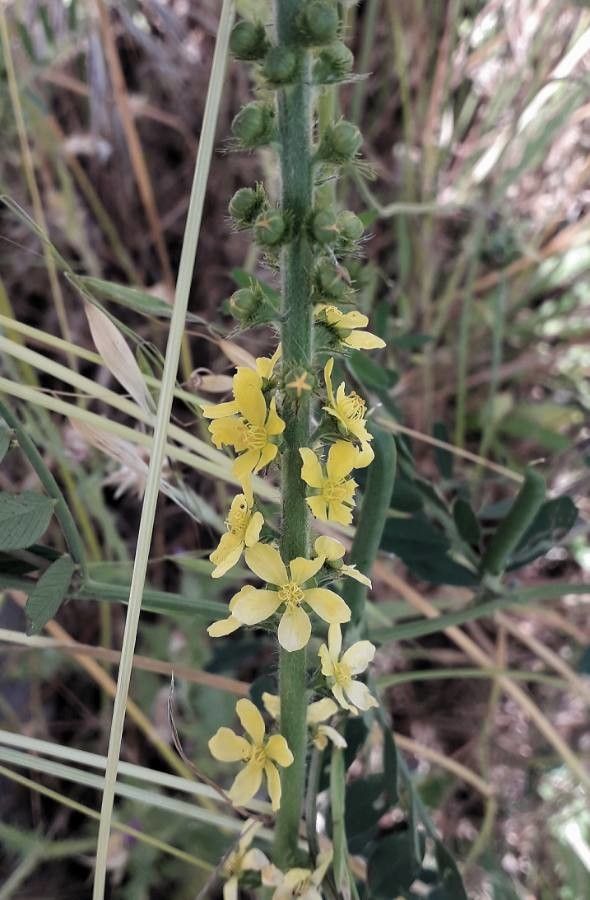
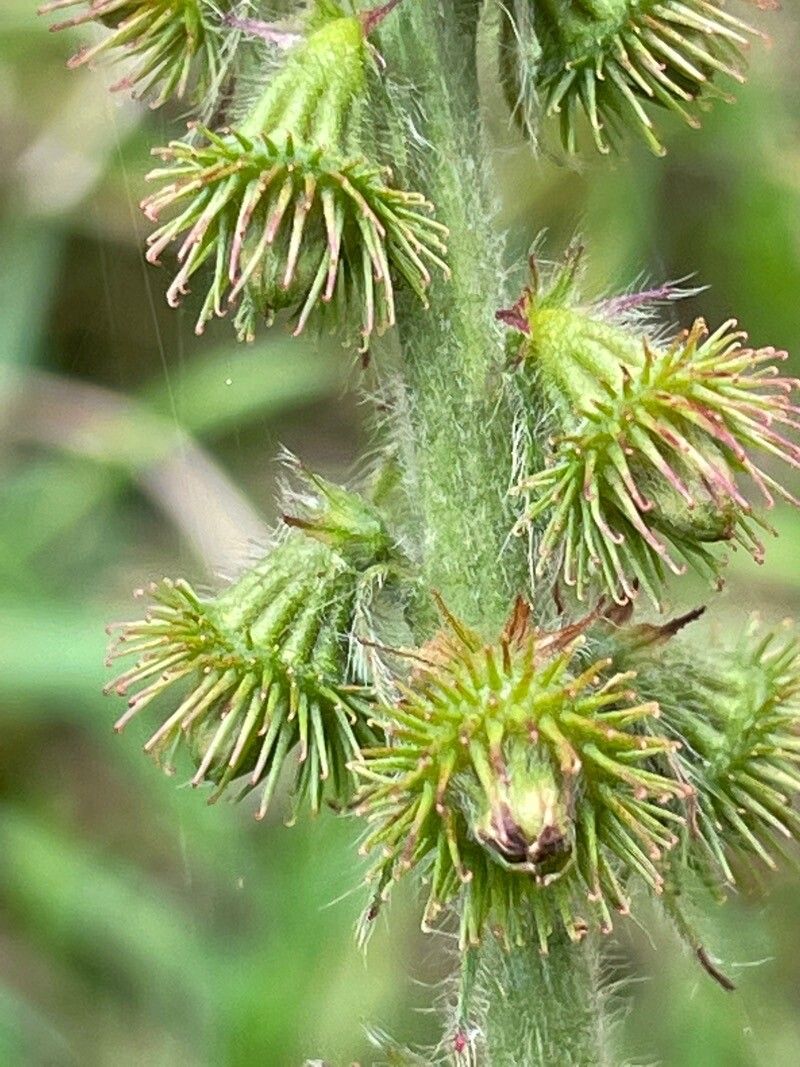
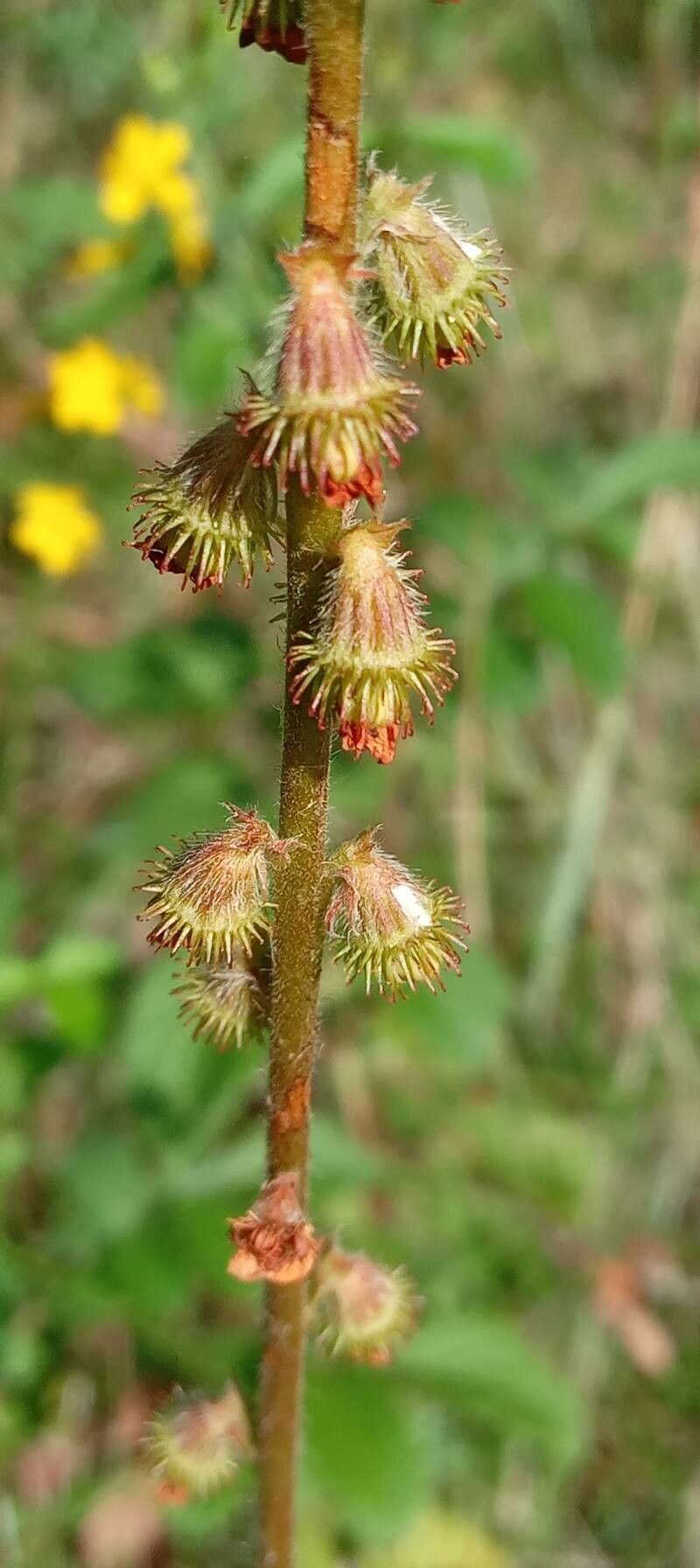
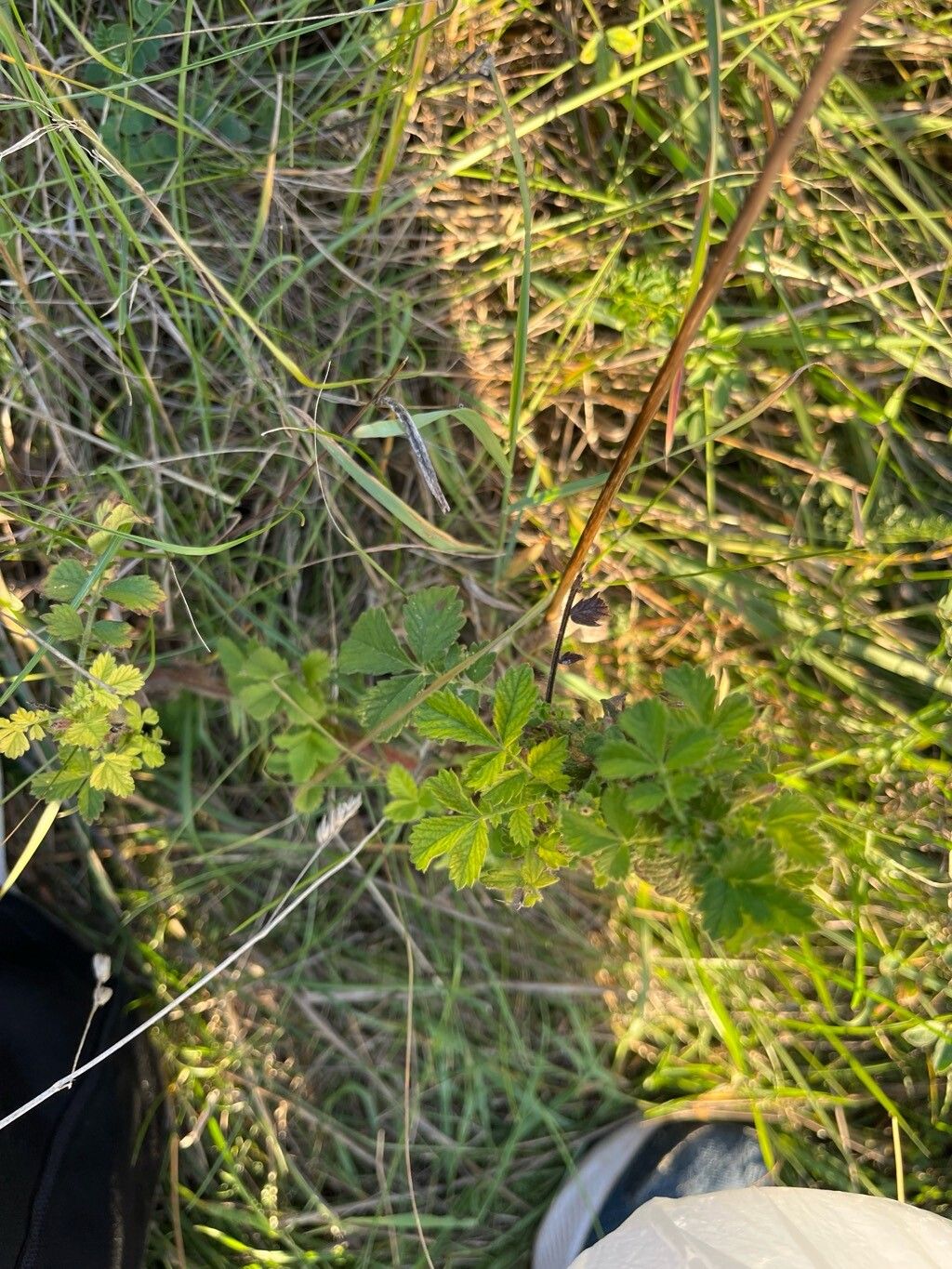
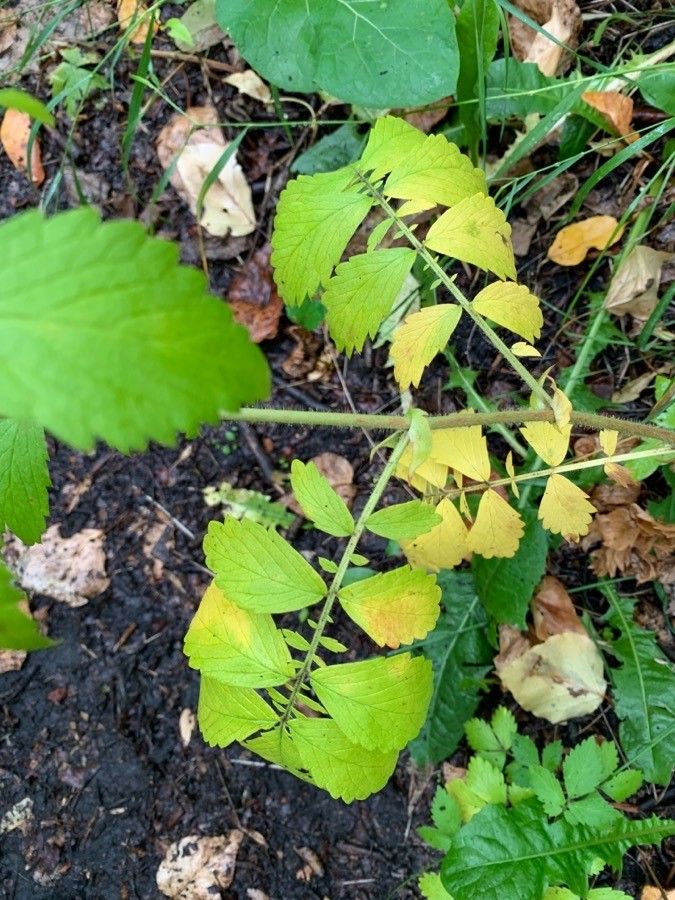
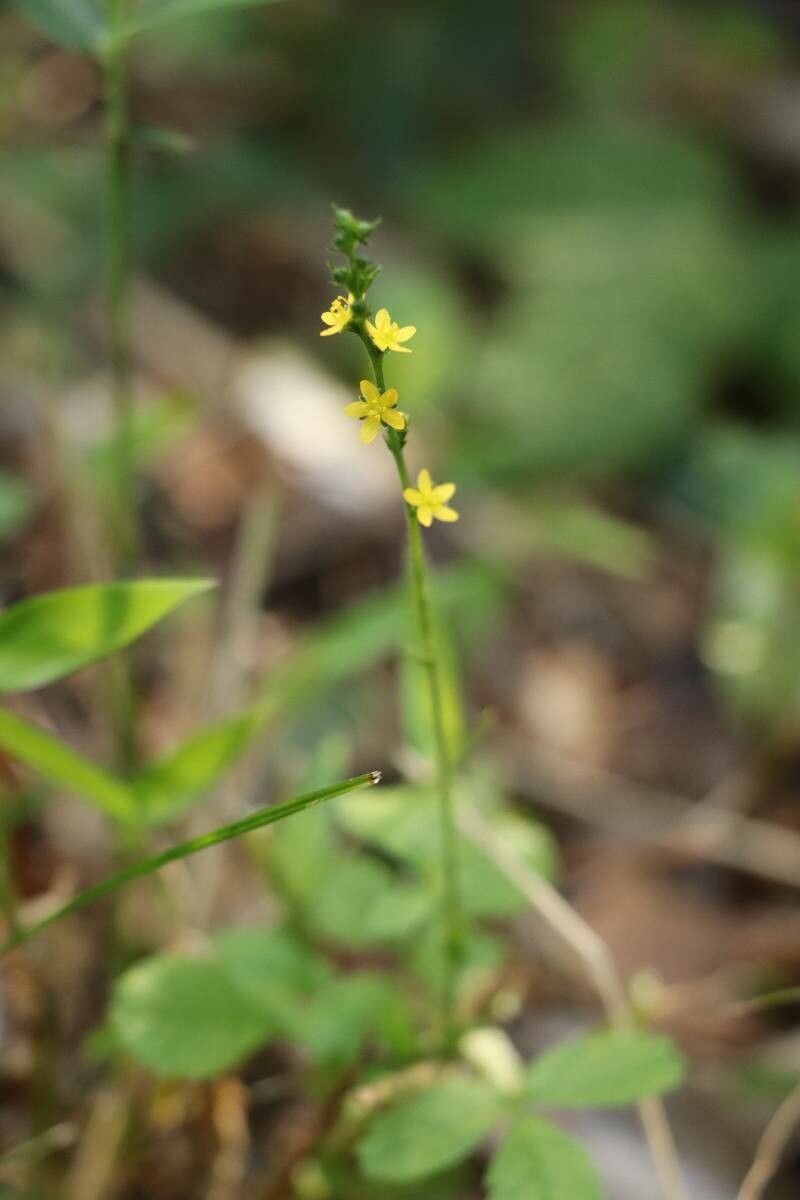
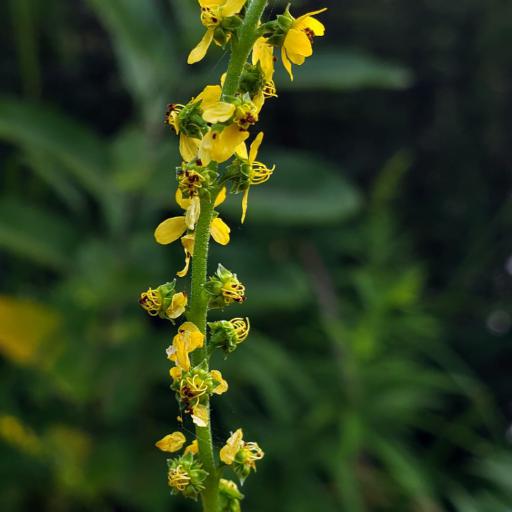
Agrimonia eupatoria is a species of agrimony that is often referred to as common agrimony, church steeples or sticklewort. The whole plant is dark green with numerous soft hairs. The soft hairs aid in the plant's seed pods sticking to any animal or person coming in contact with the plant. The flower spikes have a spicy odor like apricots. In the language of flowers, agrimony means thankfulness or gratitude.A. eupatoria is a foodplant for the caterpillars of the snout moth Endotricha flammealis.
Common agrimony is fairly disease-resistant and usually not prone to illness. Still, it can be affected by pests and diseases present in its environment. These problems are generally mild. As for care, the plant requires moderate maintenance. It should be pruned regularly to maintain a neat appearance and healthy growth. Fertilizing can also encourage flowering. Common agrimony is suitable for anyone with outdoor space, such as a garden or patio, and does not demand extensive plant-care experience. It may need more attention when grown indoors.
How to keep Agrimonia Eupatoria.
Light
Common agrimony favors sites that receive plentiful sunlight for most of the day, though it can also do well where light is softened by partial shade. Its native habitat shows an ability to adapt to different light conditions. However, uneven light exposure can impede its growth, resulting in weak plants or sparse foliage.
Water
Common agrimony, native to temperate regions, thrives in environments with consistent soil moisture. It shows moderate drought tolerance and should be watered once a week. This plant is well-suited for outdoor gardens, as it has adapted to seasonal rainfall patterns. It is ideal for areas with regular rain.
Temperature
Common agrimony naturally occurs in habitats where temperatures usually fall between 41 and 95 °F (5 to 35 ℃). It favors the moderate temperatures within that span, and extreme conditions can impede its growth. For optimal development, keep the plant’s temperature close to 75 °F (24 ℃).
Fertilizer
The best time to fertilize a Common agrimony is in early spring, when it is coming out of dormancy and beginning active growth. Fertilization supplies essential nutrients needed for healthy development. Although Common agrimony has fairly low fertilizer requirements, applying fertilizer annually can improve its survival and encourage stronger, longer-lasting flowers.
Pruning
Common agrimony is known for its upright growth and aromatic leaves. To promote new growth, prune it from early to late spring. Remove any damaged stems to improve air circulation, and cut back the plant after flowering to prevent it from becoming leggy. Pruning at the right time enhances both growth and flowering vitality.
Toxicity
Agrimonia eupatoria has no toxic effects reported.
Further reading →
The toxicity and danger assessments provided are for reference only. We do not assure their accuracy, so it's crucial not to depend on them. Seek professional advice when necessary for accurate guidance.
Botanical profile.
- Plant Type
- Herb
- Life Cycle
- Perennial
- Genus
- Agrimonia
- Family
- Rosaceae
- Hardiness Zone
- 5-9
- Mature Height
- 30 cm to 91 cm
- Mature Spread
- 91 cm
- Leaf Color
- Green
- Leaf Type
- Deciduous
- Flower Color
- Yellow
- Flower Size
- 2.54 cm
- Bloom Time
- Early summer, Mid summer
- Planting Time
- Spring
- Harvest Time
- Mid summer
Other names.
Reader questions.
How should I water my Common agrimony plant to keep it healthy?
To properly water the Common agrimony, it is recommended to use filtered water at room temperature. Tap water should be avoided as it may contain harmful particles. The plant prefers warm water to prevent any shock to its system. It is best to water the plant directly at the soil, avoiding overhead watering as it can lead to leaf problems. The goal is to soak the soil completely to benefit the plant's roots and aid in nutrient absorption.
Why is it important to add fertilizer to my Common agrimony plant?
The main structure of the Common agrimony is made up of its leaves. Fertilization is one of the most important ways to make sure these leaves look great and fulfill their purpose. When the Common agrimony is properly fertilized, its leaves will have a consistent color and a healthy texture. Fertilization also benefits the plant's roots, both by encouraging the growth of new roots and by maintaining the health of existing ones. This means that fertilization doesn't just keep the plant healthy in the present, but also improves its ability to absorb nutrients from the soil in the future.
What are the sunlight requirements for Common agrimony?
Common agrimony thrives best in locations where it can soak up the sun's rays abundantly for most of the day, favoring full sun conditions but is adaptable enough to grow in partial shade. Ideally, it should receive more than 6 hours of sunlight daily for full sun conditions, or about 3-6 hours for partial sun. Monitoring the movement of sunlight through your garden helps in choosing spots that offer a good mix of light and shade, ensuring the plants' well-being.
What is the native temperature range for Common agrimony?
Common agrimony is native to environments where the temperatures typically range from 41 to 95 °F (5 to 35 °C). Within this range, it prefers moderate temperatures and may experience hindered growth under extreme conditions. A temperature around 75 °F (24 °C) is considered optimal for its growth. Due to its strong cold resistance, special frost protection measures are usually not necessary, though it's important to provide protection if temperatures are expected to drop below -25°C.
What do I need to do if I give my Common agrimony too much or too little water?
Overwatering is a common issue that can harm the health of your Common agrimony. It causes the stems and leaves to wilt and turn yellow. Prolonged overwatering can lead to diseases like root rot, mold, and mildew, which can be fatal for your plant. Underwatering is less common for Common agrimony as it is somewhat drought-tolerant. However, it can still occur, and when it does, the leaves of your plant will become brittle and brown. It is crucial to recognize the signs of overwatering early on. Diseases like root rot may not be fixable if you wait too long. If you notice signs of overwatering, reduce your watering schedule and check the soil drainage. Replace the soil if it drains poorly. If you see signs of underwatering, simply water more regularly until the signs disappear.
When should I fertilize my Common agrimony?
If you grow Common agrimony outdoors, you'll notice new growth in early spring. This is the signal to start fertilizing for the year. Usually, one application of fertilizer is sufficient for Common agrimony, but if you want to maximize growth, you can feed it multiple times throughout spring and early summer, approximately once every month to a month and a half.
How does artificial lighting benefit indoor plants, and what are the recommendations?
For indoor Common agrimony plants, especially when natural sunlight is inadequate, artificial lighting serves as an essential growth enhancer, promoting healthier and faster development. LED lights are recommended for their ability to provide specific light wavelengths needed by plants. The required intensity of artificial light varies: 30-50W/sq ft for full sun plants, 20-30W/sq ft for partial sun, and 10-20W/sq ft for full shade plants. The light source should be placed 12-36 inches above the plant, mimicking natural sunlight conditions, and should be kept on for 8-12 hours per day to simulate the length of natural daylight hours.
How can you protect Common agrimony during winter?
Despite its strong cold resistance, if winter temperatures are expected to drop below -25°C, it is important to protect Common agrimony from the cold. This protection can be provided by covering the plant with soil or straw. Additionally, watering the plant abundantly before the first freeze in autumn is recommended to keep the soil moist and prevent drought and water scarcity during winter and early spring. This preparation helps the plant to endure cold weather better.
How frequently should I water my Common agrimony?
If your Common agrimony plant is in a pot, the most precise way to determine if it needs water is to check the soil by sticking your finger in. If the top two to three inches of soil are dry, it's time to add water. If you have the plant outdoors in the ground, you can use the same method. When the first few inches of soil have dried out, it's time to water. Usually, during spring and early fall, this means watering once a week. But during extremely hot weather, you may need to water twice or more per week. However, it's worth mentioning that mature and well-established Common agrimony plants are quite good at tolerating drought.
When should I not fertilize my Common agrimony?
During late fall and winter, your Common agrimony will go into a dormant phase and stop producing new growth. During this time, it is recommended to avoid fertilizing your Common agrimony. If you choose to fertilize during spring and summer, it is important to gradually reduce the rate of fertilization as summer approaches, because the growth rate of your Common agrimony will also slow down. In general, it is not a good idea to fertilize your Common agrimony when the weather is unseasonably hot or when the soil is extremely dry. Fertilizing in these conditions can stress your Common agrimony and lead to premature death.
What are the symptoms of light deficiency in Common agrimony?
When Common agrimony is placed in inadequately lit conditions, it may exhibit several symptoms indicative of light deficiency. These can include smaller new leaves, leggy or sparse growth, rapid leaf drop, stunted or completely halted growth, lighter-colored or irregularly colored new leaves. Chlorosis or yellowing of leaves, sunscald, leaf curling, wilting, and leaf scorching are symptoms that can also manifest due to various light-related stresses.
What should you do if Common agrimony experiences low temperatures?
Common agrimony is cold-tolerant and best thrives when temperatures remain above 5°C, but during winter, measures should be taken if temperatures fall below -20°C. If temperatures fall below -25°C, you might not notice any changes during winter, but there could be a decrease in sprouting or even no sprouting during the spring. In such cases, it is advised to remove any parts of the plant that have failed to sprout in the spring.