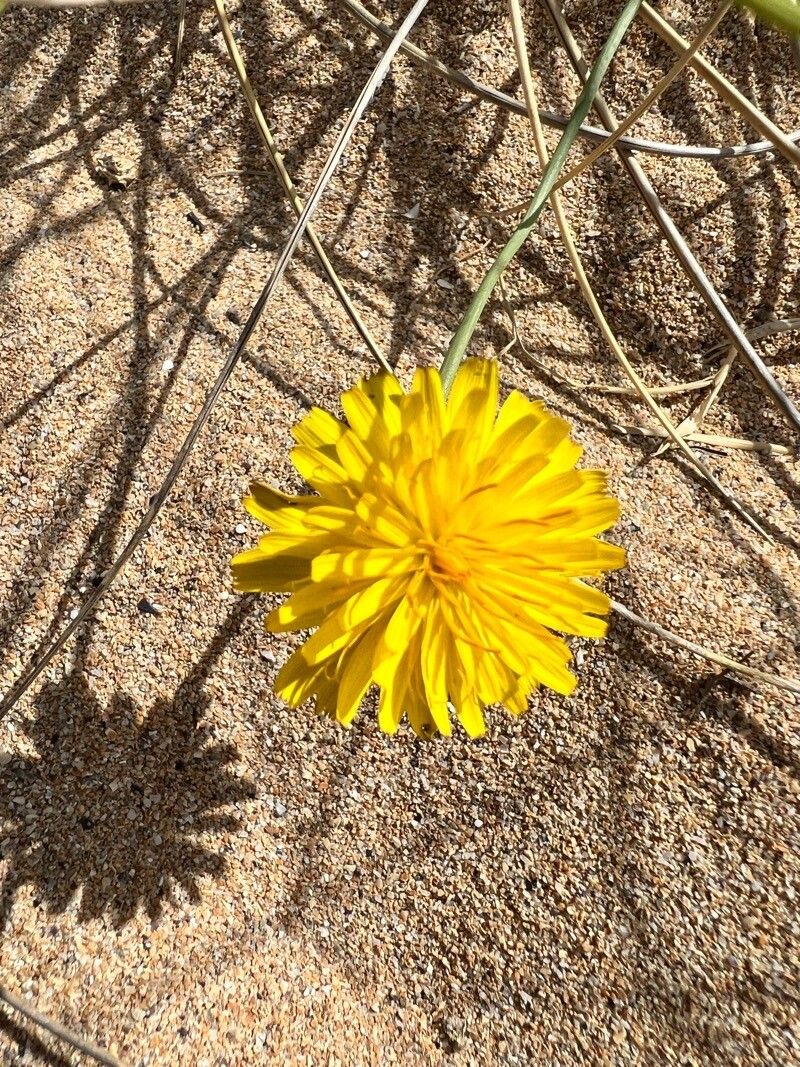
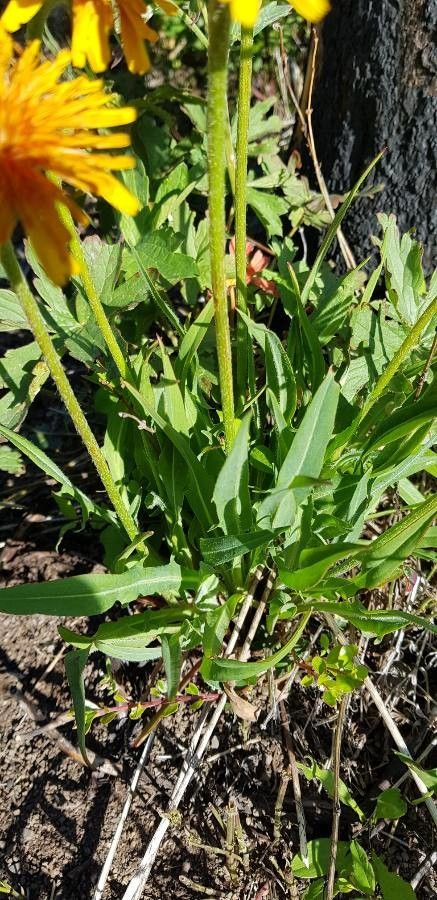
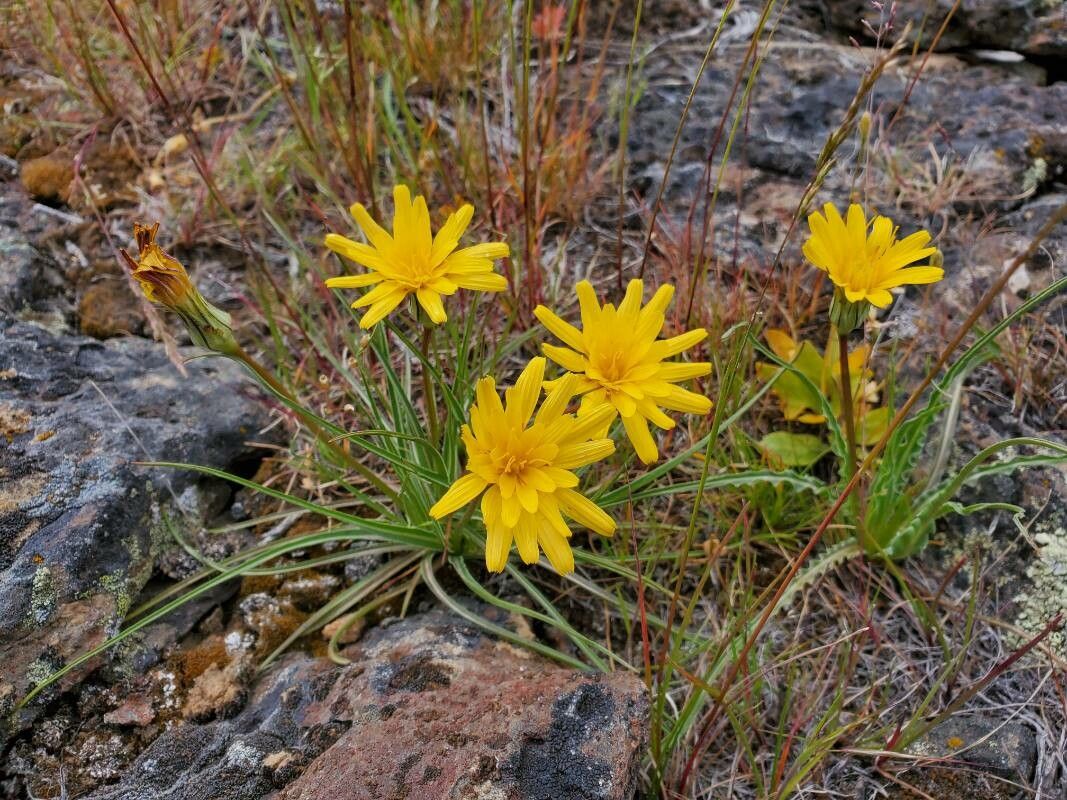
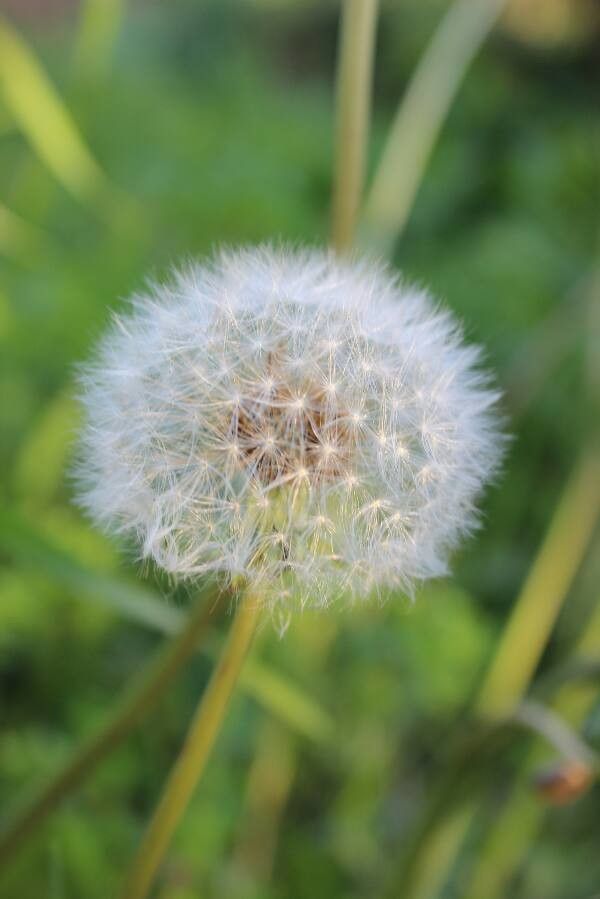
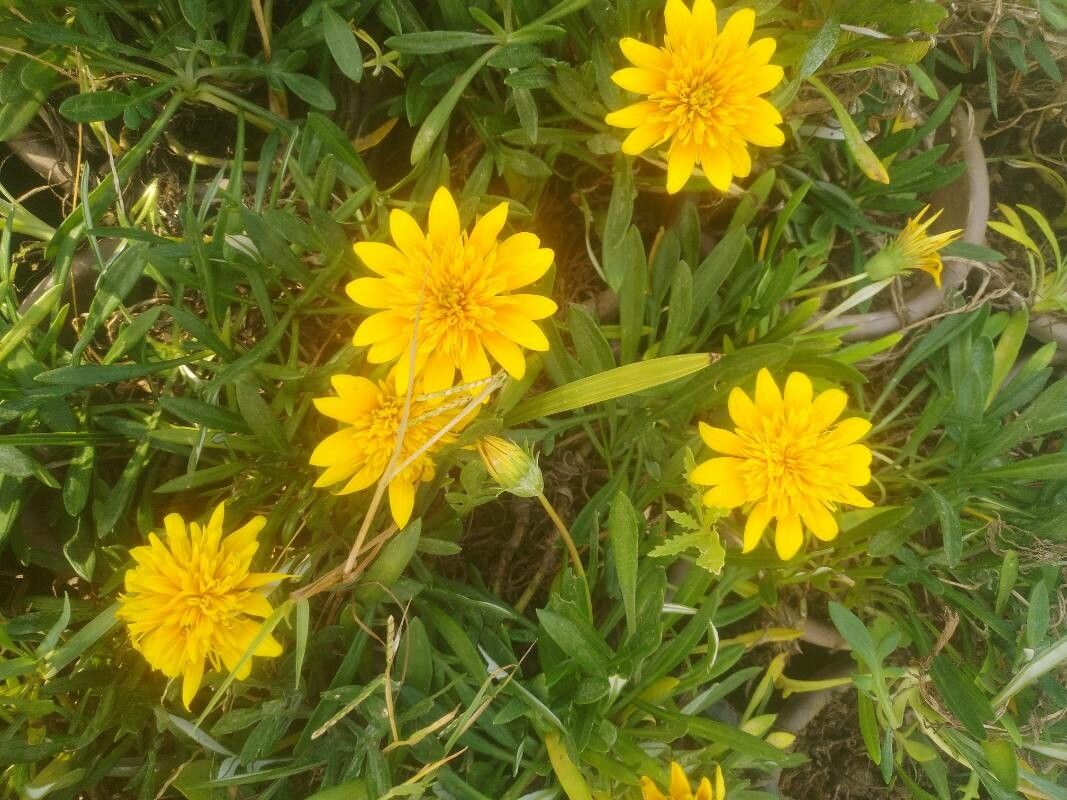
Agoseris apargioides is a species in the family Asteraceae, is commonly called seaside agoseris or seaside false-dandelion. It is native to the Pacific coast of the United States from Washington to central California, where it grows primarily on coastal dunes.Agoseris apargioides is a low-growing, perennial herb with milky or orange sap, that may be stemless or with long, rhizome-like stems that are buried by drifting sand. The leaves form low rosettes on the ground. They are slender to broad, up to 15 centimeters long, and usually with 3-5 pairs of lobes along the margins (these sometimes lacking). The peduncle of the inflorescence can be as tall as 45 centimeters but is usually much shorter. The flower head is up to 2 centimeters wide, surrounded by glabrous to hairy phyllaries, and contains yellow ray florets (the outer ones often have a purple strip on the lower surface) but no disc florets. The fruit is an achene between 5-12 millimeters long; the lower part of the achene contains a single seed, while the upper portion of the achene forms a slender beak that possesses a terminal, white pappus.
Woolly goat chicory has strong disease resistance and is generally not susceptible to illnesses. That said, it can be affected by pests and diseases present in its environment. Such infections are usually mild. In terms of care, this plant needs moderate maintenance. It should be pruned regularly to keep a neat appearance and support healthy growth. Fertilizing can also encourage flowering. Woolly goat chicory is suitable for anyone with outdoor space, like a garden or patio, and does not demand extensive care experience. It may require more attention when grown indoors.
How to keep Agoseris Apargioides.
Light
Woolly goat chicory is a sun-loving, perennial herbaceous plant native to open habitats and commonly found in meadows and grasslands. It prefers full sun but can also tolerate partial sun.
Water
Woolly goat chicory flourishes in dry environments and needs moderate watering just once a week to simulate the occasional rainfall of its natural habitat. Its drought tolerance makes it ideal for outdoor cultivation, where it can take advantage of natural precipitation. Ensuring proper drainage during the growing season is essential for maintaining its optimal health and vitality.
Temperature
Woolly goat chicory can tolerate a wide range of temperatures, but its distribution may still be restricted by particular combinations of moisture and heat. It performs best in warm summer climates with adequate rainfall or irrigation. Extended periods of cloudy, rainy weather, as well as prolonged high temperatures, can increase the chance of Woolly goat chicory dying. In winter, appropriate protection from cold can enhance the plant’s survival.
Fertilizer
The best time to fertilize a Woolly goat chicory is in early spring, when it is coming out of dormancy and starting active growth. Fertilizing supplies essential nutrients needed for healthy development. Although Woolly goat chicory has fairly low fertilizer requirements, an annual application can improve its survival and encourage healthier, longer-lasting flowers.
Pruning
Woolly goat chicory has distinctive woolly leaves and chicory-like flowers. It requires careful pruning from early to late spring. To promote healthy growth and improve airflow, you should remove dead stems and spent flower stalks. This practice helps reduce the risk of disease and enhances the overall health of the plant.
Botanical profile.
- Plant Type
- Herb
- Life Cycle
- Perennial
- Genus
- Agoseris
- Family
- Asteraceae
- Hardiness Zone
- 5-9
- Mature Height
- 10 cm to 25 cm
- Mature Spread
- 10 cm to 20 cm
- Leaf Color
- Green
- Leaf Type
- Semi-evergreen
- Flower Color
- Yellow
- Flower Size
- 2.03 cm
- Bloom Time
- Late spring, Early summer, Mid summer
- Planting Time
- Spring, Summer, Autumn
- Harvest Time
- Mid summer, Late summer, Early fall
Other names.
Reader questions.
How should I water my Woolly goat chicory?
To properly care for the Woolly goat chicory, it is important to follow a few guidelines for watering. Firstly, it is best to use filtered water that is at room temperature to prevent any potential harm to the plant. Tap water may contain particles that can be harmful. Secondly, considering the native warm environment of the Woolly goat chicory, it is advisable to use room temperature or slightly warm water. Cold water can be a shock to the plant's system. Additionally, it is recommended to avoid overhead watering as it can cause problems with the foliage. Instead, water the plant by applying filtered room temperature water directly to the soil until it is fully saturated. This method helps to effectively moisten the roots and support their growth and nutrient absorption.
What should I do if I give my Woolly goat chicory too much or too little water?
Both overwatering and underwatering can harm the health of your Woolly goat chicory, but overwatering is more common. When the species receives excessive water, the stems and leaves may wilt and turn yellow. Prolonged overwatering can also lead to diseases like root rot, mold, and mildew, which can kill the plant. The Woolly goat chicory has decent drought tolerance, so underwatering is less likely. However, when it does happen, the leaves become brittle and brown. It's important to identify signs of overwatering early. Some diseases caused by overwatering, like root rot, may not be fixable if you delay. Reduce watering immediately if you notice early signs of overwatering. Evaluate the soil quality of the plant and replace it with well-draining potting mix if it drains poorly. If you notice signs of underwatering, simply water more regularly until the signs disappear.
How frequently should I water my Woolly goat chicory plant?
If your Woolly goat chicory is in a pot, the best way to determine if it needs water is by checking the soil with your finger. If the top two to three inches of soil are dry, it's time to water. The same method can be used for outdoor plants grown in the ground. Once again, if the first few inches of soil are dry, it's time to water. In the spring and early fall, watering once a week is usually sufficient. However, during extremely hot weather, you may need to water twice a week or more. It's worth noting that mature and well-established Woolly goat chicory can tolerate drought well.
How much water does my Woolly goat chicory require?
When watering your Woolly goat chicory, don't be afraid to give it a good amount of water. Make sure the top few inches of soil are dry before watering, then give it a thorough soak. You want to add enough water that it flows out of the drainage holes at the bottom of the pot, but be careful not to let water accumulate in the soil. If you don't see water draining from the pot, you may not have watered enough, and if water isn't draining at all, you may have soil that doesn't drain well, which is bad for the plant. If the plant is outside, 1 inch of rain per week will be enough.
How do I water my Woolly goat chicory at different times when it's growing?
The water needs of the Woolly goat chicory vary depending on its different growth stages. In the first few years of its life or when it is transplanted to a new location, it requires more water to support the growth of new roots, which are essential for future development. These young roots perform better with a bit more moisture. However, after a few seasons, the plant needs less water. Additionally, during the bloom period, the flower development process requires a significant amount of moisture, so it may be necessary to provide more water during this time.
How should I give water to my Woolly goat chicory throughout the year?
The water needs of the Woolly goat chicory are highest during the hottest months of the year. In summer, the plant may need to be watered more than once per week, depending on how quickly the soil dries out. However, during winter, the plant enters a dormant phase and requires significantly less water. In fact, watering may not be necessary at all during the winter months. If you do choose to water during winter, it should be done no more than once per month to avoid the risk of disease for the Woolly goat chicory.
What's the difference if I water my Woolly goat chicory inside or outside?
The Woolly goat chicory is commonly grown indoors, particularly for gardeners in non-temperate and non-tropical regions. It is important to note that the soil in a container can dry out faster compared to soil in the ground. Additionally, if there are drying elements like air conditioning units present, the Woolly goat chicory may require more frequent watering compared to if it were planted outside. In such cases, the need for watering may be significantly reduced or even unnecessary if the plant receives regular rainfall. However, for those who grow the plant indoors, watering will be necessary as rainwater cannot soak the soil.