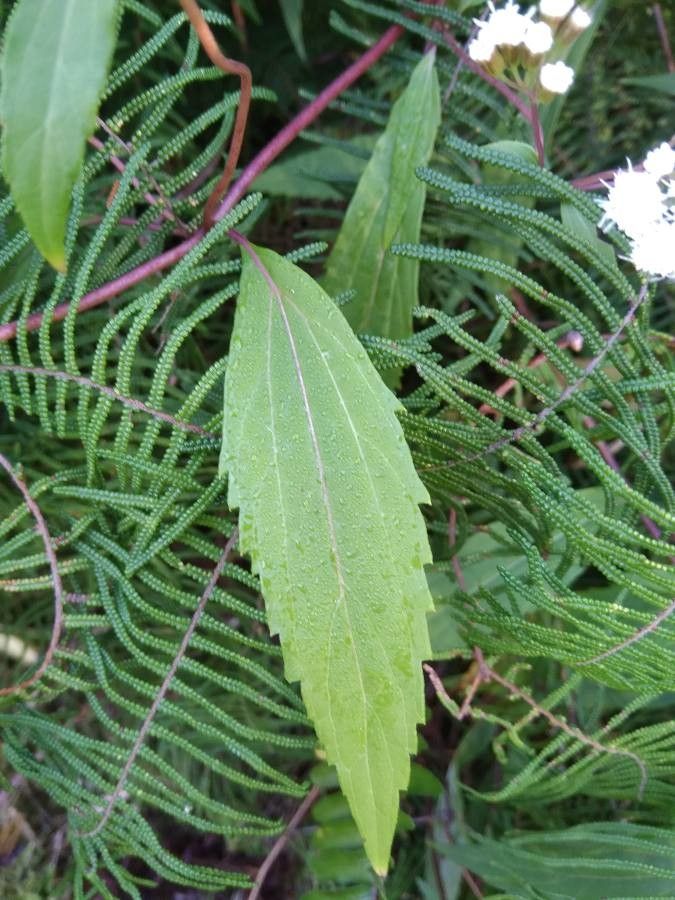
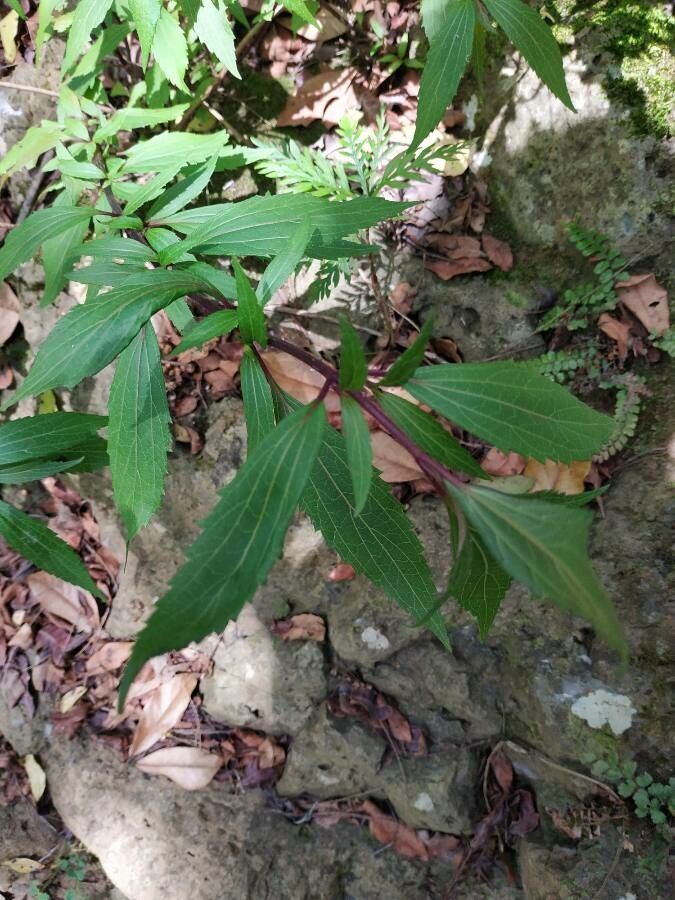
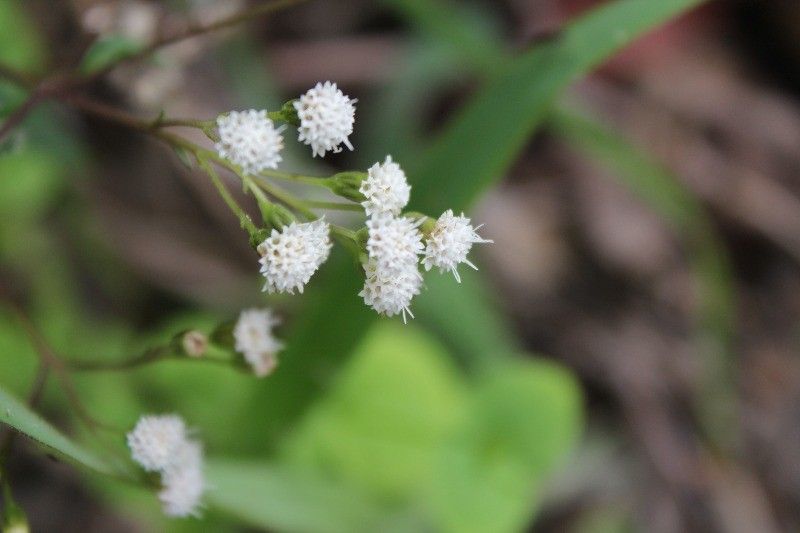
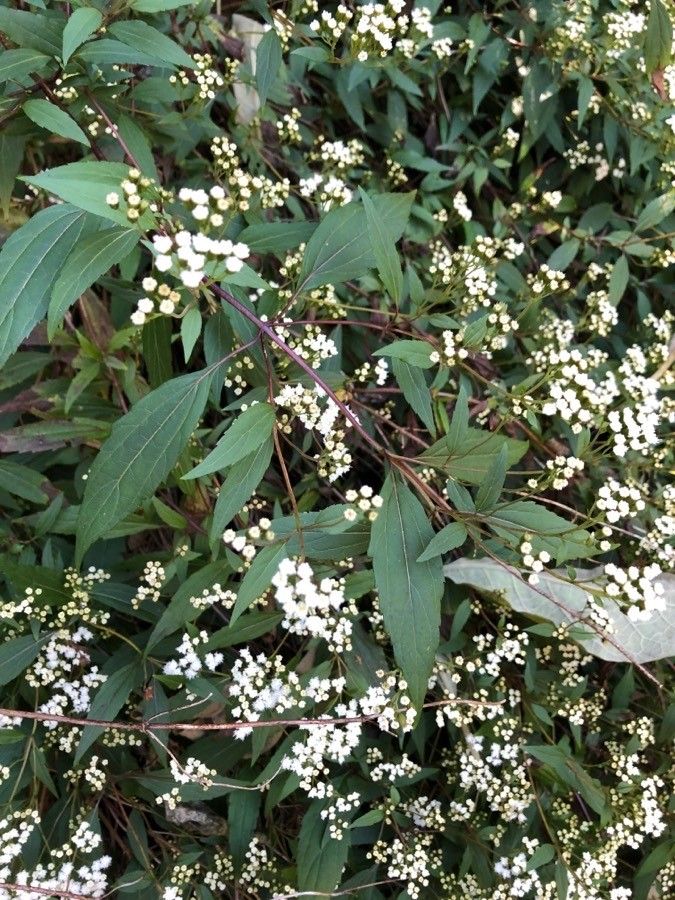
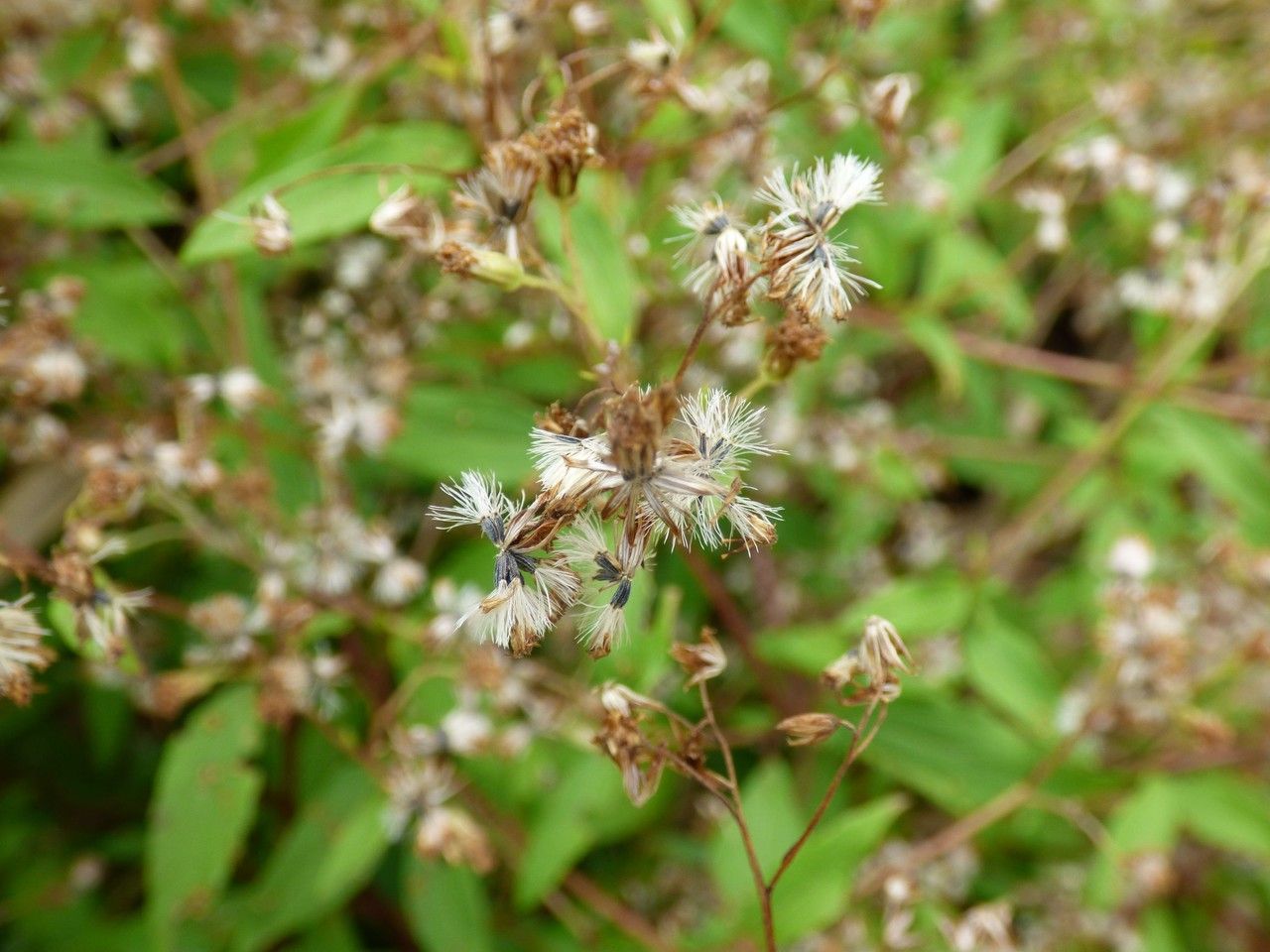
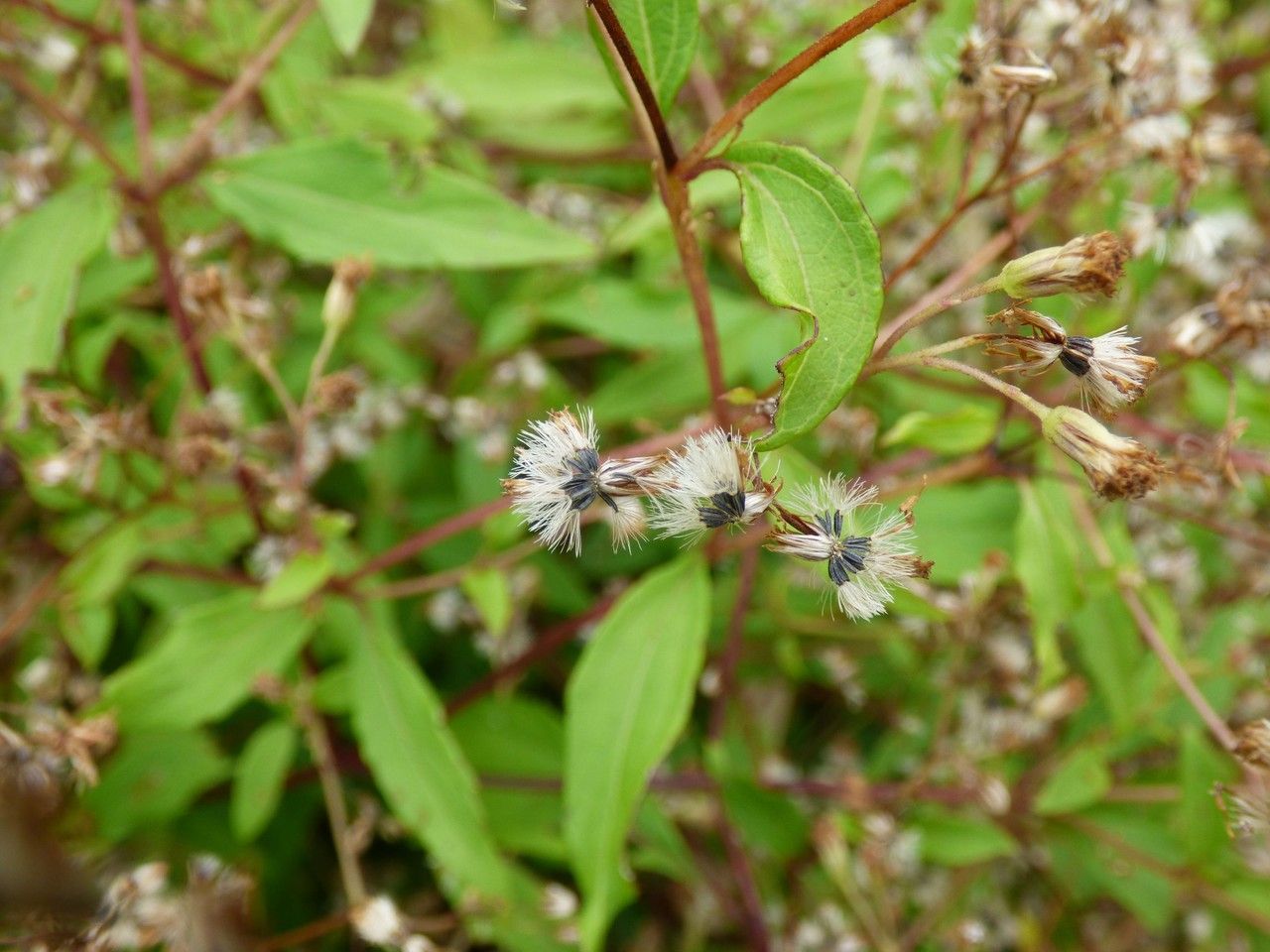
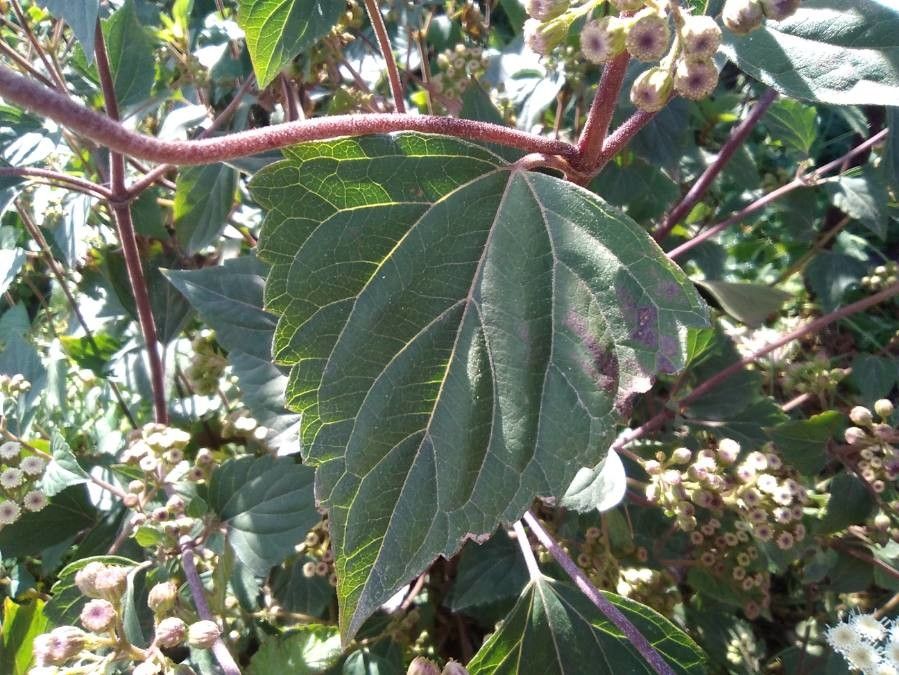
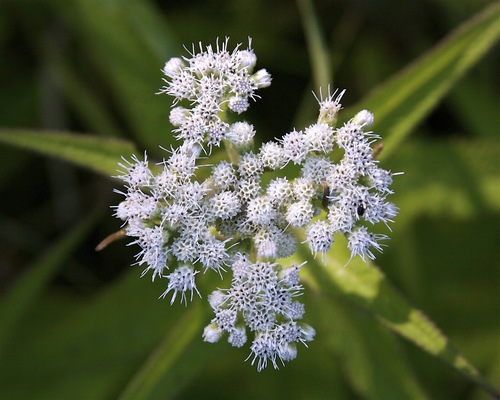
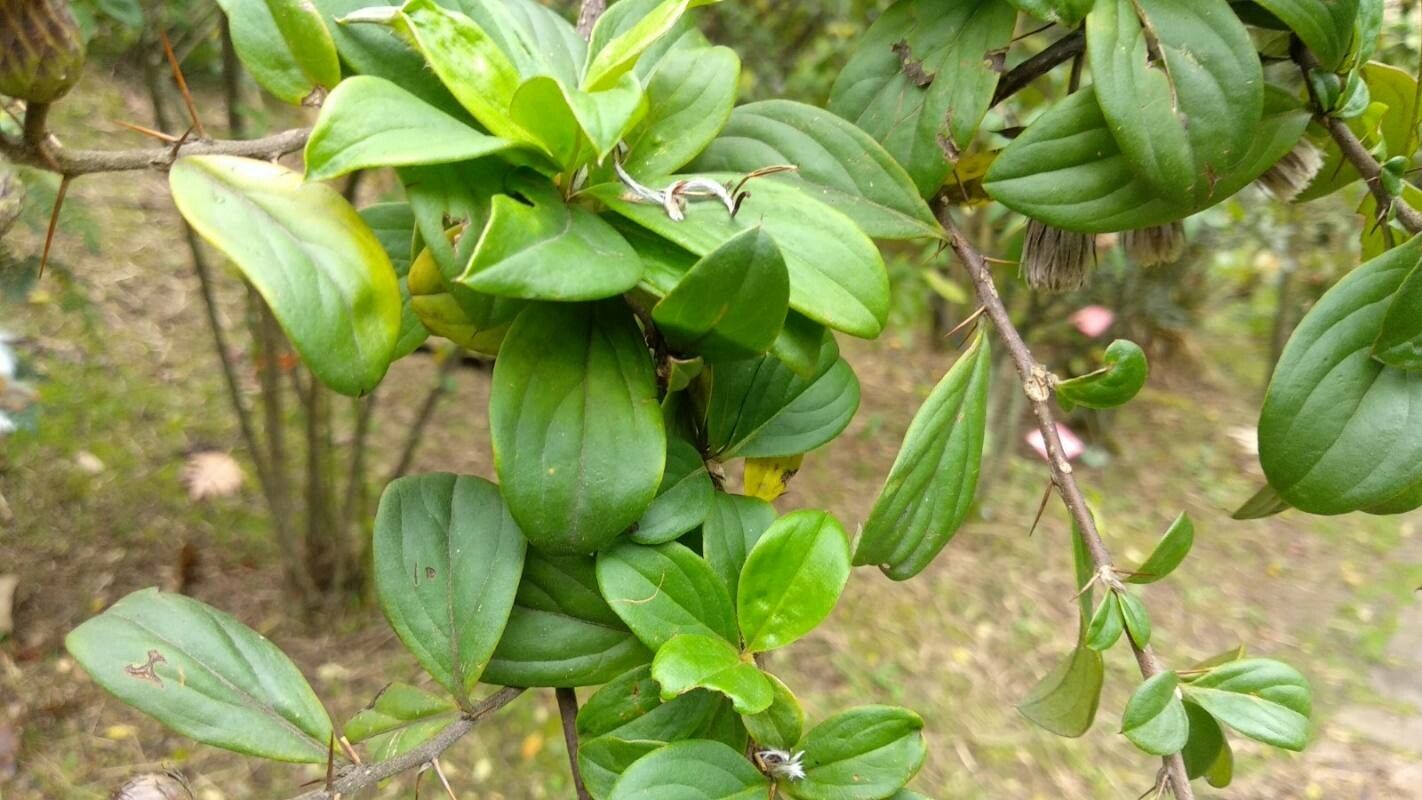
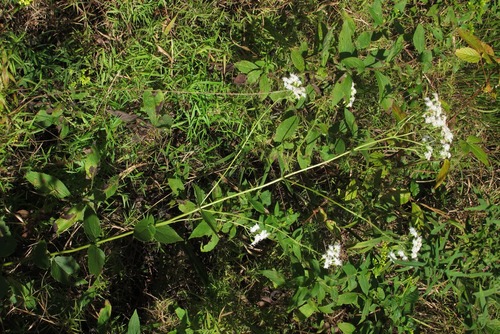
Ageratina riparia, commonly known as white snakeroot, is a perennial herbaceous plant native to North America. It typically grows to a height of 2-4 feet and features clusters of small white flowers that bloom in late summer and early fall. The plant thrives in moist soils and partial shade but can also tolerate full sun.
Although aesthetically pleasing, white snakeroot can be toxic to livestock if ingested in large quantities. The leaves contain a toxin called tremetol, which can cause tremors, weakness, and even death in animals that consume it.
Despite its toxicity to livestock, Ageratina riparia has been used for medicinal purposes by Native Americans for centuries. They believed it had anti-inflammatory properties and used it to treat snakebites.
Overall, Ageratina riparia is a plant of interest due to its medicinal properties and potential dangers if not handled properly around livestock.
Botanical profile.
- Plant Type
- Shrub
- Life Cycle
- Perennial
- Genus
- Ageratina
- Family
- Asteraceae
- Hardiness Zone
- 5-11
- Mature Height
- 40 cm to 61 cm
- Mature Spread
- 61 cm to 91 cm
- Leaf Color
- Green, Dark Green
- Leaf Type
- Semi-evergreen
- Flower Color
- White
- Flower Size
- 0.51 cm to 0.51 cm
- Bloom Time
- Mid spring, Late spring, Early summer
- Planting Time
- Spring, Summer
- Harvest Time
- Summer
- Native Area
- Mexico
Other names.