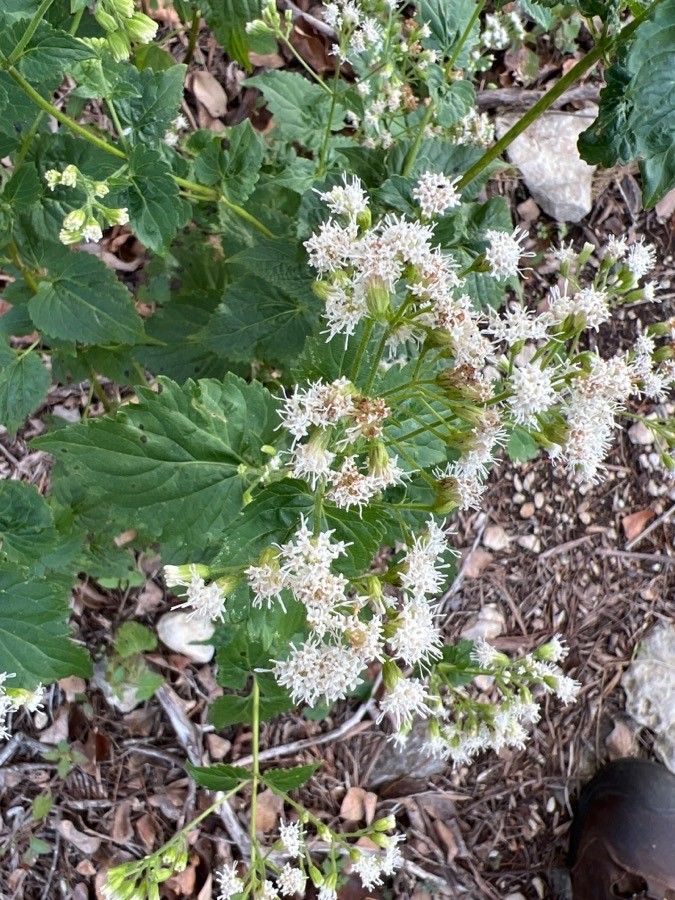
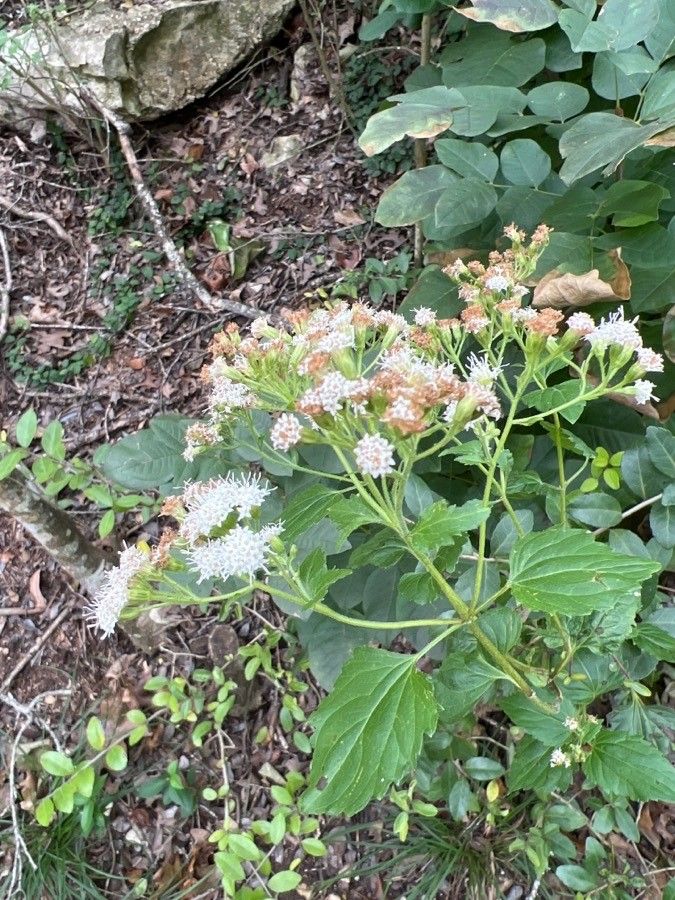
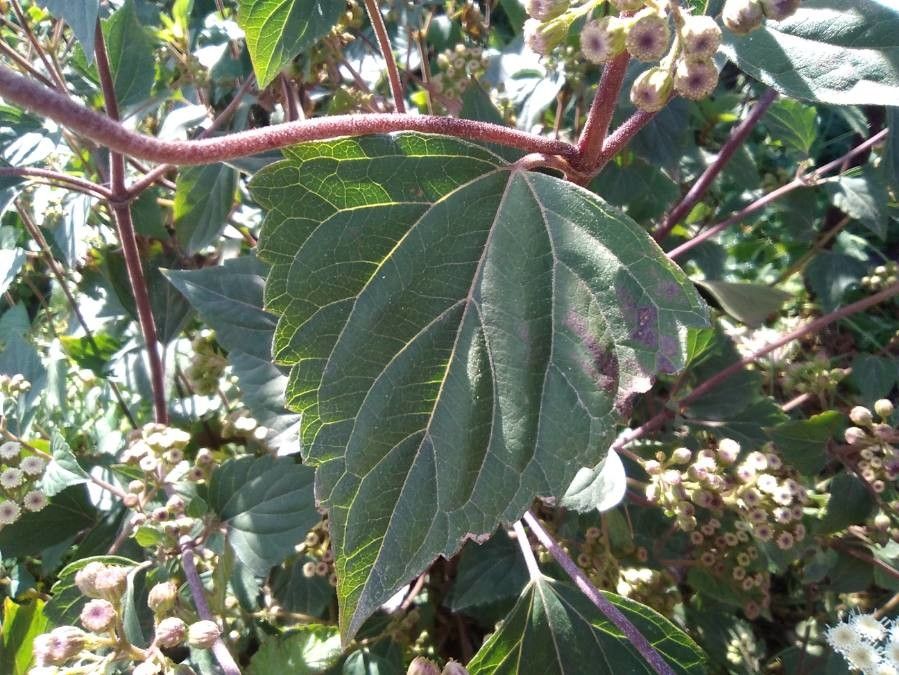
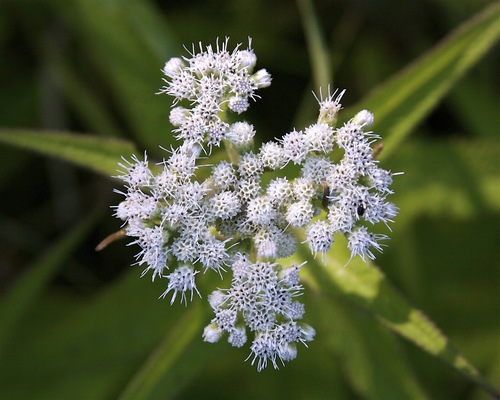
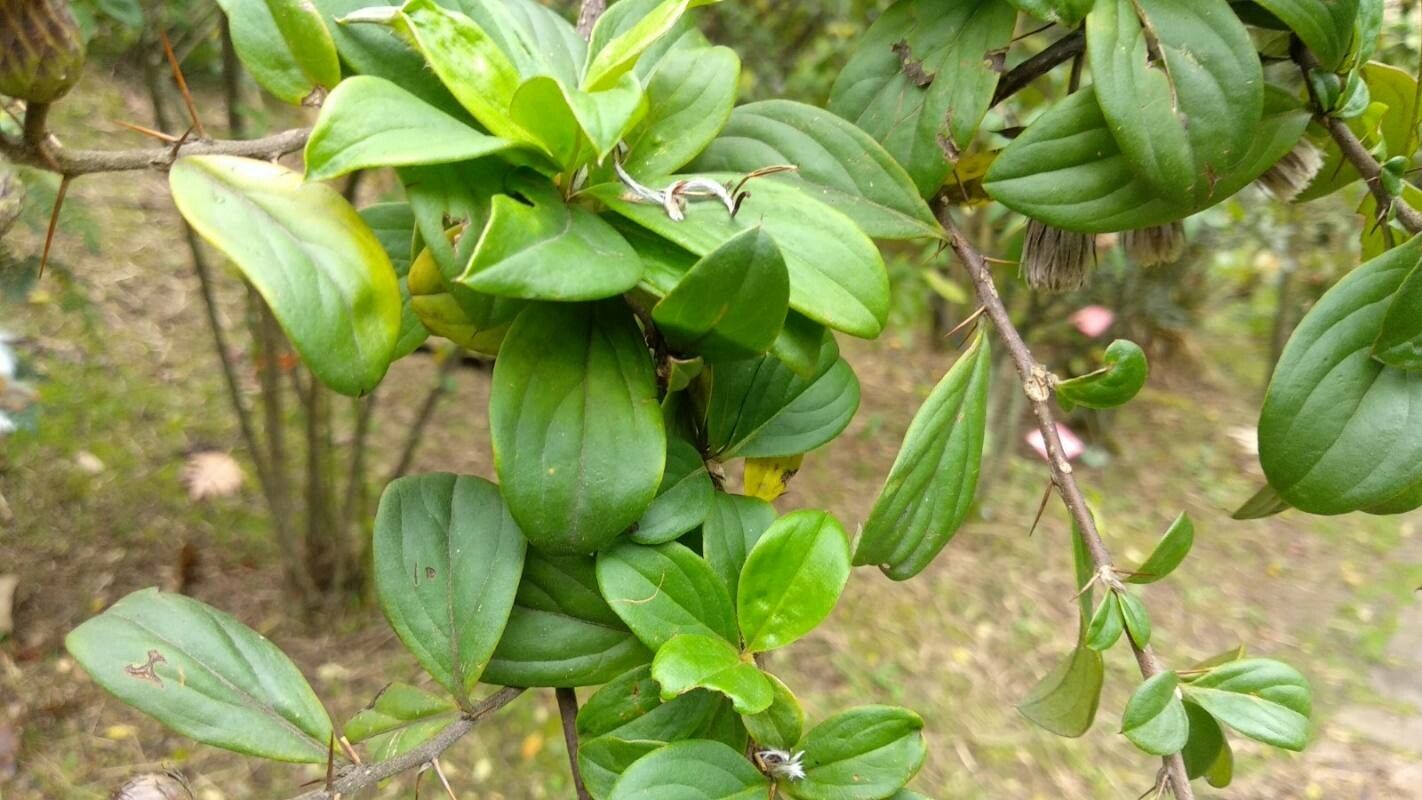
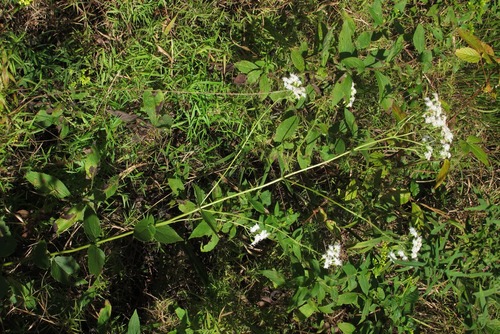
Ageratina herbacea is a North American species of flowering plants in the family Asteraceae known by the common names fragrant snakeroot and Apache snakeroot. It is native to desert regions (Sonoran, Mojave, and Chihuahuan Deserts) of the southwestern United States (southeastern California, southern Nevada, southern Utah, Colorado, Arizona, New Mexico, western Texas) and northern Mexico (Baja California, Chihuahua, Coahuila, Sonora). It grows in rocky slopes in conifer forests and woodlands.Ageratina herbacea is a perennial herb growing a green, fuzzy stem from a woody caudex to heights between about 50 and 70 centimeters. The leaves are yellow to green or grayish and are triangular to heart-shaped. The inflorescence is a cluster of fuzzy flower heads under a centimeter long containing long, protruding white disc florets and no ray florets. The fruit is an achene a few millimeters long with a rough bristly pappus.
Fragrant snakeroot generally shows good resistance to disease and is not often susceptible to illnesses. However, it can be vulnerable to pests and diseases present in its environment. These problems are usually not serious. As for care, the plant requires a moderate level of maintenance. Regular pruning is needed to keep it looking good and to support healthy growth. Fertilizing can also help encourage flowering. Fragrant snakeroot is well suited for people with outdoor spaces such as a garden or patio and does not demand extensive care experience. It may need extra attention when grown indoors.
How to keep Ageratina Herbacea.
Fertilizer
Typically, a single application of fertilizer in spring is sufficient for Fragrant snakeroot, but multiple feedings can maximize growth. Feed at intervals of one month to one and a half months. Fertilization improves leaf appearance and function, encouraging even color and a healthy texture. It also promotes root development and nutrient uptake, supporting long-term plant health.
Pruning
Prune fragrant snakeroot from early to late spring to promote healthy growth and maintain its shape. Be sure to remove any damaged stems and thin out dense areas to improve airflow. Regular pruning not only encourages blooming but also prevents legginess, enhancing the plant's appearance and overall health. Avoid pruning late in the season to maintain the natural blooming cycle.
Botanical profile.
Other names.