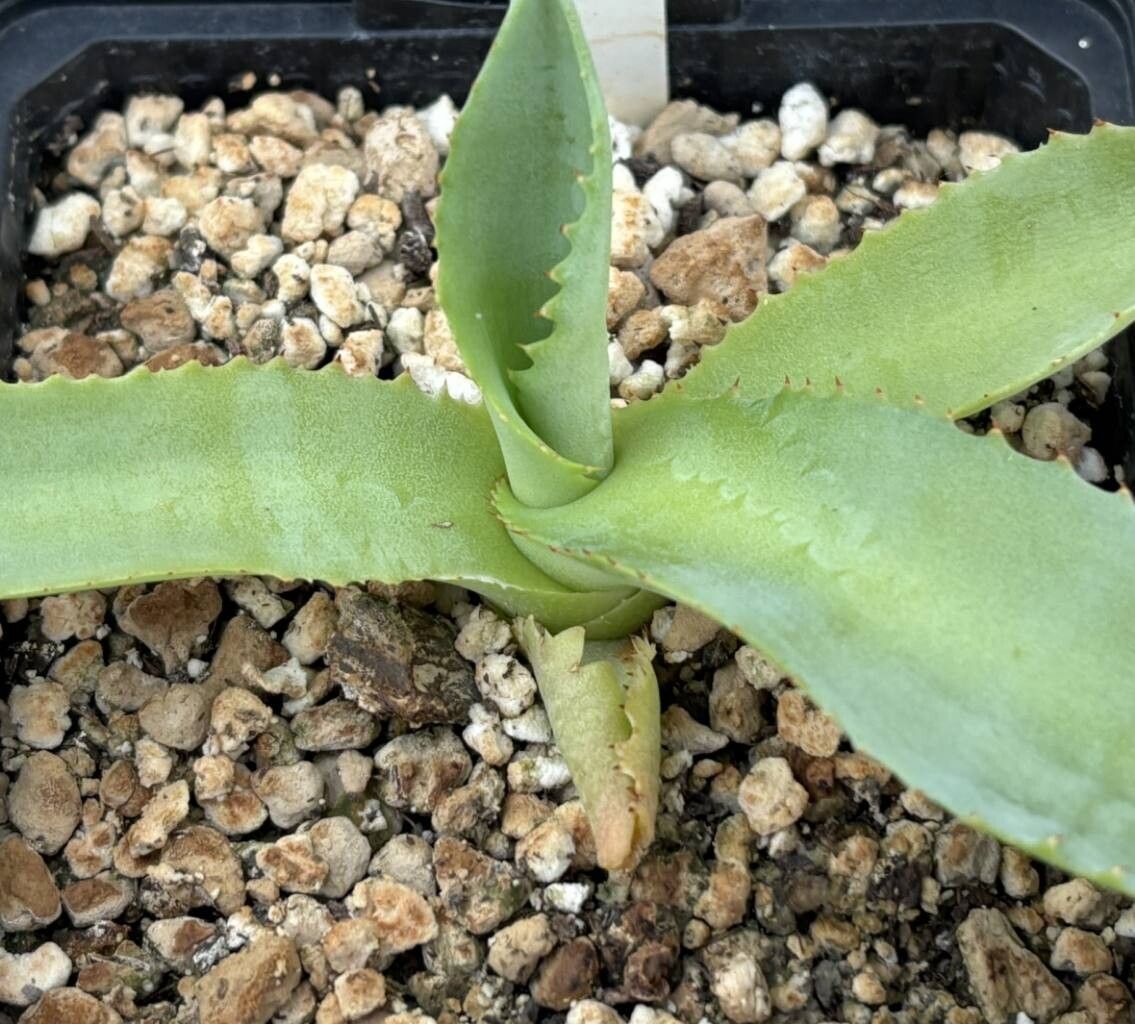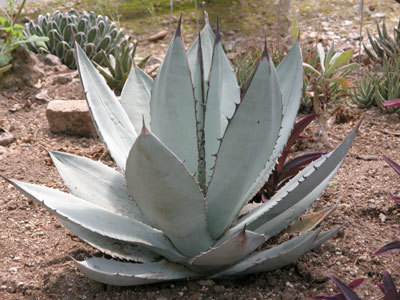
Agave titanota, the chalk agave, is a species of flowering plant in the family Asparagaceae. It is a medium-sized evergreen succulent perennial native to Oaxaca, Mexico. It often reaches 1-2 feet tall and 2-3 feet wide.The plant forms a solitary rosette of broad whitish green leaves with variable spines, which are 1-2 feet long and 5 inches wide, typically narrower toward the base and widest near the tip. Occasionally, it produces offsets. Mature plants may produce a flower head from 3m to 6m tall with yellow flowers. As it is monocarpic, this signals the death of the plant.It can tolerate temperatures of −3 °C (27 °F), but in practice is best grown in a sheltered spot without severe frosts. It has gained the Royal Horticultural Society’s Award of Garden Merit. This plant is suitable for USDA hardiness zones 9-11. It may be susceptible to scale insects and chlorosis resulting from magnesium deficiency.Cultivars include 'White Ice', 'Filigree', and 'Solar Eclipse.'
Rancho tambor agave has moderate disease resistance and is more sensitive to humidity and excessive watering. It is also more likely to develop diseases when it receives little light and is overwatered. In terms of care, Rancho tambor agave is drought-tolerant and can endure long periods without water. It needs little fertilizer and only occasional pruning. These characteristics make it suitable for people at any experience level, especially those who prefer to spend less time on plant care or who may be away from home for long stretches. It is a good option for those who do not want to invest a lot of time in maintenance but still want an easy-to-care-for plant.
How to keep Agave Titanota.
Light
Originating in arid areas, Rancho tambor agave prospers in full sun; its native habitat is marked by intense sunlight and very little shade. It can also tolerate partial sun, offering some flexibility in its growth.
Water
Rancho Tambor agave thrives in arid climates thanks to its excellent drought tolerance. It only needs to be watered every three weeks to maintain balanced moisture levels. This evergreen plant retains its leaves all year round, which helps minimize water loss through transpiration. Its ability to manage moisture effectively makes it an ideal choice for container growth.
Temperature
Rancho tambor agave originates from a temperate climate. It prefers temperatures between 68 and 95°F (20 to 35°C). To support healthy growth, recreate that environment indoors by adjusting temperatures to its preferred range, underscoring the importance of seasonal variation.
Fertilizer
For Rancho tambor agave, light applications of fertilizer once or twice a year during the growing season are adequate. Avoid fertilizing in winter or in summer when the plant is dormant. Cut back on fertilizer for plants that have been repotted, and wait a couple of months after repotting before applying fertilizer. Fertilizing promotes healthy growth and encourages blooms.
Pruning
As Rancho Tambor agave grows, its lower leaves might turn yellow and dry out. To maintain its appearance, promptly remove these leaves. Additionally, trim any infected leaves to prevent the spread of pests and diseases to the healthy parts of the plant.
Pot & Repot
Rancho Tambor Agave is a slow-growing succulent that can become quite large without spreading. Repot it every two years in the spring, using a larger pot with good drainage. After repotting, place the plant in bright light and refrain from watering it for a week to prevent root rot and encourage healthy growth.
Botanical profile.
- Plant Type
- Succulent
- Life Cycle
- Perennial
- Genus
- Agave
- Family
- Asparagaceae
- Hardiness Zone
- 9
- Mature Height
- 91 cm
- Mature Spread
- 1.52 m
- Leaf Color
- Green
- Leaf Type
- Evergreen
- Flower Color
- Yellow
- Flower Size
- 5.08 cm to 7.62 cm
- Bloom Time
- Early summer, Mid summer
- Planting Time
- Spring, Summer
- Harvest Time
- Late summer, Early fall, Mid fall
- Native Area
- Mexico