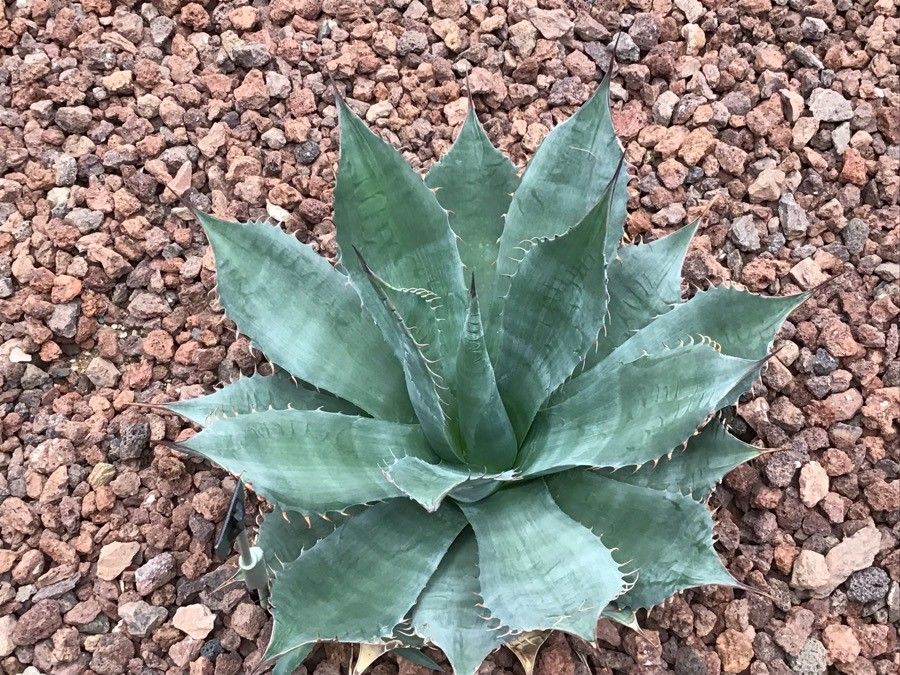
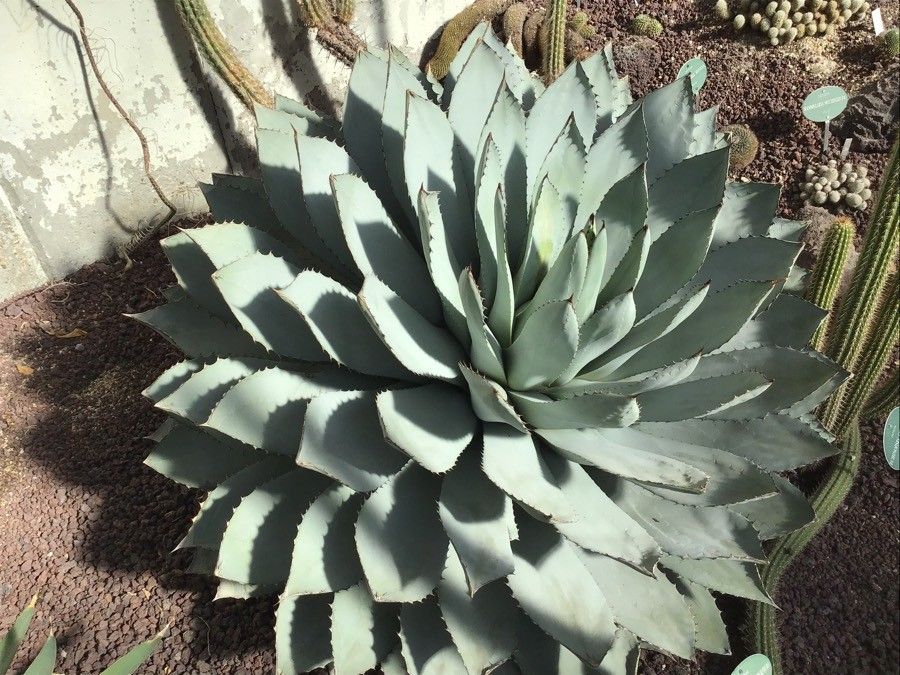
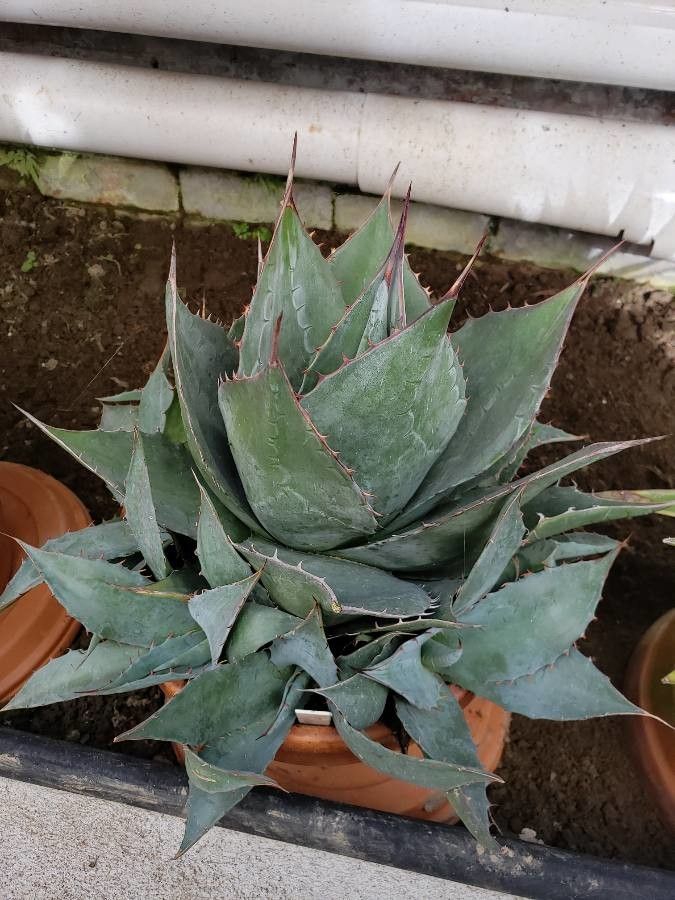
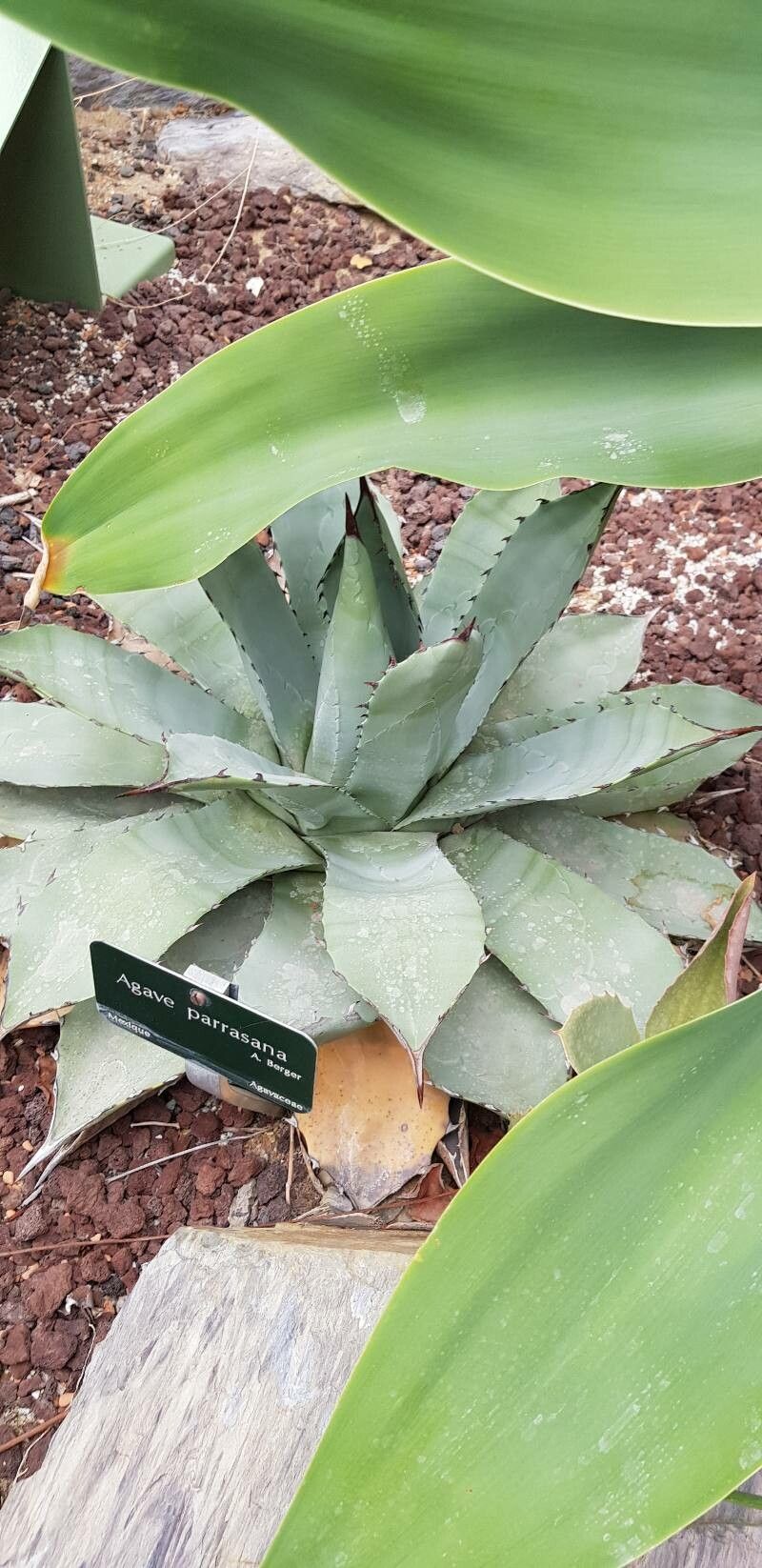
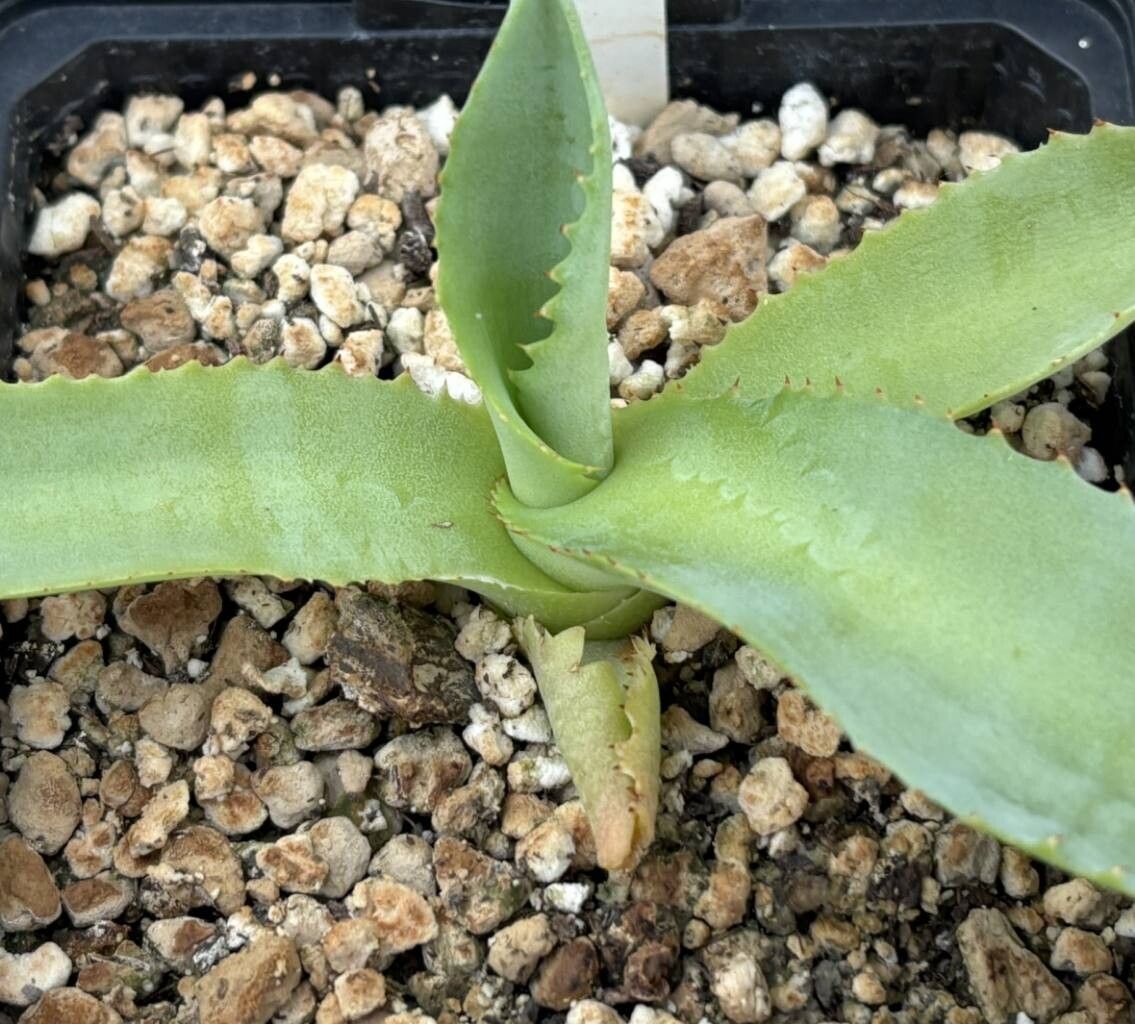
Agave parrasana, the cabbage head agave or cabbage head century plant, is a flowering plant in the family Asparagaceae. A slow-growing evergreen succulent from North East Mexico, it produces a compact rosette of fleshy thorn-tipped grey-green leaves, 60 cm tall and wide. The leaves are blue green and the thorns are red. The whole plant may reach 100 centimeters tall and wide. Occasionally mature plants produce a spectacular flower head up to 6m tall, opening red and turning yellow. This signals the death of the flowering rosette, however offsets may form and continue growing. As it can tolerate temperatures of −12 °C (10 °F) or less, it is a popular plant to grow outdoors in a sheltered cactus garden or similar environment, and has gained the Royal Horticultural Society's Award of Garden Merit. In the US, it may be grown outdoors in USDA hardiness zones 7–10. It is susceptible to scale and chlorosis resulting from magnesium deficiency.
Agave parrasana has moderate resistance to disease but is relatively sensitive to humidity and excessive watering. It is also more likely to develop diseases if kept in low light and overwatered. In terms of care, Agave parrasana is drought-tolerant and can endure long stretches without water. It needs little fertilizer and only occasional pruning. Because of this, it is appropriate for growers of any experience level, especially those who prefer to spend less time on plant care and who may be away from home for long periods. It is a good option for people who do not want to invest a lot of time in maintenance but still want an easy-to-care-for plant.
How to keep Agave Parrasana.
Light
Native to arid regions, Agave parrasana thrives in full sun; its native habitat is characterized by intense sunlight and minimal shade. It also tolerates partial sun, giving it some adaptability in its growth.
Temperature
Agave parrasana performs best in warm settings and needs higher temperatures during the growing season to support growth and metabolic processes. It favors abundant sunlight, proper moisture, and good airflow. However, it is vulnerable to harm from very low temperatures and from overwatering. It’s also important to maintain balance and avoid both excessively high heat and overly dry conditions.
Fertilizer
For Agave parrasana, small amounts of fertilizer once or twice a year during the growing season are adequate. Do not fertilize in winter or summer, when the plant is dormant. Reduce fertilizer for repotted plants and wait a couple of months after repotting before you begin fertilizing. Fertilizing helps sustain healthy growth and encourages blooming.
Botanical profile.
- Plant Type
- Succulent
- Life Cycle
- Perennial
- Genus
- Agave
- Family
- Asparagaceae
- Hardiness Zone
- 8-11
- Mature Height
- 91 cm
- Mature Spread
- 91 cm
- Leaf Color
- Blue, Green
- Leaf Type
- Evergreen
- Flower Color
- Yellow
- Flower Size
- 5.08 cm to 6.35 cm
- Bloom Time
- Early summer, Mid summer
- Planting Time
- Spring, Summer
- Harvest Time
- Late summer, Early fall, Mid fall
- Native Area
- Mexico