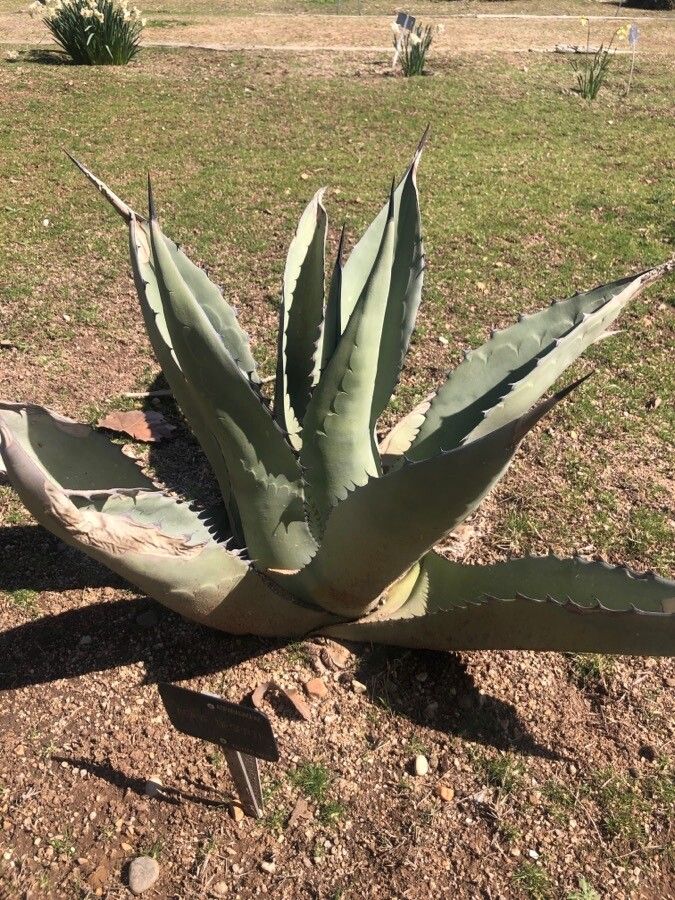
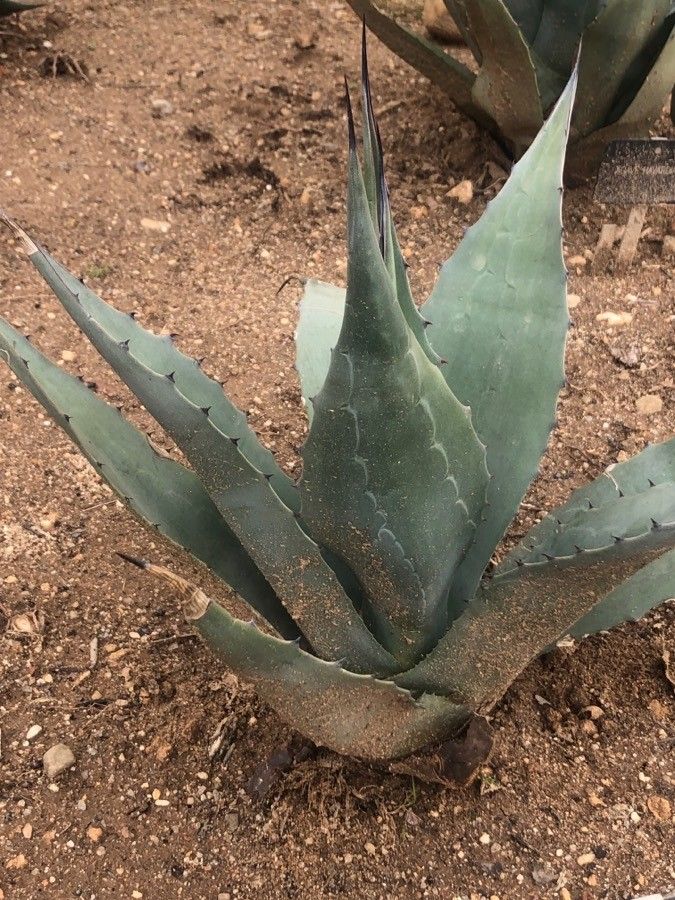
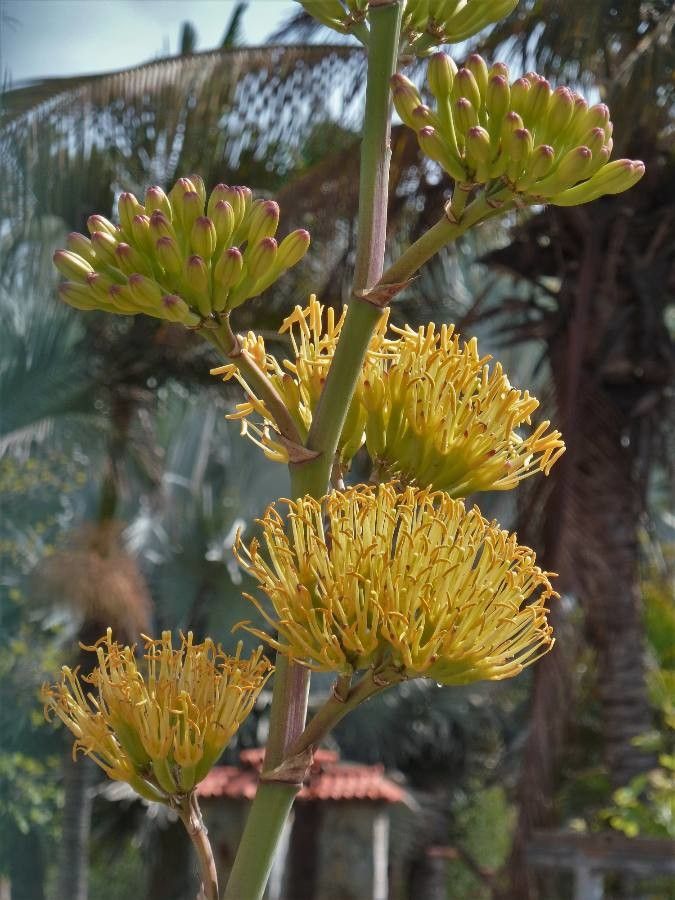
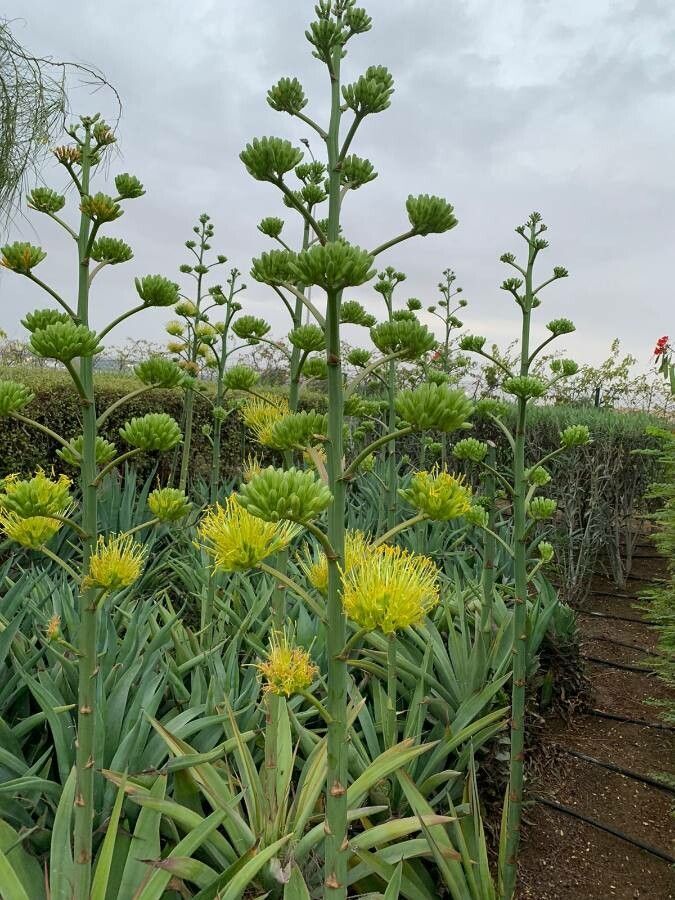
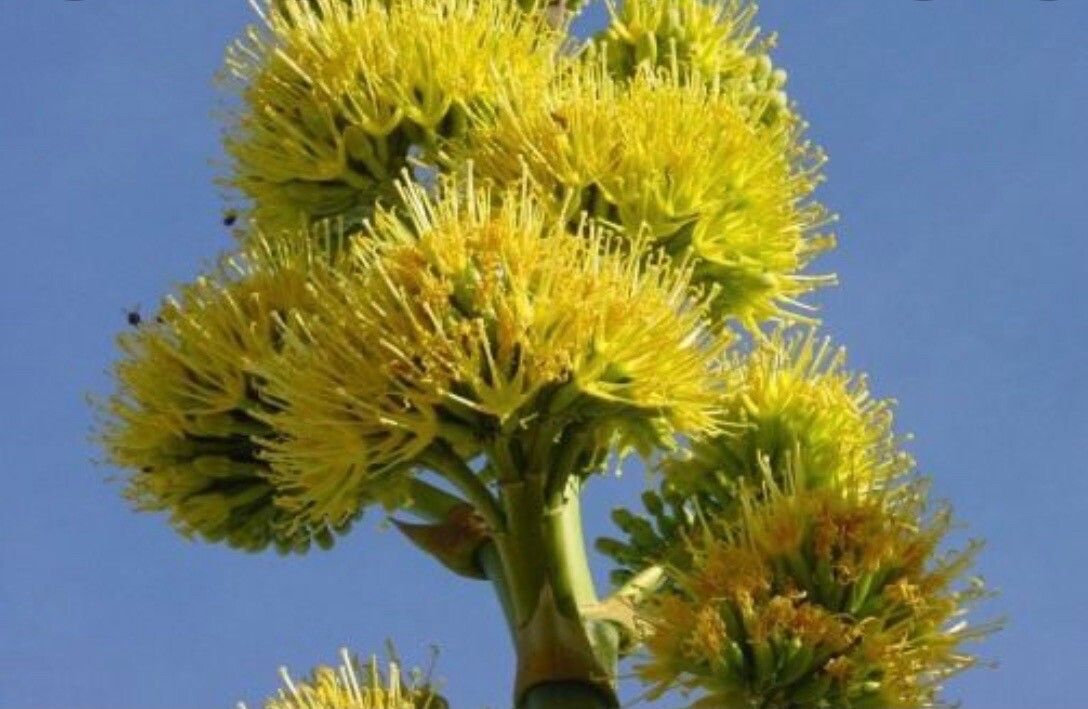
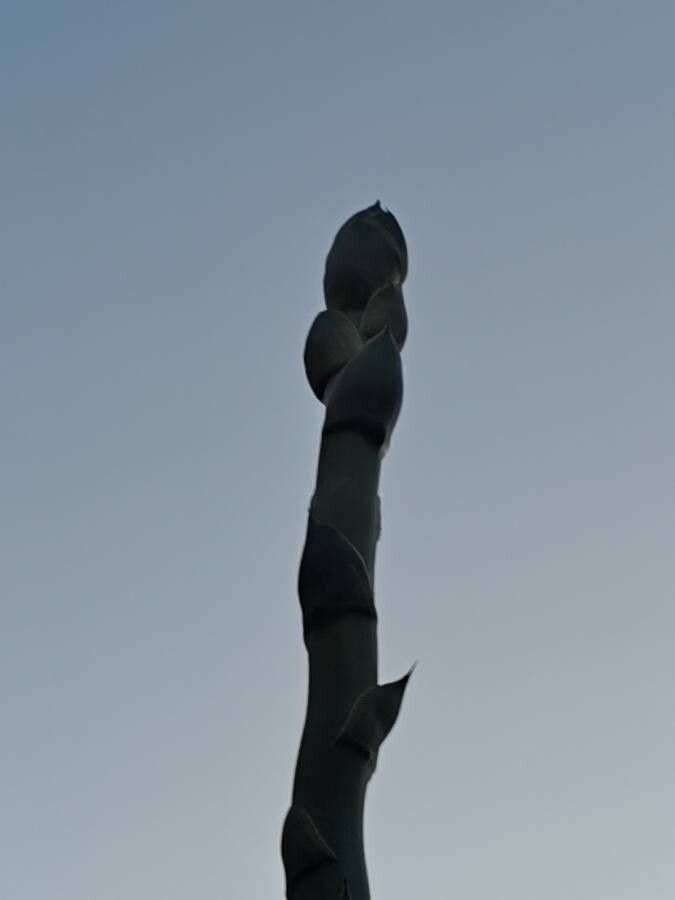
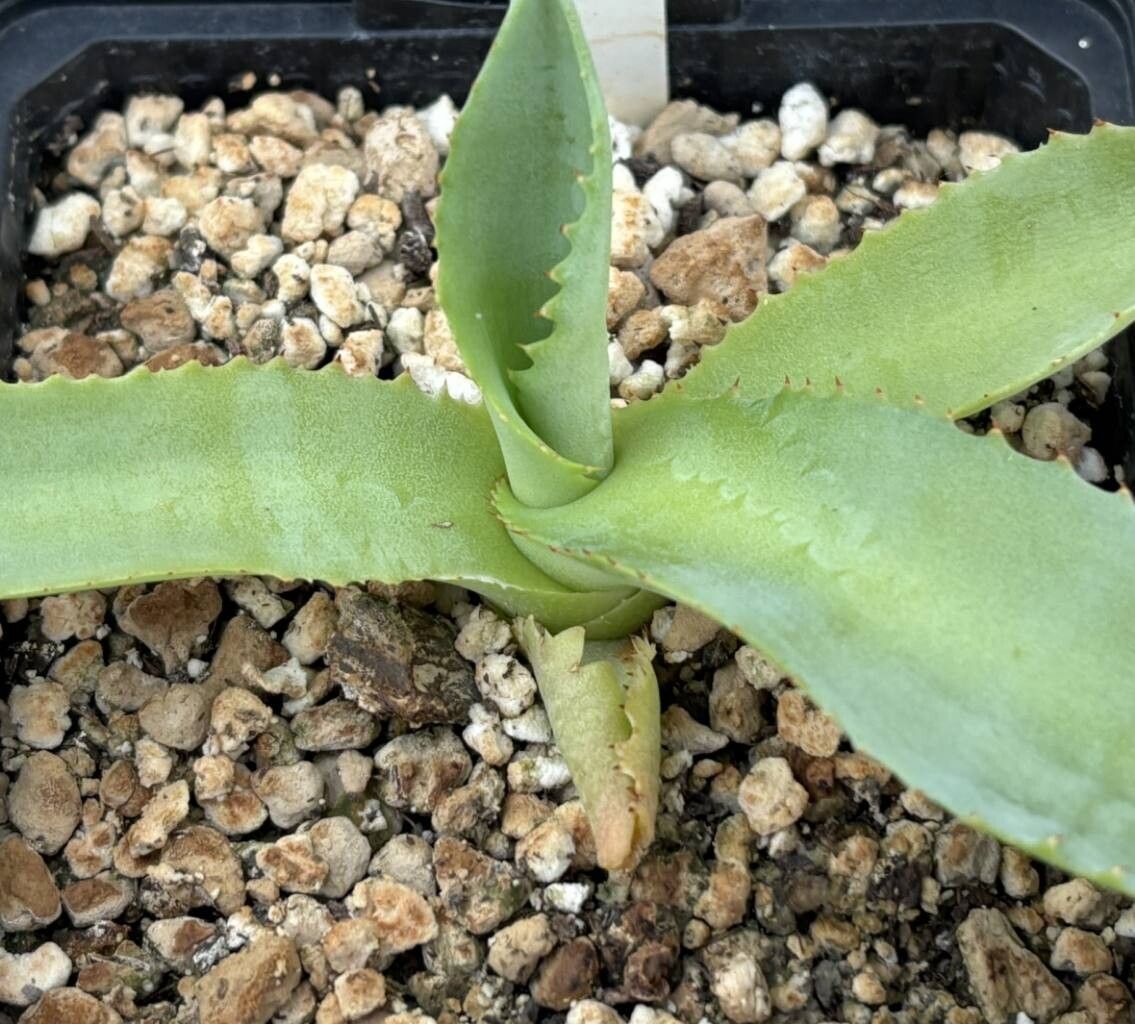
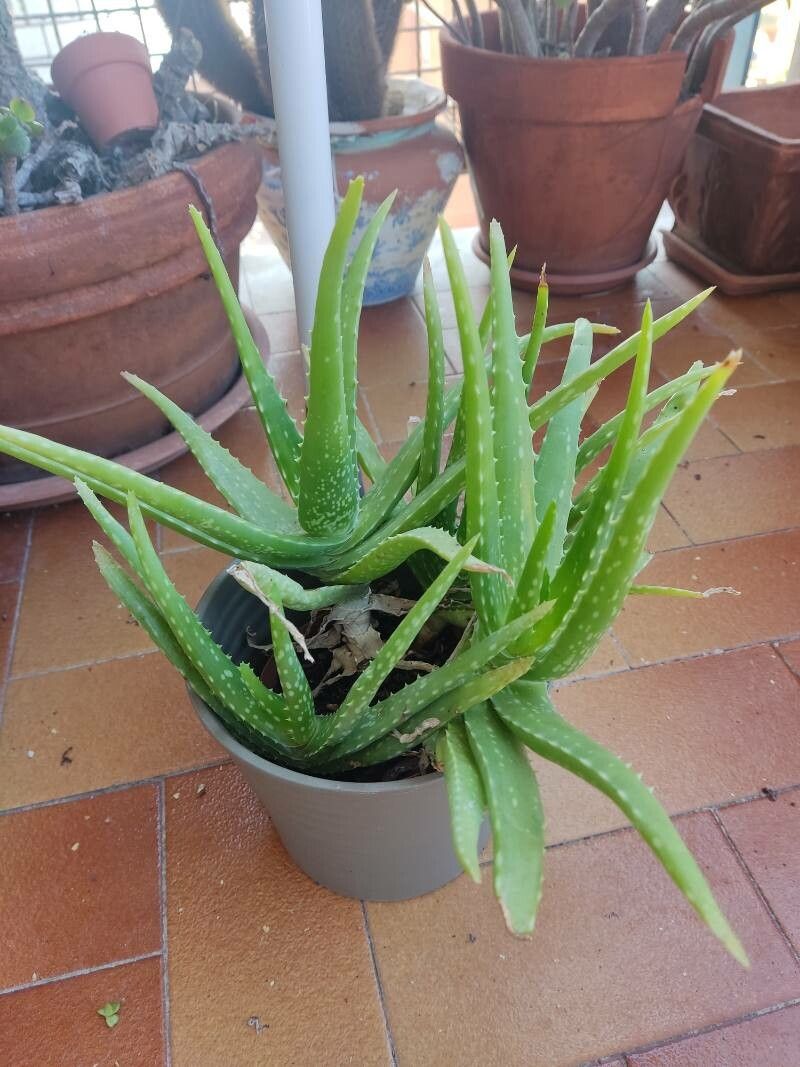
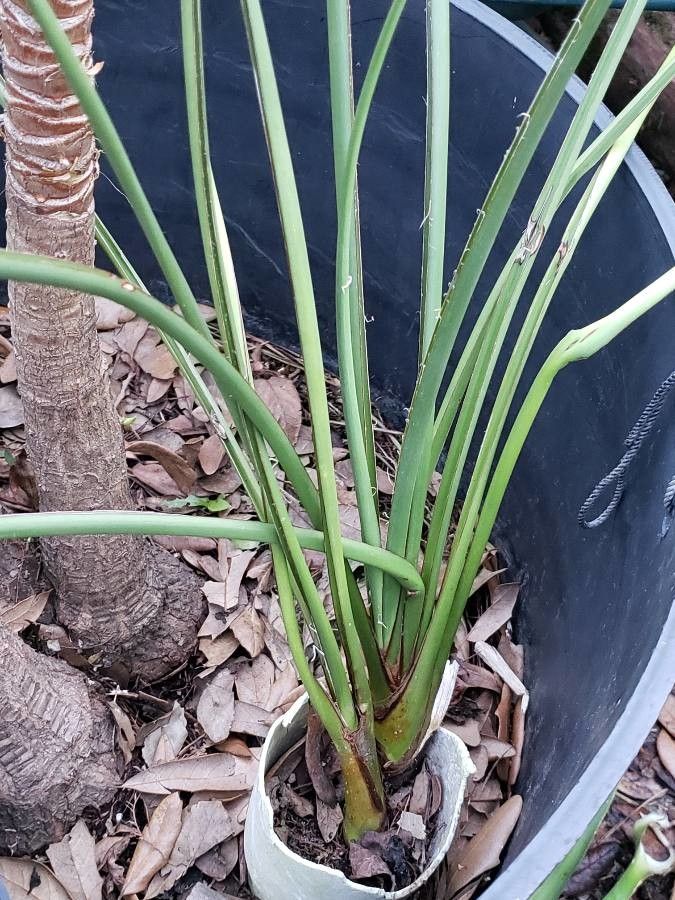
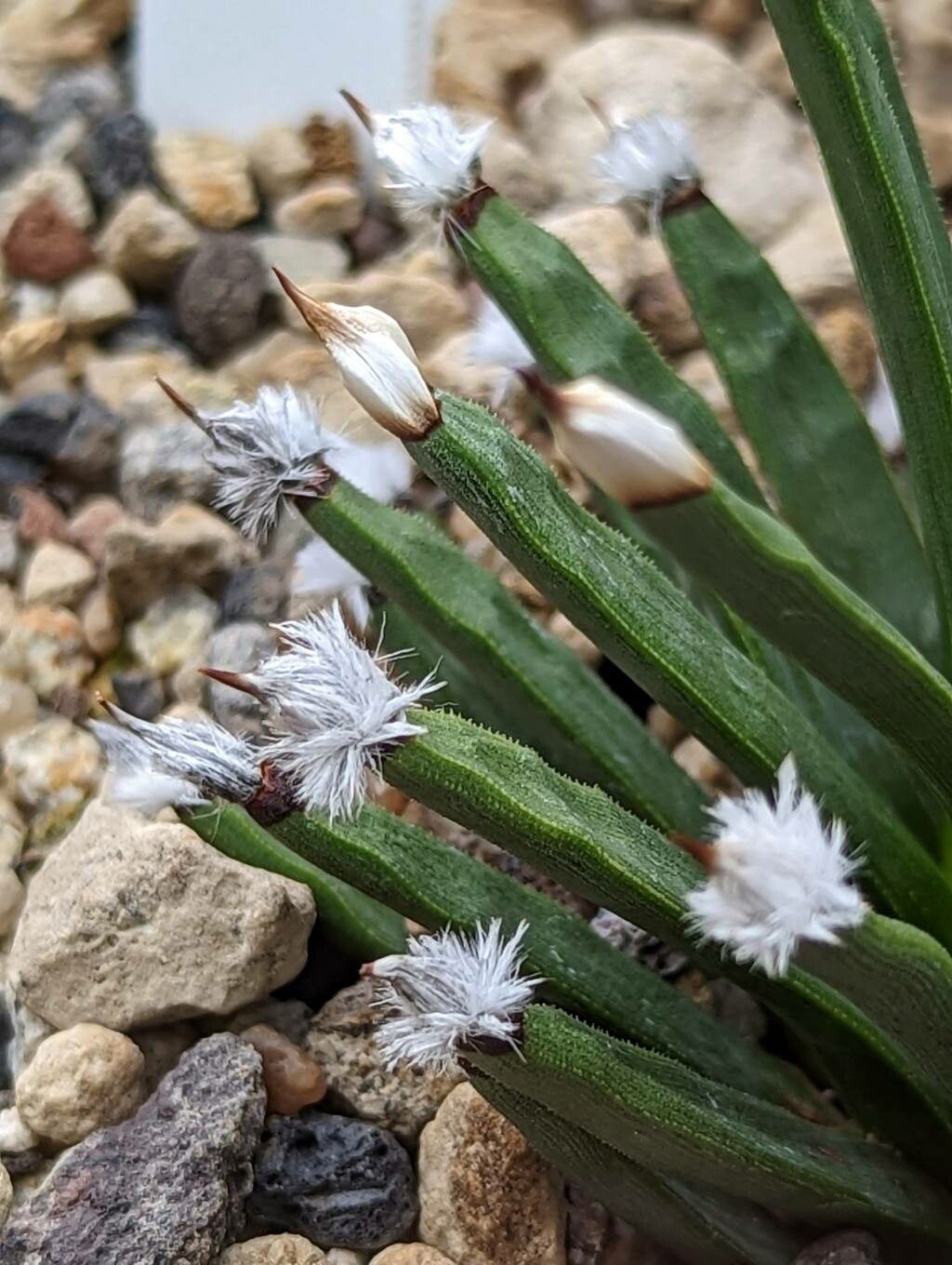
Agave deserti (desert agave, mescal, century plant or maguey) is an agave native to desert regions in southern California, Arizona, and Baja California. Its tall yellow flower stalks dot dry rocky slopes and washes throughout the spring. It forms a rosette of fleshy gray-green leaves 20–70 cm long and 4.5–10 cm broad, with sharp spines along the edges and at the tips. It flowers at maturity (20 to 40 years), sending up an inflorescence 2–6 m tall. The panicle bears numerous yellow, funnel-shaped flowers 3–6 cm long. There are two varieties:
Agave deserti var. deserti. Plants usually with numerous rosettes; perianth tube 3–5 mm. Southern California only. Agave deserti var. simplex (Gentry) W.C.Hodgson & Reveal. Plants usually with one or only a few rosettes; perianth tube 5–10 mm. Southern California and Arizona.
Simple desert agave has moderate disease resistance but is more vulnerable to humidity and overwatering. It also becomes more prone to illness when kept in low light and given too much water. Regarding care, Simple desert agave is drought-tolerant and can endure long stretches without watering. It requires little fertilizer and only occasional pruning. For these reasons it is appropriate for growers of any experience level, particularly those who prefer to spend less time on plant care and who may sometimes be away from home for long periods. It is a good option for people who don’t want to devote much time to plant maintenance yet still want an easy-to-care-for plant.
How to keep Agave Deserti.
Light
The simple desert agave does best in places where sunlight is uninterrupted throughout the day. This stems from its native habitats, which receive abundant sun. Insufficient sunlight can cause poor growth, while extreme exposure is well tolerated, demonstrating the simple desert agave's robustness against intense light conditions.
Water
The simple desert agave excels in arid environments due to its exceptional drought tolerance and preference for dry soil. It should be watered every 1 to 2 weeks, ensuring the soil has completely dried between waterings. Although it is typically grown outdoors, the simple desert agave adapts well by closing its stomata during the hottest parts of the day, which helps it conserve water efficiently.
Temperature
The simple desert agave is native to regions where temperatures usually range from 41 to 100 °F (5 to 38 ℃). It prefers a temperate climate and can tolerate cooler temperatures in winter. You can maximize its growth by adjusting the temperature for each season.
Fertilizer
For Simple desert agave, give light amounts of fertilizer once or twice a year during the growing season. Avoid fertilizing in winter and in summer, when the plant is dormant. Cut back on fertilizer for repotted plants and wait a couple of months after repotting before you fertilize. Fertilizing helps maintain healthy growth and encourages blooms.
Pruning
The simple desert agave is a resilient succulent with rosette-shaped leaves and spines. To promote growth and remove dead parts, prune it in early spring using clean, sharp tools. Regular pruning helps maintain the plant's shape, improves air circulation, and reduces pest problems.
Pot & Repot
Repot the simple desert agave every 2 to 3 years in the spring. Choose a pot that is appropriately sized to prevent excess moisture buildup. After repotting, place the plant in a location with bright light and water it sparingly to support its recovery. Make sure the soil stays loose to allow for proper aeration. The simple desert agave is a hardy plant that demands minimal care.
Botanical profile.
- Plant Type
- Shrub
- Life Cycle
- Perennial
- Genus
- Agave
- Family
- Asparagaceae
- Hardiness Zone
- 5-12
- Mature Height
- 49 cm
- Mature Spread
- 91 cm
- Leaf Color
- Green, Gray, Silver
- Leaf Type
- Evergreen
- Flower Color
- Yellow
- Flower Size
- 5.08 cm to 6.35 cm
- Bloom Time
- Late spring, Early summer, Mid summer
- Planting Time
- Spring, Autumn
- Harvest Time
- Late summer, Early fall, Mid fall
- Native Area
- Mexico
Other names.
Reader questions.
How should I water my Simple desert agave plant in the best way?
Your Simple desert agave is not particular about how you water it. You can use any common watering tool, such as watering cans, hoses, or even cups. Regardless of the tool, it's important to water the soil directly and evenly to ensure all parts of the root system get the necessary moisture. Using filtered water is helpful as tap water may contain harmful particles. Water at or slightly above room temperature is preferable, as extremely hot or cold water may shock the plant. However, the Simple desert agave generally responds well to any type of water you use.
Why should I add fertilizer to my Simple desert agave plant?
No matter which type of Simple desert agave you have, regular fertilization is crucial for its overall health. Providing the right nutrients promotes vigorous growth and enhances its resilience to challenging conditions, as well as its ability to combat diseases and pests. The foliage of your Simple desert agave is particularly appealing, so it's important to preserve it. To achieve this, establish a consistent fertilization schedule tailored to your plant. By doing so, your Simple desert agave will develop beautifully colored leaves and a healthy appearance.
What are the sunlight requirements for a Simple Desert Agave?
Simple Desert Agave requires full sun, which means they thrive in areas receiving above 6 hours of sunlight daily. However, they can also tolerate partial sun conditions, receiving about 3-6 hours of sunlight. It's important to observe how sunlight moves through your garden to ensure plants get the ideal balance of light and shade, thus promoting their health and growth.
What is the ideal temperature range for Simple desert agave?
The Simple desert agave thrives in temperatures ranging from 41 to 100 °F (5 to 38 °C). It is suited to a temperate climate and can adjust to cooler winter temperatures. To optimize growth, adjust the temperature seasonally. Although it has strong cold resistance and typically doesn't require frost protection measures, in winter temperatures below -25°C, protection is advised by wrapping the plant with non-woven fabric or cloth. Before winter's first freeze, water the plant abundantly to keep the soil moist, helping to prevent drought and water scarcity during the colder months.
What should I do if I give too much or too little water to my Simple desert agave?
Outdoor plants, especially newly planted ones or seedlings, may suffer from lack of watering. It's important to water them regularly, especially during the first few months when the tree is small or newly planted. Once the roots are established, Simple desert agave can rely on rain most of the time. In the case of Simple desert agave planted in pots, overwatering is a common issue. If you accidentally overwater your plant, take immediate action to fix the situation. Stop watering the plant to minimize the impact of overwatering. Then, remove the plant from its pot and check the roots for any signs of root rot. If there is no root rot, you can return the plant to its container. However, if you find root rot, trim away the affected roots and consider applying a fungicide. Repot the Simple desert agave in well-draining soil. On the other hand, underwatering is an easier problem to solve. If you notice the plant's leaves drooping, drying out, and falling off, it's a sign of underwatering. Simply increase the frequency of watering to resolve this issue. Adjust your watering schedule as soon as you observe symptoms of underwatering.
When should I fertilize my Simple desert agave?
To properly fertilize your Simple desert agave, the first time to do so is in late winter or early spring. This will provide the necessary nutrients for the agave to grow healthily when the weather becomes warmer. If you live in a warm climate region, it is also beneficial to offer an additional fertilizer feeding during early fall. This helps add nutrients to the soil for the agave to utilize in the next growing season and makes it more resilient to winter cold, preventing foliage damage. Fertilizing earlier will also allow the new branches enough time to develop and withstand the cold winter.
Why is sunlight important for Simple Desert Agave and how can artificial lighting be used?
Sunlight is crucial for the Simple Desert Agave, originating from habitats with abundant sun exposure. Insufficient sunlight leads to poor growth, although these plants are remarkably tolerant of intense light conditions. For indoor plants or areas with less sun, artificial lighting becomes essential. Using the right type of artificial light, like LED lights that offer varying wavelengths, can mimic natural conditions. Full sun plants need 30-50W/sq ft, partial sun plants require 20-30W/sq ft, and full shade plants need 10-20W/sq ft of artificial light. Additionally, adjusting the distance (12-36 inches above the plant) and duration (8-12 hours per day) of artificial lighting can promote healthier, more robust growth.
How does low temperature affect Simple desert agave, and what are the solutions?
Simple desert agave is cold-tolerant and prefers temperatures above 5°C. In winter, it should not drop below -20°C. If temperatures fall below -25°C, the plant may not show immediate damage in winter, but in spring, its branches might become brittle and dry, failing to produce new shoots. The solution for springtime is to prune any dead branches that have not developed new leaves, addressing the plant's response to extreme cold.
How frequently should I water my Simple desert agave plant?
For most outdoor plants, natural rainfall is sufficient for normal growth. However, if your area receives limited rainfall, it's important to water your plants adequately every 2 weeks during the spring and fall. During the summer, more frequent watering is necessary. In the winter, when plants grow slower and require less water, it's best to water sparingly or not at all. If you have a young or newly planted Simple desert agave, it's recommended to water more frequently to help it establish and eventually become more adaptable and drought tolerant. When it comes to potted plants like the Simple desert agave, there are two main approaches to determining watering frequency. The first is a predetermined watering schedule, with the plant being watered once a week or every other week. However, this method may not always consider the specific growing conditions of your agave. Alternatively, you can adjust the watering frequency based on the moisture in the soil. It's generally advised to wait until the top two to four inches of soil, which is about ⅓ to ½ the depth of the pot, have completely dried out before watering again. This approach takes into account the plant's higher water needs during the summer months.
When is the best time to not add fertilizer to my Simple desert agave plant?
There are a few specific times throughout the year when you should avoid fertilizing your Simple desert agave. The first time is during the early and mid-winter months when the plant is dormant and doesn't need any additional nutrients. Another time to avoid fertilizing is in late spring and throughout the summer, as the weather tends to be hotter and drier during this period. Fertilizing during these times is not recommended as it can have a detrimental effect on the plant. To prevent any issues, it's best to stick to a fertilization schedule that involves feeding only in early spring and early fall.
What are some symptoms of insufficient sunlight in Simple Desert Agave?
When Simple Desert Agave does not receive enough sunlight, it may exhibit several symptoms such as smaller new leaves, leggy or sparse growth, and faster leaf drop. Growth may slow down or stop entirely, and new leaves might have lighter colors or show signs of chlorosis—turning yellow due to lack of chlorophyll. Excessive sunlight can cause sunscald, leaf curling, wilting, and leaf scorching, which present as damaged or necrotic areas on the plant tissue.
How does high temperature affect Simple desert agave, and what are the solutions?
During summer, Simple desert agave should be kept in conditions below 38°C. Exposure to temperatures above 43°C can cause the leaves to lighten in color, the tips to become dry and withered, and increase susceptibility to sunburn. To mitigate damage, trim the sunburned and dried-up parts of the plant. Move it to a shaded location or use a shade cloth to protect it from the midday and afternoon sun. Additionally, watering the plant in the morning and evening will help keep the soil moist and cool, further protecting the plant from heat stress.