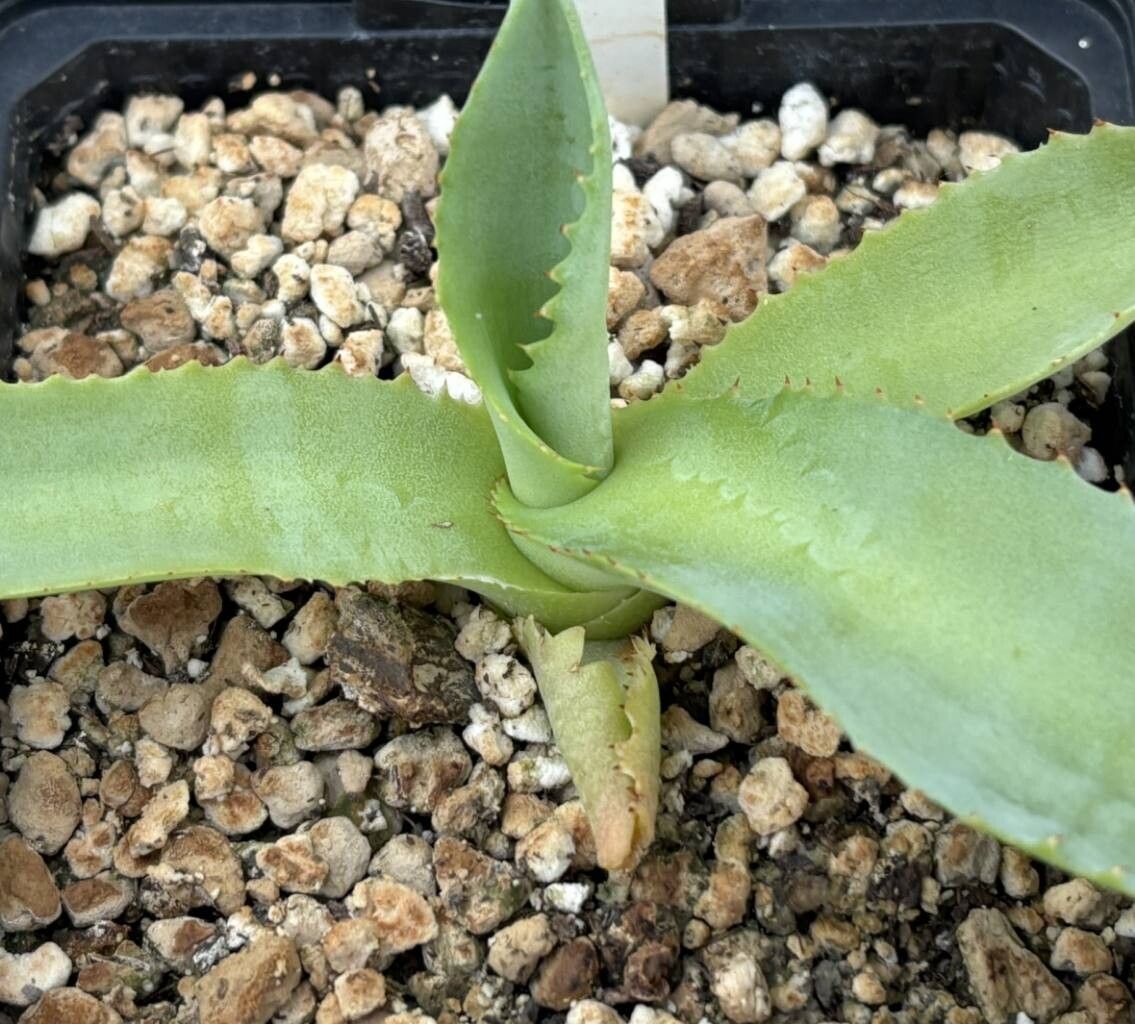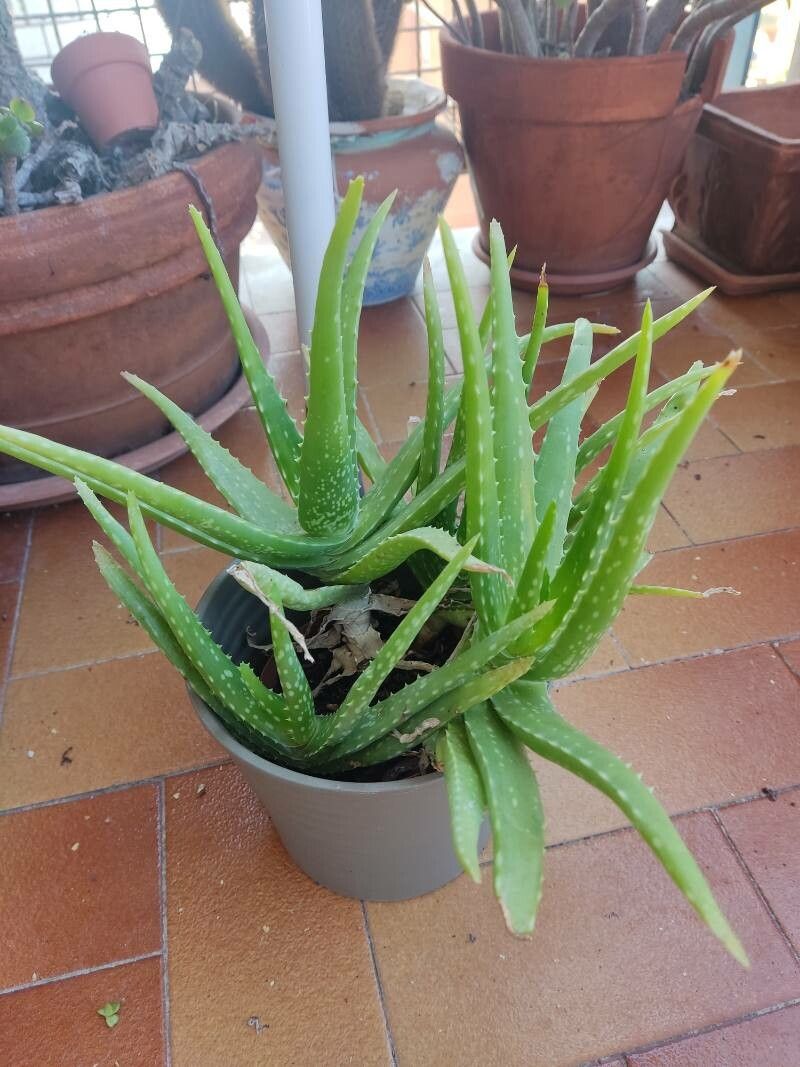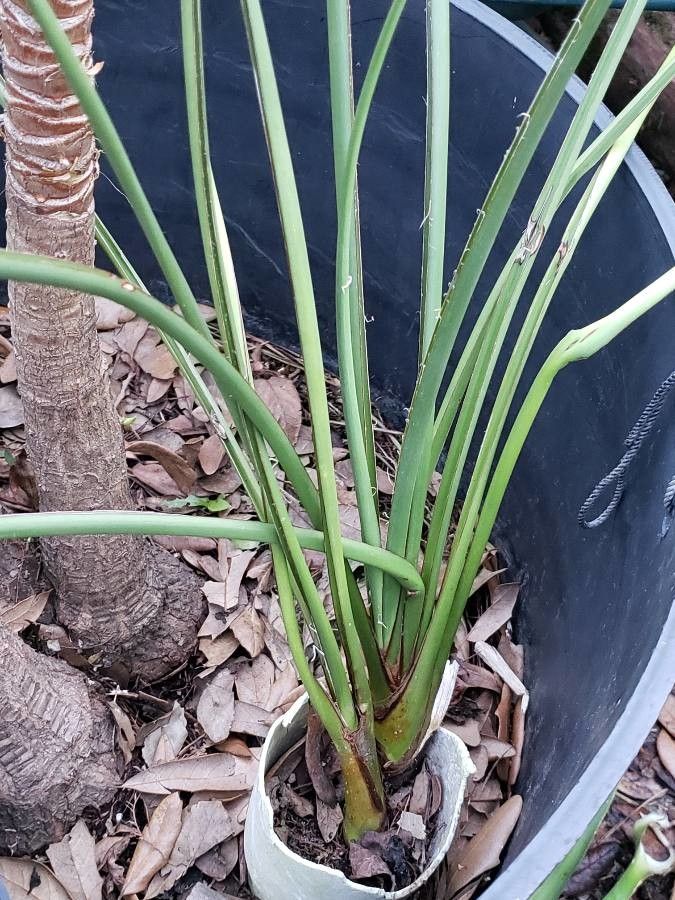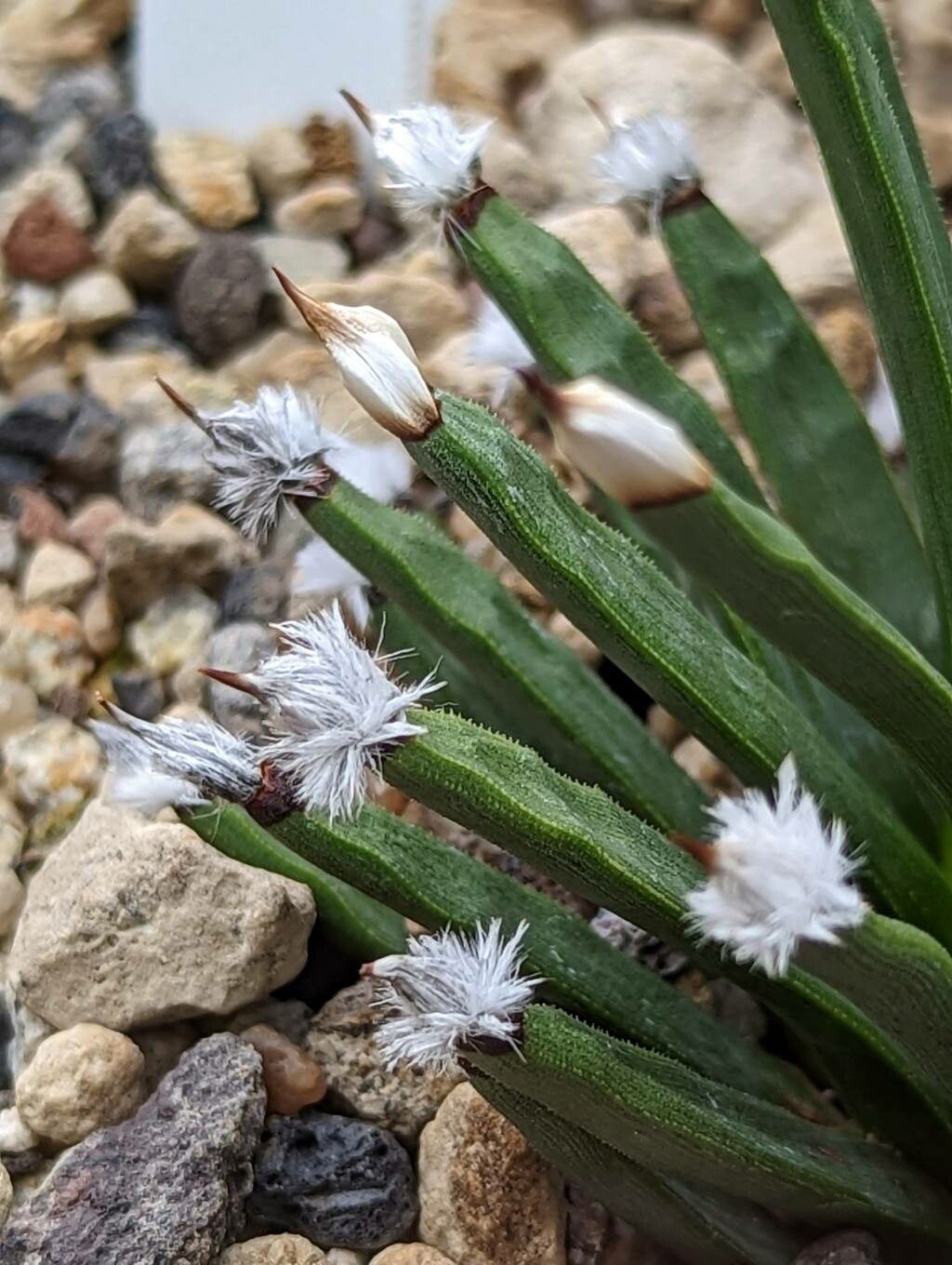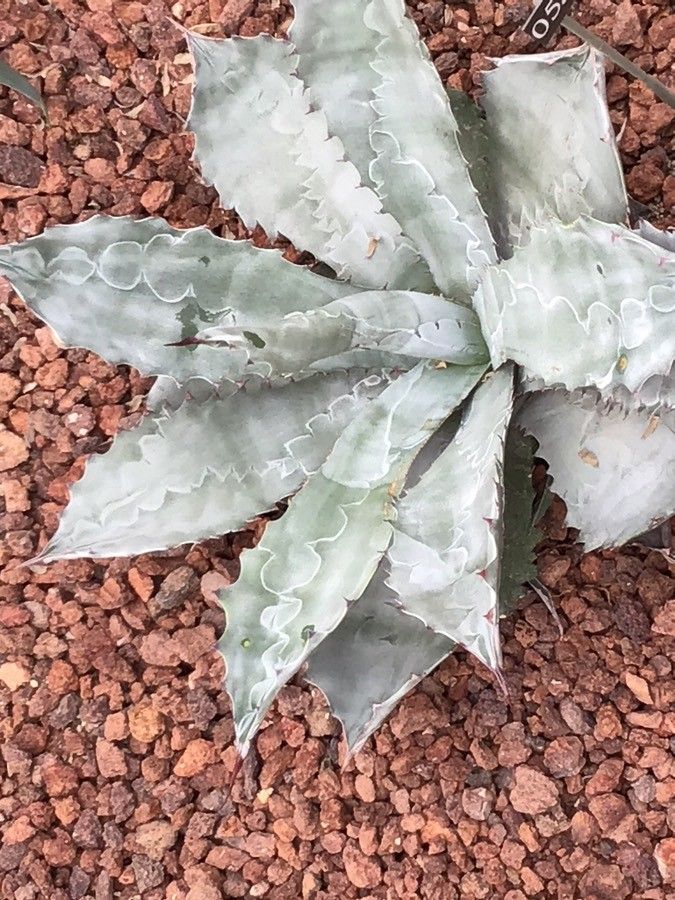
Agave cupreata is a species of plant in the family Asparagaceae, and is found only on mountain slopes of the Rio Balsas basin in the Mexican states of Michoacán and Guerrero at elevations of 1,200-1,800 meters. A. cupreata is a long-lived plant with mature leaves reaching between 40–80 cm in length and a flowering stalk of 4–7 m. The age of maturity for A. cupreata is variable, but generally occurs at any time from 5–15 years. A monocarpic perennial which does not reproduce clonally, A. cupreata allocates its accumulated resources toward the production of a single inflorescence and dies following the production of seeds.Communities in the mountains of Guerrero harvest and make mezcal out of Agave cupreata, known locally as maguey papalote.
Agave cupreata has moderate disease resistance and is more sensitive to humidity and to being overwatered. It also becomes more prone to illness if it is kept in low light and receives too much water. Regarding care, Agave cupreata is drought-tolerant and can withstand extended periods without watering. It requires little fertilizer and only occasional pruning. That makes it appropriate for growers of any experience level, especially those who prefer to spend minimal time on plant care or who may be away from home for extended periods. It is a good option for people who do not want to dedicate a lot of time to maintenance but still want a plant that is easy to care for.
How to keep Agave Cupreata.
Light
Native to dry areas, Agave cupreata performs best in full sun, its natural habitat having intense sunlight and very little shade. It can also tolerate partial sun, offering some flexibility in how it grows.
Water
Agave cupreata flourishes in dry conditions. To maintain the right soil moisture, allow any excess water to drain away. In the summer, increase watering slightly, but reduce it again in the fall. When the temperature drops to 10℃ (50℉) during winter, the plant enters dormancy. At this point, stop watering and ensure the plant stays warm. In spring, resume watering once temperatures rise above 20℃ (68℉).
Temperature
Agave cupreata favors warm conditions and requires higher temperatures during its growing season to support growth and metabolic processes. It does well with plenty of sunlight, proper moisture, and good air circulation. However, it is vulnerable to harm from very low temperatures and from overwatering. Maintaining a balance is important, and excessively high heat or overly dry conditions should also be avoided.
Fertilizer
For Agave cupreata, light applications of fertilizer once or twice a year during the growing season are enough. Do not fertilize in winter or in summer, when the plant is dormant. Cut back on fertilizer for repotted plants and wait a couple of months after repotting before applying any. Fertilizing helps maintain healthy growth and promotes flowering.
Pruning
Agave cupreata is characterized by a rosette of tough, succulent leaves. To maintain its health and shape, it is best to prune in early spring, carefully removing any damaged leaves using clean tools. Be cautious not to over-prune, as this can stress the plant. Proper pruning not only enhances air circulation and reduces pests but also promotes optimal growth and longevity.
Botanical profile.
- Plant Type
- Succulent
- Life Cycle
- Perennial
- Genus
- Agave
- Family
- Asparagaceae
- Hardiness Zone
- 9-11
- Mature Height
- 0.91 m to 1.52 m
- Mature Spread
- 1.52 m to 2.13 m
- Leaf Color
- Dark Green
- Leaf Type
- Evergreen
- Flower Color
- Yellow, Green
- Flower Size
- 5.08 cm to 6.35 cm
- Bloom Time
- Late spring, Early summer, Mid summer
- Planting Time
- Spring, Summer, Autumn
- Harvest Time
- Late summer, Early fall, Mid fall
- Native Area
- Mexico
Reader questions.
What are the sunlight requirements for Agave cupreata?
Agave cupreata requires specific conditions when it comes to sunlight. For full sun, the plant needs to be in an area where it can receive above 6 hours of direct sunlight daily. In cases of partial sun, a spot that provides about 3-6 hours of sunlight would be ideal. It's important to observe the movement of sunlight through your garden carefully to find locations that offer the right balance of light and shade. This consideration ensures that your Agave cupreata thrives by receiving the optimal amount of sunlight it needs for healthy growth.
What is the botanical name of Agave cupreata?
The botanical name of Agave cupreata is 'Agave cupreata'. This name helps in uniquely identifying the plant, distinguishing it from other species within the Agave genus.