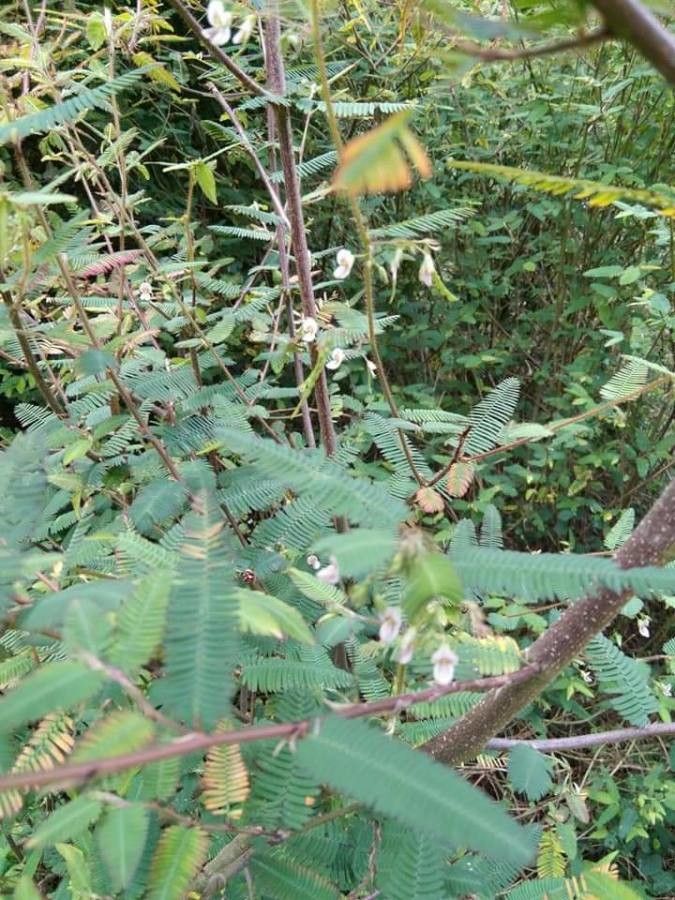
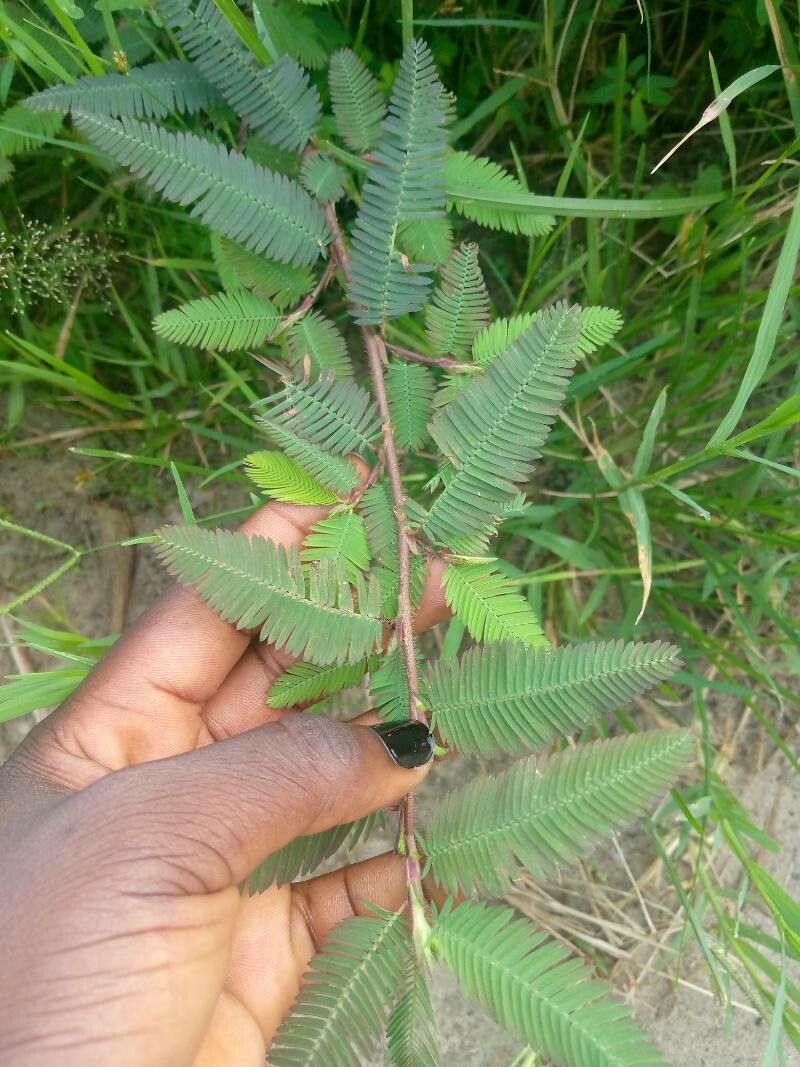
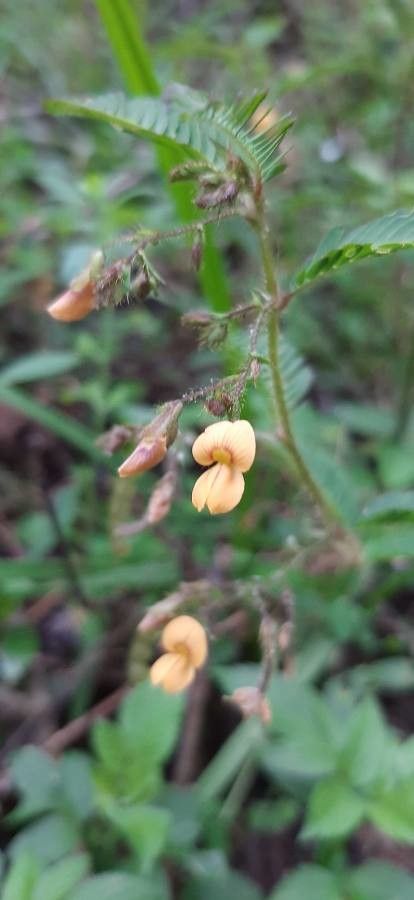
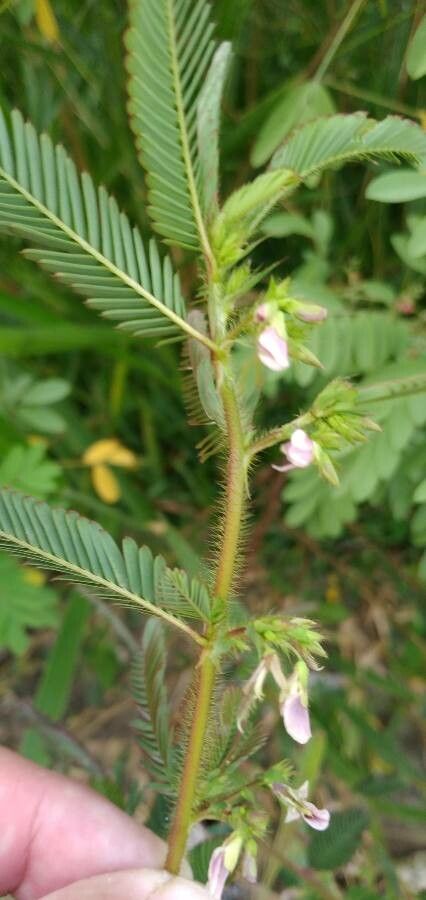
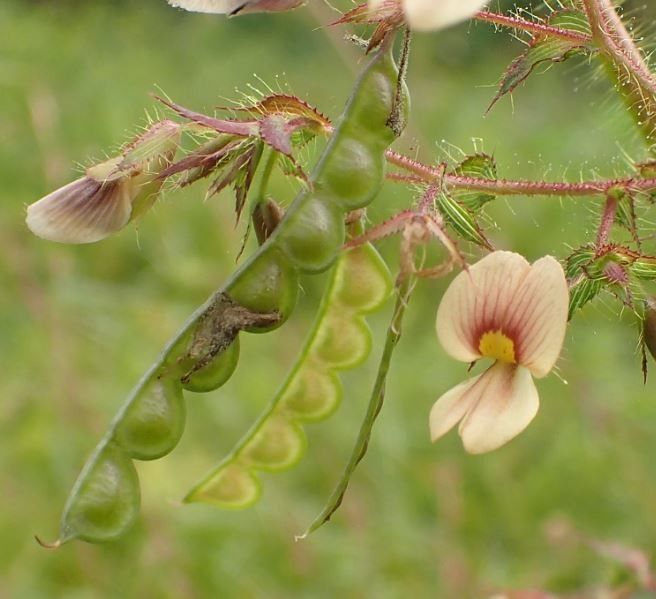
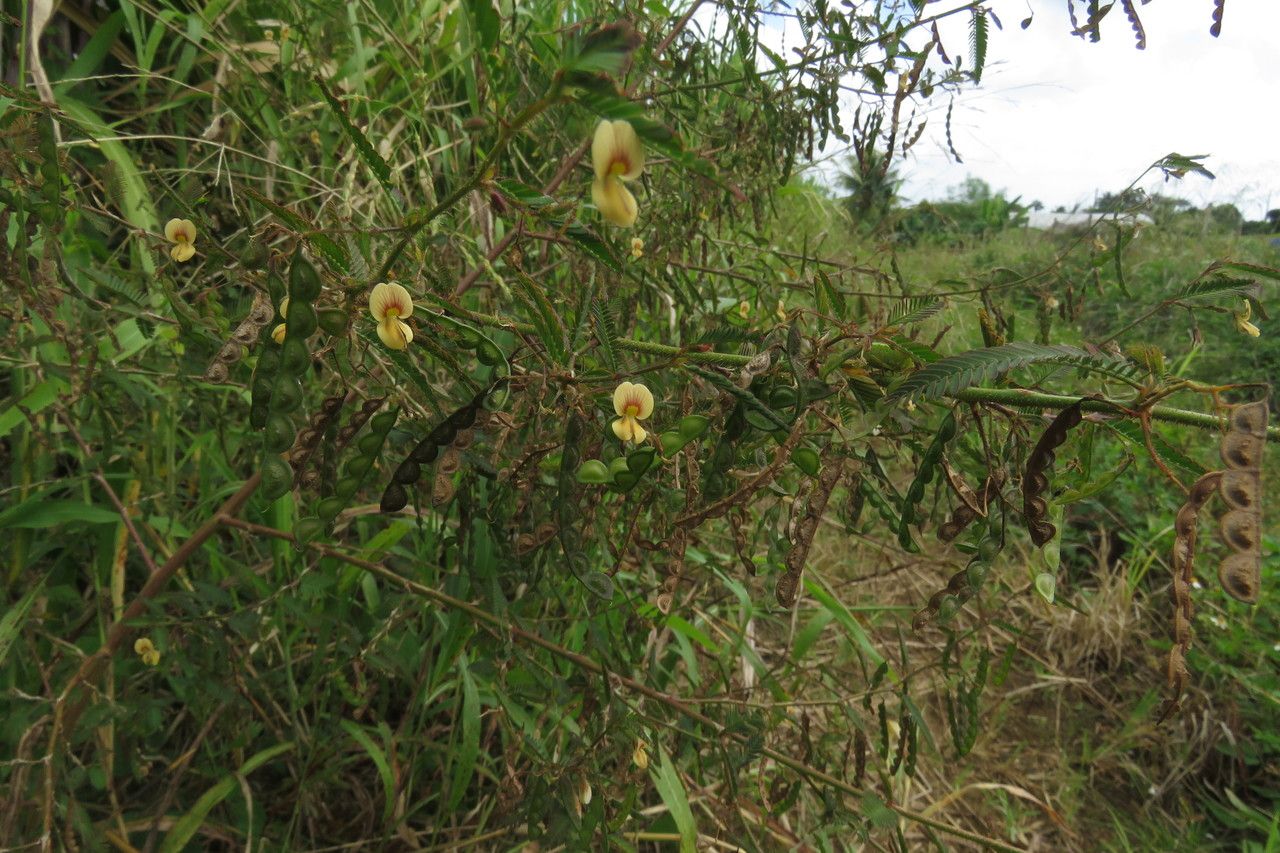
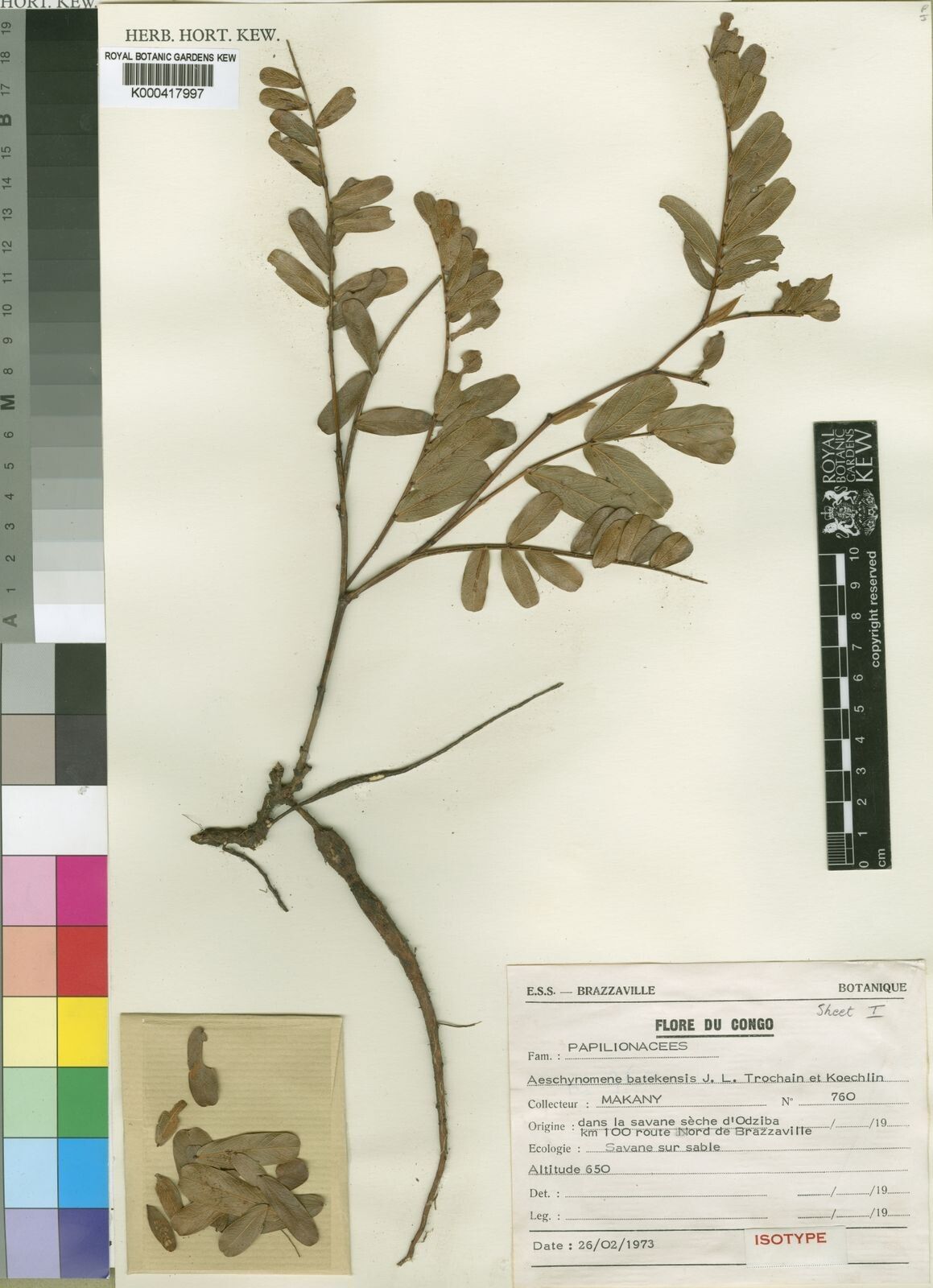
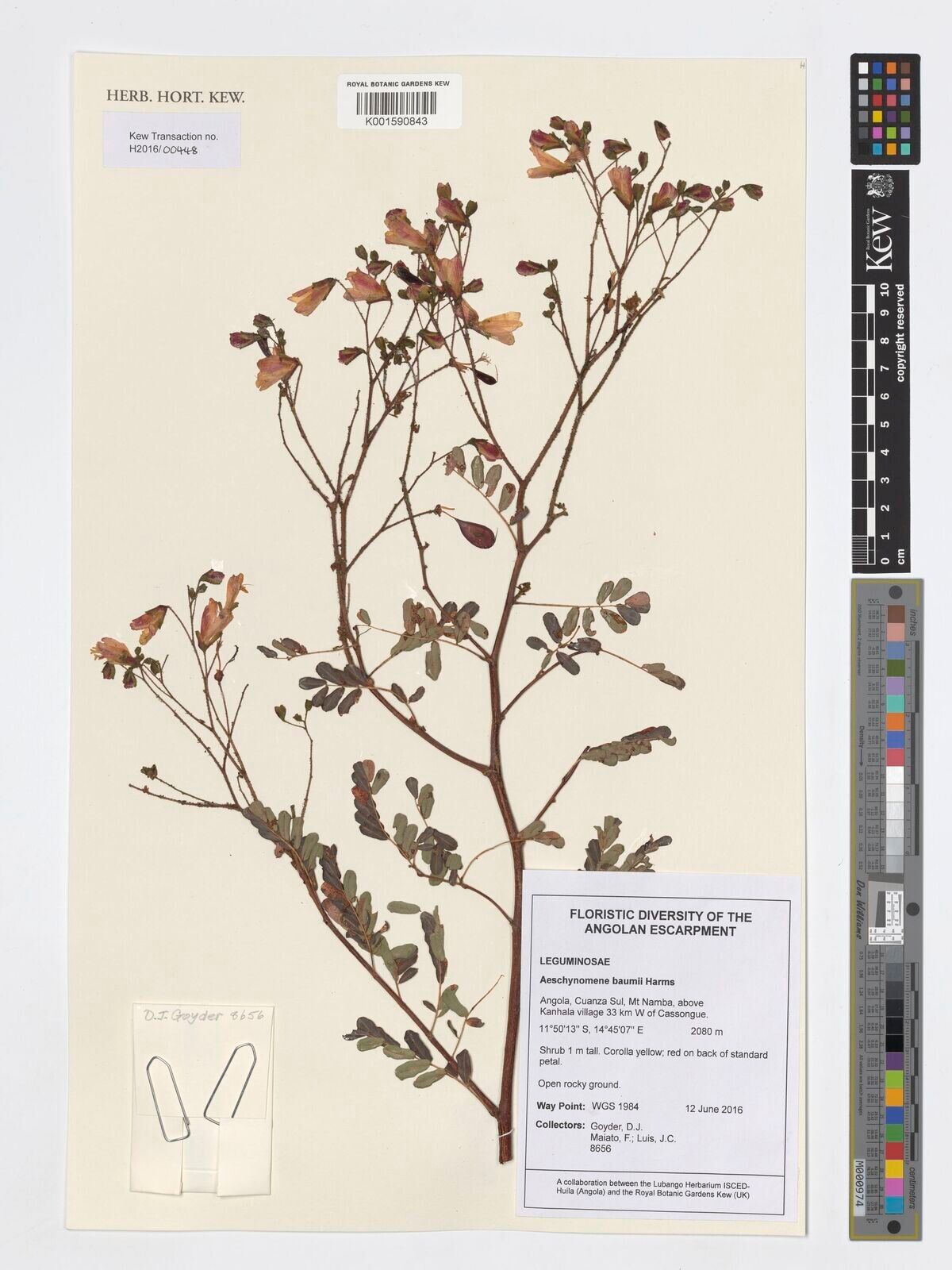
Aeschynomene americana, commonly known as American jointvetch, is a perennial legume that belongs to the Fabaceae family. Native to the southeastern United States, it thrives in wetlands, swamps, and along riverbanks. This plant can grow up to 1 meter tall and features a sprawling growth habit with long stems branching out from the base.
The leaves of Aeschynomene americana are pinnately compound, comprising 6 to 12 pairs of oval-shaped leaflets, each about 1 to 2 cm long. Its small, yellow flowers are clustered at the ends of long stalks and bloom from June to September.
Ecologically, the plant plays an important role by providing food for wildlife, including deer, rabbits, quail, and various birds. Additionally, it helps prevent soil erosion by stabilizing riverbanks with its extensive root system.
In traditional medicine practiced by indigenous people, Aeschynomene americana is utilized for its anti-inflammatory properties to treat ailments such as fever and inflammation.
Overall, Aeschynomene americana is a valuable species both ecologically and medicinally. It makes an excellent addition to any ecosystem or garden setting where wetland plants can thrive.
Joint vetch is fairly disease-resistant and usually not prone to illnesses. Still, it can be affected by pests and diseases present in its environment. These problems are typically mild. In terms of care, the plant requires moderate maintenance. It should be pruned regularly to preserve a tidy appearance and support healthy growth. Fertilizing can also help encourage flowering. Joint vetch is well suited for people with outdoor space, such as a garden or patio, and does not demand much gardening experience. It may need extra care if grown indoors.
How to keep Aeschynomene Americana.
Light
Joint vetch prefers environments with plentiful sunlight for most of the day, which promotes its healthy growth. It can, however, tolerate conditions that receive sun only part of the day. Excessive sunlight may stress the plant, while insufficient light can impede its development.
Water
Joint vetch thrives in humid tropical environments and prefers consistent moisture, although it can tolerate brief dry periods. To ensure it stays healthy, water the plant weekly to meet its hydration needs. It is often found near bodies of water, where it benefits from natural rainfall during its growing season. This natural rain supply provides sufficient moisture without causing waterlogging.
Temperature
Joint vetch comes from tropical areas where the climate is usually warm and humid. Consequently, it is adapted to high temperatures and humidity. It is sensitive to abrupt temperature changes and prefers a consistent thermal environment, so indoor temperature fluctuations should be avoided. It generally cannot tolerate cold and needs higher temperatures to grow. If the ambient temperature drops too much, growth may stop or the plant could die.
Fertilizer
Joint vetch needs the most fertilizer during its active growth period, which is mainly in spring, summer, and early fall. Applying fertilizer supplies essential nutrients that the soil might be missing, supporting strong root and stem development and producing attractive foliage, a notable trait of this plant.
Pruning
Joint vetch has delicate foliage and clusters of flowers. Pruning in early spring encourages new growth and helps maintain its shape, while pruning in late spring removes spent blooms, promoting further flowering. Regular light pruning is beneficial, as it enhances the plant's health and disease resistance, improves air circulation, and increases its aesthetic appeal by removing dead or crowded stems.
Botanical profile.
- Plant Type
- Herb
- Life Cycle
- Perennial, Annual
- Genus
- Aeschynomene
- Family
- Fabaceae
- Hardiness Zone
- 9-11
- Mature Height
- 91 cm
- Mature Spread
- 1.52 m to 2.13 m
- Leaf Color
- Green, Dark Green
- Leaf Type
- Deciduous
- Flower Color
- Yellow
- Flower Size
- 2.54 cm
- Bloom Time
- Summer, Early fall, Mid fall
- Planting Time
- Spring, Autumn
- Harvest Time
- Late summer, Fall, Early winter
- Native Area
- Belize, Honduras, Mexico, Guatemala, Peru, Dominican Republic, Trinidad and Tobago, Panama, Jamaica, Colombia, Bahamas, Paraguay, Sierra Leone, Haiti, Argentina, Bolivia, Venezuela, Brazil, Guyana, El Salvador, Nicaragua, Ecuador, Costa Rica
Other names.
Reader questions.
How should I water my Joint vetch plant?
To properly care for the Joint vetch plants, there are a few simple guidelines to follow. Firstly, it is important to use filtered water that is at room temperature or slightly warmer when watering. Tap water should be avoided as it may contain particles that can harm the plant's health. This is because the Joint vetch prefers a warm environment and cold water can be a shock to its system. Additionally, overhead watering should be avoided as it can cause issues with the foliage. Instead, it is recommended to thoroughly water the soil until it is completely soaked. This provides several benefits for the plant, including moistening the roots and facilitating their spread in the soil to collect necessary nutrients.
What are the sunlight requirements for Joint vetch?
Joint vetch thrives in conditions where it receives ample sunlight throughout the majority of the day, which is crucial for its healthy growth. It requires full sun, defined as above 6 hours of sunlight per day, but it can also tolerate partial sun, receiving about 3-6 hours of sunlight. However, locations should be chosen carefully to achieve a balance of light and shade, as overexposure to sunlight may lead to stress and inadequate exposure could restrict its growth. It's important to observe how sunlight moves through your garden to ensure the best conditions for your plants.
What should I do if I give my Joint vetch plant too much water or too little water?
Overwatering is a common issue for Joint vetch plants and can cause wilting, yellowing leaves, and diseases like root rot, mold, and mildew. Underwatering is less common but can be identified by brittle, brown leaves. It is important to recognize the signs of overwatering early on and reduce watering immediately. Assessing the soil's drainage and replacing it with a well-draining mix can help. If under watering is suspected, simply increase watering until signs improve.
How do you use artificial lighting for growing Joint vetch indoors?
When growing Joint vetch indoors, especially in conditions where natural sunlight is limited, artificial lighting becomes essential. Optimal growth under artificial lights can be achieved by choosing the right type of artificial light, such as LED lights, which can be customized to the plant's needs. Full sun plants need 30-50W per square foot of light, partial sun plants require 20-30W per square foot, and full shade plants need 10-20W per square foot. The light source should be placed 12-36 inches above the plant to mimic natural sunlight, and the duration should replicate natural daylight hours, generally 8-12 hours per day.
How many times should I water my Joint vetch plant?
To determine if your Joint vetch plant needs water, there are different methods depending on whether it is in a pot or planted in the ground. For potted plants, simply stick your finger into the soil and if the top two to three inches are dry, it's time to water. The same concept applies to plants in the ground. Usually, watering once a week is sufficient during spring and early fall, but during very hot weather, you may need to increase watering to twice a week or more. However, it's worth noting that mature, well-established Joint vetch plants have a good ability to endure dry periods.
What are the symptoms of inadequate light for Joint vetch?
Joint vetch shows several symptoms when it's not receiving enough light. These include smaller new leaves compared to mature ones, leggy or sparse growth due to elongated spaces between leaves or stems, faster leaf drop as a resource conservation measure, slower or halted growth as the plant enters survival mode, lighter-colored or chlorotic new leaves indicating a lack of chlorophyll, and symptoms of overexposure like sunscald, leaf curling, wilting, and leaf scorching. These symptoms can vary based on the severity of the light deficiency or excess.
How much water does my Joint vetch plant need?
When you water your Joint vetch, don't hesitate to give it a generous amount of water. Make sure the top two to three inches of soil are dry before watering. It's best to water thoroughly, soaking the soil completely. You should add enough water to make it drain through the holes at the bottom of the pot. If you don't see excess water coming out, it means you haven't watered enough. However, be careful not to let the water accumulate in the soil, as that can be harmful to the plant. On the other hand, if the water doesn't drain properly, it might be due to poorly draining soil, which is not good for the plant's health. If the plant is outdoors, it should receive about 1 inch of rain per week, which will be enough.
What solutions can be applied for Joint vetch suffering from light deficiency?
For Joint vetch plants suffering from light deficiency, gradually acclimatizing them to receive at least 6 hours of direct sunlight daily can be beneficial. For indoor plants, this could mean using a south-facing window or artificial light sources such as desk lamps or professional grow lights for at least 8 hours a day. Outdoors, moving plants to sunnier spots each week can help them adapt without experiencing sunburn. Reducing obstructions to sunlight, like pruning trees, or transplanting smaller plants during their dormant period to areas with more sunlight and good drainage, are effective strategies for improving light exposure.
How do I water my Joint vetch at different stages of growth?
The water needs of Joint vetch can vary depending on its growth stages. In the early years or after transplanting, more water is required as the plant focuses on developing new roots for future growth. These roots need more moisture to thrive. As the plant matures, less water is needed. Additionally, during the bloom period, when flowers are forming, Joint vetch may require additional water due to increased moisture demands.
How do I water my Joint vetch throughout the year?
The Joint vetch has different water needs depending on the season. In the hottest months of the year, it will require more water and you may need to water it more than once a week, depending on how quickly the soil dries out. On the other hand, during winter, the plant goes into a dormant phase and needs much less water. In fact, you may not need to water it at all during this time. If you do choose to water in winter, it is important to only do so about once a month. Overwatering during this time can increase the chances of the Joint vetch getting sick.
What's the difference between watering my Joint vetch inside and outside?
Growing Joint vetch indoors is the most common choice for gardeners who do not live in temperate or tropical regions. However, it is important to note that when growing in containers, the soil can dry out faster than ground soil. Additionally, if you have drying elements like air conditioning units, your Joint vetch will need more frequent watering compared to if it were planted outside. In such cases, outdoor Joint vetch may not require much watering, especially if you receive regular rainfall. On the other hand, for those growing the plant indoors, watering will be necessary as you won't have the option of relying on rainwater to soak the soil.