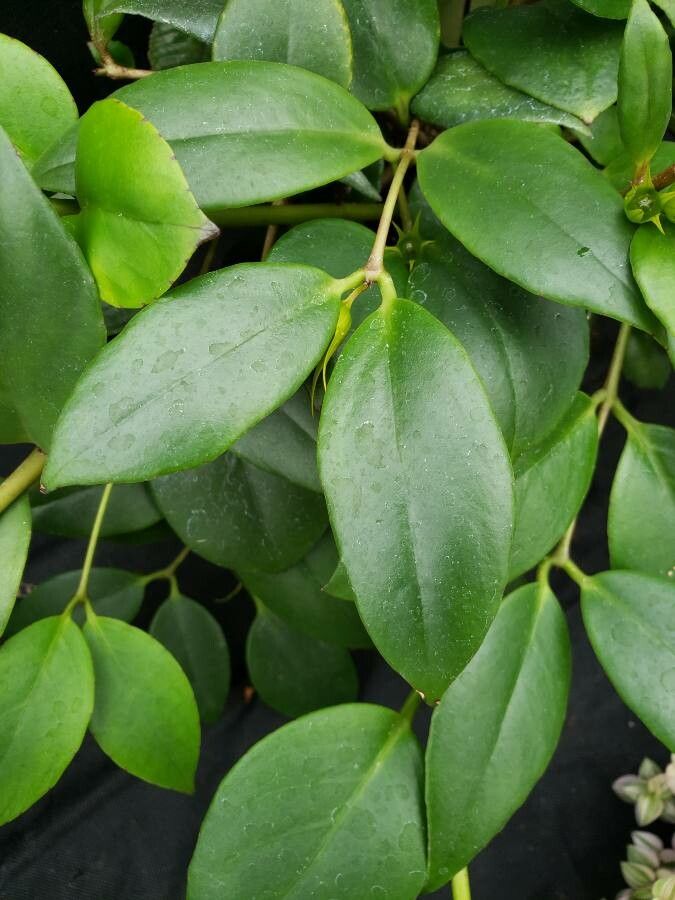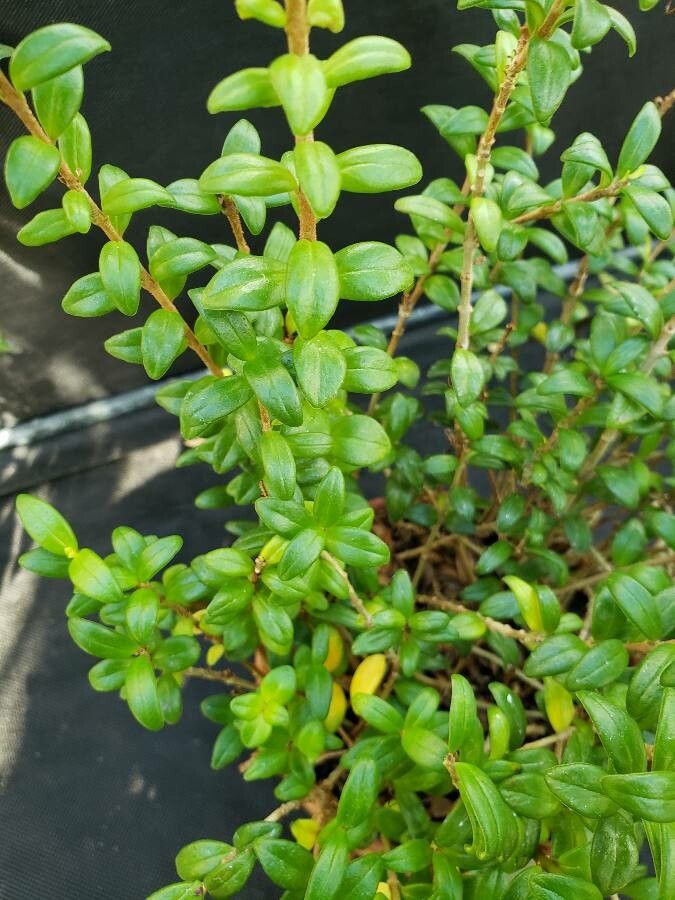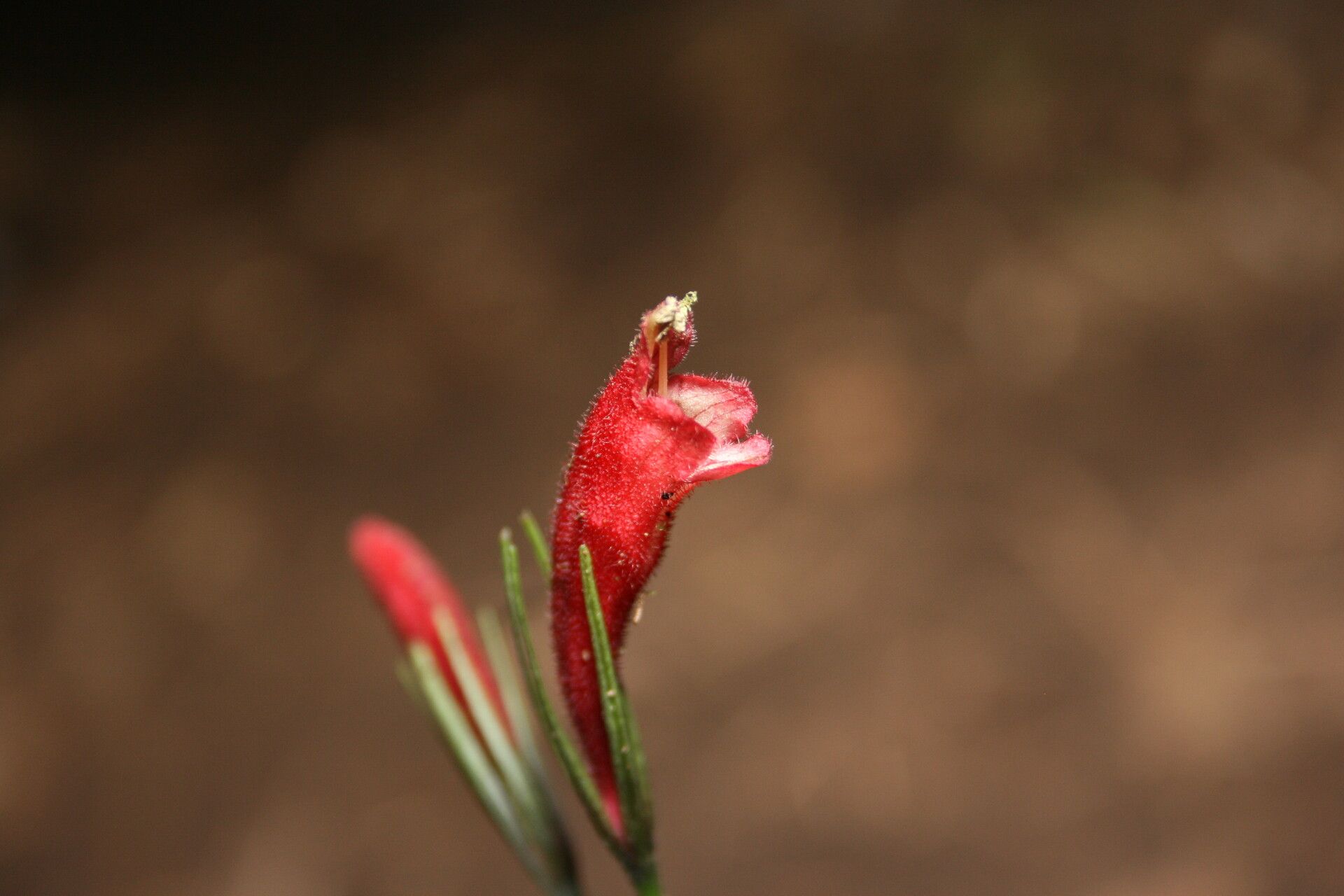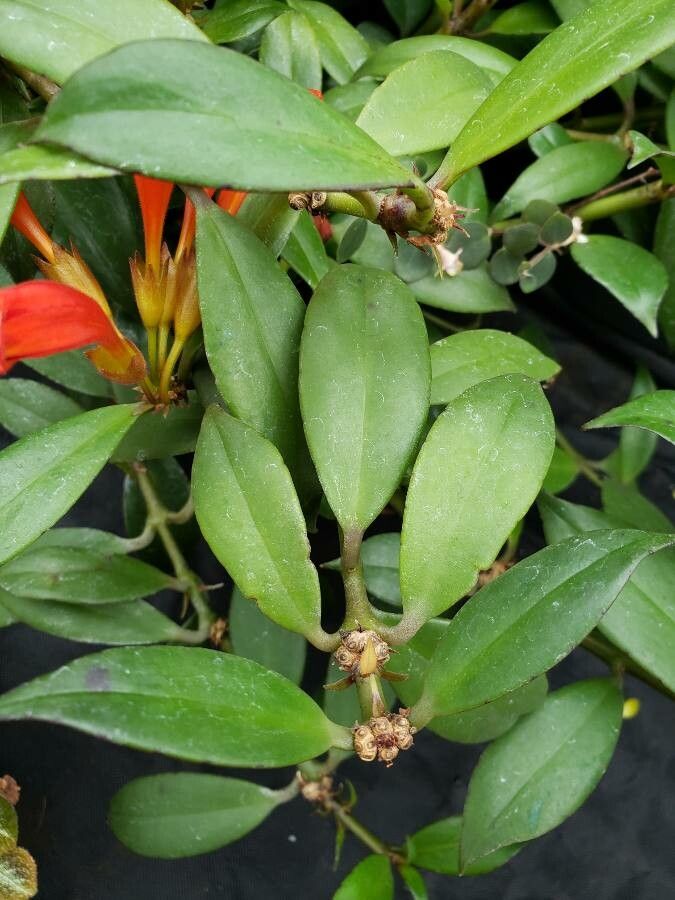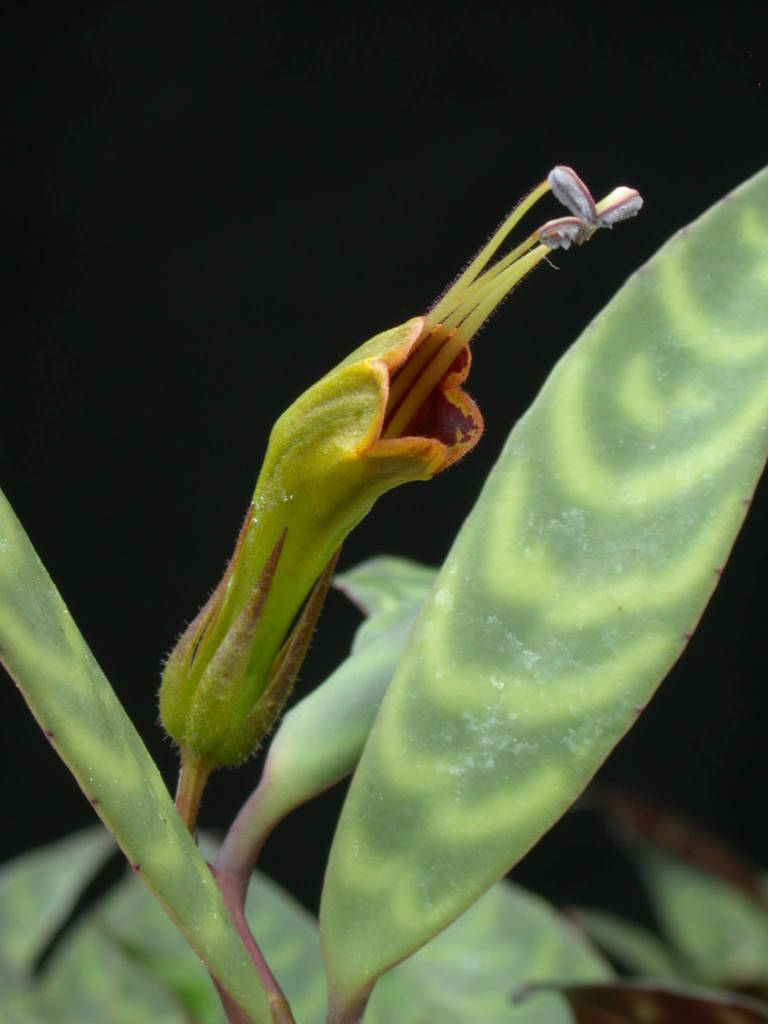
Aeschynanthus longicaulis, commonly known as the lipstick plant, is a tropical species native to Southeast Asia. It belongs to the Gesneriaceae family and gets its name from its bright red, tubular flowers that resemble a tube of lipstick. The plant features long, trailing stems that can grow up to 3 feet in length, adorned with glossy, dark green leaves.
The lipstick plant thrives in bright but indirect light and requires well-draining soil. It can be cultivated both indoors and outdoors, provided it stays within warm temperatures ranging from 60-80°F (15-27°C). While the plant needs regular watering, it is important to allow the soil to dry out slightly between waterings.
Propagation of Aeschynanthus longicaulis can be achieved through stem cuttings or by layering the stems into the soil. This relatively low-maintenance plant is an excellent choice for hanging baskets or as a trailing plant on shelves.
In summary, Aeschynanthus longicaulis is an attractive tropical houseplant with unique red flowers that bring a splash of color and interest to any space it graces.
The lipstick plant is generally disease-resistant and typically not prone to illnesses. Still, it can develop leaf spots if it receives poor light and ventilation or is overwatered. Its care level is regarded as easy since it mainly needs regular watering and little else. The lipstick plant is well suited for people who lack the time and energy for frequent plant care.
How to keep Aeschynanthus Longicaulis.
Light
The lipstick plant comes from the understory of tropical forests, doing best in full shade with occasional dappled sunlight and able to tolerate environments with very little direct sun.
Water
The lipstick plant flourishes in high humidity and needs balanced watering, typically on a weekly basis, to remain healthy. As an evergreen, it retains its leaves throughout the year, which aids in moisture absorption. Ensuring well-drained soil is essential to prevent overwatering and root rot.
Temperature
The lipstick plant originates from temperate regions and favors warmer conditions of 68 to 95°F (20 to 35°C). During colder months, make sure temperatures do not fall below its comfort range to ensure optimal growth.
Fertilizer
Proper fertilization is essential for the Lipstick plant's health and appearance. Fertilize the Lipstick plant during summer, repeating the application monthly throughout the season. Nutrients drive growth and help sustain the plant's parts. Fertilizing improves the Lipstick plant's floral display, ensuring the best blooms.
Pruning
The lipstick plant is a trailing variety known for its vibrant, tubular flowers. To encourage bushier growth, prune it from early to late spring. During pruning, remove any dead stems and trim back overgrown sections. This process not only stimulates new blooms but also improves air circulation. Using clean tools is important as it helps prevent disease, promoting healthier growth overall.
Pot & Repot
Repot the Lipstick plant in early spring, selecting a pot only slightly larger than the current one with proper drainage. Use a well-draining potting mix and position the root ball at the same level as before. Gently loosen any root-bound roots. After repotting, water generously and place the plant in a warm, shady location. Regular pruning helps maintain its size and encourages new growth.
Toxicity
Fortunately, the plant is not hazardous to animals, despite being challenging to grow, according to the toxic plant database maintained by the American Society for the Prevention of Cruelty to Animals. Despite not being classified as harmful to animals and pets, the sap from zebra plants might irritate the skin in some allergic individuals.
Further reading →
The toxicity and danger assessments provided are for reference only. We do not assure their accuracy, so it's crucial not to depend on them. Seek professional advice when necessary for accurate guidance.
Botanical profile.
- Plant Type
- Vine, Herb
- Life Cycle
- Perennial
- Genus
- Aeschynanthus
- Family
- Gesneriaceae
- Hardiness Zone
- 10
- Mature Height
- 1 cm to 24 cm
- Mature Spread
- 49 cm to 91 cm
- Leaf Color
- Green, White
- Leaf Type
- Evergreen
- Flower Color
- Red
- Flower Size
- 3.05 cm to 5.08 cm
- Bloom Time
- Summer, Early fall, Mid fall
- Planting Time
- Summer, Autumn
- Harvest Time
- Fall, Early winter, Mid winter
- Native Area
- Malaysia, Vietnam, Myanmar, Thailand, China